Pilot Debrief First Advanced Autorotation Course @ H.O.G.S.
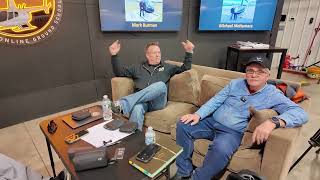
Kenny Keller and instructors at H.O.G.S. debrief their first advanced autorotation course. They flew straight-ins, 180s, 360-degree autos, zero-airspeed landings, and full-downs across three to four flights, tailoring each to the student's level.
Chapters
Let's debrief our first, very first advanced auto rotation course. C.W. you came out here two weeks ago, approximately.
Yep.
And we. What we, Hauser and I laid out as an initial advanced auto rotation course, we laid out a plan of what we thought was going to work. You came out, did the first day. Day number two was looking like, well, you came in day two, but the ceilings were iffy. And part of this auto that we're going to talk about this course, one thing is Hauser wants to do is get up at different altitudes, different air speeds, and do different things that people don't get to do. So we decided. You decided to go ahead and go home and come back couple weeks, pick a better day. Today you got blue skies so you could go out to whatever altitude you wanted and, and do day number two. So let's, let's run down what we initially did is we figured three flights for this advanced auto rotation course. And then we decided to give you an extra flight. So today you got two flights.
Right.
So let's just debrief for ourselves because we're recording this and we'll.
Sure.
And we'll transcribe it and AI will put it together for us in a nice form and we can evaluate in chapters and titles and the whole course. So they're. So what did you guys do for flight number one? Either one of you? Go ahead, jump.
Well, in my case, I hadn't flown in quite a while. So basically what we did is we came out and we did. We did some quick stops to get familiar with the air helicopter again. And then we just did the basic straight ends and 180 autos. And then that was the first hour just kind of getting back into it. Whereas if somebody had flown recently or whatever, they might have moved a little faster in that first hour. And then in the second hour, we concentrated on maximum glide, minimum glide, just going along and suddenly the engine cut and being aware, situational awareness, where you might have to go to when you weren't expecting it, which reinforces that you should always be looking for a spot and backing up. And then what was planned for the next day, which we actually did today, was because of the weather. And I made the decision a no go. We came back today. And then what we did in the first hour, again, some quick stops straight in 180. And then we worked on. Let's see here. I gotta try to remember here now, S turns and stuff. And then. And one of the things that if you haven't done an S turn before, done recently. And one of the things you should be aware of, because initially on my first S turn, I turned right and. And then Chris pointed out afterwards it might have been better to go left because of the direction the wind was coming in. And when we went and did the second one and went left and then right, it actually worked better. So, you know, not doing them all the time or whatever, and that whole quick process of going into an auto and doing an S turn, you know, I failed to think about the direction of the wind. So that was a good learning point for me that, you know, now I can be a little bit more cognizant of wind if I, you know, got into one of those situations. And then after lunch, we went out and we did 360 autos and we did 0,0 speed autos. And both were really enjoyable. Never done them before. You know, the main thing is you, you know, you got to watch your spot and your, your speed and your RPMs. And you know, on the first one I kind of was. I think it was a little bit too slow. No, too fast and too fast on the speed. So that ended up, I went a little bit long from my spot, but on the second one I had better control of it and I got closer. And then on the zero autos, really, they were kind of exciting. Once you get past that initial, you know, zero speed and you go, you know, collective, collective down, right, right pedal, you just. Everything. It's almost like you're. You're frozen time. You just, you just. Nothing seems to move if you're doing everything right. You just, you just keep coming down, nothing's moving, everything's good. And then, you know, at about 300ft or whatever, that's when you want to push forward to get your speed back on, to come into your flare, to. To do your power recovery. And then after that, the last thing we did was straight in, full down autos, which I had not done in several years. And again, that was a good experience, remembering just to, you know, just keep going and make sure at the end you push forward so you come down and keep the pedals right so you can be straight. So overall, I think it was a great experience. And as the first one, I really think if you're coming out here, you should think or give your own evaluation to Chris or Kenny as to how comfortable or how experienced you think you are, because that might determine whether you need just three hours or is it really important to do that fourth hour. And then the other thing too, depending on the time of the Year just have in your mind a backup plan. What if the weather goes bad? Do I want to. Am I prepared to stay another day? Or is it better to come back, you know, another time or, you know, if you made this appointment two weeks ago and two weeks from now, the weather's kind of looking. Work with Kenny and Chris to say, hey, you know what, you know, what you guys are expecting of the weather. Is it really worth for me to come and only do part of it, or depending on your schedule, can you block me in another time, you know, so you get the best bang for your buck.
Is there anything that you guys did that CW didn't think of to mention while he was going through that? Anything else?
No, I think he hit it. He hit it pretty good. One thing I would like to not stress, but just make it important that we, we want to tailor this course to the individual. Right? So he kind of touched on it as.
So.
So cw, when he came here on the first day, he hadn't flown in several months, you know, so you've got to learn to crawl before he could walk, right? So there's no. So we wanted to make sure. Hey, let's make sure that the straight ends and the 180s are good before we go into the advanced stuff, right? And I'm always going to do that no matter if you're flying at all. So, I mean, a student or someone that's coming here, we're always going to do straight in 180s first, because I want to see what, you know, what you're used to or see how you do it or whatever. But in CW's case, I think. And it's nothing to his flying, I think we just spent. We took an extra maybe 20 minutes or half an hour spending on straight ins and full or I mean straight ends and 180s because he hasn't flown for a while.
Right.
So what I'm getting at is we tailored it to cw and that's why he took a fourth flight, so we could get everything that we, we wanted, that we had discussed what we wanted to make this course about so he could experience it all. A person that might come in here, that is, that's been flying a lot and used to. Or maybe even an instructor who's been used to teaching 180s and straight ins or whatever and is used to the autos, he may come in here, hey, show me straight in. Show me 180. Hey, perfect. Great. Let's move on to the next thing. And he might be able to do it in the three hours or whatever. So I think it's. Well, we will tailor it to that person. But it's like he said that you two things, you know, one weather. So if you're thinking, you know, we offer I think a two day course. Right. Well you know exactly what happened to CW is I want for the, for the 360 autos and the zero speed, I like to have more altitude so we can play with the glide. Right. I mean I'm not saying that that's where you will fly at, but that's what we wanted so we could play with the glide. And, and on that day, that second day he was here. I mean we had 400, 500 foot ceilings. Well that, that wasn't going to work for what we. So you know, someone needs a plan on, okay maybe an extra day in case of weather and then maybe plan on a day, maybe an extra hour if things don't go, you know, I'm not saying bad, you know, the first hour but just maybe we want to spend a little extra time on something. So.
And you might have somebody that comes in that's always been 44s and you only have the 22 available or vice versa that could also impact that, you know, that extra hour or whatever.
But overall I think we structured it.
Yeah, let's cover that. So our original plan was two day course, three hours, probably one to two hours the first day and then one to two the second day depending on how weather played out your first flight. I remember you said just what you've already told us. Go out in the first flight, cover the basics, quick stops, straight ins, 180s, just as a warm up. Because when somebody comes here, they're flying with different instructors they probably never flown with before. They've never been to this airport, different aircraft. So let the person get warmed up, number one. And then what was your plan for step number two? Flight two.
Flight two would be stretching the glide, minimizing the glide. I think. What else do we have planned in there? Oh we did going out and just I don't think a lot of times when you're. Because like we've said before, when you're training, you're training to a standard right? Straight in, 180s. Well you don't go off, you know when you don't go out and just kind of play. So stretching the glide, minimizing glide and. And then hey, we're just going to go fly and I'm just going to say auto 3, 2, 1 or picking.
Picking random altitudes and Air speeds to give people out of the box something they don't get to normally do.
Directions. Right. We might be cruising with a direct headwind. Okay, Auto, three, two, one. And then we're straight in.
Right.
But we might be cruising along with maybe a. A right crosswind. And I'll be like, otto, now what? You know, you'd be amazed. A lot of times I have done that with some people and they just do straight in. Well, where's the wind coming from? Oh, it's coming off my right. Well, why are we not turning into the wind? Oh, I guess I didn't think about it. So we. So that's something that, that we want to do. And it might be a tailwind. So we. And we might be over, you know, maybe we were over an open field and now we're over woods with a tailwind. And. And I say engine failure. Well, we got to get turned around and. And because our spots behind. Behind us. So that was. That was. Flight number two was working on max glide, min glide and then just going out and you know, we might be at 500 AGL and engine fails or we might be up out at. Or up at cruise altitude with cruise airspeed.
And one of the good learning points I got is because not being familiar where the area is and when we did go into the auto, you know, and it was one I got closer, that I realized there was the irrigation line or whatever, which from when I went in, I wasn't. So I kind of had to change, you know, kind of towards the end there because I didn't pick up on it. So that's another thing too, is to be, you know, really thinking about whatever.
Or, you know, and it's. It's one of those things too, where I don't think people practice that because they're not. They're just all about, you know, practicing for the rating. But, you know, who's to say you don't get down in that field and in the last hundred feet, you might have to make that turn, you know, because you saw the irrigation system late, right? And I'm thinking, okay, what are we going to do? And we just kind of kept going. Okay, let's make a turn. Let's make a turn. And then we turn, you know, so that was flight two, hour two, and then hour three today for him. But for hour three would be the 360 autos, the zero airspeed autos, and then the full downs.
Okay, so. All right, so that was our plan. You did all of that stuff. Is there Anything you would like to add on the next one that you didn't cover?
You know, I was thinking on this last one that, I mean, we're doing autos. Right. Maybe we should incorporate a couple different hover autos.
Yeah.
Meaning. Because most of the time we're training three to five feet. Right. And into the wind. And that's how we do it. Right. Well, who's to say that you don't. Your engine doesn't quit as we're, you know, Hover taxi.
Hover taxi would be good one.
Doing a hover taxi or you're at a higher altitude. I try to show that at least once when I'm with a student. Be like, okay, say we're. For some reason we're hovering at 10, 10ft and we have an engine failure. Well, what's most people say? Well, just do a hub rod.
Okay.
Yeah, you're. We could. If you time that. Right. But I would suggest let's push forward and basically make it a run on.
Yeah.
That way.
I agree.
The forward. The skids can take forward movement. Right. So that will cushion our landing. Plus we can time it. If we don't time it right from 10ft, we're gonna, we're gonna split the skids.
Right.
But if you push forward, adds a little bit of momentum. Those skids is just like a run on.
Right. So.
So I'm thinking maybe adding some hoverados.
Funny, we never thought about that first time around.
I don't know. Yeah. I don't know why. But little.
Maybe higher than normal. And absolutely. During a hover taxi hoverado. During a taxi, we should absolutely do that.
And then with the hover taxi, I mean, I just, I just teach. Don't try to, you know, you think of a hover or a hover auto. Right. So you. So who's to say that someone doesn't try to come to a stop and then do the hover auto. Just if you're three to five feet and your engine quits while you're hover taxi, just continue to push forward. Just run it on, cushion it with.
The other thing too might be suggesting is basically you have like a ABC plan. A's, R22s, B's, 44s and the C is one of each. You know, some student might want it, you know, just see the difference between, you know, same procedures, but what it's like to find the two different. Yep. Frames.
So I'm thinking, you know, add maybe hover autos in there if we can.
Yes.
And then I'd like to hear if anybody out there has a suggestion, see if there's anything that they would like to see that we could. I know we mentioned. I. I even hate to mention it, but I'm not all up on the. No flare auto. I know there's a couple videos out there that they talk about that I'm telling you right now. I've never done one. Never practice it. So we're going to keep that out of it for right now and until I can actually speak with a person that has knowledge about it and how they would. So.
Right.
We're not going to do that right.
Now Then there was one that you and I discussed. I don't know if you did because we talked about. We wanted to go out and practice it a little bit first and we will. Is engine failure on takeoff, like at a lower altitude. Did you do any of that?
We did not do that. And part of that reason that is in my back of my mind. But I have not gone out there my myself and done it in a really long time. So I don't really want to go out there. And you know, I would like to have a few under my belt with just me doing it first before I actually, I mean, obviously it can happen, right. You can be 300ft off the ground in transition and you could lose it. So what are you going to do?
Right.
You know, so.
And that's something that we will. You and I'll go out and do and we'll do on our own or together and just go practice that. I feel comfortable doing the R44. I wouldn't be as much be comfortable doing that in the R22, but we'll work on that. And I think we should add that maybe it might be 300 AGL, but it's stabilized takeoff. You're going if there's Runway engine failure. So I think we should add that as well.
And as far as for the, you know, any of the helicopter pilots that are thinking about coming here, there's plenty of hotels, reasonable prices, there's good places to eat. It's very easy to get from whatever hotel you're at to the airport. It's, you know, Hogs is very customer friendly. I mean, it's going to be you and the staff and they take. They take. Yeah, they take good care of you and you get fed. And I really see where, you know, you won't say, hey, it wasn't worth it.
Yeah. So those watching put down below what you think you should see. If you didn't hear us discuss it. What would you like to see out of an advanced auto rotation course? Is there anything, since we've went through everything you guys did, what we'd like to add? Is there anything else you can think.
Of that well, overall as being our first person, how was it in your experience? I mean, I heard you say that you haven't done the 360s and the 0. You've never done those. So that was a good experience.
Much more out of it than I, than I expected, you know. You know, obviously when you're going to do something that you haven't done before, you kind of wondering, you know, just. But personally, I like the way the stepping flow was. You know, you start, you know, like you say, crawl, walk, run. And you know, after today or whatever and having done it, I, you know, I feel much more confident that if I ever got in a situation where I had to do a 360 or a 0, you know, I know what to expect now, you know. But again, I plan to come back in the future to do the R44 because it wasn't available today just to.
See the difference for our audience. You are a CFI.
Yes.
You are a CFI with 500 hours, 400. 400 hours. So it's stuff that you haven't got to do anywhere else that you train.
That's right.
And if you're new to the video, you might come along this video and don't know what we're doing. We're trying to get people out of the box things that you don't get to do at your flight school. And it's, we understand training to a standard and example. I like doing autos, nice, clean, real smooth, lower and roll off. Hauser likes to do at airspeed, like you're going cross country, real world and roll the throttle off and then deal with it. So that's kind of what this course gives you is everybody has to train to a standard and you got to do the straight in, you got to do the 180. And we worry that if that's all you ever do, then that's what you're only going to think of when this shit hits the fan. You're going to go, oh, straight in or oh, 180. Hauser calls it a training scar and I agree with it. We're both ex law enforcement. We know from our training when the stress, stressful event happens, you go back to your training. You immediately go back to the way you were trained. So with this course we're trying to give people A chance to do things that you don't get to do at your flight school. So we're not saying your flight school's bad because they don't do these things with you. People are trying to save money, get done in minimum time. So the flight school takes you and does the standard, everything required by the faa, and that's all you get. So this course is giving you an opportunity outside the box. Different airspeeds, different altitudes, different things across the board. So again, there's that stupid word. So put down below if there's anything you'd like to see, you know, and we'll consider it. We won't do anything that we're not feel comfortable with. Just like the, the takeoff. We'll go out and play with that a little bit.
As time goes on, we're going to tweak this and we're going to, you know, do some things. And the main thing, I think, for this course is that it's exactly what you just said. You, you, you've been training either for your private or commercial, and you've been trying to. All you've been doing is straight ends and 180s, right?
Yep.
Come here. Like you say, we're going to take you out of the box a little bit. We're gonna, we're gonna test you like a commercial pilot. Like you are out there doing a job for someone. Like I set up. What was our scenario for the zero airspeed? Well, you got a photographer in here taking pictures, and all of a sudden our engine quits. The only spot we have is, I mean, like, you can barely see it through the nose bubble.
Right?
So that's the scenario, you know, so, yeah, we're just gonna, we're gonna have fun doing it and we're gonna make you think. I think I made you think a couple times out there about. Because as you being a cfi, I would ask you, okay, how come we didn't hit our spot? And you would be sitting here thinking, well, well, all right, we kept our airspeed up. That's why we didn't. Or we, or, okay, well, how come we, you know, got low rotor rpm? Well, it's because, you know, we, we had collective up to control the rotor rpm, but then when we leveled out, we lost all that. So we need to get the collective back down. So it's, it's going to make you think a little bit, but we're here to have some fun and hopefully you walk away with learning something.
And another thing, too, you might want to do is you advertise this if when you put it out or you have on your hogs, like a little two minute, three minute, just a quick, you know, this is a zero. You know what I mean? Just, you know, it might be the person, you know what I mean, that's on the fence and they, you know, they see you see a. Demonstrate, you know, you're gonna.
You're gonna be Hog's new PR guy.
Okay, well, I'm trying to make. I want Kenny to retire to a nice island where there's plenty of pina coladas, you know, but, you know, have something that might be, you know, something that'll help the person that's on the fence or whatever and say, well, I can. Yeah, I think I could do that. Or. Yeah, I'd like to learn that again, just as gesture.
See at the bottom, CW's personal phone number. You can call him if you're on the fence.
Yeah, I'm thinking of. I'm trying to behave here because I was going to make a wise cracker.
Don't put that on the video.
You know, the one thing that I can't quit thinking about just since in the last five minutes we go out and train out of ground effect hover, and as commercial pilots, we go do it. And you might hover for hours doing photos at all kinds of events. And private pilots are allowed to go out and hover out of ground effect and take pictures of their buddy's house or whatever. So it does make you think, since this is something that we actually teach people how to do is go out there and hover out of ground effect as a normal thing in a helicopter. That's perfectly accepted. Why we've never been shown zero airspeed unless. Just like we're doing here, right? We're offering it to people and go, this isn't in a normal course of training. It makes you wonder, why is it not? Shouldn't pilots be introduced to. At least they know if the engine failed while you were doing out of ground effect hover, should at least experience it.
Well, maybe at most places they. Where they practice, there's always open areas, right? So you just learn to push forward and build your airspeed and then find your spot. Maybe that's it. Maybe because no one's probably doing a lot of training in downtown Indianapolis or downtown Dallas, whether or wherever, right? Where there is no. I mean, where you have to put it on top of a parking garage or put it in. In a ball diamond, you know, or whatever, right. I don't know. It's just What I want people to know is it's just not like you said earlier, cw, it's just another tool. Right. It's another tool in your toolbox that you could use. Like I was telling you, like I was flat out told CW that I don't. I'm not a big fan of the S turns. We show it and I think the book actually talks about S turns.
Yeah.
But I think there's too much going on in S turns. You got to control rotor rpm, you got to make your turns, you got to make sure as you get lower, you got to make sure you don't run into something and then you got to keep your spot. I just, I just, I'm not a big fan.
I mean, me personally, I felt I actually had to think less about the 0 in the 360 than I did about the S turns. Yeah.
Well, I'll reiterate what you said a little while ago. We put down the initial course a couple days and three hours. But we realized people are all going to be at different stages. So there's always the option to adjust for any one individual if you're really current and you just want to do some extra stuff. And then we could do a one day thing. It wouldn't have to be two day, but we put out what we thought would be good for the first time around. So.
And the two days is like you said, it is three hours. But it's, you know, you show up your first day, you're going to sit here, we're going to introduce, we're going to talk, we're going to find out what your background is. We're going to do that. So there's, there's your morning there, then there's lunch and then you can maybe take. You'll do a flight in the afternoon. So there's day one. So then day two, you show up a lot less talking, a lot more flying. Right, Right.
All right, well, I guess we'll wrap it up. Unless we can think of something else. Hayden, we as of making this video, we're 13 years online, so we have 50% off all of our courses to the end of March. Lucky 13. So 13 years online. Lucky 13 is the code. 50% go down below and you get. I won't run after them. You get the hogs ball cap or the hugs Badass kneeboard or hugs backpack on professional pilot. So let us know down below what else you might want to see in a course and subscribe to the channel. Click that bell too. That kind of helps.
And also you'll get to meet Heather when you come here. There you go the workhorse behind the actors.
Well but she didn't have cheeseburgers here ready for us today so I don't.
Know you had another employee but I.
But oh yeah there was there is another one but we don't know randomly oh I just have too many unimportants to do things to do today than.
That person is Mia I don't make.
Sure she gets that copy of the.
Video oh she's going to edit this video so she'll get to hear it at the end unless I get tired of waiting because she can't make it another day and I have to do.
It stuck in a train anyway all right peace out.
Peace out Up.
Nice sweetness good job cdubs thanks 10 o' clock tomorrow then oh, this turned red. Is that good or bad? Did that turn red because you stopped recording or did that turn red because probably.










