R-44 ROTOR BLADES Removed and Sent for TEARDOWN
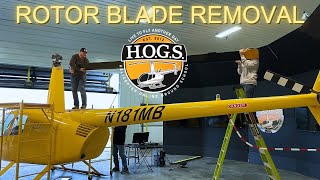
Kenny Keller describes an R-44 helicopter overspeed caused by skipping steps on the checklist. The rotor blades are being shipped to Tennessee for teardown and inspection, the engine to California for evaluation. Keller emphasizes checklist discipline as the key to preventing similar incidents.
Questions this video answers
Sevier County Choppers (mechanic performed blade removal and packing).
To the California shop that performed the recent overhaul (owner/lessor-preferred shop).
In Tennessee (facility used by Sevier County Choppers).
About two months (could be less or more; holidays may delay).
"R-44 ROTOR BLADES Removed and Sent for TEARDOWN" — uploaded November 21, 2023.
Chapters
Well, looking pretty open here in the Hogs hangar. We missed the R44 already. We're going to share some images with you. Sevier county choppers showed up today and picked up the helicopter. And I'm going to give you a little background with that and share some images. But real quick, we thought we'd give you a quick look at the Hogs Wall of Fame. These are our members rolling through on the Hogs Wall of Fame. The start out digital, I'm sorry, individual pictures. And we filled up seven panels. We've moved it back down to five panels now. Seven panels of pictures. And we ran out of space and we decided, you know what, let's just make this thing digital. So if you don't know, we had a overspeed incident, I guess last week. Yeah. And I've done a couple videos on it. So I've talked about it openly already on YouTube and thought I'd just share some pictures today and show you how it went. The guys from Sevier county choppers showed up today. They come up with a flatbed and they got a box and a ladder and luckily we had some scaffolding and they show up and their guy gets to work. You remove the rotor blades after you take the rotor blades off. We rolled it outside, called a local rollback truck so that we slide the helicopter onto the rollback and then back the rollback up to the flatbed and go onto the flatbed, which is really kind of cool. Some of you know it. For 10 years before I did helicopters, I ran a towing service. So I had rollbacks and I had small tow trucks and I had big heavy duty wreckers and I towed tractor trailers and went out and rolled them over and cleaned up access, did all that kind of stuff before I got into helicopter. So I know the guys at Glenn's record Service and it was cool to have them come out and help. So bottom line, everything's going good so far. Yes. We had that overspeed incident and I've contacted everybody involved and everybody's been awesome. It's a lease aircraft. The owner of the leasing company's been great. Insurance company's been great. The guys from Sevier county choppers have been great. They showed up, as I said, today, and it's on its way to Tennessee right now. It'll be there tonight. And what's going to happen? They're going to get it to Tennessee, they'll unload it and the engine's gonna come out and the engine's gonna get shipped to California. And the reason for that is the shop that did the overhaul for it. When the aircraft was overhauled this past spring, they're the ones that did the overhaul. So made sense to me to let it go back to the same people that worked on it before. And that's a shop that the owner of the leasing company prefers anyway. So I thought, well, why not? And I chose Sevier County Choppers because they did the overhaul. And I've been really pleased with the aircraft. It's been pretty much flawless. And, you know, this is an unfortunate mistake that I made, not catching something on startup and getting ready to go. And I've done a couple videos on it, and a lot of people have been awesome and saying, hey, you know, at least you fessed up and showed us that, you know, you make mistakes like everybody else. And the one thing people, even though I explained it in detail, people say, well, what exactly happened? I don't really understand. And just to sum it up, we got out of sequence in the checklist. And no, the checklist itself is not the problem, but the problem is that we got out of sequence, and we should have went back further in the checklist to make sure everything was done in a certain manner. And because of us getting out of sequence, I got distracted trying to figure out something. So ultimately, everybody's trying to figure out exactly what happened. What's more important is we got out of sequence. That's what I'm saying. It doesn't matter how many times I replay it through my head. I coulda, shoulda, woulda, and hands down, if I would have stopped when we got out of sequence and said, let's go back now, even if it was clear to the beginning, seems redundant or seems like maybe that's overkill, but we got a sequence, and then we couldn't figure out why the collective wouldn't come up, which it wouldn't come up because we did the hydraulic check, but he didn't turn hydraulics back on. Anyway, we got our sequence on the checklist, and as a cfi, it's my job to make sure the student doesn't advance that throttle. My hand was down there. I didn't catch it. I didn't notice. No, I didn't notice the throttle. Yes, the governor was on. Yes, the hydraulics were off. And again, I play it through my mind a thousand times. Basically, I should have caught it. What I should have done. At some point, I looked up. When I'm trying to figure out why the click didn't want to come up, I looked up and then there's the needles way up, higher than they need to be. All right. It happened because we got a sequence, and I didn't stop and go, all right, let's back up. I tried to fix it and kind of continue on. And. And to me, that's totally the underlying factor in why this overspeed happened. So to the good news of it, I want to share some images with you just to see. It was cool. The guy from Seviera County Choppers, the mechanic was awesome. He showed up prepared. He knew exactly what to do, was super confident in how this was going to play out and what we were going to do. He brought in his tools. He got everything ready. Luckily, we had some scaffolding, and so the scaffolding was really nice. And we didn't get a picture when all four of us were working together because we were all busy. But the mechanic was up on the helicopter pulling the blades apart. And then I had my daughter on one end holding one blade and her boyfriend on the other end holding another blade. And then when the mechanic would hand the root of the blade down to me standing on the ground, then I would just, you know, very carefully help. Either my daughter or boyfriend walked down the ladder. I could move to accommodate them as they climbed down. And then we carried the rotor blades outside and put them in the box that the mechanic from Sevier County Choppers brought with them. You know, built specifically for rotor blades. Went out, packed in the first one, came back, did the repeat with the other. And I chose to let my daughter and her boyfriend get on the ladders so that when the mechanic lowered the root of the blade, he would hand it to me, because I figured if it's going to get dropped, it ought to be me, the one that drops it, and not somebody else. And then we just very carefully again brought him down the ladder, walked him outside and packed him up. And then we had a local robot come out, and we put the aircraft up on the log book. He hooked the hooks from the rollback chains and hooks underneath to the rear cross member. Mechanic held the tail boom down, brought the front skids up, rolled it up onto the rollback. And we had some, oh, you know, some rubber pieces that went at the back of the skid so they wouldn't be dragging the skids themselves on the ground. So you get the aircraft onto the rollback, put the rollback bed back down, back the rollback up to the trailer, slide the rollback bed back just a little bit, angle it down, set it on the bed of the trailer and then with the wheels rolled onto the trailer and then the mechanic spun the helicopter around and wished it on site on both sides to help kind of guide it and make sure that it didn't roll off the trailer. He spun the helicopter 180 degrees and then loaded the rotor blades on, strapped down the helicopter, strapped down the rotor blade box and his ladder, and he got everything ready to go. And we shook hands and I thanked him for his help, told him I'd make sure I let him know that or let Jim know when I talked to him next. I was super happy with the service, super happy with the gentleman he sent up here. He was super confident and he made it look easy. He made that whole thing look easy. And with it being an unfortunate event, I've mentioned in the past video, everybody's been great. Yes, I was able to make an insurance claim. Yes, there is an deductible on that. So I am going to be, you know, spend a little money on my pocket, but in the end it's worth it. And here's the point why I continue to tell the story. I thought it was super interesting to actually, I understand helicopters get loaded on trailers. And I hauled once, I hauled one once myself with a buddy. We hold a helicopter on a trailer. But it was cool to see how they do it, how they show up. You know, when I did it, we were just a couple of yin yangs trying to figure out how to make it work and get it done. And we did it. But it was a lot of screwing around. These guys, or this one mechanic in particular, had the right equipment, had the right truck. He had the knowledge, he had the confidence, knew exactly what to do with the aircraft. And it went pretty seamless. So I thought it would be interesting just to share this with you on what you do when something bad like this happens and you're not able to fly the aircraft. You call up your ace mechanics and you arrange for the transportation and you put it on a truck and away it goes. People, of course, have been asking, well, what are they going to do? So they going to pull the engine out once it gets there? Pull the engine out. I think I already mentioned it's good. Engine is going to go to California because that's the gentleman that did the rebuild is in California. And that's where the owner of all these, the leasing company, he likes that engine shop. So engines go into California. There in Tennessee, they will do the rotor blade inspection, inspect the drive system, get the engine back together, or when it comes back, engine will get Shipped back to Tennessee. They'll assemble the whole thing and they'll go out and they'll test fly it, make sure it's good to go. They'll test the track on it. And when it's all said and done and ready to go back, then I guess I'll be heading down to Tennessee to pick it up and bring it back home. People say, well, how long is it going to take? Estimated time? Don't really know. I'm expecting a couple months. Could be less, could be more. Depends on what they find. Right. Hopefully they won't find a lot of problems. Depends on how long it takes to work. How long does the engine take to get done in California, get on a truck, get sent back. Holidays are coming up. We got Thanksgiving, we got Christmas. That's probably going to throw a wrench in things a little bit. So I'm figuring two months. And again, it could be more, could be less, might go faster. They assured me they would get after as quick as they could, and I'm sure that they will. And they asked the, you know, they're going to ask the engine guy if he can, you know, kind of push this thing through a little bit for me. But, you know, the process is what it is and I just have to be patient and wait for the phone call and, and handle any paperwork that comes along. Insurance company did contact me today and said, hey, your claims approved and you know, we'll work through the process together. And they've been great. And Ford, unfortunate, an unfortunate event. The outcome is pretty good and I. I've had my head. Head held up pretty high and been able to get. Keep smiling. And today, again, for being an unfortunate event, it was really interesting to see the process of someone showing up prepared to get ready and just. It went pretty smooth. And again, I can't thank Sevier county choppers enough for their help, along with the owner, the lease company, the insurance company. Everybody's been wonderful. And we had a good time of day when it was cold and rainy out and kind of ugly day. But the idea itself of preparing the helicopter, seeing how he loads the blades in the box, watching him take it apart. And again, you know, we had the scaffolding, we had the ladders. It went really, really smooth. So it was interesting to see. It was interesting. Go out, see the thing getting loaded on the trailer. And you know, it's a learning experience for, for all of us. And I'll reiterate, this is why we have a checklist and this is why we should work through that checklist, step by step all the way through. And if you run into a problem during that checklist, you need to back up. So again, I'm admitting my fault of where we should have just stopped and I should have went back and I could explain to you and I have in the past videos, and people still get confused by it. All I can say is I wasn't 100%. I was trying to be. We were going slow. We were being deliberate. We were being very careful. We did ground school before each flight. We discussed the collective. The collective lock, the governor, the throttle. We discussed how all these things work. And this was his third lesson. So it was new. But. But with new people, you can be nervous and anybody can be nervous on any given day, doesn't matter. You have three hours or 300 hours or 3,000 hours. And we just got jumbled up on the sequence of things along the lines of the hydraulic check, checking everything, RPM check. And again, the throttle had to get advanced. I'm sure I didn't do it. Most likely this student, maybe he doesn't even know that he did it. I never even specifically said, did you roll that throttle on? It just happened as I'm distracted trying to figure out what's going on. When the collector didn't want to come up, I look up and it's already up and it's too high. And it doesn't matter how long it was up when I explained it to Jim at Sevier county. Goes, doesn't matter how long it was there because it's high. The way you're explaining it, as far as it went, thought, that's inspection. That's an inspection of the engine, inspection of the drive system, inspection of the rotor blades. There's no way around it. So it doesn't matter. You went high enough, doesn't matter how long you were there. So I want to just caution new CFIs and those of us that have been doing it a while, we can just never, you know, get complacent. And we have to stick to those checklists. And I can tell you, I know in the professional environment, and I can tell you in ems, there's guys that don't use a checklist because they think it's faster and better to get the speed to get off the ground. And even though our company didn't want them doing that, there were guys that did it. There's a lot of guys in other, other environments too. And I've seen it. People don't use a checklist. I get it when you, you do something repeatedly, over and over and over. But, you know, I even tried it when I was younger and tried to fall in line with the other EMS guys, and I tried learning the flow like they did. But, you know what? When I did it without the checklist, I would forget something. And so not only is there a reason for the checklist, there's a reason to go through it step by step, and there's a reason to back up if something happens along the route of getting through that checklist. I highly encourage you to back up. And then, of course, guarding the throttle. We all know that. And I. This is what's weird is, you know, I harp and harp about the throttle all the time. I harp about the collective. The collective lock, having a good method for everything you do and we do. And something that I've been seeing this year is there's a lot of people that come in here. They've been flying somewhere else in the country in this rush, rush, rush. And they go on. They're. Well, the flight school makes me do that. I don't understand the rush, rush, rush. You know, you should take your time. And we were taking our time, but we still got a sequence. And instead of backing up, I proceeded on. And I didn't catch the throttle getting advanced. Yes, the governor was on, but the governor's not going to control it if you overpower it. So that's. That's the vicinity of where it happened and why it happened in the end. Does it really matter? No, it doesn't, because what matters is we got out of sequence. I didn't back up in the checklist. And then what? I didn't waste. Catch the engine sound or the RPM sound, and I didn't catch the throttle being twisted. I can't tell you exactly why. I'm just saying it can happen. I thought everything was going fine, and before you know it, it only takes a few seconds, right? Only takes a few seconds to just look away, be distracted. Whatever happens, looking at your telephone, whatever the case is, this is why we got to be slow, smooth, and deliberate with these checklists. And if you make a mess or screw something up during that startup, just stop. You know, Makes me think of an ems. They said if something's going kind of sideways, somebody in the aircraft should just go, all right, stop. Everybody stop. You know, this is ridiculous, you know, kind of thinking about that, right? In this environment of we get out of sequence, we try to kind of fix it without going back. I should just went, that's it. All right, let's Just, you know what? If we're truly not in a hurry, let's just stop, let's shut the engine down, let's talk about what we did and let's start over and let's work through that checklist. You know, when I think about it, why not? Yeah, it's time consuming and kind of annoying, but his third flight, he was struggling a little bit and that's okay, nothing wrong with that. And we did sit and talk and I said, you know, hey, one good thing to do is when you have time, nothing's going on, jump in the helicopter and sit there and practice with the checklist and go through it. And we even talked about, you know, how I wanted to get him a knee board with a strap on it so we could, you know, work through a checklist nice and slow. We discussed that, we talked about those things. So ultimately would have been smart just to go, you know what, we're struggling here. You're having trouble moving through there. Let's shut it down, let's go get the knee board, let's put that thing on, let's talk through that checkers. And then let's start again and let's just go through it step by step and do it right versus getting out of sequence and just trying to fix things without backing up. So let you let us know below, Give us a like and subscribe if you want to follow along. I'm sure we'll do some more videos between now and the time that the aircraft comes back back. We know it's going to take a little bit and occasionally we'll just do a fresh video to let you know where we're at and we'll, you know, try to document as much as we can of the overspeed incident and the repair getting back in service. And if you're new to these videos or new to helicopters and just happen to be watching a lot of people right, in the general public, like I'm talking to somebody and they'll go, oh my gosh, well, why would you have to tear it down if it doesn't seem like anything's wrong with it? If you don't understand, rated pilots already get this. If they, if you're a pilot, you've already been training, you'll understand this. This has already been explained to you at your flight school. The problem is with that overspeed, something could have been damaged inside the engine, something could be damaged in the rotor system, something could be damaged in the drive system. And the aircraft appears fine, runs okay, seems fine. But because a Part has been fatigued tomorrow, next month, next year, two years from now, five years from now, one of those parts could fail. And that's most likely going to be somebody else's flying the aircraft or if I still had it and somebody soloing or doing a rental or even if I, you know, aircraft leaves me and go somewhere else, somebody down the line is going to have to put up with a failure from a component that happened while the aircraft was in my possession. And that's why it's important in flight training. Again, if you're new to this stuff, that's why we talk about with limitations, you keep track of what you went over. You know, what limitation did you exceed, how long did you exceed it, what were you doing when it happened and then what did you do to correct that? So it's very important to any limitation that we exceed, keep track of what we did and report to maintenance as soon as possible. And again, I knew it was going to be expensive. I knew this was going to be some headache and heartache. But I just made the phone call after we shut down and fessed up to what I did because I could have tried to hide it. And I'm sure that there's people on this planet that have tried to hire hide in overspeed and maybe nothing ever happens or maybe that aircraft, you know, people wonder all the time about helicopters wrecking and crashing and things happening. How many times did an accident happen because of fart, because a failure happened due to something that was damaged on a previous flight? Again, whether it's a day, a month, a week, two years, five years, 10 years, something in the past was damaged and then just finally decides to let go. I don't want to live like that. You know, if I would have chose to try to hide it, oh, and just go, well, it'll be okay. We were on the ground, we were flat pitch. It was just, you know, probably wasn't there long. I'll be okay, It'd be fine. I would think about that every day and I would think about it every time I pre flighted that aircraft and every time I went to fly it, I would think about it and there's no way I could deal with the stress of that. Just couldn't do it. It's not worth it. And I knew making the phone calls, you know, nobody gave me a hard time and I'm happy about that. But somebody certainly could have and especially the, you know, owner of the aircraft, well, why'd you let that happen? But he didn't do that he said, hey, mistakes happen. You know, you did the right thing. Let's figure out what we got to do to move forward. That's basically the bottom line, right? It's like do the right thing. And yeah, it's going to be costly. And as a renter or a student, whatever the case is, maybe my videos I hope will help somebody along the way fess up where they thought about just going, well, if I don't tell anybody, nobody will know. Maybe they'll just go, you know what? That's the right thing to do. I'm just going to walk in right now and I know it's going to be expensive and maybe they'll, you know, who knows that the consequences will be for fessing up. So encourage you to do that. You're seeing exceed a limitation, have an overspeed. Just keep track of it the best you can and notify your mechanic, your flight instructor, the flight school, the owner of the aircraft, whoever you need to contact to let them know that something's happened is what you need to do. So hey, that's the story for now and we'll update you when there's more. So leave us a comment down below and click that old subscribe button and a like and come back and hear what's process in the next video. Peace out.
When you feel the pressure to fly, but know the right decision is to stay on the ground, hit the hogs no go and live to fly another day. Helicopterground.com.










