Refreshing Helicopter Flight Maneuvers For Flight Review / Rusty Pilot
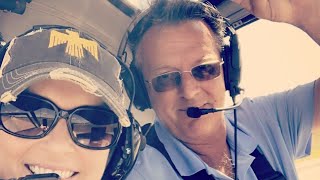
Kenny Keller (HelicopterGround) presents a live instructional video for rated pilots to refresh skills for flight reviews or after a period of inactivity. He demonstrates and narrates preflight and startup checks, two‑step pickups, hover taxi, normal/steep/shallow approaches, running/slide landings, max takeoffs with obstacle planning, quick stops, autorotations (including 180° autos and hover‑to‑ground entries), set‑downs, and basic hover work. He stresses good setup, conservative go‑around decisions, timing in autorotations, and when to train with a CFI. The livestream closes with Q&A, merch (no‑go buttons, masks), and membership/course promotion (coupon KK25OFF).
Chapters
All right, we should be live. Kenny with helicopter land ground school. We're gonna get to the video. We just went out in the instrument, shot a new video for you. We're gonna get to that in just a minute. Two members, we're gonna put up the first picture for Josh. Josh said, hey. Hi. Kenny had the private checkride today. Thunderstorms moved in and couldn't do the flight. But oral is done went super well thanks to hogs and the amazing CFI I have. Your checkride tips were huge. Example, I had to make sure I had current sectional and reference materials. The examiner made a point to thank me because she had has had a lot of candidates come in with old materials. Anyway, just wanted to say thanks and let you know how the flight goes. And then just a few days later, private pilot checkride success. Thanks for all your help on instrument next week. Take care. So that was Josh, so can you. Congratulations, Josh. That's awesome. And that's the point we make all the time about having everything ready the day of having it ready three weeks ahead of time. Then the next picture we're going to share with you is Glenn Roberts. Glenn said, heather, I use the instrument and commercial courses to review my heli ATP add on in the EC135 SIM at flight safety in Dallas worked great for review. I used the instrument review because remember we have instrument specific information inside helicopter one ground school to get ready to start teaching in my F28C. I'm really enjoying the course material. It's great for review anytime. Anytime I have a minute to spend. It's always reminding me of things I learned when I started but maybe have not thought about in a while. Keep up the great work. Glenn Roberts. That's awesome. So what we're going to do is we're going to roll a video for you now. We just shot today. Heather jumped in with me. We went out and just ran through most of the basic private pilot maneuvers. So we're going to share you with that as soon as I mention we have a new course that's down below Flight review Rusty pilot. That's what this video is about. Helping people refresh their their knowledge, getting ready for a flight review or if they haven't flown in a while. And also today went out did a flight to just kind of help you refresh if you haven't flown in a while. Some of the basic things that you remember because the basics is what's important. What we learned back day one private pilot are the things you should be carrying with you. Through your whole career. So go down below to check out that new course or our private commercial CFI or instrument courses. Those are all down as well below. All right, let's roll that video for you, and then we'll see you at the end.
Hey, it's Kenny with helicopter airline golf school. We're gonna go out and just do something kind of fun today. Gonna make a video for our flight review rusty pilot course. And I'm just going to go out and fly all the maneuvers, Basically go back and do everything that a private pilot does for a checkride. And that's what I usually do if I haven't flown for a while. You know, example, over the years after my helicopter accident, I didn't fly for a few months. So anytime I went through one of those stages where I didn't fly for a little while, either I've flown with a cfi or if I want to just review myself, Just go out and go through all the private pilot maneuvers and just get yourself back up to speed. I've done a complete pre flight. I've done a startup with the checklist and all the things that, you know, you should do as a rated pilot. Again, this video is for rated pilots. And so we're just going to talk through this stuff. So anytime that you haven't flown in a while, you know everybody's case is going to be different. If it's been a real long time, you probably ought to go out with a cfi. If it's only been a short amount of time and you feel like you're safe to go up, you just need to brush up your skills before your flight review, then that's fine. It depends on you, the individual. You as pilot in command got to make that decision. Am I good to go out and refresh myself or should I spend the time and the money to go to hire a cfi? Whether you're a private owner, have somebody come in, or go to a flight school. Again, there's a number of different ways you could be handling this. And everybody's at a different level. Right? Okay, so I got everything warmed up. Like I said, I've done all the buy the book stuff before. We got ready to go by my hanger. So first thing I'm going to do is clear left and right and pre lift off. Check. Warning. Caution lights are out, gauges in the green. All the switches look good. Everything set where it's on, Mags on both. I got my radio frequencies tuned, transponders on. We're all good to go. So the first thing you should remember, hopefully you were taught this. A good pickup should be a two step process. So on this specific model of aircraft, I start at 2500 and just start raising the collective. And I'm going to do that until I get the aircraft to light on the skids, which is step number one. Get the aircraft light in the skids, pause, neutralize all movements. Step number two is to gently lift it up. You're going to see a little instrument bounce. That's normal. I'll check left and right again, make sure I'm clear. Okay. Everything's where I like it. The nose is staying straight. Feels pretty good. Cyclic feels good. I'm just going to raise the collective as step number two and just raise it up. Get out away from my hangar. Clear left and right again. And I'm going to hover out here, just get clear of obstacles. So right now I'm kind of doing a hover taxi pre takeoff check I guess you'd call it. As I'm hovering out here to get to a nice open area looking what are the temperatures and pressures doing? How's everything looking? Okay. Now again, this particular aircraft, I'm going to set it down and it's allow we can lean this aircraft. Depending on what you're flying, you may not be able to do that. So I'm going to set it down. Once I get it down on the ground, I'm going to lock my collective, roll back the rod a little bit, make sure everything's safe. I could take my hand off in this aircraft because it's got trim motors on it. Some aircraft you can't do that. Collector's locked. Lean it out a little bit. I'm going to mess with the squelch here just a hair. Hopefully that will help take out some of that wind noise. If I keep the aircraft in trim, we won't have a lot of wind noise. We'll see how good a job will I do keeping it in trim. Okay, again as a refresher two step process to lift the aircraft up. I was taught in the beginning, experienced pilots roll these aircraft over from not doing a two good. Step two, a good two step process. So here we go. Step number one, get the aircraft lighting the skids. I got to reach down, release my collective lock. All right, step number one, get the aircraft line of skids. Looking outside, I can see the wind sock directly out in front of me. Looking good, caught up right. Step number two, gently lift it. So now I'm going to do another hover pre Takeoff check. Warning, caution lights are out. Gauge is in the green. Everything's looking good. I'm looking for any aircraft. I'm actually on emergency frequency right now just because the radio traffic is really heavy and I didn't want to get interrupted every five seconds with somebody talking. So I'm looking left and right. Oh, by the way, I'm at a classy airport and it's quiet right now. All the radio traffic was coming from other, other localities. All right, and I'm going to set down again and adjust that squelch. Cuz I know that's annoying, but you know what, we're going out to to reprep our skills, right? Or prep our skills. So take your time when you're going out. There is no rush. I got to set it down again, adjust that squelch a little bit, try to take some of that noise away. So I'm going to set it down, lock the collective again, reach down, let's turn, squelch back a little. Hopefully that will cut out some of that wind noise. And we're going to try this again. Gas dressing up the two step process. So I'm looking around, looking for traffic. I see nobody, nobody in the taxiway, nobody coming or going. Release my collective pre takeoff check or pre lift check. Warning. Caution lights are out, gauges in the green. All my switches are where I wanted them. Got my squelch adjusted, got my mixture done, got my radios where I want them. Taking the time to be prepared is going to make your flight a lot better. I've rushed flights and every time you rush flights it ends up being sloppy.
Right.
It's like the key to a good approach. Either a good approach is a good setup. Let's try this again. Now we're up to hover. Warning, caution lights are out, gauges in the green. And I'm going to just do kind of a modified in between normal and max takeoff. So I go around to the taxiway. So here we go again. Warning, caution light. All the gauges are looking good. Okay, so we're going to go around and the first thing we're going to do is a normal approach. We just did a couple of normal pickups and I always start everything out with a normal approach because I firm believer that everything we do builds off that normal approach. You do the steepest, shallow off of what you know for the normal. And another big one is, in my opinion the key to a nice approach is a good setup. So we're going to go around and I'm going to set us up for 300 AGL from a normal approach. I'm going to start my approach at 60, get my approach angle and then just start flying it down. And remember, the collective controls the angle, the cyclic controls the speed. So I'm going to be turning what we'll call a downwind right now because I'm going to go around and use Taxiway 27, just because that's going to be the best into the wind. So again, key to a nice normal approach is a good setup. So we're 800ft here at Warsaw. So I want at least 500 AGL for my downwind. When I'm going during my base and final, I'm going to. Or during my base. Basically the end of my downwind of my base, I'm going to. But lowering that altitude because I want to be about 300 AGL, that's textbook for setting up your approach. And before I intercept that approach angle, I want to have everything nice and neat where I want it. Because if I take the time to set it up nice, it's going to be nice. If I do it sloppy, the approach is going to be sloppy. I got about 80 on my speed right now, about 1200ft, and I'm going to beam my spot. So I'm just going to start lowering collective just a little bit, adding a little bit of right pedal, start bleeding off a little bit of my speed, little bit by little bit. And then I'm going to make a radio call I like making, just making base and final in one call Warsaw traffic helicopter 26 papa right base turning final landing on the taxiway parallel 27, Warsaw. Okay, so I got my radio call out of the way down about 70 on my speed, losing a little bit of altitude. So Michigan City Traffic Sky Clock 2 Tango Alpha is 5 North Michigan City straight in. I want about 300 AGL and I want it trim. I don't really want much of a rate of descent. So I've got my 1100, starting my turn for final. There's my 1100. So I'm going to pull up a little collective because I don't want to sink any farther yet. About 65 on my airspeed. Line up with my taxiway and we got Heather running the camera. She's got the camera off the front. So that second taxiway is my landing spot. So I'm going to tell you when I intercept my angle or a normal, which is 10 degrees, there's my normal angle. So I'm going to start a little bit of aft cyclic a Little bit of right pedal and I'm just going to work this angle all the way down. Not paying that much attention to the instruments. I'm just going to glance in and look at them. But I'm doing this by fill. It should look as though I'm always approaching that intersection at the same speed and from where my eyes are at, my eyes are going right through the center of the compass right down to my spot. Now, depending on who you are, how tall you are, how long your back is, you know, your sight picture can vary differently for that 10 degrees. So I'm just using what's right for me, but still showing 40 on my airspeed. Even though, you know, my ground speed is probably almost Nothing. I'm about 200ft per minute, so no problem. I can get slow now. I don't even have to worry about vortex ring state slowing, more power, hard for me to stay vortex ring state. Just by nature, I still want to stay, settling with power and down to a hover. I'm pretty happy with that for my first normal approach. Just going out and freshening things up. Sometimes you'd be amazed at how quick everything comes back to you. So I'm going to clear the till left and I'm going to make a right hand turn at a Class G airsport. So it's nice to do a nice 360 turn, look for traffic on the taxiway, the Runway, look on downwind, looking around the pattern, don't see anybody. All right, so I'm going to turn back around and I'm going to do a hover pre takeoff check, which all of you should be doing every single time you take off. So warning caution lights are out, gauges in the green. Everything's looking really good. So it's a hot day, we're 800ft at Warsaw, but I checked the weather and it's 2,500ft density altitude. So we're operating this level, we're at 2,500ft. That's a hot day in the summer. 82 degrees, two of us on board, decent load of fuel. So I'm just going to start slow, build my speed. There comes ETL already because of the wind push through that ETL around 30, 35. I'm going to start my climb, which is where I'm at right now. This particular aircraft, I can leave that collective right where it's at and it will give me 60 and my 500ft per minute climb. We're going to call that about 50ft there. So I'm going To trim into the wind, which I basically already was and now repressure textbook is climb to 300 AGL before you start your turn. We're going to do right traffic because we're helicopter airplanes, most generally do left, we do right unless there's some other circumstance causing you to do something different. But that's the general rule. So a good general rule is to climb to 300 AGL before you start your turn. We even used that flying in helicopter ems. That was our rule. Didn't matter what kind of flight you were doing. Climb to 300 AGL before you start your turn. So I have my 300 AGL, I'm gonna start a right hand turn, but I'm also looking left and right, clearing the area. I'm gonna climb on up to my intended altitude for downwind, which would be 500 AGL, would be 1300 MSL. All right, so everything's looking good. I'm gonna go ahead and do kind of a downwind check now as I'm turning downwind. Morning caution lights are out, everything's green. Looking good. About 50ft away from my target altitude about 65 at my airspeed. All looking good. So I'm going to level out here for downwind. Make a radio call, get that out of the way. Warsaw traffic, helicopter 26 papa right downwind, landing the taxiway, parallel 27. Warsaw. Okay, this time I'm going to fly a steep approach. What I do for steep, I set it up basically the same way that I set up the normal approach. Do you do a good steep approach, good setup, like every other maneuver. I'm going to do the same thing again. Get everything ready. I want about 60 when I start. I want 300 AGL, I want it in trim. No big high rated descent or climb either way. So I'm going to start descending. I'm lowering collective, I'm adding right pedal. I'm going half cyclic. Then I look for that 300 AGL again. And for the steep, I'll just go a little bit farther before I start coming down, if that makes sense to you. A lot of people struggle with sight picture and if you struggle with sight picture, it's very hard to make these approaches come out the way you like them or the way you want them to. Okay, so I've got my 300 AGL, got 65 on the airspeed. I'm turning final. So I'm liking it. I got my trim a hair ready descent. I'll pull up a little collective to get rid of that. I got what I want, I got 60, I got 300 AGL. I'm in trim and we're zero, ready to send. But now I'm just going to hold this. And as soon as I intercept my angle, that looks like a steep approach to me, 15 degrees, I'm going to start it down. And always remember it's the same thing at the beginning in a counterclockwise system. Down collective right pedal ab cyclic. So I'm still waiting. There's my normal sight picture. I'm going to go a little farther, a little farther. And now I'm going to start my approach. So I'm going to go down collective right pedal half cyclic. Collective controls the angle, cyclic controls the speed. So my sight picture is a little steeper. Now my spot's between the compass and the top of my dash. Again every person is different and depending on your aircraft and your size. And I just want to keep slowing this thing down. Slow by slow. I have a high rate of descent about 500ft per minute. But I still got 30 on my airspeed. So I'm going to keep pulling that collective in and I'll have that rate of descent below 300 before I let that airspeed drop off. There I'm at 300ft per minute and now it's coming towards 200. Let the airspeed drop down and there's my spot. I like that one. And always remember, if you set the approach up and it's crappy, just go around, set it up again. You set it up sloppy. It's going to be sloppy. I'm going to clear my towel left again. I make a right hand turn again. Looking outside, looking for traffic, see what's going on and then we'll go around and we'll do a shallow approach and running landing. Alright, so warning caution lights are out, gauges in the green. Everything's looking good. Going to do another normal take up but I'm going to do this with even less power. I'm going to get closer to the ground and just pretend that I'm full of fuel and like I got no power to pull at all. So I'm not going to add any collector. We're just going to keep it close to the ground, keep my nose on or my feet on top of the pedals to keep the nose straight and just keep it close to the ground for ground effect. There comes ZTL boom. There's my climb speed 35 so I can start climbing up. I can just hold that power setting and that will give me 60 and 500 because as we get more efficient with the rotor system, that same power will do more for you. Okay, so there's a couple of your basic Prado pilot maneuvers. Normal approach, deep approach, we'll go around to a shallow approach. Now, depending on how you were taught, you might do a very short running landing. You might skid a quarter of a mile down the taxiway or Runway, if that's the way you're taught. You know, if you would ever have to use this running landing in a real life situation where you had a loss of power or you lost a turbocharger, you're high altitude, whatever the case is, you're going to do whatever it takes to get the aircraft safely on the ground. Maybe just a short slide is going to be enough. Maybe you'll need that longer slide. So another one of those that's not absolute. It depends on what you're doing, where you're flying. Now, because this helicopter is a cream puff, belongs to my good friend the doctor. I don't make great big long sliding running landings because it just grinds down those pads on the bottom of the skids. So there's just no reason for it for me at this point. But we're still going to talk you through the maneuver and I'm still going to do a little bit of a ground slide. It's just not going to crazy. So how am I gonna set this one up? Basically the same thing as what I've been doing for the setup. I'm just gonna enter it a little sooner than I would for the normal because I have everything set up before I intercept the angle. So I can use the same method which I'm beaming my spot now. So I'm gonna go down collective, I'm gonna go right pedal, I'm gonna go lap cyclical, start slowing down. And remember, you're always going to do those same three things in a counterclockwise system. Down collective, right pedal, half cyclic or 99% of the time anyway. There might be a reason at some point do something different, but. All right, so I'm going to set up for my base and final. I'm losing that altitude again. I want my 300 AGL, I want 60 on my airspeed, I want it in trim and I want zero radi descent. Is it going to be perfect every time you set it up? No, but I'm shooting for it to be perfect. Every setup at least have it close to where I want it. Alright, so we're coming around for final again. My setup is not going to be Much different than the last two approaches I did. I have what I want. I got 300 AGL. I have 60 on the airspeed, very small rate of descent. So I'm going to level it out. Pull a hair collective. So I have no more descent, and I've already intercepted my angle about where my compass attaches with the windshield. So I'm going to go down collective right pedal, half cyclic, and I'm just going to do whatever it takes to make it look like I'm approaching those numbers at the same speed. Some people try to fly by numbers all the way down. And to me, it's a lot easier just to say, you know what, we're going to gradually slow this thing down the whole time we're coming in. So if, if you're starting at 60 and you're 0 by the time you're done, that means you're gradually slowing it down bit by bit all the way through the approach. Some people don't teach it that way. That's the way I was trained. That's the way I've done it, and it's worked out well for me. All right, so my angle is still nice. I'm controlling the angle with the collective, controlling the speed with the cyclic. I'm using my pedals to keep it in trim, and I'm in no rush to get it on the ground. So my spot's coming up. I'm just going to let it keep creeping down. And you got to remember, once you touch, keep the nose straight by staying on top of the pedals, let it come down real nice and easy, and just stay on top of your rpm. Depending on what you're flying, you might have a governor. You might be doing it manually like I'm doing it, whatever the case. So here we go. My nose is straight. I'm just going to ease it on down to the ground, and we're going to slide just a little bit. So coming down, coming down, coming down. Keeping my RPM up. There's ground contact, there's my slide, and I'm braking with the collective. And there is your shallow approach and running landing and your little bit of instrument bounce. Heather's over there grinning over the bounce. All right, remember, two step pickup. Get light on the skids, pause, neutralize. When everything is ready to go, you gently lift the aircraft up into the air. So we're going to lift up, we're going to do a hover pre takeoff check location November 4200 kilo. And I'm going to do one more clearing turn. This time I'm going to do a left hand turn till clear right, checking the traffic pattern, see what's going on. I'll do another glance at my gauges when I get turned around here. And I can't stress enough covert pre takeoff check every single time. So let's do it again. Warning, caution lights are out, gauges in the green. My switches are on back over. 2632, is that for 4200 kilo bags around both? Everything looks good. That's what I'm gonna do. Thank you. Let's do a max takeoff. So everything's looking good. I'm gonna start pulling the power at my 40 knot attitude, climbing up to just below the max setting. And I'm going to say I got an obstacle about 100ft tall. I'm almost clear. All right, let's say I'm clearing my obstacle now. I'm going to get my airspeed moving before I reduce my power that way. I've cleared my obstacle, I've got airspeed. I got 60, the minimum I want for an engine failure. Now when I change the power, I'm going to lower it 4200 kilo. Can you confirm it's 2632 now lower the power now by the engine failure, I can deal with it because I got 75 mile an hour. I got a couple hundred feet of altitude. I could deal with this if the engine quit. All right, so there was normal, shallow, steep running landing. Hopefully I'm helping you refresh some of the memory on some of these things. So let's go around and do a straight and outer rotation because that's what everybody wants to talk about, right? It's the fun part. We love it. We like doing them. So for Australian Auto, I'm going to tell you the same thing I've been telling you for every other maneuver. Good setup is key. If you set it up nice, it's going to be nice. Set it up sloppy, it's going to be sloppy. And the argument is every time we'll see if we get it on this video. Well, but a good setup is not realistic because an engine failure in real life's not. You're not going to be set up well. Yeah, you're right. And that's why you should go practice engine failures. Okay, we got them on 26, 32. Thank you so much. That's why you should go practice engine failures in more of a real world environment. But when you're going for checkrides or in this case going for maybe a flight Review. You need to fly to a standard. So the way to pull off a maneuver and do well at it, you want to have a good setup. So for all of you that want to argue, well, that's not realistic. Well, you know what, you can go jump in the, in the lake and cool yourself off because you got to train to a standard. Okay, so we're going to come around. I'm going to keep about 70, 75 on my airspeed. I'm going to keep it at 500 AGL. I want to be in trim. I want zero rated ascent. I want everything to look good and feel good before I enter. And if I screw it up, I'm going to go around and do it again. If it feels good, honor it. So I'm on my base getting ready to turn on my final, and everything's looking good. I'm going to pull up a little collective because I dropped below my 500 just a hair and I have it ready to set. So I want to get rid of that. So I'm pulling. There we go. Pulled the collective up, got my 500 AGL, got my 65, 70 on my Airspeed and now I can just start getting ready. So I'm going to go to the same spot I've been going to. I'm just going to count it off and I'm going to. And I'm going to do it. If you're comfortable doing them, great. If you're not, go get what CF. Get with a CFI. Go do it with a CFI. If you're not 100% comfortable, there's no reason to crack up the aircraft. Okay, so my spots coming up. We got some wind today, so I'm going to wait till it's almost to the. Touching the. Oh, the thing on the chin bubble that where the bottom of the windshield meets. I'm gonna go 1, 2, 3, enter. Collective down, right pedal. A little bit of aft cyclic. All right, good. Got a nice entry and a little more right pedal. Now I'm just gonna keep this 60. Hold everything, hold everything. I can see treetop level. Just below treetop. I'm gonna start a gentle flare. Make it a bigger flare. Bigger flare, bigger flare, bigger flare. Now I'm gonna roll in the power, level it out and bring everything back together. Not too bad. You know, the flare is something you can discuss all day long right here. I didn't need a big flare if I had a real engine failure and I was trying to go to a small parking lot that a flare would have to be really aggressive. All right, so let's do what we do. Left toe clear left, right pedal turn left. And if you're not doing those, I think you should. And I've heard students that. Oh, they got their rating. Oh, well, I'm not with Kenny anymore. I'm not doing all that tail clearing business. Well, that's pretty dangerous attitude when it comes and I hear about it later, right? And then I hear about people going out and wrecking aircraft. Well, guess what? They turn their tails into stuff. They hit things because they don't do proper clearing turns. Should be clearing that tail every single time. So warning, caution lights are out. Gauges in the green. We're going to do in between. I'm kind of modified here between normal and max because I want to get on the roll. And we're going to go do a 180 auto. You know what? First let's do a quick stop. I should have done those before the straight in. So let's do a quick stop. Get rolling along here. And let's go. 1, 2, 3, quick stop, quick stops. I'm going to go down collective right pedal aft cyclic. Keeping the nose straight, keeping my altitude level. Keep holding, keep holding, keep holding, keep holding, keep holding. Then right about there, it's about to drop. I'm going to level it out. I'm going to raise collective. I'm going to adjust pedals, and I'm going to adjust every throttle. Everything is necessary. And let's do another one. There's a million ways of teaching these, a million ways to do it. I'm showing you how I do it. You can have a mini one like right here. Go. Oh, quick stop. Somebody pull down in front of me. Doesn't have to be real aggressive. It can be a little slower like this. Just because you need to quickly decelerate the helicopter, level it out back to hover. And I like to use 40 and 40. 40ft and 40 mile an hour. But you can use more, you can use less. You can do them at any airspeed, any altitude. So we're going to do one more. We're going to do one that's more aggressive. Warning, caution lights out, Gauges in the green. This is going to feel more like the flare in the auto. So we're going to get some decent speed. Gonna follow taxiway here. I want to go a little more aggressive here. 1, 2, 3. Quick stop. Down collective, right pedal appside. Look. I'm adjusting the throttle, adjusting my pedals. Keep flaring, keep flaring, keep flaring, keep flaring Keep flaring, keep flaring. I'm waiting till it's about ready to drop and then I'm going to level it out, raise my collective, adjust my pedals and get back down to hover. Alright, I like those. Those are pretty decent. So warning caution light gauges in the green. We're gonna get on a roll here and I think I'm gonna go around here and set up for a 180. But I can guarantee you 100%, if I don't like it, I'm gonna go around and set up again. Let's do a quick 180. And I'm making this tight to make steer clear of the north south Runway. So I'm gonna kind of maybe purposely make this 180 not work out to where I just circle around because I know about where I want to be. So I'm pulling quite a bit of power to try to get where I want to be and get the airspeed and altitude that I want to perform the 180. And I'm really rushing to try to get everything where I want the altitude, I want the airspeed. So this even may be a legitimate go around. Okay, I got my airspeed almost at my altitude, but I got a great big climb going, pulling a bunch of power. So I'm going to say, you know what, I'm close to my entry point and I'm just not 100%. I'm going to do a 180 turn here to the left. So as I'm doing this 180 turn, I could take a big deep breath and go, okay, let's get everything fixed to where I want it. I want 500 AGL. So I'm going to get that. My rpm's a hair low. I'm going to fix that. My trim, I need a little left pedal. Airspeed's about 75, so that's good. I can do a little check here. You know, warning caution, lights out, gauges in the green, make sure everything looking good before I practice an auto so it doesn't turn into a real auto. Heather, are you enjoying the auto rotations? Are you enjoying the auto rotations?
Yes.
All right, good. Enjoying it all. All right. So I can't stress enough on these 180s. This is the one. And I've told this story in the past and you'll hear about it inside helicopter line ground school. Well, it's a brand new CFI. I almost lost my life in a 180 auto. And I was with the weekend warrior private pilot that owned the flight school had a couple hundred hours, and I trusted that he could handle it, and he blew it. And luckily my training kicked in and it scared the hell out of me. But then I saved it, and I almost quit. I was a brand new cfi and I almost quit. And I went back and talked to the examiner about it, and he talked me through it, and he said, well, now you've had your scare. Don't let it happen again. Never, never believe the guy next to you is any better than. And he talked me through it, and I worked my way through it. And thank God, 20 years later, I'm still doing it, but I almost quit. All right, I gotta get ready here. I got 70. I got 500 AGL, a little right pedal for trim. I'm gonna get everything ready. That's looking good. And now I got time to breathe and relax and I can start counting before I get to my spot so I can enter on my spot. So I see my spot coming up. We're going to the same taxiway. I'm gonna go 1, 2, 3, enter corrective down, right pedal, roll off a little bit of throttle, start my turn. Here we go. Okay, I got 60. RPMs building a little bit, so I'm raising a hair collective. That'll happen to you almost every single time. Still got my 60. Gonna be a little short, but that's okay. It might work out. Still got 60. There's treetops that are the gentle flare. Make it a bigger flare, and I'm going to roll in power. I come out a little high there, but that's okay. I didn't wreck the aircraft. Right. So I still ended up in my spot. So there you go. So there's a 180. All right. What else about. You want to practice again? Use your best judgment for your skill level. If you're. If you're okay doing these on your own, great. Depending on insurance, depending on where you're at, this may not be something that's allowed. You may not be allowed to do engine failures. You know, I see an airplane or Runway, so I'm gonna get rolling here. Let's go do something else. I was gonna do a hoverado, but you know what? Let's get out of his way. What have we done? What have we not done about hoverado? We haven't done the simple hovering stuff, but you're a rated pilot, you know, but don't go out there and don't be afraid to just go back to basics and do hover left, hover Right. Hovering around a point. Have you done that? Has anybody taught you? Hovering around a point, That's a great exercise when your skills are up to par. But just take your time with this stuff. Don't get in any big rush. Auto rotations. I don't recommend private pilots go out and do auto rotations on their own. Now, if you're a private pilot owner and your insurance company is okay with it, you know, more power to you, I guess, if you're comfortable doing them. I'm gonna come back down here. The taxiway. Since we got out of that guy's way, we're gonna do a hoverado. So the key to a hoverado, there's two keys I think of right away. One, of course, is what I keep preaching about, and that's a good setup. The next one is going to be timing. To me, this maneuver is not that difficult. It is when you're trying to learn it, and it's difficult if you screw up the timing. So what I do is get a nice stabilized hover going, reposition my hand on the throttle, and I count, one, two, three, enter. When I say enter, I'm going to simultaneously roll off throttle and add right pedal. I'm going to pause, and then I'm going to raise the collective and then put the collective back down. So here we go. In 1, 2, 3, enter. Throttle off, right pedal, pause onto the ground we go and collect it back down again. Depending on your skill level, I highly, highly, highly recommend you do those with a cfi. If you own the aircraft, then your insurance allows it, and it's your choice. That's up to you. You know what, let's talk about a set down. You know, let's not forget the basics. Let's throw a set down here before we wrap this video. Now, remember to look outside, just like on the pickups. Set down, same thing. If you look at the ground, you're staring at the ground. That's going to screw you up. You want to be looking outside. And remember, there's an air cushion about 6 inches. Just start lowering the collective. I'm going to do that. Now I'm lowering down. I'm lowering down, keeping my feet on top of the pedals right about. There's my air cushion. Now I got to give that collective a small push to make it go on down to the pavement and collective all the way down. I also use a little bit of tiny bit of forward movement with those, and that's because I struggled in the beginning with set downs and an instructor Said, here, try this. A little bit of forward movement. And I liked it. And I've always maintained that. Now I've had people say, well, why do you always do that? I find it a little bit easier. And let's do that. I find it a little bit easier. If you have the space just as you're coming down, use a little bit of forward movement. Keep coming down, keep coming down, keep coming down. A little bit of forward movement. To me, that makes it a lot easier to set it on the ground. Okay. It's just. That's what I do. It's a method. A lot of people like to go straight up and straight down, but a little bit of that forward movement, that's a good thing. All right, let me get my thoughts together here. Let's go fly around for a second. What else do I want to do? You know, if you're getting yourself ready for a flight review and you were doing it on your own, I'd just go out and do all that stuff. Again, depending on your confidence level, if you weren't confident to do the autos or the insurance won't allow you to do it, then save that stuff for the cfi. I'd just be upfront with the CFI and say, hey, you know, I did go out and I did a little bit of flying and I did approaches and stuff, but I didn't want to do autos on my own, which, again, I just think the more difficult stuff you can work into and there's never any reason to do something in an aircraft that's just not necessary, that you're not comfortable with. The flight review is the flight review. Let's cover that real quick. It's an hour. It's a minimum of an hour flight and a minimum of an hour ground. And if you're good to go, instructor's going to sign you off and you'll be done. If you're lacking in one of those areas, he may say, or she may say, well, you're flying is good, but your ground kind of sucks. We need you to come back, you know, in a week or whatever the case is. But if you're using our new flight review course, hopefully your knowledge will be all up to speed and you're going to be good to go. So quick stops, all that good stuff. All right, well, I think we're going to do one more 180 auto, then we're going to go in and wrap this dude up, because I want to try to roll this live today. So one more time and let's see if I can nail this auto a little bit better. I was a little bit. I wasn't late entering. I entered when I wanted to, but I was lazy starting the turn. And a lot of times that's the problem with people, is if you're too lazy. If you're too lazy starting your turn after entry, it screws up your auto rotation. So I got to get myself a little more altitude here. I want to get myself lined up to where I know what usually works. There's a little red barn out there. I try to fly about over that barn. So I got my altitude, got my airspeed, got me in trim. So this time, I just don't want to delay that turn. When I say enter, I'm going to enter and turn. And people do it all the time. And I did it. Just a common mistake that we all make sometimes. So here we go. In 1, 2, 3, enter. Collective down, right pedal aft cyclic, and start that turn. Don't dally too long like I did last time. Oh, this is better. Much better. All right, keeping that 60 in there. Erase a little bit of collective. Rpm's climbing. I'll start a flare. I kind of screwed this one up. I'm gonna. I'm gonna pull in the power and fly away. Kind of. Kind of a halfway skill around. I just didn't like that ending. I was flaring too high, and I got aggressive, and I didn't like it, so I recovered. So there you go. Do what's safe. Trying to save it at the very end near the ground is not the place to fix it. You know, when we get practicing, like the pull downs, all I do is see if I was somebody, I go, okay, on these pull downs. We're only going to go all the way down if we like it. If we're partially through it and something's off, we're not feeling good about it. Let's recover the power and let's fly away. We only want to take it, get close to the ground if it feels good, and we're ready. If you're trying to fix stuff at the very end, not good. So I gotta go out here and redeem myself. One more, One more, See if we can make this work out. All right. Breathe in and out. Color, you know, we all do it. We get nervous in the helicopter, and we tense up on the controls, the cyclic, the pedals or whatever. And especially for flight review, rusty pilot. I mean, it's very easy to go out there and be nervous, even though you're rated. Doesn't matter whether you got 200 hours or 8,000 hours, and you haven't. It just depends. Every person is different. All right, let's nail this stinking 180, man. I want to end this on a good note. And I want to talk about the rusty pilot just a little bit on our way in about people that haven't flown in years. We'll talk about that on the way in, all right? Get my mind on the task. Gotta do a good one. I don't want to end on a crappy note. Alright, so everything's looking good. I got what I want. Need to be a little closer maybe. And I'm gonna go, 1, 2, 3, enter collective down. Right pedal. Aft cyclic start. My turn. Got my trim. Alright, looking good. I feel better about this one. Yes. Might be a little tighter. Get lined up. Better with the Runway. I like this much better. Much better. We're gonna make this one work. Yes. Yes, yes. Yes. Oh, yeah. That's it. That's it. Flare. Flare. Flare. Flare. Flare. Just over my shot. Just my spot. Just a hair. Not bad. I like it. All right, so we're gonna head in, but I want to talk about those of you that haven't flown in a while. I got a bunch of different scenarios, but instead of boring you with a bunch of stories, here's what I want to tell you. If it's been a year, two years, five years, 10 years, maybe even more, what I've seen is these things, this comes back to you quicker than what you might think. These things that you learned all those years ago. You know, I think the muscle memory is still there for the most part, for most of you. So if you're intimidated because you haven't flown in a long time, I just want to tell you, in the years I've been doing it, when I've helped someone who was, we'll call a rusty pilot, hadn't flown in a while and they came in almost every single time, they were happy with the end result and how quickly things come back to them. So ultimately it's your decision on, you know, how you approach getting back into flying again. Flying again. Of course, if you're legal to fly and insured and you feel comfortable to go out and refresh yourself, if it's only been, you know, a short amount of time, that's one thing. But it's been many years. I highly recommend not just jumping in a helicopter and going, giving it a try, just spend the money, hire a cfi, go to a flight school, get some good quality Instruction and go out and refresh. We're going to shoot an approach back into the hangar. Might as well keep the. Looks like we have enough battery time. Maybe according time we'll just shoot ourselves a steep approach going back into the hangar. So with these steep approaches, if it gets too steep, fly away. I gotta start slowing this thing down out here. And I'm. I'm okay with having high rate ascent farther out when I get near the ground. I don't want that high rate ascent. So I'm bleeding off the. I'm getting rid of the altitude now while my AirSpeed is still at 35. As I get closer then I can start bringing that collective in before I let the airspeed drop off. I'm pulling the collective. I'm almost about 300ft per minute. That's got a nine second lag. I'm pulling a little more Now I'm below 300, about 200. So now I can let that airspeed drop off. No big deal and I don't have to worry about it. So just be so very careful on these steep approaches. Off airport landings, vortex ring state slango power will bite you in the ass too fast. High rate ascent. It'll get you all right. Hope you enjoyed that. Hope that helped. We'll see you in the next video. I barely even stuttered. I couldn't do that and I couldn't do that in the hangar without rubbing something up. Shall I hit in? Yep. Stop that one. And then, and then.
And we're back. Helicopter still outside. Normally when I have the door open that makes me really dark in here. But it looks. I think this looks alright. So let me know if you can hear us. A couple of questions. I just saw Jeff said. Kenny Bryan, what are your thoughts on wearing helmets as a standard thing to do? Is it a good idea? I have a video on helmets where I put my opinion out. They're great if you got the money for them and it's something that you can do. But flight schools, you know, they're struggling to make money the way it is. They're probably. Most flight schools are never gonna be able to find to provide students helmets. They're just too much money. Of course. Helmets a great idea if you want to purchase your own again. Most flight schools aren't going to get you one. I wore 15 years Flying EMS. They're great, but for the type of flying I do, I just choose not to wear one. I like summertime flying. Short sleeve shirt and shorts and a headset. I'm taking my chances. So really up to the individual. Something that you want to spend the money on. Great. Obviously it's going to help protect your head if you ever get into trouble. That's for sure. There was a question earlier from a young man. He said he wanted to be a helicopter pilot. What do I do? Yes, start saving your money. Sign up for a HOGS membership if you're ready. But it's expensive and that's the problem for most people getting a private pilot license. Becoming a helicopter pilot is about the money. And it's going to take a bunch of money, somewhere between 50 to $100,000 to get all the way to sea where you can get out in the world and start working to build your time so you can slowly move up the ladder and you're going to work for peanuts. It's just the reality of it. What else? Was there other big questions? While we're seeing if there's any other questions. Excellent review. Who said that? Thank you for excellent review. Perfect.
Live to fly another day helicopterground.com the.
No go buttons, if you've got one and haven't sent us a picture yet, please do. We have the investment in buying these and the investment in shipping it to you and we do that. When you pass your check ride and you send us your picks, do us a favor and send us the pics of your no go button designed to when you're trying to make that decision, you decide you're not going to go due to weather or some other reason. There's a underlying decision why you know you shouldn't go. You want to go, you need to go. But you know you shouldn't live to fly another day. Make the right decision. Stay on the ground. Highlight Heather's box. This is what she did when she came in today. Heather comes in on Tuesdays. The rest of the week she's home taking your text messages and phone calls at 574-767-1797. Check this out. These are all the no go buttons going out. Matthew Youngerman, Glenn Roberts, who we just highlighted this morning. Dave Faulkner. Dave Faulkner is a CFI out in California. He's going to show this off at his flight school. Dave Faulkner's longtime ground school member, now teaching in a flight school in Southern California. Sending Dave his. Dave was here and did a video with us last summer during coffee with Kenny. What else we got? Heather's gonna be mad. I'm mixing up her packaging. And then Josh, who we showed earlier today. So there's four no go's going out and we're shipping books. We stopped shipping books during the height of the COVID stuff when I wasn't having Heather come in at all. So we are shipping books again, but they're only going out on Tuesday, so no Tuesdays when books and no go buttons will ship. As of this making of this video, that may change over time. Let's see what happens with the world. Let's hope it comes down and things get better. International shipping is taking a long time on anything. So if you're international, know that it's going to take you some time. And that's because of what's going on in the world. Shipping a lot of times is getting delayed. I mean I've ordered stuff and oh, a couple days and then two weeks later I'm getting it. That's a problem. But we got to deal with it for right now. So there's your no gos. There's your books. You can get the books. Top 10 checkride tips. Our site, helicopterground.com which there's a link down below, you can get helicopter checkride. We just send you those books for just shipping and handling. Helicopterground.com below in the description box, that's where you can order the books. That's where you can sign up for private pilot, commercial pilot, instrument pilot, CFI or professional pilot, where you get it all. And I'm gonna throw out my code today. 25% off of any membership. So 25% off the first month of any monthly membership or 25% off the big professional pilot. That's quite a good savings. So if you've been thinking about drilling a helicopter land ground school, you're going the professional pilot route. Usually Michael Ware's in here going buy it. It's a deal. It's a deal. Full price. It's an even better deal with that 25% discount. So all you need is my code. KK25. KK25OFF. You enter that in the coupon box during checkout and that will reveal the discounted price to you. So you'll see exactly how much money you'll save off the first month of any monthly membership or the big professional pilot package. And all of our memberships come with a money day 30 day, no hassle, money back guarantee. That's been in place for eight, almost nine years since we started. We backed that 100%. We don't argue, burden is on us. Provide you the value. You got no reason to sign up. Not sign up. If you're going for a helicopter rating and you're struggling whether you're a beginner, commercial guy, instrument guy, CFI professional pilot, you want a flight review, rusty pilot, jump in and consume that. Course the monthlies are all month to month. You keep as long as you like. You cancel any time, month to month, long as you need it. And the other beauty with helicopter line, ground school with the monthly memberships, keep as long as you like, cancel anytime. You can self cancel or we'll do it for you and you can leave, come back as many times as you need. We always part as friends. And Heather can verify now and Brian can too. We have people that come in, do the private, hey, I'm unsubscribing, got my checkride done but I'll be back. And then you see them come back a couple months later to do the instrument or they come back to the do the commercial and they take a break and then they'll come back again months down the road from the cfi. So this is turned in over the last three years now we've been doing the monthlies, very popular for people to log in. Use what you need for the time you need it, unsubscribe and come back anytime. We always part as friends. We impart as friends with the 30 day, no hassle money back, ironclad guarantee. We don't argue, we just refund. That's it. In the beginning Heather would question that and Brian questioned that. I'm like, whoa, whoa, don't even question me. It's a 30 day, no hassle money back guarantee. There is no arguing. No, we don't try to convince you to stay. We don't try to get all what didn't you like? No 30 day money back, no hassle guarantee, pass your check, writes down the picture, we send you the no go.
To fly another day helicopterground.com do. What do they know about the new masks?
Oh yeah, I haven't mentioned this in a video yet. I did add cloth masks to our gear, our hog Swag and on YouTube they should be highlighted down below this video. You should see them. If you don't see them here on YouTube for whatever reason, you can go to Hogshoodies.com and we know that a lot of places around the country, around the world are requiring mask. I'm not promoting mask. I'm not telling you you should wear a mask. That's your own choice. But if you're going to a flight school and you want something better than the average just cloth mask. We got the black mask with the hogs logo on the Front. We have a lot of fans out there that we appreciate, a lot of members that have stuck with us all these years. And I sure there's a few of the youths that will want to grab one of those masks and put that thing over your ears and show up at your flight school if required. Support Hogs has the HOGS logo on it. I think it even has the web address on the front because don't get confused by the imitator. We are helicopterground.com we got some yo yos out there riding on our coattail that's using as close as they can get to our web links and our name. But make no mistake, there is one helicopter online ground school, LLC. That's us and we are@helopterground.com do us a favor. Subscribe the channel, click the bell so you're notified of our video. Thanks everybody. I need to answer anything else we got here. You can give a shout out to Brandon here. Brandon Lope Silvero. Hopefully I said that right. Just passed my sift for the army starting the journey to be a pilot. Awesome. Good job. Stay after it. You'll get there. Yep. Thank you for your service. Got my private on a used 300. Got 50 hours in for 21k. Any suggestions for my commercial since my school doesn't offer it, only private. So you're looking for a school? We have recommended schools as a member of helicopter land ground school. We have a community in the app and Heather created in the community a place where members are recommending their flight schools. If that's what you're asking. We just had a member ask hey, where's that list of recommended flight schools? You need the app. The helicopter land girls school app. When you sign up for hugs when you go in, look at the top of the page and there's a place to download our app. That's where the community is and that's where. Where the list of flight schools is. Like flight schools is. Yeah. How to figure out how to do this stuff inexpensively. And doing it the best way is always a challenge. You got to be inventive, figure out things. Figure out ways to get time that doesn't cost you 3, 4, 5, 6, 700, $800 an hour. Awesome. All right, it's probably been an hour. Let's get off here. Make sure you give us a like. Subscribe to the channel, click the bell. When you do, go down below helicopterground.com for all of our courses and our books. Get your checkride done. Fence pick.
Live to fly another day.
Helicopterground.com we'll send you an elbow. All right, let's wrap it up.
See you.










