Renewed CFI Online After Expiration & Announcing Advanced Autorotation Course
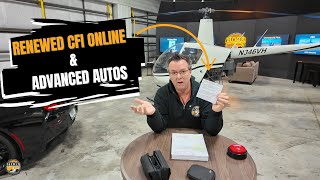
Kenny Keller renewed his expired CFI certificate using a 2024 FAA online refresher (16 hours, $125, temporary cert in 7-9 days) and is launching an Advanced Autorotation Course for R22 and R44 helicopters with three hours of flight time and maneuvers like zero-airspeed autos and 360-degree turns.
Chapters
I just renewed my CFI online after my 24 month expiration date. This is something that the FAA came out with in 2024. And previously after your 24 months, if you hadn't renewed your certified flight instructor certificate, the only way you could renew was doing a checkride. And of course that's kind of a pain because you got to freshen up your knowledge and schedule a flight with an examiner and reserve a helicopter and go take another check ride to get it reinstated. I've done that twice in my 20 some years of doing this and it's a pain. So this time I knew because of the new ruling I was at the end of the month, end of December actually 2024. And I had a lot going on that week because we were going live every day. And I decided to utilize and try out the process of after expiring. So it expired the end of December. So in January I purchased one of these online courses that you can get, went through, did all the modules, sent all my documents, took a test. At the end you it'll give you this passing score. And then it takes seven to nine days for them to have your certificate ready. You can go right back in there, print it off and you're ready to go with your temporary certificate. The FAA will send me my hard copy. So the cost was I think 125 bucks. A lot cheaper than going and taking a check ride, that's for sure. And I actually enjoyed the course. It was really easy to do again, upload your documents, go through the modules, spend the time, you got to spend 16 hours on it because that's mandatory. Take the test at the end and bam. So I did it. So I firsthand, after my 24 months in January, I was expired, didn't I didn't fly and didn't use my privileges because that's part of it. If you let it go past the 24 months, you can't exercise your privileges. However, you have three months to go online, do the online refresher course and it will renew your cfi. So that is really, really cool. And we want to announce advanced auto rotation courses in the both the R22 and R44. This is something that we've been talking about doing for quite some time. Why did we wait till now to start doing it? I don't know. Other than we've been doing the final approach courses in the last two years. We've had fun. We just did number 19. I have Lindsay edit in a photo of Joe. We just did Joe's CFI add on last week. And not only did we do Joe's CFI add on, then we'll have another picture to put in Hunter, who did his commerce or his certified flight instructor with us as a initial last fall. And then he came back last week and did his instructor sign off in R22. So he actually has the R44 instructor sign off already got his R22 time finished up and now he's signed off in the R22. So we're going to use Hunter as a backup now along with myself, Chris Hauser and then we'll have Hunter as a backup when we need extra help. So what we're promoting is what we're calling an advanced auto rotation course. And Hauser and I talk about how, you know, we he calls it a training scar. If you only do one thing in training, if all you do is straight in autos and 180 autos, it gives people, some people the idea that that's all they can do. They don't ever think about doing something in another, you know, airspeed, another altitude. And we understand that we have to train to a standard, right? And so I'm a firm believer we need the straight ends, we need the 180s and we need to train to a standard so you can go past your practical test. So there is a need for that. However, it doesn't really prepare you for the engine quitting at some other altitude and airspeed. So we come up with this advanced auto rotation course available starting now. Chris Hauser is going to be helping me with this and we came up with what type of things that we want to cover and through your feedback maybe we can add some other stuff. Actually let us know in the comments below. Actually we're live so type it in chat or if you come by this later, type it in the comments below. But we're going to do is we're going to go out with you of course we're going to do ground. This is a two day course. We're going to do three one hour flights so we can try to do two hours one day, an hour the other day, vice versa. So we got maybe if weather's a little iffy we can can work that around. And then you'll be getting of course ground school in between the flights because we want to do ground always before we go out and fly so we can do ground fly, do ground fly, do ground fly and out in the helicopter we're going to do zero airspeed rotation, which Hower loves those I'VE done them and they're not my favorite thing to do, but Howser sure loves to do them. But I'll get up to speed on those. So we'll do zero airspeed auto rotations with you. 360 degree auto rotations. I used to do them a lot. Howser's been doing them a lot lately, and those are good. Say you're flying along and there's a spot below you, but there's nothing ahead and you've got the altitude. You could do a full 360 turn and come back around to a spot. Odd rotations with S turns. So let's say you enter and the spot's pretty close to you. You can use S turns many times to try to make a spot. We want to do odd rotation during takeoff, and we'll probably get it up to maybe 300 AGL or something along that line somewhere where we feel comfortable. But, but actually doing auto rotations during a takeoff. And again, we'll, we'll work into that. Stretching the glide. This is something that, if nobody has shown you this, it's amazing how much you can actually stretch that auto. And I, I never witnessed it until I was actually a cfi and I was helping somebody who was going for their initial CFI and he was going to take his test with the faa. At the faa, they didn't want the responsibility of being in the aircraft right during the full down auto. And this is way back before they had the sign off you can give somebody. So the FAA guy says, I'm going to stand on the ramp and I'm going to watch you two. And he looked at me and he goes, I don't want to see your hands on the controls. And so we go out and he does his straight in, full down. And when he entered, his name was Randy. He's like, I feel like I'm going to be a little bit short, so I'm going to pull the RPM down to the low side. I'm going to try to stretch this glide. And by doing that, he absolutely nailed the numbers 2, 8. And went right smack dab to the numbers. And even though I'd monkeyed with it a little bit, that day is where I realized how much you can stretch that auto by pulling the RPM down a little bit, which of course you got to be careful with that. But by pulling the RPM more to the lower side of the green, you can actually stretch that glide. And then the big one entering autos in different air speeds and altitudes. So that's going out and doing, you know, 270 degrees at 800ft and maybe 90 degrees at 400ft, just go out and give you different scenarios on when an engine could fail. And again, it's something we've been talking about for a long time and we just decided, you know what, it's time to introduce this. The R22 is here and ready to go. R44 is getting ready to head back from Las Vegas here very shortly. It's coming back this month. If you wanted to get in real quick with Taz and do it in Vegas, this is what, February 3rd, you'd have to call now if you want to do it in the R44 in Vegas because it's going to be booked from the 19th to the end of the month with a 10 hour mountain course and then they're going to be flying it back to Indiana to have it back here by the end of February. So if you wanted to do something in the R44 like now, you'd have to call 574-767-1797 it's and Taz could squeeze you in before the 19th. After that it will be March. And so in March the auto rotation courses will be here at our world headquarters in Warsaw, Indiana, North Central Indiana. So the course price for the three hours, two full days, lunch included is 29.95 for the R22 and for the R44 it's 39.95. So that is full days, full day with us. And you're going to get ground from both, from both Houser and I majority of the time. So a full day and then a second full day so that we've got plenty of time to sit and discuss. Because what we know goes on a lot of times at flight schools where you're not getting your money's worth is you go into a flight school and it's like, okay, come on, let's go. Like you walk in the door and they just take you out and throw you in a helicopter and you go fly and they kick you out when you're done, right? That's not an effective lesson. You need to sit down. Hey, what have you been doing? How do you feel today? Did you sleep good last night? Did you get anything to eat? Do you need a coffee? You need a drink? See how things are going and then talk about what have you been doing and what are we going to go do in the aircraft? You sit and have a good pre flight discussion. So we know when we climb in that helicopter we're going to be ready for what we're going to go do. And included, of course, that is pre flight fueling. After that first flight, sit down, debrief the flight, sign your logbook and move on. That's something that a lot of times doesn't happen at a flight school, is a really good pre flight briefing and post flight briefing so that you're making the most use of that hour flight. So again, we'll break it up, probably do maybe an hour the first day and the two hours the second day or we can flip flop it. But to get a lot of that good ground in and really see where your knowledge is at and talk about the different things that we're going to introduce when we get out there. And we can always of course, vary that if we need to. So if you're interested in an advanced auto rotation course, I would recommend getting on the schedule now because spring's coming and the FACs are going to fill up. We're going to get more of those. So those take out a week. Those are a minimum of a week. So if we do two facs scheduled for March, you're going to have two weeks in there that should be available for somebody to come in. Because we're not going to have, we're not going to want to do those dual because the facs, we focus on you while you're here. It's all about you. And it's normally me and Hauser doing flight, doing ground, doing flight, doing ground, and we keep you going all day long. We don't want to have people in here doing the auto rotation course messing up the flow of our fac. Because when FAC is, here you are, that's your day, all day normally, minimum of three days, if not four days or more, depending on where your knowledge is at. It's you all day getting ready to take that check ride normally towards the end of the week. So it's one on one exclusive. So we don't want to overlap those. And we also want to have plenty of time for our maintenance guys to come in in between and take a look at the aircraft as we're out doing this training. To recap, yes, you can now cert. You can now renew your CFI in a three month period after the 24 month expiration. I wouldn't wait to the end of the three months because you're going to have trouble getting it all done and getting it processed in time. So you'd probably want to try to do it at least by midway through that third month. Of the grace period. I don't know if you really call it grace period, but the three months that you can renew your CFI and reach out to us. 574-767-1797. If you'd like to try and schedule a auto rotation course. Gonna be a lot of fun. And those will be fun because no checkride involved, right? We do the final approach courses and they're fun and they're exciting, but it's a lot of stress and you have a lot of stress getting ready. So these will be fun for us. Right? We love doing auto rotations. And this is providing you something that again, some of your flight schools might be doing some advanced stuff with you, and that's great if they are, but many won't. Many. You're. All you're gonna get is straight ins and 180s and you're just going to get the very minimum to get to a standard and pass the test, which is required. Right. You have to do them to a standard. And that's one thing that people always say, you know, like I have, I have a video of my top 10 checkride tips, or I'm sorry, auto rotation tips. And it's been out there for years. It's got a lot of views and we'll get this coming all the time. Oh, a good setup's great, but it's not real world, you know, it's not real world. Well, we get that, right? That's why we're offering this course. When you're in the training environment, you want to enter everything the same way each time and do it to a standard, because you're going to go to a FAA examiner or a designated examiner and you have to do the auto rotation to a standard. So we want to set it up the same way each time. A nice setup, get it ready, enter it. I get it. That's not. That's not the real world. That's not possible. Right? When the engine fails, this is going to happen. It may be the worst possible time, but in the training environment for passing checkrides is one thing, real world experience is another. So again, that's why we're creating this to go out and do different things just to give you some more tools in your toolbox, right? So that you realize, hey, I could do a lot more than just a straight in or just a 180, because depending on what airspeed and altitude you are at when an engine failed, what's the spot you're going to be going to? Is it going to be Right in front of you maybe, but probably not. Is it going to be perfectly over here, 180 degrees to your left or right? Maybe, but maybe not right. So you got to be prepared on what if I only got to turn 40 degrees? What if I got to turn 270 degrees to make that spot back over there that's in the wind? We're going to give you those tools by just going out and in turn give you the confidence that you could get in that helicopter and go out and fly and be ready in the event this happens. So again, if you want to get in schedule now because things will keep filling up. 574-767-1797 Next, we are going to get ready to give away a airman certification standards private pilot. When you feel the pressure to fly, but know the right decision is to stay on the ground, hit the hogs no go and live to fly another day. Helicopterground.com okay, Lindsey's got a question. She's going to read it to us here in just a second. What did we just decide? The question was. Oh, okay. So to win the first of five of these, about five of them, I just thought, you know what, it's a good topic of discussion. We got five of these to give away. So we're going to give one away today and then we're going to give four more. We're going to go live the rest of the week because we just made this up a little bit ago. This is auto rotation week at Hogs. So we're going to roll some videos from the past auto rotations. We're going to reshoot my. I have a video called Top 10 Auto Rotation Tips. I made it eight years ago. It's got about 100,000 views. I'm gonna go through that and see if my top 10 is still the same as what I would have picked eight years ago. And maybe we'll show the old one, but we're gonna make a new one. So all week it's auto rotation week at Hogs since we're promoting the auto rotation courses. So the first giveaway today is type in in chat the Hoggs phone number that we've been preaching at you. First one to type in the hog's phone number wins the one of these airman certification standards private pilot. So if and when you win, type in. Well, if we'll type in Heather's email. Heatherelicoptergrund.com you'll just send her an email, say, hey, I won the acs. Give her. Give her your Shipping address. So Lindsay has a question from somebody and go ahead and read that when you're ready.
So this is coming from Carlo and they asked if we've seen the videos of pilots doing 90 or 180 degree turns on the spot during the flares and auto rotations and what is that used for? We did ask them in chat to elaborate a little bit and they're currently doing a little bit more research to see if maybe we can figure that out.
Okay, so what that means to me at first, first, I don't know if he's talking about. They're waiting and turning at, during the flare down here at the end. If that's what he's asking you, you could be turning actually during the flare if you had to. I mean, ultimately we want to come in, flare and do this. However, if you were trying to make your spot and as long as it's Safe and your RPMs where it should be and your air speed is an acceptable level, if you could pull off a flare during the end of that, end of that and get it leveled out, I guess if that's what you're asking, I think that would be acceptable. It's not what we're shooting for. And that's something that we're going to talk about this week in the auto rotations. The difference between training to a standard and doing what you got to do real world. So real world it would be whatever it takes to get in that spot. But if he's talking about cranking that thing in there at the flare, kind of like doing, you know, last minute, that might be what he's asking. That's not preferred. I mean, you could do it as long as it comes out safely, right? Air speed's not in question. RPM's not in question. If everything's looking good, could you do that to make your spot? I guess, because some people. I know this is a good topic along this lines, here's my opinion. I have people that don't agree with me on this one. But on a checkride, if this is your spot right here, this, this stack of ACS books, if this is the numbers and you're trying to make that spot on your, let's say straight and auto or 180, either way, of course, you want to come in with a nice straight flare, you want to flare. And in my opinion, as long as you're within, say 100ft, depending whether you're going for private, I believe private is 100ft. If you're flaring over the spot and you're leveling out and you got just a little bit of run on. You go a little bit past your spot, that's okay. Or you're flaring here and you come out and you get kind of stopped here. If you're plus or minus the tolerance, you're within the tolerance that's passing. And so many times people want to screw up an auto because they're so worried. They think that they have to come out and end right smack dab there, right? Like everything has to be so perfect that no matter what, this is where they stop. I don't think that's the case. I think if you're. If you're within the standard, you're leveling out right here and you go just a little bit past with a little bit of extra speed, or you're flaring here and you level out and it comes to a nice stop right there. Within reason, I'd rather you do a nice flare, come out and make it nice and smooth versus too aggressive or getting crazy trying to make the spot. And I don't know again, if that's kind of along the lines of what he's asking. She's shaking her head now. What's he saying?
He's saying that during their flare, they turn and they end up landing. Sideways or backwards?
Backwards. I've seen that a couple times. My question is, why? Why? Why would you do that? I mean, what is the point of coming in and whipping it around and landing backwards? Maybe they have a good reason for it, but I can't really think of one. Right. If you're doing an auto rotation, you're going to a spot. Why in the world would you try to turn around to land? It doesn't make any sense to me and brings up a good topic. I've had a recent conversation with one of the guys from the Robinson factory and his complaint is things that we're seeing out there that are people are doing like, hey, watch this kind of thing, or well, I like to teach people and they're doing things that wasn't taught by the factory or the factory course or factory improved instructors. There's some things out there and it's actually on this topic, it's actually kind of good thing because I am going to talk to them about what we're intending on teaching in case there's anything in here that they go, no, we really wouldn't want to see you teaching that. I have a good relationship and already know that they basically approve of the way we teach around here. What our thought process is. But when you see these oddball things on YouTube, I'll tell you what, on that topic, I've seen a lot of stuff just in the last couple weeks that I want to start doing a weeklier thing where I go, hey, let's check out these latest, greatest YouTube videos. I just saw. One guy's an R22 along a roadway with traffic and everybody's bragging about this great pilot. And here's his max takeoff. Like that, no hover, pre takeoff check. Problem number one. Number two, why was he, what looked like pulling to the max or higher and super aggressively taken off like that? And of course, some people are going, wow, you know, cowboy, or why in the hell were you doing that? Or whatever the case is. And I've been seeing so much stuff. And then in the comments you see, oh, wow, look at that great pilot. I was watching one the other day and this guy came in and does all this crazy shit and did one of these things and come in and it was the most ungodly thing I've ever seen. And people in the comments were just going nuts like, oh my God, this guy's a great pilot. And I'm like, that guy is a show off. And he's given people that are learning and the average pilot the wrong impression of what's going on out there. So I think I know now what he's talking about. So, yeah, I've seen some of that goofy ass shit. My question is why? When you do see somebody doing something really outrageous, the first question is why? Where did you learn that? Why are you doing that? Why would you want to do that? The real essence of flying a helicopter is doing it smooth, slow, methodical, as slow and smooth as you can. And many will agree with me when I'm watching somebody come in to land, if I see them come in and they have this real nice slow approach and they stop and they clear their tail and they go over to the parking area, clear their tail, do this, come over and do a nice set down like that. I go, that's nice. That's impressive. That's what I want to see. Because that actually takes more skill than being, being wild ass hot dog coming in here, doing the loop de doop and big old flare and slamming that thing on the ground. That's hot dog. That's not impressive. There's nothing impressive about it. So little, little rant and rave there. But it's kind of fun because just recently I'm like, man, I want to start showing some of these videos, you know, Everybody's got a helicopter pilot reviews or vocal coach reviews. I want to start reviewing some of these freaking videos I see. And the, and the one that I'll fight tooth and nail is all these people taking off without hover pre takeoff checks. And I don't care whether it's novice or experienced pilot. I flew EMS for five years, professional environment. And they flat out said, guys, you will do hover pre takeoff checks every single takeoff regardless. And if we find that you're not doing it, you won't work for us anymore. So an emergency medical services environment. If they require a hover check every single time before you take off, regardless of the type of takeoff, there's probably a good reason behind that, which the good reason is temperatures and pressures in the green manifold. Pressure's here. This looks good. Everything's ready, let's go. It only takes 5 seconds, 10 seconds, 15 seconds. You should have a hover pre takeoff check every single time. So we're going to do that. We're going to pull up, I'm going to start sending those videos to you, Heather Lindsay. Whoops. When I find them, I'm going to send them to you. Go, let's do a video on this so we can queue it up and we can show them and go, yeah, look at this freaking hot dog, right? Like there's just so much going on. And as a trainer and somebody who makes their livelihood of training people and try to teach people to be slow, smooth, methodical and safe, when you see people doing crazy ass shit that there's no need for on the Internet, and then people are hooping and hollering about how great they are, that totally gives people the wrong impression of what we do, how we train and why we train the way we do.
Well, here's a question from a day in my Life. They are 30 hours into their private pilot training and their school has yet to introduce them to emergency procedures. Is it common for schools to slow roll training, to drag out completing to increase their revenue?
Well, let's see, how do we answer that one? You know, we, we do. Anybody that watches our videos know that we don't. We don't call out people, instructors, names of companies. We never purposely bash anybody. Okay? We don't never call anybody out specifically, but here's what we see constantly. And this is in our videos all the time. So I'm assuming this must be a newer viewer. It's an epidemic in helicopters. Our final approach courses we started two years ago, finishing people up. The first, the first young man that Came up here, came from Florida and he had 160 hours and didn't have his license. Two more people came from that same school. Three, three people total came from the same school. They liked the people at the school, they liked the location, but they all felt like why are they flying, flying, flying, flying, flying and can't get done. And at 30 to 40 hours, if you haven't been shown emergencies, I'm going to immediately question that because the FAA requires a minimum of 40 to get your license. Almost nobody does it in 40. I saw a new, a new statistically lately that the new private pilot Average hours is 75 hours. Took me 88, you know because I had a failure during my oral took me 88. So 70 to 80 is going to be a good average on when you should probably trying to be completed. So if you don't say you're at 30 or 40 hours, you ought to be halfway through. And if you haven't even been introduced to emergencies, I question that you should be learning about emergencies already on the ground. Hopefully at least you've done that or they're teaching you that, but not necessarily should you be out there mastering every emergency by yourself at 30 to 40 hours? However, before you solo, you need to be proficient enough in those emergencies know what they are if something fails. And you also have to have enough auto rotation training that you could pull off an auto rotation. And what we tell people when they solo is we want you to know enough and feel comfortable enough that if the engine quit on you during the solo, you could get entered, you could get your airspeed, you could pick your spot, you could and that you could make it and you could flare and you could get the thing on the ground and end result, you're able to unbuckle and walk away unhurt. If the helicopter gets a little bit banged up, nobody cares if you have a for real engine failure. What we need is for you to get on the ground, know what to do and know how to execute it enough that you can get out and walk away. Even if it gets banged up, we don't care. There's insurance for that and you can't help an engine failure. Engine failures aren't super, super common in helicopters anymore these days, but they can happen. So this to wrap up that question, I would be wondering If I've got 30 to 40 hours at a flight school and I'm not being taught emergencies, I'd want to know why not? Why am I not at least being exposed to them? Why have you not why have they not intro'd autos for you and start doing them and let you feel what it's all about? Because I can give you a little bit of insight, specifically on autos, when we take somebody brand new and you train them through, we start showing them autos pretty early on. But that's like all the maneuvers, the things that we do in the aircraft, we're going to let you do them repeatedly, over and over and over. And what we do as instructors, as your skills get better, we slowly start taking our hands off of the controls. We're always keeping them close, but we want to be close in case an actual failure happens of some kind. But in the beginning, we have to be right there. But as you progress and you get better, we will give you confidence by maybe resting our hands on our lap, taking our feet off the pedals, but we work into that. So out of all the things that you do, hovering, takeoff, landing, autos, quick stops, all these things we do with you, we do them together with you. And as we repeat them over and over and over, we will remove our hands more and more from the controls so that you can see and get the confidence that I am doing this by myself. So I think they should be talking about emergencies and should be showing you autos, at least introducing them at this point. So you may be getting the run around, because flight schools do it. They care about the blades spinning and making money and making their payments is what they're concerned about.
What advice would you give to pilots who are maybe stuck in that same situation?
Hands down, go number one, if you think something's a little bit iffy, talk to them. Just say, hey, no offense, but I feel like in this scenario I'd say, how come I haven't been taught anything with emergencies? Or why haven't I at least been intro to them and at least starting to learn a little bit about them. But what I tell people all the time is do not be afraid to try another flight school. And I get it that that's hard sometimes because you might be have to drive quite a ways to, to do a lesson, and maybe the next place is another hour farther away to get to. But their responsibility to you, the customer, is give you valuable flight training, help you get through the rating in the amount of time that makes the best use of your use of your money. Everybody learns at a different pace. It depends on how many times a week do you fly, how much ground do you get out of weight, get done with earlier in your training. There's a Ton of factors on why it takes so long. You know, the kid that came up here at 160 hours, if his knowledge sucked because he wouldn't study and he just wanted to pay them to fly, fly, fly, that's kind of on him. However, the flight school should also be going, hey, you're never going to solo or you're never going to finish if we don't get the ground done. So I don't want to be too quick to just blame the flight school every time. You got to be motivated, you got to be going through the books and you got to be studying and doing all the things that you need to be doing as you're going through the training. Which brings up. We got to finish our seven steps to Private pilot that we've cooked up. We've got it laid out and we're going to introduce that here soon. This week we'll get that out. We're going to introduce seven steps to Private pilot. We could do that this week. While we're doing all the auto stuff.
I was going to make the suggestion of, okay, this week, auto, next week.
Private, we could do that too. All right, maybe we'll save that for next week because we were going to work that in a couple weeks ago. And then things got changed with the final approach course we just did last week. All right, we'll stick with the autos this week. Next week we'll introduce the seven steps to prepare Private pilot to help a person break down the. The biggest areas that you should be here by this point, here by this point, here by this point, to help you navigate through Private pilot. So hopefully that kind of answers that question. Do we have any others that came in?
Yes. In real life, do you look at the RPMs or hear them? This is coming back from Carlo.
That's a great question. In the beginning, of course, you're going to be looking. You will. However, with time, you will get to notice RPM high, RPM low. And again, that takes time. It doesn't happen overnight. But the more you fly, the more you'll get used to that, that sound and the vibration. And at a certain point, you'll get to where you'll go, RPM sounds a little high. And you look down. Oh, yeah, I'm going to crank that down a little bit or it's a little bit low. That will come with time. So in the beginning, you're completely going by your gauges, your tachometers to make sure you're within rpm. And yes, with time, you will, I promise you will get to know the sound. And you'll know when rotor and engine is high or rotor and engine is low. You will learn that and you'll get a feel for that. Absolutely. That's a great question. Because in the beginning, you're learning so much in the beginning. I mean, you're taking in so many things that at 50 hours you'll start noticing new things. And then at 100 hours you'll go, how come I never noticed that in the last hundred hours? And then 150 hours, I'm just throwing out random numbers. But as you progress and get more and more comfortable in the helicopter, you'll be amazed at what you keep learning. And you'll see new things, feel new things, hear new things that you just didn't hear in the beginning because you were so overwhelmed with trying to learn. And I guess I'd have to say that's part of the fun part of it, right? As you keep practicing, keep taking your lessons, fly more, build your time, build your solo time, start building time after your rating and then doing more additional training, it is fun on how you just continually learn and grow and get more comfortable. I had a struggle with autos when I was brand new and we'll talk about that this week where I almost died as a brand new CFI in a really horrible auto done by the guy who owned the company, who was a weekend warrior with 180 hours and I just thought he could handle it and I wasn't prepared to catch it. I did catch it and saved us, but it scared me so bad that I can tell you it took me to about 500 hours to where I got to where I could teach autos and be comfortable teaching them. Like, I was terrified in the beginning because I had one bad experience and I was worried about something bad happening again. And this week we'll talk about how what I did after that, I actually paid a another instructor to come in, a high time instructor to help me build my confidence. And that was a huge help. But still it took me, took me about 500 hours before I could do an auto and just not be like heart racing and on the edge of my seat because of what had happened to me. So, good question.
Our next question is coming from Jase and they want to know if you think low zero airspeed autos are a viable option to a very close spot or would you recommend turns to lose altitude?
That's a great question and that's why we came up with the course that we mentioned earlier. If you're late to the video on our list, number one is zero airspeed autos. Then it's 360 autos and then there's autos with S turns and auto rotations at different airspeeds and altitudes. Because that's a, it's a big, it's a great question, but it's a big question. It's always going to depend on what do you, what area do you have to land and what's the wind doing and how heavy are you and where are you when this engine failure happens. So could a zero airspeed auto be a benefit to you? I think so. And I wouldn't build a course to show you those if I didn't think it could be valuable. It's not something we do in the normal course of training. I personally don't really like it. I just don't like that feel of. I've done some, you know, I've done thousands of thousands of autos over the years doing our normal 70, 60, whatever speed we're using. Enter, enter, enter. And just this past summer Hauser and I went out and did some and it's just the weirdest ass feeling when you're at zero airspeed and you go eh. And then you got to build up your airspeed and it's totally doable. And we're going to do them, we're going to go out and do them and we're going to practice them. So in a commercial environment, let's say you're out there doing an out of ground effect hover, doing photography for a photographer, or you're doing news reporting for a news company. Many times you're out there in a hover trying to hold a shot for say the evening news. So there is a time where a person might be 500ft, thousand feet, whatever the altitude is and they might have an engine failure with zero airspeed. So I definitely think it's worth doing. So the person has that option. Like earlier I said when I laid them out tools in your toolbox, right? And like we mentioned 360, if you have the altitude and you're up here and that spot is directly below you, if you have the altitude and there's nothing else around, say you knew you just flew over a football field and everything else is a suburban area, there's nowhere to go. You could fly a full 360 degrees as you're coming in, as you're coming around and come in and make your spot. And I've done them. Those I like, I think 360s are great. Howser Likes doing them. So that's why the first two things on our list is zero Airspeed 360. And then again, let's see, it was two summers ago that I went out and I spent a bunch of time on myself just going out and entering from 800ft in 50. And then maybe I'd go do 400ft and 70. Like I would just go out and find all kinds of different airspeeds and altitudes to enter an auto just to get really like feeling comfortable with them happening at any, you know, airspeed and altitude. So that's why we listed those right at the top. So you know, I've had, I don't get super, super crazy with them. The examiner we've been using for 24 years now, when I met him, he took me up above 500ft above the Runway. It was a just get to know each other flight. The people I worked for said, hey, go out and fly with the examiner for an hour and just get to know each other. And he put in, came into a hover above the spot. Let's say this is like 28 right here. And he comes to hover and he goes, if I enter auto right here, do you think I can land on that spot right down below, straight down, like the number's 2 8. And I'm like, well apparently you're getting ready to show me. And so he enters the auto rotation and he backs up and he comes over here and he goes over there and then he comes in and then boom, puts it right on the spot. So there are a lot of things that the helicopter is capable of that we don't go out and do in a normal course of training. And I don't, I don't recommend anybody go out and do that. I never got that comfortable to the point where I liked enter and go backwards and sideways and you know, maybe I'll get there if we get on going out and really diving into these kinds of things. But you know, everything has to be within reasons and every situation is going to be different. No two autos ever come out the same, ever. You can set one up exactly the same as you did five minutes ago and it won't come out the same. They just, it's kind of the nature of the beast. They almost never come out the same. So great question. But I whole reason behind this advanced auto rotation course that we're offering now is to go out and do these types of things. And that's why our two day course includes three hours of flying. But they're Full days. It's two days. It's full days. Because we're not just going to go fly you in the helicopter. We're going to sit down and talk about where you at, what you've been doing, and we're going to do ground and we're going to talk about the types of things we want to go do. And then we're going to go out and experiment with them and then we'll come back and we'll debrief and go, hey, that was cool. I like that. You know what, let's go try that again. But let's go, you know, 270 degrees versus 180 degrees or whatever the case is. We should always be spending more time talking about flying than really flying. And it kind of sucks. But the reality is, especially in training of two days here, the majority of what you're going to be doing is on the ground talking about flying and talking about what we're going to do and then talking about what we did while we were out debriefing, signing the log books, taking a break, eat lunch, go out and do the other flight. Right. Again with what are we going to do when we go out Pre flight. This is my complaint in the industry, a lot of places, not enough pre flight time, pre flight briefings. Not just pre flighting the helicopter, but pre flight briefings and then proper pre flight. Then get fuel, then fly an hour, then land, post flight, walk around to see if anything is leaking out of the aircraft, refuel, put the aircraft away, whatever the case is, go in, sit down. What'd you think? What'd you think of that flight? Sit and discuss all these things so that you get the most benefit out of what you just did. It's going to last. The training is going to go so much better when you get the proper amount of ground. But why am I complaining? We're helicopter land ground school. That's why we're here. Because of the lack of ground out there. Lindsey has her hand up again.
I didn't mean to fully interrupt you. I just wanted. You.
That's all right.
To have my attention. So we've been running this giveaway for quite a few. Quite a little bit of time here all through live and I.
And you just got a winner.
No, not at all.
Oh, okay.
Apparently chat will not allow phone numbers entered in. I have been dropping little hints here and there throughout chat and finally, you know, I asked, I was like, okay, should we make the question any easier? And they're like, no, we've sent in the phone number we sent in the number. We sent in the number, but I do not see it anywhere on chat. So it's not allowing them in.
So. So YouTube is not letting them type in a phone number.
Right. I don't know if maybe they're typing it in, like correctly with the parentheses and hyphens or if it's just numbers, but if we want to rerun the giveaway.
All right.
With a different question.
That's odd.
I know. I thought it was odd too, but I. I triple checked the chat and not one answer has come through on our end.
Let me look at my phone. Just real quick. While I'm looking on my phone, let's see. Should we go to my email that I'll open this up. Right. If you haven't tried our clone yet, go below. There's a link down there. Ask Hogs.com and our clones available 24 hours a day, seven days a week to answer questions. I don't know how to get on chat on my phone. How the hell do I get into chat?
Let me try it. Let me try it on my end. And then you just keep going through what you got to do.
Yeah, I'm just curious. Why is it. Why is it.
Here, let me try it.
I don't even see the chat. It's not even showing up. All right, I guess we better come up with something else, hopefully. Okay, well, that was pretty easy. So got to give another easy question. I can't make it too difficult since for whatever reason, it's not showing up in chat. I don't know why. Maybe YouTube doesn't allow you to poke phone numbers in chat. I don't know. I guess we never tried it before.
Oh, I'm stupid. Okay. No, it won't go through. But I'm stupid. I put my own phone number in there.
Whoops. Did it go through? No, but it won't let it go through. Okay, all right, let's make it easy. Type in our web address for our main helicopter website. It's right.
Remember the last time we did web address, it didn't exist.
Oh, that didn't work either. God damn it. Don't do that either, because that screws up too, when you try to type a website address in chat. All right, we're making this super easy. Our business name is Helicopter Land Ground School. Now, don't type that. And we pay these big marketers, heavy duty marketers, a little over a year ago, and the one guy's like a super guru, and he. When he's like, oh, you guys are calling your business hogs. We were even looking at doing a logo with a hog on it, right? And that was one of the marketing guys. And the other guy comes in, he's like, oh, my God, I hate those logos. No, no, you can't have a hog on there. You can't even. You can't even use. You can't even call it that. And we go the custom. Our members named it. What's our nickname? Just type in the four letters for our nickname. Nickname. In chat. You don't even need a period or an abbreviation. Just type in the nickname for helicopter on ground school. I just think it's cool because customers members just started calling it this. We never named it blank. We never called it that. But just through emails and in chat and just through the. It's just what people started calling us. It just happened. So I told the marketing guys, I'm like, no, we can't take away. We can't take away what the customers have been calling it for years. Right, There it is. Anybody win yet?
Yep, I'm typing it. Paul G. All right.
Paul gets a private pilot acs, even though we know he's a rated pilot, probably doesn't need it, but Paul can give it to one of his friends. Since we had to go through all that to give away an acs, and I just wanted to give them away, I ordered them recently because I just thought, you know, the ACS is always a big topic because for years I've preached on the pts. It's now the acs. We've been working through it. In the beginning, everybody went, oh, my God. Now we're switching. But we've ended up liking it. It makes sense, the changes that they made. And I get it. So this is a very important part of your training. And if I think is Carlos, if he's still here. If you don't have a copy of this yet, for anybody working on your private, you need a copy of the airman certification standards. And if you don't know what it is, this is the guideline of what's going to be asked during the oral portion of your test. It's going to show you the maneuvers, the tolerances for those maneuvers. It has what I call the most important page in the back. And this will be a question coming up this week. I'm going to ask to give another one of these away this week. I'm going to say, what is the most important page in this book? The most important page in this book is practical test checklist applicant. This is everything you need to show up the day of the test. And when I started out 24 years ago as a brand new CFI, when I asked our examiner, who we're still using to this day, what tips can you give me as a new cfi? He said, ever heard of the pts? Which of course now they see us. Make sure your students have a copy and make sure that you go through that and have everything that they need when they show up for the test. Because I have a real problem with people showing up not prepared and not having what they need and then we have to send them home and then nobody's happy. So you got to have everything that's on that list and then you got to work through this to get ready for the test. And I could tell you this comes from examiners, people are constantly showing up not properly prepared for a checkride. And this is a topic that recently came up that we're a little short on examiners, but we wouldn't be if more people were passing on the first attempt because they were showing up more prepared. And the ACS is key document that you must have and you must be working through it and your instructor should have their own copy of it and you should be working on it together with your instructor and you should be going through it at home when you're studying. And if you find anything in here you don't know as you're preparing, look it up because there's going to be no secrets the day of your test. It's in here. So if you have any surprises, the day of your test is because you didn't properly utilize the acs.
We have one more question. This is coming in from Jace and as a small helicopter operator, any recommendations for someone looking to break into the commercial helicopter world on their own? It's a big one.
So this person wants to start out and do their own one man operation?
It seems that way. I believe he's still in chat. So, Jace, if you would like to elaborate.
Okay. Elaborate if you like. Here's a story that I tell all the time and I'm assuming that maybe you're new to our videos as well, which. That's okay. Right? Glad you're here. If you are new, I've. I've operated a one man, one show, one helicopter business and I owned it. Four. Four. I owned it for four years. I had Anstrom helicopter in four years. Oh, I'm going to. I'm living the dream. I'm going to make it happen. I'm going to work hard. I can do it. I can do it. As I drained my savings in my retirement and started selling stuff off at the end of four years, one man, one helicopter operation, I had a quarter million dollars of debt, sold my property, and I was in my 40s and I was broke. So be very, very cautious. If you're trying to do a one man, one helicopter operation, I'm not going to say you can't do it because I'm a dreamer and I believe that you can do anything. I believe anybody that sets their mind to something, they can do it. My one thing that hurt me is I started in 2008 and we had an economy crash back then. But trust me, when the planning started, that crash hadn't happened yet. So it takes months of planning, getting the loan, getting set up. And by the time I took delivery of the helicopter, the economy had tanked. So there's one big problem for me, right? Economy tanked. And even the wealthy people that I was flying with pulled their money back and it made it very, very difficult. So Now I operate two helicopters, an R22 and R44. But the only reason I have them now is we're getting ready to celebrate 14 years online March 1st with Hogs. Two years ago I got an R44. That's 10 years I operated without an aircraft. I had a buddy who let me use his instrument occasionally, or I would drive to a nearby flight school and I would pay to rent the helicopter and the instructor. And I've worked my way around it for 10 years building hogs, talking about flying, using helicopters when I had access to one, but not having one to operate. And now that we have two that we're operating, the only way that we can operate these is we're trying to get them to pay for themselves. There are three of us that are actually there's four of us on the payroll that require a paycheck every week. And our paychecks come from helicopter and ground school. This first, second year of operating the R44, a little bit of money had to come out of HOGS to support that helicopter. So we can do it because our livelihoods are running the online ground school business. The helicopters were trying to get them to at least pay for themselves so it's not costing the business out of its pocket. So not to blow your dream, you can do it, but do a lot of research and be very, very cautious. And it's very hard to do if you're just going to do Billy Bob and Mary, you're going to fly with one guy on Monday at 22 and then another person Wednesday at 4. And that thing's got to be in the air. So I know you mentioned commercial operations. So now maybe if you're going to have work for it like pipeline patrol, power line patrol, you're going to be able to do a lot of rides at festivals, depending on what aircraft you get. If you've got work that you can line up where you're going to get a lot of hours very quickly to generate money. The problem with these is if the factory says, oh, operating cost is about 165 an hour, take that times two, all right? And figure it's going to cost you double. It's going to cost you double. And I'll give you the example of the R44 we have. My insurance alone is 26,000 a year, okay? So think about the kind of money that you have to generate just to pay insurance. 26,000 a year. Then you got fuel, then you got maintenance, you got inspections. And the one that kills you is unexpected breakdowns. When something happens, let's say something random, you make a mistake and a garage hangar door gets closed and it hits a rotor blade and breaks it. And all of a sudden you need $40,000 for a rotor blade. So I would hate to break again. I don't want to break. Bust your bubble. Helicopter business is hard, and that's why you see flight schools constantly come and go. You see helicopter flight school, oh, it's opened up. Hey, there's a new flight school down in such and such. Two years later, they're gone. And many times people show up, oh, I went in for a lesson, there was a chain on the door, they're gone, right? And you hear store stories about people losing lots of money because they have money on account at a flight school and they don't tell anybody. And that flight school owner closes it up and takes off and goes to Florida or wherever. So helicopters are a very expensive business. Make sure you do your research, make sure you have money in the bank for if something happens, engine goes, rotor blade, whatever the case may be, money for insurance and money for everything else. It's just they're highly, highly, highly expensive. And that's the only way you can get around it. You know, I have all the time I talk about a gentleman out on the west coast, has been helicopters for 50 years, and he's very, very well to do, and he's done well with his business. And after 50 years of it, he said, if you have to Ask you can't afford it. And if you're going to do it and then start complaining about what it's going to cost after the fact, don't do it right. Because they're just horribly, horribly expensive. So you really, really have to have your ducks in a row in order to make it work.
Okay, so Jase responded. He is talking about part 91 operation.
And what was the other part of his question?
You know, any recommendations? Looking to break into the commercial helicopter.
Oh, commercial, okay. Yeah. Part 91. So you're not gonna be able to do charters. Part 91 you're just gonna be doing, I guess all you can really do is helicopter rides. Unless you're doing well, you wouldn't have to be 135 for like pipeline patrol unless you were carrying people. And I don't want to dig into that whole conversation. What's 135 and what's not? But part 91, the majority your income is going to either be flight instructing or helicopter rides, you know, and then you get venture into other things. You might have to be 135 operator. So just use a lot of care in doing your math and line up the work before you make the plunge. Or, or if you've got the money that is not going to be a problem, then great, go for it. But the average person isn't prepared for the kind of money that they really, that it really takes to operate. And I'm just saying, whatever it is you think it's going to cost you double it. Because that's what's going to happen. Double or triple it. All right. Is that all we got?
Yep.
All right, well, we'll wrap it up, come back tomorrow. We're going to keep talking about auto rotations all week. We got four more of these to give away through the week and we're going to bring up more auto content. We'll watch some auto videos. Askhogs.com is our clone. That's down below. You can get your questions answered 24 hours a day, seven days a week. And hey, we have affiliate program where we pay you 50% of our commissions on our online sales. 50%. That's some really good money. If you're an instructor, you want to refer your students to hogs, go below. There's hogspaysme.com you can sign up there. Through the process, you can text or call Hogs Support 574-767-1797 if you have any trouble or email supportelicopterground.com and we can walk you through it, but you can self sign up. You'll have a link to share to give your students or others who are interested in signing up. And after they go past their 30 day refund policy, if their payment clears and they don't refund, you get 50% of that every month for a monthly or for a yearly or pro, you'll get payments and we send it directly to your PayPal. You gotta have a PayPal account, but we can get you all set up and you can earn 50%. We have people out there making some pretty good money just having their students sign up for Hogs.
Do you have to be be an instructor?
You don't have to be an instructor. If you know other students and you want to earn a little extra money because you believe in the product, you can be anybody can be an affiliate, anybody can sign up and if you're really a fan, you go, man, this has really helped me and I want to share it with others. Yes, anybody can sign up again. Got to have a PayPal account and an email associated with, with your PayPal account because that's how your commissions or your affiliate payments are tracked. They're tracked to your PayPal email. And then when we pay once a month, we just go to that email and zap you the money directly from PayPal. So down below, hogspaysme.com.
Instead of having an affiliate link, can we just have 50% off in which. Don't answer that yet because really the question is when is our next big Hogs sale?
Well, considering we're going to be celebrating 14 years long line March 1, that will be the next big sell. I don't think I'm going to do anything in between because you know, we did our normal holiday sales and we might have some kind of little pop up sell. Some kind. But you know, there's a point where we just don't feel like having a cell on every day, all day. Maybe we should be. But the next big sell definitely is March 1st. When we celebrate 14 years online and whether we'll start before March 1st or start March 1st and go after. But there will be a big. Yeah, and we usually do 50% off on that one because that's, you know, it's fun. 14 years online, we're almost there, right? 15 is like sounds more exciting than 14. 10 was a big deal. I thought 10 was cool, 12 was cool, 13 was cool, 14 will be cool. But 15, you know, that's more of a, you know, five years, 10 years, 15 years. I've been watching a lot of business stuff lately and you know, 90% of new businesses don't make it 99% don't make it like more than five years. So making it almost 14 years and we're still here. And I've been able to rebuild my life after helicopter ownership where I had nothing. And you know, for the gentleman, if you're still watching on the one buying a helicopter, that's why I just talk highly against it because I legitimately lost everything and started over in my 40s with nothing. And that's scary as shit. That is flipping scary to be in your 40s and living with family and driving a family's vehicle because you don't have any money. And I was that guy at that time, I can remember I think you could get a filet o fish at McDonald's and a Coke for $2.14. And I'd heard these stories before. I'm really at the drive thru with $2. Oh shit, I got $2 scrounging the floor the you know your cubby holes to find 14 cents so that I could get a fish sandwich and a Coke. And half the time I was going to the freebies down in the lobby of the airport, you know where you just put your money in the little cardboard thing. I go down there because I was hungry. I didn't have any money and I'd be eating potato chips and candy bars and junk like that. And then when I'd get a little bit of money, I'd go down and put a $10 bill in there or twenty dollar bill in there because I was eating out of the community snacks because I had no money and I was hungry and I was sleeping half the time I was sleep at the airport on the couch in my office. I am that guy who was there from helicopter ownership.
Yeah.
And that is a fact that is not made up. Yes, 14 years ago I had nothing.
In a world of high cost of living and inflation costs, you definitely take into consideration of everybody's pockets. So, so hog pays me.com get 50%.
Hogs pays me.com and it's all you got to do is refer somebody. But you got to use your link because that link will go inside your administrator part of your hogs account. And you can go right in there and see and you'll see what you're earning. You'll know what money is coming to you. You sign, you know, our Pro pilot is 2800. We have had people that had somebody buy the 2800 package and we've sent them $1400 to their PayPal account. So it does happen. Happens on the pro, on the yearlies or the monthlies. If somebody signs up for monthly, every month. As long as they keep it, you'll get 50% every month. They'll just keep getting paid, getting paid until they unsubscribe. So it's hogs pay me is great. It's great for. For people to earn extra money. And we didn't do it for years because I couldn't afford it. You know, we had to get the business filled up to a point where we could actually say, let's implement that. We had the software for it. But in the beginning, you're like, okay, I need this money to make this payment. I need this money to make this payment. And the sales come through. It's like, I can't right now. We had to get things built up enough to where we could afford to share some of the money that comes in. It's just the way it works. All right, looks like. Are you saying wrap it up? All right. I'm getting kind of hoarse, so we're going to wrap it up. Remember to come back tomorrow. We'll send out a link. We're going to talk more about auto rotation stuff. And hey, if somebody wants to. If anybody wants to join live this week and propose some questions about autos and talk about it, we'd like to either maybe bring him on a phone call or maybe bring him on, like, Zoom or something and have some live guests just to talk about auto rotation. So email me specifically kennyelicopterground.com if you'd like to be show up and be live on our show this week. Yeah, let's do that. All right, that's all I got. Anything else, Lindsey, before we go?
I don't believe so.
All right, here we go. To fly another day. Helicopterground.com Peace out.
Peace out.
I feel the pressure to fly, but know the right decision is to stay. Stay on the ground, hit the hogs. No go and live to fly another day. Helicopter ground.










