Replay Heliport Accident Prevention - What you don't know can kill you!
Webinar (2018) by Kenny Keller featuring Rex Alexander summarizing heliport accident prevention. The talk compresses ~3 days of instruction into an hour: accident statistics from a 50-year NTSB review (most accidents occur during takeoff; most at ground heliports; mostly daytime), applicable FAA regs (Part 77, Part 157) and Advisory Circular AC 150/5390-2C, state and local permitting (DOTs, municipal zoning, fire marshal/AHJ, building/fire codes, NFPA 418), heliport design elements (TLOF, FATO, safety area, approach/departure and transitional surfaces; straight vs curved approaches), required forms (Form 7480 submission, 5010 Airport Master Record) and database issues (FAA master record, AirportIQ5010, AirNav, Garmin/iFly GPS), and a breakdown of causational factors from ~185 accidents (1963–2013) with obstructions as the leading cause. Rooftop-specific hazards (architecturally induced turbulence, need for an air gap — AC suggests 6 ft as minimum; modeling sometimes shows 12 ft better) and common field problems (improper fencing, lights, fuel placement, safety nets, parking multiple helicopters on a single pad) are emphasized. Pilot-in-command responsibility and legal/liability risks for unpermitted or undocumented pads are highlighted.
Questions this video answers
FAA Form 7480 (Notice for Construction, Alteration and Deactivation of Airports).
The Airport Master Record (FAA Form 5010).
Approximately 34%.
About 31–32% (largest single cause).
AC suggests a minimum 6 ft air gap; the presenter notes modeling found a 12 ft gap produced better flow results.
Chapters
I'm Kenny Keller, creator, helicopter, airline, ground school. Rex Alexander is here. I'm go over his camera here in just a minute and let Rex introduce himself to you. I worked with Rex in the EMS field for a little company called Omniflight Helicopters. We flew EMS together. So Rex is an excellent presenter. He talks all over the country on a number of different areas and heliports are his specialty. So I'm going to jump over to Rex's camera, let him introduce himself to you.
Hey, folks, thanks for joining us. Sorry for the technical glitch.
Now that we have you online, we'll.
Get going here shortly. A little bit about myself. I've been in the aviation industry for almost 40 years now. I started flying when I was 14, been in helicopters for 30, did EMS for 20, did offshore, been in heliports probably almost 20 years now, and helping design and oversee and work on the safety side of the house. As Kenny said, we work in the EMS world for a while. And what we're going to show you today is a very small snippet of what's out there for information. We put a lot of information into one hour. So if you see something that you don't understand, please feel free to either do a question later or you can always email us later and we'll get the answer to you. But thanks again for joining. Really appreciate that and hope all the people out there get some very interesting information. Thank you very much.
All right, so kind of Rex touched on it and I want to expand a little bit. Rex did this presentation for us and he's gone through a lot of information, but stay with it because he's going to give you a lot of the technical stuff in the beginning about how heliports are designed and what you have to go through to get the proper authorization to have a heliport. So stay with it because it's going to, you know, we all want to see the accidents and hear about the bad things that have happened. And you'll understand by watching the whole presentation. He leads into why these things happen. And if heliports a lot of times were built properly, a lot of these things would be prevented. So I'm going to go ahead and get to it. Ask your questions in the box and we'll be back at the end to take your questions. So here we go with Rex's presentation on heliport safety.
So today we're talking about heliports, primarily looking at heliport accident prevention. What you don't know can kill You. So one of the first things we're going to look at is some of the accident statistics. And working with a group called the US Helicopter Safety Team, we looked at approximately 50 years of accidents from the NTSB records and came up with some pretty interesting statistics when we look at why and where and when. So first thing you notice the largest portion of this is the accidents normally occur at takeoff at 34%, then landing at 22, approach at 14, and then a departure at 5. Now, one of the key factors when you look at what the difference is between landing, takeoff, approach and departure is landing and takeoff. That accident occurred at the heliport on approach, departure. That accident occurred during the approach phase or the departure phase. So we notice a significant problem at the takeoff phase is one of the largest ones. When we go into the next, we look at the location. Most of these accidents occurring at ground heliports, with 14% being at rooftops. So we have 65 at ground, 14% at rooftops. Then we have accidents occurring on the dollies at 5. Trailers offshore and ships make up the rest of it. Now that makes sense because most of the heliports in the United States are in fact ground based. There's very few rooftop heliports because they're very expensive and not that many people want to have to build them and deal with the fire code and regulations. Next thing we look at is what time of day did this occur. So the majority of them happened 81% daytime. We look at 16% night and about 3% at dusk. That makes sense because most of our operations do occur during the day, less flying at night. Now, guidance for the helicopter or the heliport actually comes from multiple different places. And one of the challenges for the average helicopter pilot is knowing where to look for that. So there are regulations, there are codes, and there are other guidance out there. So for the Federal Aviation Administration regulation, specifically we look at FAA regulation part 77, safe, efficient use and Preservation of the Navigable Airspace. Or you'll hear that referred to as the NASS or the NAS. Next one we look at is Federal Regulation Part 157. Now, in Part 157, it's the Notice of construction, alteration, activation and deactivation of airports. Now, one of the things you got to understand is the FAA defines an airport as all encompassing. So seaplane bases, heliports, airports, glider bases, all are airports in the definition of encompassing airports. So Those are the two regulations. Guidance is then contained in the advisory circular, FAA Advisory Circular AC, if you will. 150-53902C. This is where it gives you the details and guidance on how a heliport is actually designed. So when we develop a heliport, get that information from those three particular locations from the faa, and that's federal guidance. Other oversight or other guidance that we deal with on heliports comes from many different locations. And these are some of the areas that a lot of people don't know that exist. So when we look at that, we look at the state Department of Transportation or the Aeronautics Division at that DOT level. Each state has its own regulations. Every state is different. It varies state to state as far as what regulations are on the books. The people that have oversight of that are the Department of Transportation Aeronautics Division. They are the people you need to ask in that state what regulations apply. And in many states, it does require licensing or permitting. So there have been a lot of pilots who have went out and put a heliport in to find out that they did not follow the guidelines in their state. They put it in and then found out that they actually violated some regulation or code because they didn't get permission from the state and then go through them to get the license or permit. Now, other areas we look at local city and county. So when we look at the local municipality, they may have some things in there. Zoning requirements on heliports can be significant in certain urban areas. When we look at the other pieces, most places that we deal with have a conditional use permit or we'll refer to as a cup. Also, if you're in certain areas, you have to do a noise study, and sometimes you have to do an environmental impact report. The next level we look at is a fire marshal. The fire marshal is a very integral part of this because he's probably the one guy out of everybody has the most teeth when it comes to enforcement actions. Now you'll hear that particular individual referred to as what's called the AHJ or the authority having jurisdiction. So when we get into the fire marshal code is where he looks for his guidance. Code comes from a couple different places. First place we look at is the municipality code adopted. What I mean by that is a municipality can adopt certain codes from certain years and certain revision cycles. So you have to go back and really look to see what code is adopted for that location. So international building code is one. Now that really gets into a lot of detail for rooftop heliports. But there is some specifics in ground heliports in there. The other one we look at is what's referred to as the International Fire Code. The International Fire Code has some very good specifics in there as far as what the fire marshal is supposed to be looking at and what he's supposed to be validating. This heliport on the next one we look at is called the National Fire Protection association or referred to as nfpa. Now, NFPA has several different documents that we refer to. The first one, and the most important one for heliports is NFPA 418 standard for heliports. In there, there's guidance that gives the AHJ what criteria that needs to be followed for a heliport. One of the key issues with that is that points to the Advisory Circular, points to the Advisory Circulars to such a degree that it says that all aeronautical criteria must be met per FAAC 15053902C. So the NFPA418 in effect makes the AC regulatory in a lot of locations. Now, if you wanted to do a little bit more at your heliport, you could possibly put in a fuel system. Well, you NFPA 407 goes through all the requirements for fuel systems and then if you put in a hangar, there's NFPA 409 standards on aircraft hangars. So there's some of the different things that we look at when we go into what you have to meet regulatory code requirements and also what best practices are heliport terminology. So you might have heard me speak a little bit about this to some degree, but heliport terminology, one of the things we don't have good definitions in the Aeronautical Information Manual, working on that as an industry, it's gotten better. But there are certain terms that you'll hear. The only place you'll find these defined in many cases in the Advisory Circular. So the first one we're going to look at is what's called the touchdown liftoff area or the T lof. The T lof is by based on 1 times rotor diameter. Now, the key here is what is the largest helicopter that's going to service that location, and that's the aircraft that you design your heliport towards. Now, next item that you're looking for is what's called the fado. Now, the key here is the hard stand. That's the telof. That's where you land and take off. A lot of people refer to that as the helipad. There are three parts to a heliport tef, the next one being the fatal or the final approach. And Takeoff area. Now, that area is an invisible area which we've outlined here in green and white dashed line just so you can see where it is. This is a drawing is to scale. This is 46 by 46 based on a Bell 412. The outside of that is a Telof is the Fado, 1.5 times the overall length of that aircraft. So that gives you, as the pilot, an area that you can maneuver without fear of running into something and hitting an object or something that's in and above the surface of the tee loft. The next area outside of that is the safety area. Safety area is a function of pad marking. Generally speaking, this area on the outside is usually about one third of the rotor diameter or 10ft, whichever is greater. Now, depending on how the pad is marked, it may actually be a little larger than that. When we look at the three pieces we just talked about, you'll hear those pieces referred to as a heliport, the telof, the fado and the safety area. Now, the airspace that attaches itself to that is different. We look at two different types of airspace. One is a straight approach path, 1 is a curved approach path. Now, the key to understand with approach paths is we have the surface, the approach departure surface. What the FAA looks for when they come in and do an airspace study is they're looking to make sure that you have a clear, unobstructed. Unobstructed being the key here. Approach departure path. This is a plane, if you will, that is a ramp going into the sky. This is your corridor to the teloth. Theto safety area or the primary surface is what's referred to in part 157. When we look at this green area here, this is referred to as the approach departure surface. That's an 8 to 1 surface or 7.125 degree degrees. So 8 to 1. So every 8ft you go out horizontally, you come up one vertical foot. So at 80ft you've 10ft, at 160ft you're at 20ft and so on and so forth. What that means is if you have an obstruction 80ft out that's 12ft high, it's 2ft penetration into that 8 to 1. It's quote an obstruction and either needs to be removed or the approach departure path needs to be shifted so it's not in the way. Now, most pilots don't fly this 8 to 1. At 8 to 1 is 7.125. Most pilots are going to fly a little steeper approach based on standard criteria 8 to 10 degrees or steeper criteria upwards of 15 degrees. What this is is again this is for obstruction identification for the FAA to make sure the airspace is clear outside of the 8 to 1. In the blue surface here is what's called the transitional surface here. The transitional surface is a two to one for every two feet out you come up one foot. It's attached to the outside edge of the eight to one. Now it's up to the FAA airspace study to determine whether it's an obstruction or not. And then there's a requirement for if it is, it could be there. It needs to be lighted and it needs to be marked. Now the other approach departure path that we can have is the curved approach. The curved approach allows us to navigate around certain things that may have noise sensitivity or towers or obstructions. The curved approach still uses the 8 to 1 and also the 2 to ones. All we're looking here is we're adding a straight section of about 1000ft with an 886 foot radius. Or we use a full radius of 1886ft. Again this allows us to maneuver around certain types of obstructions or if it's a noise sensitive area, gives us a little flexibility. One of the challenges we run into as a pilot does not know that this exists currently as the way the regulations are written, it's not a requirement for this information to be presented on the forms that you can then look at for pre flight planning. One of the other key elements is who owns it and what's use. So we talk about public. Public use means that anyone can land there. Public use means the FAA does an inspection on it, usually on an annual basis. Private, private means somebody owns that other than the government. Private also could be privately owned, publicly used, meaning then the FAA does an inspection and anyone can land there. However, if it's privately owned for private use, only those people that the owner allows can land there. We get into then the reference of ppr. PPR meaning prior permission required. So it's private property, privately owned, privately used. You as a pilot just can't show up and land there. You may see it and say, hey, ooh, there's a heliport, I can land there. Don't do that because you will be trespassing. One of the key elements that the FAA makes sure that they dictate in the advisory circular is that the owner and the operator are responsible for making sure all pilots that land at a private PPR facility are informed of all the requirements at that site to include any limitations for that location. If you go in and Try to land at a PPR facility, you've never been there and you don't know what's there. You can be really setting yourself up for a huge liability exposure. So understand public, private and PPR are three very, very important terms. When we look at utilization of a heliport now, something I see a lot of times guys go in and they do something that's very ill advised. One helicopter and one heliport, right? One heliport is designed in function and design with a telof, a fato and a safety area to support one helicopter. If you land two helicopters at the same facility, you as the pilot in command are taking on a huge reliability. And NTSB reports the pilot in command has always been the person held responsible for anything that's been damaged or any injuries that have been occurred in this scenario. So understand, if there's somebody already occupying a heliport, don't land there, go somewhere else, have another alternative to landing there, or have some other alternative to go someplace else. The design standards in this chapter assume there will never be, and this is straight out of the advisory circular, be more than one helicopter within the final approach and take off fato and the associated safety error. So the FAA says specifically in the advisory circular, a te lof, a fato and a safety error are designed for one aircraft. You land two, three or more pic is taking on that responsibility. My recommendation to you is don't do it. So what is a heliport? We talked about what the makeup is, what a t la fatal and safety area and approach departure path, transitional surfaces. But what I tell people is just because somebody went out in the parking lot and painted an H in it, don't go land in there unless you know for sure that it meets a standard. I've seen a lot of guys get themselves in trouble because they assumed just because it had an H on it and they had a marking on it, it was a really licensed heliport. There are a lot of heliports in the United States that have never had an airspace study done. The FAA doesn't even know they exist or none of the criteria is even met. So when we get into looking at what this is, it's up to you as a pilot in command to go out and actually get some education on this, understand what a heliport really is. Now, there is a definition loosely referred to in the ac. The AC basically says the basic elements of a heliport clear approach, departure, and notice they use plural paths. Reason we use plural is because of wind. If you only have one path. That means there's a chance that you as the pilot may have to do a downwind approach or downwind departure. And we all know that that's not the right thing to do. And I've seen people suffer because of it. So what we look for is at least two approach departure paths. If we don't have that, then we look for a limitation, usually a wind limitation. The next thing we look at is a clear area for ground maneuver. We don't want to hit anything. We don't want trees or poles or wires. Then we have the final approach and takeoff area, the fado, the touchdown liftoff area, and a safety area and a wind cone. So this is the definition that the advisory circular uses as the basic elements of a heliport. If you don't have that, you really don't have a heliport. So responsibility, we talk about this as instructors to our students all the time. So we get into the instructor part and we put our instructor hat on, we talk about responsibility. Pic, whoever that may be in that aircraft, is responsible for every action that occurs in that aircraft, all the decision making in that aircraft. He is the ultimate, final, responsible decision maker. So what's that mean for heliports? Well, basically, the suitability of the landing area and the takeoff environment is part of that decision making. And if you don't know that that is or is not a heliport, doesn't cut it. When an NTSB accident investigation comes knocking on your door, when you bend a piece of metal, you have to be careful to know and be understand exactly what you're getting yourself into. If you land off site where there's no heliport, you are taking full responsibility of those actions and anything that then happens from that flight. If you land at a heliport that's not licensed, not permitted, it's not been looked at, does not have any documentation, does not meet a criteria improperly marked, doesn't have a wind cone, doesn't have a clear approach departure path, and you land and something bad happens. Pilot decision making is number one. You can say no. And that's important as a pilot. You have to learn to say no. It's like that's gonna get us in trouble. We can't do that today. So I always, you know, impart that to all the pilots I work with is you have to learn to be able to say no. That's the hardest two letters to say sometimes, but it will keep you out of trouble. So now that leads us into the next Section where we talk about forms and records. So what are the records and forms that you need to know about when it comes to heliports? So first we need to actually put a heliport in. We have to file what the FAA calls a Form 7480. What that is the notice for Construction, Alteration and Deactivation of Airports. So this is a form that you can download from the Internet from the FAA's website. Once you download that form, there is a laundry list of things that it gives you as far as instructions on how to fill out the form and the information that you need for that form. Now, you can also refer to Part 157, has some additional criteria in there as some of the additional things that you need to attach to this form. So you fill the form out and you send it in, and you send it to the ado, the airport district's office in the area. Now, there are certain states, we live here in the state of Indiana. We send it to the Department of Transportation. They forward it on for us. So there's a couple different things. Any questions on how to fill this form out or who to talk to? I would recommend talking to the Department of Transportation Aeronautics Division in your state or talk to the Flight Standards District Office, the FSDO that's in your area. So the 7480 is the first step. What we're doing is telling them that we're going to put in a heliport. Now, one of the criteria that they Talk about is 90 days prior to construction beginning. That's important. You don't build it and then notify them, notify them before you build it. Now, there have been times where the FAA staffing has been challenged because they haven't had enough people in the department. Once 90 days comes and goes, there's nothing says you can't start construction. It's just you, you've already started the paperwork. Now, the next form, and this is after the heliport's been submitted, is the 5010. The 5010. And there's two. There's one for public, one for private. The Dash 3 or the Dash 5, depending on what you're putting in, is the record. Now, what the process is as you submit the 7480. The FAA then assigns a case number to that at the ADO level, has to go through a approximately anywhere from 8 to 13 different lines of business internally, depending on the complexity of the airspace that we're dealing with. Everybody signs off on it, and then they assign somebody from the local FSDO to come out and do the evaluation. What you're getting is an airspace evaluation. Not so much a heliport evaluation, more so an airspace evaluation. They're going to come in and they're going to look and say, okay, where are you going to put that tee loft? Is your fato big enough? Is your safety area big enough? What. What kind of aircraft are you going to fly here? What's the biggest one? What's your approach? Departure corridors. What's that look like? Are there any obstructions? He's going to go through a checklist, and the checklist that they use comes out of what's called the fsims. That's the Flight Standards Information Management System. And in there, there's a criteria for evaluating heliports. He goes through that. Once he's done, he'll give a determination. What you're looking for for the determination is favorable. If it's favorable, he agrees with everything that you're doing. If it's unfavorable, then he doesn't agree with what you're doing. And you have to either start all over, change location, the other one, the third one's in between. You're looking for favorable with concession, meaning that, hey, that's good. Cut that tree down, trim that tree, move that fence back, add a light, mark this, put the win cone there. Basically, it's giving you additional instructions on giving you the favorable. Now, that's important because if you're putting in a heliport at a location, a lot of the conditional use permits require a favorable airspace study to further process, meaning they are not going to give you a permit in that local municipality until the FAA says your airspace meets our criteria. Certain departments of transportation in different states also have that criteria. So the 5010 is very, very important. But it's also probably the Achilles heel of the system because it's a paper document. As the owner of the heliport, you submit the 5010 back to the FAA. So after the entire process, the FAA is going to send you the airspace study letter and a copy of a blank 5010. It's the owner's responsibility to fill this out completely and submit it back to the faa. If you don't do that, the FAA is not going to come knocking at your door and say, hey, you forgot to fill this out and send it back to us. It's just going to fall through the cracks. So all the work that you just did in putting in a 7480 and submitting that, doing all the documentation and have the FAA come out basically fell through the cracks. So it's very, very important to submit the 5010. And one of the most important reasons is without this you don't get an identifier. And that's hugely important. Which we'll go into here in a minute. So the 7480 and the 5010 are the two primary pieces of documentation that we worry about in the heliport world. Now does your heliport exist? So you're a pilot and you're landing and taking off at multiple heliports and airports all over the country. Alright, like I said, just because somebody painted an H in a parking lot does not mean that that heliport meets any standard. It also does not mean that it exists in any database. So how would you know? There's a couple different ways you could do that. The FAA has a website that you can go to and I've got the web address here that if you go to that and you can actually cross reference search location, you can do the entire United States. You can do state by state, county by county, city by city. You can go in there and look to see where what the heliports are in that location to include airports, seaplane bases and the whole nine yards. Now that is a challenging system to kind of navigate to some degree. But that's probably the highest level of accuracy is in this particular database. Now other databases pull from this site. So you have the 5010 Airport Master Record other databases you can go to and also look for one is called Airport IQ5010 that's run by GCR which is a third party, you can go in there and do a similar search. Now if you're not sure and you don't know an identifier, the other place you can go to there's a website run by AirNav and in there there's the web address. If you go to airports tab and then you go down to advanced search, you can actually search by latitude and longitude and also do a circle search from 10 nautical miles out to as far as you want, up to 150 nautical miles. So you put in the latitude and longitude of where your heliport is and find out if it actually is in the system. Now if it doesn't show up in any of these three systems, there's a really good possibility that it doesn't have a 5010 on record. Which also means there's a good possibility there was no. 7480 done? Which means there was no airspace study done. So now we get into the criteria of risk exposure and liability exposure. So you as a pilot command, you go in, you land at this airport or heliport all day long, and something breaks, something gets hurt. Now you got to go and look at, was it really a heliport? Did it exist? Did it have an airspace that was consistent with what the criteria the FAA requires? And that's when legal gets involved and you're dealing with lawyers in a case like this is somewhere you don't want to be. So forewarned is forearmed. Make sure that you do a little research and it can save you a lot of pain and agony. The other thing on the 5010, is it up to date? There are a lot of heliports that have moved. They've been built in one location on the ground, and then all of a sudden they put it on the rooftop or it's on one side of town, and they've torn it down and moved it somewhere else, but they've never actually updated the information. So that's where we get into, yeah, we have a 5010, but the heliport's mislocated by seven miles. Well, that also needs to be fixed. Now, when we get into why. Why is this so important? Why do I care that the 5010 exists? Why do I care that there's accuracy or inaccuracy? All right, a couple years ago, we have these new airborne navigational systems that are pulling information from the 5010. It used to be public, only now we're pulling private. All those private heliports and airports are now in these databases. So iFlygps is a system and they advertise public, private airports using official databases for both public and private airport information database updated directly from the FAA data cycle. What that means is they're pulling that 5010 information from the FAA master record, and now they're putting it into the database that you're flying off of. And if it's not in there, you won't know. If it's wrong, you won't know. The other one is Garmin's got the 726. They advertise private airport and heliport database greatly expands your emergency nearest option. Now, if you've ever been in a situation where you've actually had to use this, you hit the nearest button. It's going to give you all the nearest locations, depending on what parameters you put into your GPS problem is. So let's say that that heliport's moved and you put in the wrong parameters and all of a sudden it says the nearest location in an emergency is over here. You go there and you find yourself in a downtown urban environment with no place to land because it's inaccurate or it's in some bean field in the middle of nowhere and you thought you were going to a specific location. Worst case, we found one in Nashville, Tennessee, that was a TV station. All I can say is somebody probably gets dyslexic because it's 1 degree off, which means it's 55 statute miles in the wrong direction. That's important, that's critical. Especially if you're doing this emergency nearest. Usually that means you don't have a lot of time, you're in over your head and you're trying to get out of a really nasty situation and the last thing you need is the information to be wrong. Also on the 496 addition of private airports and heliports to the database provides even more navigation and emergency nearest options. Same thing. If this stat is wrong and you're depending on it to get you out of a sticky wicket, you may be in a lot of trouble at that point in time. So that's in the aircraft. That's you. The other thing we look at is the FAA's before you fly applications. So we just talked about what we're worried about. Now we have this other group, the drone and UAS world, who are trying to do everything correct and everything right. So the FAA came up with this application, and it's a good application. I use it all the time. However, guess where this application pulls all of its information? It pulls it from the 5010 database. If it's wrong in the database, it's wrong here. If it's not in the database, it won't show up here. So you as a UAS pilot are doing everything correct. All right, you pull this up, you look at the airspace and hey, there's nothing there. Well, what if this heliport is like quarter mile away and you don't know it because it's mislocated 7 or 855 miles and you start flying your UAS and you have a collision. Who's at fault? So far we haven't had that come up. But when it does, it's going to be really ugly because the lawyers are going to tear somebody up. So do yourself a favor and make sure that your location is in the system, because this will keep you from having an issue. The other side of this coin is make sure the contact information is up to date. One of the problems we run into with the contact information is a lot of times the people have moved on. I found one 5010 was so out of date. The individual on there was dead for seven years. I always tell people, I said, if they call and they answer, please call me because that's going to be really impressive. So make sure that not only do you have a 5010, but the information is accurate. So those three sites you go to, you can find that information, look at it, if it's not right, update it. Because the life you save may be your own. Alright, so now you know what a heliport is, you know what approach departure surfaces and transitional surfaces are. And you have a basic background of some of the different regulations and some of the different criteria that we're trying to meet and what forms that we need. So we're going to look at now is what are some of the common causes of accidents at heliports. So we broke this down. Originally we had 185 total accidents and we spent a lot of time going through these, sifting through them to figure out what the causational factor was. Now I will tell you that there is some overlap because there were more than one thing that actually created a bad situation. But I feel pretty comfortable in telling you that this is a pretty good representation of those 185 accidents. And again that was from a 50 year period from about 1963 through 2013 that we looked at. One of the problems we identified was in a lot of the cases, the accident environment was not really looked at that closely by the accident investigator. They looked at pilot error as the main cause of the accident, but did not look at the accident site and where it happened. And in some cases they said it was a heliport. And in a lot of those situations it wasn't really a heliport, it was an off site landing area. In the other case it was a heliport and there was a problem, but it was not captured. One of the issues with that was that the dash 23, which is the accident investigators checklist, does not have a good grasp of helicopter accidents and does not have anything that speaks specifically to environmental causes at heliport. Specifically. There is a move underway currently to help actually create a dash 23 accident investigation checklist that is specific to helicopters. Now when we look at why were the causational factors, we broke it down, number one, an obstruction. 31, 71% of all accidents at a heliport were caused because the helicopter hit something that wasn't supposed to be there. Whether it be a pole, be it a light, be it a wire, be it a bush, be it a tree, be it a building, something wasn't supposed to be there. Now 4% were midairs. There was one that came up as FOD. It shows up as zero. Mechanical was 7%. That means that the aircraft actually had a mechanical malfunction and crashed at the heliport. Surface area was incorrect. Lighting training is one we looked at because there was an accident that occurred because there was no training or improper training of either the crew, the pilot or the people on the ground. Tie downs was one we saw. There was a couple where people tried to take off with tie down still attached. Size basically size means the teleport location, the telof, beto and safety area were undersized for the aircraft or they were trying to put too many aircraft in too small a space and tried to occupy the same airspace. Location was in the wrong location. It was in a bad site. It was surrounded by obstructions. Approach departure path 6%. That means that the approach departure path didn't really exist or it was poorly designed and or there was obstructions in that approach departure path. Wind and turbulence kind of go hand in hand. Wind Basically the pilot was trying to shoot something that he shouldn't have done. That is a downwind approach or a downwind takeoff. Because this particular location had generally one approach departure path and the pilot tried to do something he shouldn't and asked more out of the airframe than he should have. Then the turbulence, normally we see that is that the aircraft had an issue with the turbulence created at the heliport location. Usually created because the heliport was placed incorrectly, the heliport was too close to a building or the architecture actually created a turbulence environment for the aircraft. One of the things that is recommended in the advisory circular is that a rooftop heliport should have at least at a minimum a six foot clear air gap between the roof and the bottom of the heliport. What we see is a lot of times heliports are put right on the roof. Think of what happens at a wave at a beach. As the wave comes in, it hits the reef. Once it impacts the reef, it curls and rolls up over the top and you have a wave. Exactly the same thing happens with air currents. Air hits the building, rolls up over the top and that's the turbulent area that the pilot's got to deal with. If we can get a clear airspace underneath, we can force that air under the pad, get a much better laminar flow on top the pad.
When discussing flight safety at rooftop heliports, you hear us talk a lot about the need for an air gap. What we are looking for here is a clear, unobstructed area below the pad that will allow wind to flow under the heliport. This photo depicts the air recirculation and turbulence pattern that a pilot can encounter on a rooftop heliport. This type of turbulence is directly linked to the building's architecture, the heliport's placement on the building, and the air gap, or lack thereof, under the heliport. The question then becomes, how important is this for a pilot? And just how large should the air gap be? In this photo, the wind is moving from right to left on the windward side of the building. We see the building redirecting the airflow up and over the heliport, as well as under the heliport. As the air current continues downwind, There is a significant separation in the flow pattern just above the heliport. Here we see a downdraft occurring directly over the heliport. This type of flow pattern has been the cause of a number of main rotor blade strikes to tail booms over the years during startup and coast gallon, where the main rotor blades are going slow and are more susceptible to turbulence. Further downstream, we see a second separation of the airflow, which is causing a recirculation zone to form above and downwind of the heliport. And finally, further downwind, we see the airflow separating into differing directions. In this scenario, we are not seeing the degree of wind going under the heliport that we were hoping for, indicating the need for a larger air gap. The one being modeled in this photo was 6ft. It wasn't until we went to 12ft did we see the results we were looking for. So what is the relationship of architecturally induced turbulence in regards to our approach path when it comes to performance margins and controllability? This, of course, will be dependent on the velocity of the wind, the turbulence being generated by the building, how shallow or steep our approach path is, and at what speed and descent rate we shoot our approach. At first, we will more than likely encounter a direct headwind, which is what we are looking for on our approach in the first place. However, at some point, depending on the previously stated variables, we will more than likely encounter a downdraft at the edge of the recirculation zone.
And under the right conditions, this can.
Quickly change into a tailwind and possibly even into an updraft in short order. Finally, once we are over the heliport, that updraft may very well turn back into a downdraft. So what does this mean at heliports with little or no air gap? Well, from a safety standpoint, if you are already operating your aircraft's maximum performance limits and you come in too fast on your approach, this can quickly turn into an over torque or over temp situation with a high potential for a loss of control situation occurring. This is why it's critical when designing and placing a heliport on a building. We do it right the first time and incorporate an unobstructed air gap that accounts for all site specific variables.
And then lastly, we have communications. Somebody wasn't talking to somebody else. We've had a couple midairs where communication was the key, some really bad ones where we didn't have a common traffic advisory frequency and two pilots didn't know the other one existed and they ran into each other. So these are a breakdown of the causational factors. Obstructions being the worst offender. We broke those down. But one of the things, I would say that when you, when you look, 7% were mechanical. So reality is 93% of all these accidents were totally and completely preventable if we would have just been proactive in designing it correctly and implementing it correctly and keeping it up to date. So when we look at this, remember that 93% of these accidents in most cases were preventable. So we break down the obstructions. The obstructions, we hit something. So, okay, what did we hit? Well, it's interesting to note the number one thing that we hit around heliports, fences. And why is that? Normally what happens is that fence is placed too close and too high. So we talked about that tee laugh area, the fado area and the safety area. Key component of that. All right, you should not have any obstruction that penetrates that horizontal plane by more, more than 2 inches. The only thing that's allowed to penetrate that up to 2 inches is the heliport perimeter lighting. So if you have these airspace blocks laid out, you can't have poles, you can't have fences, you can't have wind socks inside of those areas. These are obstructions. We want to keep these areas clear, not only for normal operations, but in case of an emergency. If you lose tail rotor authority, you lose a tail rotor, you lose an engine, you have a drive shaft fail, you lose anything on that Aircraft that allows you to lose control. You want as much area for that emergency as possible. And if we box you in with a fence, you're going to hit something. So that's the key to keeping this safe. Now one of the things we look at is that fence also may impact that 8 to 1. Key component to the 8 to 1 is we talked about that level plane for the Fado. When we measure that 8 to 1, it's attached to the Fado, not at eye length but at ground height. That's where the 8 to 1 plane starts and it goes up from there. So if you had a fence that was 4ft tall and 20ft out, it would penetrate that 8 to 1. It would be an obstruction. And that's one of the things we see a lot of times is people will put the fence in too close. One of our recommendations, if you're building a heliport, elevate the tee loft two to three feet, have it sloping out towards the Fado. Put a three foot fence in, now it's even to the top of the tee loft, no obstruction. We'll tell you right now, fence. Fences keep honest people out, the dishonest people, they're going to climb that fence. We had a gentleman that climbed his six foot fence in Maine to jump on an aircraft. Didn't stop him one bit. So it's really important. What's that fence for? It's to keep the honest people out, not the dishonest people. Now what else will we hit? Wires, power lines, guy wires? Those are some of those things. The next one, main rotor. Main rotor. What do you mean by that? Well, basically we Talked about size 2 aircraft tried to occupy the same site. And remember, one heliport is designed for one helicopter. In this case, we had two aircraft trying to occupy one heliport and somebody bent metal. Next one down is trees. One of the things we talk about trees is while they live, look okay today, what are they going to look like 5 years, 10 years, 20 years from now? Some trees have a tendency to grow really tall, really fast. So look at the species of tree and vegetation that you're putting around your heliport. It's important to keep Those below that 8 to 1 and outside the airport or the heliport area, going on safety nets. Buildings, lights, cranes, objects, and they're all listed it out there. But the basic top five fences, wires, main rotors, trees and safety nets. These are all avoidable. Good site selection, following guidance, making sure you have a good 8 to 1. That's not penetrated, making sure the fado, the tee loft and the safety area don't have any obstructions, penetrations, not only when it's built, but as you go on and time. So when we look at that, give you some examples of what this looks like. So these are some pictures that we had that kind of gives you an idea. Remember, one heliport equals one helicopter. So I got this picture, I took the tail numbers off so nobody can tell who this is. But this is one that was forwarded to us and I thought this was pretty interesting. This is a 50 by 50 pad, basically with three 407s on it. When I said that's pretty, pretty impressive. They got three on there. A couple days later I got this picture, I was like, well that's kind of scary. I said, I suppose if you parked out a little farther you might be able to get another one in there and get five. But again, these are pilots trying to accommodate somebody. Now remember this, what's this doing this is making it convenient for somebody else. Not for a pilot, but for somebody. Convenience kills. Anytime you try to make something convenient for you or somebody else, you're about ready to screw up. Don't do it. So one helicopter, one heliport. If you need to land more than one helicopter at some location, put in another heliport. Now that would be another teloph beta one safety air or the other option there is the FAA actually in the AC talks about parking places. So you have the one heliport, then you have 1, 2, 3, 4, 5 parking places. They take up less space. But there's a criteria, there's a spacing that you need to make sure that you have, there's a diameter for that, for what type of operation you're doing. That's all in the advisory circular as well. So fences, we talked about fences. In this case, we call this a helicopter in a box. Not only do we have vegetation too close inside the fado, we also have a six foot fence surrounding the entire area. Again, all this does is keep the honest people out. But it also makes a helicopter trap for pilots. You have an emergency situation coming in and out of this pad, you're going to have a situation that's going to get worse real quick. Just, just a standard approach. And if you get a gust of wind taking off or landing, there's a good chance you're going to dip your tail rotor into that fence. That's why we don't want it there because we have a heliport designed to meet standard and Emergency operations. It's very important to keep those and look at those and make sure that they stay that way throughout the entire time. In this case, we have a heliport port in a parking lot.
Not a bad place.
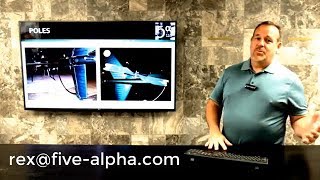
But we also have a tower nearby. And the tower has guy wires. This is approximately 380 foot tower. So guy wires on three sides. Now, this picture doesn't show it real well, but you can see the tower here. You can see this shadow here. Guy wires come off. They did put balls on here. They are required to mark it. But the thing is, is when you look at it from the ground level here, you can see the guy wires here, here and here. There is no way that you can get into this heliport from the north to the west without going through those guy wires. This particular heliport, guess what? It didn't have a 7480, didn't have a 5010. None of these obstructions were identified. So again, it's a helicopter trap. Doesn't meet the criteria. So wires and towers. Here's another example. So here's the heliport. Now notice that this heliport is asphalt. Don't ever make a heliport out of asphalt. Helicopters stick in asphalt. On hot days, one of two things can happen. One skid may stick and the other one release. Guess what? Now you have a pivot point, you have a rolling moment, you can get into dynamic rollover. Also having happened to me, you can actually have a large chunk of asphalt stick to the skid on takeoff, get about 50, 60ft in the air and it lets loose. Heaven forbid it hits somebody. In my case, it only hit a BMW. It was okay, well, it was covered by insurance. But also here, see, we have the power lines here, we have a building here, we have fence here, we have cars here. Notice where this picture was taken from though. It was taken from on top of a building. So this is a really tight area. You can't really get into this. And out of this, it doesn't really even have an 8 to 1. So this is one that's surrounded. Now, when we look at trees, what do we say? Trees grow and they can become a huge issue. So when we look at this heliport here, we don't want to put it next to a tree, we want to put it far away. Because one of the biggest challenges you're going to have is if you say, hey, we're going to cut the tree down. You have just become a lot of people's worst enemy in your neighborhood because nobody wants to cut down good trees. Good prior planting will help avoid that. Pick a good location and then don't plant trees next to your heliport once you do. Here's another example of trees. When we get into this, we have trees on all sides. Not a really good location for a heliport. We've basically hemmed this in quite well. Now we talk about safety nets. So safety nets are a requirement on any heliports elevated above 30 inches. So we see this primarily on rooftop facilities. But the safety net, remember the telof, the fado and the safety area, primary surface, nothing is supposed to be above that except for the lights at only 2 inches. Well, in this case, these safety nets actually stick up quite a bit. You can see where this tail rotor is actually closer to this. These are pivot points for dynamic rollover. These are locations where our tail rotor can actually impact something and have a catastrophic failure. Now, at an airport, these lights are designed to be breakaways. Well, we don't want want those on heliports. We want to make sure that we don't have any impact area for these tail rotors, because tail rotors don't do well with impacts. So on a safety net, we want to make sure this is slightly below the edge of the pad. Now this is a safety net that was properly installed. Basically it should have been on the outside of the building. They put it on the inside of the building. Now, we not only have a trip hazard as well as a hazard for catching the skid, or potential for catching a tail stinger or tail rotor, depending on the model of the aircraft that we're flying. When we look into buildings, how can you hit a building? Alright, well, here's a good picture. So here's a building, here's a building, here's a building, here's a building, here's a heliport. This doesn't do it justice, but this is a high point to a low point. So this is not only surrounded by, it's at the lowest point and there's a fence that runs beside it. So to get in and get out, there's one way in and one way out. And if you're on approach here and you have an emergency, you have no flyaway. And if, depending on what you're flying, whether it's single or twin, or if you don't have the emergency power for an engine failure in a twin, it's going to be a bad accident. So we talk about two approach departure paths that are unobstructed. To deal with winds. This is one that shows a single way in and single way out, which is also surrounded. That's definitely not the way we want to fly. We want to have as much outs as we possibly can in case of an emergency. So lights, we talked about that peripheral being 2 inches. This is a light that was too tall. You can see where it sticks up about three feet right here. So that's again something that you can hang a skid on. And it doesn't take much to roll a helicopter over. If you hang it up on a skid by accident and don't notice it, especially at night, and you get that rolling motion going and you go beyond the critical angle, boom, it's over. Now the other thing I want to point out in this picture is not the lights. We talked about the National Fire Protection Association 418 critical criteria in there is storage of fuel and also compressed gas. Notice where this fuel tank is right here. The418 specifically states that any fuel tanks for storage or any compressed gas shall be located 50ft outside the Fado. So if you do have an emergency or you do have an incident, you don't make it 10 times worse because now you've involved fuel, or worse yet, at a hospital, you have oxygen, liquid oxygen next to it. So these are one of those little things we look at. So the light's definitely one. The fuel is another one. Here's a couple more pictures of some of the other lights we see out there that are too tall. And we get into situations. You see this one down here? You can see how close the tail stinger is on that particular aircraft to that light. Now, poles. These are meant to protect the heliport from people parking on the pad. Problem is it's something that the helicopter can hit. We see here we have the poles. These are about 4ft tall. These are a little shorter. These are about 3ft tall. These are poles that were put in, but they don't meet the criteria. Remember, the tee loft is the landing and takeoff area. Then the FADO is the maneuver area. These are in the Fado. They shouldn't be there. Why? Because we can hit them with a helicopter and cause significant damage. As an example, here's what that looks like. So here's a 40 by 40 pad with a steel pole next to it. And you can see what that happens when you had impact. Now, having been involved in that particular case, I can tell you that a sudden stoppage, this an AS350 ended up costing in a total of approximately $350,000. That's a huge chunk of change. We don't want to spend that. We don't have enough money to fly and put gas in the tank, let alone deal with this. So we don't want this pole anywhere near our heliport. That is something that the pilot can, you know, refuse to land at, say, hey, it doesn't meet criteria. I'm not going to land there. Will you get blowback? Possibly. But at the same time, you don't want to be paying for this. Now, we covered a tremendous amount of information. We talked about the heliport advisory circular. That's the one primary guide in the United States. You can find that on the FAA website. It's AC or advisory circular 15053. It gets revised about every five to seven years. You can get that, download that for free. It's information that's available. Also part 157, you can go find that on the Internet. Part 77 is on the Internet. All the state dots have an aeronautics division. You can get information directly from them. And some states have criteria. Again, we live in the state of Indiana. So the DOT has a permitting process for heliports. Go through the state DOT and a great group of people and they will help you get your heliport permitted. They'll help you submit the 7480, and then you'll work with the FAA to get the airspace study done and move forward to getting a 50 10. Remember, that identifier is key to knowing that you exist, not only for you, but also for all those other people out there flying. Really today, it's all the UAS and drone people. You want to make sure they know you exist because the last thing you want to do is be on final approach or takeoff and meet a UAS or drone pilot operating in your area. He may be doing all the right things and all of a sudden you have an impact. That would be a bad day. If you have any information, you can contact me or contact Kenny and we'll be more than happy to answer any of your questions. Questions. Thanks for watching. I hope you guys have a safe day. Awesome. Wore out. All right.
Hope you all enjoyed that presentation. That's a lot of information. Rex told us that he teaches that normally over like a three day course. So that was condensing it down to the meat. And for those of you that stayed with us the whole time, you kind of see how understanding the, the proper design helps with the accident prevention. So Rex has a couple of questions that people ask during the presentation. So I'm going to go ahead and go back over to Rex and let him take care of those couple questions, and then we'll be back to wrap everything up.
There you go.
All right, folks, hopefully we gave you a lot of good information. Like I said, that's a lot to try to condense into one hour. I directed this specifically for pilots. What, what a pilot should be looking for, what they should worry about, what they need to do to educate themselves so they can make better decisions in the field. So the questions we got only a few. One was, if my heliport is not in the system, who should I contact? So, two entities there that I would say that you should contact and see what you need to do to get your heliport in the system. Number one is find out who the local flight standards district office or FISDO is that covers your area. Contact them. Also look for the state Department of Transportation Aeronautics Division for your state and contact them. Those two entities will help you put the paperwork together to submit if you don't have any already. One thing I will tell you, and we went over that in the presentation, certain states do require a permit, and certain states are more challenging than others. So be prepared to stop flying in and out of your heliport if no one knows you exist yet. That's just a fair warning. So be careful what you ask for, because once you start opening those doors, they can be interesting. Do military heliports have the same requirements? Good question. Yes and no. So when we look at military heliports, we get into the situation where Department of Defense follows additional criteria. So if you're in the military and you're wondering what the heck we follow, you look at unified facility criteria in that there's an airfield and heliport Planning and design guide. UFC 326001 covers all DoD. Now, key point there, every branch of the military does it a little differently. So if you're in the army, the Air Force, Navy, or the Marines, Coast Guard might be some specifics in there that you need to look at.
They may adopt FAA depending on where you're at.
Also, most do adopt and follow code. Next question, next question. What does building code have to do with accident prevention? Well, you'll hear people in the aviation industry always talk about the fact that most regulations and rules are written in blood. Same with what we're talking about here. Most rules would been put in place in building code and fire code because something bad happened. So fire code and building code are there to prevent those bad things from occurring again. So if you follow the code, the advisory circular and all the regulations in the state, what we're trying to do is just make that environment that much safer. The last question we got was on database error. And we do know that there's databases out there that have errors in those. It's up to us to look at these errors and these databases and actually try to fix those because no one else will. So if you find that your heliport's not in the system or it's incorrect, specifically if it's incorrect, make the individual that's the owner know that it's incorrect. Now, when it's incorrect, and it's already got a 5010 on file, normally print the 5010 out. And if it's something simple that you can just put a pen and ink change and send it back to the FAA's FSDO office and get it in the system. That's sure usually easy. Now, if it's something major that you move the heliport, say a quarter mile away and now it's on a rooftop, you're going to have to submit a new 7480 to get a new 5010 because they're two totally different airspaces that.
We have to worry about.
So with that, that's all the questions we've had.
Got a few more.
We got a couple more. Okay.
I want to tell you, there's a bunch of great jobs, great presentation, good job presenting. Rex, excellent presentation. Lots of that going on here.
Good.
And then some good questions. Have you heard of the FAA registering or approving helipads on boats or yachts?
Yes. Well, when you get into the boats and the yachts, if it's a boat that's free floating, that's different than a fixed facility.
Now, is it attached to shore and.
What waterway is it in? So if it's a barge in a water that's attached to the shore, now, the FAA would probably get involved. If it's a waterway type thing, now we get into the Coast Guard and when we get offshore, say these larger yachts, now we get into ICAO criteria and there's a specific criteria for ships at sea that's different than what we work with from the faa. So that can get interesting. There's a lot of information on the web on that.
Okay. And there's another good one, and I don't think you touched on this in the presentation. Maybe you did. How many times can a pilot land in his or her backyard a year before it needs to be a heliport.
So you get into the difference between a permanent location and a temporary location. So when you look in the part 157, and I'm going to have a senior moment here, and I can't remember the exact number, but there is a number of times that you can land and take off without temporary permit, and you can call the dot, tell them.
What you want to do, and you.
Land and take off there. In certain areas, and this is state by state, you will have to get a temporary certificate. Other areas, you just go and do it. Like I said, There's 50 different ways of doing business in the United States because each DOT has its own regulations. But there is criteria in the federal regulations as what constitutes permanent and temporary.
Okay. And somebody asked for your contact info, which I'm going to put that up on the screen here when we get done. Up for half a minute or so when we're done.
So anyone wants to send me nasty emails and call me, that information will be up here shortly.
Many hospital health ports do not meet these requirements. How are they permitted?
Well, the challenge with the hospital and having flown in the EMS world for 20 years, we get into a political challenge in that the Federal Aviation Administration does not have any regulatory authority to come in and tell a private facility to shut down. They can tell them they're doing a bad thing, tell them they're doing something really, really dangerous, and they can say you should cease and desist, but they can't force them to stop from a federal standpoint because the Federal Aviation Administration has never been given the legal authority from Congress to be able to really do that. So that would have to be a regulatory change from a legislative standpoint. Now, again, each state is different. So if you go, say the state of California, they are more engaged and have more criteria on the books from the Department of Transportation governing heliports. Other states have none really whatsoever. They don't have really any regulations. The DOT doesn't get involved.
And then you have everything in between.
So when it comes to forcing somebody to fix something, it becomes a huge challenge. Now, one of the things I've been involved in here in the state of Indiana is getting hospitals to fix bad heliports. I, as individual pilot, go in and say, I don't like your heliport. They're going to look at me and say, that's okay. The program down the street doesn't have a problem with it. They need the work. They'll come and land. However, in most states, there's A state association in the state of Indiana. There's the Indiana association of Air Medical Services in the state of Indiana, having been the president of that association. If you send a letter from the state association to hospital and say, hey, we want you to fix this.
None.
Of the programs in our state will land here until that has been fixed. Now, all of a sudden, you have some significant leverage. Individual pilots don't have that kind of leverage. Individual programs sometimes don't have that kind of leverage. However, a state association where everybody's on the same sheet of music can wield a significant amount of power. Be careful, though.
You really need to make sure that.
You'Re prepared to help these people.
I don't want to go out and.
Close a heliport without having options in.
My pocket to help them reopen it and do it right.
So do some research, do your homework. We don't want to beat them over the head with a stick. We want to get them with a carrot.
Awesome. Well, we wanted to give you something for coming today.
Okay, thanks guys.
And I'll let you know. You can go ahead and open that up if you want to.
Okay.
Our next FAA webinar is going to be on a cool weather tool that's kind of the best kept secret in the industry. And it is a, it's good for one of the best kept secrets for low altitude weather reporting. And I was first introduced to this by Rex about 10 years ago when we were flying EMS. And I love, we all lived by that tool. I mean, it's that good. And a lot of people don't know about it. And Rex brought up that it's good for uav, it's good for low flying airplane pilots. It's good for a lot of different, a lot of different pilots. So that should be the next one. Thanks everybody for joining helicopter ground school. Link is down below this video helicopterground.com if you want to learn more about any of our private commercial CFI instrument courses. Gary made a new code today for anyone attending one of these FAA webinars. And the code is FAA safety 15 off.
Yes.
So that code is going to stay good. If you attend one of these events, watch the presentation. You can use that code for 15% off. FAA safety 15 off. And we're also going to put a link down below for a free download of the number one bestseller top 10, 10 checkride tips that we did with Taz Christman. So in respect of everybody's time, we're going to end this thing right now. Yep. I'm going to put that up on the screen. I'm going to put Rex's contact info back up and we'll leave that go for 30 seconds or a minute or so so that if you want to contact Rex, he's, as already stated, he's open to take your questions. And he said he works internationally, so he can travel wherever to help with your heliport design. So thanks, everybody. Please click that like button. Please give us a share and we'll see you all in the next video. Unless anybody else got anything else? All right, we will see you all in the next video.
Take care.
Sa.










