Robinson R-22 Fatal Accident Review
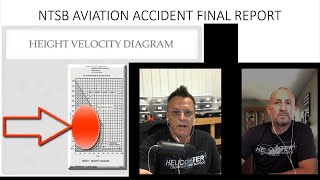
A Helicopter Online ground‑school video (hosts Kenny Keller and Brian) reviewing the Robinson R‑22 fatal accident (NTSB final report referenced) to teach helicopter safety. The hosts explain the height–velocity diagram (avoid upper/lower shaded areas), summarize the accident (photo flight operating at low altitudes — ~75–150 ft — leading to loss of control), note Robinson safety notices and the factory safety course, and emphasize risk management (know when to say no, prebrief emergency actions, minimize time in H–V shaded areas). The discussion includes weather and operational details from the NTSB report and advice for photo/news flights and job-related low‑level operations.
Questions this video answers
NTSB Aviation Accident Final Report, September 10, 2012.
Approximately 75 ft to 150 ft above ground.
Winds 130° at 8 knots.
3002 (reported as 3002 in transcript).
SN34 and SN24.
Chapters
Are you struggling with all the information there is to know to become a helicopter pilot? Welcome to Helicopter Online ground school.
It's rolling.
Last but not least, the height velocity diagram. I love talking about this one. This one you really need to understand. You have the upper shaded area that you can see there marked in red. And we have the lower shaded area of the height velocity diagram. These are the two areas that you must avoid when flying helicopters.
Every helicopter has a height velocity diagram.
You have the upper shaded area. If you have an engine failure in that upper shaded area, you do not have enough altitude and air speed to complete a successful auto rotation.
These diagrams were designed at the factory. Guys with tons of experience went out.
And tested this thing and took it to its limits. And that's what it's all about. It's showing what the average guy is going to be able to and not be able to do if he has an engine failure. If you're in a lower shaded area and you have an engine failure, when you go to flare, you're going to bang your tail boom and wreck the aircraft. So they're showing you the recommended takeoff profile. As you get moving forward in the helicopter, you're gaining speed little bit by little bit. And as you go faster, you can see there that they want you somewhere before 50, around 40 or so in that general vicinity, they want you to start climbing up. And then once you come up out of that takeoff profile, then you have a little more leeway for handling an engine failure. If the engine quits, you're then going to have airspeed, you're going to have altitude, engine stops, you've got somewhere to go so you could be, you know.
Climbing up a little more aggressively maybe.
If you need to be, or getting up to your cruise altitude for your cruise flight. That's what this diagram is all about. You need to know it, you need to understand it. Examiner's going to ask you about it, he's going to take you to this page, or he's going to have you open up the book and show you this.
And that's what you're going to want.
To explain to him.
I don't want to be in either.
Area, the upper shaded area. I do not have enough airspeed and altitude for a successful auto rotation landing. And again, the lower shaded area, if you're going fast and you're close to the ground when that engine quits, you're going to descend quickly and hit the ground. So you need that altitude with that higher speed so that you can flare and safely land. The helicopter recommended takeoff profile, it's everything. You should be thinking about this on every single takeoff that you make because you're using this chart and you're using the high velocity diagram to keep yourself safe as you. And that's the bottom line. Will you ever operate in those shaded areas? Yes, you probably will. But be thinking about it and try.
To minimize that time in that area.
As much as you possibly can. You get out into the real world and you're flying ems, you operate in that high velocity diagram quite often and you don't really have any choice but for training, using a big old Runway, you got lots of room. You want to avoid those shaded areas.
Helicopterground.com and we are live. We're going to talk about an accident report today. Brian's going to take the lead. I'm running cameras and stuff and Heather's in chat talking to everybody.
So here we go.
I'm going to. I got some slides here that Brian has prepared. He wants me to bring up. I'm Kenny Keller, creator of Helicopter Land Ground School. And again, this accident, we've been talking with Scott Terrell, the US Helicopter safety team, and we've discussed this accident. We wanted to prepare a video on it and just talk a little bit about what happened. We're going to do it in good taste. We're not here to blame the pilot. It was an unfortunate fatal accident. So I'll bring up your first slide, Brian, so they can see exactly what the accident is. And it is the NTSB Aviation Accident Final Report, September 10, 2012. Take it away, Brian.
All righty. Well, I'm glad we're doing this today, Kenny. For anybody that wants to pull up that report, there's the number. You can go to the NTSB accident database and you can read this entire report. It is very lengthy. There's a lot of good information in the report. But I think the big takeaway are just a few key points. First off, this was an R22 and, and it was a photo flight. And in the report it does talk about some pretty low altitudes that the helicopter was operating in. Kind of a little bit of a dead giveaway at the beginning. You saw the video on the height velocity diagram. That's the whole reason why we're talking about this today. Kenny does say in the video that there are times as helicopter pilots we may find ourselves operating in the height velocity diagram, but you need to do that with some caution in mind. Now, this particular accident that occurred, there were varying witness reports as far as altitudes, but the average Altitude that we gleaned from the report was the helicopter was operating between 75ft and 150ft above the ground. On this photo flight, there were two people on board. Like I said, it was an R22, two passengers. And it ended up the defining event that they, that they determined was a loss of control in flight. And you think about that and you go, right, here's a pilot doing a photo flight for all accounts. Seems like everything's going smooth, engines running, everything's operating correctly, and then something goes wrong. Now what went wrong? When you read the NTSB report, you know, you can, you can glean a couple of things. Was there an engine failure? Was there? They, even when you read it, they'll bring up possible carburetor icing conditions. Was that a cause of a problem? Don't know. Did he get lte? I'm leaning more towards the LTE as we go through the report here and you make your determination as to what happened. But the bottom line is it really doesn't matter what was the cause as far as was it an engine failure, was it lte? You know, was it something else? The problem was the helicopter was being operated at a very low altitude, like I said, 75 to 150ft when the problem happened. And there wasn't enough altitude or airspeed to safely either auto rotate the helicopter without either substantial damage or ending up with a fatality. So loss of control in flight, that's a big problem for helicopter pilots. It shouldn't happen. It does happen. And I think with what the US Helicopter safety team's working towards, as well as the FAA and the ntsb, everybody wants to see these accidents, numbers reduced. It'd be great if we had none of, but we definitely need to reduce them as far as the altitude that this helicopter pilot was operating in. When you're doing photo flights and this happens a lot, I think to pilots, they don't want to say no. A lot of times now people that are watching this or that will watch it later may have a different opinion on that. And they may say, very well, I have no problem telling somebody no, I'm not going to put the helicopter in a position that, you know, if something goes wrong, that I'm not going to be able to safely land the helicopter. But there are a lot of people out there and this one pilot in, in particular, it seems, put himself and his occupant, you know, his passenger in a position where when something did go wrong, he wasn't able to successfully land the helicopter. There are Robinson safety notices that have been, that have been around for a long time. And if you go, if you have, if you fly a Robinson or you, you want to go online and you want to pull up all the safety notices that Robinson has put out, you can do that.
Yep, I brought up the first one, Brian. Safety notice.
Okay.
SN34 is on the screen now. Aerial survey and photo flights. Very high risk.
Yeah, very, very high risk. And, and so at the bottom of, of that particular safety notice, there's, there's three things that they, that they list. And Kenny, if you can scroll down to the screen now, three items. So they talk about the number of hours that a pilot should have for, you know, performing photo flight missions. And this pilot had more than enough hours. He had more than enough hours in the R22 and it says extensive training in both low rotor RPM and settling with power recovery techniques. But, you know, and that's true, that's very true. But I think the one that jumps out at me the most, if, if more pilots could do number three more often, I think a lot of these, you know, tragic accidents could be avoided. So number three, willing to say no to the observer or photographer and only fly the aircraft at speeds, altitudes and wind angles that are safe and allow a good escape route. So if you think about that, if this pilot had either told the, and I don't know what the photographer's intentions were, we really don't know what was going on inside the cockpit. I don't want to Monday morning quarterback this thing, but, you know, when the pilot determined that, you know, he was going to be between 75 and 150ft, that should be clue number one that I shouldn't be a, I shouldn't be that low over a. I think it was a steel pipe yard that they were taking pictures of. And his airspeed, according to witnesses, was pretty low to where they said that looked like he was in a hover when the helicopter began to spin. So you know, you go back to number three and it says altitudes, airspeeds and wind angles. Now the wind, according to the weather report that was provided by the ntsb and let me see if I can find that here real quick. The weather report on that day. Winds were 130 at 8 knots, visibility 10 miles. Ceiling was scattered clouds at 8,000ft. And then the temperature in dew point temperature is 93 degrees Fahrenheit. So it was a warm day. Outside altimeter was 3002. So a nice high pressure system was there. But it sounds like, great day to fly, you know, good weather, little warm outside. But the wind, you think about the wind, 130 degrees at 8 knots. So the one witness that they had said, actually maybe there was two. The helicopter was pointed to the north. The nose of the helicopter was facing north. So let's think about that. If his nose is north and the wind is 13 0, it's going to be more towards the tail at 8 knots. Is it possible when he got into that, almost into a hover, that he experienced lte? Because there was a report that said the helicopter looked like it spun to the right. Other reports said it turned to the left. So not too sure. And really it doesn't matter whether he got LTE or whether he had an engine failure. The problem was that whatever happened, happened at 75 to 150ft off the ground, well within the height velocity diagram. And for every height velocity diagram that's out there that I've seen, there's usually a caution. And Kenny, if you can go to the height velocity diagram.
Okay, bringing it up now at the.
Bottom of this one, this one for a Robinson, you know, right at the very bottom. Avoid operation in shaded area. It doesn't say that you can't do it, it says to avoid it. And any publications that you read about the height velocity diagram, they're always going to caution people about operating in that area. Low airspeeds in those altitudes. And those two red dots, those are roughly about what the witnesses said that the helicopter pilot was operating at almost in a hover between 75ft, 150ft, somewhere in there. And that is well within the height velocity diagram. So, you know, I think we need to continue to have these discussions. Not so much to point our fingers at the pilot, you know, for doing something wrong, but I think putting more emphasis on risk management is something that I know the aviation industry has really been harping on for pilots is risk management, staying ahead of the aircraft. Whatever aircraft you're flying, whether it's an airplane, helicopter, gyrocopter, doesn't matter. You know, we're all pilots, so we need to utilize risk management skills. We need to understand the do's and don'ts of flying, you know, what safe operation, what's a not safe operation, and how are we going to mitigate these risks? And I think if more pilots spend more time doing risk management and mitigating those risks and saying no to certain operations, I think, you know, that accident percentage will continue to go down. Anything to add, Kenny?
Did we Talk about SN24 yet. We want to mention that today, too.
No, actually we didn't. Yeah, if you want to pull that one up.
Okay, that's up on the screen now.
Let me see if I can find it.
I'll jump in here just for a second. And I want to mention that.
Yeah, go ahead.
Today, Scott wanted to mention a couple of these Robinson safety notices during this presentation today, because if this comes out good, they're going to use this on the FAA lessons learned Libra to go along with this accident. And so Scott asked us if we wouldn't mind mentioning these two safety notices today. And I said, absolutely, I would love to add those. And the reason that I wanted to talk about them is the Robinson Safety course is one of the best courses you'll ever attend for the money. And that came up in these discussions too, with Scott from the US Helicopter safety team. And those safety notices, a lot of times people stick their nose up because it says Robinson, you know, because there's a lot of people that don't like a Robinson. But majority of those safety notices are good no matter what helicopter you're flying across the board. So especially if you're flying Robinsons in your early training, like I was, my instructor said, hey, you make sure you go to the back of this poh. And I was going to have mine out today. But anyway, in the back of the poh, it has the safety tips and safety notices. That is good stuff. It's excellent information because those safety notices and tips are taken from what has got people hurt and got people killed. Right. So when you go through those safety notices and study those, you're learning what Robinson has learned about why people crash helicopters and why they lose their lives. And when I first read this helicopter accident report, I noticed they mentioned that the pilot had not attended the Robinson Factory Safety Course. And at first I didn't really think too much about that. And then after Brian and I just started discussing it, it popped in my head that, you know what? Maybe that could have made a difference because that is such a great school. And I know when I went to the Robinson Helicopter Factory Safety Course, I went as a new private pilot working towards my commercial. So I had learned a lot of these really good things from my instructor. Like he had me reading accident reports on R22s, which is what I was flying as a private pilot. And going to that Robinson factory school hones all those things that you learn as a student pilot. But then when you go to the factory, you go away with an understanding of why Robinson got a bad name in the beginning because of all the bad things that happened. Okay? So over the years, Robinson has developed what I think is some of the best training on the planet for new pilots. And especially, of course, anyone flying an R22 or an R44 or an R66. But that school is, you know, that's where I learned in depth about the height velocity diagram, because they explain to you, here's how we make this height velocity diagram for the R22. This isn't a bunch of private pilots out there putting these helicopters in these awkward situations. These are high time, skilled pilots that go out and test what the aircraft can and can't do. So that high velocity diagram is geared towards who is what I consider an everyday pilot. Just like me, okay? I'm an everyday pilot. I'm not a highly experienced test pilot, been doing test flying for 40 years. I'm an average pilot. And that high velocity diagram is geared for the average person. And this could be private pilot, commercial pilot, even newer CFIs. Anybody out there flying in an environment, when you're putting yourself on that high velocity diagram, as Brian already talked about at the factory, they just hone that in. And when they explain to you how they go out and come up with those numbers specifically for the R22, it just really hones in what you can and can't do with an aircraft. And that same instructor who got me reading R22 accident reports, got me reading the Robinson factory safety notices that we've been talking about, is also the one that taught me as a student pilot. I can remember we're working on my private. And he goes, kenny, I know you want to be a professional pilot. I know that you're going to go on, you want to go on a commercial and cfi. And he said, I want to tell you right now, listen to me very closely. He said, you're going to get out in the commercial world later as a commercial pilot and you're going to start doing photo flights. And he said, these photographers are going to always like that best shot. You're going to be downwind, they're going to want you to come to a stop. And he said, there's going to be times where you have to tell them, I cannot do this. So Brian brought up number three earlier, and I'll bring that back up on the screen because I remember my instructor beating that in my brain about how you have to be able to say no to a photographer. So his name was Brad. And Brad taught me a lot of really Good stuff. And I remember that discussion. I remember where we were in the pattern. I remember the aircraft we were in. I remember the day that he said, kenny, listen to me very closely. So that's why the. I think the Robinson training is awesome. The Robinson factory school is awesome. So that's why they mentioned it in the accident report. That's why we wanted to mention these two safety notices, because this is what gets people hurt and killed. And yeah, I just wanted to relay that to me because when after Brian and I read the report and we both talked to Scott at the US Helicopter Safety Team, Scott said, you know what jumps out at you? And I said, well, immediately, the first thing that jumped out of me as soon as I started reading that report was back to that conversation with Brad about later. When you get further into your career, this is what's going to happen to you. And people are going to want to put you in bad spots. And I can tell you, I started doing photo flights and then I did news reporting in a Jet Ranger. And I can tell you when you're live with the news and you're circling in an accident or something, the news station, you're talking to the news station, they'll go, whoa, slow down, slow down. Hey, stop right there. Oh, we love that shot. Stop. And here you are, heavy loaded Jet Ranger, extra person on, more fuel. Because they want to stay, want you to stay live for the evening news and you're downwind and they want you to stop and you have to go, nope, we'll go around and we'll try to do what we can. But there's just those times when you have to say no. Whether it's a photography flight or a news reporting flight, you're trained properly from day one as private pilot what to do and what not to do with that aircraft. So with these accidents, when you read through this report, you just go, I want to mention again that it didn't. I don't know if I mentioned this. I told Brian, I want to talk about this. Usually when you read an accident report, you see red flag, red flag, red flag, bad judgment chain. You just, you start seeing where this is going to go prior to it. And when you read this accident report, I just didn't get that feeling. I'm like, I know what's going to happen, but they don't, they don't give you a bunch of meat about the pilot and he was out too late and he didn't have the proper requirements or the, something was wrong with the aircraft. You don't get any of that with this one. So you immediately just go, yeah, this guy was in a bad position. And whether it turned into LTE or it had an engine failure because they talk about could be possibly, you know, the whole humidity thing and the carb heat and maybe the engine quit. So Brian and I have discussed this at length and you do in your mind you're going, well let's see, the engine could have quit. Well, yep, it could have been lte. There is no clear cut. There's no clear cut. When you get done reading the report you just kind of, kind of summarize and go, well might be this, might be that, but you know, we're just average guys on a video doing a review. NTSB didn't say for sure so we can't really say for sure either, but we can talk about it and learn from it and wow, I just go on like crazy. You got some more thoughts there Brian? I'm going to look over at the comments and see what we got going on in comments but no. Anything else Brian?
Pretty much covered? Yeah, I think we've pretty much have covered, you know, everything in the, in the report. There's not much more to say in operating in that high velocity diagram is, is a can put you in a very hazardous situation and that's why it says to avoid it if you can. And coming from my line of work that I did, did I operate in the height velocity diagram on various occasions? Yes, I did. But those were things that were part of the job that we were doing. We were very well aware of the height velocity diagram. Excuse me. And we had, you know, pre flight briefings. We discussed all of our emergency procedures. If anything happens, this is what we're going to do. This is where we're going to go. It wasn't just flippantly go out and low level fly within the high velocity diagram. So I mean there are people that will watch this that have jobs that, that particular type of flying is something that is part of the job, that is what they do. But as far as photo flights and things of that nature, you know, they've got zoom cameras and they've got these lenses on cameras that can, they can get a shot from quite a distance. So I think if you stayed, you know, 700ft instead of 100, 100ft, you'd be much better suited for any type of problem that you might have. So that's really all I have.
Well, when you say that, it brings me back to Jed, who's the tree saw pilot who I trained back from a young kid many years ago, and that video has got over 4 million views and people go crazy over it. Right? How cool. That's so cool. I went to go watch Jed and he took me up in the helicopter and showed me how they operate, how close they operate to the power lines. And I'm like, oh, my God, you're in the height velocity diagram. And he goes, all day, buddy. All day long, man. We fly in the height velocity diagram all day long, and that's just what they do, and that's part of that job. So they. It's on their minds. I go, so you think about it. He goes, all day, buddy. He goes, I'm thinking about settling with power. And I'm thinking about lte. He goes, I'm thinking about the height velocity diagram all day long because we fly in it. So like you just said, sometimes you have to do it. You just want to try to minimize the risk. Right. The best you can and at least have it in your mind, what am I going to do? Do I have some kind of an out here? So, you know, it is a great topic. You can think about some ending thoughts if you want to there, Brian. I know Heather's been in there answering comments. Doing something a little different today with Brian and I here together. This is. This is awesome. We're gonna do live every day in May. So this is what we wanted to start out with. I appreciate the work so far with the U.S. helicopter Safety Team. I was honored when Scott first called me and asked Helicopter Land Ground school to get involved in videos with the FAA Lessons Learned library. It's exciting stuff. I've had numerous conversations with him, and Brian now is in the picture. Brian has had some phone calls and there's more to come. And he's asked hogs to get involved in some other things that the U.S. helicopter safety team is doing. And he want to know if we want to be involved. And I said absolutely, 100% yes. I said, it's an honor. I'm honored that you've even asked us to be a part of what you're doing. So one or two of our videos are already on the FAA Lessons Learned website, and if this one's good, this one will be part of it too. So we just want to say thanks to everybody that's tuning in today. I'm not going to sit here and bore everybody reviewing your questions. I know Heather's been there for you. Heather is taking care of the phone line seven days a week at 557-476-71797. She's taking care of members, easy requests, things you might need, login problems. And she can answer a lot of simple questions about learning to fly. And she was answering questions about written test today and she did good. She's like somebody asked is the FAA written test the same between helicopter and airplane? And she's like no, absolutely not. No, they are two different written tests. And so Heather can answer a lot of simple questions. I'm the creator of Helicopter Land Ground School. I'm Kenny Keller, been online eight years with this Brian Rutledge is the gentleman you see presenting with me today. If you don't know Brian yet, Brian has 30 years in aviation, airplane helicopter instructor, law enforcement officer, 25 years that just retired and is now working with helicopter aligned ground school as our full time operations manager. And Brian is helping me build new content but is also helping going through our courses Private commercial, cfi, instrument. And Brian is the most detail oriented pilot I've ever seen. He gets tired of hearing me say that, but he's so super detail oriented. And Brian's been doing a lot of stuff for us inside ground school, mainly downloads. The members are calling him Brian Download Rutledge now because he's created some study downloads that we've put inside the site and there's a lot more of that to come.
Brian.
Brian worked with me as a part time status for the last seven years. We met in 2013 and he was flying for the sheriff's department then and I helped him online do some Skype and helped him get his CFI4 helicopters at that time. And he ended up running the unit and was in charge of the airplanes that helicopters in charge of training. So we've brought a who I feel like a person onto the HOGS team that just helping us take the whole thing to the next level. So Brian is here for you, our current members and anybody that signs up for helicopter Land Ground school. You get a quote 30 minute consultation with Brian's with Brian that have turned into an hour and an hour and 30 minutes because that's the way Brian is. But that's okay because I'm that way too. So there you go. Any last minute thoughts before we go, Brian? We're gonna do this every day for May.
Yep. Probably the only thing, just remember, um, just a little, little thing to keep in the back of your mind for every pilot out there. Just remember we're all student pilots. No matter how many ratings we have, there's plenty of learning to be done. None of Us know everything and we just need to stay on top of our skill. That's for sure.
Brian and I talk about this all the time. I learn every single day. I swear to God, if I jump in the instrument right now and I went out for a flight, I'd come back and I would have went, huh, Wow. I never noticed that before. Right? You learn every single day. And we, heck, I learned from our students a lot of times from our members. They'll send you an email about something or a story or whatever. But anyway, I'm going to wrap it up. Thanks everybody for tuning in. We're going to move on. I'll be live every day this month in May. Brian and Heather will be joining Monday through Friday. Brian's going to teach some topics. He's going to pick out five for next week. So we're going to teach you something every day. Monday, Tuesday, Wednesday, Thursday, Friday. Quick short subjects, things that are relevant to what's going on in the world right now. I know Brian wants to talk about one of the there's been some things put out, aviation related due to the COVID 19 and there's some things going on that are pretty important that need, that you need to know as a pilot right now in the world we're living in. So I think Brian's going to repair some repair, prepare something that for next week along with a few others. And then Fridays and Saturdays or Saturday and Sunday, I'll still go live and do something, maybe just answer basically member questions. I'll give Heather and Brian Saturday and Sunday off to do whatever they want to do. So that's the deal for May. Every day in May. I was drinking coffee this morning. Ooh, I like that. Live every day in May kind of rhymes. I was a poet and didn't know it. So that's what we're doing, people. We're going to be teaching, having fun, going live every day. And we're going to do it at 2 o'.
Clock.
So now you know, so many members have asked and said, not just members, but YouTube followers and viewers, like, well, hey, we sure would like a notification. Or sometimes we do live, sometimes we do a video premiere. Sometimes I did them at, you know, 2:00pm, sometimes I did them at 9:00 clock at night. Right. Just random. And I've always, I'm a random kind of guy. But that's why Brian's here. Brian's a scheduling, you know, more of a organized kind of guy. So I know Brian had even said anything yet. But I'm sure he's liking the idea of every day 2:00 clock because that's scheduled. And now he can. He can get everything planned for next week, so he knows what he's going to teach. Monday, Tuesday, Wednesday, Thursday, Thursday, Friday. So, all good stuff. I mentioned somebody saw a code. Yeah, helicopterground.com below is the link. There's always something cool going on. Go down there, check out our memberships, like subscribe. Any last words from Brian?
Nope. I think we've covered everything.
All right, sounds good. Thanks everybody for tuning in and we'll see you tomorrow at 2.










