Robinson R-44 is a BEAST- 17 Hour Cross Country flight in 2 Days
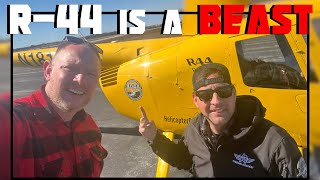
Kenny Keller flew a Robinson R44 helicopter 17 hours across two days from Las Vegas to Indiana, hitting ground speeds near 140 knots with tailwinds and climbing over 10,000 feet above the Grand Canyon. The video covers fuel stops, fatigue, and the R44's reliability, plus a seven-step guide to helicopter private pilot training under FAA Part 61.
Chapters
Oh.
Hello.
As soon as we walk in, This is a little different. We're going to show you some footage here real quick. We decided to keep it. Not the greatest audio of all time, but we're going to roll this. The guys got back in the R44 yesterday, late in the day, after 17 hours in the R44 in two days. And it was weird because their energy, what you thought would have been like woohoo. But they were so drained and tired, not even funny. So we're gonna show you that clip and what else are we gonna show them? Step four is that going in. So we're gonna let you see what little debrief from two guys going from Las Vegas to Indiana. Two days, 17 hours of flying. We'll just, we'll roll the video. So what's it like getting in a helicopter on Tuesday morning in Las Vegas and by supper, Wednesday or whatever? Wednesday you left Las Vegas at what time in the morning?
7, 7:30?
7, 7:30 in the morning on Vegas Yesterday. Wednesday it's Thursday evening and you guys have just drove here at 6:30. How did you get from Las Vegas to Indiana in two days?
Helicopter. Helicopter and good tailwinds.
Why did it take three days the first time?
Weather?
Well, yeah, weather in our Albuquerque and.
We went to south south out to Mexico.
We had winter, was it rain and low ceilings and stuff like that in St. Louis. And we ended up having to stay there because we didn't want to chance it.
Yeah, we only flew three, three hours the first, the first day when we left here.
So we were discussing earlier, Hauser and I. I've never done it in 30 years you've done it. Hauser's been flying 20 some. We never went from Vegas to Indiana or anywhere out southwest. So what's it like?
It was a very cool experience. The mountains are a different animal for sure. Just with, I mean setting up landings and just with the, the power in the helicopter with the altitude and we actually got a altimeter of over 10,000ft. We got a picture of that. So I hadn't seen that.
Was it 10,000 to get over something?
Yeah, yeah.
We had to climb. Well, to go over the Grand Canyon we had to be. One sector was. We had to be above 9,999. So we went to 10:1.
So you can't even really get down and get a good look?
Not really. There was a couple spots. It was just one sector. Another sector we did, we got down to what, 8,000. And then when we got out and we went over Horseshoe bend. We were able to get down to like 500ft, so still some awesome views.
So when you guys went down, it was about 20 hours of flight time to get to Vegas from Indiana. What was it this time, coming back?
I've not added it all up yet. I think it's gonna be less.
Yeah, probably less. Because obviously we had yesterday we had some pretty good tailwinds. And then today after our, what, that second fuel stop, we had 20, 30 knot tailwinds. So it started kicking up in. In Illinois, which was nice.
What was your best ground speed yesterday?
I think we had what, 140.
We had 140.
Ooh, 140. That's why you guys got here today.
Yeah, yeah, 110. Yeah, about 30 knot to Owen.
Yeah, yeah, we were booking.
So how many fuel stops total?
We did two today and we did what, five yesterday.
Five yesterday, Is that right?
Yeah, seven. Seven.
So today you only did two. And so were you flying the, like almost three hours for each stop?
Two. About two hours.
So you guys were. Okay. So you stopped in Kansas, right? Overnight? Yeah.
Staying in Witchita last night.
So you flew farther yesterday?
Oh, yeah.
Yes, we had about five, six hours a night.
Yeah.
Last night.
So you flew a bunch of the night last night.
Yeah.
So the invaluable night that's so hard to get, you now have it?
Yeah, got a lot of it.
You probably got what you needed for your commercial.
Yeah, we. Yeah, we did Foggles coming out today too, for a little over two hours.
Yeah.
How much total Fogle time? Two hours?
About two hours. Yeah, we did it today. He did the night yesterday and Boggles today.
I sleep good tonight.
I mean, I can tell the energy's pretty low.
Yeah, Last night. Yesterday was a long day. Yeah, we got into wichita about midnight, 12:30, something like that. So by the time we got to the hotel and got the room and finally got to bed, I think it was probably closer to 1:30. Yeah. So.
And then we were up at 7.
Yeah, we ate there and yeah, I think we actually took off this morning.
Around and we didn't really like rush it this morning either.
We knew it was only gonna be like five hours.
So I thought for sure it would be dark, it'd be late before you guys got here.
But we thought too. But if we hadn't made it to Wichita yesterday, it would have definitely. We would have added another two hours to today.
But this trip out from Vegas to here is definitely the way to do it versus what we did. Yeah, we were exhausted when we got To Vegas. Just with that third day and all the weather. Arriving at night in the mountains.
Yeah.
So the R44 left here beginning of November. It's now end of February. You did 100 hour on it. Other. Other than that, you didn't call me or text me about any kind of problems. So how has that R44 performed since it left four months ago?
Beast. I love that thing. It's great.
Hasn't broken down.
No, it's great.
And fell to start.
No.
Say it out loud. I need some wood. And that's not real wood, but, like, so did just perform. Just every time you flew it, it flew.
Never had any issues with it. It was great. It is awesome.
So it's a. Somewhat of a testament with, you know, the R44 now has 350 some hours. We got it with zero, you know, or four hours when we picked it up when Heather and I got it year and a half ago. Going on two years. Been through an overspeed, which was my fault. So I had a couple cylinder problems.
They're good now. Good. Good compressions last week. I'm sure he's gonna have good compressions when he does it tomorrow.
Which it's.
It's.
They dropped it in Rochester at our maintenance guy who's now gonna do an annual. That's what we were concerned about was 300 hours. You know, a couple cylinders were bad. So what's gonna happen to the other cylinders? But now you've done the 100 hour, you checked the compression. You've been flying in mountainous areas, higher elevations. When I was there with you, we were out there three or 4,000ft, and it was working pretty hard. It's kind of a testament to the Robinson helicopter.
I would say the 44 is a great helicopter. Yeah, I like it.
And ours specifically? Oh, yeah.
Most definitely.
It's a smooth flying.
I've flown dozens of R44s. This one's a really good one. I like it.
You know, as much as I like the instrument. Flew it for years. Can I imagine flying four months and not having to do anything to it?
I don't.
I just doesn't seem like that happened. Right. Like, that's pretty amazing.
Yeah.
All right, well, we're gonna go. You guys got the energy for supper?
Yeah, we're hungry. We didn't really have lunch.
No, we had some granola bars. Pringles.
Pringles. We ate a lot of Pringles.
And you've been with us to Rexes, right?
Yeah. Last time we were here.
Yeah.
We're Gonna get ready to go have supper and go to Rex's or maybe both. Maybe we'll have supper at Rex's. Open mic night. We got drivers, we'll figure out who's staying, what we want to do. What is the number one? Just hands down, like this is the freaking coolest.
I think the mountains. Yeah, the mountains for me and seeing the Grand Canyon and just getting, you know, seeing Vegas and then the mountain training, just can't get that.
So did you guys get your whole 10 hours into the mountain time before you left? We.
I think we almost did like 8.7 or 8.9. Yeah. So we bout.
We did about.
Yeah, we did a lot.
And we're number one. You know, the helicopter's got 350 hours on it. We'll say 100 of those are Jason now. Pretty much, yeah. All right, well, they're hungry, they're tired. It's been a long week. So. Yeah, we don't know where this video is going, but whatever. Put a comment below. We're back to seven steps for private pilot. Let's review. Number one, get that introductory flight. Just get it, go do it. Number two, chart your course and figure out what study resources you are going to start using. At least get the helicopter flying handbook on the way. Start looking through that and then as you move forward, start working on getting that FAA written test done. The sooner you get that thing done out of the way, the better off you're going to be and you're going to save time and you're going to save money. Next, as you're doing your duel, you've got your flight school picked. You're doing all this. You got the written done or during about the same time. Build your hours, complete your FAA aeronautical requirements. And we failed to mention this back in video. Two, this is one of the study resources you're going to need to have. So this is the far aim. You can use electronic version if you like. I still like the paper. I. I use both. Part 61. Part 61 is how we get our license. So this is where we're going to go to look for the aeronautical requirements. I have everybody highlight these. Part 43, that's for maintenance. Part 61 is how you get your license. Part 67 is for medical standards. Part 91, general operating flight rules, NTSB 830. You should have all those highlighted because most of the things you're going to look up in this book are right there. So highlight those. Getting the aeronautical requirements done. Again, this is something else. Somebody shows up or they call and hey, I want to do my checkride. Like we have a guy now who is close. He's got maybe 60, 70 hours, still needs his written test. No, I think the written test is done. Written test is done. But he still has some requirements to do. And he talked about coming up early so we could do those before the final approach course. Not sure if he's got those done yet. But at this point where he's that close, he has the written test done, he's been studying, he's ready, he wants to schedule his test. But think about it, he's still got a night requirement to finish or something to finish. So you want to get these requirements done as soon as possible. As well as you're working through the training, you're getting your duel, you're getting your solo. Your instructor should have a plan for covering. A lot of these requirements should be covered prior to solo in all reality, because part of the cross country is for instructor to go with you on a certain route and get you prepared to do cross countries. You want to go to part 61109. And this is something all the time, people will say, well, hey, what do I need for this rating? Or what do I need for that rating? And a lot of times it's add on pilots and they'll be going, well, how many hours do I need? And a lot of us that instructors go, well, you're a rated pilot. You ought to know how to look in under par 61 and look and see what the requirements are in here. Under 61109, aeronautical experience you go to for a helicopter rating and it'll explain 40 hours total for the initial 20 a dual, and it's going to go right down through and list your cross country requirements, your solo requirements, your night stuff. It's only about a paragraph or three or four paragraphs. It only starts there and goes to there. So it's very easy for you to look up. So you could even push your instructor a little bit. Let's, let's be honest here. There are a lot of flight schools out there that are doing great and working with you and making sure your training is going along a good path. And this morning Lindsey asked me like, well, how is it that people end up with requirements aren't done or the written test is done? Is that on instructor or the student? I'm like, not really. That should be on your flight school and your instructor. They should have a nice plan for you to get your rating and take care of all these things. However, if you're at one of those schools where they're not, they're just flying the hell out of you, running up their time. They don't seem to care about your rating. You could pull this over on the instructor and say, hey, I still need this. I still need this. I want to get these things done. In your plan of going through seven steps in order to make this thing go and make the best use of your time and your money, make sure early on as you're doing your duel, you come up with a plan with your instructor. Your instructor should be doing it for you, but if not, push them. Hey, I want. What's the plan? How are we going to get these requirements done? How are we getting my solo time done? And we're going to talk about solo in the next video and give you some tips on that. Getting these requirements done, knowing how to look them up, it's very easy to check. And let me tell you this. So many times people show up, they think they're ready, and I'll even ask them on the phone or on a zoom. You got your requirements done? Well, yeah. I'm like, are you sure? Yep. Well, did you go through with your instructor? Oh, yeah, we went through it three times. They show up and guess what? We'll sit down, go through it with them. Something's still not right. Maybe the flight needed to be 2.0 and it was 1.8, or there's a sign off missing. To get through these ratings and make it go again with the best use of your time and your money, make sure you're going through with a good plan and getting these requirements done as soon as you can, and make sure that they're all done. You got the right endorsements, and, you know, push your instructor if you have to. That is step number four. Next one, solo with confidence. Finish your solo time efficiently. So we're going to go more into that in the next video as Lindsey picks up and takes away Private. Oh, because she wants. They want it. Yeah, because we're going to pimp this. The maneuver guide. We have a maneuver guide we're going to put down below for you. Again, Brian Rutledge, our operations manager, put this together. He went through the Helicopter Flying Handbook and put together the maneuvers as per the Helicopter Flying Handbook. You're going to find that most everything we do in helicopters, it doesn't really matter which helicopter you fly. You might have a different airspeed, a different vne. A little bit of technique might be a little bit different from one to the other. But in general, helicopter flying is helicopter flying no matter what. And the helicopter Flying book has laid out all of the specific maneuvers and what's acceptable for to a standard for a maneuver and how they're taught. So we're going to put a link down below for that. And since she took that away from me, we'll put a link down below for Private Pilot 101. Again, geared for beginners. It's going to help you save time and money through my headache and heartache. That's what a lot of this book has in it is things I've seen. Either I made the mistakes or students we've seen made the mistakes. We're going to help you avoid those with this helicopter training blueprint. Private Pilot 101. I can't say private pilot. Private pilot. Put that link down below as well. So do us a favor. Subscribe to the channel. Trying to get to 50,000 subscribers. It don't take much. It doesn't cost you anything little. Subscribe and notification bell and you'll get notified for the other steps coming up. So we'll see you in the next video. Peace out. When you feel the pressure to fly, but know the right decision is to stay on the ground, hit the hogs no go and live to fly another day. Helicopterground.com.










