Robinson R-44 Start Up & Get HOGS Gear @ hogsmerch.com
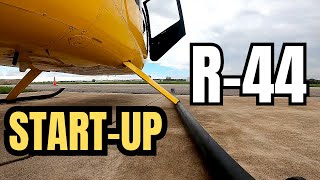
Kenny Keller walks through the Robinson R44 startup checklist and engine run-up, hitting specific power targets like 50-60% light-out and 80% at altitude. He details an overspeed incident that cost $54,000 and three months of downtime to show why you follow the procedure exactly, slow and smooth.
Questions this video answers
50 to 60% (stated during starter/light-out procedure).
75% (mag check at 75%).
About 80% at altitude (speaker: "At altitude, I'll go up to 80").
Approximately $54,000 in damage and about three months without the aircraft.
Originally $97; mentioned as on sale for half price during the 12-year anniversary sale.
Chapters
All right.
I'm gonna leave my door open for a little bit of air movement. We've already got our seat belts on.
Everybody's got their seat belts on.
Fuel shutoff valve.
It is on.
Collective friction off. Check the controls. So off there, off there. Make a nice big round. Make sure things free. Same thing with the pedals. Same thing with collective. Back down. Lock the collective, lock the cyclic. Push carb heat down and back to the checklist. Throttle.
Yep.
Full travel? Yep. Collective full down. Everything locked?
Yep. Pedals neutral.
Rotor brake disengaged? Yep.
Circuit breakers.
Take a quick look.
Make sure they're all in.
Carb heat off. Yep.
I pushed it down.
Mixture Full rich. Mixture guard installed? Yep. Landing light switch off. Avionics switch off. It is. Clutch disengaged. Altimeter set. Hydraulic on. Throttle twist for priming. I'm gonna go three to add to the one. Throttle closed. Battery and strobe switches on. So now I'm gonna go ahead and turn the power on. We'll put our headsets on to continue the startup. So we have the audio. Okay.
Back to battery on.
Area clear.
Clear to the right.
Clear to the left.
We're all good. Engine switch. Start them both. There we go. That's a little cooler now. So let's go. Starter on. Alternator. Avionics. Clutch engaged. Now go back to make sure I caught everything. And oil pressure is up in the green already. So we're going to go back and just check mission.
Yep.
Starter on. Light out the engine. 50 to 60%.
Got it.
Clutch switch engaged. Yep. Place turning.
Less than five seconds.
They are. Alternator switch on? Yep. Already turned it on. Oil pressure with within 30 seconds it is. Avionics and headsets on. We're on an unscator panel test. This helicopter does not have the switch. Audio alert Test. Don't have that. Wait for clutch light out. So now I increase the throttle just.
To get up a little bit higher.
Now the needles are joined. 50 to 60. And we're just going to wait for the clutch light to go out. Alright. Clutch light is out. Now we can go to 60 to 70% while the engine continues to warm up. Now we're waiting on the cylinder temperature to come into the grain. And while we're waiting, it's going to take a look around. Everything's on. Timer's running all the temperatures. Pressures are coming up. Everything's looking good. No weird noises. Nothing else strange going on. Everything feels good. All right. Engine gauge is coming into the green. Gonna do a Mag check at 75%. Slight drop. I check the other one and I don't do that very long because I had a mechanic that once made a comment that a lot of pilots stay too long on the mag on they're checking the left and right and he's like, get it over there. Check your drop and get it back.
Don't dilly dally because you're.
There could be issues by leaving that too long on just one mag. No dilly dally. Nope. All right, collective is still locked.
Left hand.
I'm going to pull carb heat up and I'm going to watch for a rise on that carburetor temperature gauge. And I can see that it's going up, which is good. And this year we did have a problem with a clip that fell off and that carburetor heat was not working and we did catch it on a startup. So carb heat, I'm going to go most of the way back down, but still engaged. So again, be very careful with these controls. I don't mind taking my hand off the collective just to move a control.
As long as I have it locked.
On the ground during startup.
But once we're going to lift, hand.
Does not come off the collective until we're in flight.
At altitude, I'll go up to 80.
And then I'm going to do Sprite clutch checks off. Add right pedal, needle split. Yep. Pedals back to neutral. In the northern states, we add the right pedal because if you don't add the right pedal, the helicopter could spin on you. If you're on a slick surface, check our limit manifold pressure for the day using our outside air temperature. And we've got a handy little chart right here on the cyclic. All right, I'm going to put the checklist away. I'm going to release the frictions, check the hydraulic system, make sure the governor is on. And then we're going to check the warning lights and check the horn before we take off. So the checklist is going away. Hands on all the controls. And then I'm going to reach forward first. I want to get down below to 80 before the governor catches it. Roll it down a little bit. I'm going to reach forward with my left hand because collective is still locked. Release that friction and put a little friction back on just a little bit. Now my left hand goes back. Collective friction off. Now my hand is not going to leave that collective again until I'm in flight. So now we're going to clear left and right again. Take a quick glance. Gauges. Everything's in the green, everything's looking good. Timers running. We've got plenty of fuel. Let the governor take over. Clutch light just came on, but that's normal. We'll just keep an eye on that, make sure it goes out. Yep. I'm going to check the hydraulic. So hydraulic switch off, make sure that I can still move it. Good. Hydraulics back on. And I'm going to roll back throttle and raise collective till the horn comes on. Yep. Now down collective and let the governor take the throttle back up. Now after a quick glance of everything, one more check. Warning caution lights are out. RPM's top of the green. Timer's running. Still a little bit in the yellow. I'm going to pull. Let's see, I'm going to lock the collective. Well, just a little bit of carb heat. Then my hand right back to the collective and unlock it. And that's going to rise as soon as I put pick us up to hover. And there you go. There's a pickup in the R44 Raven one here at Hawks.
All right, so we just showed you a video on an R44 checklist startup and today's video is becoming a safe and confident helicopter pilot. The startup is so important, learning it and learning it correctly. People that follow our channel know that several months ago we had an overspeed during startup. And now almost three months later, we're still waiting to get our aircraft back. So getting out of sequence during that startup can be a problem. And that's what happened to us that day. We just showed you a video, going through it nice and slow, step by step. And it was kind of interesting when I watched it this morning when I decided I wanted to use that, that I saw the exact steps where we got messed up when I was with a student. And it just became clear to me how nice and slow we did it in that video. And then the day I was in there with a student, it was only his third lesson, he was a little nervous, he was a little aggressive and we were even talking about it as he started up. I'm like, hey, you're getting out of sequence here, so let's slow down and take our time. And I'd even mentioned I should the next flight I was going to bring a knee board out he could use to help himself keep organized with that checklist. So the checklist is so important for the pre flight. It's so important during your startup. Anything that you do in the helicopter realm that involves a checklist, you need to use it. And what happens is Many people become confident, they become overconfident, right? Ah, I've done it enough times, I can do it without the checklist. I've even tried it myself over the years. Here's what happens. Anytime you try to do this without checklist, even though you think you know it so well, you'll end up forgetting something. So part of this whole, whole scheme of getting off the street to private pilot. Start this out in the beginning with a really good pre flight checklist in your hand, startup checklist on your leg, in your knee board or whatever method you're using. Maybe you'll have it on an iPad and you're going through it on an iPad. Whatever system you use for the startup, it is so important. And not only, let's say in our case the estimate is $54,000 in damage, okay, that's just a financial thing, right? And it's a, it's a, you know, three months of being without our aircraft. You can see how financially that can be a real burden. But let's take it beyond that. Not following that checklist properly during that startup could cause you to lose your life because something went wrong, something was missed, it causes a problem later in the flight because that part of the checklist was not done properly. So by doing these things properly, doing the checklist properly and taking your time, slow, smooth, methodical, with your pre flight, with your startup checklist, with your hover pre takeoff check, which we're going to talk about tomorrow, these are some of the key things pre flighting, startup, hover, pre takeoff checks. These are three valuable things that you need to get right from the very beginning. And again, I can't stress enough. Slow, smooth, methodical. Everything that you're going to learn throughout your helicopter training, whether you're just going for private or you're going to go on past that to become a professional pilot. Slow, smooth, methodical. Everything we do in the aircraft should be slow. Every maneuver should be slow, every single input should be slow. In the past year I've trained people from around the country that have traveled here and the common theme is they're aggressive, they're in a hurry, they put too big a control inputs in. And specifically, this isn't just newbies, this is people that are coming here for a commercial checkride or a certified flight instructor checkride. And I'm taking them back to Basic Private Pilot 101 going, why are you doing this? Why are you pulling that collective so much? Why are you so aggressive? And they say, well, that's what the flight School wants. Well, I think where that comes from is instructors wanting to get in the air and hurry, hurry, hurry. And what I want to tell you is in the EMS environment, most pilots have at least 2,000 hours or more. I did it for five years. Everything we did in the EMS environment, the professional environment, was slow, smooth, methodical. It didn't make a matter. It didn't matter that it's what they call a medical emergency. It's only a medical emergency for the crew in the back that are taking care of a patient. You as the pilot have to approach this as though you're hauling cargo, you're hauling boxes of nails. And so you'll say, oh, well, that sounds kind of rude or you know, some. That's not, you know. No, you don't have any feeling, you're just like dead or whatever. No. If you get involved emotionally in what's going on in the backseat, you rush. And when you rush, you make mistakes. And when you make mistakes, people get killed. So in the EMS environment, which that's the dream for a lot of you, if we're not doing it fast and aggressive there, why would you ever be doing it during training? So I'm going to caution you, if you're with an instructor, you're at a flight school or they're rush, rush, rush, hurry, hurry, hurry. You need to be changing instructors or possibly even changing flight schools. Every single thing we should do or we do should be slow, smooth and methodical. So we got our 12 year anniversary going on. I don't think we've shown this yet. Lindsey thought we have. That's the new updated cover to the private pilot study Guide. We just wanted to mention that we're proud of that new cover. The original cover had a picture of the old Hogs Wall of Fame with all the pictures on it. And at that time I was just so proud of the Hogs wall that that's what I wanted on the COVID But we've updated the Private Pilot study guide with the new cover and our new logo that you can see everywhere. Plastered. Plastered. These days this is on sale for half price. So during our 12 year anniversary sale, there's a link down below. You can get this for 50% off. This is a $97 book that we've had for sale for three years. We use the best materials. It's spiral bound. That's why we paid a little extra money for the good covers, good paper, it's got tabs from all your sections out of the far aim and we paid the extra money for spiral bound. So when you're working through it, you can do this, lay it flat. There's nothing worse when you're working through a book and it's a, you know, normal paperback where you're fighting it like this. So we spent the money for all good quality stuff, lay it out flat, flat with a spiral bound. And then each section with our study questions, you can write in your own answer. And then the second half of each chapter, it shows you the correct answer. So you can write it down. Because we learn through repetition. That's how we learn. We learn through writing things down. That's why we designed the book this way and that's why we don't offer an electronic version. Because we want you to sit down, be able to work through it, write things down. Because again, repetition and writing helps us remember. So that's down below for half price during our 12 year sale is 20% off all Hogs memberships. And the code is Hogs12years. I had to look at Lindsay because I keep forgetting hogs 12 years. When you go to helicopterground.com that link is down below. Enter that code during checkout for any of the memberships. One month for the monthlies or for the year up, the annual options or the pro pilot option, all of them 20% off during the sale. And so we just started showing this. Here's the original HOGS no Go. We were happy with it, we love it, but it's kind of big. We wanted to order the new ones because we were low and we wanted to update with the new logo. And they said, sorry, all we have is these small ones. We won't have the new ones till April. So I reluctantly said, well, okay, all right, we'll try them. But then I did. I showed them on social media. We shared that video that my daughter did. And Roman, who's getting a free one, by the way, Roman already has one from past in his private, he sent me a message. He goes, hey, I like this. The Mini no Go. He called it the Mini no Go. Or somebody did. I'm like, ooh, Mini no Go. That sounds kind of cool. And he goes, that's the perfect size for a cockpit. And I went, that's brilliant. You know this thing in a cockpit. We had it in the Enstrom that we used to fly. It has this great big panel and you put it right up on top, this cockpit size, I love that. And when he heard me say it, he goes, well, do I get one then? Since I inspired that. And I said, yes, we'll have Heather send you one that now that I've gotten used to it, I freaking love it. And so the idea is a little piece of Velcro and you could mount, you could literally mount this in your cockpit. Now if you're flying an aircraft owned by somebody else, please don't do it without asking permission. But you think about this. We already, we're teaching you to say no. When it's your gut says no, the weather says no, or your gut instinct says you shouldn't go, you hit the no go button and it's to take away that pressure. Live to fly another day. Helicopterground.com you want to go, you're pushing yourself, someone else is pushing you. It takes away the, some of that stress. When you go, you know what flights off, I'm not going, boom, you hit the button. And I gotta tell you, I just got a call today. When I was flying ems, I worked opposite a Vietnam air pilot who, he would hit the easy button at the EMS base. There's a lot of pressure to go, right? And he'd turn the call down and he'd go, I'm gonna have to decline this flight due to weather. He would hang it up, hang up the phone, he'd go, that was easy. And I love that because there's so much pressure. And you don't like telling the medical crew that you're not gonna go in the hospital because even though they say they want to be safe, they still want to go rescue people and the hospital wants to make money. Unfortunately, that's how I feel about it. That helped take away the stress of that no go decision button. And just today I got a call from that base manager who I worked with and he was good friends with this Vietnam era pilot. That's how I met him. And I posted this yesterday. Last night I did a blog post late night talking about the Mini no Go. And we came up with revolution. I don't know, revolutionizing. Revolutionizing the no go decision or something. And I posted it. And so my buddy called today and said, nice job on the Mini no Go. And he said, I'm really proud of you for doing that. And what a neat deal. And he's like, I shared that on like LinkedIn and it's getting a lot of attention. And I told him how we recently had a young man who was on his solo flight cross country. He recorded it from the back and he shows the bad weather ahead of him. And on the post on Facebook he said, my online instructor says live to fly another day. I Don't like the weather. So I turned around and went home, went back to the airport and I said I put my mark on the helicopter training world. And then we had another gentleman who I just told my buddy about. We had somebody who got one of these on a private passes commercial, I think. And we go, well, hey, you already got the no go. And he goes, I do, but you know what, I left it at the flight school. And he goes, the students are having fun hitting the no go button. And so it's I just left it at the flight school because everybody enjoys it. And so I said, you know what, we'll send you another one you can take home and keep where you make your decisions about the no go for weather. So I know I've already made my mark on the world. You know, my scar on the helicopter training world is the no go button. So I know there's one kid that made the right decision, turned around because of the live to fly another day, you know, the no go button. So we're doing our part. Okay, so a couple more things and we'll let you move on with your day because we got more videos to you show.
Shoot.
This is free down below. The PDF is free down below. It's available on Kindle right now for 99 cents. You can get that the link below. You can also get the free PDF down below. Amazon number one bestseller. It's for beginners. It helps guide you along the path from off the street to private pilot. It's a guide to help you answers questions that you'll have in the beginning. Tips and tricks and techniques, things you should be looking for throughout your training to help you have a more a smooth process. And then we just did something yesterday kind of cool. We just added a new domain called hogsmerch.com because we had Lindsey the other day is like, hey, how do they get to maneuver guide? And I'm like, I don't know. The links plastered on like 400 videos. And Heather's like, hey, somebody wants a hat. Where's the link for the hat? And somebody wants a no go. So we went, you know what, this is ridiculous. We created Hogsmerch.com so you can get the Hogs ball cap at Hogsmerch.com the little mini no go button that I just showed you and Lindsay's got there in her hand and that's where our free PDFs are. We have a free PDF for helicopter maneuver guide. Free PDF for top 10 checkride tips. Free PDF for helicopter checkride. Free PDF of chapter one study guide so you can get a look at that how how it's laid up and get a good idea. So. Hogsmerch.com we finally have a link where it's easy for us to remember when somebody asked me where do I get that?
Let's see. I don't know.
Hogsmerch.com that's where you can go to get our gear and our free downloads. What else, Lindsay? Is that it? All right, so come back tomorrow. We got two more videos tomorrow, hover pre takeoff checks. Come back for that and we'll see you in the next video. Peace out. When you feel the pressure to fly, but know the right decision is to stay on the ground, hit the hogs no go and live to fly another day. Helicopterground.com.










