Robinson vs Enstrom Which Helicopter Would You Pick?
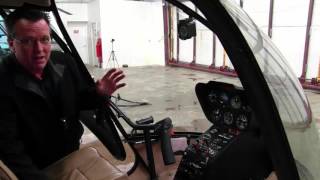
Kenny Keller (Helicopter Online ground school) compares Robinson (R22/R44 family) and Enstrom (notably the Enstrom 480) helicopters from his experience as a student, instructor, and paid pilot. He contrasts rotor systems (Enstrom: fully articulated/high-inertia with excellent autorotation behavior; Robinson R44: semi-rigid with reasonable autorotation), seating capacity (R44 is a true four-place; Enstrom marketed as three-seat but tighter), commercial suitability (R44 preferred for passenger rides and some agricultural work), fuel systems and training convenience, controls (governor vs correlator), maintenance/safety reputations, and gives a final recommendation: Enstrom for personal/fun flying (safety/robustness), R44 for training and commercial operations.
Chapters
Robinson Helicopter, Enstrom Helicopter, which are you gonna pick? Hello, I'm Kenny Keller, the creator Helicopter Online ground school. And I've had the opportunity to fly both of these great aircraft over the years. As a student, I've flown them as an instructor, I've been paid to fly both. So I'm going to start with the two different rotor systems that they have. The NSTROM is a fully articulated rotor system and is called a high inertia rotor system, which I can tell you is very, very good. With the Robinson R44, it's a semi rigid system and depends on who you talk to whether they call it a low inertia or a high inertia. Definitely more inertia than the R22, which is a good thing. One of the biggest benefits of the NSTROM and the high inertia system, the auto rotation is absolutely incredible. If you enter it nice, it's not a lot of work. It's very, very stable. The semi rigid system on the R44, it's nice, it's smooth, it has some inertia in there. Auto rotations aren't too bad, they're pretty decent as well. So between the two, which is going to be better? That's something that people are probably going to argue back and forth. Rotor system on the instrument, I can tell you, is pretty darn tough. I survived a helicopter ground resonance incident about 10 years ago in the Enstrom 480, basically the same rotor system and even though the entire aircraft was destroyed, the rotor system remained intact. But the only thing that was left of the aircraft was the rotor system and the rotor blades pretty much unharmed. With the R44 and the semi rigid, there is something they call low G mass bumping that can be a catastrophic event. And the fully articulated system does not suffer from that low G mass bumping. So one thing there that probably would make me lean a little more toward the fully articulated on the instrument. So now, just in case you're thinking, oh, he's already going to favor the Instrum, let's go to the R44 and talk about some of the good things about the R44 that you don't have with the instrum. The R44 is a four place helicopter. You can seat two in the front, two in the back. The nstrom they call a three seater, but to be quite honest, three reasonable sized adults, like three, you know, normal sized guys, they get in there and they're pretty squished in there. So to call it a three place, yes, it is a Three place, but it's going to work best, best with say two adults and a child in the middle. Okay, then you can call it a three seater. So for the next plug for the Robinson, I personally think that the R44 as far as doing commercial operations is going to beat the instrument hands down due to the fact that, let's use example of helicopter rides. If helicopter rides is the type of commercial thing that you want to do, you're going to be able to seat three people, three pretty much normal sized people. You have a bigger engine so you have more available power. And for that operation, most definitely I've done helicopter rides with the Instrum, but again it's a three place, two and a half place. You have one person that might be a little on the heavier side. You're only going to be able to take up one person on that helicopter ride. So for a couple helicopters that are general vicinity of, you know that price range of what somebody would be looking at for a personal aircraft or possibly doing some commercial stuff as far as helicopter rides, you're not going to be able to beat the R44 hands down. And I know quite a few people out there doing like say crop dusting with R44. And I'm sure there's probably some people doing it with the instrument, but I don't hear about it a lot. It's more common as far as I know, in the R44. Next we'll cover tail rotors for just a second. The Rabisson is known for having a really good design on the tail rotor and a very effective tail rotor. And I can also tell you that the tail rotor on the Instrum also has pretty good reviews and they say that it's a really good system and a really good tail rotor as well. As far as flying the two, I can't tell you that I noticed any big, huge difference. And I really would have no pick as far as which one would be the better. Next, I'd like to talk about the two. As far as from a training, a training environment with the fuel and with the Instrum, I like that a lot. Because it has two 20 gallon tanks. There's a factory fuel stick that's right inside the door. So for training or everyday flying, you go to fly to go climb in the pic seat and you just take that factory stick put in the tank, you pull it out, you know exactly how much fuel you have in the tanks. With the Robinson you have a main and an aux tank and you can carry more fuel with you on board. And it actually burns a little less per hour than the instrument. So you have more range. But it's just not quite as easy to, in your head, know exactly how much fuel is in there. You're kind of going by the gauge or by the fuel gauge. You can look in the tanks and check them. There's no factory stick to say exactly, I know how much fuel is in there. And a little harder to figure when you have two tanks with different sizes. So not a big deal. But as far as on a daily training basis, instrument makes it really, really easy to know exactly how much fuel you have in your tanks. So next I want to talk about controls. Other big thing that people will talk about between the two aircraft. The Instrum has a standard cyclic like most any helicopter has. It has two separate cyclics. One you can take out when you want to just be flying and not doing training. Then you can put the cyclic back in when you're going to be doing dual. So this is one thing that we'll look at the Robinson in a minute that a lot of people have a complaint about, and I'm going to give you my thoughts on that. This, of course, is nice. The other big thing is this does not have a governor, so it does have a correlator. So you're operating the throttle, but it has a really good correlator. And it only takes a little bit of finesse to operate that throttle. So that's not really a big deal on the Robinson. It's a governor. And we'll talk more about that when we get over there. As far as pedals concerned, not a whole lot to really say there, other than I think you have some more adjustment with the Instrum over the Robinson. But for me, no real big comparison there. The other thing is the cockpit on the instrument. Definitely more roomy than the R44. So the instrum gets an A on the room, that I can tell you. So the Instrum can be a better choice for a heavier person and. Or somebody who's really tall. Not to say you can't fly the Robinson, but just in general, that's one thing that might want a person to kind of lead over to the instrument as far as what would be right for them in between these two helicopters. So moving over to the Robinson, the one big thing here that everybody talks about is this handle right here is the cyclic. When you're flying on one side, you do this, the other person's flying, you just do that. When you first start flying these, it's really Strange and you won't like it. But to give Robinson credit, it works. And once you get used to it, it's really not a big deal. And it's not really different than anything else that you're going to fly. I know I started in Switzer's, and when I switched to Robinson, I didn't like it. My instructor said, hey, it's still a helicopter. They all fly the same way. You'll get used to. It'll be no big deal. And he was absolutely right once I got used to that. Now does it bother me? Doesn't bother me a bit. Then again, we'll go to. The collective does have a governor. A governor is nice because you can just turn the governor on and basically operate the collective up and down. And you really don't have to do any throttle adjustment in normal situations. So that to me, really isn't a big deal either. You know, the governor is fine, the correlator is fine on the instrument. To me, not really a big deal there. Some people are intimidated if they learn with a governor. They're intimidated when they get into an aircraft without one. But it doesn't take long to really get them the feel of what it takes to fly with a correlator. It's really not that bad. So I guess the last big thing I would mention between the two would be maintenance. And I'm not going to go into numbers. I can't really tell you. I have owned an Instrom. You know, any helicopter is expensive, hands down, across the board, the maintenance wise. I would venture to say that maybe the Instrum takes a little more than the Robinson, but again, that's just kind of a guess without ever actually owning a Robinson. It's hard for me to make an exact on that, but the Robinson does have a pretty good reputation now. And that's one other place where I'll defend the Robinson. You know, there's a lot of Robinson haters out there, and Robinson got a bad rap back in the beginning. And I attended the Robinson School back in the late 90s, and they're very upfront and open about what went on with their helicopters in the beginning. And their safety over the years has improved, you know, hundreds of times over. So Robinson still has that stigma or that bad reputation from things that happened in the beginning. And it's a completely different company now. The safety record is so much better now. And I will say, for Robinson, the training, as far as training goes, I think Robinson has the best training on the planet. Yes, there's a Special Sfar, but in turn, because of those special Sfars, you know, you're held to a higher standard. And some of these things that you need to know for flying any helicopter, they really hit it a lot harder with the SFAR 73. So all in all, that's not a bad thing. If you train in the R22 or the R44, but particularly R22, when you move on to something else, you can jump into about any other aircraft. And that's true, especially like say jumping in a Jet Ranger. If you grew up in the R22, you can jump in a hydraulic aircraft like the Jet Ranger and you'll be able to fly that thing all day long. Enstrom, the big plug for that one. It's a tough bird, man. I've, you know, as an instructor over the years, have I done some stupid stuff and had some autos that went bad and smacked the ground pretty hard. That I've done. And I'm amazed at the beating that those aircraft can take and the R22 as well. When I was a brand new CFI, you know, we had a couple of bad events in R22 when I was brand new with the owner of the company who was just a weekend warrior. He had a couple hundred hours and was just a private pilot and I trusted him too much and auto went bad and we hit the ground and I have to say that the Robinson came out pretty well also considering the amount of force that was applied when we ended up on the Runway. So what would I pick, Robinson or Estrom? If I was going to buy one today, I would say, what is it? Am I going to be? What am I going to be doing with that aircraft? If I was going to buy a helicopter to just have for fun and go out and fly and go where I want to go and enjoy myself and feel really, really super safe, I would pick the N Strom. Okay, with that being said, if I was buying a helicopter today between the two of them and I was going to use one that I wanted to have for training and use for commercial operations, I would have to say I would pick the R44. So the question now is, which one would you pick? Thanks for checking out this video. Please give us a like and a share and get those arguments going in the comments box below because I'm sure there's going to be plenty of them. So thanks again and we'll see you in the next video.










