"serious concerns i have regarding helicopter pre-flight safety?"
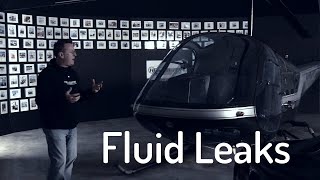
Kenny Keller walks through a student's helicopter pre-flight worries, showing how to spot the difference between normal seepage and actual leaks. Check daily fluid levels in three places: engine oil, main-rotor gearbox, tail-rotor gearbox. Always guard the collective while rotors turn, and if something feels wrong, tell your instructor or switch schools.
Chapters
Hey, it's Kenny with helicopter Line ground school. Gonna answer a member's question today about aircraft maintenance and about whether he's too cautious. He sent me an email about some oil leaks and some other things. And I want to shoot this video for those of you who are new to it, just like this young man and just give you some ideas of what to look for. I'm gonna pull the screen over here a minute, show you some pictures he sent me about oil leaks. I got the instrument detailed in the background. We'll go over and take a look at the things you should be looking at as far as oil leaks on the pre flight and maintenance and so on for but specifically fluids, because that's what his question is mainly geared at. So to start it off, he said, hope you can shed some light for me on some serious concerns I have regarding helicopter pre flight safety. And I'm going to just pull the screen over here and we'll take a look at what he's talking about. And it's mainly talking about oil leaks. And when I go through the pictures, when I take a look, I am seeing mainly just grime. When I take a look at these, I'm not seeing any oil dripping off anywhere. Now there's like smudged oil here where it looks like somebody took their finger across it and went like that or with a rag or something. But first picture, I don't see anything dripping. Next picture, same thing. You know, it looks like an older aircraft that's probably getting close to be timed out. There's some grunge here that needs wiped off. But I'm looking down here, I don't see anything dripping down on the ground here. I don't see nothing dripping over here. Again, a lot of just grime but not actual drips. Another picture, still a lot of grime. But I'm guessing this aircraft is probably close to overhaul. Things get looking grimy on an engine. I mean this could definitely needs wipe down. But again I see no great big drips anywhere. Same thing here, A lot of grime. Don't see any drips. The tube right here, that's very common. If somebody's not wiping that off, occasionally they're cleaning it. You're getting a lot of grime on there and then here. Not too bad. A little bit of seepage around a valve cover, but that's not totally uncommon, especially on an engine with a lot of hours on it. Now I'm just kind of giving you an idea here. That is seepage. This is coming out kind of Slow. I don't see any actual drips. So that would be the first thing that I would say would be, you know, you're watching your fluid levels on the aircraft on a daily basis, right. You're checking the oil level on a pre flight. Check the oil level when you get done flying. Seepage on an aircraft is common. There's different between seepage and an actual oil drip. So again, you should be monitoring all your fluids, engine oil, main rotor gearbox, tail rotor gearbox and those you should be checking on every single pre flight. And then what I even do when I go out for the day, we of course do a full pre flight in the aircraft before we go out. But if I'm going to do continual flights where I fly two or three or four times, each time when I walk back up to the aircraft, I'm looking at the ground to see if there's anything dripping out and I check engine oil, main rotor gearbox and tail rotor gearbox because that way you're keeping track of things. Right. And I even like to peek into the engine compartment and just see if anything has dripped out during the previous flight. Okay, so we just talked about that. What you're looking at, checking your fluids all the time. And then a big thing is the aircraft normally sitting in the same spot. You know, there's millions of scenarios here, so today is just to give you some ideas. Luckily I operate only one aircraft and I'm currently the only one that flies it. Once in a while I might have somebody come in, but majority of time it's me. So I know for my intents and purposes I can be checking the floor at any time. This thing just came back from its annual, had a whole bunch of upgrades done to it and when I picked it up, the mechanic said, make sure you give it a good pre flight man, because we've had this whole thing apart. Right. So you pre flight every single time, but especially after maintenance, you're really looking at it. So when it came back, other than a little bit of grime from sitting around the maintenance shop, it looked pretty good. Oil, engine compartments clean. I flew it home, had some grime on it for the few flights it had before it went to maintenance came back. I've flown it one time and then last Saturday we had our detail guy come in and he cleaned the whole thing. Right. Got it really nice and shiny. So the beauty is now we can monitor everything. Okay. Because we've had it in for maintenance, we've had the whole entire thing cleaned. So now daily when I come back or Anytime I'm going to fly it, I'm always looking at the floor. Right now I have a couple of spots down there where I put some floor dry down on it. The last flight when I moved it out a little bit oil on the floor and I put some oil dry down because I didn't want to slip on it. Saturday we had water and things on the floor, so I left the oil dry on there. Now I needed to sweep that up. So the minute I sweep that up, I can keep track of any new leak that comes out. So when you're looking at the aircraft, this specifically an instrument, if you don't have a little bit of grease coming out up top, something's wrong. You probably don't have enough grease in it. Now it shouldn't be excessive, but it shouldn't be dry either. You should always be seeing a little bit coming out. And on these aircraft like this one, the engines rebuilt may have several hundred hours on it, but it has a few seeps, but nothing, I guess, nothing out of the ordinary. Right? An aircraft is going to have seeps, right. So just be cautious of that. Any aircraft anywhere can be either well maintained or maybe not so well maintained. Maybe somebody's cleaning it daily, weekly, monthly. Maybe that you're flying an aircraft somewhere that's not getting cleaned at all. Sad to say, but many times that happens. So again, every given situation, you got to kind of look at the totality of the circumstances. But anytime you're pre flighting, you're always looking first. When you walk up to the aircraft for the day, when you first come walking out, you're looking at the floor, you're looking at the ground. Is there anything new leaking out? Is there anything on the ground? You're looking at all your cross tubes, your landing gear, heck, lean down, look underneath the belly of the aircraft, you're looking at the rotor system, is it kicking any oil out, any grease? Look at the top of the tail boom. And then even coming back here, the things I'm always looking for is I usually reach down here and see if there's any oil dripping off down here. Up here you're going to have grease that's going to come out, but it shouldn't be excessive. You have gear lube in here, right? And most of these aircraft, there's a sight glass on the back where you can check the gear loop. I had some guys one day, a student instructor about an hour away, they called me and said, oh, there's, there's no gear lube in the aircraft. And I said, are you sure? I just checked it. Oh, no, there isn't any in it. So I get down there and they're going, it's leaking too. I went and checked. There was a little bit of seepage, right? And I go, hey, guys, try this now. Look in there. Oil goes in or the grease goes in, comes up in the sight glass, and they're like, oh, okay. This is a splash system. So it's only going to have a certain amount of fluid in at any time. So if it's depending on how it's sitting, you might have to readjust it. But again, this is one aircraft. This thing is always seeping, but there's a difference between it seeping and me walking up and going, oh, there's actual fluid dripping down right there. Oh, there's fluid dripping down here. So when you're worried about these things, oil leaks, is it an oil leak? Is it just fuel seeping out? Something else that he talked about in that in his email. We'll go back to it and we'll talk about it a little bit. But he's talking about his aircraft being underpowered. And they have a couple of them and three instructors didn't want to fly one aircraft because it was underpowered. And they're putting them in other aircraft and he's saying that one's underpowered, too. Something you're going to find over the years is a good majority of the aircraft you fly are going to be underpowered. You got all the different situations for any day. Temperature, weight, amount of fuel, condition of the aircraft. And you have some strange things happen, why an aircraft may or may not be making power. I had one of these that I owned for four years, and it was like the most underpowered instrument ever flown. And I had some really good maintenance guys working on it, and they checked everything and they're like, we can't figure out why this thing is just so low powered. And then I talked to another instrument mechanic one day on the phone and. And he goes, hey, Kenny, this sounds crazy, but I want you to check something. Go check your seal on your door, for the door for your engine compartment. Check that seal between the door and the air cleaner. He goes, because if that thing seals bad, it's going to rob you of power. Go check it out. I looked at was cracked and chunked and put a new one on it. Boom. Nothing. Not say anything bad about the other mechanics that worked on it. It just took a while to figure out why that one specific aircraft was underpowered. So like I said, you're always looking at everything. And when you're worried about oil in specific, it's your daily checking it, you're looking at it. How often is the aircraft getting cleaned? You're always looking at the floor, you're looking at the ground when you walk into the hangar for the first time of the day, general overall appearance and checking all the fluids, keeping an eye on them, checking them before you take off and checking them before you, when you go back in. So I don't think this gentleman really has anything really to worry about. But okay, I shouldn't say that, right. For those pictures in this instance, I see a lot of seepage and things that aren't maybe being wiped down quite as often as far as the ones that they're flying at that particular school. Hard for me just to say from, you know, reading an email. Most aircraft you run into are under power and there's tons of reasons why they, why they're making good power or they're not. That's a maintenance thing. So let's go through kind of his questions. I reported to the engineers, they said they looked at it and found nothing wrong. Very well could be. And again, this is from a low time pilot, so by no means am I criticizing him. I'm not criticizing the airport or the aircraft owner or the maintenance. You know, the aircraft could be on the up and up. I simply don't know. I'm not there. I'm just trying to give you the things to look at. Something else that popped up here is, he said when starting the helicopter and releasing the collective friction just before liftoff, the collective shot up past the seat height when I took my hand off the collective, wanting to loosen the cyclic friction. Okay, so here's a problem. You shouldn't be taking your hand off the collective once the blades are spinning. That's the way I was trained on the R22. I've kept that with me throughout my entire career. Nstrom the same way each aircraft make and model are gonna be different in whether that collective is spring loaded in whether it'll pop up at any time during startup, during flight. Some aircraft, you friction the collective when it's running. Some aircraft like this one, you cannot friction the collective when it's running. So a good general rule, this is a little off the topic, but since it contains email, should always be guarding that collective all the time. Especially in the training environment. Once you get out in commercial operations, there might be some other things that are established and set forth for a certain way. An operator's Doing things. But in the flight training environment, the way I was trained, you're in the aircraft with an instructor, somebody's hand is always on that collective. From the time the blades start moving until the blades are done, either the student has his hand on it or her or the instructor has their hand on it. And there needs to be clear communication between both instructor and student on who has the controls at all times. And especially on the collective. And the collective during your run ups and shutdowns. One thing that I've always done is, you know, I briefed my students and we know that, okay, we usually put our headsets on after the helicopter is running. But here's what we do. We go through the startup. Once we get it running, we've already briefed and say, okay, if you want to guard your controls, I'll get my headsets on. So you can get your headsets on, get your mic adjusted, get where you want to be, and then you say, hey, I got the controls. Other person takes over the controls. I other person gets their headsets on and adjust them and do whatever you need to do. And you could do that either way. So you know every operation is going to be different on when you put your headsets on. Just giving you some ideas about what I've done in the past, that works for me. So of course you always have to be looking at what is standard. It's your flight school, the people you are flying with, you're going to want to follow their guidelines. So let's go through his three questions at the end. Where do we draw the line as inexperienced pilots in terms of technical safety? The PoH, for example, says no leaks on oil lines. My R22 is loaded with oil leaks, but the owner says it's fine. How do I handle this again? Learning the aircraft, pre flighting properly, post flighting, taking a look after, after you're done and looking for those drips and trying to figure out between a drip and an actual leakage or something that's just seeping over time and hasn't been wiped down. And again, you know, we'd all love to have helicopters and engines that were just always clean all the time, not always the case, and seepage is kind of a pain in the butt. But just because you've got some seepage doesn't mean you have a problem again. That's why you're watching your oil levels at all time. Number two, if not even instructors want to fly the R22 that is underpowered, how do I say no to the owner? To get his attention to the safety of the, the issues without appearing as a pilot who was oversensitive to technical issues. You know, we do get questions like this often from people new to flying. There is no one end all for this question, right? You have to base your situation on your experience. And you're talking, of course, talking to your instructor, talk to the owner if possible. Hopefully you can make friends with the mechanics. Hopefully you have access to the mechanics. Many times at a flight school you'll be able to meet and greet the mechanics and be able to talk to them. And that's the ultimate best situation when you can get to know the mechanics and the maintenance people and be able to talk to them and go to them. Sometimes maintenance might be off airport, you may not get that opportunity. So it's so difficult. I wish I had a blanket answer to answer that one. But you have to go with what is right, following the poh, just as you quoted, and taking things that you find. And if you truly feel that a flight school is negligent and they're not heeding your problems or not taking care of your problems and making you feel good about it, then maybe it's time to fly another flight school. And I always make sure, I say, you know, make sure you at least give them the opportunity. If you're working somewhere with a school instructors and you just feel like they, they're not taking you serious, then you have to be honest and say, look, I know what you guys have been saying to me, but this is really bothering me because if you're so upset about what's going on, then that's going to distract from your training. Because if you're always worrying about maintenance, then you know, that's taken away from your quality time in the aircraft when you're going to fly. If you're always worried about something, you're spending a lot of money as you know, so you should feel good about that. So, you know, talk to your instructors, talk to your flight schools, talk to your maintenance people. If you can get them to, you know, help, you know, heed your concerns. And if you still feel like in your gut or in your heart that they're not maintaining their aircraft properly, then it's time to fly another flight school. I mean, that's really about the best absolute thing I could say on that. So where, where do we draw the line? Am I too safety conscious? You know, it's a great question and trust me, over the years I've had my moments with maintenance situations. I could bore you all Day long, right. I've been lucky that almost everywhere I've flown my entire career flight school, we always had maintenance that was either on the field or close by or we had maintenance personnel that came in during my EMS days that five years of ems. We had a dedicated mechanic that was there five days a week, Monday through Friday. Then of course he came in weekends if you needed him. I've been lucky everywhere I've been, I've always had access to the maintenance people. They've always been friendly and talkative and you've been able to, you know, meet with them and talk to them. And you're going to learn a lot just being able to talk to the maintenance people and be able to go to them and talk to them about things. So in that, in that circumstance, I'm pretty lucky. I have flown at places where you knew the maintenance was. So. So. And without making drawn it out too long, I worked at a place when I was new to my career. It was good for my career and I was getting the hours, but I knew there were some hinky things that were going on and I chose to fly. Always in my mind knowing a little uneasy about certain things that weren't being taken care of. And I remember talking to somebody when I was applying for another job and it was experienced pilot. He said, you know, Kenny, we've all worked those jobs, sad to say. But the thing about it is, is you got to do what you think is right. Go with your gut and you get your experience and you move on. And you, as you gain more time and experience, you can be more picky about where you go flying, what you do. And I hate to say it that way, but that's really kind of the sad truth. So to wrap it up, pre flighting, using the PoH, talking to people, monitoring fluids, Monitor fluids all the time, every single flight, pre flighting. If you're worried about a leak, yes, take it to maintenance, take it to your instructor, take it to the owner if you have to, talk to the maintenance people. But it's your responsibility as pilot in command to check those fluids every single time. So if you've got something that you're worried about, you know, make sure that you're addressing it and that you're checking those fluids every single flight. If you're flying several times a day, make sure you hit those fluids in between. Doesn't take long, just a minute or two as you're getting ready to climb back on. Maybe you took on fuel, maybe you didn't check your fuel. Take a quick peek in the engine compartment, check your fluid levels and then you'll have at least that confidence that you know all of your fluid levels are where they need to be. So. Hey, I haven't been talking about the Hogs Wall of fame too much lately. If you're still here, thanks for hanging around. Right back there. Helicopter oil and ground school hall of fame. We're so proud of it. Still growing. Heather started building out this end of the wall and I think I'm gonna have her continue down that side. And then as soon as that one's full, we're starting over there and we're gonna go that way. And then we got one more panel in the back to add and then we don't know, I don't know where we'll go from there. Helicopter online ground school I created eight years ago. We'll be celebrating eight years online on March 1, 2020. We're gonna have some big specials and so stay tuned. If you're looking at joining, you can sign up right now by going to helicopterground.com below. We have a 24 hour free test flight where you can go in, you have to sign up with your credit card, but you have a full 24 hours to check out the private course, the commercial course, the instrument course, or the what I say private commercial instrument cfi. You can check out any one of those courses on a monthly membership and you're not billed for 24 hours. So we call that the 24 hour test flight. So you can sign up and you can go in firsthand and see everything. We get a lot of emails. Well, hey Kenny, does your course cover this or hey, how is the course layout or is it video based or is it more reading? It's a video based course. The best way to know firsthand is just sign up, log in, go check it out and start. No matter what course you're in, start on lesson one. Sample a couple of different lessons because each lesson has a number of videos underneath of it and you could go in and see how it's laid out. Get a good idea if it's something that's going to work for you. Hogs Wall of fame, man. People from all over the world and it's turned into quite a quite a neat deal. So do me a favor, subscribe the channel and click the bell so you'll be notified of our videos that we put out. Usually each week we do a couple videos, all kinds of topics, taking care of questions from members, amongst many other things. So subscribe, click that little bell and we'll see you in the next video.










