Should You Purchase A Robinson R-22 For Helicopter Flight Training?
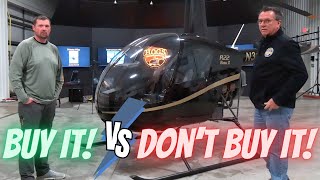
Chris Nelson bought a 2006 Robinson R22 Beta II with 5,800 hours to accelerate his helicopter training. He had about 135 total hours when he purchased it, set aside a maintenance fund equal to the purchase price, and emphasizes the importance of patient, checklist-driven flying and having an exit strategy before buying.
Chapters
Came across this guy here and made the decision to take the leap. And some of my thought process on the purchase price and maintenance. I knew the dollar value that I was going to put into this aircraft for the purchase and I knew that I would need for the three to 500 hours that I'm going to keep it. I knew that I would probably need just about as much money as I paid for it to maintain it because of what could happen. What's going to happen?
The following videos with a helicopter online ground school member named Chris Nelson, who just traveled here to the Hogs hangar to tell us about his experience with purchasing a helicopter to get through his helicopter training. I've made it publicly known in the past that for a lot of people I don't think helicopter ownership is a good idea. I think renting is normally the better option. However, Chris tells us in this video how he has utilized this helicopter for his training and he has went about it the right way. So we'll get back to the video. Just do us a favor, give us a subscribe or a like on the video. We have a lot more planned like this. So your support on the channel would be very much appreciated. So we'll get back to Chris and his R22 helicopter. So we have Chris here, Hogs member from Illinois, right.
Living in Illinois, Crown Point, Indiana. The helicopters in Lansing, Illinois. So this is a 2006 Beta 2 Robinson R22. It's right now, got about 5,800 hours on it, Been overhauled twice. The second overhaul was done by Sevier county choppers, where your R44 is at right now. Those guys did a phenomenal job. It got a new engine put in at that point. Also all the other 4400 hour items, tail cone gearboxes and whatnot. I picked it up about 45 days ago in Lebanon, Missouri.
Would you be willing to show us the cockpit of this thing? Yeah, it's kind of impressive.
So this is again a beta 2. And this has got an instrument package on it. So it has an instrument console. It's got dual Garmin G5s on it. And what that does is it helps me with doing my IFR training. And this has got. The Garmin 430 was GPS. It's integrated with the Garmin G5s. So they communicate to each other and put in, you know, the airport what approach I want to make. And I shoot the approach and tells me to do, tells me what to do.
Nice. What else, Anything else you want to add before we sit down and have Our conversation about ownership and not ownership.
I think that's about it.
All right. Yeah. Well, Chris, if you don't mind, why don't you share with us where you're at in your training. I know you went through that with us when you were here a couple weeks ago, but I was kind of in a turmoil that day with our big, you know, day after the overspeed. So run through again where you're at in your training and what your end goal is.
About a year ago, I started my first introduction flight at Summer Skies in Lansing, Illinois at the Lansing Municipal Airport. Like everybody else, just, you know, fell in love with it. Knew that it was probably something I was going to pursue. I only did a half hour with their senior instructor, CFI2, and I signed up that day and said, when can we start flying?
Nice.
And so Fast forward about eight months later, I was at about 30 hours and flying in R44 and kind of realized that I was kind of plateauing and I was struggling. I was only flying about one day, one to two days every two weeks, and it was two steps forward, three steps back. Yeah, I kind of realized at that point that if I really want to make this serious and I need to kind of, you know, jump head first.
Sure.
And so I have a very supportive family. They said, we support you, whatever you want to do. Gave my company two weeks notice and I headed out to McMinnville, Oregon to Jerry Trimble helicopter. And I hit the ground running there. By that time, I was at about 50 hours. Showed up, we did a couple flights with a few different instructors. They're like, hey, we think, you know, based off of your weight and the DPE's weight, that we want to put you in the R44. It's going to be the most successful for your checkride. I agreed as well. So did about five hours of instruction flying with them, prepping for my private pilot checkride. The end of August, I believe it was beginning of September. I passed my private pilot checkride.
Nice.
It was fantastic experience. You know, you have all the typical, you know, butterflies in your stomach and you don't sleep the night before and, you know, you spend three days non stop prepping and studying and studying and grinding and grinding and, you know, to get yourself as prepared as possible. Went out and did well. I thought the instructor had a couple comments to me basically saying, these are some things that you need to improve upon, you know, for your future flying. But at the end of the day, the DP that was there is a fantastic guy. And his biggest drive home to me and other private pilot guys was know the information, know the fundamentals, but understand that this private pilot license is the beginning of your real training. It's really where it starts and where you can really start to build, you know, your experience and your time. One of the best parts about them and the reason that drove me to them was is they have student housing that is just huge. And so when I was doing my research on where I wanted to go, I called them and they said, yeah, we'll take care of everything, how long you want to be here and we'll figure it out for you. And I showed up and that was it.
Cool. So you got the private. So now you're on, you're working on commercial, correct?
Yep. When I came home from McMinnville, I knew that, you know, the next step was commercial and instrument. While I was out at Jerry Trimble, I did 17 hours of instrument with their helicopters. On the way home, I had seen this guy right here on Facebook, contacted the owner and he scheduled a time for me, basically while I was driving home, stop by and check this out and, you know, work out a deal with him. So I did that. And all of that was the intention of knowing that I needed to build hours and how efficiently could I do that?
Sure.
And I knew that would be with owning my own helicopter. Currently now I'm at about 135 hours. I'm sitting about 75 hours of pic time. We're inching there every day, so flying four or five days a week.
Cool. Your, your hover taxi and your set down look really nice. Well, thank you. We'll share that as we're talking here in the video. But you looked really smooth coming up. And that's what, as an instructor, that's what I'm looking at. That nice, slow, smooth hover, nice set down, and you're around the 130 hour range. Nice job.
Thank you.
I was impressed.
Well, and a lot of that I attribute to the training that I've had back at my school and with Jerry Trimble, you know, one of their biggest things. We fly in and out of airports every day. And it's very important to make sure that we have, you know, good etiquette, airport etiquette. Just because we're a helicopter and we can take shortcuts and fly over here and do an air taxi over there, it doesn't mean you shouldn't try to follow, you know, the airport rules and airport taxiways.
So, sure. And this is something I harp on all the time. So I commend them for the job they've done with you. And because that's the way it should be, you're doing it the way it should be and I appreciate it. As much as I've seen and just in the past year the training I've done, I just see a lot of stuff going on that's really sloppy and not only sloppy, a little bit dangerous at times. You know, people put themselves in that position where they can get into LTE and you're gonna, if every time, if you come to my hangar from that direction, the wind's out southwest, you're going to be putting yourself in that every single time. Alright, so around 135 hours you're getting close to commercial. So what's your plan moving forward?
So plan moving forward is to in the next 30 to 60 days get to that point where I've met all of my hour requirements, schedule some time with the DPE and get the commercial checkride complete. After that then come springtime just going to continue to fly and work on instrument. Hopefully have that knocked out sometime. Beginning of summer.
I know the burning question that I couldn't think of a minute ago was a lot of the premise today, you coming up here was I want to play, you know, a good cop, bad cop. And the argument back and forth between helicopter ownership, why you bought one for your training and nine times out of ten I'll tell somebody, don't buy it. Going for your ratings. I say just rent. I say just rent. However, when you were here, we already discussed last time a little bit about why you chose to buy. You had the right reasons and the steps you took I think were really smart and you were able to pull it off. Share as much as you'd like to share with someone who's man, should I just pay the flight school or should I buy my own aircraft to do my training? Because I know people think it.
When I first started flying, you know, it was a dream I think to own your own aircraft. Right. At some point in time I didn't know that it was going to be as quickly as right after I got my private rating. What I had found, you know, with the, the schools that I went to is that, you know, they have to, they're dealing with multiple different students and instructors and everybody has a schedule and everybody has a time when they want to fly and they need to fly. Good weather, bad weather and so on and so forth. And so for me last summer, going through summer skies and also Jerry Trimble it really, I was locked into these certain blocks and it, whether it was a two hour block or a three hour block, it was the time seemed a little constrained. And so because I knew that, okay, well, I got to get up there, I got to get what I got to get done because there's another guy that's going to be waiting, sitting there on the ramp, waiting for this helicopter. And I'm getting out and he's getting in, he's fueling, he's doing his pre flight and he's got to do what he's got to do. And I kind of had to sit back and think that if I'm going to take this seriously and I'm really going to have a reason to go out and fly and motivate myself, I'm going to have to take the leap, purchase the aircraft, so that way I can bring that control back into myself.
Sure.
So there still is scheduling that you have to do with the flight school.
Right.
But I'm more open and available now because we don't have to worry about the aircraft. I fly when I want to fly. I make sure that the maintenance is done, you know, in accordance with the FAA rules and regulations.
Sure.
And my hours are my hours and I know in 25 hours I got to change my oil or in 100 hours I got to do 100 hour inspection. And so I just fly and do my pre flights and my checks and you know, it's allowed me to be more flexible.
That's a good reason. There's one good one. I'm going to plug hogs for a minute. That's why when we do our final approach course, you know, somebody comes in for two days, three days, four days, we fly with one person. That's it. You know, we don't do typical flight school stuff where you're like you said. Right. It's just that's how a normal flight school works. And it's very hard a lot of the times to get your rating done just because you're competing with the schedule. And a lot of people that we helped had a lot of hours and they're like, I'm ready but I can't get on. I can't even get on the schedule for like three weeks to even do a checkride prep flight. And so what we do here is we just, we never fly with more than one person. It's you come for one day, two days, three days, four days. So for you, for your training, that, that's very smart. That helps you make the Progress, I can see all the benefits there. Are you willing to share any of the financial part of it, how what your strategy was and you're not sharing more than you feel comfortable sharing, but how you made the decision financially, how it could work, whatever you feel like sharing.
So I of course reached out to a lot of people that I trusted. You know, people with a lot of hours had owned aircraft previously. They told me that if you're gonna do it, you need to make sure whatever aircraft you purchase is, it's going to do everything you need it to do and cover all of your ratings. So that way when you're done with it, you can move on from it, sell it to the next person that needs to build ours. Because at some point you start flying somebody else's aircraft and they're paying for the maintenance and the fuel and everything that comes along with it. So you really only need it for that certain period of time that you're building those hours. You know, again, going back and forth, talking to people I knew, okay, well if I'm going to get, eventually get to that 135 point, then I need to get an aircraft that's instrument, has instrument panel and I can do everything I need it to do.
Very smart.
Kind of bounce back and forth between a 22 and a 44. Luckily, my flight instructors, they've been a little on the light side. So we've just been methodical about our training and what airports we fly to, making sure we have the right amount of fuel, our weight and balance is within. And it's just a lot of pre planning.
Right.
I mean that's the most important thing.
Yes.
Basically came across this guy here and made the decision to take the leap. And some of my thought process on the purchase price and maintenance. I knew the dollar value that I was going to put into this aircraft for the purchase and I knew that I would need for the three to 500 hours that I'm going to keep it. I knew that I would probably need just about as much money as I paid for it to maintain it because of what could happen. What's going to happen, what maintenance is going to come up, you know, problems while you're flying over speeds. You know, something happens and you ding a blade. Now we got to get a new set of blades. You know, it's just anything can happen. And so I wanted to have that, you know, like you had did. We talked the other day about, you know, figuring out that number per hour and what was that max amount of money that I knew I would need to put in a separate bank account that I could just keep just writing checks out of and keep paying for everything. Buying the aircraft is easy. The maintenance, storage, insurance, all the other things that come with it is, you know, a whole lot more and a whole lot. A whole lot of money.
Exactly. All right, so let's elaborate on what you said about how you did the financial part of having money in the bank versus cost of the aircraft. Because I think it's super smart if you're going to go this route. I think what you said is really, really smart.
When I was doing my calculations per hour, what it's going to cost for an oil change, 100 hour inspections, you know, number of hours left on the aircraft. Typically, as that aircraft gets closer to its timing out, you might have some cylinder problems, head problems. I've seen multiple times where, you know, these little R22s, you're probably going to have to put one or two cylinders on them in that 2000 to 2200 time frame. You know, you have. You get bad fuel at an airport, things happen. And so those costs just keep building and building. So what I did is I said, look, I'm going to pay X amount of money for the aircraft. I know that I'm going to have three to 500 hours of reliable time on it. In that three to 500 hours, it's going to cost me X to operate the aircraft. And so as just a general overall, if I paid 100 grand for the aircraft, I should just put 100,000 into a bank account and just write checks out of that. And that's for storage, fuel, insurance, maintenance costs, anything that comes up, I know I have the money in the bank and I can just take care of it and we can just move on and keep flying.
And I think it's so smart because here's where I get to play the other side of it. When I bought an aircraft and it was 2008, the bank said the aircraft was 150,000. And they said, we want you to have 50,000 in the bank as a maintenance account. Guess what? That 50,000 did not last anywhere near the amount of time that we thought that it would. And that was how my four years of ownership, how my whole, you know, financial drain just kept. You know, started out okay, but then over time, you fix it, you repair it, you fix it. Pretty soon that maintenance money is gone. So 50,000 in the bank for maintenance for an aircraft that cost 150,000 absolutely was not enough money. I've never heard anybody Say it the way you said it. Aircraft's gonna cost this much, have that same amount of money in the bank, I think is smart.
The other big thing too is having an exit strategy. Knowing that, okay, I'm going to do X amount of ratings and it should take me X amount of time. As soon as I'm done with those ratings, I need to be exiting this aircraft because the longer I hold onto it, the closer I am to its 12 year, the closer I am to an overhaul, you know, and all that costs money. And so time is ticking. So you want to get in, get what you need to get done done and get out.
Exit plan, I like that too. That's very smart. You have the whole got all planned out for. You need to get to be we. The aircraft that we've been using is a lease aircraft. And I chose that because it has an exit plan. It's a one year lease and you pay a deposit which is reasonable for what the type of aircraft we were getting. And then you lease for one year, you know what it's going to cost per hour and you know what the insurance is going to be. I know what's going to what it's going to cost me at 100 hours, at 300 hours because I'm responsible for the majority of the maintenance. You know, oil changes, 100 hour inspections. The first time when I bought an aircraft, you do the numbers to make it hopeful, right? And well, I can get by with this. This will pay for this. But I say if the manufacturer says it's going to be $260 an hour to operate, I say double it with a lease, I know it's going to cost. We did the math and then we kept figuring in what ifs, you know, everything that we figured, let's figure it more and figured out a rate per hour of what the aircraft needs to make. And people snoot when we go it's 645 an hour. And they go, oh my God. You know, it's like, you know, what we're paying for the aircraft, it's not making us a ton of money at 645 an hour. You know, it's a $400,000 aircraft. You know, insurance is $26,000 a year. You know, a simple inspection 100 hours back is $3,000. You know, fuel flying at 20 hours a month is $1,400 a month.
I mean there's always a lot of things that reasons why and why not. I think the biggest thing is, is you can't allow Anybody else to influence your decision making. And because everybody has their own opinion on yes or no. And really it has to make sense for you and your timeline. And that's ultimately why I came up with the decision to purchase the aircraft. I know that basically in the next nine months I'm gonna have all my ratings and this aircraft will be up for sale. And I really hope that I can move it to another guy that's trying to do the same thing that I'm doing.
Sure.
You know, and the aircraft's got quite a history already, and so to keep moving it down the line to other people will be awesome to do.
Cool. So you'll be willing to come back maybe in a month or six months or three months or whatever, continue the journey in the near future or some point down the road?
Absolutely, yes. Yeah, definitely. You know, the next 30 to 60 days, hope to have my commercial. So definitely come back and talk about that.
Nice. So you can always expect surprises with aircraft ownership. 45 days or so you said. What has popped up that you had to pay for that you hadn't had thought about or had in the plan? Something that come up as a surprise.
So there's been a couple of things. I think one of the biggest things to try and, you know, push and try to inform people that are thinking about it is make sure that they do pre inspection, pre buy inspections and also really dig deep into the logbooks. With the purchase of this aircraft, I felt comfortable with purchasing it, but I felt like the logbooks, the things just weren't annotated well enough.
Sure.
And so that was kind of something I really. I spent about two days in the logbooks doing a deep dive into everything that was annotated, wasn't annotated, questions that I had about what was annotated, inspections of transponders. There was also at one point an engine was put in this machine and then it was taken back out a couple hundred hours later. That was kind of something I thought was odd.
Sure.
And so luckily enough, I was able to contact the prior owners and they were like, oh, yeah, I'd love to tell you all about it. And so they got me up to speed on what and why and then felt a lot more comfortable with it really getting it down and dirty on the log book. Especially with something that's got. Has had two 2200 hour overhauls. That's quite a bit of time.
Sure.
This aircraft originally was. It had its first 2200 about three years, so 2009. And that's a lot of time in three years that they put on a flight school, had it, and they were flying the wheels off of it, which is great. And they maintained it very well. And it went through several other hands. But the other big thing too was the transponder. We didn't catch that when we were doing our pre buy inspection. And so I got it home. We started diving into the log books, found that I was out not too far, only by less than 30 days. So we shot down to Freedom helicopters in Indianapolis, and they knocked it out literally in a couple hours for me. I picked up some oil filters and some grips for the helicopter, and it was a great experience for those through those guys.
So you diving into the log books and actually calling people, that's super smart, too. That's another really smart move because obviously the older the aircraft, the more history is there. Is that I have to say it, you know, on an older aircraft. Is that history even correct?
That's right.
Because I did work at a place once where I have recently talked about in some of the previous videos where they were cheating maintenance and the log books were a mess. And FAA walks in one day, well, just us, the, you know, Indians were there, the boss, the bosses are around, surprise FAA inspection. They start looking at the aircraft logbooks and they're like, what is going on in this logbook? And we're like, you know, shrugging our shoulders, and they're like, we're going to leave and we're going to be back in about three days. Let the owners know that these logbooks are not up to snuff. Right? Yeah. So I've seen it firsthand where maintenance isn't always, always done the way it should be. In one of the recent videos, somebody said, oh, it's hard to believe any owner would ever do that. You get hard up for money, you're trying to pay the bills, you're trying to run a flight school, you ain't making it. Oh, well, we'll fix that next inspection. Oh, that's. That's broken. Well, we can fly. Yeah, it's okay. And then the. It's like it just starts to build, right? And things get overlooked, things get cheated, things get left behind. And now in my time of, it's like, I don't want to fly. I don't want anything broken. If the clock don't work, I don't want to fly the damn thing, you know, I want everything fricking right. And that's why I love that Mike Patey video that we shared recently. I've Heard some people say, oh, that's that. Three strikes and you're out. It's been around a long time. And that's cool. I had never heard it. And when he goes, you know, something doesn't work in the aircraft, and then it's a night flight and I'm tired and I'm done. And I'm like, you know what? That is so freaking smart. Some people would say, oh, that's too conservative. But no, why didn't I fix that part on the aircraft? I'm tired. Wait till tomorrow, you know, whatever the case is, wait till it's daylight. It's those little things that I just. The longer I'm in this, the more I realize how fast things get messed up and people get hurt and people lose their lives and over dumb, stupid shit. If you wouldn't mind, just share what you'd like to talk about, about the training experiences you've had, because you're, you know, been through all this in the last year or so. So you're out there experiencing in different parts of the country.
And so, you know, again, going back to starting out about a year ago at Summer Skies in Lansing, met a great instructor there, Zach. He was a phenomenal guy. Like, he was the guy. I really am happy that he was my guy to start me off.
Sure.
He was very patient and understanding, and, you know, we all ask a million questions, and he would answer every single one. After about 30 hours with him, I transitioned over to Jerry Trimble. I had one other instructor there, which actually is still my instructor now. But the biggest thing really is patience. These companies, the flight schools, they are busy. You know, there's a lot of people. There's a lot of moving pieces, maintenance, aircraft people. And really the big thing and big takeaway for me was just being patient with the training and understanding that these flight schools are working really hard to try and get you everything that you want to do. And so just be patient. The instructors, most of them are all great. I really, you know, became close with several of them, you know, but also keeping that personal boundary, you know, really, patience is the most important thing. Their job is very hard to make sure that they're keeping you safe in the aircraft. You know, let them do their job is, I think, important. And, you know, let the flight schools do what they do. They have a formula for success, and if you're just patient and you follow their curriculum and what they tell you to do, you'll be successful. So being part of the 61, part 61, too, you really have to do a lot of work on your own as well. So getting set up with a good online ground school is important. HOGS was instrumental for me. I started at HOGS back in last summer and really hit that hard along with the ground instruction I was getting from the schools I was at. And it really makes a big difference when it comes to that checkride.
So I think we talked about this when you were here last time. The thing I'm noticing is everybody rushing in the cockpit. So I want your take on it being, you know, you've been out there for the last year and flown some different places. What I'm seeing is everybody just super rushing in the cockpit and I don't understand it because, you know, flying ems, we didn't rush in the cockpit. So if you're not doing that in that environment, flying for an emergency medical service, which you are trained just to, you're flying cargo point A to point B to keep the emotional part out of it and not hurry and make mistakes. But so if you don't do that in ems, I'm really trying to figure out why flight schools do that. Did you notice that where you flew in any of the places, did you ever feel rushed? Did you feel like they were go, go, go, hurry, hurry, hurry, or were they low keyed with a nice flow in the cockpit?
Both schools that I flew at were very low key and take your time. And the checklist is just as important as any other fundamental in your training, you know that you're going to do. And so it's just as important as, you know, shooting a good approach, doing a correct auto. That checkride is going to keep you alive. First and foremost, getting in the cockpit, setting down, grabbing your checklist, going through it methodically, you know, step by step. If you skip something, you start back over. Earlier today we talked about how I got in and I forgot to set my GPS. So I turned my governor back off, rolled back down to 70%, turned on all my frictions, set my GPS, GPS up correctly and then took back off again. So it's paramount to make sure you hit that checkride and be patient in the cockpit. There's no reason we're not in any hurry to get in the air. We'll get in the air when we get in the air. But it's important to make sure you're setting your altimeter correctly and you have your radio set correctly because that's going to save your life.
I love that. And this is not that I didn't preempt this. We didn't discuss this. And you said exactly what I wanted to hear. I'm happy that the places you've flown are doing it slow and taking your time. That makes me feel good, number one. Number two, if we would have done what you did in our overspeed incident, we wouldn't have had the overspeed if we'd have backed up and do exactly as you just said. There's this guy in the comments, I don't know who Sundance Helicopters is, but. Or Sundance Helicopter Tours, arguing with me in the comments about what I did in my cockpit. And no, that's not what you did. And that's not the checklist, is not why you got messed up telling me in the, in the comments how I'm wrong. And I'm like, well, I'm so glad that you're, you're so sure that it wasn't the checklist. We did get out of sequence and that is why it happened. Yeah. I'm a firm believer if we would have went, all right, we're jacked up. Stop. Roll the throttle down. Just let's back up and figure out why are we making mistakes. And let's work through that checklist again. I love what you said. That gives me faith in the industry and that not everybody's out there going, hurry, hurry, hurry, Go, go, go. Because almost everybody that flew here this year, almost everybody was like that. I'm like, why are you in such a hurry? Well, that's what my flight school wants me to do.
I'm like, I think a lot of it, too, can be nerves. You know, as a new pilot, you know, you're, you're excited, you know, you're, you're trying to be cautious. You don't know what to expect, you know, so you get in and you say, if I can get through this as fast as I can, I know I can get in the air and I can be flying and doing what I'm doing, enjoying doing.
Yep.
And the key there is, is don't get in a hurry. Don't lose focus of the checklist and do what you're told by the instructor.
So important. And our, you know, our examiner that we've, that I've been using for 20 some years, he's been doing 34 years. Right. And he's also an EMS guy. And that's all he's ever preached is, you know, every checkride, hey, you did good today. You were slow, smooth, methodical. That's how we want everything. Right? Doesn't matter. Student environment, EMS environment. Slow, smooth, methodical. Nothing should ever be rushed. If somebody's rushing you in the cockpit, then they're doing you a disservice. Yep. Everything's got to be slow, smooth, and methodical. All right, well, we're definitely gonna have to hound you till you come back and let us know how your commercial goes. Thanks for coming up here and flying in.
Appreciate it.
Sharing your little, cute little black. I shouldn't call it cute. Little black. Cool. Little black R22. I have fond memories of them, right. Like when I got in the R44 this past spring. It's like going home again, right? It's like I trained in the R22, got R44 time later, have taught in R44. I have experience in them, but then I was away from them for a while. And when I climb back in and you get in, you go. They're just some. Something homey about the Robinson for me because I flew them early on and you said it, they are like the little sports car. You know, it's. You know, people love to bash them. But I think that if you fly the thing the way it's intended to be flown and you follow the rules and you've already talked about your maintenance, you're on top of the maintenance and you stay on top of it, you know, chances are you're probably never going to have a problem as long as everything is done slow, smooth and methodical. So anyway, we'll see. Kristen, another video. Private pilot study guide. We'll put this link down below. Over 400 questions that you could be asking on Private Pilot checkride. Yeah, you've been hearing about it for a while. There it is. Link down below. Thanks again. Thanks. Appreciate it.
Thanks for having me.
We'll see, everybody. Next video. Peace out. When you feel the pressure to fly, but know the right decision is to stay on the ground, hit the hogs. No go and live to fly another day. Helicopterground. Com.










