The Enstrom Helicopter
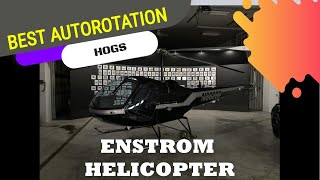
Kenny Keller walks through the Enstrom F28 helicopter, comparing it to the Robinson R22 and R44. The Enstrom has a heavier three-blade rotor, a roomy cockpit, durable landing gear, and better baggage capacity. Keller answers questions on operating costs, autorotation, IFR training, and transitioning from other helicopter types.
Questions this video answers
40 gallons
About 15–18 gallons per hour
About $400 per hour (can range higher; some operators command ~$600/hr for the aircraft plus instructor fees)
Approximately $30,000 per year (owner's report after 17 years)
About 1.5 hours per leg
Chapters
Hey, it's Kenny with Helicopter Online ground school. We're gonna do something a little fun, a little different tonight. Gonna take a look at the instrument here. We're gonna answer some questions and I'm trying out some new equipment, made some more nice additions to the studio. We got things looking good. So we're gonna go over the aircraft in a second and talk about the instrument because I've been getting a lot of questions just recently about the instrument helicopter, and I printed those off so I can answer some of those questions and talk about the helicopter and all at the same time. I'm actually trying out some new equipment here. My mouse backwards. Got some cool new monitors moved around so I can actually do some of this stuff on my own. Normally Heather's here helping me, you know, run the videos, but I've got got dual monitors facing this direction along with the original monitor. So I can do it alone or I can do it when I have help here. So I can see in the chat box right over here you make some comments about the instrument. I want to kind of keep it instrument specific at this point because the video is about the instrument helicopter. So I'll check up here occasionally, see what comments you are, and you'll know I'm for real live and really here. So again, I got the another live camera over here. We can just go over there and look at the helicopter as we kind of go through these questions. And these are just. I printed off the last five or six that's just come in the last few days. And I am Kenny Keller, creator, Helicopter Line Ground School. By the way, there is a link down below for Helicopter Line Ground School site. Do us a favor and subscribe to the channel and click the little bell when you do, because then you can be notified of our weekly videos. We've been doing a lot of videos. We've had a lot of activity here on YouTube in the recent past and we got a ton of new subscribers. So a lot of you maybe don't know who we are yet. And a lot of people ask questions about the instrument. So subscribe. Channel, click the bell. We talk about all kinds of helicopters, right? I've taught in a number of different helicopters. They all have their pros and cons. Today's topic is about the Instrum. So the first question, looking for total cost of ownership, investment, maintenance, operation level. Are there significant differences between the R22 versus the instrum? Okay, the NSTROM is going to be a little more of an expensive helicopter than what the R22 is okay, the R22 is the most popular trainer out there. There's more of them than any other helicopter out there in the training world. And Robinson's the number one civil aircraft basically in the world. And a lot of people love them, a lot of people hate them. But the fact is they are who they are. And an instrument is actually going to cost you probably some more money than the R22, but they're kind of two different. There's two different things going on here. The R22 is a smaller aircraft built as a small trainer and a small personal aircraft. But it is very small. The instruments are bigger, heavier aircraft, you can take three people versus two than the R22. You have a much heavier rotor system, which we're going to get into here in a minute. I'm going to talk about the specifics of the rotor system and why this is such a great helicopter. It's the mass in these blades. So you know, when I get a question like that, that's a big question. But in general the instruments going to cost you a little bit more money. But it also has a baggage compartment, has the fully articulated rotor system. This rotor system is heavy duty and safe. Nstrom is celebrating 60 years in business. We did a video with them this year at Heli Expo 2020 and after I've done today, I'll put that link down below in case you want to check it out. But it's a fun story how enstrom helicopter started 60 years ago by a fabricator welder that wanted to build his own helicopter. So it's a really, really cool story. So to answer that question, in general the instrument is going to be a little more money. Yes. From the safety side are three blade, three blades rotor easier to maneuver in translation or auto rotation than a two bladed rotor. Depends on which aircraft you're talking about. If you're comparing this instrument to an R22 again you have so much more mass in the blades. These blades are so much heavier. And the blades on R22, they're small. So that's a low inertia system where this is a high inertia system. So there's a big difference. Now moving up to the R44, that has much bigger blades and that's a lot heavier. Two bladed. In a Bel Jet Ranger those blades are huge and there's a ton of mass in those UEs. Should see the blade on a UE. Those things are massive. So again, a lot of these questions that I understand people why they ask them, but depends Depends on the aircraft in general. A three bladed is going to be probably smoother than a two bladed. Well, I don't even want to say that. The R44 can be really smooth. The Jet Ranger can be super smooth. So it depends on a lot of things. And got a couple questions already from David. I could see what is the advantage of helicopters with counter rotating blades and can I add extra weight to the instrument blades to assist with autorotation? I don't fly the counter rotating system so I can't answer a lot of questions there. We do have some videos where we just. I went flying in a counter rotating system with one of our instructors in the Cadbury and we have several videos talking about the Cadbury that took. You can check out link. Put those in there. The auto rotation, I'm going to talk more about it. You don't need to add any weight to the blades on an instrument to add auto rotation. And again I'll talk about that more in a minute when I talk specifically about the auto rotation. But with the mass of those blades it's awesome. There's no need to add anything to that. But good question David. So alright, there's two of the questions. Quick note. Oh, what made you. What made you choose to fly Enstrom over Robinson? There was no real choice. I trained trained in Robinsons. I've trained in R22s for all my ratings. I started flying Nstroms. Well let me take that back. The R22 was less expensive per hour to operate and they were more available to me when I was doing my training. I did fly in the R22, I did fly in the Schweitzer and I did fly some in the Instrum but the instrument was not as available and was more expensive than than both the R22 and the Schweitzer. So for all my ratings, mainly R22, some Schweitzer and then some Enstrom and that's the cool thing. I can talk about them and carry on discussion about those aircraft because I've trained in all of those as a student and then I've taught in each one. So I can give you some of the characteristics on all that. So I didn't really choose one or the other. Again I'm a helicopter lover and I think every helicopter has pros and cons. I don't hate any of them. Every single person. Depending on where you are in the world and your size of your person and what your financial situation is on what you can afford, there's a lot of different Reasons why people could jump around between different helicopters. And we've gone lately with, you know, fly one that's right for you and that's well maintained with good quality instruction. Is a, is above board more important than anything. They do look pretty from the outside than the Robinson. Yep, I'd agree. Robinson is kind of ugly, but hey, you know, the Robinson's cool too. And you can say the instruments ugly, but they serve a purpose. They're helicopters. Before I go to the next one, I'll see David's question. If I'm used to flying Vietnam era ue, how hard to learn to fly, to fly light training helicopters shouldn't be a problem. If you could fly the ue, I don't know why you'd have a problem jumping in the smaller, the smaller helicopters, especially a super stable one like this. Probably a little more difficult for you to fly the R22 because when you get in there, you know, it's just, it's a real tiny, tiny, tiny movement in there. And they're like a little tiny sports car. Right. So that one would be a little more difficult. Something like this would be a little more easy for you. But I'm sure within a couple hours, David, that you could transition into it. All right. Another question. I've made my choice on wanting instruction in the Enstrom helicopter, but just want guidance on which online course I should sign up for. Well, this is from Mark. Mark. Depends on what rating you're going after. We have an Enstrom specific section and that's included in the private commercial or cfi. You get that with any of those courses. The same as our Robinson R22 section and our Robinson R44 material. Those are included in the private, in the commercial and the cfi. So you get those no matter what. So great question. So you sign up for the one you want. If you just want to go for private, just sign up for private. If you're going for cfi, sign up for cfi. Depends on where you're, you're taking your career. And number five, this is a good one. And this is just from a gentleman that, that called me yesterday and he was looking at buying an instrument, but he had a bunch of Schweitzer time from over the years and he said, how does the instrument compare to the Schweitzer? So I'll cover that question. I think one more and then we'll go over and we'll actually look at the aircraft and just kind of show you around and let you see it. So how does the instrument Compare to the Schweitzer. What I told him on the phone was the Schweitzer is a great little helicopter. It's been used or was used by the military for many, many, many, many years for training. It's the used helicopter. It was originally used, then changed to the name of Schweitzer. So the Schweitzer is a great little helicopter. It's a great trainer. The biggest difference I'm going to say between Nstrom and instrument Schweitzer is again, if you park them side by side and you look at the mass of the blades, there's still a lot more inertia in the rotor system on an Enstrom. So the Nstrom or the Schweitzer being a great little helicopter, time tested, proven, it drops out of the sky a little faster than what the instrument does. The instrument truly wants to float. That thing just wants to float down. It's unbelievable. And I'll talk more about that in a minute. But the instrument autation is hard to beat. And a lot of people will say, well, you know, I've heard good things about Enstrom, but I've never flown one and I hear they have a great autorotation. They do, hands down. Absolutely. And to finish up, the question on Instrom vs Schweitzer, in the Instrum you have a baggage box, and I'll show you that when I go over there, pretty good size. You can get quite a bit of stuff in that baggage box. The Schweitzer, you got nothing. I can remember going to my instrument checkride in a Schweitzer after I was a cfi and there's nowhere to put your bags and all the stuff and gear you take with you. So on the Instrum, that baggage is really nice. So that's one advantage, the heavier rotor system. And then the instrument is a pic on the left, so you can take the collective out and you can put three people across, pilot plus two. And then the Switzer has a couple different versions where one's a two seater, one's a three seater, but the, the cabin itself, the cockpit's a lot more roomy on the instruments. So those were to be the things that, that I told him on the phone. I said, sweitzer's a great little helicopter and if you want to stick with those. But if you're wanting to move to Schweitzer, to me that's just. Or I'm sorry, if you want to move to the instruments, just a bigger, heavier helicopter, more room, more baggage, probably cost you a little More money in the end. But then again, Schweitzer's are a little tough to get parts for right now. And they're trying to, you know, a new company's reviving the Schweitzer, but you know, how fast are they going to get all the parts back available? Hopefully quickly. And I know they're working hard at it, but there's a lot of Switzer still sitting out there, there's people can't get parts for. So I see a couple questions come up there. I'll get those as soon as I get number six, then we'll go over, check out the helicopter. So looking to purchase an F28F? This guy is a commercial pilot, 5000 hours. His daughter is a fixed wing pilot and he wants to get her commercial and instrument rating in a helicopter. What would you estimate it would cost to get her different certificates? You know, that question comes up all the time on what does it cost? And it's really a big question because it boils down to any one person's abilities. For the private add on fixed wing to helicopter you need 30 hours, 20 dual, 10 solo. And then for the commercial add on you need, you know, 50 pic in helicopters. And depending on how much time fixed wing time she has. I can't answer that exact question, but the instrument is going to be more expensive than the others, than the Switzerland, than the R22. And right now we are at around $500 an hour for the instructor and the helicopter and that's what it takes to operate. And this gentleman I was talking to yesterday that asked that last question, he's like, well, what do you think it really costs per hour? And I said, you know, I owned one of these for four years, it's $400 an hour, just going to cost you in maintenance. And this helicopter, for example, owned by one of my students, luckily I get to use it half of the year. It's a very well maintained cream puff helicopter. And at supper when I picked it up, he said, Kenny, anybody that asks you after owning this one for 17 years, he can tell you hands down is 30 grand a year. It's 30 grand a year if it sits in a hangar all year and doing and does nothing. And that's after 17 years of paying the insurance, you know, doing your annual inspections. Occasionally you have things that break, you have parts that go out with time, you have life limited parts. So what is it going to cost? It's expensive. Any helicopter across the board is expensive and people go, oh my God, 500 an hour. Well, that's what it takes. The fuel alone is, you know, 70 to $80 an hour depending on how the fuel is fluctuating. So you're going to find some out there, maybe a little less money per hour. I know one of the top instrument guys in the country gets almost $600 an hour for one of these just for the aircraft. And he gets 100 an hour on top of that. So again, wide range of varying there depending on who you, where you're going. It really should always look back to quality of instruction and quality of aircraft maintenance because you're going to spend several hundred dollars an hour across the board. All right, let's get to some of these questions and then we'll go over the helicopter fear of heights. Have an issue with getting your ppl. No, there are tons of pilots out there that are scared of heights. They won't climb up a ladder to get on their roof, but they'll fly an airplane or a helicopter. So no, you can overcome that fear. There's something different between being on a ladder, being on a roof, climbing a tower than there is being in an aircraft. You know, when I was a kid, I could fly. I climbed the water tower in my hometown. Didn't scare me at all. Most in the last two years I climbed a tower for the light beacon at the airport. Scared me half to death. But I can get up in the helicopter and fly all day long. So don't let that stop you. There's Heather, new studio lights. Look at sharp. Thanks, Heather. Any of these able to be IFR capable certified? All these small helicopters, the trainers you can train in them if you have the proper equipment for training. But rarely are you going to ever find a small helicopter certified for IFR that does that. That boils down to the cost and the weight. So in general, you're not going to be able to fly an IFR certified helicopter until you move into the bigger, heavier turbine models, the much more expensive models. So the smaller light helicopters, yes, you can do IFR training, but, but, but that's it. And there's Clarence Watkins. Watson. Clarence, I've been talking about the instrument specific training and the R22 specific training and the R44 specific training that you always talk about. Jim Reynolds. Hello, sir. And Heather. Awesome. Clarence, for the 280. I'm not sure what your question. Ask again, Clarence. All right, while your questions roll in, let's go take a look at the instruments. I got this other camera up. Oh, let me switch it over. So Heather's normally here Doing this for me. But this is kind of fun because I can now control the cameras myself. And take our other little live camera here. We can go look around. So where do we want to start? Let's start with the mass of these blades. This again. If you look at the size of my hand and look at the rotor blade now, you walk out and put your hand up near the blade on a sweatshirt, it's going to be in between R22 and the R40 or in between the Robinson and the Schweitzer. This is a heavy duty blade. Look at the length of these blades, look at the mass of these blades. And then look at this beefy freaking rotor head. Okay? Ensuent's been using this same design for years. For years they've been using this. It's a time tested, proven helicopter. And with that many years of, you know, design or designing and maintaining that same rotor system, it's just due to the mass of the blade. You know, it's. You don't have to be a rocket scientist. When you start comparing the helicopters and you look at them, that's just a lot more energy. So when you have these things up at RPM where they should be, you have so much more energy in the rotor system than what you do in the smaller helicopters with smaller rotor blades just the way it is and the odd rotation of these things, I'm telling you, it is truly amazing. People that transition to the instrument from say the Schweitzer or the Robinson, first time they come fly with me, they go, oh my God, this is freaking amazing. Because it is. When you set up the auto rotation, one of these things, if you just set it up nice. My examiner says that. My examiner says you got to do something really dumb to screw up an auto rotation in the instrument and in the R22. Great little aircraft, great trainer, I loved it. But man, you got to do that. You got to do the rotations by the numbers, man. And you got to do it right every time. And there's just no room for error with that low inertia rotor system. And then you also have a problem with low G in an R22 and in the two bladed systems. You don't have that problem with the design of this rotor head. This being fully articulated, the mast will not come into contact with the rotor head like it does in the smaller two bladed, where you run into that problem with the low G mass bumping. So again, the way the system, the years it's been around, you know, this to me, this is the heavy Duty truck of the trainers. It really, really is. We'll just kind of go around and just kind of take a look here and we'll climb in from the other side here maybe in a minute. But when you just kind of look at the cockpit, you can see, you can kind of get a idea if you've been around in the R22, the R44, there's, there's way more. Even the R44, this is wider than the R44, which, the R44, of course you can put two people in the back. But as far as comfort for the pilot and the front passengers in this thing, there's just so much more room. Rotor system or I'm sorry, landing gear. I can tell you from first hand experience that this landing year is tough. And I say that because when I was a brand new CFI and wasn't the greatest and wasn't the most confident teaching autos, I had a couple of bad autos in these things. And the first one where we hit the ground really hard. I know when I got out the student and I landed, I don't remember what we did, been too many years ago, but we hit the ground pretty darn hard. And I had him hang on to the controls, everything felt okay. And I got out inspected everything and I got got out expecting to see bent landing gear. I could tell you they can take a hit and like I said, so it's tough. So between the landing gear being really tough, this instrument has been using the same design forever. They don't change much over the years. They really haven't. This one's an F28 model and it's cool and I like it. Then there's the 280 version. Now the 280 they call the Shark. You'll see a more pointed nose and then it has a little fancier air scoop up here versus like this is an air intake here. But the one that's on the 280, the shark is just streamlined a little bit more. So that helicopter has a little sportier look to it. It's same rotor system, same basic helicopter. Just characteristics have changed a little bit between this, the Shark and the thing about the 280. Again, aesthetically it looks really cool. It is a little cooler looking than this one, but the cockpit is a little more cramped when you get in there, it's not just quite as big. The instrument did just make a new addition to a new larger door which helps a bunch. But to me it just feels like once I'm Inside of here, I have a whole heck of a lot more room. So, you know, to me backing up when I got started, I can remember the first time I walked in and saw an instrument somewhere. I can remember walking in and going, okay, now that's a helicopter. You know, after flying an R22. Excuse me. And flying a Schweitzer, where there's a little less body panels, they're all still helicopters, right? Don't get me wrong. And they're all great, and I like different ones for different reasons. But the first time I saw an instrument as a student, I was like, wow, you know, that's more like a real helicopter. You know, you have your individual controls. It's a little bit fancier. Definitely much more room. So that is, you know, another. Another really, really good thing about it with all the body panels, it just looks sleeker. Tail rotor. People talk about tail rotors all the time. It comes up in on any helicopter. How effective is it? I've been flying these since the late 90s, and I think for the size of the aircraft, the NSTROM tail rotor does a great job. You'll hear people pick apart tail rotor effectiveness. One helicopter versus another. I've never had a problem. And if you take a look at it, I mean, the design, I'm sure hasn't changed for many years. Looks pretty appropriate for the size of the aircraft. The tail rotor does fine job. And I do like the. You do have some safety here in the tail rotor guard. Years ago, had was just one little stinger that came down and then they improved it with this larger unit and then even put a brace in here. So when you are practicing quick stops doing those autos and you're getting low to the ground, you have that protection of this hitting the ground before you stick the tail rotor in the ground. And I can tell you from experience, I did that once, many years ago, an old instrument with a single stinger. We put the tail rotor in the grass, put a little gouge in the grass, and that was pretty embarrassing. As a cfi, luckily we didn't tear up too much and we had the mechanics check it out. But by the time they sent the gearbox off the instrument and had the blades checked, it was $15,000 damage. And I'm like, oh, gosh, you know, I'll make payments to you, to the owner, right? Because he wanted to do full downs and I didn't really want to do them. And he kind of conned me into it. And then he said, you know what, Ken? You want to play you got to pay. He goes, you don't owe me nothing. He goes, I'll just take care of it. So luckily, didn't have a big problem there. Getting a little hogs wall shot here. For those of you that don't know what this is, this is called the hogs wall of fame. And we're having a big deal next week. Starting March 1st. We're gonna have a bunch of awesome cells going on. We're gonna have giveaways. We're gonna give away a book every day and give away some other stuff, and we're gonna start some type of. Gonna come up with something new, something never offered before with the cell, something really cool. So coming back down the other side. Great tail rotor, amazing main rotor system. Again, it's been around forever. And this, you know, it's just almost. I don't want to say indestructible, but it sure is close. All of the instruments use the same rotor system. And in 2005, I was in the turbine model, same basic rotor system, and the aircraft was destroyed from ground resonance, and I mean destroyed. But guess what stayed intact. Everything else is destroyed. The rotor blades and the rotor system went through that event. When the cockpit blew apart the tail boom 50ft away. It was destroyed sitting down. Clearance belly squashed the skids, and that rotor system was intact. So that's testament to what these aircraft can take. Absolutely amazing. Oh, here's the baggage box. Let me show you that. And again, that sound like a big deal. But you know what, when you're wanting to go somewhere overnight, not a good light in there. But see, there's a seat cushion in there. All kinds of room goes way back in there. That's probably, that's probably close to four feet deep. You can get us, you can get a suitcase in there. Not a great big eugen, but a suitcase. You know, your flight planning stuff, flight bag, clothes, boots, gloves, a couple screwdrivers, a flashlight. It's just so nice to have a baggage compartment on these smaller aircraft. So when you are going to travel somewhere, I like to tell people like, you know, an instrument is a great helicopter. If you want a personal aircraft that you're going to go fly and have fun with it and you're going to travel with it, you can put your overnight bags in there with you, along with the gear that you need on any given flight, fly somewhere, park overnight, take your bags with you and go enjoy yourself. So that's, that's a big plus because in the Switzer, not gonna be able to do that. R22, you got a little room under the seat, but it's not room for much. So you can literally take this aircraft, go fly, have fun, feel really super safe and have a place to put your stuff. So that is just freaking cool. And it's a little dark in here, but this gives you the idea. The cockpit, I mean, it's just roomy. And again, it's probably hard for you to tell through this video, but trust me, once you climb in here, I'm about 5, almost 5 11, and I got all kinds of room for my head. So a taller individual, a larger individual can climb in this aircraft and still fly when you're limited by seat weight on some of the other aircraft. So having the larger cockpit is nice and the visibility is just absolutely 100% amazing. I've been flying since the late 90s. Like I said, I like the Schweitzer, I like the Robinsons, they're fun. But you know, everybody kind of. Everybody kind of. Most people are gonna go back to the, go back and have a love for their first aircraft they ever flew. Which again, for me is actually the Schweitzer was my first couple lessons. And I still like it and I still like the Robinsons, but you know, I got flying instruments a little bit later on and I just, to this day, it's probably one of my favorite aircraft due to the reliability of it. How tough it is not saying the Schweitzer ain't tough because it is not saying the Robinson ain't tough, because it is, but it's a great helicopter. So when people ask me my opinion, why do I fly it? Well, this one, not only is it a great aircraft, I feel safer in it, always will with the aircraft with the heavier rotor system. And this aircraft actually belongs to one of my close personal friends who was one of my first students from way back. And we have this agreement where instead of it sitting in a hangar half the year, I get to take it and use it for flight instruction and make videos and go out and get myself current. So there's lots and lots of reasons why it's a good deal. Alright, so we'll go back over here and flip cameras back over if you're still watching. Heather. This is pretty handy. I like it when you're here, but. Alright, so back the other screen. What do we got here? Well, you see me looking up, I'm just looking up to this other screen and what do we got? Just got to back up here a little bit. There's clearance. Okay. I remember seeing that Kenny useful load in max distance you travel 600 pounds. A useful load on the instrum. And how far do I travel? I travel an hour and a half. This instrum holds 40 gallons of fuel. It has two tanks. So you have a tank on this side and you have a tank on the other side. And depending on how you're flying it and how you're working it, an instrument, one of these will burn somewhere between 15 to 18 an hour. I personally don't like pushing it on fuel. So over the years when I travel, like if I'm taking that home or I'm moving one for somebody, if I'm flying an instrument, I like to be on the ground in an hour and a half. Because at 40 gallons of fuel, if I got a lean, I'm burning 15 an hour. I know I can go two hours, burn 30 gallons of fuel, and still have what, 10 in the tanks. So if I stop at an hour and a half, I'm ready to get out and walk around anyway, take a break, get something to drink. If that particular airport, their fuel pump quit working or their credit card machine wouldn't work or whatever the problem is, I still have enough fuel that I can take off, go to another airport somewhere in the vicinity and still land and have reserve fuel in my tank and not worry about it. So for me traveling on that about an hour and a half. About an hour and a half. So I like to do. Good question. Let's see. Hello, Daniel. There's Heather again. That is true. Great weak knees on a ladder, etc. But helicopters and like roller coasters are just different. Probably when Heather and I were out, they're probably talking about what Heather and I were out doing, doing autos the other day. That was fun. Let's see. I hear an echo. Yeah, probably because we're in a hangar. I don't know, I can't check it because I'm standing here talking to the camera. Oh, echo from that camera. Yeah, I probably screwed it up. Oh, well, doing the best I can on my own. I'm still pretty handy or I'm feeling pretty good that I can pull this off, go live, use multiple cameras and run cameras and still talk at the same time. Okay, well, Jim Hardy's got his question on blades. Let's look at one of those on this blade right here. If you think about it, this is symmetrical. So when you're at flat pitch and you're running up and down, you're not really creating any lift. If it was symmetrical, you'd have to be you know, that could cause a certain problem where you're generating lift before you're ready to even come off the ground. So we talk more in depth about that inside the course. Jim Hardy, I'm sure you're pretty sure you're a ground school member. So we cover that inside the helicopter airline, ground school course. But yes, these are symmetrical. Stupid spell check. Gordon Meadows. Hey, Gordon, how you doing? Do you have opinion on the Cadbury? We have a couple videos on the Cadbury. The Cadbury is gaining a lot of popularity and a lot of people like them. I did a video or I went to Fort Wayne, Indiana and flew with one of my CFIs that I trained, Chris Hauser, and I went and did an hour with him in the Cabaret and I actually enjoyed it and I can understand why a lot of people like it. My knowledge is limited because I've only had one hour in it. But we also did three videos with Chris Hauser during the Coffee with Kenny video series, so you could search them here on YouTube. And we sat down with Chris and talked specifically about the Cadry helicopter. And we also did a video a year ago at Heli Expo on the Cabri helicopter. That's here on YouTube. And we talked to a couple of guys from Precision Helicopters at the Heli Expo. And two of those instructors talked in depth about the Cabri. So from what I know, cool little helicopter. I get why people like them. We went out and we filmed my first flight in it. And for me, after flying clockwise for over 20 years, to jump in a counterclockwise was odd. And I struggled with that. And I've had people say, oh, I jump in them all the time. No big deal. Hey, that's great. If you can jump in it, that's fine. For me, you do something the same way for over 20 years when all of a sudden you got to do something different. It just doesn't come easy to the brain. Probably because I'm getting older, but that's the way it is. So all in all, the Cadbury, I hear great things about them. Go check out our other Cadbury videos and the ones we did with Chris where you can learn a lot more. And also the Cadbury video that we did from Heli Expo. Alright, Jim Hardy, I'm on that wall. Yes, you are. Heather's got you up there. I'm sure Heather is in charge of that. I'll bring it up again. It's looking so freaking good. We're so excited. We're going to be highlighting the wall during the 15 day cell March 1st through March 15th. So anybody wants to come back and get a good deal on a ground school, come back. How are the instruments at high altitudes, mountain flying, etc. You can fly them just like anything else. And I've talked about this subject in many of our videos in the past. It's about fuel management, watching the weather, going different times of the day. Mountain flying is a whole nother animal. Higher altitudes is a whole nother animal. But the instrument can do just fine if you load it properly. Doesn't mean you can land wherever you want, just top up the fuel and go like crazy. No, but that comes with any aircraft. So the instrument can. They can do what the others can do. It's competitive. It can fly in the air in higher altitudes. I would love to fly, to learn, learn. Love to learn flying helicopter from the being real. You should do it. Cost per hour on the instrument? Well, you're always late. Big bill theory, I covered it already. It's 400 an hour, in my opinion. I don't know what the, you know, manufacturer says, but I think any aircraft you look at, if the manufacturer says it's 200 an hour, figure four. If they're saying $400, figure eight. Because the thing that I just discussed with this gentleman on the phone yesterday that you got to understand about helicopters, it's not the insurance. The insurance you could. That's a quotable price. You know what that's going to cost you per year? You know, an annual is probably going to cost you ten grand. The things that happen along the way that come up that are unexpected like this just had to have the navigation updated due to the new regulations that came out. And there were some updates that needed to be done for the rotor system. And the owner just spent over $40,000 on an annual and doing upgrades that this aircraft needed. There's always going to be those things in aircraft ownership that come up, stuff that breaks, that's not scheduled. All sudden you have a cylinder head problem and you're spending ten grand putting a cylinder head on your engine. To me, they're always more expensive than whatever the manufacturer tells you it's going to cost. It's going to be more. And there's a saying, and it's not to be rude, but if one of the guys I know in the industry, one of the top dogs, says if you have to ask, can't afford it, and it sounds kind of rude, but. But ultimately, helicopters, they're just freaking expensive. They're just hands down expensive. It still boils back to quality and maintenance, I believe. All right. Yes. Rotorway has the asymmetrical. Yep. Can't tell you much about the rotorway. I climbed in one once and after he started up, I chickened out and got out. Just couldn't do it. Just so many things I'd heard over the years, I just can't bring myself to do it. Sorry. Second, the altitude question for instrument. Can I drop supplies in mountains to folks max, safe altitudes from hovering? Takeoff, landing again, that's all back to your David, that's back to your performance planning. You're going to have to figure your performance planning for any single given day. What's your crew, how much food you're going to take, how much fuel do you need to take versus what you're going to take with you? You can do it, but it's always comes back to that performance planning. Clarence, which do you prefer, turbine or piston? I know it's subjective. I had to ask. It's kind of like I say, you know, and this is, I swear to God, the EC135 I flew was a $6 million aircraft. Okay? And they're badass, right? They're cool. They are so cool. I have more fun in this nstrom F28F, going out in the pattern, doing autos, filming videos, working with students, doing emergency practice, perfecting a normal approach. I really am about the essence of training and I like the essence of sticking with the basics. And, you know, flying a $6 million aircraft was cool. It's a great aircraft, but the Persona around it and all the political garbage that went along with it and the go, no go's and the shifts, flat out, hands down, I'd fly this any day. And I, and I love flying this. Now, if I had a. My favorite helicopter, deep down in my heart is a Jet Ranger. If I had the money to just blow. Because that's why I told this gentleman the phone, he kept going back to the money, the money, the money. And that's why I made that comment just a couple minutes ago, because I kind of said to him, like, look, if you're so worried about the money, you better not do it, okay? It's disposable income. To own an aircraft, you need to have disposable income. Money you can just throw out the window and it doesn't hurt you when you throw it. People ask me, well, I'm going to buy this helicopter to help me get through my training. But I've done the math and if I, if I lease it to the local flight school and they pay me this so much and it flies this many hours a month, I can make the payment and I can make the maintenance that I go, don't do it. If you're counting on someone else flying and providing you income and maintaining and taking care of your aircraft, don't do it. Now if you're financially able to write that yearly check for insurance to make that helicopter payment and be prepared for a rotor blade that gets put into the side of the hangar and you need to spend 40 grand to put a new rotor blade on your helicopter. You don't have that kind of money in the bank. I wouldn't do it. So back to Clarence's question. I mean, ultimately, hey, a Jet Ranger would be nice sitting over here. I'd love to have a Jet Ranger, but piston turbine, they're still helicopters. Control inputs are the same. Turbine are nice. Easier to start, easier shut down, easier to fly, but a whole lot more expensive to maintain. So what's my favorite? I don't care. I mean, a helicopter is a helicopter if it runs good and it's maintained well and I can go out and fly it and I can do autos and I can enjoy myself and have fun. That's what matters. You know, I don't like getting too caught up over, oh, you got to fly this one or you got to fly that one or this one's my favorite and that one's and that one ain't. It's like, you know what? They all have pros and cons, every single helicopter. All right, last question. Where do you see helicopter ground school in the next 10 years? Bigger, greater and bigger than ever. What do you think? You know what I'm going to say, Clarence, Got a big announcement coming up soon. Won't be till after our big sell, but we're making the next biggest move is coming the end of this month. That will release the info about it after. After our big event. But ground school is going to the next level and the current members are going to like it and new members are going to like it too. You're going to get offered something you've never had before. And I'm still going to go into it because it's going to blow it if I do. But it's the next phase of HOGS is coming and this one is going to happen to secure the next 10 years of helicopter laying ground school. All right, what two seater do you recommend for the helicopter owner? Check them out. What's right for you? What's right for your budget, what's right for your size. A big thing to go and buy an aircraft is who's going to maintain it. Okay. This is another problem. People run into around the country. They buy a certain aircraft, and there's nobody in that area qualified to work on that aircraft. So any one individual looking to buy a helicopter, you need to do your research. You need to look at what's right for you. What aircraft fits you well, what aircraft's gonna fit your budget, and how hard is it gonna get the parts for, and who in your local area is gonna be able to maintain that for you? Because if you don't, it's quite an expense to be able to have to take your aircraft somewhere that's an hour away, two hours away, four hours away to get your aircraft maintained. Not a good situation. And it just adds up to the cost of ownership. All right. Yep. Awesome things to come. Yeah. Can you keep it going? Oh, we are. I mean, I love what I do. I don't want to do anything else. I just the other day said, you know, my. My dream was law enforcement, to fly for a law enforcement agency. I'm still young enough that I could do it if I wanted to go somewhere where they're going to hire a civilian pilot. I'm having so much damn fun what I'm doing right now. Why would I quit? I'm not gonna. I freaking love coming to work every day. And I'll tell you, I have the best studio I've ever had now in eight years, I have the hanger I've wanted. I dreamed for years about a hanger with white. All white. This hangers all white. It's all white metal. I have the best equipment I've ever had. And we've been morphing this since we got here in April. But we've been putting pieces together piece by piece and adding equipment and rearranging. And now that we got the instrument back and we got it shined up, and we've just put these finishing touches on the. On the hogs wall of fame. We got new lights that I can operate from my phone. Every light in the place. I can change color, I can change intensity. These two new monitors where I can monitor what I'm doing along with the all the rest equipment we have. It's just I'm having more fun right now with helicopter online ground school than I ever have. And I love what I do. I love being here. You people are going, man, you got like the bat cave. It is like the bat cave. It's like my freaking bat cave, you know? I just freaking love it. So not going anywhere. All right, awesome things to come. A few years ago I heard that someone was restoring rebuilding Korean War generation Bell helicopters. Any of those in the market? I have no idea. We got another one. Hi Clarence. I'm new. I've been subscribed for a long time and I thought I would say hello. Awesome. Thanks for stopping by, Kevin. Great point. Thank you. You're welcome, David. Sound like great advice? Awesome. Alright, well hey, 13 likes, 40 people watching one dislike. Whoever that was that disliked it. I hope you should dislike it more and click that again. Never fails, man. Oh well, it's part of it, right? It doesn't matter what a person puts out. You're gonna get likes and you're gonna get dislikes. Just too damn funny. Alright, subscribe to the channel if you haven't done it yet, click that little bell when you do because you'll be notified of our weekly videos. Come back March 1st. We're gonna do a video every day March 1st to March 15th. March 1st is the celebration of helicopter land ground school eight years. And you know what? Just because I can, we're gonna go back over and look at the Hog's Wall. Let's go mobile. Let's go check it out. We are so freaking thrilled. So absolutely thrilled. And one of these days, I swear to God I'm gonna make a video. I'm gonna go over here and name every single person and go down the road just so people know that they're up here. You know, this started, we started this about a year or so ago back in our old hangar and we're putting up these pictures on this old nasty paneling. And now we've designed the hall wogs and the Hogs Wall and it keeps morphing into something new and different. These are our members, okay? They send their pictures in when they get their checkride. Let's give you a sample. Jeff Mador, commercial pilot Adam Corner, private pilot Adam Volley, commercial pilot Foreign license conversion and it goes on and on. You know, our members are excited and I was trying to think back to when it all started. I can't remember who probably ever sent me their first picture. When I built this from nothing and was trying to get the, I don't know, just trying to get it off the ground. Didn't like, didn't take long. People start sending their picture to just say, hey, you know, with the help of helicopter on lane Ground school I was able to get through the rating. Couldn't have done it without you. And that's because it is a struggle, right? We know it's a struggle. I failed my first checkride. So all the time I'm thanking our members and we are just so stinking proud of the Hogs Wall of Fame because it's fun and it's cool. And it's cool to know our members. We know so many people that we've met over the years. And it's fun when we know them by name, we know them by picture, we know them by story. And then when we see, you know, run into them at Heli Expo or, you know, an airport around the country, wherever. Airport somewhere. It's just cool. We run into two our members and there's a lot of them up here that are up here where we put them together, where they've got their private pilot. Let's see where's one of them? We'll highlight over the next two weeks. But like, Caleb's up here. Private commercial instrument. I think his CFI is even up here now. So we group you all together. We'll do. Let's make a shout out here for. We've got our online instructors, people you see inside our course. David Sipes from California. Brian Rutlis hooked us up with David Sipes. Sarah Green from California, Austin Boa from California. Dan Taz, Christmas 2018 Y Instructor of the year. There's me. There's Chris Hauser, one of my students that's now one of our ground school members. There's Brian Rutledge from California, our operations manager. They're going to be seeing and hearing a lot more from him in the very near future, I guarantee it. And Dave Redmond, who people love Dave's aerodynamic videos inside the site. Holly Gardell, who's been did her CFI with me, was here for two weeks and she's got several videos inside online ground school because her airspace was so freaking good. I loved that video, or I loved her presentation so much, I said, hey, can I shoot that? And she said, well, sure. So we rolled the cameras and she did this presentation. Now it's inside helicopter on ground school because it was so good. Tannen Austin. You see Tannen Austin in our instrument course, one of our HOGS members went off the street to double. I got a job in Indianapolis and now he's out there in the world flying. I think he just moved, actually. So whole line is. Whole line of HOGS members that have become our online instructors, which is so freaking cool. You know, people email us and go, hey, you know thanks Kenny and Heather and team it is. It's a team. It's a freaking team effort man and it's awesome. So one little peek here. So with all the lighting, getting our monitor set up, got the imac going along with another you know pretty heavy duty computer. You know eight years of putting stuff together to make it all work and it's just fun, just plain fun. So it's going to get better and even better and even better after that. Alright anybody left? Ah there's still 18 there. Alright well I'm going to click that dude over. Make sure you subscribe. Click the bell go down below for helicopter on ground school link check out our stuff and there's also a link down there. I want to say this earlier there's a link for free PDF from my Amazon number one best seller Helicopter Trek ride. You can download the PDF for free right down below this video. Alright see you later like subscribe click the bell comment below See you next video.










