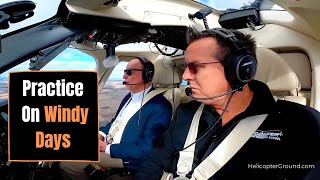
A short transcript from a video advising helicopter instructors and students to practice flying in windy and gusty conditions rather than avoiding them, noting that gusts over 20 knots are common and trainees should learn to handle such days; cancel only when winds are excessively severe. The clip emphasizes using winds to advantage during training and making conservative go/no-go decisions when necessary.
Questions this video answers
Gusting up over 20 knots.
Chapters
Our next rotor tip is the winds are so much stronger than I'm used to. If I had a dime for every time that an applicant blamed the winds as a reason for their poor performance, I would encourage the applicants to fly with their instructors on the windy days and the gusty days. I know it's easy to cancel on those days, but if Check ride day happens to be a little windier day, they really can't be using the winds as an excuse for their poor performance. And I've seen that from time to time. And as helicopter pilots, we can use the winds to our favor for some of the tasks that are going to be conducted that day. I'll talk to instructors right here. If you feel the winds are really gusty and, you know, maybe severe too strong, yeah, it's okay to cancel that. What I'm talking about is don't be afraid to fly in those days where the winds are gusting up over 20 knots, because there probably will be a day that your student is going to have to fly in conditions like that. So it's important to fly in all types of weather conditions. The winds are much stronger than I'm used to. Keep that in mind, instructors, and let's try to fly with the students even on some of the windier days.
Rotor tips brought to you by helicopter Online Ground School's no Go decision button. When you feel the pressure to fly, but know the right decision is to stay on the ground, hit the hogs no go and live to fly another day.