The Key To A Nice Normal Helicopter Approach
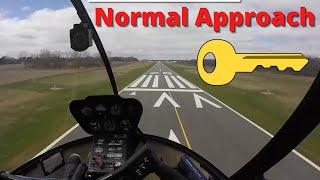
Kenny Keller shows how to nail a helicopter approach in an R44 by starting at 60 knots and gradually slowing down while descending to cross your visual reference at 300 feet. The critical rule: keep at least 30 knots until your descent rate drops below 300 feet per minute, or you risk vortex ring state.
Chapters
Alright, so we're going to go around and film a normal approach in the R44. Now the key to any approach, no matter what it is you're flying, no matter what helicopter you're flying, the key is a good setup. And out of all these different aircraft, I don't do a whole lot different in one than when I do the other. In general, I start my approaches about 60, 65. Then right from the time I start my approach, I'm slowly decreasing the speed all the way in. So the key is a good setup. So right now we're on downwind. I have a nice downwind base and final kind of setup where everything's at. I'm going to go ahead, pull full carb heat, I do 500ft for downwind, 70 knots. We got that. We've got our airspeed, altitude and trim. Everything's nice where we like it. We're going to go shoot for the numbers 28. I'm almost a beam 28. As soon as I'm at beam 28, I'm going to start slowing the aircraft.
Down.
And start a small, very small rate of descent. Now we always do the three things the same at the beginning of a descent. A little bit of down collective, a little bit of right pedal and a little bit of aft cyclic. So moving forward, I got a field here that makes a nice defined basin final and then I have a row of trees over to the left. If I come over those trees at 300 AGL, I know that I am going to be on a normal approach. Takes all the guesswork of trying to decide is this a normal, is this shallow, is this deep. So right now I am descending down to 1100. Textbook is 300 AGL for a textbook approach for your, the start of your approach. So I want to be at 60, 1100 in trim when I start the approach. Zero rated ascent. So it's a nice setup. So I got my 60, I'm about 1200 coming around for my tree line and if I do it right, I'm going to be at 11, 60 in trim, zero rated ascent when I come over those trees. Alright, I'm a little slow, so I'll pull up a little bit of power, get rid of that descent, there's 1100ft, get back up to my 60. Now I'm using the compass, down to the numbers 2.8. So there's my numbers, I'm 300 AGL, there's my normal approach. So I'm going to go a little down collective, little right pedal, little bit of aft cyclic. So I started at 60, then I'm going to go to 55 and then I'm going to go to 40 or I mean 45 and then 40. It's a gradual process the whole time we're coming in. So I'm not really looking at any of the gauges or the instruments. I'm just focusing on my numbers.
2.8.
I'm using the collective to control my angle. I'm using the cyclic to control my speed. About 50ft AGL, I'm put a little left pedal in to get in line with the Runway. Prior to 50ft, we keep it trim with the wind. Number two eight still on my line of sight from the beginning of the approach. Keeping the aircraft level. Raising a little collective.
Justin.
Or adding the left pedal because we've added a little power and right down to the numbers 2 8.
Hey, it's Kenny with helicopter land ground school. We're going to get to the presentation.
In just a minute on the approaches.
The key to a normal approach and some tips and tricks on approaches that we covered today with our professional pilot member. First I want to show you Ken Keller field.
My dad had this cut out and a guy who lettered my trucks at the time I was in the towing service that lettered my trucks lettered this.
Sign for my dad. The baseball field was named after my dad. And pretty proud to hang that up to our new hangout area for flight training.
I'm bringing a coffee table from home.
When we hang out sign logbooks.
This is where we'll be hanging out. So for my dad want to show you that.
Then the hogs wall looks a little different.
Hangar looks a little different.
We've rearranged. But don't worry, we'll be all back to the hogs wall soon. But the reason for the big change here is look over here. We're leaving tomorrow morning, Friday to go after the two helicopters. So check this out. This is the other end of the hogs hanger. All cleaned out nice and neat. Because we're bringing back two H269 helicopters tomorrow. One's flyable and will be flown here. The other I'm gonna haul on a trailer because it has a zero time engine sitting beside it. No blades. Needs to be put back together. Rather than our mechanic who lives close by travel all the way to put the engine in it, we decide to go pick it up with a trailer, bring it back along with the parts inventory. And with the parts inventory for these two helicopters, There's a whole bunch of stuff. A lot of the shelving and stuff comes with it. But we'll probably need some additional stuff. So we're gonna bring back both helicopters, stick them in here and start unloading parts. We're gonna load all the parts in a box truck and put the shelving together. And this over here will be the maintenance area for the two helicopter H269s. One will stay here at Hogs North Central Indiana. And the other will be down with Jason Cutter with Venture Helicopters down in Central Indiana. So you'll have two locations in Indiana to check out these aircraft and fly with us. If you come here to Hogs when we're done flying, we'll sit down, sign your logbook in front of the Ken Keller field sign. So let's switch over cameras. Let me get over here. We gotta switch some things around.
All right, so great. One on one with our pro pilot member today. And we talked a lot about approaches and this is good stuff. And he's. And he's doing good. I just help him refine everything a little bit. So we're going to cover that. We got Kevin Pritchard. This is actually one that we hadn't made it onto the wall. And he said, hey, you need to get my CFI picture up there. So Kevin Pritchard, certified flight instructor. Going on the HOGS Wall of Fame behind us. Patrick. Hopefully I don't butcher this. Too bad, Patrick. I just thought of how it sounded. Good. Lopatosky, instrument pilot. Check this out. Sheriff supported my helicopter. I'm impressed. I'm jealous. Going up on the Hogs Wall of Fame. And Zach heard instrument pilot. He just sent us in, sent us two pictures. We're only putting up the one we like. This one he had the. Wherever he's flying, they put up instrument. Gave him an instrument pilot sign. So that's really cool. So they will be going up on the HOGS Wall of Fame once we get helicopters arranged and everything. Man, I'm red in that one screen. Oh, well, don't worry about it. So I didn't go to the tanning bed. We just messed with settings today because we're doing something different. You can see a different view. As we already mentioned, getting ready for helicopters to go in the back. So once we get everything set up and we get the 269 flying, it will be over here, back in the background for the HOGS videos. And a lot of interesting stuff we're going to film, going to pick it up. We're going to film some of the stuff Getting it together, putting the fresh engine in it, so on. So today, some of the things I wanted to talk about. Just mention five things. Our pro members doing good. He was hoping to have solo soloed by today, but guess what? Helicopters down for maintenance. And I wanted to bring that up because he said on his own, before I said it, he's like, well, I didn't get to solo because the helicopter has been down for maintenance longer than they expected. And I go, well, that's normal, you know? And he said, but I've been studying real hard. And I'm like, good, because we try to make this point to you all the time, that people freak out when the helicopter goes down for maintenance, and they also freak out when they have to cancel because of weather. And I always say the same thing. If the helicopter's down for maintenance, you've got stuff to do. You've got endorsements to go over. You've got regs to check in your logbook. You've got ground study to do. And when you cancel for weather, if you really wanted to go to the airport that day, tell your instructor you want to come in and do some ground school. People freak out. A lot of times they get so frustrated over maintenance. It's the helicopter industry, and that's what happens. Helicopters break. And no matter how many helicopters you have, if you go, well, I'm going to have two. So when one breaks, I got one to fly. Guess what? They break at the same time. And it could happen if you have three or more, right? And scheduling problems and all these kinds of things. So down for maintenance. Don't sweat it. Let the mechanics have the helicopter for the amount of time they need it to do the proper maintenance. You have things to do. And I was proud of our member for going. He goes, that's okay. You know, I really want to have soloed by today, but instead, I've been studying, and I'm like, good for you. So all of you just know this is part of it, right? Helicopters are gonna break. I can remember in the EMS environment, the hospital would flip out every time the helicopter was down for maintenance, and they'd freak out and complain. It's like people, it's a helicopter, they need maintenance, and occasionally something breaks, and you just can't flip out every time a helicopter goes down for maintenance. Let the mechanics do their job. Let them have the aircraft. Don't push them. Leave them alone when they're doing the maintenance, leave them alone. All right, let's go to the next one. Heather, what do we Got for number two, easy stuff or not so easy from my own training notebook. So I haven't a lot of you been swallowing us forever. You haven't seen it in a while. Here it is. I brought this dude out today while we were one on one. I said, you know what, let's just get started. And I went right to the first page and they've actually fallen apart. I put them back in where they go. But when I built this notebook, it was after my failure and it was the stuff that I had trouble remembering. So we just went right to the start. And this member is doing really well. He's doing well on the fly in. He's making good progress. He's really sharp individual. He's been studying and I can tell he's been studying. And even last week I said, now when we start doing the one on ones and I start asking you questions, I know as an engineer you're going to want to give me everything. And I even use the example of retreating blade stall. And what he do today got too technical. So right off the bat I went, whoa, stop. You know, it's when the retreating blade exceeds a critical angle of attack. Stop. Then you move on. So a lot of stuff I just started asking him, like angle of attack, boom. He nailed that. Density, altitude. He nailed that right away. I asked him what pressure altitude was. And this is why I harp all the time. Is this stuff easier? Is it not so easy? This is coming from the beginning in my notebook. These things that seem so simple. When I asked him pressure altitude, he kind of did the. Yeah, well, let's see. And he started going kind of deep into it, right? And I'm grinning and this goes on for, I don't know, 30 seconds or a minute and I'm kind of grinning. And then finally he goes, well, how about if I just say it's what you get when you dial 29.92 in your altimeter. I'm like, yes. Isn't that much easier? And he's like, okay, duh. I knew that. So the theme of today was he's a smart individual, he's applying himself, he's doing well. But the common theme through our one on one questioning today was, that's good. You're giving me too much information. Find a simpler way to say it. You know, the like retreating blade stall. What is it? What are you going to notice at the beginning? What are you going to do to get out of it? Some of the other stuff like, oh, you know, we hit the. He did good on like required equipment. We did pretty good there. But then I went into, well, what if you're at airport somewhere and one of these pieces of equipment, like let's say your oil pressure gauge doesn't work. You've, you're on a cross country, you've stopped, you go to start the helicopter back up after getting fuel and your oil pressure gauge doesn't work, what do you do? And he kind of went down a long path, but he did right away say, well I'm going to call back to the flight school. And I'm like, you're right, absolutely, you're going to call back to them because it's required equipment. Without an oil pressure gauge you can't fly it. But then I was kind of looking, I wanted to go on to the ferry permit and it took us a little bit to get there. But you know, as a student you're going to call back to the flight school and say, hey man, I want to start the helicopter. Oil pressure gauge doesn't work, you're going to work with the flight school. Obviously you can't fly it. It's required equipment. If you don't have it, you can't fly it. So then I posed the question, let's say you're now a private pilot. Let's say the examiner is asking you, let's say you're a private pilot and you own your own helicopter. Because the examiner could very well pose that question because you're getting ready to go act as a private pilot. At the end of the day when you ace your checkride, your oral and your flight, he's going to sign that paper and you're going to be a private pilot. You can now go out and do what you want to do. However, you need to know if he puts that question to you as the way I put it to my member, I said, what if you are the owner and that oil pressure gauge doesn't work and we got around to the 130 or we got around to the ferry permit, but basically even as an owner, you're going to call up your mechanic and say, hey man, oil pressure gauge isn't working, most likely he's going to come out and try to fix it there. If for some reason they can't fix it there, which oil pressure gauge should be pretty easy. But however, you're going to have your mechanic come out and check it and let's say you, you guys deem that it's just a faulty gauge, the pump's working, you've still got the I'M sorry, let's back up. Oil pressure light. The light's bad, but not the gauge itself. If the mechanic deemed it safe to get it from here back to here to do the work, you could get a ferry permit and you can go online, fill out the information where you are, who you are, what you want to do. It's a one time, yes, I can get it from here only to there, but you're going to work with the mechanic and work with the flight standards district office to get that set up so you can get the aircraft move. Every case is going to be different. And we went over here's a good one and we'll get to approaches here in a second. But just like right from the very beginning of my notebook, I said, you know, what do you do if you get lost? And he started telling me stuff, but it was really in deep and it was going in deep and I'm like, hey, how about the five Cs? And he's like, kind of scratched his head and I'm like, ever heard of the five Cs? And he's like, well, I guess I've heard it. I go, okay, so back up. Examiner says you get lost. What are you going to do? I'm going to use the five Cs. Oh yeah, what are the five Cs? Climb, communicate, confess, comply, conserve, Climb in a helicopter is the first thing you do. Because in this case, this gentleman's a fixed wing pilot. He's used to being up there thousands of feet, right? That's his experience of flying for years at higher altitudes. In a helicopter, we're normally at 500ft. So I said, if you're following along at 500 and you get distracted, let's say your GPS quits and you go to your backup chart and you get everything arranged in a matter of a couple minutes, you're lost, you don't know. You know the general vicinity you're at, but you don't know where you are. Just climbing 500ft, you might go, oh, there's that lake, oh, there's those railroad tracks. Oh, there's that town I'm looking for. So if you tell the examiner, hey, climb up 500ft or 1,000ft, see what you can see, communicate to whoever you can talk to, a local airport, unicom, an, approach, a tower, communicate to someone that you've not sure where you're at. Confess, communicate with them and confess I've done this. Then comply what you tell, comply with what they tell you and then conserve your fuel, whatever you might, whatever your settings might be on that particular aircraft for power and speed to make your fuel last as long as you. As you can make it last. And he knew these things. It wasn't. He wasn't dumb. But I was just saying, memorize the five C's. The examiner will love it. If you on the check ride, you go, oh, if I get lost, I'll use the five Cs, but then stop and there's an examiner will probably go, oh, the five Cs, huh? Well, what are those five Cs? And then you can explain to them. I've used it as simply as I was near an airport. I knew it was outside the city and fog came in before I got there, and I could see the fly state, but I wasn't sure where I was at. I called up the unicom. I said, hey, I'm along this highway. I just saw the water tower. Can you help get me to the airport? And they went, oh, okay, you're going that way. You saw the water tower. Just go another mile, watch for the bridge, turn left and go a mile or two south and you'll run right into us. So communicate, climb, confess, comply, conserve. So a lot of things we were hitting today was all stuff in the beginning of my notebook. And it goes back to, is this stuff easier? Is it not so easy, these things? And this point came up why I titled it this way. My member agreed. He goes, I know this stuff when I'm not. When you're not asking me the question. And I said, that's the point. You're at home studying on your own, and you're going over this stuff, and you're going over this stuff. You've got it, you've got it memorized, and you know the material. The moment you are on the other side of a table, an examiner's asking you questions. Or in our case, he's in Florida, I'm in Indiana, and we're on a zoom call. It's still the same pressure. And he's like, I know this stuff, but it just isn't coming out fluid as. As you're asking me the question. And I said, that's the point. That's why you go over this stuff and you go over it and you go over it because we learned through repetition. You want to know it so well that it rolls off your tongue when the examiner asks you, you know the five C's Climb, communicate, communicate. Complex, confess, comply, conserve. And all this simple stuff that seems so simple. Pressure, altitude, density, altitude, all these Things, you know, the frequencies for hijack, radio failure, emergency. He got them, but he had to think about them. I'm like, keep going over this stuff. This is how you excel in a checkride versus just pass, right? The examiner wants you at the private pilot level and you can pass at the private pilot level with you kind of stumbling around and having some problems. But why not go the extra mile to really hammer this knowledge and go over it and go over it. Because you'll be impressed when you smoke the checkride and your examiner is going to be impressed. And so many people have said, man, I went in the, well, the hogs wall of fame back there. The people tell us they've been through the video, the whole video course, two or three times. They've studied on their own and they've done one on one with their instructor. You get good at this stuff by going over it and over it and over it. And don't overlook the easy stuff. I say this all the time. You always worry about the complicated. And then you get tripped up on a check ride when you're sitting there across from the examiner and you're stumbling on density, altitude, pressure altitude. And I told my member today, my first CFI ever, he was at airplane or my first private pilot ever. Add on airplane cfi. The guy knew his stuff, man, he was awesome. He went to the checkride, he couldn't figure pressure altitude by hand and he failed because you have to be able to figure pressure altitude. And when he couldn't do it, he couldn't use the chart in the R22 PoH. And the examiner said, dude, I can't. If you can't figure your pressure altitude, you can't manipulate the chart and therefore I can't pass you. So don't overlook the easy stuff. All right, so let's go to the approaches. We. This was part of what we got talking about today. I don't remember how we got there, but doesn't really matter. Okay, here's a good one. We're talking about the approaches and I'm asking my member, well, how do you fly these approaches? And he had all the good stuff he's telling me and he's going on and on and he's telling me about, he's doing this and he's doing that and, and this type of approach and da, da, da. And it all sounded really, really, really good. Okay. He's like, well, my exam or my instructor says my approaches are great. And I go, good, that's awesome. I'm glad that you like them at some point. I said, okay, tell me what the General Safe is rule for flying the helicopter approach. And he started coming up with some different things, but it wasn't what I was looking for. And many of you will know this. I got this from my Robinson training. And I'm sure this comes up at the Robinson Factory Safety course. And this gentleman didn't know it. He's never been to the Robinson Factory Safety course, so I can't fault him there. I'm surprised his instructors didn't hone this in his brain. He said, they may have, and I just didn't catch it. Which. In the beginning, that's what happens, right? Your instructor's throwing stuff at you for an hour flight. And a lot of it just goes one ear and out the other, right? So maybe he's heard it and maybe his instructor had told him. But I said, the General Safe rule for flying helicopter approach, that I want you to memorize. I go write it down. Because everybody should know this rule. And I'm surprised the amount of people that don't know this rule. Always keep a minimum of 30 on your airspeed until your rate of descent is below 300ft per minute. Depending on what kind of gauge you're looking at, it could be like this or like this. He didn't remember ever being told that. And I said, write that down because that's good for an R22, that's good for an Enstrom, that's good for a Brantley, that's good for a Jet Ranger, or that's good for any helicopter. And he. And he questioned me. He goes, well, what about etl? I thought that's part of the. I go, well, ETL is part of the selling of power and vortex ring thing that you're trying to avoid. The reason that they use 30 in that keep 30 on your airspeed until your rate is below 3, below 300, is because they've built a fudge factor in into that, right? And the different things we were talking about, I said, there's two numbers you should always remember. I love the number three. I always bring it up. It relates to helicopter training. But 30 and 60, what I really like to remember, 30. I said, you want to know this 30? Remember this 30 number because 30 will keep you out of vortex ring state selling of power, staying above 30 will keep you out of LTE. So if you have that number three and that number 30 that comes up all the time, your approaches, and some people will say, oh, I don't. That's. You Know that's too hard to do. No, it's not. If you fly a nice stabilized approach, it's not hard to do. It's the technique that you're using as you're coming in. So it was something simple. And I praised him for all of his knowledge and that his approaches are good. But I wanted him to memorize. Keep 30 on your airspeed until your rate ascent is below 300ft per minute, and you will never get into vortex ring. Vortex ring state. Selling a power on approach. So I'm thinking of that. Every single approach I'm. I'm flying, I am always working in 30 and 300. Keep 30 on your airspeed until your descent is below 300ft per minute. And we talked at depth about approaches, and I know Glenn had a question, and I'll elaborate on that one before we're done, but because I get sidetracked and I go too far, let's go to number four, Heather, just to see what else is on there so I can make sure I get through the list sight picture and control inputs. Okay. He. He had. He explained to me his sight picture. He told me in the aircraft about on the location on the windshield lining up with the, with the numbers on the Runway and that invisible line going down. I'm like, good, okay. Because I'm surprised at how many people they're close to their check ride, and they're going, kenny, I'm screwing up my approaches. I still don't understand the sight picture. And I'm like, sight picture. You have to get it from the very beginning. So he had it, and he knew what he was talking about. And I was like, good, you're good to go with your sight picture. If you're struggling with that, work with your CFI and make sure you understand what this sight picture even should be. And he knew the 5, 10, 15 degrees for the type of approaches, which is great. You need to know that, but you need to know how it looks in the aircraft so that you can fly that approach the same time every same, same way. Every time. He had the. I always need 300 to start my approach. That's what my instructor taught me. I'm like, good. Your instructors teaching you a minimum of 300 before you start that approach. This is why I normally put my thing on airplane mode before we go live, because people start ringing your phone and you lose track of what you're talking about. So what was I talking about? The 300. Oh, so he's got that down. He's got the. I know the 300 at the beginning of my approach, I'm like, perfect, that's textbook for setting up an approach. And I said, have you ever heard of. It should always look like you're approaching the numbers at the same speed. This is what a Vietnam era tile pilot pilot taught me at the very beginning that I hadn't heard until I flew with him. I'm probably around 300 hours and he's the one. And I learned a lot from. Again, another Vietnam pilot era pilot that I learned a ton from. He was checking me out as a new CFI in the instrument. He's like, well, this relates to Glenn's question. Glenn asked before we went live or at the beginning of this, while we were on that video, he said, what about power settings? And this came up with my member today. What about power settings on your approach? Quite honestly, I don't look at power settings on my approach. And I know some people do that. They have a power setting they want at the beginning. They have a power setting they want during their glide. If that's what works for you or your instructor in any environment, if power numbers and settings works for you on an approach, that's great. I don't use it because to me, if you understand the sight picture, you understand that collective controls the angle, cyclic controls the speed. If you understand the sight picture and if you understand that you want to always be slowing down from the beginning of the approach clear down to the end of the approach, if it's a gradual slowdown from 60 to 50 to 40 to 30 to 20 to 10 as you're coming in, that helps keep you at that. The 30 and 300 we talked about, it makes it nice and smooth. I don't need to look at my. At my manifold pressure setting that changes through the day, right? Changes on the amount of fuel you got on board. So to me, I never really was big on using numbers because if you understand the way the approach should look, you sh. You can be. Again, I'm not taking away from somebody that does this differently. But for me, if I understand the sight picture, I know where to start. I know collective controls angle, cyclic controls the speed. I know it should look like I'm always approaching those numbers at the same speed because you're starting fast as you come in, you're going to be slower and you're going to be slower, and you're going to be slower. So it always looks like you're approaching those numbers at the same speed. So those are some of the things that we talked about. Again, he has great knowledge. I was just honing in some of the control inputs, the sight picture, all these things are very important. And so he was doing well on his descriptions, telling me what the way he does it. And I said, here's one other. Here's one other thing. Tell me if you do this or not. And the answer was no. And here's what I do. And I've been teaching this for years, and it's in our videos in the hogs course. If I'm going to use 60 for my approach, which I want to add, I told him today, 30, the number three comes up, 30 comes up, 60 comes up. If you use 60 as 30 and 30 make 60, 60 is always a great speed for about any aircraft training or otherwise to use as. What's a good minimum speed to have while you're going around Your confined area? 60, it works in a Robinson, works in an instrument, works in a jet Ranger, it works on a lot of helicopters. So the beauty of the number 3 and 30 and 30 makes 60. 60 is a good number that you can use for your approaches and some aircraft, you might be doing 50 on approach, you might be doing 70 on approach. Depends on you and your aircraft and the POH. But 60 is a good general number to use. Losing my train of thought again here. Again. So. So if you're going to start at 60, he was telling me how, yeah, I have that 60 and I. And I'm getting it all set up good. And then I start flying it down. And I said, do you ever think about entering a little bit faster, like 62 or 65? And he was like, no, I don't ever do that. And I go, here's the one little trick. If you want to fly your approach at 60, be a little faster than 60 before you start that approach. Here's the trick. Let's just use example of you want to fly 60 all the way down. If you're about 65 when you enter that good sight picture and you got everything where you want it when you go down, collective right pedal, aft cyclic, as we do every time we start that approach. If you go just a nice little gentle pull back, I call that setting your speed. Because if you don't, some people will go, they're right at 60. So as soon as they go down collective right pedal, half cycle, you pull the aft cyclic back just a little bit. Now they're at 55, and then they go, oh, I'm at 55, back forward, and then they speed up and then they go, oh, I'M too fast. And then they do this. So it gets that seesaw effect going in because you, you. I'm not saying you screwed it up, but by the nature of going aft cyclic at the beginning of the approach, if you're at your target speed for your glide at the entry, you're going to be just a hair slow. And then you end up chasing everything down. So back to Glenn's question and everything we're talking about. That's why to me, that nice slow approach, understanding collective controls to angle, cyclic controls to speed. You know how it should look on the windshield, you know how it should look going down. You know it should be, you're approaching that, it's going to keep because you're slowing down. It always looks like you're approaching that the same speed. I think I've covered everything. I want to talk on that and we'll go see if there's any questions when we get done here. Number five. What we got is five, Heather. Oh, Ab cyclic at the beginning of the approach. Finishing touch. And he was grinning when I told him, I go see, you're good. And what you're. What your instructor's been teaching you is good. And I'm happy that you're approaches are nice. Guess what? I just gave you a little golden nugget that will help you put the finishing touch on already. A nice approach that you're already flying. This will help make you make that touch, that finishing little golden nugget. It works. It's again calling set your speed. I just like to be 62, 64, whatever. Just a little bit faster than your target speed. So you go down collective right pedal and a little bit of aft cyclic. We talked about so many other good things. And then the last one, I emailed him after we were done because I failed to ask my number one question that I train all the time. If you're out with me in a pattern, I'm going to ask this question because my examiner will ask the same question. So I emailed my member after we were done. I said, hey, there was one thing I forgot to ask you today. What is the key to a nice approach? And he said, a good setup. But he had a. He started typing out a whole bunch of stuff. And I said all I wanted simply was a good setup. He was giving me all the info, but it was really more than I needed. What's the key to a good approach, a good setup? What's the key to a nice straight in auto practice? Auto. A good setup. What's the Key to a good hover auto, a good setup. If you set it up nice, it's going to be nice. If you set it up sloppy, it's going to be sloppy. And then there's a rebuttal. Oh, but you, you in the real world, if you lose the engine, you can't, you're not going to have a good setup. I know that we use a good setup for training purposes. On a check ride, you want to set your, you want to set everything up nice so it'll be nice. You go out in the and do instruction with your instructor and you do power failures at oddball times, whatever your method is, and you learn to practice that stuff away from the airport. What if. Oh, hell, the engine just stopped. But for training standard, we want a good setup examiner. I brag about all the time he's been doing it since dirt was new, really well respected in the industry. And he says it every single checkride. What is the key to a good approach or what is the key? He'll always say, when they say a good setup, he'll go, nice. Okay. He'll even go as far as say, if you go around to get set up for the straight in auto and you have a sloppy setup and you're trying to fix everything, last minute he goes, go around, set it up again. I'm not going to fail you because you have a sloppy setup. I would prefer you say, you know what, I didn't set that up well, I'm going to go around and do it again. He'll say, great, we just got the note, we just got the go around out of the way. You decide to not do it. You go around, you make a call. Hey, do a right360, come back, line up for final again, Take your time, go out a little bit farther, breathe in and out. Get that good setup. And if you set it up nice, it'll be nice. Set it up sloppy, it's going to be sloppy. Back to that little golden nugget at the beginning of that approach. Just that final fine tune. Just a little bit. All right. Anything I need to answer over there, Heather? I could keep going. I love this stuff, absolutely love it. But I think I hit the topics today and we talked about even more. But I want you to go away today with. Don't overlook the easy stuff when you're studying. It's. We spent our one hour went over and it was all the beginning, easy stuff. All the things that you go, oh, I'm not worried about that. You know, flight reviews, airmet Sigmet's flight service station frequency memory aid for confined areas. He goes, I know I've heard them, but I don't have one. So we went through a good memory aid like the Watt fill, wind obstacle, turbulence, force landing area entry exit, low recon. Don't overlook the small stuff. People spend the time to go over these things and go over them and go over them. Because on a checkride you don't get tripped up by the hard stuff. You get tripped up over the easy stuff that you probably overlooked. Brian hits all that in the private pilot study guide right in the beginning. Certificates and documents. I just made fresh videos on those inside the private pilot section of ground school and. Airworthiness requirements and certificates and documents. That certificates and documents has all those little questions you get tripped up on. How long is your license good for? How long is your medical good for? What do you have to have on you? What's got to be in the aircraft? People screw those up. I'm telling you, don't overlook the simple. So we said in the email today we're going to give away a private pilot study guide. We have one here. I brought it in today. We ordered it just to test and see how long it would take if I ordered it through the mail. Yeah, I bring this one over, we'll show them one. This is the one I'm using that I just used the other day to make up the new videos on the airworthiness requirements and airworthiness. Getting tired. Anyway, I've been marking up this one and it's okay. The new one came in. So it's in the box unopened, still wrapped in the plastic. So I thought, you know what, let's give that away today. We've been giving away T shirts and other books. So this is a brand new what we're giving away. It's over there in the box wrapped in plastic. All Heather's going to do is just put a little extra stuffing in there, put a little nice note to you, and she's going to stamp the the box with your address and we're going to ship it to you. So we gotta. Normally we make this stuff up ahead of time. We didn't make this up. What are we going to do today to give this away? I guess we ask a question. So get ready. Let's go back to certificates and documents. Let's do that. Because I'm telling you people, I did my December of last year. I went and did a renewal CFI checkride and I didn't go back and refresh this stuff. And my examiner buddy, who I go in there being cocky, oh, you know, I'm captain, Captain color. I'll breeze through this stuff. Brian laughed. He goes, wouldn't you like to have had this before you went for your CFI renewal? And I'm like, dude, if I'd have had this, I would have read this damn thing for sure before going to my CFI renewal just to refresh my memory. Because we all think that we're badasses and, oh, I'm a cfi. I know all this stuff. You know what? You don't. You let this knowledge slip. And it's easy to be sitting across from the examiner. I was struggling on the basic easy stuff. We did already ask the night questions like last time. We did, didn't we? I think we did. Should we do it? Should we do a. Should we do a. I don't want to do anything too. I want to try and find something quick, but I want to do it kind of hard. But. You know what? We'll make this easy. And you could lie and we won't even know I'm going to do it. But we can always check. And if we check this after the fact and then you lied, we won't ship your book. How's that? Here's a question you all should know for whatever aircraft you're flying right now or that you fly on a continually basis. And again, we're going to check this after the fact before she ships the book. What is the max gross weight for your aircraft? Max gross weight for the aircraft that you're flying or one that you do fly. Tell us in chat. What's the aircraft? We want to know the aircraft. Give us the aircraft, make and model and the max gross weight for your aircraft. Heather's looking. She's watching in the chat over there. I didn't set it up today, so I can't see it. So while she's watching for someone to state make and model of aircraft, max gross weight. And remember the way it comes up in our chat, make them up different than what your chat shows on your device. So the winner we declare is the winner. That's the way it is. No arguing. We had a guy. Oh, I'm going to email you a picture of what my chat shows. Well, it's two of us here watching Hogs chat, right? We can't. And we know for a fact people argue. Well, I was first. I was first. No, you weren't. It. It's what our chat shows us. Do you have A winner over there. Chris says 1370 for the R22. All right, Chris, what's the identifier? Just Chris. Okay, Chris, you need to email heatherelicopterground.com with your address and she is going to ship you the private pilot study guide. And we're going to check and make sure. I should know that top my head, but I haven't looked at that number in a while. And we've got the chat we can look at later after the video is rendering. So in the event something goofy happens with that number, which I'm sure it's probably fine, we can always pick a number. Number two. But you should be good to go. No go button, people. It's that time of year again. Now we're having wind, fog, freezing rain. We had 2 or 3 inches of snow the other night. I'm going to do a video soon on some stats on inadvertent IMC and some stats on, like, who gets killed, what type of environment, what kind of hours, some different things. And this is something I saw an email the other day from the faa and it was a cool. Not a cool, I shouldn't call this not a cool subject, but the FAA has got an advisory on it that I read through and I'm like, you know what? That's a really good review. So we're going to do that here soon. We're going to do a video on avoiding imc. Some of the stats that hopefully may or may not surprise you about people that lose their lives flying into the clouds, following the map on your GPS but not paying attention to flying that line right in the side of a mountain. Good weather decisions. Making good weather decisions. Now you got to worry about snow. If you're one of those people like us that all sudden you have to worry about landing in snow. Have you reviewed, reviewed your procedure for landing in snow? I've got some good video of us landing in snow I could use and make up a presentation. Maybe we'll do that next time. And there are different, different methods depending on who you are and where you are and where in your world. There you are. Your company, your flight school probably has a way they want you to land in snow. So I'm not going to go into that right now. You make good weather decisions, stay on the ground and don't lose your life. When you pass your checkride, we send you the no go button. We're getting ready to order another round of these. We've given away almost a hundred of these now. And Heather showing me how she puts in the box. Please send us a picture or a short video. She showed it to me to prove that very few of you have sent us a picture of the no go button. We'd like to hear about it. We'd like to see a quick picture. The idea is you make a decision to stay on the ground and not lose your life. And when you stay on the ground and you go, man, I want to go. My wife wants me home, but I know the weather sucks and if I go, I'm taking a risk, you say, nope, I'm not gonna go.
Live to fly another day.
Helicopterground.com there's your little treat. You can feel good when you hit that button and you go, you know what the right thing to do. Stay on the ground. Zach has his on the way shortly. Heather will be shipping this out if you haven't already. It's shipped, he's on his way. So when you send us a picture after your checkride with a short little sentence or two on how hogs helped you, we send you the no go button. So out of a hundred, God, we don't know the wall now has. We got to have probably 200 people up there. A hundred. Almost 100 of those people have no go buttons sitting at home. Exactly. So anything I need to address before we go? What do you start studying before you start training? Helicopter Flying Handbook. That's the helicopter bible there. You can get it for free. Faa.gov you can download a free PDF or you can order it from Sporty's or Amazon, you know, 15, 20 bucks, that's the cheapest way. And it's information that you're going to get that's good information because we base our training, all of our training on the Helicopter Flying Handbook and the FAA bases, you know, questions they ask on the Helicopter Flying Handbook and something else. We are currently updating all of our written test prep. And one of our members, Michael Wirth's hog superfan, almost always here in the, in the chat. I've taken him on as a part time HOGS employee because he just did his CFI written test and FOI test. He's going through and updating the written test prep for our CFI course. At the end of our CFI course, we have written test prep that is available for FAA wings credit. Since he just took those tests, he wanted to do those first. And I said go for it because that stuff is fresh in your mind. And as he's updating those questions, he actually set it to randomize. So each time you take it, it'll throw them into a different number, which is good. We didn't have it set that way before. It stayed the same. So not only are we updating the FAA questions to what's current in the CFI course, they're set on random. And as soon as Michael fixes or finishes up cfi, I asked him to go to Private Pilot next, because obviously Private Pilot is more used than anybody. Most. Most of our members are in the Private Pilot course because some people may never go on. So as soon as he finishes cfi, he's going to go back to Private Pilot, and he's going to go through every single question and what's current? Has anything changed, anything new to be added? And I like the randomized feature, so he's going to add that, too. So probably within a month, all of our questions in all of the FAA testing will all be updated. I mean, they're all still valid questions. But because he recently used hogs for all of his ratings and just went and took. The FAA in the past six months, has went in and done all these written tests. He's like, I'd like the job of going in and just checking on anything that might be outdated and adding anything new. And I said, let's do that. So Michael Worth is our FAA written test prep guy. So we're getting all of those updated in the site. And it's important to remember we have written test prep for private, commercial, instrument and certified flight instructor. So you can go through the videos, you can test your knowledge, and those videos report to the FAA or those. I'm sorry, those written tests. This is how we get our FAA Wings accreditation. So if you use our written test prep, know that everything's being updated and you can get credit. We have a little computer up here that reports every day to the faa. So if you. If you're using FAA wings credit with many, many people are our computer reports. Our site is hooked up with the faa. We just had a guy today that was talking to Heather and Daniel about membership. He's like, well, are you really a real ground school? And we're like, yeah, we're kind of a real ground school. That's why we have FAA written test prep, and that's why it's authorized through the FAA to give you Wings credit. We are an official ground school. Yes. All right, I bet we're about to lose power on our battery on our camera, so I'm gonna sign off. Thanks, everybody, for tuning in. Wednesday is next week is Thanksgiving, so I will not be here. Going live on Wednesday. Let's do Wednesday. Next week we'll go live because we rescheduled my members session for next Wednesday. He's like, why? I'm at home on Thursday. Let's do Thursday. And I'm like, I'm going to my schedule with my daughter. I need the day off. So Wednesday we'll plan on going live again and hopefully maybe my new member or pro member had been soloed. And we'll talk about whatever comes up next. Along with that FAA thing I prop. I talked about him. And some snow landing stuff, too. We'll talk about that. All right. Thanks, everybody, for tuning in. Peace out.










