The SECRET To Smooth Helicopter Landings!
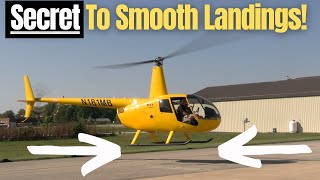
This YouTube video (Kenny Keller, Oct 17, 2023) teaches a two-stage helicopter pickup and explains common causes of unstable set-downs. Key instructional points: raise collective slowly (focus outside), pause when aircraft becomes light, then gently lift to hover; during set-down expect an "air cushion" when skids are about 6–8 inches above the surface which commonly causes pilots to over-control and wobble — two practical remedies shown are neutralizing control inputs and, when appropriate, descending slightly faster to push through the cushion. The video also describes the HOGS "no go" button (originating from EMS pilot Mike Matera), its purpose as a visual cue to say "no" to risky flights, limited-time US sale price ($49.95), and contact/website details for obtaining one (Helicopterground.com; heather@helicopterground.com referenced).
Questions this video answers
October 17, 2023.
About 6 to 8 inches above the surface.
$49.95 (US only).
Mike Matera (described as a Vietnam-era pilot).
Helicopterground.com; contact: heather@helicopterground.com (spoken as heatherelicopterground.com).
Chapters
What you'll see people do and you have a nice set down going and all of a sudden you're like, okay, I should be there. And so then you start monkey with the controls. And this is, this is exactly what people do.
Hey, have you ever struggled setting the helicopter, getting it clear down on the.
Skids during your set down?
We're gonna go right back to that video. So hang on, we just want to.
Tell you real quick before we show.
You that video, hang around to the end of the video. We're gonna tell you about the how you can get a no go button for your flight school and where it originated from. And we wanted to mention the private pilot study guide. We're put a link down for this down below. This dude has 400 questions. People are digging it. You can get a copy down below. So we're going to roll that video and this video is going to show you what I learned from an examiner of 50 years of why people can't seem to put the helicopter nice and smoothly down on the ground. So go ahead and roll that video, Heather, and hang around up to hear how you can get a no go button. Enjoy the video.
All right, we're going to talk through a two stage pickup. Every time you pick this helicopter up should be in a two stage pickup. So step number one is we're going to start raising collective real nice, super slow looking outside, 50 to 75ft and glance back in at RPM or manifold pressure. Look back outside. You can check gauges, look back outside. But your main focus should be outside. So I'm gently raising collective very just a little bit by little bit.
And it's going to start getting light.
At a certain point when it starts getting light, the nose is going to want to move left or right, maybe dip down, come or come up. So you want to pause. That's step number one.
Pause.
Neutralize all those movements. So I'm doing this super duper slow. Starting to get a little bit light. I'm going to go a little more, a little more, a little more. Okay, now it's starting to move. Okay, so there the nose wants to come up. So I'm going to go here forward cyclic feels pretty straight at the moment. I'm going to raise a little more. Collective, step number two, gently lift it up. All right, so that is your two step process. Lift to a hover. And now while we're up, we're going to do a set down. Now here's the key that if nobody showed you, there's a little bit of an air cushion when we get the skids down to about 6 or 8 inches above the surface. So I'm going to start coming down, coming down. I'm lowering collective just some pedals, just little minute changes. Right there's your air cushion. So I got to push a little more down, and down to the ground we go.
So I'm going to do is I'm.
Going to lift this back up and we're going to do that again. And I'm going to come down just a hair slower. And this is where you'll see people, or you may do this self do this yourself. In the aircraft, if you're coming down nice and slow, you'll get to that air cushion. Then the helicopter doesn't go any further and that's where people start wobbling all over the place. So let's see if I can demonstrate that. I'm going down, collective, down, collective. Coming down, coming down. Now right there, see how it's hanging? It's gonna go back up and it's gonna come down. This is where people start doing, they start wobbling the controls and you see somebody doing all this, it's because they got to that air cushion and they think they should be down, but it's not quite getting there. If you come down faster, I'm going to do that now. I'm going to come down kind of quick. You'll push right through the air cushion and there won't be a problem at all.
Okay.
So I'm going to pick it up one more time so we can really demonstrate that. And I'm just making this point clear because anytime you see somebody struggling with setting it down onto the pavement, it's usually because they're hitting that air cushion. And that's where the problem starts. So it's coming down, coming down, coming down, coming down. And right there it is. So I'm not changing anything. And the aircraft will go up a little bit, it'll come down a little bit. They'll go up a little bit and come down a little bit. And I'm going to demonstrate again. So here's what you'll see people do, or you might do it yourself. You're coming down and you have a nice set down going and all of a sudden you're like, okay, I should be there. And so then you start monkey with the controls. And this is, this is exactly what people do. And it's nothing more than just a. I don't know what you want to call it, but it's a mind thing, right? Just Know on these set downs that there's that air cushion about 6 to 8 inches. We're gonna do one more time. Coming down, coming down. This is kind of fast. It's gonna go right ahead and touch because I came down faster. All right, so let's talk through pickup one more time. Pick ups the set downs. Practice these as many times as you need. Step number one, get the aircraft line the skids. So I'm raising collective. Raising collective, raising collective. Looking outside, aircraft's getting light so the nose is going to the right. So I'm going to add a little bit of left pedal. I'm going to raise a little more collective. Feels pretty good. Step number two, go ahead and raise the collective to lift it up off the ground and adjust the cyclic and pedals as necessary.
When you feel the pressure to fly, but know the right decision is to stay on the ground, hit the hogs no go and live to fly another day. Helicopterground.com Yep, because that's why people get killed from making bad decisions and taking off and flying into bad weather when they shouldn't. Helicopter online ground school member as you see on the wall behind us here, these are all of our members that have passed checkrides. So they use our training to get through, let's say private pilot. Once they pass their checkride, they send us in a picture. As you can see, with their checkride helicopter. Usually either they're with their instructor or maybe they're with the examiner. But when they send us a picture by the aircraft and we like them right after the checkride because that's when they're excited, right? They just got that certificate in their hand and a lot of these people have that in the pictures. You'll see when they send us a picture to tell us they passed. And they usually just write a sentence or two. We don't ask for a, you know, 10 paragraph story, we just say, hey, how did hogs help you? And they'll usually say something like, hey, couldn't have done it without hogs. You know, I could have never studied this big pile of overwhelming information on my own. Once they send it in there, then you Heather ships them the no go button. So how many no go's are you shipping today?
Today I am shipping 6 no go's. Where did the idea of the Hawk's no go button even come from?
I like telling the story about the no go button. When I was flying ems, I was working with this, this guy's name was Mike Matera, Vietnam era pilot. And I learned a Lot of stuff from this Vietnam air pilot. It was cool working opposite him because I would learn lots of little things that shift change. And as an EMS pilot, a lot of time the pressure is to make the call. You get the phone call. You know there's a patient somewhere that needs transported from point A to point B. And there's the pressures either by your. Of your own pressure to go because you haven't flown in a while, or maybe you're feeling a little pressure from the hospital or the crew, which shouldn't take place, but in the real world, it does. Wherever that external pressure is, it's hard to make that decision sometimes, and especially, you know, the company I worked for five years, you could sleep at night. You could be in the middle of sleeping. 2am the phone rings. You have to take the call, check the weather, check the location, figure weights, how far do I got to go? Pull the helicopter out and be in the air in 10 minutes. So you have to make a decision really, really quickly most of the time. And there's pressure behind making that decision. So Mike had an easy button, a staple EZ button up on the shelf. And I can't remember if I witnessed him do it or he just told me, however it came about, he was using the staples, easy button to break the. Another word I'm looking for. There's a lot of pressure to make that decision. So it was a way to relieve the stress. After example, you tell dispatch, I'm sorry, I'm going to have to decline this flight due to weather. He'd hang up the phone and he'd reach up. Bam, he would hit the easy button. And of course it says, that was easy. So to me, I thought it was great. It was cool, because it was a way to help you relieve the pressure of saying no. Whether you want to go or somebody else wants you to go, or you're feeling the pressure of whatever the flight is. And ems, they try to pretend or try to not have those pressures, but pressures come regardless. Real world pressures are just something that happens. So it's the pressure of going, man, you know, you. You hate telling people no, regardless. And you can take this in your own. As a private pilot making a decision, you flew somewhere for lunch with your buddy, and then you're getting ready to go back home, and your son's playing ball that night, and then there's a storm. You want to get home because you want to go to your son's ball game. You don't want to disappoint your boy because you can't make it home. So you start going, well, maybe can I fly around this storm? Can I wait it out? What can I do? And so you have these pressures sometimes you might create on your own reason because you want to get home for a family event. It's the pressure to fly. And this is a way that an individual can use it in your own decision making. And that's why it says no go. Because when you make that decision, I'm not going. You hit the button. Live to fly another day. Helicopterground.com Nice.
So in essence, it's a visual cue, a visual reminder.
Perfect.
Can I have one for my flight school?
Can I have one for my flight school? Hmm, that's actually a good question. What we've done in the past is we've only sent them to members for passing the check ride with the exception of maybe twice when we were alive, we gave one away. However, since that's a question I wasn't prepared for, I would love to see some of these at a flight school, but I'd like some kind of guarantee that that's where it's going. So that is a great question that I need to ponder. I think maybe we should think about that.
Who could they get a hold of if they.
Heather. Helicopterground.com yeah, I think that's a grand idea. Preferably would be. We know we have flight schools and customers that send us members because they'll say, hey, what did you hear about us? And they might say Lone Star helicopters or straight up aviation in Florida. We know and we hear when our members are referred by their flight school. We know that because they'll usually tell us because when you sign up for hogs, it's a requirement. Where did you hear about us? So many times they'll put in there my flight school or straight up or Lone Star, whoever. If you want to qualify your flight school to get a hugs no go button, I say you contact heatherelicopterground.com because I would love to see these. Well, that brings up that question. Brings up a good point. We recently had a member who not only sent in a picture, we had a member I think passed an additional checkride and he already had a no go button. And he said I have the first no go button I got at our flight school and we have a blast with it sitting around, live to fly another day hitting the button. So that kind of inspired us. It's like, you know what if they're having fun at a flight school sitting around, clicking the button, that's pretty Huge because of the idea behind the no go button. So if people are hitting the button and they're talking about it, that's a good thing.
Perfect.
Can I get one now before passing my checkride?
Well, good question. We discussed this morning a limited time offer of selling them and we threw out a number like 49.95 and we did say us only. I kind of said let's think about it. And then we kind of thought, well, why not? Because in all transparency, we buy these 50 at a time. We buy a whole shipment of them and with buying them, getting them shipped here, and then shipping them to a member, we spend about half of a monthly membership. So recently our examiner who we just did the rotor tips with down at Hale Expo, he said, man, if I was you, I'd start selling those because that way you could help offset the ones you're giving away for free. So I think if you're watching this video and you want one for a limited time only, we will ship you one within the US for $49.95. So I think I should build a link and put below this video where you can purchase your own HOGS and Ugly button while the offer lasts. Supplies are going to last because we're giving them away and now that we've started it, we can't stop. But I think the special offer to buy one should be limited time only and we'll decide later.
Can I send you a video of me utilizing the Hogs no go button?
Absolutely. We only have a few videos. We have a few, but we would like more. For example, one of our members sent in a picture or a video. He had his computer open looking at a storm and they had the no go button sitting there and he sent the video and said, well, looking at the weather today, this was pretty easy. Live to fly another day. Helicopterground.com and he hit the button. We'd love to have videos of these because we have some pictures and we'd love more pictures of members that have a no go button. We'd love that because we should probably start a no go button wall for everybody that sends in a picture for their no go. I think we should an id. Did I answer your question?
Yes, thank you very much.
Is that it?
Well, who can they send the video? If they utilize the Honk snow go button, who do they send that video to?
Preferably heatherelicopterground.com Great, but me too. Kennylicoground.com But Heather. Yeah. Or Kenny. Yep. Because that's why people get killed for making bad decisions and taking off and flying into bad weather when they shouldn't. And you can even go beyond weather. In the beginning, we called it the weather no go button. And then we kind of thought, you know, we should just call it the hogs no go button. Because it doesn't necessarily be weather. It could be you went on that flight with your buddy, you get ready to go back home, and you have some kind of a maintenance issue that pops up, and maybe you're scratching your head going, well, maybe we could make it. Or you start playing that game of, you know, in your gut, you should probably just stay put and get a mechanic to come out and you try to finagle. Well, it's. I could market, you know, inoperative, and I could do this or do that. A lot of times it's gonna be better just to take the safe route, stay on the ground and hit the no go. Or just say.
It's so funny. The reason I didn't ask you about where it came about is I. In my head, I was sure you.
Would get there on my own. Yep. Okay, let's look at our clips up.










