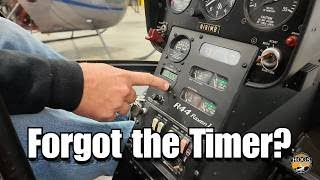
Kenny Keller shows helicopter pilots how to prevent fuel starvation by starting a timer at engine start and tracking burn rate. Memorize your quarter-hour consumption, like 3 gallons per 15 minutes, so you know exactly how much fuel you have left during a diversion. Jerry Ventrella found that diversion confusion fails many Private Pilot checkrides.
Hit the timer immediately when the engine starts (or set a watch/radio timer) to track fuel consumption.
Chapters
Come on over here. I want to show you something. We've been talking about the last 30 checkrides we've done over the last 30 months. Common things that we're seeing. And a lot of people have been enjoying these little short videos. And we're giving you things that seem like so simple. But you know what, too many people move on past Private Pilot and go, oh, well, that's Private Pilot. Shit, I don't do that anymore. That's Private Pilot. Well, you know what? The essence of what we learned as private pilots we should continue to learn throughout our career and use throughout our career something that I've been seeing people again coming from all over the country. When they're doing their startup, they'll hit the battery and hit the ignition, make sure oil pressures going, and they'll start following the checklist. And what's not on our checklist is starting the timer and why people aren't taught this. I'm sure there are some helicopters that don't have timers, but in the aircraft we've had, if it didn't have a timer in it, we put a timer in it or we minimum make sure you wear a watch or you set the timer down here on your radios. But setting the timer when you start is super important. Yeah, you could say, well, I'll just track the time on my watch. But it's easy to forget and there's a lot of reasons why you should just very simply add hitting that starter button as soon as you do the necessary things as per your checklist. Get the engine started, make sure oil pressure is up, but right away hit that timer and start that. So you know you're tracking your fuel with your timer. And I want to show you something, a little whiteboard we have over here. As simple as this is, you need to have a way of tracking your fuel. As we just stated with starting your timer. Start the timer. And we know that Jerry Ventrella has talked about how a lot of failures happen now on diversions during a check right at Private Pilot and during a diversion. One of the things you have to do is pick your direction and figure out what's this diversion going to do to your fuel. And I was taught something way back in the beginning, and this is very simple. I'm just going to pick a number to use for simple math. But let's say whatever you're flying is burning 12 gallons per hour. So I have this in my notebook from way back when I was brand new and trying to figure this stuff out. And one of My instructors had me do this. And you can think of this in the clock as 15 minutes, 30 minutes, 45 minutes and an hour. So if you're burning 12 gallons an hour, you know in that first 15 minutes, you're going to burn 3 gallons. Next 15 minutes, you're going to Burn 6. In 45 minutes, you're going to Burn 9. And that full hour, you're going to Burn 12. So obviously you can put in whatever number for that works for the helicopter that you're flying. You can write whatever number in there and divide it into quarters. So this is a simple way, as simple as it seems, when you're in the moment, you're in the helicopter and the examiners diverting you, and you were going to go here, but now you're going to go there. You're trying to compute math in your head. Have something like this memorized for your aircraft. So if you're using your timer in the helicopter, start the timer when you start the engine is the simplest, easiest way to track, keep track of your fuel. And then something like this that you have kind of memorized is just a very simple way to keep track of your fuel. And we, I'm going to mention it again, Jerry Ventrella, He's, I think 77 now, he's still doing checkrides. He's been doing them for over 50 years. So when somebody like that says the biggest reasons people are failing, you probably ought to listen to that. So again, he talked about, at Heli Expo, he talked about how when they, when they make that change to go, their diversion, they get jumbled up on what's going on, and that's where problems arise. So start that timer at the engine start and have a simple way that you can use in your mind to keep track of your fuel. So super important, as simple as it is. And we also know a lot of people in aircraft, airplanes, helicopters, lose their lives from running out of fuel. So as simple as it is, super, super important. So come back tomorrow. Subscribe to the channel. Click that bell for us. We got more coming. People have been enjoying these short little tips, so leave us a comment down below and we'll see you the next video. Peace out.
When you feel the pressure to fly, but know the right decision is to stay on the ground, hit the hogs, no go. And live to fly another day. Helicopterground.com.