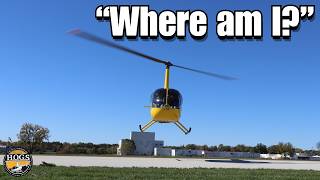
A short instructional YouTube video by Kenny Keller offering practical advice for student helicopter pilots preparing for checkrides. Keller demonstrates a simple technique for maintaining orientation on cross‑country legs and when returning to the airport—use the magnetic compass to confirm 'where I'm going' vs 'where I'm coming from' and plan radio calls and pattern re‑entry accordingly. He also emphasizes that examiners expect reasonable radio calls in uncontrolled (Class G) airspace.
Chapters
All right, so we're out in the pattern watching Hauser go round and round prepping a one of our final approach course members that's getting ready to take a private initial. And the R22, they're practicing autos. And we've come out just to do some refresh for me and do a couple videos real quick to catch you up on the 30 days of videos. This one is pretty simple, but I don't want you to overlook it if you are. Some of you will take your check rides at an airport that you're familiar with. And if you get to do that, that's great. In our case, you can imagine people are coming here from around the country and they've flown somewhere else and had just a few days getting ready for a check right here. And what's happened with probably at least three people or so didn't necessarily stop a checkride, but they've had a little trouble with orientation coming back into the airport, going out on their cross country flight. So we got a highway here. I'm just going to kind of head that way, simulating they when they leave, usually they're going east or west. So they follow this highway, go to their first checkpoint or their second checkpoint, get out of the way from the airport, make their checkpoints, and then the examiner is going to say, okay, turn around, that you found your checkpoints. He might divert them somewhere or he may just turn them around and have them come back to the airport. The trouble people have is sometimes just being disoriented on where they're at. The first day here we try to go out and say, okay, let's stand outside and let's talk about the runways. We got north and South, 1836, we got East, West 927 and we show them. And then we fly for a few days in the pattern, but usually just a minimum of three hours. Usually it's three to five hours we fly before their checkride. So you can imagine on the day when you go out, it's the day of your test, you got through the oil, now you're doing the flight and you got some nerves going on, right? So it's very common that they get out, they're finding their checkpoints, okay. It's when they turn around and come back that they just get a little bit disoriented. And I'm gonna turn around now, head back towards the airport while I explain how like I'm thinking like a student would be right now. I just went out away from the airport. So this is Very simple for many of you. But if you've never really thought about it, this might help some of you. You always look at the compass and it's gonna give you a general of where you're going and where you're coming from. So when you look at the top, very top of the compass, like right now, it shows west. So I am flying west. I know I got to turn around 180 degrees to go back to the airport. So the top is where you're going, east is where you're coming from. So let's say I just hit my second checkpoint, I'm going to turn around. So I'll start making, executing a 180 turn. As I do, the compass obviously is going to roll and it's going to do its different compass errors. But once I get back, stabilize the other direction heading back towards the airport, it's then going to show me I'm heading east, coming from the west. And so again, once you let the Kappa cuppa stabilize after you get your turn completed, and then I can start thinking about, okay, so what am I doing going back to the airport, I want to make a call. So I'm going to look at the compass shows, I'm going to the east, I'm coming from the west. So this radio call is very simply, helicopter winning Mike Bravo is Approximately. We'll say five to the west Warsaw traffic. Helicopter one mike bravo, five to the west, 1600 inbound for pattern Warsaw. So I just made that call. Warsaw traffic. Helicopter two share tails back at the north hangar. Very simple. Five to the west inbound for landing. But you have a little time to think. So you turn around, you're heading back. Use the compass again to kind of get ready in your mind, where am I coming from, where am I going? And what am I going to do as what am I going to do as I approach the airport? Crossing over midfield for a teardrop to the right now 130. And how am I going to re enter the pattern in this case for today? We've been out doing right traffic. Houser's been doing right traffic. He just made a radio call. He just went in. So once I get a little closer, I can just make another simple call and advise I'm going to enter midfield right now, win for 1 8. Something simple like that. So you just need to take the time to think through where am I, where am I heading to, what's the different directions, how am I going to get back into that pattern? And I know it's a very simple concept that many of you already understand. But for those of you that are worried about your checkride, because maybe you don't have a lot of time, it's your first checkride. It's your private. Just make sure you take the time to think through where am I? Where am I going? Who am I? Where am I? What am I going to do? Just do a little bit of forethought so you don't get caught up the day of the test going back to the airport and getting back in the pattern as I had somebody else answer. Well, does the examiner want me talking on the radio? You know, for us here in class G? Yes, absolutely. The examiner wants you talking on the radio within reason. Right? Like they'll be covering people up, but be trying to use crosswind downwind. I like turning bass into vinyl. Like right face turning final. But yes, the examiners do want you talking on the radio in uncontrolled airspace. So subscribe to the channel, click the bell, come back tomorrow for another tip. I'll see you in the next video.
When you feel the pressure to fly, but know the right decision is to stay on the ground, hit the hogs. No, go and live to fly another day.
Helicopterground.com so yes, Lindsey, you're bored about now going. Okay. How long do I gotta sit here editing, waiting to continue on.