Top 10 Reasons H.O.G.S. Is the Best Place in the US to Ace Your Helicopter Check Ride!
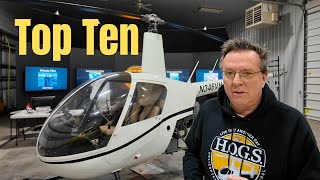
YouTube video (Kenny Keller) promoting H.O.G.S. as an excellent location to complete helicopter checkride preparation and the checkride itself. Keller lists and explains numerous advantages (experienced DPE availability; one-on-one instruction; laid-back exclusive facility with on-site logbooks, meals, and close accommodations; focused two-flight-per-day schedule; proactive maintenance; use of ACS; online resources like askhogs.com; and personalized cockpit setup). He emphasizes practical logistics (limited monthly throughput, rapid examiner scheduling, Zoom prep sessions, and contact procedures) and provides contact info for booking.
Questions this video answers
Over 35 years.
24 years.
574-767-1797 (text or call).
Four people.
Two flights per day, one hour each.
Chapters
Taking you inside and gonna give you top 10 reasons why coming to Hogs to finish up your helicopter rating is one of the best choices you can make. This is one of the best places in the country that you can come and take a helicopter checkride. And I'm gonna give you the list right now as soon as I ask you to give us a like and subscribe. If you you like free content on pass and check rides, flight and ground training, the whole ball of wax. So here we go with number one. Our DPE has over 35 years of experience giving helicopter checkrides and I've been working with him for 24 of that 35 plus years. So he's just a text away when we're trying to work up your checkride and get a date that works for both you and the examiner. We can get right to him right away and, and figure out a date that's gonna work. He doesn't have the backlog that you hear at some other places where he's two months out, six months out. We've heard from two to six months on examiners being booked off in the future. So you don't have that problem with us. Reason number two, one on one exclusive with you. You're not sharing the schedule with three or four other people coming in, messing up the day. As we sit down here in our ground school area and it's one on one, you on one couch, me on the other, and we just start hitting the ground school along with the flying to make sure things are covered. Number three, it's a laid back atmosphere. We got coffee and a coffee maker and a George Foreman grill and an air fryer and refrigerator. You can bring in snacks, drinks, whatever you want. And we'll actually also cater to you and find out what you're going to want for the week while you're here so you're not having to run off and run back to the hotel or run down the street. Everything's right here. And at most we'll have Lindsey over here doing possibly some editing. And then Heather is either upstairs working on her stuff or occasionally might be over here at a computer next to the couches. But it's gonna be no more than three of us 95% of the time. So it's again, it's exclusive. It's super laid back. Nobody leaves the hogs hanger unhappy. Number four, maintenance logbooks on site. All right, so when we want to look up maintenance logbooks, it's right over here. Boom. In the cabinet or in the drawer along with our oil, paper towels and so forth. Log books can be a big deal. Log books many times aren't shown to a student. They're locked up with the mechanic or they're locked up at home with the, with the owner's other paperwork. Aircraft maintenance records are always here. Number five, lunch at Hogs every day. We don't do the, okay, let's pile in the car and drive 15 minutes to find a place and oh, they're busy. And then we got to go somewhere else, go sit and wait on food. We don't do that here. If the weather's good, we cook on the grill and we have anything from burgers to chicken to shrimp, whatever you might need to eat, we'll make sure that you're fed. Saves us that time of going out and wasting an hour and a half of our day to go somewhere and eat. So this way we can get through our day, have lunch, keep going. Number six, we're not time builders. Obviously, I'm not a time builder anymore. I've been doing this long enough. I, I don't need hours in my logbook. Chris Hauser, that helps me here often. He flies corporate. He comes down and helps on his days off. He doesn't need time in his logbook. So we're not time builders. Not to knock somebody new and new to the industry, but that's majority. What they're doing is they're out there just trying to fill that logbook with time. That's the reality of it. You don't get that with us, you're going to fly no more than you need to absolutely get through the rating. That's it. No fluff, no added padded hours on there. We fly you as much as you need to fly to a standard and pass the test. Number seven, we're careful to not over overbook. That's a problem you'll find at a lot of places. You got too many students, you don't have enough aircraft, you don't have enough instructors. Examiner doesn't have time. So we make sure that we schedule these out. We put a lot of time and effort working with you, making sure your knowledge is ready before you come out, checking on the maintenance on the helicopter, making sure maintenance is done. That is a problem at a lot of flight schools is overbooking. Number eight, close accommodations. I'll just walk you out here and show you. There's one really nice hotel. It's just across the Runway, basically on the other side of the airport. It's right over there. So five minutes tops. Maybe even three or four minutes to the local hotel. And then we have several others in town, all reasonably, reasonably price. And over there you've got everything you need by the closest hotel, Walmart, some restaurants, pharmacy. Everything you need is right here. You're not going to have to travel anywhere to go find what you need while you're in town. Number nine, daily schedule, two flights, one hour each. And what I want to talk about there is what those of us that been doing this a long time, we know that about a one hour flight is about the limit of what anybody can take. So they need a break. So we schedule our day so that you come in, we sit down. Hey, how you doing? Did you get some sleep last night? Are you hungry? Get anything to eat? You need anything? Do you need a drink? Need a coke? Anything you need. We talk about what we're going to do. We do the pre flight, push the helicopter out, get fuel, go in, do your startup, do that flight, come back properly, debrief that flight, what went right, what needs some extra help. You know, what areas do we need to focus on moving forward, Sign the log books and boom, before you know it, it's lunchtime. So you sit down, take a break, get some food. When we're refreshed, same thing again. All right, what are we going to do on this flight? Go out, do your second flight of the day, come back and again, debrief, do a little ground throughout the day and pretty soon, you know, oh my gosh, it's time to go back to the hotel already. We try to leave around seven or eight hour day because that works best. When we first started doing these final approach courses, we were doing three flights a day. That turns into a 10 to 12 hour day. It's rushed after that first year. The last two years we've said, you know what, we're not doing that anymore. One hour flight in the morning, one hour flight in the afternoon. In between we're pre flight and post flight and signing logbooks in doing ground school. Super, super effective. Next up, we do a zoom session with you or multiple if we need to over zoom. I sit down right here at the table and I do a zoom with you. That way before you arrive, I get an idea of where you're at, how you're doing, how well you can answer questions one on one over zoom. Because you're going to meet me for the first time and it's kind of different and it's not a lot different than meeting an examiner for the first time and having to Answer questions right. It kind of puts you in a little awkward environment. But that's good because that's one of the best ways to test your knowledge. So we schedule those zooms and that way we get to know you a little bit before you even arrive. We already know you when you get here instead of you just walking in the door and us getting started and you're feeling kind of overwhelmed. The zoom sessions are super, super helpful as well. Just to kind of get you comfortable where you're at, find out where your knowledge is and have a game plan for when you arrive. Next, we highly recommend going through our courses. Specifically we'll use Private Pilot for example. We have progress tracking so we can go in there and make sure you're going through the videos, make sure you're going through the content. Because the people that do the best and ace the checkrides have went through every single video inside hogs at least once, if not more than once to make sure that they have the knowledge. Because there's nothing I'm going to say to you in person that you're not going to hear inside hogs. This helps you get ready before arrival, going through there and we can work with you too by just kind of keeping track of where you're at, what you need to be working on and make sure you get through all the content before you arrive. So I fooled you. We're actually, we called this top 10, but we're going to keep going. We're actually now on number 12 customer support. Again. Heather is usually right here or upstairs during the week but she takes care of the hogs phone line seven days a week. So Heather will get all of your documents before you head out. We'll have her send you all of your documentation. We'll make sure that you have your written done. We have everything that we need because that's another problem. People showing up, not having what they need and oh hell, I gotta, I gotta send home and have them send me this or oh man, I took the wrong written test. Whatever the case is, we go through all the documents, have you ship them here for your training file before you arrive. So we eliminate any of those problems that pop up when somebody shows up with something that they should have had and they didn't bring with them. We have a pretty open schedule for both the R22 and R44 again because this is, I don't know if you want to say you have to qualify or you're hand picked. We don't just, you know, we don't do three or four or five of these a month. We usually do two. A month is what we like because we have plenty of time to do maintenance in beside in between the checkrides. With either the R22 or the R44 we can do maintenance work on hogs and be doing the things that I that we need to be doing on a monthly basis to keep helicopter online ground school. So we keep it limited on purpose because that's again, that's a problem a lot of flight schools run into. You got too many people, not enough aircraft, not enough time with examiner instructors leaving to go to another jobs. Common, common problems. And here we go. I'm carrying around my list and I'm using the ACS as my piece of my backboard to keep my paper solid. This is a problem that we see all the time and I've been seeing the problem for 20 some years. Instructors and flight schools aren't always going through the acs. That was the pts. This is so important and I see it continually time and time again. I harp on it all the time. We are going to use this. We're going to make sure you have it before you get here and we are going to work through the acs. This is the checkride. As simple as this is, I'm telling you, the amount of instructors that aren't using them and the amount of students or applicants that show up, either they don't have one or oh well, yeah, I think I have it on my iPad or they pull it out of their bag and it's pristine. I can tell they've never even looked through the stupid thing, right? You got to be using the acs and you are going to go through the acs with us and because that's how you make sure you're prepared for the checkride. Common problem with instructors and flight schools not using the ACS. You will be using it. Number 15 aircraft maintenance. I already mentioned it, but I'm going to mention it again. The longer I'm in this business, the bigger I have become on maintenance, right? It isn't like I've gotten lax. It's like I want every single thing right. I don't want anything wrong on the aircraft. I want all maintenance done on, on time and we even spend a little extra to have mechanics look at them even when there's nothing wrong with them, right? Even when it's. Let me rephrase that. You know, I'm guilty of in the past operating a helicopter where I only took it in because it needed 100 hour, 50 hour, or there was something wrong with it. We do, I'll call it progressive maintenance where I'll pay a mechanic just to come take a look at the aircraft. And even though there's nothing wrong and they're in between inspections because example, a mechanic can come by and go, hey, I was checking this thing out and the special ink is a little bit loose, that's within tolerance, but we're going to need it pretty soon. So let's get one ordered, have it over here on the maintenance shelf, and when we get close to it, we need it. Boom. It's a quick change. Using that style of maintenance is worth its weight in gold. The money I've spent paying guys just to come and take a look again, mechanics, experienced mechanics to come out has saved me thousands. And I could bore you with the story, I've talked about it before, but you're going to fly an aircraft maintained properly. And unfortunately, there's a lot of shady operators out there with some shady maintenance. You're not going to deal with that with us. But wait, there's more. Number 16, simple procedure to get you flying. So again, I want to back up and mention how all of our ground is right here, our logbooks is right here, our helpers are right here. When the examiner comes in the day, the checkride, he comes right in the door, we have everything laid out. He puts down his laptop right over here and boom, get you going. So as far as getting you in the, in the flying every day, everything we're doing right here, we're doing the ground here, we're doing the, all the maintenance or all the ground school, pre flight, everything in here. And then when we're ready to go, we just flip the wheels up, we open this door and it's just a short push right out the door. And the other thing that I love about being here, the line service here has been absolutely incredible. We call them, and if they're not fueling another plane or a jet or something, they're here in like three minutes or less. Like, we push it out, we call them, we're closing the door, kind of getting things ready, and here they come. So I've been to plenty of flight schools where it's not that simple, right? Like the fact that we can do everything we need to do pre flight. Logbooks, copy machines, bathroom snacks, everything is right here. We're not traveling to go get stuff. And again, it's a quick flip up of the wheels, call the fuel guys, push it out, remove the wheels, and we're ready to go flying. It is so easy. And again, after a recent trip to another flight school, I was like, oh, my God, do I miss home? Right? Because everything was so strung out all over the place. I'm telling you, that's such a big part of this, is just how simple, easy, laid back everything is. Number 17, I've only had four people fail in 24 years. Now, it's a lot of checkrides to have not many failures. And the reason we've been able to do that is because of I was lucky enough to be trained by good people who in the beginning harped the pts, harped the poh, harped reading aircraft accidents and incidents. I just had good people that trained me. So in turn, I used that knowledge from what those instructors did with me to help me get through my ratings. I learned the tricks. Not even tricks. I just learn the right thing to do. And one of the biggest ones is people not using this, as I've already stated. So it's just many years of just taking the time to make sure people have what they need. And I want you to fail. I mean, I want you to pass. I don't like, you know, I don't want to make a number five in 24 years. I want to wait a couple more years before I maybe have failure number five within 25 years. No, I'm just teasing. I mean, people are going to occasionally fail, right? It's part of it. But four and 24 years, that's a pretty darn good record. I'm very, very proud of that. Number 18, we have this thing called askhogs.com so we're sitting here a lot of time between these two couches. Again, it's usually me and the applicant. Sometimes Hauser might be here, but we're sitting here doing ground school and we're throwing questions back and forth and we're using our typical resources to look things up far. AIM manual, poh, private pilot manual, whatever the case is. And then I'll go, well, heck, let's just use ask hogs.com so ask hogs.com is 13, I guess, 14 years of my content. Blogs, podcasts, videos, paid content, free YouTube content. It's all been piped into askhogs.com so we've sat here at times and we're wasting a bunch. Not wasting time, but we're spending a bunch of time looking up stuff up because we need to be able to look things up and show the examiner correct. However, this tool, askhogs.com is freaking incredible. Like we're stuck on something, taking too much time to look something up. We use askhogs.com and that is something that's free to any of you out there watching this video. Askhogs.com you can go there and ask helicopter related questions 24 hours a day, seven days a week. And it is free and you can ask as many questions as you like. Again, after recently visiting a typical flight school, oh my gosh, you had one tiny little office with two or three students in there and somebody working doing the office work and instructors coming and going. And then it's freaking chaos. It's just like, oh my God, nobody can. Everybody's competing to talk over top of each other. People are sharing aircraft coming and going. And I get this just the way it works. And it's just the way it is for a lot of flight schools. You don't have that here. You don't have that flight school chaos. People come and people going. Mechanic coming and going, people coming in for intro flights coming, people coming to pay their bill. No matter what the case is, the typical flight school is just hectic and usually the areas are small. So we're avoiding the typical flight school chaos. And number 20, I sat down and just wrote these out the top of my head before I hit record on the camera tailor to you. And there's plenty of examples I can use. But the example I'm going to use is I don't care if you want to use paper charts, I don't care if you want to use an iPad, I don't care if you want to use both. I don't care. Our examiner allows both. So what we do is when you get here, we take you over to the cockpit and first we ask you what do you want to use? All right, do you have an E board? If not, we have an E board for you, but we make sure we get you in the aircraft and we get you comfortable so that while you're here, you're using whatever combination you're going to use. And I suggest, I think the best at this point is a knee board, an iPad and a sectional chart tucked underneath the pant leg so that you're super comfortable in the aircraft. But again, I don't care what you're using. We're going to make sure we go through with you the time to make sure you're comfortable in the aircraft and you can navigate properly, get to your iPad and again here we'll just give you a little demo real quick. Very simply, I think this is the Best I like an iPad or I like the knee board right on my leg. I like my iPad with foreflight right there and then I like it taking a sectional chart, have your route marked on it and it goes underneath the iPad right on your leg. So if that iPad would freeze with lock up and you had a problem, you can pull out the handy dandy sectional chart and save the day with a chart. Because on most checkrides you're only going to have to do one checkpoint anyway. So if you have that as your backup, that's perfect. That way you have the new age electronics that's super easy to use and then you got a good old paper backup. And yes, I order the sectional chart in case you didn't have one because everybody says, oh well, you can't get them. Yeah, you can. You go on Sporty's and order it and have it in three days. All right, so I'm going to wrap that up for you without. That's 20. I thought I'm going to do the top 10. I just started writing so fast, I'm like, well, I want to add that and I want to add that and I want to add that. And this is what's reported, you know, from people that come in and do the checkrides with us. And it's more than one. And some of these guys have even talked on the videos, right? It's like it's proven okay. And it's just years of experience knowing what gets three gets people through. So if you'd interested in a final approach course with us, reach out to Heather. 574-767-1797 text or call and Heather will get back to you. She'll ask you a series of questions to see if you qualify. And then we'll do a little chat and we'll do a zoom and, and we'll get you set up, find a date and we can make that checkride happen. And before you go, we got two free resources here. Top 10 checkride tips. This is for specifically taking the checkride and getting prepared for the checkride. Private Pilot 101 is Private Pilot training specifically still has good tips for training, even for moving past advance or past the private. But it's really, really good for those of you that are working on the private, whether you're just starting out or you're even nearing the end, there's still plenty of good content in here to help you get through the ground and help you get through the flying. So again, if you enjoy our content, give us a subscribe Give us a like, give us some interaction down below. I'd love to hear what has been working for you wherever you've been flying, what you're doing. I'd like to hear what's not been working. This video is the end of 2024 moving into 2025. I would love to hear what's happening out there for other people. As far as trouble with getting checkrides done, I know that we've heard recently still one of the biggest problems with checkrides is iPads. IPads freezing up, iPads locking up or somebody has to do a diversion and they've learned to use their iPad. But they're not good at having a lot of practice with zooming in and out and figuring out an actual distance. So that's kind of what we're hearing. A lot of problems still happening with electronics. You know, they're great. I don't blame anybody for wanting to use them. I highly recommend it. But we recommend iPad and a chart underneath just in case. Super, super simple. So again, subscribe the channel. Leave us some comment down below. Give us a like let us know down in the comments what kinds of things that you see good and bad with checkrides and training. And we'll see you next video. Peace out.










