Vertical Lift To Hover! One of Brand New Helicopter Maneuver Videos inside HOGS!
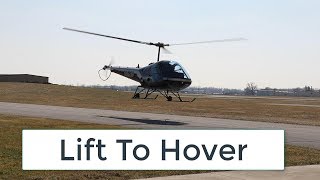
This YouTube video (Kenny Keller with Brian Rutledge) demonstrates a standard two-step vertical lift/pickup to hover—pre-flight/hover checks, raising collective to get the aircraft light on the skids, neutralizing controls, then gently lifting off—and discusses new/much-updated maneuver videos added to Helicopter Land Ground School (HOGS). The hosts describe multiple max-performance takeoff methods (hover-start vs. ground-start; 40-knot attitude; vertical climb-first; gradual power application) and emphasize limiting power changes during takeoff. The video also announces 12 new basic-maneuver videos (plus new advanced/autorotation content), member benefits (30-minute phone consultation for paid members), and downloadable maneuver handouts coming to the site.
Chapters
Alright, so we're going to start shooting some of the maneuvers for you. Last video I did my walk around before I got in. Got everything fired up. You should always do that every time. Whether you're just doing hover practice, you're going on a flight, whatever, do that walk around before you get in. And then all I do is move the helicopter over here out from the hangar. My daughter's helping video today, so she's in the hangar and Heather's right here running cameras inside too. So the first thing we're gonna do is basically a liftoff, right. So I'm gonna make sure everything is good to go before I even roll up and lift up. So I'm looking down. All my gauges are on. My boost pump needs to go on. Anti collision's on. It's bright and sunny so I'm not gonna turn those on. I need to lean the fuel just a little bit. Radios are good, Everything's good. So the first thing we start doing is focusing outside 75 to 100ft, whatever the case is. But you want to be focusing out away from the helicopter. So you're looking outside. And what I'm going to do is I'm just going to get my RPM where I like to start at 2300 and we do the pickup in a two step process. And it should be done every single time in a two step process. Number one is get the aircraft light on the skids. Pause, neutralize all movements and then when you're ready to go, step number two is gently lift the helicopter off the ground. So I'm going to do it and talk about it as I'm doing it. So I'm going to start raising collective. I'm looking outside, I can glance back in at rpm. I can look outside. Back end RPM still raising. Helicopter is going to bounce. We just got to put up with that. It'll go away in a little bit. So I'm going to get it light and I want to feel what's the nose going? Is it going up or down, left or right? What's it doing? Is the helicopter trying to slide right now? It feels pretty good. So I'm going to go a little more up collective. And there it's getting pretty darn light. So I'm making a small adjustment with a little left pedal. I'm doing just a little bit of trim. It feels good. Step number two is gently lift it up. Okay, so that is your normal pickup. Step number two, gently lift into the air. So this is an instrument. They all have that little bit of bounce on the ground when you're lifting them up, it's just part of it, it's what they do. So a good two step process. Get the aircraft, lighten the skids, pause, neutralize all movements and then gently lift the aircraft up off the ground. Got a little bit of crosswind that's messing with me here. But that's part of it, right? I know it's blowing the turbulence right into the tail rotor. So there is a normal pick up the way I do it.
Alright, did you enjoy that? We have 12 new videos already inside the maneuver section with more to come. I'm really proud of those videos. Heather was running camera inside. We were running a GoPro and then we have my daughter Gloria out there helping since she's out of school. She did those shots outside and we were really, really impressed. I worked till midnight last night. I was so excited once I saw the video and started editing. I'm like, you know what? We shot all those maneuvers yesterday with three files and I was just like, man, I love it, I love it, I love it. So going back and looking at some of those videos, I can say it now, I'm embarrassed, right? They were so freaking old. And so just last night and Today I've uploaded 12 new videos to the Section 8 Basic Maneuvers. I added one new one to advanced maneuvers which is a new quick stop video. And there's more to come. I looked at the auto rotation videos today and I'm like, oh my God, those are so old too. So we are committed. We are really, really proud of the new videos have been uploaded so far. Brian Rutledge is in chat if you don't know yet. Brian Rutledge is our full time operations manager. Just started full time this week. Hello, I'm Kenny Keller, creator of Helicopter Land Ground School and Brian is here to help us move Helicopter Land Ground School forward. When you sign up as a new member, you get a 30 minute phone consultation with Brian to talk about your training needs, anything you want to talk about. We'll even extend that offer to those of you that are current members that view our videos. So get ahold of us getting helicopter ground down or you can actually email brianelicoperground.com now. Email Brian@helopterdownground.com and give him your phone number and he'll contact you about a consultation. But you gotta be a paid member for that. The 30 minutes is not for non members. This is for paid members. So excited to be here. 35 people. Heck yeah. In the middle of the afternoon. Awesome. And I just gotta mention this is how I started shooting these videos 10 years ago. I'm just so thrilled that we've taken helicopter ground school to where we have and we're rebuilding. We're gonna. Every video is gonna be new in the basic maneuver section and every video is gonna be new in the advanced maneuvers. And I'm gonna do all new for the auto rotation videos too. So there's gonna be a lot of really cool content coming for everyone inside the site. We'll give you a view here and there, but we're really proud of where helicopter and ground school is going. And the amazing thing is just like reshooting these videos, you know, back in the beginning, some of those videos, they would take me forever ever to build those things. And now with technology and my experience in the hangar and having the helicopter right here and the studio right here and the best equipment and fiber Internet, we've got the best content with the best team we've ever had. This is freaking awesome. I'm so excited. I can't stand it. I'm gonna give away at the end of the video, we're gonna give away a couple books and a T shirt again. Now, let me say down below, there's free PDFs in the description box right now. If you don't have either of these top 10 checkride tips or helicopter checkride, you can get the free PDF down below, no cost. Down below is our link for our free radio course. Helicopter radio communications. That's down below. A link for our Pod O Matic or our podcast is down below. That's free. A lot of free resources down there right now that you can sign up for and utilize. And then we're gonna let you guys compete against each other with some basic private pilot questions at the end to do those giveaways. So next I'm gonna have Heather cue up something else I shot this morning. I shot opening for Max Takeoff and an opening for normal takeoff. And I was getting ready to move the helicopter out and go shoot him. Ran home to get the hogs cart. We got the hogs cart here now. And Gloria was coming in. So we were going to go out and we were going to shoot the maneuvers to match my intro that I just shot this morning. And the first one I did is Max takeoff because I love talking about him. So I want to show you the intro. I really like it where I talk about there are several different methods that people teach for max takeoffs. So I shot the classroom part this morning just with the helicopter. And then we're gonna go out and haul our equipment over and set up. And I have an actual a tree line on the other side of the airport that I believe we can use so that we can film inside and outside the helicopter and actually show you what it's like to clear an obstacle. And it'll be this tree line, some pretty tall trees. And I topped the instrument off last night, so it'll be full of fuel. The weather's warmed up, it's a little more humid. So it'll be a challenge possibly for me to climb up full tanks with Heather on board or Gloria, whichever one's operating the camera inside and to climb up that obstacle. And I'm going to do the three, the three different ways I talk about how you can do a max takeoff. There's actually four. There's a bonus in there, something that a lot of people have never heard of. And I'm going to go shoot those. And you'll be able to see from inside and outside what it looks like, like clearing an obstacle versus an imaginary obstacle. So Heather, if you would go ahead and just roll that clip. Remember that if the rain stops tomorrow, as soon as the rain stops, we'll get out and shoot the actual footage of this. But I want to show you the opener because this is really important. For those of you that have questions about max takeoffs, there are different methods. So let's go ahead and roll that now, Heather. Alright, as we're shooting all new maneuvers for helicopter land ground school, we're going to do max performance takeoff. I'm going to talk about it a little bit to show you some options you may have. And then we're going to pull the helicopter out. And I have a tree over here on the other side of the airport that I can use as kind of an obstacle. And we're going to do our best to film that, But I'm going to explain to you first what it is I'm going to do. And then we'll move the helicopter out.
And we're going to go over there.
We'Re going to film it. So with max performance takeoffs, you're going to hear some different methods around the country, around the world, people teach this differently. I'm going to show you several of the options. What I was taught early on was we did max takeoffs from the ground. This was 20 years ago. We did them from the ground. You did all your checks, your magnetos, you did all that stuff, and then you just took off from the ground and Went like this and away you went over your obstacle. Okay. Along the way I changed my thinking. I don't do it from the ground anymore. I do them from a hover. Always. The examiner I've used for 20 years, that's the way he wants to see it. He doesn't want to see them from the ground. He wants to see that hover check and then start to maneuver. Okay, so that's my first point. What we used to do, what I do now, been working with the Same examiner for 20 years. So Max takeoffs always start from a hover for our purposes. Okay, so when I was taught, we taught or were taught a 40 knot attitude. As you started your max takeoff, that may be what you're doing right now. Very common in the beginning. As a private pilot, this is what many people teach. Basically you've got your pre takeoff checks done, you've done a good hover, pre takeoff check, you know your power, everything's good to go. Here's your obstacle. Now when you're out training, you're going to usually have a make believe obstacle. Okay? So what I was taught early on, you start pulling the power close to max or to max power, depending on how somebody's teaching it, 40 knot attitude, take off, clear your obstacle and fly away. Okay, so there's one option that you may be being taught then later, as I was a cfi, I went to a specialized school and the gentleman that I trained with at this point said he didn't like this style of takeoff, max takeoff. He said his opinion, he would rather see you go straight up, get the height of your obstacle and then fly away, never changing the power. Okay. And it makes sense. And when he first showed that, I wasn't sure, but then I tried it and I liked it. So now 20 years later, I think it depends on what you're doing. So in this one, his opinion was if you go straight up like this and you have some kind of a failure or problem, you've got time to come down and do this. His opinion was doing this, if you have a problem, boom, you fly into your obstacle. Okay? Just giving you the different ways of thinking. So I kind of like that. And I still do both. Depending on the situation out in the commercial real world, you may have to do more of this type situation in order to get out of there. This one may not work. So again, I'm giving you the options. These can be done different ways. Then my examiner showed one time, he said, you know, you can as an option and I've done This too, you can be close to the ground and ground effect, get some airspeed moving, start getting to ETL or just through etl, and then pop up and clear your obstacle. Okay? So I want to show you those three things and tell you, you do whatever your instructor at your flight school or your company, you do it the way they want you to do it, Okay? I think it depends on the situation. I think you can use any of those. Now, the one other thing that I want to show you, there's something cool that I wasn't taught until I was a commercial pilot flying EMS. We were flying the EC135 had a lot of power, but they were limited on the amount of power you could use because they were tearing up transmissions, right? The two big jet engines grinding that transmission, and they were having a lot of trouble. So we were very limited on the power we could use in the EC135 that I flew. And sometimes we'd have trouble trying to get up high enough to clear our obstacle by pulling straight to max power, okay? And you'd be pulling max power, and you'd get about so high, and then you couldn't get out. So you'd have to set back down, burn off fuel, offload equipment. You'd have to do something in order to get lighter. And sometimes it would take us two or three tries in order to get out of there. Okay? So what a Czech airman taught me was he said, have you ever tried doing a max takeoff and not going to full power? And I'm like, oh, I don't know, not really. And he goes, I want to tell you about something. And he showed me later in the aircraft sometimes. And if you ask me aerodynamically why this happens, I can't tell you. But sometimes if you go straight to max power, you'll get to a point where you. You're at your max and you can't pull anymore and you don't have enough height by going straight to max. He said, don't go to full power. Don't go to max power. Go. Maybe between hover power and max power, just pull in a little slower and only go part way. And he goes, sometimes you can climb higher. And I tried it, and it worked in the EC135. Now I'll do it in the nstrom. And I've told people that. Some people don't believe me, and I've done it for whatever reason, instead of pulling all the way to max power, let's say you go halfway between hover power and max Power and pull that power in slow versus a lot of times for a max takeout, people pull right to the max right away and try to get that momentum going. Right. This method is to just pull slower, not pull quite so much and come up a little bit slower. And then you've got time to go, you know what, we're getting close. I'm going to pull a little more, going to pull a little more. And by doing it slower, sometimes you can actually get higher and be able to clear your obstacle and fly away. So it's a method that I was taught again later as a commercial pilot in the EMS environment, taught by a Czech airman. And it does work. So I want you to understand there's different methods. The one thing you're thinking about always is of course, engine failure on takeoff, right. And the other one point I want to add is I'm a firm believer in this. You want to limit power changes as much as possible on a takeoff, a normal takeoff, a max takeoff. They tell us that an engine failure is most likely to happen if it's imminent or coming or possibly going to happen. If it happens, it's probably going to happen when you change the power. So one thing that I'm always thinking about during a normal takeoff and a max takeoff, I'm trying to limit the amount of times that I actually change the power. I'm most generally trying to keep the same power the whole entire time without changing anything. Get your airspeed, get your altitude, and once you're clear your obstacles and you have the airspeed, you have the altitude, you have everything you need, then change the power. If you've got somewhere to go in the event you had an engine failure, you've got a place to go. So just giving you some ideas on how these can be done. So now we're going to take the helicopter out and go see how it works. So let's go do it. My life. Alright, Brian, did you see that? 52. We hit 51. 52. Brian said by the end of the month, let's get 45 people live. We've got 50 right now. That's awesome. Thank you everybody for joining us today. This is awesome. Brian Relig is our not new operations manager, but now full time operations manager. He's helping me with rebuilding all these maneuvers that you're seeing and talking about. And Brian right now is putting together downloads that are going to go with each maneuver. He's preparing them right now and we'll be uploading them to the site very soon. So every Brand new video you see inside HOGS maneuvers is going to get a download so that you can watch the video. You can just open the download, take a look at it or you could print it off if you like. We're going to have a download for each maneuver that you can take a look at to refresh your mind and then you're even welcome to print them all off and make your own little.
Booklet if you'd like.
So that's our first big project with Brian full time is reshooting the maneuvers. I'm so thrilled, right, because some of those videos were sold but I made them back in the day when I was really, really hurting and I didn't have very good equipment and didn't have good editing equipment. And I'm so thrilled of where we're at now and I'm really, really thrilled of these videos. So thanks everybody for tuning in to enjoy the new fresh videos with us. So I promised some giveaways. I will say first, there are free PDF downloads below for these books that we're talking about. A free radio course and a link to our podcast. All free stuff. Okay, now we're going to give away paperback books and then a T shirt. We're going to give away do helicopter CheckRide first, top 10 CheckRide tips after that and then we'll give away a T shirt. And just so you know, we extended our birthday sale. We're celebrating eight years online this month and my birthday, we brought that sale back to the very end of the month. So right now, 50% off any monthly membership the first month, then it goes to normal or the big professional pilot. People are gobbling that up. It's half price. The codes down below on below this video, KK50OFF. Use that in the coupon box at checkout. That is a smoking hot freaking deal. Alright, so I'm going to give away some prizes here. So these are short questions and I'm just going to read them because it won't take long, right? So you're competing against each other and you have to be in live chat on YouTube if you're on Facebook. Sorry, we're not monitoring Facebook right now, we are live on it. And the description box below will not work either because we need you to answer in real time. So to win you have to type your answer in the live chat. So this one is going to be question 91 from Private Pilot. But this is good stuff. I picked a couple that are short but good. So when you answer A, B, C or D, type in 91A or 91D, depending on what your correct answer is. So are you ready to play? Ooh, 53 people. What do you think? Brian? You said 45 by the end of the month and we're at 53 right now. Awesome. Got my pre flight flashlight out here so I can see. It's hell to get old. So here comes question 91. So the remember when you type in your answer 91 ABC or D. So here we go. What is the recommended waiting time for someone to fly above 8000msl after any scuba dive? Question mark. Is it A, 24 hours, B, 12 hours, C, 24 hours only if the dive was a decompression stop dive. D 12 hours if the dive was a non decompression stop dive. What is the correct answer? I see one answer. I see another answer. Okay, we've got a winner. The first one that picked A is the winner. So is that John? Is that the first one that got a Glenn? He didn't type it in right. Ah, Glenn. You didn't follow directions. A24 hours. You didn't follow directions. John McComas. That's John then. I mean, you got to follow directions. I'm sorry, it's just like Brian. I had a discussion today about that our FAA approved testing. That's where this comes from. This is from the private pilot written test practice within helicopter on ground school. We have written test practice for private commercial, CFI and instrument. When you take those courses, make sure you watch the intro video and read the directions so that you get the proper FAA wings credit. We have people that have taken the test and they didn't get their credit because they didn't follow the directions. And I told Brian on the phone today, I go, you know, to be a good test taker, you got to listen to how the test works, right? Whether it's a test or a competition, you got to listen to the directions. So good topic. So our winner gets helicopter checkride. Do you have a copy of that yet? If you'd answer for us, that'd be awesome. If not, we can give you a different book, but hopefully you don't have that yet. Heather will ship that to you. I see she typed in heatherhelicopterground.com that's how you get a hold of Heather for Heather to get your book. Brianelicopterground.com if you want to talk about training. And let's go to the next one. So I'm jumping around here. The next question is 89. Thank you, Ron. Awesome. So the question is 89. So the answer this time will be 89. A, B, C or D. Okay, very short. So I'm just going to read it to you. What altitude does hypoxia usually begin? A, 12,000 msl. If over 30 minutes. B, 14,000 msl. C, 15,000 msl d. Hypoxia can occur even before 12,500 msl. Keep answering. Alright, looks like we got a winner. The answer is D. So the first one that got D looks like. Ryan. Ryan. Awesome. Ryan, do you already have this? Seems like you've been a winner before. Do you have top 10 checkride tips? Answer when you get a chance, please, Ryan. If not, we'll ship you the other book or we'll hook you up. Alright, cool. So we got one more. Nice. So again, when I was telling you about our training, we now have written test. Well, we've had it for quite a while. And you can take practice tests. We pay for these practice tests. It's part of our site. You can take these tests as many times as you want. After you get done with the test, you can score your test. You can view the entire test to see the correct answers along with the right answers or wrong answers that you picked. You can view the entire written test, that's what this is right here. And then you can even download it. And that's what I did. I took the private pilot written test. I went through in about 20 minutes and I scored 89%. See, so when you're not studying, it's easy to fall behind, right? And I answered some stuff wrong, but that's where this came from. So you can use our written test practice score yourself. Take as many times you needed to improve your score. After you submit the score, you can view the whole thing online or you can even download it. So it's a pretty cool deal. And if you take the FAA Wings test, you get credit to your FA Wings account for using, going through our course, watching the videos and taking the written test. So when you say, is our course FAA approved? Yep, because they provide Wings credit for it. So we're pretty darn proud of it. Awesome. 52 people still here. Heck yeah. Do us a favor and subscribe to the channel, click the bell because we'll be doing more stuff between now and the end of the month. Some more giveaways, having some more fun, showing you some new stuff. And we're trying to have fun in this time of need. Alright, so here we go with the last question. This question is number 97. So when you answer it'll be 97. A, B, C or D. Very short. I'm just going to read it. So here we go. And this is good because these ones, these aren't always as easy. This one you got to think about. Some of you will get it right away, probably. Where do you look for magnetic variation? A, the compass card in the helicopter, b the VFR sectional, c the E6B and D, the number on the compass card will have to be computed on the E6B. So do we got some people answering? We do. And this is 97, right? Yep. The answer is B. So Ryan got it again. Dang. Burn it up. So you get the T shirt on that one. Awesome. Well, Ryan, I know she typed it in. Heatherelicopterground.com to get your free prizes. 56. Heck yeah. Thanks everybody for tuning in today. We got more cool stuff coming. One more time. We got a sale going to the end of the months. KK50 off celebrating eight years online, celebrating my birthday this month. And we brought the sale back so people could take advantage of it while they're off work, they're at home stuck, quarantine or you know, social distancing, whatever you want to say. So we can't thank everybody enough. Subscribe to the channel. Click the bell. So be notified of our videos. Go down below for our free resources. Free PDF downloads. Sign up for our course. I started 10 years ago making videos with this damn thing. Friggin amazing what it's turned into. All right, thanks everybody. We really appreciate it. We will see you tomorrow. Peace out.










