We Spent $107,731 Operating the Robinson R-44 in 9 Months! (Lease Aircraft)
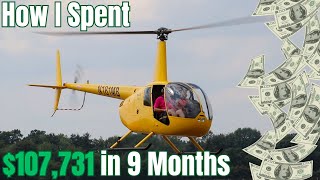
Kenny Keller breaks down nine months of operating a leased Robinson R44 helicopter: $107,731 total, including $50,000 monthly lease payments, fuel, insurance, and inspections. He walks through a $50,000 damage claim that cost $20,000 out of pocket, and explains why routine mechanic checks save money long-term.
Questions this video answers
$7,500
$5,301.20
$5,200 per month, includes 20 hours minimum
$26,506
$2,435 per month for 10 months
Chapters
$7,500. $5,301.20. 5,200. 2,435. 26,506. 1,400. 3,150. 54,000. 20,000. So today's video, we're just going to show you what an R44 has cost us as a lease in the first nine months that we've had it owned in the past. And I've talked about that a lot in video. This is the first time we've really given you hard numbers on a lease. And we did mention the other day in a video where we had a HOGS member here on the couch with us talking about his R22, which inspired today's video because a lot of people think about buying, think about leasing. We chose the lease. So I want to show you what this thing has really cost us. So to enter into our one year lease for the Robinson R44 is was a deposit of $7,500. And that's reasonable considering the aircraft is valued somewhere around $425,000. So this is what came out of the HOGS bank account just to get started with the lease paperwork. And I should say that's $7,500 to the lease company for the lease. So then the down payment here, this is the down payment on the insurance premium and we'll talk about more, more about that in a minute. But $5,301.20. So those are the two numbers to get the lease started and get the insurance in place before we could even think about going to pick the aircraft up. So there's what it costs, day one. So as I already stated, this is a one year lease. Our lease payment is $5200 a month because we have to pay a monthly lease which includes 20 hours. So the 20 hours that we have to pay, minimum $5200. And again, that is for minimum. If we fly over that, then that rate goes up and it will be more. But at a minimum we have to fly at 20 hours and that's what it's going to cost us. So for the total year for insurance, $26,506. So I made that $5,301 down payment. Now I have to pay $2,435 for 10 months. I'll get a break for two months at the end of the one year lease. But that's what it's costing me every month for insurance. Then at the current rate for fuel, at that 20 hours the fuel is going to cost us $1,400 a month. And of course, with fuel prices up and down, that could change. But that's a pretty hard number that we know every month at minimum, we're going to spend one $1,420 or I'm sorry, $1,400 to fly our minimum of 20 hours for that lease. So for our first 100 hour inspection, aircraft has 135 hours on it. Now that first inspection cost us $3,150. Not figured in there is the 50 hour oil change. And then there's also oil that we put in the aircraft while we're flying it. In between oil changes and in between inspections, aircraft burn oil. So every so often you're, you're grabbing a case of oil. So then you got the cost of the oil on top of that. Then of course, there's the unexpected. And everybody says, oh, I'm gonna be safe, I'm gonna be careful, I'm not gonna wreck the helicopter, I'm not gonna have an overspeed. I'm gonna be just super careful and nothing bad's gonna happen. Well, guess what? Things happen, right? So here's an example of doing damage to the aircraft. And of course you have a deductible normally on insurance policy for a helicopter, just like you have a deductible on your car insurance or your home insurance. So we have an example here of $50,000 damage done to an aircraft with a deductible of about $20,000. So that's going to come out of our pocket first nine months of having an aircraft put in service. And then I have a list over here, some other things you can think about. You know, we picked up this aircraft, we needed wheels. No wheels came with the aircraft. A set of easy wilts, 1200 bucks, which great wheels, they work perfectly. I don't have a problem with that. There's twelve hundred dollars. I needed some headsets. I've got some headsets, but they're older. Didn't want to get in a nice freshly reconditioned aircraft with a bunch of old beater headsets. So I bought three headsets, all at about 500 bucks a piece of. And then there's all the little things. Window cleaner. Do you have any idea what a bottle or aerosol can of window cleaner, the proper stuff you should have for cleaning a freaking aircraft? That stuff is expensive. I ordered two cans just recently and it was like 50 or 60 bucks for two cans of window cleaner. I already mentioned the oil in between oil changes and inspections, no matter what aircraft you have, you're going to be using oil, it's going to burn oil, it's going to drip oil, and then another cost is going to be hanger. Do you have a hangar? Or if you're going to get an aircraft, do you have to go get a hang? What is that going to cost you? 300amonth, 1000amonth? Depends on where you are in the world and how nice of a hangar you want. And then I just want to mention a lot of times people will email me, hey, Kenny, I'm going to buy this helicopter so I can get through my training and I'm going to lease it to flight school. But I want to start my own little business too. And I'm going to, you know, make it in helicopter business. And I always say, okay, well then there's all the stuff that we just talked about. So you can see we're talking some pretty large numbers here for us to operate an R44. If you're going to do this as a business, all right, you're going to use your cell phone, you're going to get a phone line. Where are you going to operate that business? Are you going to have hangar space? Are you going to need additional office space? How about a website? What are you going to spend on a website? How about accounting? Who's going to do your accounting? Monthly, weekly, yearly? What's an accountant going to cost you? Are you going to be doing all this accounting yourself? How about marketing? Who's going to run your Facebook and Twitter and Instagram? Answer that phone for you. So there's a ton of things that are involved in operating an aircraft and I just wanted to give you an idea. On lease. I have done a video in the past on aircraft ownership, the one that I owned for four years. And I listed out in that video all the things that you have to pay for. And I thought, this is a lease. And we chose a lease because that's what it is for accounting purposes. For us, it's a good move because of the tax deduction and the one year lease. @ the end of a lease you can get out with an aircraft ownership. Of course, if you buy it down the road, you decide things aren't working out, then it's your responsibility to sell that aircraft. And you know, where are you going to be at on payments? What are you going to be, your balances? How long is it going to take to sell the aircraft? Are you going to get what you want? What's the economy doing at any given at time. I know the last time the big crash happened in, say, 2008, you could have an aircraft worth 330,000 and everybody would say, we, yeah, you know, that the aircraft's worth 330,000. But when the economy tanks, nobody would pay what anything was worth. Homes, cars, houses. And I can remember aircraft valued around $330,000 that were being sold for like 200,000 because people just weren't buying. So owners are taking big hits when they'd have to sell their aircraft because even though it's valued here, people just aren't buying. And you need to move an aircraft on down the road. So let's talk about a per month figure. We sat before we ever entered into the lease agreement, and we figured all these costs that we've talked about and we tried to, you know, put in a cost for unexpected, you know, upcoming maintenance. You have to really be, I don't want to say conservative with these numbers. You got to jack these numbers up because of the things that are going to happen that you're not prepared for. And then there's another big one that I want to add in our flow of mistakes or mishaps or things I would do differently. Now, something that I did with maintenance when I owned an aircraft, I should quit shining, shaking the knife at you. When I owned an aircraft, I did what a lot of owners do. I just flew it, I took care of it. I gave it all of the inspections that it required, took it in when it needed maintenance. But that's it. And that's the way a lot of operators do. Before I entered into the lease, a friend of mine that actually runs the helicopter operation down at Madisonville Community College, where they've used. They've incorporated hogs as their main course for their helicopter students at this community college and the gentleman that runs that became a friend of mine. I went down to visit them because they were using our training, and they invited me down. And he's a helicopter maintenance expert, been working on helicopters for, you know, 40 years. At that time, we talked about getting an R. I talked about getting an R44. And he said, you know, I want to encourage you if you move into getting one, something to think about as an operator is spending money for additional maintenance. Maintenance that's not necessarily required. It's not on the books. Paying a mechanic to come in and inspect the aircraft on a relative basis or a relative basis. Come on a regular basis, I should say. And the idea is that if you have a mechanic Looking at your aircraft, let's say they're coming in once a week, spending the time to give it a good look over. Maybe they catch the pitch link on the tail rotors getting a little bit loose, and they say, hey, you know what? This is within tolerance right now. But we know within about 60 days or so, that thing is probably going to be getting close. Let's get that pitch link ordered, have it on the shelf. So when it gets to that point, it's going to need to be replaced before your next, say, 100 hour. Let's get that part on the way, have it on the shelf. When it's time to change it, boom. It's a quick change the pitch link, sign the log books, and you're back in service versus finding a pitch link loose one day on pre flight and going, oh, the aircraft's out of service. And that's a great example because I can remember doing that. I can remember operating helicopter where we went back one day and we're like, oh, you know, and then you're out of service while you're chasing parts. So the idea behind spending a little extra money ahead of time, or not ahead of time, extra money on a regular basis to have a mechanic come in and look at your aircraft, you can avoid future problems. And I have a absolute great example of this. The aircraft was overhauled. We knew it had six hours when we picked it up coming back. I think, like, with any rebuild, you're going to expect some type of a issue of some kind, something that maybe just isn't quite right just because of the nature of tearing something completely apart and putting it back together again. You know, over the years, I've worked on cars and trucks and had a towing service and we rebuilt cars and trucks. And you always have like kind of a shakedown right after you completely rebuild something. You expect some little issues here or there. We're super proud of the aircraft that we have, and it's operated pretty flawlessly. However, shortly after I got it back, I invited a mechanic out who I'd already talked to to come take a look at it. And this guy is an EMS helicopter mechanic. So this is something he was going to do on the side. And he comes out, takes a look at the aircraft and goes, yeah, it looks like a pretty nice aircraft. And he goes, I. I want to bring by another mechanic tomorrow who will be like kind of our, our backup to me as a backup. And if I'm unavailable to come and look at your aircraft, he'll be able to come look at your aircraft. So the next day they come back and I'm working at the computer and I hear k clink ka clink klink. And I hear one mechanic say, this alternator is about ready to fall out of the helicopter. And the other mechanic's like, no shit. And they go, hey, Kenny, come over here. And I go, yeah, I heard. Well, for whatever reason, the alternator had come loose in the aircraft and luckily they caught it. Right. I was paying these guys to come in. I'd been pre flighting the helicopter, I'd been underneath of it, I had grabbed the belt, I didn't catch it. And I'd had a student here just prior to that that had been doing really good pre flight. He was under there looking at things. We just didn't catch it. So they go, hey, we, one of the bolts or nuts is missing. We're gonna have to run and get parts and we'll come back and we'll get this thing secured. And of course they did. Got it all locked up, made the aircraft entry. And we all agreed, or the mechanic said, luckily we caught it because that thing was ready to fall out of basically the aircraft. And the thousands of dollars of damage it would have done when that air, when that alternator came loose could have been devastating. Could have called, caused us a failure in flight. And what if we were in a flight profile where we weren't able to pull off an emergency landing and there was more damage done or even at worst a fatal accident over something that was becoming a problem with the aircraft. So just want to do that little video to give you an idea what it really costs to operate an aircraft and why I say you a lot. You got to have plenty of money just laying in the bank that you can write a check at any time. And if you, you don't when these things, extra things happen, you might be in bad shape. You could do thousands of dollars of damage, you could have a fatal accident. Lots of bad things could happen. So the idea of spending the money, I'm not spending the money. I'm now a firm believer. Pay somebody to come look at the aircraft no matter how good you are. You know, most of us are not helicopter maintenance professionals. We can obviously pre flight an aircraft and do a good pre flight, but a mechanic who works on aircraft all the time are gonna be looking for things that we're probably not gonna catch and in turn can, you know, help us save money down the road. So we just opened up some ptss. Look at that pts. Crazy. We harp on these all the time. We had a question the other day from a members like, well, what do I do with this pts? We need to do a short video to elaborate on that a little bit to help explain it better in the private course. But basically the PTS is your guideline for your upcoming private pilot checkride. It lays out what the examiner is going to cover on the oral portion. It lays out what the examiner is going to do with you when you go out in the aircraft. In the beginning of the book it talks about special emphasis areas, what is expected of the examiner, what's expected from the instructor, what's expected from you as the applicant. And we include these in our packages. We have special package with our pro pilot membership. If you're going off the street to CFI and you know you're going to go through all the ratings, you're going to do it all. We have a package where we include the practical test standards, helicopter flying handbooks, the stuff for the instructor, end of things. And we add a knee board to that fancy schmancy package. And it all comes in a night sleep packed HOGS backpack. So we'll put a link down below. This is a great offer for a lifetime membership Pro pilot includes private commercial instruments, cfi, majority of all the books you're gonna need, kneeboard and backpack. So go down below, sign up for propilot. We'll see you on the inside of hogs. Peace out. When you feel the pressure to fly, but know the right decision is to stay on the ground, hit the hogs no. And live to fly another day. Helicopterground. Com.










