What is the (real) importance of memorizing acronyms like...
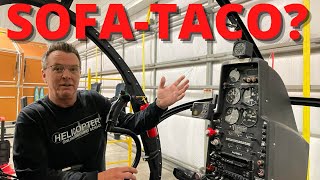
Kenny Keller hosts a live livestream answering member questions about helicopter flying. Main topics: the utility of memorizing preflight acronyms (e.g., CAMIFOT/CAMOFOOT and others like SOFA/TACO) — Kenny advises using whatever memory aids work for you but emphasizes knowing required instruments for legal and safe flight; explanation of why an alternate source of electrical power is required for night VFR; a comparative discussion of buying/owning small helicopters (Robinson R22 vs Cabri G2) including maintenance, SFAR-73 considerations, and instructor availability; and announcements about a free helicopter maneuver guide PDF, upcoming live events, and "Fly with Kenny" training packages tied to the 10-year anniversary of Helicopter Land Ground School.
Chapters
All right, so I think we're live. This has been the biggest screwed up day, so bear with us here because normally we start on time. We had another camera set up over there so we could talk about some instruments and stuff. Right when we go get ready to go live, we have a problem with the mic that's going through that camera that I was wearing to be in both cameras. So let us know, can you hear us? Number one, we see 13 concurrent viewers. So we had a problem a little bit ago. We had it set on private, so we got that fixed. People were emailing, hey, you're set on private, so hopefully you can hear us. There's Steve Carlson show. Yes, we can hear you. Awesome. Jason Cutter, loud and clear. So again today, long list of everything that didn't go right today. Heather got here before I did and I went through the list of everything. I went to a dentist appointment that was actually supposed to be tomorrow. Then she goes, well, since you're here. And she's like, well, you need new tray, right? And I'm like, no, I got new trays for the next month. Oh, well, your appointment is actually next month. So I went on the wrong day and they scheduled me for tomorrow, which wasn't supposed to be till next month. Oh, my gosh. Anyway, so this whole day has been like this. So let's get to these two questions from a member. And I'm still nursing this freaking cold that I've had for, God, over a month now. This is ridiculous. So let's just get to the question. Okay, I had fancy stuff set up, but let's just do our best. So from a member, and I thought this was a pretty good question. I haven't really heard this a lot, but he said, I thought I would share a topic with you for a video that I think might be helpful to your audience. This has been a topic of heated, always positive, respectful, but passionate debate amongst myself and my instructors. I hope you can shed light on this issue to better wrap my brain around it. What is the real importance of memorizing acronyms like sofa, taco, and he listed a couple other tomato flames, etc. When I asked my instructor to explain the reasoning behind these acronyms, I'm told for safety, you need to make sure those items are functional before takeoff. And he goes a little bit longer into it. But basically, I think you get the jest of the question. So there's two sides of this. So several sides. I guess the first I want to say is whatever it takes. Whatever it takes for you to get through the ratings and operate the helicopter safely is number one, Right. And like there's a lot of these different acronyms that come up and people use. And when we had the camera set up for inside, I was going to go over here and talk about climbing in the helicopter. You know, for example, camafoot. A lot of people now say camel's foot. But when I was trained, I started in the late 90s, we used Camouflt. I've never forgot camo foot, right. So when I'm climbing into the aircraft for the day, if I want to start up and there was something not functioning, boom to my brain is camouflage, right. I know what's required for day VFR that I have to have in order to go fly. So camifoot Compass, airspeed, manifold pressure, altimeter, fuel gauge, oil pressure, oil temperature tachometer. I've never forgot that. Right. So to me, that acronym is something that I've always used and it makes sense to me. There is tons of different acronyms out there. So I think that's one that to me was useful and what I was wanting to do. I keep turning away from the mic. I know it gets different, but when you're in the helicopter, for me it's always start at the top and work your way down. When you're getting ready to go, you want to make sure everything's operating, but you also want to know what could be placarded, what could still be not operational, but you could still legally go fly. You know, you still need to technically shut the aircraft down so you can unhook whatever is defective. Let's say it's the clock and you want to unhook the clock, pull the fuse, shut off the circuit breaker, whatever you have market inoperative, fire up and go. So I do understand the side of memorizing certain things for in and out of the aircraft. And the next flip side that I think of, back when I was doing my cfi, there's a whole lot of stuff that I remember when we were two of us were going through our CFIs together on California and both of us named Ken. Not that makes any difference to the story. But anyway, we were going through, we went to accelerated two week CFI course where you show up and you just hit it hard every single day, all day long. You go back to your hotel room at night and you study and you study and you study and you study, then you go back the next day and you hit it again, right. And for cfi it was a lot of Memorization. And when we were kind of complaining about, oh, my God, there's all this stuff we've got to know, I remember the instructors going, look, guys, you got to pay your dues. And this kind of goes for any rating. They're like, you just got to go back to your room at night, use these acronyms, write in your pts, do whatever it takes. Right now, it's a lot of memorization and a lot of that stuff I still remember, you know, levels of learning and application, correlation. There's a lot of stuff that I remember from the cfi, but I don't remember all those acronyms that we memorized. And for me now, it doesn't really make any difference, right, Because I have the knowledge in there of those different, you know, the rules and all the things that you need to know to be a reasonable cfi. Those things stick with you. The acronyms do not. So I think there is a time and a place for them. But if you, you know, any one person can memorize exactly what instruments you have to have in there, and you don't feel like you needed an acronym, that's great. But you don't want to always have to go to the PoH or go to a minimum equipment list. You want to know what can be quickly know in your brain, am I good to go fly or am I not? So I think it really depends. And I understand why he was saying it, but I think my advice is use whatever it takes, you know, because in his email he mentioned, well, you know, I understand you need to memorize emergency procedures, but he just didn't understand, you know, memorizing all of those so you wouldn't have to use them, but you still need that knowledge. And so again, when you go to your checkride, the difference between sitting down at the state, at the table and studying, or even sitting with your instructor and he's asking you questions and prepping you is one thing. The day you get to the checkride and you're sitting across from this guy who, you know, he's evaluating your knowledge, and you know that he's going to say yes or no to your knowledge before you even go to fly, I think anything that helps memory is going to be a good thing. And when you're nervous, if you've got a memory aid there, you can think through it, right? You can think through camo foot or sofa taco, all these different ones that people use, and there's tons of them out there, but ultimately it's kind of a part of aviation. You know, there's abbreviations and acronyms for everything. So that's my best on that. I understand why people use them. And again, I've used them myself, especially like, you know, things like what do you have to have in a Robinson on top of the other normal rigs for any aircraft? Then you've got additional things for Robinson aircraft like we used at the time Caroka. So it's easy just to think in your mind and then you can go through your list, right? Because if I think a camel foot, I can go right on the list in my head, boom, boom, boom. And I know what it is. So then the next question we put in the email was one of our members said, hey, I'm looking at buying an aircraft for myself to get my kid or grandkids, and I want to be safe. What is your opinion on whether I should get either a G2 or a Robinson R22? That's cabri. G2 or cabri, depending on how you say it. And my answer is always the same when somebody ask me about a specific aircraft. Personally, I like the R22. Did all my ratings in R22. I did the video videos. Last winter we did 50 days of videos with Chris Hauser and the Cabaret. And of course, I got checked out. I actually did my certified flight instructor. I had to take a. I let it lapse and I had to take another checkride, right. To reinstate my cfi. I did that in the Cadbury. So I flew it enough that I could be proficient to go out with an examiner and, you know, renew my rating. And I really learned to like the Cadbury at the beginning. I wasn't really sure. The more I flew it, the more I liked it. You know, there's always going to be the people that are going to immediately bash a Robinson. And I'm going to go down that route right now because you got the people that just immediately hate him and know nothing about him. Okay? And one of the examiners I've used forever, he quite a while ago, he said, anybody that's bashing a Robin usually probably has less than 10 hours in him. And that's again, that's just a statement coming from the examiner who's been given checkrides forever, has flown in everything under the sun. His. And he's like, you know, Robinson is a great little aircraft. They hardly break if you maintain them properly. And again, I did all my ratings in the R22, and I think if the R22 is maintained properly and if you have good instruction, you have good maintenance. You fly it the way it's intended to be flown, I don't believe you're ever gonna have a problem. So for this individual, it's like anybody that asks, well, what helicopter should I get? You know, this one or this one? Well, the R22 is going to be a little less money, or I shouldn't say a little less money. I don't know the prices now, But I know R22 is going to be cheaper than a cabry, right? So when any one person is looking at buying a helicopter, it really is your choice. You really need to look at what is right for you. Which do you like better? Which do you fit in better? Because depending on what size of person you are, it can make a difference which aircraft you want to be in, who's locally going to be able to maintain that aircraft for you, and what instructors do you have available to, you know, get your flight review, so on, so forth. So there's a lot of different things to consider. Honestly, if money was no object, I'd have them all lined up in here. I'd have an R22, I'd have an R44. Gonna have a chance here to be flying the H269 soon. That's gonna be fun. I'd have an instrument sitting here. Yeah, I know they filed Chapter seven, but somebody will buy it and they'll get parts out there and stuff. Again, I like all the little training helicopters, like, I like all of the bigger helicopters. Every single helicopter has a pro and a con. So any one individual needs to do the research and look what's right for them. You know, with the Robinson, you do have the additional and I'll call it hassle of the SFAR 73 requirements, right? So the. That's going to affect you on getting a job to teach, because you got to have the 200 hours. There's the special sbar that just makes flying and owning and maintaining Robinson a little more difficult. Our mechanic that's working on this helicopter said the other day, he's like, we were talking about maybe an R44 for us in the future. And he's like, yeah, Robinson's are great, but, man, all these ads are crazy on these things. So any one individual really needs to take the time and effort and choose the aircraft that's right for them. Because I think depending on who you are, where you live in the world, and again, maintenance is a big deal. You know, are you going to have somebody that can swing by a hangar where you're at and do maintenance for you. Are you going to have to move your aircraft a half an hour away or you have to take it an hour away or. In the idea of the instrument that I used off and on for years, our mechanic was clear. I was two and a half hours away almost by helicopter. And if he had to drive over here and the owner wanted that particular mechanic to work on it no matter what, you know, there's five or six hours to get the mechanic over here. If we had to have something that had to be done, you know, by, you know, something other than just a simple change in a headlight or doing an oil change deal, something like that we could do locally. But there just really is so much to think about and I never really want to steer anybody and say, well, you should buy this helicopter, don't buy that helicopter. You know what? I think it's really up to any one individual. Any good questions over there?
We got going on, not real questions, but just some nice comments. How do I scroll?
We've had this. We got a hell or helicopter.
One of them was good.
We've got this crappy old screen over here that we used that would be better. So Heather could be using the looking through comments and stuff right here.
Down here.
I'll let you do it. Okay.
It was. Oh, he was sharing right here. For emergencies, we always were taught know the bold cold. Everything that can kill you will be in bold.
The rest that can get you after.
Just another way of.
Right. So yeah, ultimately it, like I said in the beginning, it's whatever works for you. If one individual doesn't necessarily like an acronym. If you can memorize everything that you have to have during day VFR without an acronym, great. Oh, and I know he did ask something else. Let me bring this up because this is a good one that people don't always understand. One last thing. I honestly think that many items on these lists were half made up just to fill in letters. Why is a source of power only required for night vfr? Does the helicopter fly on pixie dust and only require electricity at night? I have a good answer for that. Okay. When I worked at Cleveland years ago, there was a guy that had an airplane down at night near the maintenance area where we took the helicopters down for maintenance. And there was a guy that had an airplane that all he had was an alternator mounted underneath with a big fan on it that would spin when he was flying. The air going through it would generate electricity. That's all he needed for daytime flying. Right. He just needed that One source of power because it's daytime. If the alternator would fail and he lost power, if he's in class G airspace, he could turn, go, head back home and land without really a big deal. But the I've always called it, and what I was trained years ago, was alternate source of power. Meaning you need a battery and an alternator. Okay. Because if you're out there flying at night, you need your alternator charging and operating and you need your battery that's holding a charge. Alternator quits at night, you've got battery reserve. So light comes on, you cycle the switch and the alternator has failed. A lot of times it's just, you can reset it and continue on. But let's say your alternator quits, so you cycle the switch. Alternator light still on. Well, you've got reserve power in your battery to keep your lights on, keep your instrument lights on so that you can see your RPM gauge and your airspeed and you can go, okay, we've lost the alternator. We're not going to go all the way to where we were going. But we need to find a local airport because we know that that battery is going to over, you know, a certain amount of time. It's going to drain that battery down. So that's just to answer his question there. And I know a lot of people that comes up a lot of time, they don't understand the alternate source of power. That was my interpretation of what I was taught many years ago. And I always thought that that made a lot of sense. So that's the reason why at night you need an alternate source of power. You need a battery that's operating and a generator or alternator. If your alternator fails and your battery's crap and isn't holding a charge, then you've at night you've lost power. And what's gonna happen with your lights? Are you comfortable flying at night with no instrument panel lights and, you know, no anti collision lights, no navigation? Navigation lights. That's scary dangerous. All right, well, that went pretty good considering all the problems we had trying to go live and screwing up a mic. And we want to get back on a better a theme here. We were doing them Thursday every week and it was working out pretty good. And then, you know, I did the video earlier this week about what's been going on in the hangar and that's all going real well. So we're kind of getting things switched around here. Oh yeah, I was going to talk about the maneuver guide. So we got a maneuver Guide and as soon as we go shut everything down here, I'll put the link down below for the maneuver guide. This is a free maneuver guide. You can download the PDF by the link down below. This video and what we did was our operations manager, Brian Rutledge, went through the Helicopter Flying Handbook and wrote a maneuver guide based basically on the Helicopter Flying Handbook. Something that you could just download yourself, something you go through and maybe make notes for the different aircraft you're flying. Because the essence of the maneuvers that we do, they don't really change that much helicopter to helicopter. That's why when you read the Helicopter Flying Handbook, the way you perform on most maneuvers doesn't really change a lot. A little bit of a technique might change here or there, or a number on an airspeed might change a little bit. So you can always make a notation if you want to download it. You can even do something like we do, make your own little book. But helicopter maneuver Guide. Because the other thing we got to do, and Heather has it all typed up, we need to build a presentation on it. But we're going to do a live event and we're going to do it this month. No, we're going to do it in February before we start our big celebration. March 1st. March 1st is 10 years online for Helicopter Land Ground School. That's our 10 year birthday. Every year we make a big deal out of it. Remember, five years seem like a really big deal. Each other years been cool, but 10 years to me is like we've made it the next level, right? We've made it to 10. So we're gonna have a big deal like we do every year. We'll try to go live probably every day from March 1st. March. Man, I can't believe this day can't talk either. March 1st, damn it. Through the 15th, we're going to be doing go live. We'll be giving giveaways, all kinds of fun stuff. Can't talk. Jesus, I didn't drink any beer before coming in here, I swear to God. Anyway, that's coming up. But between now and then, we wanted to do a half a day event where we're going to go through and talk about maneuvers. We're going to make the whole day about maneuvers. And I'm going to pick some of the best maneuver videos that we've done the past 10 years and we're going to roll videos on maneuvers. We'll talk in between, take questions, talk specifically about maneuvers, answer questions, do some, you know, smaller giveaways, and then we're Going to announce our flight training for March 1st. Mechanic has guaranteed us it's going to be done in a couple of weeks or less. It's going to be flying in February. Give us a little time to get out there, and then we're scheduling flights. March 1 and after, during our big live event, we're going to announce some flight training, flight training packages. We're going to explain how you can just do one on one, come as you go, first come, first serve. But then we're creating a fly with Kenny package. And it's. Honestly, that's what it is. It's going to be if you want to come and come, like, say you want. Let's say you want to finish your rating, you want to finish a private, and you got your requirements done and you're just having trouble because of whatever the reason is. Let's say you got an aircraft and an instructor, but you can't line up the examiner, or you're just struggling. Like Jamie that came up here in the orange R44. Four, five, six years ago, Jamie had 200 hours in R44 that he bought brand new. And he legitimately had eight different instructors in that 200 hours. And he was so frustrated. And he came up here and in nine days, we finished him, got him all done. And the only thing I needed to do is just kind of put it all together for him and give him the confidence. His ground was good, his flying was good, but he just couldn't put it all together. And he was the one that started. You know what, dude? He was a businessman from Texas. He's like, if I was you, I'd make. Anybody wants to come fly with you, they need to be a ground school member. Because there's nothing that you tell me that you didn't tell me that I didn't already see in the videos. And we implemented that clear back when Jamie was here. So we want to do something like what Jamie did, or you just want to come here and experience the H269 for a week. But we're going to do some offer fly with Kenny packages where you're gonna have my full attention the whole time you're here. It's not gonna be a weekend thing. It's gonna be a Monday through Friday or if you want to jam it out, like Monday through Thursday or Tuesday through Friday, something like that. But we'll block the schedule off. So when we. If you go for the fly with Kenny package, you're gonna come here, you're gonna have my attention all day. Every day you're. Nobody else will be on the schedule. And we're gonna give out all the details on that when we do our live thing coming up. We'll get it put together here real soon, get a link out for everybody. We'll do a couple videos on it, promote it, give you a link to sign up so you'll get notified before the event. You know the typical. Hey, join us tomorrow. Hey, join us in an hour. And we're gonna give away. I'm thinking we're gonna go for a mini iPad. I probably should have checked price before I start saying that, but too late. So we're going to give away a mini iPad that today to someone special. All right, I'm going to wrap it up because I'm. It's freaking cold. Stupid. Tired of it. Yeah. All right, we got everybody caught up over there.
Yeah. Unless you want to. Dan said, kenny, show us how easy it is to get in the helicopter behind you.
I haven't been in this one. Well, there's no seat, but, hey, let's try it.
Not quite ready. There it is.
I think it's the first time I'm in here. Not bad. Brings back memories. My first flight ever was in a sweater. 300, same thing as this. Heather today is like, what's the deal between H269 and used and sweater? And I explained to her, we actually went online to see the dates of when it went first from used to McDonnell Douglas to Schweitzer to Sikorsky to now Schweitzer RSG. So an H269 is ultimately a Schweitzer. And I remember back in the day, my first couple flights was in a Schweitzer. And I remember what's the Schweitzer 300 of my logbook said H269. Well, what the hell is that? What's that mean? That's why. So the H269 became the Schweitzer. Been building them. They've been building them for over 50 years. Time tested, proven little aircraft. My first. First. I think my first 10 or 20 hours was in the Schweitzer. And then a kid called me or I wanted to go experience the R22. So I started going back and forth and I was flying the R22 and I was flying the Schweitzer. And I actually became real good friends with the guys flying the Schweitzer with. So I attempted my first rating my private in the Schweitzer 300. So I did have time in it and then I failed because I took that with an FAA examiner. Most of you know the story. Six months, you know, home with my tail between my legs. Couldn't believe I failed. I was just like, couldn't get hard to get over it. And six months later, I went to. Went back to go back to train. My buddy that was flying the Schweitzer had left and had a new guy. And I'm like, well, I'll go try the Robinson. And I like the young man up there. And he ended up actually finishing me in the R22. Anyway, so that was my experience with them when I was learning to fly. And then when I became a new cfi, I started teaching. I was teaching in Robinson, but also in Enstrom. And then the place I was flying full time, they sold the instrument, got a Schweitzer. So I spent a year flying like crazy in one of these. So I think I got about 300 hours in them. So I'm really looking forward to getting back in it and getting comfortable again. Probably fly a couple hours with Hauser. Jason Cutter is going to come up with the other one. Let me jump in just to refresh my memory on startup and, you know, go out there and get a feel for the machine again. And Taz wants to come up. Taz, I think, is going to be here. He's planning to come in March 2. He wants to go fly it. So I'll go out with Taz because he's got a lot of time in him, and I know the really, he. I know he knows the ins and outs just because he's been flying them a lot for the last, I don't know, five or six years minimum. So we are looking forward to getting this thing in the air and to get out there, start flying. All right, well, my throat's getting pretty rough, so we're gonna end it right there. Thanks for tuning in. We'll have something more coming up here for you soon. We'll see you in the next video. Peace out. End stream and then end probably again.










