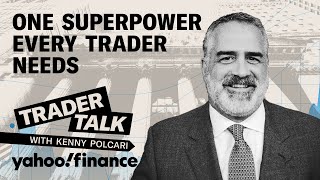
This is a Trader Talk YouTube episode hosted by Kenny Polcari. Opening monologue: Kenny emphasizes that bad trades are inevitable and professional traders manage and learn from them through discipline and quick recovery. Interview: Kenny interviews Atish Davda (founder & CEO of EquityZen) about his start at AQR (joined in fall 2008), transition to ad-tech (Ampush), and founding EquityZen to provide liquidity for private-company shareholders (particularly employees) with company-approved secondary transactions. EquityZen offers individual private-company investments (as low as $5,000) and private basket funds (minimums around $10,000), has served roughly 750,000 households, facilitated transactions across almost 500 companies and tens of thousands of trades, and positions itself as issuer-friendly. The episode closes with a lemon-roasted feta chicken recipe and podcast sign-off.
Questions this video answers
Fall 2008 (September 2008).
About 13 years (speaker states EquityZen has been around for 13 years).
Approximately 750,000 households (speaker claim).
Almost 500 companies (speaker claim).
On the order of tens of thousands — the speaker cites "about 45, almost 50,000" transactions (phrasing in transcript).
Chapters
Foreign. Welcome to Trader Talk, where we dish out the latest Wall street buzz to keep your portfolio sizzling. I'm Kenny Polkari and I'm coming to you live once again from the iconic New York Stock Exchange, A place that I called home for many decades, but it still feels the pulse of capitalism, entrepreneurship and freedom. Now let's take a jump into my big take for the week. Let's get this straight. Every trader makes bad trades. Number not some, not rookies. Everyone. The pros just recover faster because they don't waste time pretending that it didn't happen. A bad trade isn't a moral failure. It's a statistical certainty. You will misread setups. You will get chopped up by volatility. You will chase. You will hold too long. Welcome to the game. What separates the winners from losers isn't avoiding a bad trade. It's how they handle them. Most retail traders double down. They try to justify it. They revenge trade. They turn a paper cut into a gaping wound. Why? Ego. Refusing to admit that they were wrong. But the pros. Pros cut it. They log it, they learn from it, and then they move on without flinching. You don't blow up from bad trades. You blow up from not owning those bad trades. Discipline is what turns a mistake into a lesson. Denial is what turns it into a disaster. Bottom line, bad trades are just part of the business. You're not judged by how perfect you are. You're judged by how quickly you get back to the process. The market doesn't care if you're wrong. It cares if you keep being wrong the same way. Okay, so now into my guest for the day. Now joining us today is my new friend, Atish Davza, founder and CEO of Equity Zen I, a groundbreaking platform that opens access to pre IPO shares in some of the world's fastest growing private tech companies. Before launching equities and Atish worked at algorithmic trading at AQR Capital and led product efforts at Ambush, a digital marketing firm with a unique background that blends software engineering and finance. He's built equities then into a go to marketplace for private tech investing, serving thousands of investors and completing hundreds of deals. Please welcome Atish Davda. Atish, first of all, I gotta tell you, it is such a pleasure having you here. I want to talk to you really quick because I think the audience will really appreciate this about your very first days at AQR Capital and when did that happen?
Yeah, so this is 2008. I'm fresh out of college.
So that Was September.
September. This is the fall. I remember this vividly. Everything we've learned about markets in textbooks, you throw it out the window when you're seeing 4 or 5% swings in the S and P every single day.
Every single day.
Lehman Brothers bank number three. And where I used to work previously as an intern, you know, people are questioning, is it gonna be around next week?
Right.
So that's how my career started.
Started, yeah.
And I basically realized, you know, be very careful about drawing a line too far out. Basically.
It was an exciting time for sure. You know, you would miss the Bear Stearns breakdown because that happened earlier in the year in March. And then it was that whole lemurs and I was here on the floor during that whole kind of cycle, that whole event, when it happened, how it happened, you know, the, the, the anxiety in the markets. It was really a fascinating time to be here. But for someone that was just fresh out of college, still green. Yeah, it had to be, it had to be really an eye opening experience.
It was visceral. Not always in a bad way. I gotta tell you, the fact that I didn't have the 1, 2, 3 years of, you know, low volatility days just made it okay. This is the normal. Yeah, this is what happens.
Right? Getting thrown into a fire.
Exactly. Thankfully, that wasn't the actual, you know, reality. And things did calm down eventually.
Right, but talk about quickly because then this is going to take us into where you are now. But talk about quickly what your education was and what brought you to AQR in the first place.
Yeah, look, so quick background. I grew up in India. I moved here right before college. I studied anything that contained numbers. So my education was computer engineering, finance and mathematics. My joke is numbers make sense to me. Everything else is a bit of a question mark. So I went to aqr, which was a fantastic place for someone like me for systematic trading.
All about numbers.
All about numbers. So I'm at aqr. Actually one of my first projects there was to take a pension fund strategy, $50 million minimum investment, typical investments, couple hundred million dollars and a long short strategy, convert that into a long only mutual fund that mom with 2,500 bucks and a Vanguard account can access. So we didn't call it that back then, but this was the early days of liquid alts. That was the little seed of diversifying, democratizing access really took hold in my head in the early days of aqr.
That had to be a phenomenal experience for a young man just out of college as they Got into.
I used to joke that I could close my eyes, someone would spin me around, and whoever it was pointing to had at least two more degrees than.
I did at aqr.
At aqr. And that was such a phenomenal place to learn, continue a sense of learning and academic freedom from the college days, but now in a professional setting.
How long were you there?
I was there for a couple of years, and I was on the stock selection side. And they moved around quite a bit during that time.
Yeah, they moved around quite a bit during that time. Okay, so then from aqr you went.
Yeah, I went to an advertising company called Ampush. And really what I was doing at AQR was writing algorithms that would either buy, hold, or sell stocks. Early days of Facebook advertising, they had just opened up the Facebook API. Advertising is not that different. You buy, hold, or sell ads.
Right.
And so I went to this company as a first employee. I built these trading models that effectively bid up, bid down, or held steady. Ads at prices, I guess, at prices, ad bids, and budgets. And by doing that, large Fortune 500 companies were using a tool like this in order to effectively convert clients into theirs.
I got to. For me, that's amazing, because that's a world unknown to me. Right. I spent 40 years here. That's like a world unknown to me that I find absolutely amazing. Yeah.
And we are bombarded by these ads all day long.
Yeah.
I was fortunate enough to see the similarities between this world and that world, trading and in the technology side. And candidly, after spending a bit of time in finance and a bit of time in technology, what I realized is I really got to join the two together.
Right. Okay. So now that brings us to equities. And so talk to us about. Because I think this. I saw you on tv.
Right.
Which actually, I immediately reached out to you because I said, I got to talk to this guy. He's got to come on this podcast. Because you're going to tell us what equity is in is, and how the retail investor gets involved.
Yeah, exactly. So EquityZen is a company that I co founded with a couple people zooming out. I used to work at a hedge fund. Now I'm working at a technology company. I'm not making the hedge fund salary anymore, but I've gotten these little pieces of paper, these options in a tech company, not just in the company I was working at, but a few others that I was moonlighting for. Just helping some buddies along.
Right.
Some of those pieces of paper, some of those private shares ended up being worth Something. I'm in my mid-20s. Yeah, right. I'm in my mid-20s, not really making the hedge fund salary anymore. I'm looking for an engagement ring. This is a true story. I'm looking for an engagement ring. It turns out they will not take my piece of paper that my boss guarantees is worth a million dollars, or in my case, $100,000.
Right.
I'm trying to convince them you can't buy a burger with it, you can't buy a house with it, and you can't buy jewelry with it. And that was really the light bulb that went off for me that said, hey, look, if I had $10 million worth of stock, there's a ton of solutions, but If I have 50,000 worth of stock, which is a lot of.
Money, it's a lot of money.
And there's just not that many solutions to that was what has now become equities. And we are a platform where shareholders of private companies can sell their shares and investors who want to buy private company shares can buy them, always with the blessing of the company.
Okay. So they could be. When you say, in this case, when you say shareholders, you're not talking about the VC firm that's invested, you're talking about the employees that end up getting restricted shares.
That's right.
Private shares that they can't really do anything with but are worth money.
These people are paper millionaires. Exactly. Right. We started off by focusing exclusively on the little guy and gal that's, you know, that's, that's helping build the company. Right.
Early investors that wants a little bit of monetization.
Just a little bit. The whole idea is if you allow employees to sell, you know, they got a stack of monopoly money if you let them sell two bills on top.
Right.
It'll remind them, oh, gosh, how many. What are the, what am I fighting for?
That's right. That's right. It'll create actually more loyalty, I think. Right. If they're able to. If they're able to. Not all of it, just some of it. Okay, so, so then let's talk about it, because now I'm, I, like I said, I spent 40 years down here serving the institutional community.
That's right.
Now I flip to the high net worth retail side of the business. And this is why it was so interesting to me the day that I saw you on tv because I talk to clients all day long that say, how can I get access to. And I had a conversation that day and then you come on the TV and I jumped out of the church. I have to have this guy on this podcast.
So exactly what you said, Kenny, is what we are hearing from so many clients. Look, when you know, back in the day private markets were only the purview of institutional investors.
Right. So the Joe Q. Public could not get access.
Could not get access. And you know what, there were good reasons for that. What's happened over the last 15 years and EquityZen's been around for 13 years and we've led the charge on this. As we've said, there is a way to allow responsible access to the private market. And so what EquityZen does is we work with the company, we work with the shareholder that wants to sell and we open up access with the company's blessing to accredited investors with the company's blessing who want to buy as little as $5,000 or millions of dollars and everything in between.
But. OK, so talk to me.
Yeah.
Is there an active market or. It's very, very. The market's wide. The bids and offers are wide like this.
Some are very narrow.
Yeah.
This will not surprise anyone. Kind of like public markets. There's a small number of names that are extremely liquid and the bid ask is right next to each other.
Yeah.
And then there's a long tail of companies that until they kind of become, you know, come to the zeitgeist. The bid ask is wide and what we see. And because equities end at this point serve 750,000 households, half of whom are wealthy, 10% of whom are actually ultra wealthy. And what we've realized is we can provide liquidity at the $10 million level. We can also provide liquidity at the $10,000 level. And across the entire spectrum we're doing it with the company kind of saying, you know what equities then you can get on our cap table. You can then have effectively like a street name, like an etf.
Right.
You can then manage who has access to it under your name.
Okay, so hold that thought because we're going to come right back after this piece. Okay, wait, so let's get back to that because I'm fascinated with this. If, if the first of all start like this, do you have to go out and find these private companies and bring them onto your platform or are there companies out there saying look, we're available to do this?
Yeah, look, in the early days we were knocking on companies doors and saying here's who we are introducing ourselves.
Give me an example of the companies.
Yeah, so back in the. Spotify is a perfect example of it. Spotify was A company where everyone that I looked around, you know, I was working in the technology industry, was using Spotify. They were moving off from Pandora. They were moving off from, you know, literally using devices back then. And what we saw was, well, there's a lot of folks that actually want to invest in this company. We had someone call us up and say, I just threw my daughter sweet 16. Everyone was using Spotify, I don't know, invest in this thing. I'm not allowed to. What's going on?
Right.
And so we went to Spotify and we said, hey, look, we've got about 3,000 people who want to invest. That's a lot of money when you pull it all together, 100%. And we said, hey, do you have any shareholders that are looking for some liquidity? And we actually had about 12 to 13 shareholders at the time who had already signed up. We wanted to see what the company wanted to say. The company says, oh, I don't think anyone's looking for liquidity. And we said, well, would it surprise you that I've got a dozen folks who used to work at your company or work at your company now who are candidly afraid to tell their boss that, hey, look, I love this company. Want to stay here for a while. I just want to go buy a house.
Right.
I want to pay off a loan.
I need some liquidity. Because to your point, you can't take those restricted shares and go to the bank and say, lend me $500,000 against it.
You can't do it. Can't do it. And so we went to Spotify in that case and we said, hey, look, here's everything. We're going to do everything on the up and up. And we helped them with hundreds and hundreds of trades before Spotify officially went public. We had helped over a thousand people access that private stock right before it went public. And by the way, Spotify is a great example also because what happens in IPOs is that companies pop.
Yeah.
And the first time a public investor allowed gets to touch it.
Yeah.
All the. So much of the juice has already been squeezed by a whole lot of other people.
100%. Wait, so I got to ask you a question. So how many names are on your. In your portfolio? If I go to Equity Z. Yeah. Is it like going shopping? There's a bunch of names that appear up on the screen and say, here's all the opportunities.
Yeah, look, we offer single name investments. We offer people the ability to invest in individual companies. We also offer basket products. A lot of financial advisors, you Know, first the client comes to us, and they talk to their financial advisor about it. What a financial advisor is telling us is, hey, Atish, my clients putting in a couple hundred thousand through your platform. I don't know who you guys are. Let's. Let's talk. Let's, you know, let's connect. Right. And by doing that, what we're doing is two things. One, we're learning more about all the other clients a financial advisor has.
Right.
And two, we're learning, hey, financial advisors sometimes have a tough time recommending individual stocks, especially without a ton of information.
Right.
So what they want to do is say, do you have, like, an etf? My client wants to invest in AI. Do you have, like, an AI fund or something they can invest in? Of course we do. And so that's the second offering we have is basket products for folks to say, I can't tell scale AI from databricks from glean AI, but I would like to bet on the tide that's rising. Not no individual books.
Okay, but clarify that maybe I misunderstood, but you don't have a publicly traded etf.
No, these are private funds.
Okay. So just to clear it up, because when I hear the word etf, I think of a publicly traded etf. That's not what you have. You just have private funds that you've created a basket.
That's right.
Okay.
We're providing diversified access in private funds to qualified investors.
Minimum investment.
Minimum investment, as little as $10,000. Individual stocks, $5,000 minimums, if people want, in any situation. We conduct the trades through the company.
Yeah.
And now EquityZen has now facilitated similar trades in almost 500 companies. We've done about 45, almost 50,000 of these transactions.
And what happens if there's a name that is not in your portfolio? Can I call you up and say, can you get me accessed?
Absolutely. We've got order books on the demand side the same way that we've got order books on the supply side. And exactly to your point earlier, Kenny, that's how we know that, hey, you know what? The Bid Ask is closing in on this name. Right. There's something going on here where there's a lot more awareness of this company, and there's a lot more folks that have been around in this company for a while that are looking for liquidity.
Okay. So. So two things. Yeah. First, you and I need to make a date off. Off camera, because we have. I have to. I have to bring this to. To my. You got my wealth management firm. Because it is absolutely an Area of the market that, you know, we're starting to dip our toes into it. We've got a couple of relationships, but they see they don't seem to be as liquid, maybe is.
Yeah, right. Yeah.
At least that's my sense. I guess we'll have a conversation. But the other part of this is talk about how you, how is it priced in terms of how is it mark to market? How does a, how does somebody know what it's worth?
Yeah. So one of the things that equities and provides is an estimated mark on these names.
Right.
These are not publicly traded names.
That's right. Which makes it difficult.
You can't just look up a ticker.
Exactly right.
But what we do is anytime there's any event, any sort of price setting event, we updated and at the same time, if there's any sort of market activity that tells us, hey, look, recent trades have been having 10, 20% higher than where you bought in. Hey, that's just one more input into us letting you Mark, to market your position.
Okay, but so that may not happen. That may happen every two months. That's not going to happen daily.
That's not going to happen.
So for instance, if, if an investor gets in, here's the mark, here's the price. So that's your mark.
That's right.
And that, that's the mark that stays there until it's updated. Could be next week, could be two months, could be three months from now. It could be at the moment that's my price.
That's your price. Until there's some sort of. That takes.
So if I call you up and I want to sell it.
Yeah.
That's not necessarily the price though.
That's not necessarily the price. What we do is we try to provide a price that is representative of where the market is actually clear.
Right. And can somebody who gets in, they buy it, say six months from now, they go, I want out. Can they, they can come back to you to sell it.
So typically it's really hard to get that liquidity unless the underlying company goes public. One of the things Equity Zen has.
Provided or unless there's somebody else that.
Wants to buy, even if somebody else wants to buy, the company doesn't want to be a publicly traded company. That's why what EquityZen has provided the company with is basically an arm's length ability to say EquityZen, we know you, we trust you. You can get on our cap table. You manage within this spv, that's on the cap table, you manage who actually has the piece of the stock like the fractional share, you manage that. And so with that trust, we've earned the trust of almost 500 of these companies. And I think Kennedy, one other thing that's worth calling out here, a couple months ago, less than two months ago actually, Larry Fink at BlackRock actually added private markets into the model portfolio.
Right.
That got a lot of press at the time. And it's a big deal because all of a sudden you have retail investors who have 0% allocation, 100%, which is.
Listen, I'm, I'm experiencing that right now at Sleep so Wealth. We've got clients that are looking for ways to access the private markets.
There you go.
You know, there are some specific, very specific names. Right. But, but if there's a platform that I can bring to them and say, look, here's the platform.
Yeah.
Here's what we can help you do in that space.
Yeah.
With the help of equities and.
Yeah, that's exactly right. And I think just one more thing I like to point out in terms of the why now? I think three years from now, Mark Rowan, Apollo CEO, said a few years from now, we're not going to talk about private equity and public equity. People are just going to hold equity and some of it's going to be public, some of it's going to be private. That line between the IPO is blurring. I think one of the things Equity Zen is bringing to the table is responsible access to investors with the ability to say if you want to invest in this company, there are certain things you have to qualify for, but if you qualify for them, if you understand the risks you're taking making. If you're a buy and hold investor.
Yeah.
Then you can actually do this.
Are there. Would you, would you say that you. Equity Zen has a handful of competitors in the space or no.
Oh, the private markets have been around. I mean equities and did not invent this.
No, no, I know they didn't. But, but are there others competitors that, that, that are doing exactly the same thing? They have access, they have all that stuff.
Absolutely. There's, there's about, you know, three or four names that have. All of us peers have been operating in this space.
Same space.
The key thing to point out, and I think this is a question every single client that's considering entering this market should ask. Is this transaction approved by the company? And I think EquityZen has established itself, our brand, our ethos as a company that is A issuer friendly and B, something that the issuers Will you asked earlier, One out of three shareholders are referrals to us.
Right.
It's companies saying, hey, look, I've got a small, I've got a VP of marketing. They're fantastic.
Right.
They want liquidity, but we're not going to be able to meet their compensation requirements in this case. Can you please help them get liquidity? So we're getting referrals from the company. If your broker can't say that, then you should really do your research before you enter.
Yeah, right. But even just to be clear, if that person comes to you, say, I'm that person and I come to you, I'm trying to monetize a little piece of it. Just because I come to you doesn't necessarily mean I'm going to be able to make that monetize that sale today, tomorrow, next week, totally. Might take a month, two months, it might never happen.
That's true.
Correct.
That's true.
So as long as. Right. Okay.
I think one way to think about this market is even though it says public, you know, private equity, it's closer to the real estate housing market than it is public stocks in terms of liquidity. And I think I found people find it easier to conceptualize. Yeah, it might take me a month to sell my house at a price I'm happy with.
That's right. Correct. Listen, I really, really appreciated this conversation and I look forward to visiting you again three, four months. We're going to talk about how it's changed, if it's changed, we're going to get this. I'm going to tell you, I'm going to take this interview after we do it and I'm going to use it as kind of a marketing piece for us to show people what this opportunity potentially is.
And you and I need to set that day to talk more about this offline.
We absolutely do. And we should do it over dinner one night.
That sounds great.
All right, listen, hold on one second. So you know, I end every podcast with a recipe because I like to cook. So today I'm giving you this lemon roasted feta chicken. You just need to savor this whole thing. It's a simple yet delicious dish featuring juicy skin on chicken thighs roasted to golden perfection alongside tender potatoes, sweet onions and garlic marinated in a zesty blend of lemon juice, olive oil and oregano, then finished with a creamy softened feta. This one pan meal bursts with Mediterranean flair paired with a steamed green vegetable. It's effortless, crowd pleasing dinner that's as comforting as it is flavorful and hey, if you want my take on it, you can scan the QR code that's on the screen for the full recipe. You'll thank me later. Look, that's a wrap for today's Trader Talk, but the conversation keeps going. You can subscribe on Apple Podcasts, Spotify or Amazon Music, or wherever you get your podcasts. You got questions you want me to talk about? Email us at tradertalkahoo inc.com because we are listening. Until next time, stay sharp, stay disciplined, and stay in touch. Take good care.
This content was not intended to be financial advice and should not be used as a substitute for professional financial services.
More from Kenny


Wall Street Is Celebrating| But Kenny Polcari Sees A Warning Sign | Kenny Polcari


Stocks Crashed After The Fed Move But Here’s What Investors Missed | Kenny Polcari
9/11 25 Years Later: Bond Market Warning, Oil Above $100 & Fed Rate Hike Fears | Kenny Polcari

Oil Hits $97, Bond Yields Surge & PPI Inflation | Markets Brace for Fed Decision | Kenny Polcari
The Fed Has a New Problem | Oil | Inflation | and Rising Yields | Kenny Polcari

The Fed Never Promised a Rate Hike | But Markets Panicked Anyway | Kenny Polcari

Nvidia Crushed Earnings | but the Biggest AI Opportunity Is Still Ahead | Kenny Polcari