Buying stocks due to Fed cuts? Why that's the wrong strategy
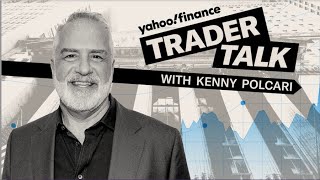
A Trader Talk episode (host Kenny Polcari) interviewing Adam Johnson about current market turbulence, Fed rate expectations, inflation risk, and investment strategy. The program argues that buying stocks solely because you expect Fed cuts is a flawed approach — investors should focus on earnings growth and company fundamentals, manage risk via diversification and defensive sectors, and use pullbacks to add to high-conviction names. The episode also includes concrete market signals (rate-cut odds, VIX level, S&P gap levels, earnings growth outlook) and closes with an Arrabbiata linguine recipe.
Questions this video answers
January 22, 2025
Markets are baking in odds of only a single 2025 rate cut, a 60% chance of a second cut, and a 25% chance of a rate hike.
10–12% growth
Closed at S&P 5783 and opened at 5864 (the gap referenced).
VIX passing 22
Chapters
Foreign. Welcome to Trader Talk, where we break down what's cooking on Wall street so you and your portfolio don't get burned. I'm your host, Kenny Pulcari, and being back here at the New York Stock Exchange is very personal for me. I spent 40 years here as an institutional stockbroker and it changed the course of my life. For me, it's like coming home. On this show, we'll make sense of all of it with expert insight, actionable advice, and my take on everything from the Fed to why chicken cacciatore should be on tonight's menu. Yes, you heard me right, but we'll get to that in a moment. But first, let's get to today's market tips. 1 what happened to the rate cuts? Expect more volatility as earnings roll in. The idea that the job market is so much stronger than what markets had been led to believe in is coming back to bite us in the ass. Look, a stronger report can have a range of impacts on stocks, depending on the context. And sometimes good news is bad news for the markets. And that's what we saw as stocks tumbled. Markets are now baking in the odds of only a single rate cut in 2025 with a 60% chance of a second rate cut, yet there's still a 25% shot of a rate hike. Translation, we're not out of the woods unless the data goes decisively south. There's little reason for the Fed to jump in with more stimulus, though they'll insist they're still restrictive, which clearly I don't think they are at all. All this does is set the stage for potentially turbulent first quarter as investors, traders and algos try to parse the latest rate moves. Economic Surprises and Fed Speak when earnings kick off next week, expect the C Suite's outlook to drive growth. Much of the action strong guidance will likely steady the ship, while any whiff of weakness could push stocks into a fresh downdraft to embrace the cycles without getting whipsawed. Markets move in waves. They always have and they always will. We'll see in quantum computing, stocks in energy, in tech, you name it. The key is not to panic when a new cycle rears its head. That doesn't mean you ignore the red flags and rising bond yields and shifting Fed policy or or even Jensen Wang's latest sermon. But you manage the risk methodically instead of hitting the eject button every time there's a headline. Being a long term investor is far different than being a trader, so you have to ask yourself, who am I? Am I an investor or a trader, because how you answer that and react will dictate who you are. When prices swoon, ask yourself, is this short term noise or a fundamental shift? Knowing the difference helps keep you on the right side of the trade and keeps you sane. And three Revisit defensive plays Even when it feels too late, the sudden break beat down in growth names is a reminder that defensive sectors so you think health care, consumer staples and utilities shouldn't be relegated to the back burner even if they've already moved a bit. When bond yields spike and and fears creep up, these sectors often hang in there better than a frothy tech stock. Sure, the sexiness factor is lower, but when you're staring down the daily headlines that feel straight out of a 1967 Batman fight scene, a little defense can keep you from getting knocked out. This full market is due for some turbulence. It really felt like a classic 1960s Batman brawl, right? Who remembers that? Kaboom. Oh wham. Only this time the hits were delivered by rising bond yields and big corporate debt. Sales spiking wages suggest inflation may be revving up, which puts stocks under major pressure. Throw in record high yields for the 10 year, topping levels not seen since 2007, and it's enough to make any investors head spin. The latest Jolts report and the NFP report only added fresh fuel to the fire, signaling that the labor market is just fine and that businesses might have to dig a little bit deeper in their wallets to lure the right talent. Higher wages, of course, translate into higher costs, and they can sneak their way into everything from corporate earnings to consumer prices. No wonder the Fed is eyeing the situation carefully and the market responded with an 11% jump in the Vix, the fear indexes, and then lower stock prices. Big Tech, often dubbed the Mag 7, took a beating, dragging the market capitalization S and p index down 1.1% last week, while the equal weighted S and P shed just a third of a percent, reminding us just how much the mega caps can tilt the entire market when they move. It's really a wake up call for anyone betting too heavily on one segment. Volatility is the name of the game right now, with a new administration, potential tariffs and all the geopolitical drama vying for the spotlight. In times like this, you need to keep your guard up, manage your risk, and don't let a few clonks and biffs knock you out of the game. A well diversified plan still holds the best defense in this market showdown. My next guest knows a thing or two about The Fed. He spent years as a hedge fund, hedge fund manager and then became a Bloomberg anchor and, and is now the author of the Bullseye Brief and the portfolio manager of the Bullseye American Ingenuity Fund. I am very excited about my next guest, Adam Johnson. Adam, thank you for joining us today.
You bet, Kenny.
Tuck me. There's been so much happening, so let's just talk broadly. First, talk about the recent NFP report, what you think of it, because I know I have my own sense of it, and then what you think that really means for investors and the Fed and rates.
Yeah, sure. Well, first of all, let me tell you there is much more to like than to fear.
Okay.
And we have seen some chop in the markets really since the middle of December when we found out that maybe inflation wasn't going down quite the way we thought, but possibly even ticking up.
Right.
That has definitely upset the apple basket. And yet think about this, Kenny. We have one of the strongest economies we've seen in a long time. The most number of people ever are gainfully employed and spending money. That's driving earnings growth. We have a GDP that is somewhere around 3%. We have an incoming administration that's business friendly in theory. That means fewer regulations, lower taxes. That's all very good. So the only thing that we don't really know if we have is inflation kind of going back down and the Fed possibly cutting rates more.
Okay, so here's the question. Do you think inflation's on its way back down or do you think in fact it's going to rear its ugly head? Because I'm in the position that I think it's going to rear its ugly head and I think we're going to find out.
Ugly head.
Well, I think it's going to start to rise again and I don't think it's going to stick at 3%. I think if we, if we see inflation go back to 4 or 5%, that's probably where I think it's going, which is not it. It's not like it was 9%.
Right.
But it's certainly not the 2% that the Fed wants.
Sure. All right. So I agree that would be an ugly head.
Yes.
But so far what we have seen is inflation tick up maybe 1 or 2, 10 higher each month for three months in a row. So instead of what we saw back in October where inflation was 2.2% on average, if you average CPI, PPI, PCE and GDP price index, those four average them together, it went as low as 2.2%. The Fed's target is 2, so that's pretty darn good.
Yeah.
And now it's about 2.6. If you are only buying stocks because you think the Fed is going to cut rates and or inflation is going down, you're missing the point. You should be buying stocks because of earnings growth. And I think what we're going to see the next two weeks as the fourth quarter earnings season begins is 10 to 12% growth. That's the highest in several years.
If that happens, I think that's great.
And that's a reason to own stocks and to be buying this dip, which is what I'm doing.
Right. You know, it's interesting because, you know, we talk about as a wealth manager, I'm in the wealth manager space now. Right. So it's a very different conversation that you're having with your clients because they're not institutions. Right. Well, remember when I was here as a broker, all my clients were big institutions, they were big asset managers, so they get it. But now the individual investor, it's a different conversation you're having. Right. So who's nervous? Who doesn't feel right? Who's afraid that, you know, that the market's going to crash? Well, I don't think the market's going to crash. No. To your point, though, a healthy pullback would actually be welcome, I mean, for a lot of assets.
Oh, it's happening.
I think it's happening.
We're in.
It's healthy.
And to be clear for our viewers who don't understand gaps, you and I say we fill the gap.
Of course.
All right. Say no more. I understand.
Right.
But if the stock market or any particular stock gaps up, it opens above the previous day's close and then trades higher, inevitably, they want to go back and fill that gap. And that's your point. We finally filled the gap from.
When was it from November 5th and 6th, which is the election to the next.
Filled the gap.
Right. So it closed on Tuesday night. It closed at the SP5783, but it then opened at 5864. So that gap is what we're talking about.
And we filled it, which is healthy people. As you know, I'm Long Nvidia. Right. I run the American Ingenuity Fund.
Who is it Long.
Well, but I own a fair amount of it. And as a growth investor, I own a lot of these companies that are growing quickly. That's the kind of company I like to own.
Right. That's.
And yeah, in 2024, Nvidia pulled back at least 25% on three separate occasions. Right, right. People each time said oh, is this it? Is it all over for Nvidia? I said no, no it's not. They're going to continue to grow, they're going to continue to beat. They are in the sweet spot. And these are all gifts. If you look at the broader market, either the s and P500 or you can look at the Nasdaq, each of those indices pulled back four times last year by anywhere from 7 to 11%.
Right.
The current pullback is somewhere in the Midst of that 7, 8% I think.
Is down 6 and a half percent which is, which is to your point, still within what's considered the normal.
This is just part of markets.
Part of markets. And that's what people. And that's a conversation that I have with investors is look, the S and P, let's talk about that because that's the broad market index is off about 6% off its high, still well within. We could go down another 4% and still be within, you know, 9.9%. We're still within normal at 10%. Then you say, okay, now we've entered a correction phase which actually still again happens. It happens. And it's not necessarily the worst thing in the world to change the branch a little bit. Maybe it gets some of the fluff out because maybe there is too much fluff. That's right. And maybe, maybe prices have to adjust based on now what the new narrative is.
Right. So I am an investor, I'm not a trader. You have to know what you're looking for.
100%.
And I always tell my clients, we focus on time in the markets, not timing the markets. And so my approach is if I can project out two or three years and look at the cash flow and see a pathway to say 15 to 25% earnings growth for each of the next several years. And I can put a forward P E price to earnings multiple on that future cash flow and arrive at a target that represents a double, maybe a triple over the next several years. I'll buy it and I don't worry about these pullbacks.
Right. Actually. Right. And actually when, when it pulls back, it gives you another opportunity to add to the name. As long as the correct. The thesis hasn't changed.
Correct story.
The reason you. That's right, bought it. As long as that hasn't changed, then individuals, long term investors really need to use that. Which is why I was telling some clients today, look, now you need to be making sure that you have Your shopping list. Right.
Yeah.
And that you have to pick names that you like better.
Believe it.
Who, who, whose stocks are on sale for no other reason than there's nervousness in the market. Not because the thesis changed, not because the story changed, but because it's just, it's part of the cycle. Right. And you use that as an opportunity.
You want, you want a couple of picks at a pullback.
Yeah, yeah.
The heck hit me with a couple of monolithic power. Npwr. Right. This is a company that helps regulate the power flow into all those arrays, those stacks of Nvidia chips.
Right.
It has pulled back because some of the guidance was considered soft. And yet the company reiterated full year guidance. Don't focus on the quarter, focus on the full year. There's one that has pulled back 30%. Aerovironment, the largest supplier of hand launched drones to the US military has pulled back 30% because there were fewer sales to Ukraine, because fewer allies gave Ukraine money. That's a one quarter event. That's pulled back 30%. And given the incoming administration's focus on surveillance at the border, this is the company I think that's going to sell.
Right.
So their names, I could give you any number of names, but you have to always be willing to step in on these 20 to 30% pullbacks. Like the three times Nvidia pullback.
And that's exactly the point. Right. The stock is on sale, it's down 30%. And so therefore it's an opportunity as long as it's a name that you like and you've done your homework on and the story hasn't changed and it's nothing but an opportunity for the long term investor. So I agree with you 100%. Look, I want to ask you another question because it's interesting. Somebody asked me this the other day. The NFP report came out. It was good news.
Yeah, right.
But yet good.
In other words, stronger than expected job growth.
That's right. But in this case, good news was bad news.
So perverse.
Yeah, right, but, but on the same day Delta Airlines came out with their earnings. Right. Last Friday. Yeah. Now they blew it out of the water. Blew it out where? Good news in that case was in fact good news because investors took Delta Airlines up, yet they sold the market off 2.5% on the good news by the NFP report.
What they did with Delta, they should be doing with the s and P500. So you know, good news is good news. But we're in this perverse, this psychology where. Oh my gosh, Good news means there might be inflation. That means the Fed might not cut interest rates. That means we should sell stocks. No, no, you buy stocks because of earnings growth. And if you're buying stocks because you think the Fed's going to cut rates, you're buying for the wrong reason.
Well, agreed, agreed. But you also have to understand if, if the economy changes and inflation once again spins out of control, then you just have to be more cautious in how you buy stocks or the stocks you buy and when you buy it. Right. Just because you should understand what the economy is doing around you before you just haphazardly go in and start buying stock.
But I think it's also important that our viewers recognize a lot of the chop in the markets. Up, down, up, down, sell them when there's good news. Right. A lot of that is not coming from guys like you and me.
Right.
You know, running our models and debating and what do you think, Kenneth?
Right.
No, these are computers that have been pre programmed to take certain data points.
You know, exactly what they do.
And then they instantly sell bonds. They instantly sell stocks.
Right. So the minute we hit, and I, and I, and I made a comment like this in my note this morning. Right. Like the vix, which is fear index. Right. So in The Vix passes 22, which is the high we saw in September, October and again in November. If it pushes up and through 22, that's going to ignite a whole message sent out to the algorithms that we now pierce this. What was resistance? The VIX will probably shoot a little bit higher and then the sell algos will just hit their button and they'll just, they'll just sell stocks just because that's what they're programmed.
I hate to say this, but what do you bet the 10 year goes to 5% at some point? Because the boys just want to take it there.
Now it's about momentum. That's exactly right. And I think the 10 year is going to go to 5%. I'm not necessarily.
Which will not be great for stocks.
Great for stocks. Listen, if the economy remains robust and inflation is under control, 5% wouldn't necessarily be a stock killer.
Right.
But if, if they go to 5% and the inflation and the economy starts to struggle and inflation starts to really lift its head. Yes. Then it's, then it's an issue. Yeah.
And it's all about baseline. And by that I mean think about it. Mortgages were like two and a half to 3%. And you know, mortgages haven't been 7% in what, 15 years? Yeah, maybe longer than that. 17, 18. I mean I remember when my first mortgage was seven and a half, it went down to five and seven eighths. I refinanced and I thought I was the king. Yeah, five and seven eighths. Boy, I really, I really straight bottom.
My first mortgage was 15 and a half percent.
Shocking.
15 and a half. Shocking. Now the price of the house was only 246.
Right, right, right.
But it was still 15 and a half percent. Right. And then as it, as, as rates came down, so. And I refinanced lower.
Yeah, we got accustomed to low rates, to cheap easy money, to government largesse. Oh, we need another stimulus program. No, we don't. That's how we got to inflation. So you know, again, I'm a guy who believes that, I'm an investor, I'm a person who believes that smaller government is better government and I would like to see the government spend less. I think that would be healthy for everybody.
Adam, just hold on one minute because we're going to toss to a break and we'll be right back. Okay, so we're back. So Adam, we were talking about yields and the 10 year going to 5% and what's that mean for the market? And you know, we both agree it's not necessarily the best thing for the market yet if the economy remains robust and they can control inflation, it actually won't be a disaster.
Correct. And again, that gets to my central thesis right now, that there is more to like than to fear.
Right.
In fact, I would even argue that MAGA matters more than the Fed. Right. This focus on efficiency in government, on reducing the waste, on lowering taxes, on making it easier for businesses to do what they do, which is to innovate. I think all of that's important. And it's happening against the backdrop of what is already a very positive market. 10 to 12% earnings growth, steady 3% GDP growth, employment that is almost as strong as we've seen ever because we have the highest gross adjusted income. It's only the inflation component. And the Fed's response, do they cut more or do they say that's the only thing that we're having to wrestle with?
Actually unemployment ticked lower in the last NFP. Thank you. Which you think expected? Yeah, they expected 4.2, came in at 4.1, but it still ticked lower. Right.
And again speaks to the thesis there is more to like than to fear.
Right. And so I think, you know, we, and what's really interesting is I think it's also just A matter of, I think as investors, as this happens more, I think investors become used to this idea that pullbacks like this can happen and it's not the, it's not the end of the world. And as long as the, the total thesis hasn't changed, then buying stocks is on sale is a huge opportunity for the long term investor. Yes. Listen, if you're a day trader, you're going to trade no matter what, correct? Right. You're going to, you're going to trade the noise because that's what you do.
And I know because I used to be one of them. I am reformed, Kenny.
But that's what you do as a long term investor. You want to be here and you want to take advantage. You don't want to be scared away and you want to take advantage of stocks that go on sale.
Well, the other thing about being a long term investor is you don't have to reinvent the wheel every day.
That's right.
You don't have to come in and say, how am I going to make money today? I'm not worried about making money today. Maybe not even this week or this month. If I just continually review my companies, make sure, as you pointed out, nothing's changed, I'm comfortable owning them through the chop.
Yeah, I think it's great. Adam, thank you very much. I appreciated this conversation. I always appreciate having you on and I appreciate your friendship.
Oh, thank you.
Before we go, I want to recap today's tips. 1. Don't let the rate cut odds blind you Expect more volatility as earnings roll in. Markets still anticipate at least one 2025 rate cut with a decent chance of a second and yet acknowledge that a 25 there's a 25% possibility of a rate hike. In other words, we're not out of the woods. If economic data doesn't weaken meaningfully, the Fed can't jump in with added stimulus. And that would make no sense if they did. Despite the idea that they keep telling us that the current stance is restrictive, it really reminds me of the transitory narrative. All this sets the stage for a choppy first quarter as everyone digests various rate predictions, economic releases and Fed chatter. Once earnings season kicks off, corporate guidance takes the spotlight. Strong forecasts may calm the waters, while any hint of trouble can spark further sell offs. To embrace the cycles without getting whipsawed, markets move in waves. Diversification remains the name of the game. Do not ignore it. Genuine danger signs like spiking heights, spiking inflation or abrupt policy shifts. But Also, don't panic every time there's a downturn. Ask yourself, is this a routine pullback or a deeper shift in the market direction? Keeping that perspective helps you preserve both your portfolio and your peace of mind. And three Revisit defensive plays Even when it feels too late, the recent pressure on growth names underscores why sectors like health care, staples and utilities shouldn't be sidelined. They're not sexy by any stretch, but when fear rises and rates goes up, these areas often provide stability and balance for your portfolio. Consider the strategic short term contra plays like the Dog, the psq, SH and spsx, which is a triple leverage short play and is not for everyone as well as the Vixie to help mute the downturn Linguine Arrabbiata so in keeping with the theme today, how about an arrabbiata sauce? This is a southern Italian tomato sauce that gets its kick from the crushed red pepper. In fact, arrabbiata means angry. You can use this sauce over pasta or even meats. Today we're going to eat it over linguine. Now for this you're going to need olive oil, onions, garlic, red wine, sugar, crushed red pepper or chili peppers if you really want it. Hot, hot, hot lemon juice, oregano, salt and pepper, crushed tomatoes, a tablespoon of tomato paste and chopped parsley. Now you want to bring a pot of salted water to a rolling boil on the back burner so it's there when you need it. In a large deep saute pan on medium high, you're going to heat up the olive oil and the garlic. Saute it just a bit. Don't burn it for about three minutes or so. Then you're going to add in the sliced onion. Saute that until it's soft, five or eight minutes. Next you're going to add in a half a cup of red wine, a half a tablespoon of sugar, fresh squeezed lemon juice, about a tablespoon, some oregano, a bit of tomato paste and a 28 ounce can of kitchen ready crushed tomatoes. Not the puree, just crushed tomatoes. And then you're going to add in the crushed red pepper or the chili pepper if that's what you prefer. Bring it all to a boil and then let it reduce to simmer and cook for 15 or 20 minutes. Now you're ready to add the linguine to the boiling water and cook that for about eight minutes or just until it's al dente. Strain it, reserving a mug full of pasta water, which we refer to as the tears of the gods. Return the pasta to the pot. Add in back about a quarter cup of the pasta water to remoisten it, stir it and now take the pasta and add it directly to the saute pan with the sauce. Toss it well. Add a handful or two of grated parmigiano cheese and serve it immediately in warm bowls. Enjoy this with a nice bottle of Brunello di Montalcino and always have extra cheese on the table for your guests. Bon appetit. Sam.
More from Kenny


Wall Street Is Celebrating| But Kenny Polcari Sees A Warning Sign | Kenny Polcari


Stocks Crashed After The Fed Move But Here’s What Investors Missed | Kenny Polcari
9/11 25 Years Later: Bond Market Warning, Oil Above $100 & Fed Rate Hike Fears | Kenny Polcari

Oil Hits $97, Bond Yields Surge & PPI Inflation | Markets Brace for Fed Decision | Kenny Polcari
The Fed Has a New Problem | Oil | Inflation | and Rising Yields | Kenny Polcari

The Fed Never Promised a Rate Hike | But Markets Panicked Anyway | Kenny Polcari

Nvidia Crushed Earnings | but the Biggest AI Opportunity Is Still Ahead | Kenny Polcari