Could Trump's economic chaos spark stagflation?
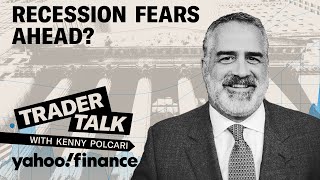
A hosted interview (Trader Talk) between Kenny Polcari and Cameron Dawson (CIO, New Edge Wealth) discussing the market impact of Trump-era policies, the odds of a recession vs. a slowdown in 2025, risks of stagflation, the role of immigration and labor-survey measurement, the behavior of consumers and soft vs. hard data, the recent performance and risks around the 'Mag 7' tech names, and tactical views on growth vs. value and sector themes. The program closes with a personal recipe and a financial-advice disclaimer.
Chapters
Welcome to Trader Talk, where we dish out the latest Wall street buzz to keep your portfolio sizzling. I'm Kenny Pulcari coming to you live from the iconic New York Stock Exchange, a place that's been my home for decades and still fuels the pulse of capitalism, entrepreneurship, and freedom. Now let's jump into my big take for the week. Every time Trump makes a move, the market reacts. Sometimes with a rally, sometimes with a panic. But let's get one thing straight. Trump does not control the stock market. Investors do. Right now, the big debate is whether Trump's policies, tariffs, deregulation, tax cuts and spending cuts will send the market soaring or trigger a meltdown. Here's the truth. It really depends on how you play it. Yes, tariffs can create short term volatility. They disrupt global trade, send corporations scrambling, and give the media plenty to scream about. But guess what? The market isn't crumbling. Investors adapt. Companies shift. Supply chains and industries that benefit. Think domestic manufacturing, energy and cybersecurity quietly strengthen. On the flip side, Trump's aggressive economic stance could ignite stagflation, slowing growth and higher inflation, something we haven't seen in decades. If that happens, the market isn't going to go up in a straight line anymore. Investors will have to think beyond the buy the dip transaction and focus on assets that hold up in high rate, high inflation environments. And then there's the wildcard, retail investors. Trump's unpredictability keeps them on edge, leading to emotional trades and massive market swings. In fact, after his latest tariff move, we saw a historic shift. $22 billion flooded into short term US government debt. That's a clear sign investors are hedging their risk, not running for the exits. So what's the play? Ignore the noise. Focus on companies that thrive in the chaos. Industrials, defense, energy, and yes, even select technology. Avoid betting on one narrative because whether Trump's policies create a boom or a bust, one thing is certain. The market will move and adjust and smart money will be ready. The bottom line? Trump's policies will shake the market. But fear isn't a strategy. If you're prepared, volatility is just another way to make money. So I'd like to introduce my next guest. Meet Cameron Dawson, Chief Investment Officer at New Edge Wealth. In her role, Cameron develops strategic investment themes and asset allocation approaches, working closely with advisors and clients to deliver optimal investment results. Previously, Cameron served as Chief Market Strategist at Fieldpoint Private securities and as a Senior Equity Analyst at Bank of America, specializing in macroeconomic analysis. Honored as the CIO of the Year by institutional investors RIA Intel Awards in 2024. She's also a CFA charter holder and and graduated valedictorian from Rollins College with dual majors in business and dance. Let's welcome Cameron Dawson. Cameron, it is a pleasure to have you here with me today.
Oh, thank you so much for having me, Kenny. Happy to be here.
Listen, you were one of the people that came right to the top of the list when I realized I was gonna start doing this podcast and I thought, you know, who could I have, who would be exciting to interview? And you were one of the people that came right to the top of the list. And, and so I appreciate that. I want to talk to you about the big thing that seems to be on everybody's mind is the recession. Right? It's the R word. Now, what I find very interesting and I want to. I'm dying to hear what you have to say about this, but Remember back in 22 when yields first inverted and everyone said, okay, it's only 16 or 18 months, we're going to get a recession, it's guaranteed. That's what's going to happen. Well, it never happened. We never got the recession. So, so here we are once again. So now yield curves have uninverted and now we're starting to talk about a recession. So let's talk about that and tell me what you think.
So if we go back to 2024, one of our key thesis for that year was that instead of having a hard landing, a soft landing, or a no landing, which everybody was debating, we said it's going to be a strange landing. And the whole idea behind the notion of a strange landing is all of the indicators that we used to rely on, things like the yield curve inverting being a recession indicator, things like sentiment indicators being really good at capturing where the economy was going, that in the post pandemic world, none of those held anymore. Those relationships have completely broken down.
Right.
So I think that we have to. What it forces us to do is take a very empirical approach to the are we going into recession or not? Because a lot of these market based indicators and survey sentiment based indicators have now become completely worthless in predicting where the economy is going.
All right, so then, for now. So then, what do you think?
So we think that we're going to see a slowdown in growth in 2025 for a whole host of reasons, which I'll talk about, but not necessarily dipping into a recession.
Right.
We don't see the signs yet. And we reserve the right to change Our minds, as always, that, that you are going to be tipping into a period of negative growth where we have that typical recession. So why would we see slowing growth? Well, we see less of a support from fiscal stimulus.
Right.
Huge fiscal stimulus over the last couple of years. And at the margin a less does drive some of the growth.
Right. But that's engineered. It's specifically we're just pulling back on the, on the, on the candy.
Exactly. So there is that aspect. We also have the aspect of things like productivity being a big boost over the last couple of years. Some of that was just the rebalancing coming out of a very low productivity environment post pandemic. But we also had dynamics where we had for example, a big influx of low cost labor through immigration as that starts to slow down. That can weigh on overall consumption in aggregate. But it can also weigh on some of these productivity measures as you lose that low cost source of labor. The other interesting dynamics that we thought were a boost is that the dynamics of how credit, how balance sheets were structured in the US meaning that people had termed out their debt, were less reliant on short term debt, but we're actually benefiting from higher cash interest rates. Some of those tailwinds are starting to fade. So effectively what we see is that a lot of the tailwinds that drove much better growth in 23 and 24, they still are there, but to a much less extent, which means slower growth, not necessarily a cataclysmic recession.
Right, okay. And which is how I feel. But let me ask you a question. We had 20 million plus immigrants come into this country. Is that about right? Okay, let's just go be the number right of which a percentage of those were people that we didn't want or that are going to get deported. We've already seen that. But we're not deporting 20 million people. No, there's a whole bunch of people that came here that are contributing to this society, that are working hard, that are trying to set up a new life and they're, and they're playing by the rules. And so I'm not concerned that we're going to see this slowdown in, in, in employment because all these people suddenly aren't going to be here. They're still going to be here. It's going to be a small percentage of people that, you know, end up getting deported. I think.
Yeah. I think it's also that stock versus flow, which is that we have to appreciate. Over the last two years you saw a big influx of new labor Entering into the labor market that was more low cost helped those productivity measures. And you can actually see it in the difference between the household survey and the establishment survey. When we look at nonfarm payrolls, household survey didn't capture those people. And so we saw the big revisions higher. One of the reasons why you saw much better consumption growth over the last couple of years is there were just that many more people that weren't really being captured in these surveys.
All right, so, so let's clear that up because make it clear for the, for the listeners to understand between the household survey and, and the, and the, the nonfarm payroll service.
So it's just the way that they measure two different measures. Two different measures, One asks businesses, the other one asks households.
Right.
So the household does not do as good of a job of capturing immigration, mostly illegal immigration. And so it's one of the reasons why you didn't see a lot of the new entrants into the labor market get into that household survey. And I think the other important point to mention as well is that we have to realize that it's a rate of change that matters here. So deporting people would be a negative rate of. But keeping the same number of workers constant is also something that could weigh on the growth statistics.
Right, right. So, but let me ask you another question then. If that's the case, then, and you don't see, you think it, at worst case it's a mild recession. Is that about what you think?
Well, look, we could see a feedback loop build on itself. We are seeing business confidence, for example, start to really plummet. Now it's always been with these survey and sentiment measures, it's a watch what they do, not what they say.
Right.
Consumers say that they feel terrible, but they on spending.
Right.
So we think that if you are in an environment where you really are seeing people start to pull back on spending and that could come from a whole host of people are afraid that they might lose their jobs. Look at the UMich or the conference board surveys that say people are feeling.
A little bit less, little bit antsy.
About the labor market. And does that bleed into them spending less, which then could potentially cause companies to see slower sales growth that then causes them to actually self fulfill those weaker or those, those layoffs.
Right.
And that all remains to be seen. We have not seen the soft data bleed into the hard data yet. We have some anecdotal evidence, people like Delta saying, hey, demand's really fallen off a cliff. Look at the, at the, in the retail Sales, you can see the food away from home side of things really pulled back. Is that a function of weather or are people saying, I need to save my money? These are all big questions that we may or may not get the answers to in the next couple of months.
Look, they were talking about, you know, the January, I think, consumer spending number, which was really negative. And I thought to myself, well, you know, we just came through the end of the fourth quarter, the holiday season, Christmas shopping, which by the way was strong. Right. We hit another record. So in my mind, was it just, you know, these people taking a breather, saying, okay, I just spent all this money. It was just all things, so I'm just gonna take a breather. So. And then the February number actually bounced back a little bit. Yeah, right. So then all the negativity that everyone had, oh my God, the consumer's done. You know, we're going off. This isn't really what the data told us in February.
We do think that there was that pull forward dynamic. Look at, we get GDP updates for fourth quarter this week, and one of those updates is looking at personal household consumption, and that was running at a 4.2% pace in the fourth quarter last year. That is not sustainable.
Right.
And that really does capture some of that pull forward. So I think you're right. There is a dynamic that it's not the consumer necessarily falling off a cliff to start the year, but that they just spent a lot of money at the end of the year and then you had weather and then you have a little bit of angst around the labor market. And all will feed into the fact that probably in the first quarter growth is going to look worse than it will look the rest of the year.
Okay, so the GDP for the final GDP for fourth quarter, I think is 2.5%. 2.3. 2.3. Okay. But now the projections for first quarter by the Atlanta GDP is now calling for. I think it's negative 2.8 as of, as of today. I think, I think that's a massive swing, but I'm not so sure I believe that yet.
Yeah, I mean, there's a lot of dynamics there around imports and exports, and then there is the gold imports. There's all these kind of things that feed into that model. Atlanta for GDP now has actually been fairly accurate in predicting where growth has been much more accurate than the Wall street blue chip consensus, which they track as well. But I think that you're right, that number is likely going to be too, too dire. This does not feel like an Economy that is, that is shrinking. But there's all these measurement indicator or details.
Yeah. But I wonder if even if it comes in negative second, negative two, does that really spell disaster right away or. No, I mean, you need, you need two or three quarters of really negative growth to really start to get nervous.
The issues would be if people saw that number and stopped investing.
Right.
Stop spending.
Right. If they get anxious about it.
You know, the economy has a big psychological component. How to Scanlon, you're the vibe session.
Yeah.
Y a. It's a real dynamic. And so the concern that we would have is that you get into a feedback loop kind of environment where people pull back because they're feeling a little bit less confident. And that actually shows up in the hard data. But that's been the challenge over the last five years post pandemic, we've seen big, huge soft data swings. Whether it's being much more bullish and it not showing up in better growth or much more bearish and it not showing up in weaker growth. So it's really a wait and see. And I think the other part of it is listen to what the stock market is saying. My favorite indicator is the equal weight discretionary versus staples. It's really good at sussing out or sniffing out turns in household consumption growth forecasts that has corrected sharply over the last month with these growth fears. But it still is technically. And we could talk about the merits of using technicals on relative charts, but technically in an uptrend. So we'll have to watch.
But when you say technically, if you said that the equal weight discretionary is pulled back now to come in line with the consumer staple spending.
The whole idea behind that is you look at a very cyclical sector like discretionary and compare it to defensive staples.
Staples.
And you equal weight it because you have outside impacts of Amazon and Tesla in Discretionary and Walmart and Costco in Staples. So you do equal weight to, to level the playing field. And what that shows you is that we've been in an environment where discretionary has been outperforming staples, which it has. Which it has. And you know what that has coincided with is big upside to household consumption. How we got to 4.2%.
Well, but because discretionary is exactly that. It's discretionary spending versus the staple stuff, the stuff you need versus the stuff you want. Right. So you need laundry detergent, you need toothpaste, you need soap, you need, you know, the, the things that we need every day versus the wants. Right. I want a new couch. I Want a new car, I want a new. I want a new outfit. You don't need.
I always want a new outfit.
But the, but the discretionary spending, I think you're right. It has been outperforming all last year. It outperformed, had a great year last.
Year and actually it outperformed really coming out of the lows of 2022. And it's such an important lesson, which is that the stock market was able to determine that in 22 we weren't falling into a recession. In fact, it was that growth forecast had gotten too low. So it turned before people started raising their GDP growth forecasts for household consumption, which is why we still look at this on a weekly basis. Because if that really does start to trend, if discretionary really does start to underper Staples, that to us is a sign that the stock market is getting more concerned about that, about the consumer. We're not quite seeing that yet.
Okay, hold that one second. We'll be right back. And welcome back. We're continuing our conversation with Cameron. So, Cameron, let's talk about the big elephant in the room about the Mag 7. Is it going to become the Lag 7? I know there's been lots of talk about that and if we looked at, if we look at what's happened over the first quarter, it certainly feels like they're not leading any longer.
Part of the reason that the Mag 7 has struggled so much year to date is because they did so well to end 2024. Really not in any. And 2023, by the way, and 23. And it's sort of one of those sort of Damocles moments where you become a victim of your own success. But what we saw was positioning got extraordinarily crowded in the mag 7, 98th, 99th percentile kind of positioning. You also saw valuations get stretched even while you were actually cutting earnings estimates for some of these Mag 7 names. So prices were going up, earnings were coming down, it was all valuation.
Right, right. But people were just excited. They wanted to be in the trade, in the trade, in the tech trade, in the trade. And so that's typically what happened. So I'm not actually surprised and I don't think you're either to see what's happening happen. Right. But I think it's causing a lot of stress for some people, which it really shouldn't.
Well, it is why we always quote Walter Deemer whenever thinking about these kind of big positioning shifts, which is his rule of pervers. The market will do whatever it takes. The greatest to make the greatest fool out of the greatest number of people to the greatest possible extent. It is such an important rule to remember that when you see positioning get crowded, valuations get stretched, sentiment gets stretched, everybody goes, you have to be there no matter what. There's, it's Tina, there's no alternative. That's precisely the moment where these trades tend to get smacked in the face.
Right?
So what we think is that some of this is just a mean reversion. The question is, is this more distributed, distributive and that's where earnings are important. If I look at the s and P500 right now, earnings are getting cut everywhere I look, right? So you've seen earnings estimates, revisions continue to move lower Everywhere except the Mag 7 in a meaningful way. So the question is, will people see them as safe havens or will they say, look, Google is an advertising business. Meta is an advertising business. Amazon is a discretionary business. Tesla discretionary, Apple discretionary. Are they more cyclical than maybe we're giving them credit for?
I'm not so sure that I'd say Amazon's discretionary because I don't know about you, I use Amazon for everything. I just don't feel like going to get it ding on, you know, pull up my Amazon Bing. It's there the next day or it could be there, it could be there three hours from now if it, if I, you know, if they had it ready for me. So I'm not so sure. I would say it's discretionary, but I get it right and I have to say something. I'm not sure. A lot of people get very nervous, right? But they've owned tech, they've owned some of these names since 23. So they've seen these massive gains in the moves and then they pull back 20%. Then they like the hair on fire. Oh my God. Oh my God. I go, what are you worried about? You know, you've, you've got massive gains in this. It's, it's in your retirement account. Long term money. Don't. We're not chasing it. We haven't bought it way up here, we still own it way down here. So just. Right.
I think that you have to appreciate the long term quality of those businesses and the challenge you have as an investor is continuously re. Underwriting to say has anything actually changed? And if it hasn't, then you have to write out the volatility. That's what it is to be a long term equity investor. But if there is a change in the fundamentals where we're starting to say, are margins going to trend lower? Is free cash flow going to trend lower? Those are all questions that are legitimate. Are legitimate.
Right. And that would cause you to kind of reevaluate. But if I always say if the thesis hasn't changed, then it's just a cycle and you go with it. And if the cycle creates a real opportunity, like the Stock pulls back 20 or 30% and it's still the same name with still the same thesis, it's an opportunity.
And I think appreciating that so much of the upside at the back half of last year was just valuation. And my dad used to always say pigs get fat and hogs get slaughtered. So some of this is just the fact that we, we got a little bit hoggish with valuations. 100% you're mean reverting. And then it's a matter of making sure that you're still comfortable with the earnings story on the other side.
Okay. So I tend to be more of a value type investor. Just partly might reflect where I am in the life cycle. But talk to me about growth versus value this year because certainly last year growth outperformed and I think this year value is outperforming. Not substantially though, is it?
It is, it's outperforming by a fair amount, at least a fair amount compared to the last couple of years. And part of that is a function of the fact that as I mentioned, December growth versus value got so stretched it went parabolic for a few weeks.
Right.
Meaning that relative was straight up.
Yeah.
So we actually went overweight value at the end of the year saying that's not sustainable. But then we've seen all of that relative performance revert. And so we closed out half the position to say let's be, let's, let's, let's not be pigs or hogs.
That's right.
And manage the risk. So as we go into 20, 25 or through the rest of 25, the question will be are we going to see enough improvement in value related earnings to justify continuous outperform? And those earnings rely on things like energy, financials, materials, health care. And those are most definitely show me stories.
Okay, so in six months I'm calling you up and you're going to come back and then we're going to go over this whole conversation and see where we ended up. Thank you very much for joining today. I really, really enjoyed this.
Thank you for having me.
Always a pleasure. And each week I end my show with a recipe. And today I'M giving you shrimp scampi. Now, back in southern Italy, near the sea, the fishermen would haul in baskets of delicate little shellfish called scampi. Not quite shrimp, not quite lobster. Scampi were their own delicious thing. The local cooks would then saute them in olive oil and garlic and a splash of white wine and maybe a few torn herbs from the windowsill. It was a simple yet rustic dish. Nothing fancy, but full of soul. So when Italian immigrants arrived in America, they brought their food memories with them. But here in the States, no scampi, just shrimp. Bigger, firmer, and ready for the pan. So they adapted. They took the technique for making scampi and applied it to shrimp. They swapped olive oil for butter, which was cheap and abundant. They added a little lemon, a pinch of red pepper, maybe tossed in a whole thing of spaghetti if they really felt like feeding a crowd. It wasn't called anything fancy at first. Just shrimp made the scampi way. But over time, people started calling it for what it was. Shrimp scampi. Even if that meant shrimp. Shrimp. Today, it's a beloved classic, the kind of dish you can pull together in 20 minutes, but one that feels like a treat every time. So when you make shrimp scampi, remember, you're not just making dinner. You're telling a story of resilience and resourcefulness and a whole lot of love. That's the wrap for today's Trader Talk, but the conversation keeps going. Subscribe on Apple Podcasts, Spotify, Amazon Music, or wherever you get your podcasts. Got questions or topics you want covered? Email us@tradertalkahooinc.com because we're listening. Until next time. Stay sharp, stay disciplined, and stay in touch. Take good care.
This content was not intended to be.
Financial advice and should not be used as a substitute for professional financial services.
More from Kenny


Wall Street Is Celebrating| But Kenny Polcari Sees A Warning Sign | Kenny Polcari


Stocks Crashed After The Fed Move But Here’s What Investors Missed | Kenny Polcari
9/11 25 Years Later: Bond Market Warning, Oil Above $100 & Fed Rate Hike Fears | Kenny Polcari

Oil Hits $97, Bond Yields Surge & PPI Inflation | Markets Brace for Fed Decision | Kenny Polcari
The Fed Has a New Problem | Oil | Inflation | and Rising Yields | Kenny Polcari

The Fed Never Promised a Rate Hike | But Markets Panicked Anyway | Kenny Polcari

Nvidia Crushed Earnings | but the Biggest AI Opportunity Is Still Ahead | Kenny Polcari