Disciplined investing and education pave the way to lasting wealth
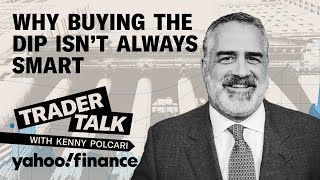
Kenny Polcari interviews Rob Luna at the New York Stock Exchange (video titled "Disciplined investing and education pave the way to lasting wealth"). The conversation contrasts disciplined investing versus blind "buy the dip" behavior, and traces Rob Luna's rise from a low-income background to building and selling a roughly $1B RIA. Rob describes founding Wealth Academy (education platform with weekly live sessions and office hours) and Real Talk Financial Solutions to democratize family-office services by bringing in-house tax, legal coordination, insurance, and asset management earlier in entrepreneurs' journeys. He explains pricing (Wealth Academy ~$1,000/year), operational approaches (in-house divisions meeting weekly), client examples (an entrepreneur who had ~$110k pre-exit and sold for $160M), location (Nashville with distributed staff), and market views (S&P long-term ~10% average; recent outsized gains imply pullbacks; portfolio construction advice).
Questions this video answers
$1,000 per year.
Nashville.
About $1 billion (RIA).
April 2, 2025.
About $110,000.
Chapters
Foreign.
Welcome to Trader Talk, where we dish out the latest Wall street buzz to keep your portfolio sizzling. I'm Kenny Pulcari coming to you live from the iconic New York Stock Exchange, a place that's been my home for decades and it still fuels the pulse of capitalism, entrepreneurship, and freedom. Now let's just jump into my big take for the week. Everyone loves the phrase buy the dip. It's catchy, it's simple, and it's. Sometimes it even works. But here's the hard truth that nobody wants to say out loud. Buying the dip isn't always the smartest thing to do because sometimes the dip is there for a reason. And stocks drop because they genuinely overvalued or fundamentally broken. Remember companies like Enron or Lehman Brothers? Investors kept buying those dips believing the market was overreacting right up until the stocks hit zero. Now, buying the dip should be a disciplined strategy, not a blind religion. The market is littered with investors who kept buying dips all the way down to zero. The key is recognizing when a dip is an opportunity versus when it's a red flag. Successful investors look carefully at earnings, revenue growth, debt levels, competitive advantages and overall market conditions before diving in. If you're buying dips just because prices fell, you're gambling, not investing. Before you put your money in, ask yourself, why did the stock drop? Did the company miss earnings? Or is it a broader market correcting temporarily? If the fundamentals are still strong, valuations attractive, and your long term thesis is intact, that's great. Buy away. But if the fundamentals are broken, or if the stock was overpriced from the start, buying the dip might just be like throwing good money into a hole. The smartest investors understand the difference between price and value. They don't automatically jump in every time the market pulls back. They patiently wait for genuine opportunities, using discipline, not emotion, as their guide. The bottom line. Buying the dip can be a winning strategy, but only when backed by the fundamentals, discipline, and a clear investment thesis. Always review financial statements, recent earnings reports and sector performance before committing your capital. Otherwise, you're not buying the dip. You might be catching a falling knife and that never ends well. Now I'd like to introduce my next guest, Rob Luna, who is a visionary entrepreneur and has been a friend of mine for years. He spent nearly two decades building a $1 billion RIA focused on the ultra high net worth investors and then he sold it to a publicly traded company. Today, he's on a mission to empower a broader audience through financial education and mentorship. He founded Wealth Academy and the lunatic investor, which I'm sure you know if you're on Instagram. And he wrote close your wealth gap. He launched the annual bulletproof live event which I've had the pleasure of speaking at. And he co founded Real Talk Financial Solutions, all with the goal of democratizing the the family office model for entrepreneurs and aspiring high net worth investors. Ladies and gentlemen, please join me in welcoming Rob Luna.
Kenny. I'm excited to be here, brother.
It is a pleasure to have you here in the New York Stock Exchange.
Iconic man with an iconic backdrop. It doesn't get any better than this, Kenny.
Well, listen, it's a pleasure to have you here and I'm so glad you guys made the trip up from Nashville. Thank you for coming.
Thank you.
New York City is also always a great place and it is spring, so things are starting to change here in the city.
And added bonus, my wife had never seen the New York Stock Exchange and thanks to you, she got to see it.
There you go. And today she saw it. She was very happy. So listen, let's just talk really quick. Just give a little bit of history about you. Yeah, kind of. I know I introduced you, but talk about kind of where you, where you came from and then how you ended up where you are today.
Yeah, well, I came from a very humble, actually less than humble. Pretty, pretty poor, to be honest with you, Kenny. Background, you know, family never owned a stock, never owned a home, nobody went to college and you know, kind of by the grace of God, I was able to wrestle, got a scholarship to go to school, got into education and had an opportunity, kind of like you at an early age to be a stockbroker trainee. Got into the industry, fell in love with it, and I realized that was my one opportunity. Go all in, be all that you can. And wound up building a pretty successful business in this industry and a wealth management, wealth management business that I, like you said, I sold about four to five years ago. And that's kind of where I'm at.
You launched, by the way, out of your garage.
It sounds better, but it's actually, it was actually a spare bedroom that I launched. I wish it was a garage, but yeah, it was, it was a bedroom. Just, just myself. And I tell everyone I was the trader, I was the salesperson, I was filling out the paperwork, I did everything. It was, I was a onepreneur.
Right, but you, but you learned by doing.
Exactly, exactly.
And then you took that business, you sold it, you cashed out and now you started, you started Your new. Your new business.
Yeah, yeah. So, you know, when I sold the business, I didn't know what I was going to do next. And I. And I realized, you know, kind of like myself, the vast majority of people, you know, Kenny, we talk about this all the time. They don't understand financial literacy whatsoever. They're still not teaching it in schools. And the sad part about it is even people with basic college degrees don't understand the basics of finance. So I launched the Wealth Academy with the idea of showing people how to build businesses, because that's how I was able to create some wealth and be able to invest in the stock market and invest in stocks, real estate, cryptocurrency, whatever it is really providing financial literacy. And you talked about Real talk financial solutions. That really came out of the need of people say, hey, Rob, will you manage my money? Can your team do it? I really didn't want to go back into industry, but again, I realized the need of how do we take what we were doing for those really wealthy people? Break that down. Like you said, democratize and give more people access to better financial services.
So talk about, when we talk about demographics, democratizing the family, a lot of people, you know, define first what the family office is.
Yeah.
That our listeners can understand.
Yeah. So a lot of people don't understand. It's a big buzzword, family office, when you think about it this way. And it's usually people with today, they used to say 100 million, but things have gotten so expensive. Now it's really billionaires that are setting up their own family office. And when you think about it, if you had a billion dollars tomorrow, are you going to go on Google and find a financial advisor and an attorney and a. An insurance person, or more than likely what you're going to do is want to hire the best of the best to come and work for you.
Right.
Only working for your family. No conflicts of interest. Your attorneys talking to your financial advisor, who's talking to your tax person. Everybody working together just solely for you. And so that's the benefits of a family office. The firm that I founded before we were what's called multifamily officer, we helped kind of coordinate those services for several families. But when you take a look at those services and the results and outcome that those people receive versus the average person who's got a CPA who never talks to their accountant, it's like January 1st and they're looking in the rearview mirror to see if they did anything. Financial advisor doesn't understand that they Just bought a new property. And all those things are kind of convoluted, segmented. They're not getting the best of both worlds. So we wanted to do is create a solution to where we can get to the people earlier on, provide those services so they come into the ecosystem. Because the big thing before Kenny is we would get a lot of people at the old wealth management firm that sold a business. They're getting ready to retire now. They had 5, 10, 15, $20 million. They would come to us because they said, well, I need to upgrade my financial advisor because the people we worked with don't get it. So we figured, okay, if we could have gotten to them 10 or 15 years earlier though, would have been 10 million, would have been 30 or 40, by setting up the right tax structures, giving them some advice on selling their business. So what we really wanted to do was give people access at an earlier stage in their entrepreneurial community journey to be able to come into us and work with us and then we have the services to kind of level them up and provide them as they got along, as they grow and need those services.
Right. So the service is so, so, so, so people understand in a family office like that services would be not only you're contacting or you're staying in touch with their own advisors, legal and otherwise, but you could be doing other things like a whole bill pay service, take it away right off the hands of the family officer. Not worried about that stuff, right?
Exactly. Yeah. Pretty much everything that touches their life.
Everything that touches their life. And so. And so. And you've had real success with that.
Yeah, so, so what we did. So here, you know, here's the thing. As an entrepreneur and I have a lot of smart investors in our business, everyone was worried, okay, Rob, like, how are you going to take the average person and deliver that to them and be cost effective? So the way we did, without giving all my secrets away, was we looked at these individual businesses, taxes, let's use that for an example, because that's really what we lead with. When you were an entrepreneur and one of the larger clients that I had who invested over $100 million with me was an entrepreneur who sold his business, it was a health care business. The year prior, he maybe had $110,000 investable assets before he sold for 160 million.
Right.
In our business, like 110,000, no one's really looking or paying attention to them. However, way earlier in his career, 15, 20 years before he had a need for accounting, he had a need for Bookkeeping, he had a need for advice.
Right.
So what we did was we said, okay, how can we create a tax system and a tax program where we can get to these entrepreneurs not just like the reactive tax CPAs, but people who understand, hey, this is going to be a guy who might exit for 100 million in 10 or 15 years. So we set up the tax division to where it works with our financial advisors, it works with our legal, it works with our real estate group, but it now allows us to go out to those people, get them in earlier to services that they're already paying for. Right. But we give them to them at a higher level with a holistic outlook of hey, we're kind of bringing you into this incubator. So at an earlier stage, are you.
That, are you, do you then become the account or you work hand in hand with their own account?
No, we do it internally. And that's the big difference. I would say even at the firm I had before, we used to outsource a lot of that. And here's what you hear in the industry that I'm going to push back on. You want independent advice, you want it to be outside an arm's length distance. Here's the problem. CPAs don't get paid enough, so they don't want a coordinator pick up the phone with you. They're not interested in getting involved with the meetings that we have all throughout the year because they're not charging enough. And while it sounds good in theory, it never works. And high net worth entrepreneurial people do not have time to have 52 different meetings. They want it all in house.
They want it all in house.
So that's why we're doing it in house now.
That's great. And it has so far been successful because we have family office services services at sladestone. But to, to your point, you know, we, we partner up with different services. Right. So CPAs and legal and all that stuff. But ours is still just very in the early stages as well.
Yeah. And the point of it was, Kenny, is we have these standalone businesses, an insurance business, an asset management business, a tax business that on their own are standing alone and can be profitable. Right. So we can bring them in there. It's not a loss leader for us. Right. And so if we could have all these systems individually profitable long term, we can be there for them. But then the idea is we meet them every Monday morning and we talk about the client. And as a group we have leads of each division. So they're getting the benefit of yes, siloed independent services. But we all talk together about their common goals.
Right now you are located in Nashville.
I'm located in Nashville.
Everybody in Nashville.
We have people everywhere from Tennessee, California, Texas. And that's the great thing, I think the one benefit about COVID that I always said, like, if it was like a two or three month event, it might not have changed, but being over a year, it kind of changed the way people think. And I had offices in the nicest areas of LA and Scottsdale. People don't want to drive in there. They'd rather get on a zoom and do that. Now we can get the best talent from around the nation to be able to come and work for us.
Right. All right, so talk about your Wealth Academy, because that's separate from this family office business we're discussing. So tell me a little bit.
So it's separate, but I don't do anything without one common vision, which is basically enabling people to be entrepreneurs, invest, and live a life they love. And so one of the things that I used to do is as a wealth advisor with these multifamily offices. I mean, you know, Kenny, a lot of the times, whereas, hey, my son's just not getting it. Well, you go and have a conversation with him or this is, this is where the family money is going. So a lot of it was education. And so again, if we're going to democratize the family office and a large part of it is education, how do we scale that? Right. As an entrepreneur? So I created the Academy. We do a live zoom meeting every Tuesday to again, we get everybody in there. We have individual courses in there. And, and the Academy is about building business, about investing in stock. You've been a guest on there. We have a lot of great guests.
Right. So do, do the participants, do they have, do they have like an assigned mentor that they can call, that they can have a conversation with?
Yeah. So it's a thousand bucks a year, first of all. So we make it very, very affordable. And what we do is we have live courses every Tuesday, but three times a week we have certified financial planners and a chartered financial analyst who will actually do what we call office hours. So if they want some one on one where they want, we can't give them specific advice, but if they want some one on one education they're trying to understand about investing in stocks more or real estate, they can get on there and get a one on one call with one of our CFAs or CFPs.
Right, because you're not. The Wealth Academy is not Just stocks.
It's not just stocks, right? Everything, anything financial, real estate. We talk about taxes, building a business, whatever income.
Crypto.
We talk about crypto. Yeah. It seems now today everyone wants to talk about not so much maybe now the way things are getting beat up. Yeah.
Talk about, I guess in your wealth academy, you talk about, you know, starting early, saving, having those good habits that are ultimately in the end going to really benefit you.
Yeah. I think the key is this. With everything we do, Kenny, whether it's building a business, building a portfolio is starting with the end in mind. Right. You know, I talk about focus, clarity, execution, accountability. And I think most people run into these issues because they have no focus or clarity. And by the time they get it, they're 35, 40 years of age. And we all know the idea of compounding and if we can get people coming right out of college. You know, one thing I talk about to my. Our clients is let me talk to your kid before he chooses his major. Right. And let me help him identify and quantify what his ideal lifestyle looks like. Okay. And when I tell him that $60,000 a year based off the sociology degree he's going to go and get is not going to get him there, it's going to cause him to think, or her to think a little bit different. So it's really about that is really identifying where they're trying to go and then putting a path to get there. And then that's the whole thing, right, with being an entrepreneur, someone says, hey, I need 10 million in 15 years. Okay, 80,000, a hundred thousand dollars a year. Your way there is pretty hard to do that. But if I can show you, maybe you're putting 5k, 10k in your 401k for 15 years, but simultaneously we're building equity in a business that we can drop and sell to a private equity firm. And it could be a landscaping business. I've done this with H Vac. I don't care what it is. If you have a skill set, we can monetize that, build a business. And there's more buyers out there for private businesses than I've ever seen, Kenny. So it's part of that plan.
Right. So, so, so it's interesting because, you know, you. Because part of those are the same conversations I have.
Yeah.
You know, about starting early, remaining committed, putting the plan together. Now, look, when you're 25 years old, the plan may change as you, as you, as you age. But the fact is you've got to, you've got to start with A plan.
Right.
And then you've got to kind of tweak that as you go along based on kind of events that happen, because we all know that, you know, stuff happens.
Yeah, that's the idea, though. But when you start with a plan, you can pivot from that plan. When you're constantly trying to reinvest yourself in yourself, figure out where you're going to do. You're a dot, you're going to be a doctor one day, you're. You're a mechanic the other day. Those are some of the biggest problems where I see is people just let time get away from them.
Right.
And we're all running out of time. We're born running out of time.
We're born running out of time. Yeah, yeah.
Let's not even go.
That's a whole nother conversation. See this. Great. Yeah, I'm running out of time, for sure. All right, listen, Rob, we'll be right back. Give me one minute.
All right.
So we're back and we're going to pick up where we left off. So let's talk about current market conditions because there's been a lot happening over the. In the first quarter of 2025, and actually some of it I'm not so surprised at. Yeah, right. We've been talking about this, the change of administration causing some angst, which I get, and I'm not surprised. I think actually it's healthy for the market to pull back. And I think, I think you think the same thing.
Yeah, absolutely. I mean, we had. Look, over the long run, the S and P is going to average just under 10%. Okay. So when you get two years back to back of over 20%, just, you know, statistically we're due for a pullback. That means a lot. You know, markets are driven by a lot of psychology. So when you get into year three of 20 something percent gains, people have gains and they feel like if there's any uncertainty, they much rather sell stocks at a gain than they would at a loss. That's, you know, I believe. I know, as I believe you do, that what Trump's doing long term, I think, are things that the economy is going to need. I think it's going to put us on a stable ground. However, in the short run, it creates a lot of uncertainty and quantitatively, we don't know how to figure it out. When that's the case, what are you going to do? You're going to discount assets, and that's what we're seeing as a discount.
But. But I think what's important to understand is if you see somebody in their 30s who's got plenty of time, cycles like this should not stress you out. The only reason I say to people, if you're really stressed out about this pullback in the market, it's probably because you got a lot of junk in your portfolio. Right. I said, if you have high quality names, like the biggest names in the sectors you want to be in, and the market pulls back and the thesis for that investment has not changed, then what do you worry about? Actually take advantage of it. Right?
Yeah.
That's where that whole buying the dip thing makes sense.
And that's why markets like this, I think, are good times to take inventory of what you're doing. Okay. So when you see these pullbacks and you take a, you know, you know, in our, you talk about the lunatic investor and that's something where I put out, you know, kind of model portfolios and we've got the market momentum stocks that have been crushing it that have gotten killed this year, but we got.
Our momentum on the way up. Momentum on the way down.
Exactly. But then we've got our dividend growth stocks that are up 3%. Right. And so then you get to take a look at, okay, maybe I'm not as a momentum, as investor. Maybe I need to shift more as I thought. And that's, you know, kind of what I'm telling people is, to your point, if you feel like your stomach's upset, you can't sleep at night, it's probably time to readjust.
It's time to at least look at what you own. You know, I, I had a conversation with a client that did exactly that. He, he had, he has the money that we're managing.
Yeah.
And then he's got his own little mad money trade account, which he was absolutely convinced he didn't know. I said, okay. And so he does it. Yeah. And then he gets crushed. The market sells off and he gets nervous and he calls. Yeah, but what do I do? What do I do? I, I said, okay, well, what do you own? So then he started to tell me, so you're going to get rid of all that stuff. Right. But it's part of his learning lesson. It's not the names that we owned in his portfolio. So he's okay. But it's funny because, you know, part of it is you got to go through that process if you want to play that game.
That's exactly right.
You've got to, you got to, you got to understand what you want and why you own it and then how it can hurt you.
And it's fine to own those names. I think you should own some of those speculative names because, hey, like I believe investing today in AI and robotics and quantum computing, we're getting some of the same opportunities we did in the 90s and we haven't seen that in a few decades where you got the amazons that were down 90% 901 time that if you had 10 grand in, you wind up being a millionaire. But you've got the Ask jeeves and the pets.com and the names that aren't around anymore.
That's right.
I think it's going to be the same thing ten years from now. Who those are going to be, I don't know. But that showed you. You put a little bit in some of these names.
Okay, but it's not going to be Nvidia, it's not going to be Palantir, it's not going to be Apple, it's not going to be Amazon.
Exactly.
It's not going to be Johnson and Johnson and IBM.
It's not. Right.
And so I think you're right. Those are. And so that's a conversation that, you know, both you and I have with some clients that maybe that are a little bit nervous. You have no reason to be nervous. Look at the names in his portfolio. The thesis on none of the. And any of these names has changed. All right, So I appreciate that. Let's wrap this up with three essential market tips that you should keep in mind. No matter which way the wind is blowing in the markets, right. You want to prepare for quarterly rebalancing moves which is actually happening right now, right at the start of a new quarter. Institutional money often rebalances their portfolios right between the end of one quarter and the start of the next. Watch for heightened volume and volatility in stocks and sectors that performed exceptionally well or poorly over the past quarter or two. Anticipate potential pullbacks in recent outperformers and be ready to add to quality positions if temporary weakness emerges. You want to monitor early signals from, say, the employment data. The monthly employment report typically hits in early April in the first Friday of every month, quite honestly setting the tone for market expectations around the economic strength in the economy this week. Pay close attention to the payroll growth numbers, unemployment rates and wage trends. Strong employment data may reinforce bullish sentiment favoring cyclical stocks, while weaker figures may could shift sediment towards more defensive positioning. Evaluate seasonal trends in consumer stocks with warmer weather and seasonal spending shifts approaching. Review consumer oriented sectors like retail, home improvement, leisure industries. Historically, these sectors tend to gain traction as consumers increase spending ahead of, say, the spring and summer. Check analyst outlooks and company guidance for confirmation of this, and consider gradually increasing your exposure where favorable seasonal trends are forming. Okay, so as usual, I always end this podcast with a recipe, and today I'm giving you the Steak pizzaiola. Now, here's a little history, because long ago in the heart of Naples, before fast food and takeout ever existed, there was a dish born from necessity. Simple, hearty, and made with love. They called it steak pizzaiola. Now, this wasn't a fancy restaurant fare. It was Nonna's specialty, the kind of meal that should start early in the afternoon, letting the sauce simmer all afternoon, low and slow. The whole house would fill with the smell of garlic and oregano tomatoes. Like a pizza, but better. You see, back then, they didn't have filet mignon or ribeye just lying around. They had the tough cuts steak that needed time and coaxing to become tender. So they got smart. They cooked it like a pizzaiola, which is a pizza maker, using the same simple ingredients, the crushed tomatoes, the garlic, the olive oil, the dried oregano, and maybe a splash of red wine if someone had a bottle open and maybe a bell pepper or two from the garden, right? It was a dish of resourcefulness. One steak could feed a family, especially when you ladled that rich tomato sauce over the pasta or dipped some crusty bread and in the sauce as you ate the steak. Now, no part of the meal went to waste, and that's what made it beautiful. For Italian families who settled in places like Brooklyn or Boston or Chicago, steak pizzaiola became a bridge between the old country and the new one. It was a way to remember who they were, where they came from, and how food made simply and shared generously could turn an ordinary evening into a celebration. That's a wrap for today's Trader Talk, but the conversation keeps going. Subscribe on Apple Podcasts, Spotify, Amazon Music, or wherever you get your podcast. You got questions or you want topics covered? Email me at tradertalkahoo inc.com because I'm listening. Until next time. Stay sharp, stay disciplined, and stay in touch. Take good care of.
More from Kenny


Wall Street Is Celebrating| But Kenny Polcari Sees A Warning Sign | Kenny Polcari


Stocks Crashed After The Fed Move But Here’s What Investors Missed | Kenny Polcari
9/11 25 Years Later: Bond Market Warning, Oil Above $100 & Fed Rate Hike Fears | Kenny Polcari

Oil Hits $97, Bond Yields Surge & PPI Inflation | Markets Brace for Fed Decision | Kenny Polcari
The Fed Has a New Problem | Oil | Inflation | and Rising Yields | Kenny Polcari

The Fed Never Promised a Rate Hike | But Markets Panicked Anyway | Kenny Polcari

Nvidia Crushed Earnings | but the Biggest AI Opportunity Is Still Ahead | Kenny Polcari