Firing Fed Chair Jerome Powell could spark market chaos
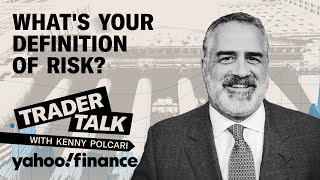
A Trader Talk YouTube episode (host Kenny Polcari, guest Dan Payne) linking political risk around President Trump’s threats to fire Fed Chair Jerome Powell with market volatility and investor behavior. The discussion emphasizes the importance of central bank independence, defines risk (volatility vs. permanent loss of capital), and outlines practical portfolio risk management: multi-level diversification (asset allocation, GICS sectors, security-level), using volatility opportunistically, and maintaining a disciplined, repeatable investment process (the "four P's" and "three R's"). The program closes with brief Fed appointment speculation and a pasta crudaiola recipe segment.
Questions this video answers
11 GICS sectors.
Down about 19.8% from closing high to closing low on April 8th; then up roughly 25% over ~67 trading days from that intermediate low.
Over 30 years in the asset management industry; has overseen nearly $2 billion in assets.
Stocks: 9.9% annualized; bonds: 6.2% annualized; average investor: 2.5% annualized (1995–2015 window).
Chapters
Foreign.
Welcome to Trader Talk, where we dish out the latest Wall street buzz to keep your portfolio sizzling. I'm Kenny Polkari and I'm coming to you live from the Yahoo Finance headquarters in the heart of New York City, a global hub where deals are made, fortunes are built, and the next market move is always just around the corner. Next, I'm gonna share my big take on Trump versus Jerome Powell. Sit down with Slate Stonewell's Dan Payne and then ch risk and management and then reveal my pasta crudiola recipe. Right, so let's just jump into the big take. Trump's repeated calls to fire Fed chair Jerome Powell are more than political theater. They warn markets, institutions and anyone who believes in economic stability. Whether you love Powell's policies or you hate them, one fact is apparent. Central bank independence is one of the anchors of global investor corporation confidence. When a president publicly threatens the head of the Fed, the message isn't about policy, it's about control. If the Fed is just another lever for political power, then the market's faith in the long term stability crumbles. Rates become campaign tools. Inflation targets get hijacked at home and abroad. Every investor has to price in a new kind of risk. Will tomorrow's rate move be about economics or about politics? That's how you inject chaos straight into the heart of the financial system. History is clear. The more politicians meddle with the central bank, the more unpredictable and volatile markets can become. It's not about liking Jay Powell or agreeing with every Fed decision. It's about protecting the delicate machinery that keeps capital flowing and inflation expectations anchored. The bottom line. When Trump threatens to fire Powell, it's not just drama. It's a giant red flag for anyone with skin in the game. Respect the independence of the Fed or get ready for the kind of volatility that doesn't end with a tweet the market might love. Excite it craves stability. Undermine that and all bets are off. I would love to welcome my guest today, Dan Payne. He's the Chief Investment Officer and partner at SlateStone Wealth. He's joining us right from Florida. He leads our firm's overall investment Strategy. With over 30 years in the asset management industry, Dan has managed portfolios across the spectrum from institutional mutual funds to high net worth and ultra high net worth individuals and endowments. Over seeing nearly $2 billion in assets. He's held senior roles at firms like Morgan Stanley, PNC Wealth Management and US Trust and brings a deep experience in financial analysis, research and portfolio construction. Please join me in welcoming Dan Payne to the conversation. Dan, it's such a pleasure to have you come up from Florida to join me.
It's great to be here. And quite frankly, I think I brought the humidity with me.
Yeah, I think you did too. Actually. I think it's cooler in Florida than it is here right now.
Absolutely.
Oh my God, it's so hot outside. Anyway, look, let's get right to it because we want to. About. I want to talk about with you, I want to talk about process and risk management and given the volatility that we've seen, you know, over the last couple of weeks, over the last couple of months. First it was with COVID then it's with Liberation Day, most recently in April. How do you as a portfolio manager manage risk and really deal with that volatility?
Well, that's a great question. And I really think we're in a, in a phase right now in the market. We're going to see more and more volatility.
Agreed.
So to take a step back, I think first you have to define what is risk. For a lot of individuals, risk is defined as losing money, or some people might define risk as not meeting a financial goal. You know, academia and us practitioners, we define risk as volatility or standard deviation around an expected mean return, correct?
Yeah.
But a lot of really elite investors define risk as the probability of, of a permanent loss of capital. And that's very important. And the biggest way to mitigate risk is really the only free lunch in finance, which is diversification. And to be properly diversified. I think there's really three levels of diversification. You have level one, which is basically your broad asset allocation, your stocks, bonds, cash, and you know, over the past decade we've seen a move towards alternative assets and other illiquid assets as another asset class. So you want to be diversified amongst the. The asset classes.
Okay.
The second level of risk control and specifically within the equities market is being diversified within your GICs sectors, your global industry classification sectors. And you know, as of now, there's 11 GIC sectors and people might think of them as the financials, the technology, consumer discretionary, communication services, industrials. So you want to be diversified amongst the different sectors, but then there's the third level of diversification, and that's where you come into the security specific individual issues and then within industry groups. So an example of that is that within the technology sector you have multiple industries, right? You know, you have software, you have subsectors or industries, you have software, hardware, networking, consulting, semiconductors. So, you know, it does you no good if you have a portfolio of 15 to 20 names, but they're all technology stocks or they're all software stocks because you're not diversified.
That's right.
And people found that out, you know, about 25 years ago in tech recovery, where the S and P was down roughly 50%, but NASDAQ was down 90, 90. So. And you know, people found out the hard way they were diversified in a number of names, but not on a sector or in even an industry specific.
But even, even in April, at Liberation Day, if you were really overweight tech, you got smashed because naturally tech was the outperformer and people got nervous and they went right away to sell the, you know, the High flyers, right, the Big Fours. And so you got wrecked.
But if they had some exposure to consumer staples and select health care stocks, and even in some of the consumer discretionary names, they were mitigated for some of that massive downdraft. So that's where diversification really helps.
As they should be, Right?
Correct.
That's exactly right. So talk to me. So when you're managing risk, right, the risk that we described, how do you actually use volatility to your advantage? Because volatility scares a lot of people. Right. And I understand, but explain to your audience how you actually use volatility to help you manage that.
Yeah, sure. So, you know, like I said earlier, you want to use volatility opportunistically. Okay, Volatility.
And that's the key word. Opportunistically.
Opportunistically. Because volatility actually, as a long term investor is your friend because that gives you the ability to add to positions that you want to add to and. Or add to names that are on your on deck list at a cheaper price.
Right.
And the really elite investors are the ones that can overcome the emotion of the day and focus on the long term because they have a specified process and a definition of what they want to own and why they own it. I mean, Peter lynch came up with that definition.
Right.
Know what you own and know why you own it.
Right.
So that gives you the conviction to be able to shop for merchandise when the merchandise is on sale. Because our industry, I think, is really the only industry in the world that when the merchandise goes on sale, people are the most reluctant to buy.
They run out the door.
Yes.
They want to sell everything and it.
Needs to be the opposite. Right, of course. You know, Warren Buffett said it best. You know, you want to be greedy when others are fearful. Correct?
Yeah. No 100%. And you know, and I use, I use another analogy. And I use it, I use it all the time because you hit the nail on the head. You know, when Blooming Yale's has a sale and they mark everything down 30%, everybody runs into the store and they buy three of everything because they're on sale.
Correct.
I think to myself, well, why don't you have that same mentality when Apple goes on sale or Amazon goes on sale or JP Morgan goes on sale? Only because there's nervous in the market, not because anything fundamentally has changed in that story.
Correct. And I think that goes back to how we started this conversation is how do you define risk?
Right.
Okay. If you define risk as losing money, yes, you're going to be very reluctant. But if you define risk as a permanent loss of capital when the merchandise is on sale and you're buying very high quality companies cheaper, you make your money not when you sell the stock, but when you buy the stock at a cheaper price.
Right.
And that's a very hard emotion to overcome.
It is a hard emotion to overcome. And I, and you know, you, and I deal with it every day. Well, deal with it when the markets are under pressure and when the volatile, you know, certainly in April, you know, I was fielding calls all day long, people getting nervous. What should I do? Should I sell what you know? No, no, no, no, no, no. Just sit tight because to your point, know what you own and why you own it. So let's talk about that. Let's look at this portfolio. Let's talk about what's in there. Right? The biggest names and the biggest sectors, all fine. And in fact, we've seen the market rally back. And most people, I would say the majority of people, if you didn't, if you stuck to the plan and you didn't panic, you're better off today than you were.
Much better off. I mean, a great example of that is what we were down, what, 19.8% from closing high to closing low on April 8th. And currently as we sit here today, we're up 25% and roughly 67 trading days since that intermediate low.
Right. It's been a very much of a V. And I'll tell you, I was one to say I didn't think the V was gonna happen. I thought it was gonna be more volatile. But in fact, the V did happen. And now market are higher than where they were and many of those names are higher than where they were. Right. Sure, they got beaten up, but again, the good names get beaten up, but they're the first ones that rally right back. Because when people settle down and they're not emotional, they realize, why did I sell that stock? I got to get back in.
And the cream rises to the top and the high quality all the time recovers quicker all the time. And that's where quality wins out.
Quality always wins out. Okay, hold on one second. We'll be right back. Okay, so, so let's talk about how you're able to operate, right. What gives you, what gives you the guts? I guess maybe it's just experience, but what gives you the guts to, you know, to, to not follow the herd necessarily or try to get clients not to follow the herd? Right. When the, when the overwhelming, overwhelming sentiment feels like you want to sell it, you know, how do you pull people back from the edge?
Correct. Yeah, that's, that's one of the hardest things we deal with, is dealing with that. Em, you know, really all investing and all of what we do is, you know, it's a social science. Okay. And so behavioral finance plays a big role in that. Overcoming your emotion and the fear and the volatility and the fear of losing money. So the way you overcome that is by having conviction. So how do you have conviction? I think that's kind of where we're going here. So you have to have a defined investment philosophy and process that you hang your hat on that when the going this tough, you, we know with conviction you can buy on the cheap.
And so I think the key word is. There is you have to have a process and you have to feel comfortable about your process. And so you've designed, I mean, you obviously have a process and you feel. But you've designed this process over your 30 plus years in the industry. So talk a little bit more about, about that process for you.
Sure. So the process is one part of it. So I mentioned the first part. So we like to call it the four P's which leads to the three R's. So the four P's is philosophy. You gotta have an investment philosophy. The second P is your process. Okay. The third P, and this is very important, is the people behind the process. You gotta have a good team of analysts, portfolio managers, and an investment committee behind you. Okay. And then the fourth P is obviously performance because what'll happen is that the three Ps will lead to the fourth P. And the way you generate performance over time is through that process and philosophy. You buy things on the cheap. You make your money when you buy a stock and not when you sell the stock. You Buy at a good, attractive valuation. And so the four Ps philosophy, process, people and performance. What you have to have, that is the four, excuse me, the three Rs. And your investment process has to be rigorous, routine and repeatable. Okay? So the four R, three R's lead to the four P's. And so through that, that's how you have the bedrock or the cornerstone to give you the gumption and conviction to buy. When the consensus and the herd says, sell, sell, sell, things are falling apart. The world's coming to an end.
Right? And it's so funny because when Liberation Day happen, everybody panicked. The mood went from in the weeks prior, the mood was very bullish and people got. And then suddenly the mood turns negative and everybody's screwing, yelling, which is to the point, especially when you get clients that both you and I are talking to that get unsettled. And you have to really, you talk them through the four Ps and the three Rs and why the process works. Correct. The fact is, look, if, if Apple or Nvidia or any of these, J.P. morgan, bank of America, if any of these stocks are pulling back because the market is nervous, that's not a reason to buy those stocks. That's actually more of a reason sell those stocks. That's more of a reason to buy them.
Yes, that's exactly right. Because the underlying fundamentals of those companies have not changed. And so all you have is just a temporary dislocation from price and value. So in your investment process, you should be able to determine what a stock is valued. Okay?
Right.
And then there's temporary dislocations both above and below the intrinsic value of the stock. And so therefore, when you have a market dislocation, that is the opportunity to load up on a company at a lower price than where you value the company.
Right? 100%. You know, I said that. I was on Fox one day and they asked me, it was in the middle of that sell off and Apple was down. And I'm, there's only, you know, would you sell your Apple? I said, sell my Apple, I'm going to back up the truck and buy more. Absolutely. It's crazy that people listen. First of all, first of all, I said to them, Apple makes $100 billion every three months. Think about that, just one minute. $100 billion every three months. And so, no, I'm not selling my Apple. But also, the story hadn't fundamentally changed, not at all, for any of those. Now when the story changes, then you have to have another conversation.
That's exactly right. And that's when you have to make a decision, had the fundamentals change so that the company will not be able to recover or compete further in the marketplace. Okay. And so during broad pullbacks, you want to own companies that when the pullback ends and the correction is defeated, those companies emerge stronger because they take market share from the weaklings.
That's right.
So you don't want to own the weaklings, you want to own the market leaders.
So in fact you do want to sell the weaklings. Right. That's when really you see the separation. Right.
And so I would say you'd want to avoid owning the weaklings from the very beginning.
That's why they get people like you and me.
That's why we have the process.
That's right. That's why the people like you and me. But, but you know, if people are doing this on their own, then they recognize the weak and the strong. Right. That's the weakest link in the chain. And that's when it becomes, I think, evident to them. But I think what's really interesting, and I think you make the point, it's really about having a process. Whether you're doing it with a wealth advisor and manager like you, or whether they're trying to do it on their own, they have to have a process that they're comfortable with.
Yeah. And you know, I've told people this over a number of decades. To effectively manage money, you got to have four things. And if you're missing one of the four things, you're not going to be able to do it as well as a professional. That's where it's a full time job.
Right.
You got to have time because it's a very time intensive process.
100%.
You got to have the desire. Okay? You got to want to do it. If you don't want to do it, you're not going to be successful. Okay. You got to have the access to information. So you know, 20, 30 years ago that was more important. Now I would say there's too much information.
So a lot noise.
Too much noise. So you got to ferret through the noise and know what information is.
Correct. Right.
So access to information. And the fourth attribute is expertise, Time, desire, access to information and expertise. And if you're missing one of those things, you're not gonna be able to do it as well as somebody's dedicating their whole life to it.
And you know what I think is important in that conversation, especially now, because you're like 20 years ago right. There wasn't nearly as much information available so quickly, but today there's so much, and I call it noise because a lot of it is noise.
It's information overload.
Look what happens when a post comes out on Twitter that could positively or negatively affect the stock. How quickly the market reacts. Because then you've got these smart logic algorithms that scrape and read every headline everywhere and then they react ahead of everything else.
And it might be frustrating at the time, but that provides the opportunity.
That's exactly what it does. It's exactly what it does. There are times when you say that you get frustrated when it happens, but then if you're agile enough, then you take advantage of it.
Correct. One factor I want to point out is a few years ago I noticed a study that Morgan Stanley advertised and this was done. I don't know if the study was done by Morgan Stanley, but it was done with 20 year data through 2015. And so that data started from 1995 to 2015. 20 years worth of data which obviously included two 50% plus corrections in the market, tech wreck and financial crisis. But it included the great bull market of the late 90s and the recovery from tech rec and included the few years after the financial crisis. That 20 year window. The annualized return for stocks was 9.9%. The annualized return for bonds was 6.2%. Then you had gold and other assets. The average investor performance during that 20 year period was 2.5% annualized, which was 20 basis points higher than the rate of inflation. So what caused that massive dislocation? 700 basis points from stock returns to the average investor returns and then, you know, 350 to 400 basis points on bonds to the average investor. It's because they could not master emotion and they sold and got out at the absolute worst time at Mr. Recovery completely. And you see what it did to their long term returns, right?
Yeah, completely. Completely. Wait, I want to ask you one more question because then we got to get on to the recipe of the day.
Can't miss that.
But what do you think? Do you think Trump replaces him or tries to replace him or do you think he lets him go till May?
I think the odds are he lets them go to May. However, I do think he's gonna appoint somebody in December when we have a Fed governor, Michell Bowman ends. And I think that replacement will be the pseudo next head. And so you'll have a period of a number of months where you have a lame duck pal, right? That's my perception.
And I agree with you, but I think then the market will then start to look towards this new person who will then most likely be more considered, more dovish and think of lower rates. And so that should help fuel the market.
And you know, don't forget the point. It's going to remove uncertainty.
That's right, remove uncertainty. Okay, listen, we got to get to the pasta Today. I'm giving you the pasta crudaiola. Now this comes from the southern regions of Italy, especially Apulia and Basilicata, where hot summers and abundant local produce inspired meals that don't rely heavily on the name. Crudaiola is derived from crudo, which means raw, because the sauce isn't cooked at all. It celebrates the raw sun, ripened tomatoes, aromatic herbs and grassy olive oil, the dish born out of necessity and tradition. Farmers and field workers would toss these just picked tomatoes, local cheese and pasta together for a fast filling meal that required little more than boiling the water so that you could cook the pasta. Orecchietti, also known as little Ears, is a classic Apulian pasta shape that perfectly cradles the tomato juices and the cheese. The ricotta salata adds a salty tang at the end, and the arugula provides a peppery contrast that brings the whole dish alive. Over time, the pasta crudaiola has become a staple of cucina povera, which is simple and honest food and is a shining example of how less is truly more in Italian cooking. You can scan the QR code that's on your screen for the full recipe and you can thank me. Look, that's a wrap for today's Trader Talk, but the conversation continues. Subscribe on Apple Podcasts, Spotify, Amazon Music, or wherever you get your podcasts. You got questions or topics you want covered? Email me@tradertalkahooinc.com because I'm always listening. Until the next time. Stay sharp, stay disciplined, and stay in touch. Take good care.
This content was not intended to be financial advice and should not be used as a substitute for professional financial services.
More from Kenny


Wall Street Is Celebrating| But Kenny Polcari Sees A Warning Sign | Kenny Polcari


Stocks Crashed After The Fed Move But Here’s What Investors Missed | Kenny Polcari
9/11 25 Years Later: Bond Market Warning, Oil Above $100 & Fed Rate Hike Fears | Kenny Polcari

Oil Hits $97, Bond Yields Surge & PPI Inflation | Markets Brace for Fed Decision | Kenny Polcari
The Fed Has a New Problem | Oil | Inflation | and Rising Yields | Kenny Polcari

The Fed Never Promised a Rate Hike | But Markets Panicked Anyway | Kenny Polcari

Nvidia Crushed Earnings | but the Biggest AI Opportunity Is Still Ahead | Kenny Polcari