How AI stocks and earnings are driving the market rally
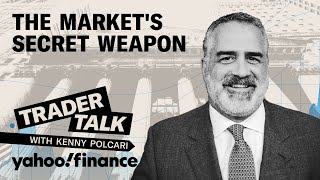
A Yahoo Finance Trader Talk episode (host Kenny Polcari interviewing Adam Johnson) discussing how to read earnings reports and how AI and earnings are driving the current market rally. Key themes: focus beyond headline beats/misses to guidance, cash flow, costs and tone; bullish case for continued rally supported by rising earnings, employment, economic growth, business-friendly policy and a large AI capex cycle (Microsoft/Google spending $10–12B/quarter). Use-case companies mentioned include Symbotic (warehouse automation for Walmart) and Sterling Infrastructure (data-center buildout). They also discuss Fed policy (Powell cautious on cuts), macro data (CPI peak ~9.1% down to ~2.5%), GDP ~3% (imports down ~30%), and labor-market strength. The tone is generally optimistic/bullish about markets and AI while acknowledging possible near-term pullbacks and job displacement effects.
Questions this video answers
August 6, 2025.
$10–12 billion per company per quarter.
All 47 of Walmart's warehouses.
CPI peaked at 9.1% and is described as now in the mid-twos (~2.5%).
Rates were taken from near 0% up to about 5.5%, and have been cut to about 4.5%.
Chapters
Foreign.
Welcome to Trader Talk, where we dish out the latest Wall street buzz to keep your portfolio sizzling. I'm Kenny Polkari coming to you live from the Yahoo Finance headquarters in the heart of New York City, a global hub where deals are made, fortunes are built, and the next market move is always just around the corner. Coming up, I'm gonna share my big take on reading an earnings report. I'm gonna sit down with my very dear friend Adam Johnson and and then I'm going to share my risotto Siciliano recipe with you. So let's jump into the big take. Most people see an earnings report and immediately look for one thing, did the company beat or miss expectations? But that's not how pros read the tape. Earnings reports are more than just a scoreboard. They're a playbook for what comes next. If you only focus on the headline numbers, you're missing the real signals that could move stocks. Here's what matters. Check the top and bottom lines. Did revenue grow, profit margins hold up, and were earnings per share higher or lower than expected? But don't stop there. Dig into the guidance. What is management saying about the next quarter, next year and the health of their business? Are they raising their outlook, holding steady or warning about tough times ahead? The market cares far more about the future than it did about the past. Now look for trends and red flags. Are costs creeping up? Is cash flow shrinking while profits look stable? Did the company beat estimates by slashing expenses instead of driving real growth? What's happening with debt, inventories and customer demand? Read the management commentary and question and answer for hints of confidence or concern. The tone often says more than the numbers. Most importantly, pay attention to how the stock reacts. Sometimes a beat sells off and a miss rallies that tells you the expectations were too high or too low or already baked into the price. The smartest investors know the market is always forward looking and and full of surprises. The bottom line? Learning to read an earnings report is about connecting the dots, not just checking the boxes. Get beyond the headlines. Listen for what management isn't saying. Watch the price action. That's how you turn information into an edge. Now, once again, it is my great pleasure to welcome my dear friend Adam Johnson back to the show. Adam was my first guest and he's a portfolio manager for the American Ingenuity portfolio at Bullseye Investment Group and and the founder and author of Bullseye's Brief, a weekly growth focused investment letter spotlighting what he calls American Ingenuity in publicly traded U.S. companies. He's also regularly appears On Fox Business as a featured contributor. Before founding bullseye, Adam spent five years anchoring daily business programs on Bloomberg Television, interviewing CEOs, heads of state, Nobel laureates and prominent investors. Before his broadcasting career, he built a three decade Wall street resume trading stocks, options and oil at ING Asset Management, Louis Dreyfuss and Merrill lynch, where he began his career. A Princeton University graduate with a degree in economics, Adam has consistently brought a passion for American innovation and data driven growth to his work. It is always a pleasure to have him on my show. Please join me, ladies and gentlemen, welcoming my dear friend, Adam Johnson. Adam, it is such a pleasure to.
Have you shaking hands.
Yes, we are. And by the way, I got to tell you, congratulations. You just recently got married. I think that's great. Great.
There it is.
I see it. Wedding ring on your hand. It's been a long time coming, but.
It has been.
But, but you seem very happy and the pictures I saw were just stunning.
Very happy.
Good. Okay. So listen, a lot's been happening, right, in the markets. We could talk broadly about a whole bunch of things. You know, in fact, we could talk about tariffs, which were front and center, which seem to now be kind of left of center now. Not, not even front and center.
Kind of like inflation, kind of like recession, Kind of like that whole laundry list that all the gloom crew guys like to talk about.
Right. And they talked about for a while, creating all kinds of angst. We saw that happen in April, but then we saw the market kind of back off and reassess.
Yeah.
And then we saw this magnificent, really V shaped recovery take place. Which, by the way, I have to tell you, I was, I was one that wasn't sure it was going to be a V shape. I thought it was going to be a little bit more volatile. A w. Yeah, Yeah, I really did. So tell me, give me your thoughts on why it ended up being V shape and where some investors went wrong.
Well, actually, I would just offer one caveat. You said in the past tense how it ended up. No, it hasn't ended. The rally that we are in the midst of right now is going to continue, I think, for a very long time. I think that we in some ways have only just begun to see a series of new highs. It won't be a straight line. You know, as you and I both know, markets never are right.
And it shouldn't be, by the way.
No, it's not healthy. And you typically get three 8 to 10% corrections every year. You get three over the course of the year. And we Certainly had the one in March, April. So, yeah, come fall, there may be some sort of pullback. But if you're looking out towards December, January, next spring, next summer, I think we're gonna continue to see new highs for several reasons. We have earnings that are going up. We have an economy that is growing. We have people who are employed. I mean, arguably, that's the three E's, Right?
Right.
Earnings, employment, and the economy. To that, we now have an administration in Washington that is business friendly, that has cut the red tape, gotten rid of regulations. We have the. Forget what you want to call it, but we'll call it the big beautiful deal, just because that's what a certain someone likes to call it. And what it did, I. Most importantly, Kenny, besides giving a certainty and besides giving us tax cuts, et cetera, I think what it really did was stimulate growth and investment by allowing or incentivizing companies to invest. You go out and you buy equipment. You can deduct the full value of that equipment in year one right up front. It's a 100% depreciation. And so that is just this huge tailwind to actually go out and buy, buy the stuff that we need to make stuff. So I think that's huge. And then finally, what I would add is that the AI Capex cycle is so powerful. I mean, think about it. Microsoft and Google are each spending 10 to 12 billion dollars per quarter.
Yeah, right. It's unbelievable. It's unbelievable.
And that, yes, that has a multiplier effect when companies like that are spending that kind of money. It percolates through the economy. It touches so many other aspects. And so there's just a lot to like, Kenny. And that's why I sort of, you know, softly corrected you when you suggested that this rally, you know, was something of the past. No, it's something of the past, present and future.
Yeah, no, I agree. I by no means suggest that the rally itself is over. What I mean is the doctor might be a little bit ahead of itself, might be tired, and I wouldn't be surprised, actually, we're coming into that August, September timeframe, we. Which is always a little bit anxious for the markets for whatever reason, but it is. And so, and so, just from, from a, from an investing perspective, maybe you just want to. What you have is investors invested. If you have more to put to work, maybe just wait a little bit and see how the market reacts. Look, if the market continues to go higher, you're participating because you're invested, you investors, whoever it is. Right. As long as they haven't taken themselves out of the market, which I would imagine most retail investors have not.
So I can speak to that because most of my clients, whether they're Bullseye Brief Investment letter clients or whether they're Bullseye Investment Group money management clients, very similar approach, Kenny. And I'm so proud of my clients. Nobody panicked, nobody took money out, nobody said, oh my gosh, do you think it's over, Adam? No, it's not. And for all the reasons we just discussed, it's only just begun. And so I had a number of clients that, that actually put money in.
So.
And what a difference, because the pros on Wall street were all negative and.
Shorting and selling money out. And it's funny because also in the wealth management business, I saw that same thing. Retail investors that maybe two or three years ago would have gotten very anxious and nervous, in fact called up and said, are we putting more money to work? You know, there's been this massive, very swift correction.
Yes.
In names. That there's nothing fundamentally wrong with them.
Yeah. So two comments. You and I have been pros on the street for a long time, and I think one of the things that I've observed that you probably would agree with is that somehow bears always sound smarter than bulls. Right? And so people want to say, oh, well, have you thought about this? Or thought about that? And it's as though the bears, these pessimists, have seen something that we gullible bulls haven't seen. So they must be smarter. And that's not true.
No, no, no, it's not true.
In fact, a lot of times you end up being dead wrong. I mean, Mike Wilson at Morgan Stanley, how many times has he tried calling a top. Jan Hatzius of Goldman Sachs, the economist there, started to play that same game and then reversed course. And I think these guys should just zip it and.
But it's good for their business. Right.
Because that's point number two. As a pro, I used to work for a guy who would walk in and he'd sort of put his arms on the conference table and he'd say, okay, how are we gonna make money today? Well, I'm sorry, but there's not a trade to do every day.
100%. And that's the other thing that I think people need to understand. There is not a trade to do every day. And people should not feel like, well, if you're a day trader, there's a trade to do every day, but if you're a long term investor, there is not a trade to do every day.
And by the way, if you're a day trader, go back to school and learn to read balance sheets and read everything you can get your hands on and become a fundamental investor. Because if you really want to make money over time, and I'm talking about companies that go up 6, 7, 8, 9, 10 times over several years, you're not going to do that as a day trader. You do that as a fundamental analyst. It's harder, but that's how you make money.
Yeah, 100%.
And you're also more tax efficient. You're not giving the government half your profits.
Yeah. So listen, let me ask you a question, because the theme certainly is AI. Let's just put it on the table. The theme is AI now it's going to be AI in the future. It's not going away.
Right.
I still think we're very much in the infancy stages of AI and what. I mean, look at what has happened to things like ChatGPT or Grok or any other just in the last year, and the way that they've become even more sophisticated, you know, the way that.
And more popular.
More popular. You can actually talk to it. It's funny. You talk to it like you and I are having a conversation.
Right.
And it responds. Now, it's not always right. It does have those hallucinations. I get it. Which is why you need to be on.
You and I aren't always right either.
No, but I'm not having.
I mean, we're right most of the time, right?
Okay. Yes, we are. But so let's talk about how AI boldly is. Is driving the market in terms of semis, energy, utilities, data centers.
Yeah. So there are a couple of ways to think about AI. The first way, and the obvious way is just sort of the intellectual aspect of it. What is it? How does it work? Who's writing the code? Okay, fine. And then there are the use cases. And that's, I think, for many of us, the far more tangible and ultimately profitable way to think about it. In other words, you've got this AI program over here. How do we use it? How do we use it to drive sales? Or how do we use it to drive a car or fly an airplane or.
Hold that thought one minute because we're going to take a break. We're going to come right back.
Great.
All right, so let's pick up on where we just were. How do you use it to drive either your business or drive a car? The way you just said. So continue that thought.
Yeah. So I'll give you an example and I'll talk about AI through some of the companies that I invest in. So we make it real because ultimately that's what we're trying to do here is figure out how to make money and put AI to work. Company called Symbotic Sym. This company is automating warehouses. In fact, they are automating all 47 of Walmart's warehouses. Get rid of the people and replace them with robots. They are faster, they're more efficient, they don't make mistakes, they can work 24 7. It's just beautiful to see a robot.
They don't get sick, they're on vacation.
It's a beautiful, beautiful ballet. When you see these robots humming through a warehouse.
Okay. Which then brings up. But let's be honest and say something. It is true, it might be a beautiful ballet. But then think about what happens to all those people that just got displaced.
They need to go find other jobs.
Correct. And so where are they gonna find them?
Well, I don't know. Some of them might go into construction. We've got a housing shortage in this country. Some of them are going to learn.
A trade shortage.
Yeah, yeah, for sure. In fact, it might be that you're better off learning how to do H Vac or plumbing. I mean, with all the data centers going in, we need electric, have enough electricians.
And you need air conditioners too, because you got to keep those data centers cool.
Yeah. And by the way, with all these new robots, we're going to need people who can maintain and service the robots. That is a very specialized tech trade. So it's not as though suddenly jobs are just gone. It's just that new jobs are replacing some of the rote ones that are no longer needed. And by the way, you know, if you're lamenting the fact that, oh gosh, we don't need 52 of those workers who were picking shelves and stuffing boxes. Well, that's not a job that anyone should aspire to do for very long anyway. Right. I mean, that's not a career.
No, it's not.
You don't, you don't go to Walmart and pack boxes for 27 years.
Right. You know, well, you're right.
I mean. Right. I mean, you know, it's a job you do for a period of time. It's what I would call a gig job.
Right.
And that's fine. You know, everyone needs a gig job every now and then. But so, you know, I don't think we should torture ourselves over the loss of those Kinds of jobs. But as I say, there are new jobs coming out. So symbotic. A company that uses AI. That's what I would call a use case. The data centers. Well, just building the data centers. Sterling Infrastructure, STL, they keep guiding up because we're building so many of them and wiring them and then all the equipment that goes in them.
So let me ask a question.
Yeah.
But do you think there's a point where we're overbuilding or. No.
Well, no, we've overbuilt when companies start to tweak their guidance.
Right.
And that's not going to happen anytime soon. There's a backlog.
Right. Yeah. No, I agree. I just didn't. You know, somebody. I was reading a story, I think it was in. I think it was in the Journal, and they were worried about potentially getting to that point where we've overbuilt.
Remember?
I don't think we're there yet.
Remember what I said about pessimists.
Yeah.
And bears. They always sound smart. Hey, but have you thought that we might overbuilt? Okay, I appreciate that, Sherlock, but we're nowhere there.
All right, so let's just talk about one other thing because it's right top of mind as we talk about what happened with the Fed. Right. With the latest Fed meeting in July. Now, nobody should have been surprised that there was no cut because it was very clear there wasn't gonna be a cut. And I don't necessarily think anyone should have been surprised that he didn't commit to a September cut. I think Jay Powell played it the way Jay Powell always plays it.
Yeah.
He says if the data demands it, then we'll do it. I'm not saying it's not gonna happen, but I'm not saying it is gonna happen. I don't necessarily think that that was a negative for the market. Yet the Al goes right away through a temper tantrum when he didn't promise.
Well, the market, you know, wants.
Right.
The market cuts because rate cuts help everybody. And critically, when you lower interest rates, all of us here on Wall street suddenly can pay more for stocks because we discount future earnings back to the present at a lower interest rate.
Correct.
So, yes, you can afford to pay more today. And that's really what drives the market.
Yes, you can. But if interest rates. If, if, if it, if the economy doesn't demand.
Yeah.
That interest rates fall at the moment. Because, look, when you look around, the economic data remains fairly strong. Right. The labor market was argument. Exactly. Right. The labor market remains strong. Right.
Right.
I don't see it going off the edge. And to his point, he said he's not really sure where the tariffs are really going to end up in terms of price dislocation or. Look, the latest PC figure came out a little bit harder than expected.
Yeah, what I do.
It's a tiny bit. Tiny bit, but. Right. But I think what it does is it supports Powell's argument saying, look, I just want to be more patient.
So I have a couple of comments. Number one, cpi, the Consumer Price Index, was really low, as we know, coming out of COVID and then it shot up with all the money flow. It went up to 9.1%.
Yeah.
It's now down in the mid twos. It's like two and a half. So it's not back to the 2% target. But from 9.1 to mid twos, fine. And Mr. Powell took interest rates from zero, which was too low in the first place, up to five and a half to, you know, fight inflation, and he's only cut them down to four and a half. So inflation has come down from 9.1 to call it 2.5.
Right. And yet he's only cut by 100 basis points.
I mean, so I think, yeah, I think we deserve a couple more cuts.
Listen, I agree that cuts should be coming. I'm just not sure right now, like I'm in the camp that I think he's played it right now. That doesn't mean, I don't think in the fall there should be a rate cut or two.
Right.
But you know, Trump stands up and says, yeah, he's got to cut him by 300 basis points. I think that's ridiculous. You can't.
I would agree that's too much. That's too much.
Well, you can't even. He wants him to do it in one fell swoop. You certainly that. But I also think 300 basis points, even over a period of time, unless the economy's going way off the edge, is way too much.
Yeah, of course it is. I mean, if you cut, if the fed cut by 300 basis points, we would all be saying, oh my God, what do they see that we don't? There's something.
So that would be a negative story.
Oh, it'd be very scary.
That wouldn't be a market that would sell off on it. That's right. That wouldn't be a positive story.
So I'm gonna introduce another wrinkle or dimension or facet, if you will, to this conversation, and that is, I think that Mr. Powell is thinking about his legacy, okay, he is out of there in 10 months and that's if he serves his full term, which I think.
He will, which I think he will.
And so I think he's starting to think about how will the world remember me. And imagine if he were to have cut rates and in the middle of the summer and then we come into the fall and all of a sudden inflation starts to percolate and now he's got to raise rates in December, January 100%. Guess what? He, he is going to be going out in May and he's going to be remembered as the guy who blew it. Who blew it in the bottom of the ninth. He blew it. He had the game tied up and he blew it. And I think that haunts him. And I think that's one of the reasons why he's waiting.
But look, that happened. We saw that happen. Well, you and I saw that happen because we were alive the last time that happened in the late 70s when they prematurely cut rates and then inflation just absolutely spun out of control and Paul Volcker had a jam rates of 21% to absolutely bring the economy to a complet complete alt. Right, Right. Nobody wants to see that happen again. To your point, I do think in the back of his mind that's what he's thinking. He does not want to be the guy that's, that's been remembered as, you know, blowing it in the ninth inning.
And meanwhile we just got the GDP report and I know there's some people say, yeah, but it was only up 3%, which is a lot. It's a lot because imports were down by 30%. And so that re. Inflated GDP. Okay, fine, we can argue about that. But look, 3% GDP is 3% GDP.
Correct.
It's pretty good. And so he's saying, well, that's pretty solid. So it's not like the economy needs lower rates. We might want lower rates, but it doesn't need.
Right, and so that's my argument. Right. I mean, I understand you want it, but does it need it at the moment? And I think that's, that's where the divide is amongst.
I think he's a little late. I think he could already have cut rates by 25 or 50 basis points. You know, that doesn't make a huge.
It'S not going to make a huge difference. Agreed. It wouldn't have made a huge difference. So had he cut them by another 25, it would have been fine. Right. It was gonna take him to four, four and a quarter versus four and A quarter?
Four and a half. You know what I'm really looking forward to? When we don't even have to talk about rates in Jerome Powell anymore. I feel like it's such a hackneyed conversation. I mean, really.
Who in your mind do you think is the nominee?
The two Kevins are the guys everyone's talking about. Kevin Warsh, former Fed official, very serious man, and Kevin Hassett, the happ.
Right.
So they're very different people. I think Kevin Hassett is the warm, fuzzy one that is gonna be easier for people to comprehend. I think Warsh is a little more like Jerome Powell.
Very reserved. Yes. And I agree. But let me ask a question. Do you have a sense that Scott Besson could be the dark horse in this race?
I hope not. I want him where he is. He is the adult in the room. He is the Treasury Secretary. He is watching the dollars and cents of this economy, and he has the President's ear. He is the President's emissary. He's like the consigliere.
Yeah. No, and actually, you know something? You're right. He is the adult in the room.
Oh. Yeah.
So he should probably stay right where he is. I think he's fantastic, but I think he should stay right where he is.
I mean, I wish that we had, you know, 20 Scott Bezens, one for every secretary position, and then all the administrators and all. I mean, he's. He's fantastic. What an even keel. What a great presentation. Strong judgment, extremely smart.
Yeah.
And I think a nice person.
Yeah. I agree with you 100%. Adam, we've run out of time. Yep. At this meeting. I want to do this again with you in a couple of months, as we always do, because I so enjoy the conversation.
Me too.
But at the moment, I want to introduce my recipe of the day, which is risotto Siciliano. It is a unique southern Italian spin on the classic northern risotto dish, blending the creamy comfort of rice with rich, bold Sicilian flavors. Now, while risotto originated in the north, most famously in Milan, with saffron and parmigiano, the Sicilian version reflects the island's multicultural culinary heritage, shaped by Greeks and Arabs and Spanish influences. Sicily's take incorporates saffron introduced by the Arab traders, bechamel, a French import from the Bourbon rule, and local favorites like scamozza cheese and prosciutto or ham. It's a dish of abundance, often baked to form a golden crust reminiscent of traditional timbali or setu di Russo, elaborate rice casseroles served at family celebrations more than just a risotto, it reflects Sicily itself, rustic, hearty and layered with history. Today it's enjoyed as a comfort food and a festive dish served in homes across the island and beyond. Look, you can scan the QR code on the screen for the full recipe, and you can trust me, you can thank me later. Now that's a wrap for today's Trader Talk, but the conversation continues. Subscribe on Apple Podcasts, Spotify, Amazon Music, or wherever you get your podcast. You got questions or topics you want covered in? Email us@tradertalkahoo inc.com because we're always listening. Until the next time. Stay sharp, stay disciplined, and stay in touch. Take good care. This content was not intended to be financial advice and should not be used as a substitute for professional financial services.
More from Kenny


Wall Street Is Celebrating| But Kenny Polcari Sees A Warning Sign | Kenny Polcari


Stocks Crashed After The Fed Move But Here’s What Investors Missed | Kenny Polcari
9/11 25 Years Later: Bond Market Warning, Oil Above $100 & Fed Rate Hike Fears | Kenny Polcari

Oil Hits $97, Bond Yields Surge & PPI Inflation | Markets Brace for Fed Decision | Kenny Polcari
The Fed Has a New Problem | Oil | Inflation | and Rising Yields | Kenny Polcari

The Fed Never Promised a Rate Hike | But Markets Panicked Anyway | Kenny Polcari

Nvidia Crushed Earnings | but the Biggest AI Opportunity Is Still Ahead | Kenny Polcari