How Black Monday changed Wall Street forever
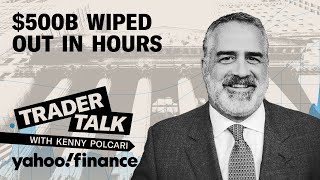
A Trader Talk episode (host Kenny Polcari) interviewing John Parasco, a First Boston trader, about the 1987 Black Monday crash. They recount conditions leading up to the crash (Plaza and Louvre accords, rising rates, stretched valuations, 40% YTD Dow gain by August 1987), the accelerating selloff the week of Oct 14–19, and vivid floor-level details on Oct 19: frantic phone calls, specialists seeking firm capital, super messages (e.g., a 7 bid for 1M AMD), catastrophic intraday moves (Dow -508 / -22.6%), and market aftereffects (circuit breakers, scrutiny of program trading). The episode is both memoir and market-structure explanation from participants' viewpoints.
Questions this video answers
508 points, about 22.6% (one session)
Approximately 2,722
A 7-dollar bid for 1,000,000 shares of AMD (via First Boston capital)
Plaza Accord (1985) and the Louvre Accord (early 1987)
Chapters
Foreign. Welcome to Trader Talk where we dish out the latest Wall street buzz to keep your portfolio sizzling. I'm Kenny Polkari and I'm coming to you live from the center of the action. Where markets move, fortunes are made and history is written. One trade at a time. Today we're gonna look back at one of the most dramatic chapters in market history and we're gonna get a firsthand account of from someone who lived it. My next guest, John Parasco was a client of mine who traded tech, media, telecom and the cyclicals at the First Boston Corporation, one of the Street's powerhouses at that time. His seat gave him a front row view of the chaos and a unique perspective on how it all unfolded. The early 1980s were a boom time. Reagan's tax cuts and deregulation gave businesses confidence again. Volcker's war on inflation sent rates falling. The economy was growing, unemployment was dropping and corporate profits were climbing. From 1982 through 1987, stocks nearly tripled in value. Investors believing the good times would never end. But beneath the surface, the risks were building. Valuations were stretched far beyond history. America's trade deficits ballooned. Interest rates actually started to creep higher again. And a new Wall street technology program, trading and so called portfolio insurance created a hidden trap one few fully understood. By August of 1987, the Dow had soared 40% that year, peaking at 2722. The pace was unsustainable. By October the selling began first slowly, then all at once. On October 19th it hit black Monday. The Dow Jones collapsed. 508 points. A staggering 22.6% in a single session. Still the largest one day drop in history. The S and P fell more than 20%. Half a trillion dollars in market value was gone in six hours. Future selling spilled onto stocks and and the computer driven strategies designed to protect portfolios instead poured gasoline on the fire. Selling begot more. Selling markets around the world crashed in unison. The 1987 crash left lasting scars. It exposed the dangers of leverage, revealed the flaws of program trading and gave birth to circuit breakers, safeguards to stop panic in its tracks. And it reminded every investor that that even in the strongest bull markets, a single day can change everything. My next guest, John Prosco was a client and a very dear friend of mine. And he traded tech and cyclicals at what was the First Boston Corporation, one of the largest investment banks on the street at that time. His position gives him a very specific perspective on this historic meltdown. Ladies and gentlemen, join me in welcoming John to the conversation. John, it Is a pleasure to see you.
Nice.
You look great.
Nice of you to get an old war horse down to the barn.
Buddy, I. Listen, when this idea came up, you were the first one that came to my mind. Listen, I want you to set the stage first. Just kind of set the stage about what was happening at the time. And then we'll get into what happened on that day.
Well, there was a confluence of events that took place leading up to the crash. You had international agreements like the 85 Plaza Court of G5 nations. The idea of that was to stabilize the dollar and put a floor underneath it. Then came the Louvre chords that was attempting to adjust currencies in a specific trading band. That's tantamount to sticking your head in the lion's mouth and hoping it doesn't bite down. Because the currency markets are known for their volatility and they trade amazingly deep.
Right. But. But these two accords happened during the summer, into the fall of 1987.
Well, the Plaza Accord was in 85. Okay. And then the Louvre Court came early. Early 87.
Early 87, yeah. Okay.
So that didn't work. Clearly. From January to September, the Fed started tweaking, rates higher.
Right.
So there was a lot of concern, the market being up 40% already.
And that year alone, it was already up 250%.
Right. You had the bull run from 82 to 87. Right. 776 in the Dow to 27 and change.
Right.
So, you know, things were ripe for volatility, up 40% and having a diverging bond market.
Right.
The bonds were not going along for the party at all.
Right. And there was, there was kind of building global economic weakness, really, as I, as I remember, right around the world, Asia, Europe, the U.S. so you had.
The overvaluation, the widening trade deficits, the declining dollar was a concern. And the selling pressure really started to mount the week before the crash.
The Wednesday, Thursday, Friday.
So on Wednesday, October 14, you had the House Ways and Means Committee come out and they introduced a bill to limit the tax benefits on LBOs. That was a dampening effect. Then you had the Commerce Department issued trade deficit data that was way above expectations. Market wasn't happy. The sell off starts and we're down 4% that day.
Right. And it's funny because on the Wednesday, Thursday, Friday, as the selling started, we sold off. We had significant sells and we close on the lows each day, which never sets up very well for the next trading day.
Thursday, the sell off continues. We're down another two and a half percent. That's followed by a down 5% shot in London. Right. Coming into Friday morning. Now you have triple witching that Friday. Exploration of the options and futures, enhanced volatility like we needed it. Market's down 4.6% that day, so we're down 10% for the week.
In three days we're down 10%.
Right.
Which was a huge move. It's a huge move anyway, but it's a huge move then in three days.
So you expect people are going to exhale over the weekend, reassess. Wrong. Saturday, Treasury Secretary Baker issues some comments hinting that he might want to devalue the dollar. Instead, foreign investors get really rattled about the prospects of a currency war.
Right.
Over the weekend, certain mutual funds back then allowed customers to redeem their shares at Friday's closing prices. Okay, you come in Monday morning, the prices are vastly different. Now the mutual fund complex has to sell many more shares to have enough cash on hand to redeem those shares.
Right.
So that's even more silly. Right. So that Friday I take home a 20 year chart book and on the top of the list I write prices I hope I never see. The object of the exercise was to have a quick reference and three deep levels for my most liquid big cap stocks. That you were trading in that I was trading in anticipation of deep institutional liquidity needs on Monday. Right. So the object was get in early. I get in at 6. The biggest concern I had was getting to the men's room, getting back to my seat and strapping in.
All right, wait, hold, hold it down one minute because I just want to. Now here's me. I get up, I go to bed Sunday night at 9 o', clock, I get up at 5, 4:30 on Monday morning. I'm oblivious to what's happening around the world. I take a shower, I get dressed, I get down to the train station, I grab my coffee, I grab the Wall Street Journal. Well, Monday's Wall Street Journal is telling me what happened on Friday. It's not telling me Monday's already passed in Asia, it's already Monday morning in Europe. And it's still, you know, it's still dark here in the United States. Right? And so I come to work completely oblivious because there's no Internet, there's no Bloomberg on the floor, there's no television or radios. I have nothing with the newspaper. I'm sitting on the floor, I don't know, seven o' clock in the morning, drinking my coffee, going through my tickets and then the phone rings. You take it from here.
Well, clearly the world was blowing up overseas. Hong Kong was a mess. And I felt it was critically important to have the floor brokers all on the same page. So I wanted him to understand my mindset and what we were apt to face. So I told you that the world was absolutely blowing up.
You picked up the phone, you said to me, hey, bro, what are you doing? I'm having my coffee. And you said to me, do you have any idea what's going on? I go, no, what's going on? Okay, go ahead.
So I told you that the world was on fire and it was blowing up.
And. And I didn't honestly, I didn't really. I honestly did not understand the depth of what you meant.
So at that point, you know, everybody had a pigeon and notes strapped to the pigeon's foot. So communication was vastly different than vastly different. So the conversations started early. You know, I had a good group of floor brokers and then I had three ninjas, as I like to say, the special forces. And Kenny, you were one of them, obviously, the special force. Your ability to communicate, your relationship with the specialists, and most importantly, you were smart.
All right, hold that thought. We have one minute because we're going to take a break. We'll be right back.
The conversations started. I wanted all the floor brokers on the same page. I wanted them to know, most importantly, that if they didn't have the ability to get back to the phone and talk to me, don't be afraid to pull the trigger.
Right.
Whether it's on the buy side or sell side, just stay in motion and things will get straightened out at some point. So I had the utmost confidence in obviously not only you, but the floor brokers that work for the house as well. So we're liquidating the entire portfolio is the first phone call I get. Who's that from? A major smart hedge fund.
Okay, so just explain what that means when they say we're liquidating the whole portfolio.
Well, this was interesting and it set the tone, right? Because Joe says to me, we've broken up our entire portfolio alphabetically. We're using three firms. Goldman Sachs, Solomon Brothers and First Boston.
Right.
So you guys get the back nine letters of the Alphabet.
Right.
Well, that means I was faced with 400,000 units for sale right now. Unisys had closed at 337 on Friday. And I knew the specialist and how he operated. It was looking to 70 and I advised.
So wait, when he says it's looking to 70, that was the pre market estimation of where that stock was going to Open not on necessarily 400,000 shares, far from the 400,000, because everybody was a seller, right? Every broker in the crowd didn't have a buy order. They all had sell orders, right.
So I advised Joe, I said, listen, I know he's going to open it deep in the hole. It's looking around 270. If you'd like me to take you out of the hole position, I will, but I don't advise that. I think you sell a third on the opening and then feed the back two thirds into a bounce. So that's what he did. He. He bought in and we sold a third at 270. We sold the last two thirds between 290 and 310 in the ensuing two hours. And then we were headed back down, of course, right?
The market then turned again, right? Because when it opened deep in the hole, there was that initial bounce which didn't last for very long. And then boom. Because we get hit with continually. It hit with waves of selling, right where the program trading had come in.
Absolutely. You know, the conversations were amazing in retrospect. The Motorola specialist came to the phone and he needed help in opening up the stock. Now, about two to three weeks prior, I didn't like the market action. My seat was a defensive street on Wall Street. So I was always on the wrong side of the trade. When markets are going down, I'm getting long from customers, right? Markets are going up. I'm getting short, short from customers. So I was concerned about the downside. And I set up what they called a synthetic put in Motorola, where I'm short stock and I'm long calls, right? So on a big break in the market, I more than make up for the premium I paid for the calls and the residual after that was all profit, right? So he comes to the phone. He said, johnny, listen, I've been to two other firms and they were not helpful. I need somebody to buy 150 to 200,000 Motorola. So I said to Al at the time, how far down are we looking? He said, we're looking down 13. I said, okay, I'll buy up to 200,000. I ended up buying 150,000. I took in my short of 100 and went net long 50, right? My next conversation with Al was, listen, we're partners. You're not going to be able to have conversations with me. Sell. Whenever you're making sales for yourself, sell mine too, right? And that's how the trading proceeded.
So what's interesting and what people really need to understand about this conversation was the specialist was typically the one that managed the flow in the stock. On this particular day when the specialist came to the phone and said he needed help, he needed someone else to come in on the buy side to, to help him blunt the selling that was coming in. So Johnny was a, was a, a trader at First Boston. So he was using First Boston Capital to step in, to actually help out, right? The same way Goldman was doing it. Sondland, they were all doing it. They were using their own firm capital to try to help blunt the, the sell off.
Right? Now the specialist system was vastly undercapitalized, under capitalized, massive. And it clearly was a weakness. We knew what the exposure was. I think for the most part, guys, attitudes were, listen, do the right thing, help each other out, right? And let's try and get through this.
And it was, I will say from where I stood on the floor, that was very much kind of the tone. Everyone really came together to try to. It was a disaster, but everyone was trying to do what they could to help out, right?
So you know those types of conversations. I would send out what they called a super message back then, which is an indication of what you would pay for a large amount of stock.
A super message out to the street. When he sent out a super message, it went out to clients, the hedge funds, the mutual funds standing up saying, I'm willing to pay X for this amount.
So I recall, I recall one super message I sent out at Advanced Micro devices. I sent a 7 bid for a million shares. And my boss wheeled around and said.
What are you doing?
I said, nikki, two things, right? It's the only stock I know where I have seven points of downside and they have $5 in cash on the balance sheet. So he said, okay, but you know.
And that super message when he said that seven bid for million, he literally, he literally sent out the message to the street saying he was willing to pay $7 for a million shares of AMD. Now it wasn't him personally, it was him. First Boston, that's what that meant. So.
By, by the ensuing two hours of trading, all of a sudden you look up and the trading floor was ringed with investment bankers and analysts that had left their seats and come down to the trading room and they would just witness to the chaos and carnage.
That was going on at First Boston, right?
It was absolutely insane.
And here on the floor, it was just, with every minute it just got worse and worse and worse. Like we never could catch a breath, right?
Well, there was no let up because they kept pressuring the futures because of portfolio insurance.
Right.
So selling pressure begot selling pressure. It spilled over into the stocks clearly.
Right.
So the notion that you can continue to sell futures down to zero was a misnomer.
I'll never forget. Johnson and Johnson was a stock that we traded, was right here in the main room. Johnson Johnson had closed at $95 on Friday night. It closed at 45 and a half I think on Monday night. It lost 5, 50% of its value.
Right.
In one day. Because. Because institutions that needed to sell stock, they had, they could sell or they tried to sell what they thought they could sell versus what they should have sold. You couldn't sell this, the stuff you couldn't sell the, the stuff you couldn't sell, that small mid cap stuff you couldn't sell them.
Right.
So everyone sold the big, large, multi cap, multi mega cap stocks.
That's why I made that trading list and I was relatively prepared considering the environment.
Right.
I mean when I gave the list to my assistant early in the morning, he looked up at me, goes, you're not serious, are you? I said, really, just wait.
Yeah.
And by mid afternoon he was looking at me saying, wow, right.
You know, so now at the end of the day, what's the sense on the training desk at First Boston?
Well, you know, midday I got two outside calls. One was from the IBM specialist and he said to me, Johnny, I just want to let you know you're on your own. Any money I have left is to send my kid to college.
Right, right. So basically wiped out.
Right. So that put the stark reality in perspective. Not too long after that was a call from my wife telling me my sec, she was pregnant with my second daughter.
I said, the call you need on.
A day like that, I said, honey, that's the only piece of good news I'm going to get today. Thanks. And I hung up the phone. But at the end of the day we were physically and emotionally exhausted.
Exhausted.
Yeah. I mean everybody was spent because of the ferocious nature of the trading.
Right. We were here on the floor till probably 8 or 9 o' clock that night just going through tickets and confirming trades with the contra side.
Exactly right.
You want to make sure that buyer traded with seller, seller traded with buyer versus two sellers trading with each other, which would have been a disaster.
Errors in that environment.
Massive, Unbelievable. Massive. It was really an incredible day. And then in the weeks after we had that massive break in the market, but then the next day on Tuesday.
So the end of trading on Monday was a Vacuum shot, right? I remember taking a Customer out of 100, Westinghouse. I bid him down $2. He said, sold. I was clean to the floo. I wasn't long any, right? Another customer comes flying in. I saw you just traded 100. Had you come out. I said, listen, I'm clean, right? 47 for yours. I had taken the other guy out at 48. I'm long them all now, down a buck.
He's long them all.
The next 10 minutes of trading, I'm out $700,000 just in that one stock. So those were the kind of things that were going on. And the vacuum shot at the end. Nobody wanted to be long. Coming into Tuesday, it was a mess, right? So you had conversations with customers after the close. You had conversations about risk management with the guys running the desk and the options department. And so it was a confluence of trying to put a band aid on the bad situation.
You know, listen, we have to stop this here because we're out of time, but this is a conversation that's going to continue. We have to do this again in another. In another episode, which actually may be next week. I'm going to. I'm going to. We're going to. I'm going to talk about this and you're going to come back to finish this conversation, but we have to leave it there. But I thank you for coming in and, you know, telling us that story. Part of this entertaining and part of it is. Is unnerving, but it was already, you know, 40 years ago. Yeah, 40 years ago when that happened.
And you remember like it was.
Yes, yesterday. Anyway, John, thank you very much. Pleasure. My pleasure.
Thanks.
That's a wrap for today's Trader Talk, but the conversation continues. You can subscribe on Apple Podcasts, Spotify, Amazon Music, or wherever you get your podcasts. You got questions or you want topics covered? Email us@trader talkahoo inc.com because we're always listening. Until the next time. Stay sharp, stay disciplined, and stay in touch. Take good care. This content was not intended to be financial advice and should not be used as a substitute for professional financial services.
More from Kenny


Wall Street Is Celebrating| But Kenny Polcari Sees A Warning Sign | Kenny Polcari


Stocks Crashed After The Fed Move But Here’s What Investors Missed | Kenny Polcari
9/11 25 Years Later: Bond Market Warning, Oil Above $100 & Fed Rate Hike Fears | Kenny Polcari

Oil Hits $97, Bond Yields Surge & PPI Inflation | Markets Brace for Fed Decision | Kenny Polcari
The Fed Has a New Problem | Oil | Inflation | and Rising Yields | Kenny Polcari

The Fed Never Promised a Rate Hike | But Markets Panicked Anyway | Kenny Polcari

Nvidia Crushed Earnings | but the Biggest AI Opportunity Is Still Ahead | Kenny Polcari