How tariffs can create buying opportunities
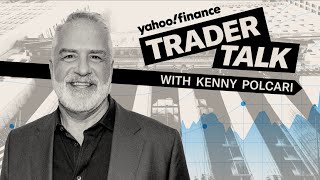
A Trader Talk episode (YouTube) hosted by Kenny Polcari at the New York Stock Exchange with guest Tom Hayes (founder of Great Hill Capital). The conversation (Feb 19, 2025) argues that tariffs often cause emotional market overreactions, creating buying opportunities in companies with pricing power, strong balance sheets and diversified supply chains; it covers long/short strategies, sector rotation (mag-7 vs small caps, healthcare, materials), bond-market views, technical/fundamental timing, and ends with a personal recipe segment (veal parmigiana). The overall tone is pragmatic and opportunistic toward market dislocations.
Chapters
Foreign. Welcome to Trader Talk, where we serve up the latest buzz from Wall street, helping you keep your portfolio sizzling without getting burned. I'm your host, Kenny Polkari, broadcasting live from the iconic New York Stock Exchange, the heartbeat of capitalism. And after decades here as an institutional stockbroker, it feels incredible for me to be back home again. This place still gives me a thrill. And while it's evolved and modernized over the years, the the New York Stock Exchange remains a cornerstone of capitalism, entrepreneurship, and above all, freedom that's woven into the very fabric of our nation's history. Tariffs aren't the problem. Investor panic is. Every time tariffs hit the headlines, the market throws a fit. Stocks dive, the media screams trade war and investors act like it's 2008 all over again. But let's just take a step back. Are tariffs really the disaster that they're made out to be? Tariffs are taxes imposed on imported goods to regulate trade, protect domestic industries and generate government revenue. While they can be beneficial in some cases, they can also have some downsides. So here's a breakdown of the pros and the cons of tariffs. So one it protects domestic industries. It encourages local production. It supports domestic jobs. It increases government revenues. Money from tariffs can be used for infrastructure and health care and even national defense or paying down the national debt. It encourages domestic consumption. It limits foreign dependence. It strengthens national security and protects critical industries. It reduces overall reliance on rival nations, that is China. Trade tensions. It encourages fair trade practices, leverages trade negotiations. And countries can use tariffs as a bargaining tool. And in trade agreements, that is the NAFTA renegotiation into usmca. Look at what's happening right now. The knee jerk reaction was ridiculous. Stocks tanked, volatility spiked, and algorithms panicked. But none of it was a surprise at all. I just think markets were betting on an 11th hour deal that didn't happen. But what happens when the dust settles? Executives adjust, trade deals get renegotiated, and investors realize that the world is not ending. Those who stay calm and position themselves accordingly will usually win. The real problem isn't tariffs. It's how investors react to them. If you're dumping stocks because of tariffs, you're doing it all wrong. If anything, tariffs create an opportunity. They expose which companies have pricing power, which sectors can pass costs to consumers, and which ones are too fragile to survive. The ones that weather the storm, they become market leaders. So what should investors do instead of running for the exits? Pay attention to where the money is moving. Look at companies with strong balance sheets, pricing power and diversified supply chains. Watch how the industries shift. This is where real opportunity is found. Not in panic selling, but in smart positioning. The bottom line tariffs are not the end of the world, but emotional trading, that's what really kills your returns. Now my next guest is a powerhouse in the hedge fund world. He is the founder, chairman and managing member of Great Hill Capital in New York City. Tom has been at the forefront of long short equity investing, delivering actionable ideas that have reshaped the industry. His weekly hedge fund tips, videocast and podcast are trusted by professionals and individual traders alike. And his expertise and has earned him features on Fox Business, where I appear with him and I love to do that. Cnbc, Bloomberg and more. He's a Columbia University alumnus and a dedicated community leader. Tom's dynamic approach makes him a truly influential voice in finance. Ladies and gentlemen, please welcome the enjoying Tom Hayes to the podcast. Tom, it is a pleasure to have you with me today.
Thanks so much for having me.
Thank you for coming in from California these days.
Yeah, that's right. That's right.
So look, there's been a lot happening in the markets, right? So the market's been very volatile. We've been talking about not only this new presidency, but new policies, but the tariffs. So talk to me just on long, short strategies, kind of what you're thinking about when you think about the markets and how to position yourself.
Yeah, this is a question that we get regularly. This reminds me a lot of 2016 to 2007. What happened right after the election was entirely different than what happened after the inauguration. After the election, yields blew out, the dollar went straight up. Tech went down, emerging markets went down, international went down. After the inauguration, things normalized. Tech went back up, yields came down, the dollar came down. And you know what? International and emerging market stocks outperformed in 2017.
Right.
These were some surprises.
So why do you think that was? Why do you think emerging markets outperformed?
Well, I think that it's. It's a fear of the unknown. Okay. This is the big thing and this creates opportunities. Like you said earlier in the segment, dislocation is where you find outperformance. So when people sell off due to irresponsible. You know, it's funny, I had a question. We have this little company, it's called Cooper Standard, and they manufacture auto parts. They do the ceiling systems around the windows, they do the fluid transfer systems. And where do they manufacture? They manufacture a lot in Canada. They manufacture a lot in Mexico. And everyone was worried, is this going to hurt it? I Said, look, at the end of the day, the average car on the road is 13 years old, okay? There's going to be a refresh no matter what. No one is going to put up a half a billion dollars to stand up a factory in Minnesota from scratch to, to produce these parts have been produced for decades from this company that's a leader in the business. Even, even when you, when you price in the effective tariffs. So at some point you have to step back. When these stocks sell off because they have exposure to China or they have exposure to Mexico or they have exposure to Canada, you say, wait a second, if, if I look back at their free cash flow and revenues two years from now, it's going to be a little blip on the radar. It gets evened out.
Right? And so I think that's a very, that's a very key part. But I think the other part of this whole conversation is these tariffs are only going to be imposed if Mexico, Canada didn't come to the table to help us with a problem that's got nothing to do with, with, with investing. Right.
You know, it's interesting, this version, Trump 2.0 is more benign than Trump 1 point, right? Trump 1.0 was a legitimate trade war, right. Trump 2.0, as Hassett came out and said, is actually about drugs and about illegal immigration and they, and they put 10,000 troops in. And we said, okay, we're going to back off, right? You keep the troops there, probably we're going to be okay.
Right. So I think the part that, that caught me the other day when the markets actually had a nervous breakdown on the Monday, that it wasn't like he hadn't been talking about it. Correct? Talked about it for seven months during the year. He talked about it before the inauguration, talked about it after the inauguration. He put them all on alert that this was coming. If they didn't come to the table and have this conversation, nothing about trade wars really, but it was about helping us out at the border and stopping the flu and stopping the drugs, right? And so I think the market was expecting an 11th hour deal and they didn't get it. And so on that Monday, you know, they all had a panic attack and then suddenly Mexico comes to the table and says, okay, okay, we're going to help. And then he backs right off.
Right?
So I think, I think it is.
A negotiating tactic 100%. This was the most telegraph surprise in history. You know, we say buy the rumor, sell the news. This would sell the rumor by the news, no question about it.
Yeah, no 100%. But tell me now about, he's talking about over the weekend he talked about imposing tariffs on China, which have started now. Reciprocal tariffs. I think that's really aimed at Europe. Reciprocal tariffs, right?
Correct, Correct. I think, look, China is doing the exact same thing that they did in 2016 right after the election, which is they devalued the yuan in anticipation of the tariffs. So what he's put into place is actually a net zero because they've devalued the yuan. Now that the tariffs are in place, you've seen the yuan stop going down. It's starting to appreciate relative to the dollar. So that's kind of priced in. And if you look at pricing, people say it's going to be inflationary. Okay. And people go crazy in the short term for, you know, first couple of months or whatever. Maybe you see something intermediate term, it's net neutral and long term, it's actually, you've seen in the case of washing machines and stuff, prices actually go lower.
Right. But you know what's interesting is that, is that it's a what if it's inflationary at all? It's a one time inflationary bump because it just adds a fixed cost to the price and then it doesn't keep going up.
That's correct.
Right. It's not like it's a 9% inflation every, you know, every time you turn around, it goes up once and then it adjusts.
That's right.
But, but to your point, then once it all settles in, it seems to find its level.
Yeah. And you have, look, you have Doge, which is actually taking costs out of the system, which is deflationary by nature. There are a lot of different offsets that are coming that people are not pricing into. The potential risk of inflation of tariffs. And I think you're going to see that more than net washes. And you're seeing it in bond yields, by the way.
Right.
Everyone was pushing, look, it's one of the two, two most crowded trades right now. What are the short bonds? I'd take the other side. And Long Mag 7, which I think you got to start to moderate your view on Long Mag 7.
All right, so talk about, talk about why you want people, why you think people should moderate their view on Mag 7. Because while I like the name and I like all the names and I own a lot of them. Yeah, of course, I'm not, I'm not chasing them up here at all.
Exactly.
Right. You got to go ahead. So talk.
So I think you want to Go where earnings growth is accelerating. Okay. So last year earnings were the name of the game for the MAG7. Okay. They had 33% earnings growth, which was double the market. They should get double the multiple this year. Earnings growth is decelerating from 33% last year for the MAG7 down to 21%. The multiple has not contracted in line with that. Decelerating in earnings growth. The rest of the market had negative earnings growth the last first three quarters of last year. It's now accelerating and the multiple is half of the Mag 7.
So, okay, so, so let's talk about that for a minute. So if the multiples in the mag 7 is decelerating, if earnings are decelerating.
Earnings growth is decelerating.
Now, you know, but that's, that's what your analysis tells you. That's just what the, that's.
Is that what all bottom up consensus estimates? Yeah. So earnings growth is going to decelerate from 33% to 21%. And we're seeing it, it's, it's a function of capex. Right. And people say that this is, this is offense. There's some, it's deep defensive.
Right.
It's defensive capex. Because you have no return on invested capital yet. Yet, yes, that's.
And that's the key.
So for the next two years they're going to spend a lot of money and we're going to find out in three to five years if they're going to get a return on that.
Right. But they, and they've made it very clear, look at the last earnings season, they've all made it very clear that they're spending huge amounts of money building out AI and data centers and all that stuff, which I think is going to end up coming back. But it might take three to five years before they really realize the return on that investment.
Yeah. This was the first quarter since 2022 that you had 0% revenue surprises in the MAG7. So we all know what happened in 2022 with tech. It was a little bit softer than people expected. Everyone was euphoric going into it. We also have the highest percentage of S and P components trading over 10 times sales since 2000. So there are a lot of multiples and a lot of metrics that point back to 2000. I don't think we're going to have anything like that at all. Yeah. But I do think we're going to have a relative slowdown in terms of, you know, those groups are going to have to consolidate their gains and that's.
Actually, okay, Very healthy. That.
Very healthy.
Can't keep.
You know, trees don't go to the sky 100%. So they could, they could underperform, which, which could imply the indices could be more subdued than last year. Maybe high single digits, low double digits.
Which also again, over historically would be fine. But a lot of people look at the indices, oh, my God, that's a failure. We were only up 12% because the last two years were up 25, 28%. Then look at plus 12% as a failure. Yeah.
And what's so beautiful about that environment is that people are like, oh, man, you know, only 8 to 12%. Well, under the surface, you can make fortunes. Some of these companies that didn't perform last year because Mag7 took the air out of it. And we started to see the rotation starting in July, took a break in December, big break in December, kickback in January, February. I think the other area you got to look at besides unmagnificent493 relative to magnificent7, I think you got to start to look at small caps relative to large caps. Why? Because again, earnings growth acceleration. So if you look at S&P 600, small cap, 8% earnings growth last year, 21% earnings growth this year.
That's consensus.
21% earnings growth, all consensus bottom up 15 times versus 22 times for the indices. That's interesting. If you look at the Russell, you go up to 55% earnings growth. Why? Because you had so many companies not earning any money. And when you go from zero to one cent, it's infinity. Right, Right.
So explain that just so the audience understands. When you say it's 15 times versus the market to 22 times suggests that it's undervalued. Correct? Correct.
Meaning you can get more equivalent earnings growth for half the price.
Correct.
Okay, so if the. The Mag 7 is going to grow 21% down from 33, and small caps are going to grow 21% up from 8, and you're paying 15 for 1 and 33 for other. Well, most people, when they go to the store, they want more for less. When they go to the stock market, they say, I want to buy the most expensive thing ever.
And they panic the minute. The minute. Right. They panic right away.
I always say Wall street is the only market, the only store in the world. When they throw a clearance sale, everyone runs out of the store.
And it's so funny because I always use the Blumies analogy. Right. When Bloomies puts dresses on sale for 30%, women run in there. They got to buy three of them. Because how can you leave it on a shelf? But yet you get a name like Apple or Amazon, they sell off 15 or 18 or 20% and people are panicked, oh my God, I lose all my money. Like, are you nuts?
Yeah, yeah, yeah.
I mean you're not talking about some nano cap or micro cap, you're talking about a mega cap stock.
Correct.
Apple makes $124 billion every three months.
Yeah.
Am I missing something?
Yeah, yeah, yeah, exactly.
But anyway, so I think, because then I want to go on, talk more about your broader kind of view of the bond market, that stuff. But let's just talk about this. So when you talk about, you know, looking. Looking in other places. Yep. Like the last will be first. I have that say I have that same kind of view. So tell the audience what you mean by that.
Yeah. So I think if you look at last year, you look at two of the worst performing sectors. You had health care and you had materials. Lowest earnings growth, lowest performance. Shocking. Right?
Right.
Well, this year they're going to be in the top four sectors. The second and the fourth, healthcare and materials. In terms of earnings growth, 19% earnings growth and 17% earnings growth relative to the S&P. Overall, 14% earnings growth in that neighborhood. So I think we're going to see a lot of catch up from these type of sectors that have high earnings growth, low multiples, and that's where you're going to see some outperformance.
Right. And these. Let's, let's be honest though, there are no names in either one of those sectors. That's really sexy. Like yo tech. No, think about Nvidia. Right. There's nothing in there that, that screams, you know, I got to have you. But when you think about where it's been.
Yes.
Last year with the underperformer versus where it can be this year in terms of consensus estimates and all this stuff. There are some great opportunities in those.
Sectors, no question about it. I mean one thing, that one material stock. And you got to look at boring ones. Albemarle, okay. Lithium, top lithium producer. Lithium prices are cyclical. Okay. Albemarle always comes through. They've got $3.5 billion of liquidity. They're taking tons of costs out of the business. All of them are lowering their production. And by the way, we all think of EVs and we say, oh, no one wants EVs anymore in the U.S. well, the global stock is going to go. It's 100% China story because it's government subsidized. It's going from 40 million to 120 million by 2027, all driven by China. They're going to need the lithium and lithium uses are even beyond EVs. So Albemarle is a leader. It's down materially, it's got the liquidity. It's going to rebound over the next.
Two to three years.
But not next two, three minutes, not next two, three weeks. Two to three years.
That's right. So you have, so you have to be, you have to know that going in and you have to realize that you're going to put this money to work and it may take you a while to see it return, but it's a great, it's on sale. So it needs to. You need.
Exactly. And when you can get, you know, when you can get stocks down 50, 60, 70% that are high quality, durable businesses through many cycles and you make a double in three years, that, that IRR is going to beat the market every single day of the week. And that's why they call me Turnaround Tom, because that's what I do for a living, my man.
But I think that's absolutely right and that's what a lot of people miss, right? A lot of people. Well, first of all, you get a lot of people that just want, they just want the names that move all.
The time, right in the headlines. In the headlines, socks come in. It's like a magnet.
That's right. But if you're a long term investor, if you're a day trader, that's fine. That's all you want. You're in chaos and you want all that stuff. But if you're a long term investor, you really want to start to think long term and you want to think about opportunities and names that it might be boring.
Yes.
But sometimes big and boring can be beautiful.
Yes, I'm the captain of boring, baby.
Hold on one second. Let's just take a quick break and I'm going to come back.
All right, good.
Okay, so here we are, we're back and I'm here with Tom Hayes, my good friend. We've had a very interesting conversation about the markets, but let's wrap it up with three essential market tips just to keep in mind no matter which way the wind is blowing. So number one, you want to stay updated on policy and political developments. Right. This week is going to make it a habit to, to keep a close eye on any of the policy updates or political events that could influence the market, whether it's a new legislative proposal, a congressional hearing, or changes in regulatory stances. These developments often send ripples through various sectors of the market. I like to set aside sometime each morning to check the trusted news sources and government releases. Doing so not only helps you anticipate potential market moves, but also gives you the chance to adjust your positions if you need to. And this week we're going to get, you know, J.J. powell is going to speak in front of Congress for the semiannual Humphrey Hawkins testimony, which may not be a market mover, but there'll be lots of conversation around it. Number two, be ready for sector rotation. Markets are dynamic with money shifting from one sector to another, as Tom and I discussed. Right. This week was a perfect example. And when this happens, use it to review sector performance and watch for signs that that asset managers and investors are rotating out of one sector while reallocating it to another. Now what I do, what I sense that's happening, is just allocate new monies to those new sectors. Right. I may trim it a little bit, but I'd rather keep the position I have built as long as the thesis remains intact. For instance, if economic data or political developments are favoring defensive sectors over growth oriented ones, that's the cue for me to allocate new money to those sectors that will automatically rearrange the risk that I have in the portfolio without me selling names that I really don't want to sell. Right. Leverage technical trigger points for timely action. Finally, combine your fundamental insights with technical analysis as you monitor policy changes and sector shifts. Pay attention to the key technical trigger points like support and resistance, trend lines, moving averages, crossovers, relative strength readings that can signal a good moment to enter or exit a position, especially if you're a shorter term investor and trader. Even if you're a seasoned investor, these technical cues are incredibly useful for timing your trades and more precisely for helping you manage. Right. They act as your internal check, ensuring that your decisions are based on both the broader economic picture as well as current price action. So, Tom, talk just a little bit about, for instance, those technical indicators, relative strength and all that stuff.
Yeah, look, we tend to be fundamentally focused. However, we do look at some of the extremes. So just as we look at extreme in price relative to the underlying fundamentals, we look at extremes from some of the indicators you discussed. Moving average convergence, slow stochastics, relative strength, all the standards. Is it at an extreme level where you tend to see some price recoveries and then do the fundamentals, based on our view of fundamental analysis, support that? Exactly right.
And I think as a long term investor, you kind of have to play both those sides. You have to have a fundamental view. You gotta do your homework and have a thesis on why you're buying it. But then you should also. Because that's how I do it. Right. You also kind of look at the charts and see if. Is it overbought? Maybe I'm gonna be a little bit patient. If I sense it's overbought. The relative strength tells me, you know, it's overbought, it's gonna come back in. So I'll be a little bit more patient.
It helps identify extremes. And for a guy named turnaroundtom, that's very, very important.
Every week I feature a recipe that either tries to play into the theme of the week or is just a fan favorite of the guest. This week, when I asked Tom if he had a favorite dish, he gave me nothing else. Veal parmigiano, which I love. Right. So here it is. It's a bit of. Here's a bit of history for you. So if you like the recipe, you can scan the QR code that's on the screen. Let me just give you a little bit of history on how this originated. It comes from southern Italy, particularly from the Sicily and Naples region of Italy, where a similar dish called melanzana al parmigiana, which was eggplant parm. Right. It was very common in this dish they used, slices of fried eggplant were layered with the tomato sauce and the cheese and the mozzarella and the parmesan, and then it was baked in the oven. Veal was not a thing that they used due to its high cost. But then when the Italians immigrated and came to America, an evolution happened. They found out that veal was more readily available and affordable in America, more so than it was back in the mother country. So they replaced the eggplant with breaded and fried veal cutlet, topping them with the tomato sauce, the mozzarella, and the parmigiano cheese. This adaptation led to the birth of vil paragiana, which quickly became a staple in an Italian American cuisine. So now, Tom, this was one of your favorites. I love Ville parigiana. But tell me a little bit why it's your favorite.
Well, look, I grew up in New Jersey. Everyone loves veal parmesan. I mean, a lot of friends, they like chicken parmesan. Chicken doesn't compare with veal. No, if you prepare the veal properly and you pound it long enough, chicken can't hold a candle to veal.
It doesn't. Although chicken is also chicken parmigiana, as.
Long as it can be good on a hero. But it's not. I mean, come on.
And if you serve the veal parmigiana on a better spaghetti with the same marinara sauce that you use to make it, there's nothing better than that.
There's nothing. I mean, who do you know who doesn't like veal parmesan? We'll have veal parmesan tonight. No, no veal Parmesan for me. I mean, everyone loves veal parmesan. And when it's done right, it's phenomenal. And you share with family, and it's great.
You absolutely do. Anyway, listen, Tom, thank you very much for joining me. I really appreciated this conversation. I hope you come back and we'll do it again.
I'd love to. Thanks so much.
Bon appetit.
All.
Right, Sam.
More from Kenny


Wall Street Is Celebrating| But Kenny Polcari Sees A Warning Sign | Kenny Polcari


Stocks Crashed After The Fed Move But Here’s What Investors Missed | Kenny Polcari
9/11 25 Years Later: Bond Market Warning, Oil Above $100 & Fed Rate Hike Fears | Kenny Polcari

Oil Hits $97, Bond Yields Surge & PPI Inflation | Markets Brace for Fed Decision | Kenny Polcari
The Fed Has a New Problem | Oil | Inflation | and Rising Yields | Kenny Polcari

The Fed Never Promised a Rate Hike | But Markets Panicked Anyway | Kenny Polcari

Nvidia Crushed Earnings | but the Biggest AI Opportunity Is Still Ahead | Kenny Polcari