Learn to invest for the next 5 years, not the next 5 minutes
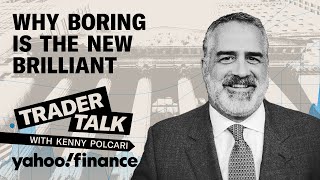
YouTube episode of Trader Talk hosted by Kenny Polcari (recorded at the New York Stock Exchange) interviewing Chad Morganlander (founder/senior portfolio manager at Washington Crossing Advisors). The conversation advocates dividend-focused, high-quality, low-volatility portfolios—favoring dividend growers/Aristocrats with low debt—as a durable, income-producing core allocation for long-term investors. They discuss sector preferences (favor tech, consumer staples, industrials; avoid commodity producers and many financials/utilities with high leverage), emphasize diversification and a five-year investment horizon, comment on current earnings-season uncertainty and Fed/Treasury dynamics, and finish with three practical investor tips and a Steak Florentine recipe.
Chapters
Foreign. Hello, and welcome to Trader Talk, where we dish out the latest Wall street buzz to keep your portfolio sizzling. I'm Kenny Polkari coming to you live from the iconic New York Stock Exchange, a place that's been my home for decades and still fuels the pulse of capitalism, entrepreneurship and freedom. Let's jump into my big take for the week. Dividend stocks are boring. Which is exactly why you want to own them. Look, let's face it, dividend stocks don't get the headlines. They're not moonshots, they're not meme worthy, and they're not promising to be 10 times by Friday. But here's the truth. Dividend paying stocks are the quiet engines of wealth. While everyone's chasing the next hot tech name or a hyped up AI play, dividend investors are getting paid quarter after quarter, regardless of whether the market's flying or falling. That's real cash hitting your account without having to sell a single share. Try getting that from your growth stock du jour. Dividends aren't just about income. They're also about discipline. Companies that pay and grow their dividends consistently. They've got strong cash flows, solid balance sheets, and leadership that actually cares about returning value to the shareholders. These aren't speculative bets. These are businesses that know how to survive in the cycles. And let's start compounding. Reinvesting dividends into high quality companies is one of the most powerful and most overlooked wealth building tools out there. It's not flashy, but over time it crushes it. Add in dividend aristocrats or dividend growers and now you've got a portfolio that doesn't just survive volatility, it feeds on it. Bottom line, dividend stocks might be boring, but boring is beautiful. And boring pays. In a world chasing story stocks and headlines, dividends are a reminder that real wealth is built slowly, quietly and consistently. You don't need fireworks, you need cash flow. So, ladies and gentlemen, I want to introduce my next guest, Chad Morgan Lander, founder and senior portfolio manager at Washington Crossing Advisors, where he guides $8 billion in multi asset strategies. A market veteran since his Lehman Brothers days back in 1992, Chad turns macro shifts into clear, actionable insights. Please welcome Chad Morgan Landa. Chad, I was so excited when I saw your name on the list of people to talk to because I think the last time you and I spoke was probably 10 years ago when we used to do CNBC when I was actually here. On the floor of the exchange.
Absolutely. Right down there, Right down to the floor.
When There was a whole lot more going on. Right. There were 5,500 type A personalities running around the place. It was really, it was really tremendous. But look, let's talk a little bit about where you are now and give the audience a little sense of kind of who you are.
So my name is Chad Morganlander. I run a rising dividend portfolio with my colleague Kevin Caron and Matthew Battipaglia. We run around about 10 and a half billion of Aum Aua. And we focus on low volatility, high quality companies that are growing profitable with very little debt on their balance sheet.
Right.
And that's one of the critical things, especially at this point in time.
Right. So I'm assuming we're talking mostly about the dividend Aristocrats or we're talking about everything.
Well, we're talking about a very select group of rising dividend companies that don't have a lot of debt on their balance sheet. So it isn't more narrow focus on certain select high quality names that have much lower volatility in particular when you get days like this.
Right. So just to be clear, so the audience understands, in the industry, Dividend Aristocrats are companies that have consistently grown their dividend for 25 plus years.
25? Yeah, we're about five years. We want companies that are growing each and every year, but reinvesting back into their business.
So the company's growing, reinvesting back the dividend Aristocrats are actually growing their dividend every year, which a little bit different.
Correct. We require the dividend to be growing as well, to stay in the portfolio and be part of the universe. But we want those companies that have more growth dynamic to them. And also we just kind of put on this overlay for lower or debt companies.
Right. Okay. So for example, give us an idea of what some of those companies might.
Sure. So you may have a company like Procter and Gamble sitting right next to a Microsoft or an Oracle or a Amphenol or a Clorox. So you have a variety of different companies. What you don't have are companies like for example, the Lehman Brothers or the Bear Stearns of the world. And the reasoning behind that is because those type of companies had a lot of debt in their business model. And when you have times when credit spreads widen out, when or there's financial stress, those type of companies, the stock prices act like stock options if it comes crazy, and the volatility is just way too high.
Right. So which is the point, which is, as my introduction said, they're bored the names you have, they're great companies, but a lot of people say, oh, they're boring, I don't want to own it. And that's where I think they're making a big mistake.
Absolutely. Because there's that seam of the market on where you want to be. And you want to be in an all weather type of portfolio where you can get the growth but you don't have to take the tail risk.
Right. No matter who you are, you could be 40 years old, you could be 70 years old.
Correct.
Right. It fits everybody's portfolio. Maybe less if you're 40, you might have a lesser allocation to it and more as you get older.
Absolutely. It's a core portfolio, more core value. And the critical thing to note here is that it's not as cyclically torqued in regard to say, for example, you may have a situation where you hit a recession. This portfolio has more durability to it, it has more consistency to it because the companies are growing. But they don't have to grow at 30%.
Agree.
Grow at 5%, 6%.
That's agreed. And I think, I think a lot of investors really need to understand that. I know a lot of younger, you know, younger investors, they want to get in. It's the meme stock, it's the sexy stock, it's in video, it's, you know, all these tech names, AI names which are great stocks to own.
Totally.
Right. But I think if you're trying to build a broader diversified, especially in an environment like we're in a portfolio like this makes perfect sense.
Well, so what you do is you create a core portfolio and then around the seams you take on risk. Either it be private equity, venture capital or these momentum stocks that everyone falls in love with and then falls out of love with.
Right.
So this is really one of these solid right down the middle type of portfolios and you get a growing income stream of over the long run.
Right.
And that's the important part.
And you would like. I would. I say to clients that, that, that we have, that I have in their dividend, in their dividend portfolio. Unless they're using those dividends as income for themselves. Because if they're older, many are, but if they're not, you're just going to take those dividends and have them reinvested automatically right back into the same name that where you've originally invested. That's you end up building this portfolio.
It's a very basic way of doing it and it's solid down the middle and you're not taking any crazy unnecessary risk. And as we can tell, people that were taking on that unnecessary risk got over their skis and that's where they are, 100%.
And that's why a lot of investors I think right now that are, that are. That are really nervous about the market is exactly that point. Right. That they either weren't balanced enough or they didn't have this kind of exposure in their portfolio. Right. Because the ones that do won't nearly feel as stressed.
They will be able to sleep at night. So the companies that we're buying and looking focused on as a universe. A universe are companies where the businesses hopefully will be profitable in times of recession and a higher probability of that profitability. Yeah. The revenues can go down a bit, you can get softness a bit, but they're not earning 5 billion and then losing 10 billion right off.
Right.
We want to try to shy away from that type of.
Right. They go with the cycle. Understood. So are there specific sectors or they. They could be in any sector across the board.
Well, there are specific sectors that we favor and others we don't. So let me give you the ones that we don't favor.
Right.
Commodity companies, because we're looking out five years. We want to make sure the volatility of the cash flow is substantially lower than say a company like Exxon or Chevron or Wildcatter, for example. We also will shy away from financials, but some financials won't. We'll own an asset manager, but we won't own a regional bank or one of the big banks or a brokerage firm because of the volatility of cash flow and the leverage that's on the balance sheet. We favor technology, we favor consumer staples, consumer discretionary materials, industrials. You can get the seam of cyclical torque from your portfolio from industrials. You don't need to be in financials or.
What about utilities?
Utilities have a little bit too much debt and they're getting a little more creative, Kenny, with their balance sheets, on how they kind of classify things on their balance sheets. So it's kind of if it smells a little bit like, you know, the back. You know what I'm talking about?
Yeah, yeah. But, you know, it's interesting because a lot of people used to look to utilities because they were typically good dividend payers.
Right.
And so a lot of people used to look at utilities as kind of that, that. That exposure to the market. Right. That you had exposure to the market, but you had good dividend payers. But to your point, maybe There is too much debt on the balance sheet. So there's other places to look.
Right. See they've been getting a little bit more creative with how they classify things. So you can just shy away, you can go to the staples or other places, get good growth, good consistent growth without having to take on that unnecessary risk.
Is health care fall in that sector or no?
I like health care. I would look towards, and we do own for many years UnitedHealthcare. It's falling considerably. It's time to start accumulating it. I think that this is an 18 month issue and then from there you'll start to see, you'll start to see profitability become much more consistent again. And they did say that on their conference call. I listened to that.
Right. But unh, when I look at unh, unh is one of the larger names in the space that they have. Right. So in your mind, are they still taking a lot of their money and reinvesting it in their business like some other companies that, that you're looking at or is that more of a stable company that's, you know, it's a big, big, massive, mega name in the healthcare space that you're, they're growing their dividend, they're offering consistency that way.
So you're seeing the growth rate There is between 5 and 8% after they have a reset here.
Right.
And I think that there's a roll up of healthcare providers, their practices. You could see the model is GDP plus 3 on growth. Then you look no further as elevance, which is Anthem Health. That one as well, we think is going to do really well over the next three to five years. Our focus is five years out, not five minutes out. So you want to be a business, you want to be a business owner and investor over the longer run. And that to us is really the right way to play this, especially in these times.
Right. And I think, you know, you make a very interesting point about, you know, you want to look five years out and not five minutes out as a long term investor. When you're talking to somebody that's trying to build a long term portfolio and they, that's what the mindset they have to be in, right. They got to get rid of that, that, that trader type of, oh my God, what did it do, you know, 10 minutes ago or what's it going to do in 10 minutes?
You got to get away from that 100%. And the problem here is that the Wall street investor, the buy, the sell side and buy side out, they have 12 month price targets.
Right.
So they're only looking every quarter and what's happening and over extrapolating. And therein lies where the risk comes. It's not only that with investors these days, it's also putting together a portfolio that doesn't have all. All not. They're not all lined up in a macro way. So if one bad macro event occurs, they all go and move in a certain direction.
Right.
Got to be mindful of that.
That's about the diversification issue. Right. You have to make sure. Absolutely. As a. As you're building kind of a portfolio that you have to be well diversified especially. And look, we're right in the middle of this storm at the moment where that is so true. And I think a lot of people that are feel much better about kind of where. Maybe uneasy a little bit, but better about kind of where they are.
Exactly right. And that's why you want to be all diversified in companies that don't have a lot of debt, have a very consistent past of earnings predictability and profitability and a diversified business line and client base.
So, yeah, client base is very important. But let me ask you another question about kind of this theme about growth versus value. Where do you stand on. Because listen, there are some stocks that are becoming value plays, Right. Because they're getting crushed. But tell me how you feel about growth versus value.
So my partner Kevin Caron's done a lot of work on this. The way that people classify growth from looking at it from the indexes is the absolute wrong way to do it. And then what happens is the growth investor then gets stuck on looking at that universe and making a portfolio and creating a portfolio that's absolutely flawed. Same thing goes for value. So you want to make sure that you call what you want to be, create your own universe. So we're called quality low volatility, two factor exposures that we want to create a portfolio on. Okay. Not based off of the thematic of growth or value, but quality low volatility. And. And that's the new thing.
I think that's a great way to. I think that's a great way to talk about it. And it's a great way to help let investors kind of understand that. Right. Cause a lot of people would either play, well, I'm a growth investor or I'm a value investor. You don't have to be that black and white. It can be as you described.
Yeah. Just want to make sure that you know as an institutional investor, what you are and what you're not. We do not Invest in a way that's traditional to, to the other growth investors or value. We call ourselves high quality, low volatility. And we're looking for companies based off of our definition of what high quality, low volatility is. What that does is you get a portfolio that the client really did want. What it doesn't do though, you're not a normal or you're not like everyone else, meaning you have a larger tracking error to these traditional benchmarks or. But in times like this, the investor that works with us is very happy.
Yeah, I would imagine. I would imagine. Listen, one sec. We're going to take a quick break. We'll be right back. Right, we're back. Thanks so much for, for taking the time. I want to pick up from where we left off because I want to talk about the mega cap names and where you feel in the mega cap names and the role they play or don't play maybe in a portfolio like yours.
All right, so Obviously we've had 15 names over the last two years that represent a large number of the, of the, of the percentage of performance and the indexes that are flawed that we spoke about. So for us, we're not trying to herd into those type of portfolios or that put that into our portfolio for that. For that matter, I will tell you right now we're at an inflection point within the broader markets where you should start to see an outperformance with the other names within the indexes that, that we're seeing here. Okay. We think that the multiples are a bit high.
Yep.
They can come down, okay. From a 20 multiple, maybe comes down to 16, whatever have you. So we would be more broadly diversified at this point in time.
So it's interesting because I want to get your sense on because we're right in the middle of earnings season. Right. So now we're, this is a big week. We've got about, I don't know, 15% or 20% of the, of the S&P 500 companies that are reporting some big names. I think we're here from Google this week. Tesla, we've got ge, got IBM. Right. IBM is one of, is a favorite name for me, but. Right, that's coming out. Give me a sense on so far where you think we've been in terms of the earnings and kind of, you know what I'm concerned about. What I talk to people about is not so much earnings because those are history. It's really what you want to hear them saying going forward. And, and some companies are Actually sitting back and saying they're not comfortable even look what United Airlines did. They gave you two outcomes. They said if this happens, we're going to project this. If this happens, we're going to project that.
Yeah, Kenny, I think that that's what you're going to get throughout this entire earnings cycle is that we don't know if it's a manufacturer. We don't know about our input costs. Yes, we could be putting things together in the United States, but our costs of goods coming from say for example Vietnam is going to be 15, 20, we don't know percent higher. That will put certain uncertainty into the earnings going forward. And the market they like, good is good, bad is bad. But as you know, because you live down here, uncertainty is the worst.
That's right. And I keep telling people, you know, that's exactly right. The market can handle good or bad as long as it knows what, what it is. Right. It can readjust and reprice. But when it's so uncertain and every day the headline is different from what was the day before, it causes complete uncertainty, nervousness, anxiety and fear in the market. And that's where a lot of people, you know, they say get me out, get me out. And you know, as you would well imagine you would say to a long term investor, look, you got a great portfolio. Those are solid names in there. Don't make that mistake.
Yeah, I'll give you an example just to your point. I was born in 1971. So now you know how old I am. The S and p was like 95 points. 98 points came in the business in 92, 93 was 400 and change. I perseverated through that my entire career and now it's 5,000.
Right.
So we believe strongly in the longer term perspective of investing 100%. We're going through this uncertain time. Just make sure that you mind that.
I will say what's interesting is I think, and you probably have a sense of this too. I actually think that retail, let's talk about the retail investor at the moment. Right. That the retail investor is now understands kind of the, the, the, the anxiety that it all creates. And as long as they though have a well designed and balanced portfolio, right. That, that they, that they, that they don't necessarily get nervous. The ones that I see get nervous are the ones that are way overweight. Something particularly tech in this case that has gotten crushed. Right. And they, and they, and now they're, they're rethinking what did I do? What did I do? I think to your point, they understand the volatility and they're not necessarily as nervous as long as they're well diversified.
I agree with that 100%. And that's what you have to do. You just have to keep your head, keep calm, and just make sure that you keep your blood pressure really low.
Yeah. Every once in a while it takes a little bit of work, but you have to do that. Tell me what you think about quickly, what you think about where we are with the White House and the Fed. You know, Trump keeps pushing, which I think is, I'm not in that camp at all. I think he needs to sit back and stay in his own lane. I don't think this whole, like, threatening of the Fed is good for the markets, but I don't think it's also good for the, I don't think it's good for the, for the economy.
So I agree that he should calm it down a bit, considering we have other things like trade issues happening right now. The Fed is going to sit back and wait. I don't think Jerome Powell is going to resign. Right. He's looking towards inflation. He used a transitory word. Then he pushed, pulled back on that. It looks as if there's going to be an inflationary impulse because of tariffs.
Right.
Okay. It looks as if the economy, capital spending and consumption in this quarter may be softer because of the uncertainty. Plus, we had January, February that was, it's unseasonably cold.
Right.
So it didn't surprise me that the administration was complaining because other administrations have complained over the last 30 years. But this whole idea of, like, replacing him, I think that it creates an additional amount of worry and concern that's not necessary.
And by the way, I'm in the camp that I don't think rates are usurious at the moment, nor do I think that they're so restrictive that we're, we're falling off the edge because the data shows that we're in fact, not falling off the edge, at least not right now. And, you know, they, they, we know if they're going to cut rates, they're going to stimulate demand. They're also going to send housing prices higher once again because lower rates, you know, housing prices will excel. I actually think they should leave rates right where they are and let housing, actually, housing needs to readjust a little bit. I think it needs to adjust a little bit lower. It's not going to do that if they cut rates.
Well, there's a lot of other inputs going into this as well. As you know, for example, if you cut rates, what's the effect on the dollar in relationship to the other currencies? And as you can tell today they have rates where they are the 10 years at what a435 handle and you have the dollar selling off 1%, one and a quarter percent.
Here's the breach. 100, 100.
And so it's starting to unwind some of the carry trade, which I call basis trades now you remember when I used to carry trade. So you know, the reality is the Fed is doing what they need to do. I think that there should be a normalization of rates. Leave it where it is. Let the 10 year find its level. Just like yourself, McGregor, 100%.
So the other fear in this whole thing though is if we start to see selling and the Treasuries coming from say China or some of these foreign countries that own a big chunk of U.S. treasuries would end up putting pressure on bonds and sending yields higher. Are you concerned about that? Not at all.
Okay. And this whole idea that oh, China owns a 900 billion of our, of our Treasuries is not an issue at all because there's another buyer there that can just buy it and that's called the Fed.
Right.
Okay. So this nonsense that, oh God, the China has us over a barrel is just logically inconsistent, intellectually inconsistent. So we're not concerned about that at this point at all.
Besides the fact I actually think there are a whole plenty of other buyers out there besides just the Fed. I think, you know, if China starts to sell, could it be disruptive a little bit? Sure. But I think like everything, you know, everything's a buy at a price. Like everything's a sell at a price. Right. And so I agree with you, I'm not necessarily that concerned, but that doesn't mean that you're not going to see some pressure on, on Treasuries and rates could go a little bit higher.
Well, yeah, I mean it could always have, you know, a two week bad two weeks right. Within the market and the 10 year goes from a 435 to a 535.
Right.
The question is can it go from a 535 to an eight handle or a seven handle? That's the conversation. And I suspect that, that, you know.
Right. And that's the conversation. I think that's, that's, that's playing out right now, creating more nervousness because if you see actually rates do that then stocks will come under more pressure. Right, right. On that if we see it, and if we see it spike very quickly. The fact is, if we see it spike, will it. Will it settle down and then come back, is the question.
Yeah, I think it would come back. And then everyone in market participants will focus their attention, as you know better than anyone, on inflation, inflationary trends, the US Economic trends, capital investment, consumption. And if that was to happen, you'll see again an equilibrium where rates will start to go lower because of a higher concern about a recessionary pressure.
Right, let's wrap things up with three essential market tips to keep in mind no matter which way the wind is blowing. Pick one stock and learn its rhythm. Look, you don't need to overthink this. You don't need 20 stocks on day one. Just pick one. One solid company that you know, use, and understand. Maybe it's a brand that you shop every week or a service you rely on. Buy a small piece, then track it, or watch how it reacts to the news. Watch how it reacts to earnings and market headlines. Get a feel for its personality. It's not about guessing. It's about learning the rhythm of the market, one name at a time. That's how you build real instincts as an investor. 2. Know what you own and why you own it. Just because something's all over the social media doesn't mean it belongs in your portfolio. I don't care if everyone and their brother is buying it or if you don't know what the company does, you've got no business owning it. Slow it down. Read about the businesses, learn how it makes money, and understand the story. When you own something, you want to be confident in why you own it. That's how you stay calm when the market gets fairly choppy. And you know what? You can start with ETFs, not individual stock picks. If you're just getting started, here's the move. Go with some ETFs. Plain and simple. One ETF can give you exposure to hundreds of companies in one shot. You want the s and P500 boom done. You want tech heavy. There's an ETF for that, too. It's low cost, it spreads your risk, and it gives you instant diversification while you figure out the rest. And while you build that portfolio, it's like laying concrete before you start building the house. Now, you know every week I end this with a recipe. And today I'm gonna give you the Steak Florentine, also known as Bistegale. For Fiorentina, it's a Tuscan heavyweight, goes all the way back to the Medici era in Florence, where giant T bones and porterhouse steaks were grilled over open flames during feasts like the Festival of San Lorenzo. It's a dish built on simplicity. Thick cut beef, salt and pepper fire. That's it. Traditionally made with chiana cattle, it's seared hot and fast for a crusty char outside and a rare, juicy center inside. British travelers in the 1800s helped put it on the map, and today it's a signature dish of the Tuscan cuisine, served everywhere from rustic trattorias to fine dining spots around the world. It's bold, it's primal, and it never goes out of style. Want to save time? Prep the rub a day early. Got leftovers? Reheat it in the oven with a splash of sauce and just as good the next day. You can scan the QR code on the screen for the full recipe and trust me, you can. This one is a crowd pleaser. That's a wrap for today's Trader Talk, but the conversation keeps going. Subscribe on Apple Podcasts, Spotify, Amazon Music, or wherever you get your podcasts. You got questions? You want them covered? Email me@tradertalkahooinc.com because I'm listening. Until next time, stay sharp, stay disciplined and stay in touch. Take good care.
The following content is not intended to be financial advice and should not be.
Used as a substitute for professional financial services.
More from Kenny


Wall Street Is Celebrating| But Kenny Polcari Sees A Warning Sign | Kenny Polcari


Stocks Crashed After The Fed Move But Here’s What Investors Missed | Kenny Polcari
9/11 25 Years Later: Bond Market Warning, Oil Above $100 & Fed Rate Hike Fears | Kenny Polcari

Oil Hits $97, Bond Yields Surge & PPI Inflation | Markets Brace for Fed Decision | Kenny Polcari
The Fed Has a New Problem | Oil | Inflation | and Rising Yields | Kenny Polcari

The Fed Never Promised a Rate Hike | But Markets Panicked Anyway | Kenny Polcari

Nvidia Crushed Earnings | but the Biggest AI Opportunity Is Still Ahead | Kenny Polcari