No rate cuts? How to navigate inflation and market uncertainty
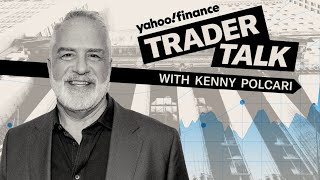
YouTube interview (Trader Talk) hosted by Kenny Polcari at the New York Stock Exchange (Feb 5, 2025) with guest John Lonsky. The conversation covers inflation risks, Federal Reserve policy (possibility of no rate cuts), labor-market strength, consumer spending, corporate credit, tariffs and global economic divergences (U.S. vs Europe). The host also gives three actionable market tips: watch policy, beware whipsaw moves (headline-driven algos), and monitor economic data (CPI, PPI, PCE, PMIs).
Chapters
Foreign.
Welcome to Trader Talk, where we serve up the latest buzz from Wall street, helping you keep your portfolio sizzling without getting burned. Look, I'm your host, Kenny Polkari, broadcasting live from the iconic New York Stock Exchange, the heartbeat of capitalism. After decades here, as an institutional stockbroker myself, it feels incredible for me to be back home. This place still gives me a thrill now. While it has evolved and modernized over the years, the New York Stock Exchange remains the cornerstone of capitalism, entrepreneurship, and above all, it suggests freedom. And that's woven into the very fabric of our nation's history. Today, we've got a packed agenda, and I've brought to you the perfect guest. To help us tackle it, we'll be diving into key topics shaping our economic future, including inflation, monetary policy, debt, debt, and fiscal strategy. We'll explore the pro business buzz, the ongoing debate around tariffs, whether they're a looming threat or a strategic promise, and the influence of global power gatherings like the annual Davos Forum, sometimes labeled a boondoggle is the way I call it. And let's not forget the world of cryptocurrencies, where volatility reigns supreme, soaring one day and spiraling the next. There's a lot to unpack, and as always, there's never a dull moment. So let's try just get to it. Let's kick things off with three essential market tips to keep in mind no matter which way the wind is blowing. 1. Pay attention to policy. Follow through New leadership, New policy directions It's a cycle we experience every two years with the midterm elections and, more profoundly, every four years during the presidential election. Each election ushers in a wave of new policies while sweeping out the old, leaving investors scrambling to hedge their bets and assess how these shifts might impact their portfolios or uncover fresh opportunities. Whether it's promises of lower taxes, deregulation, or specter of tariffs on key trade partners, the real question remains, will these policies stick? The key is to watch how swiftly these ideas move from campaign trail rhetoric to actionable changes and, just as importantly, how how global markets react. Number two Beware of the whipsaw moves. Stock, futures, commodities and cryptocurrencies have a knack for dramatic turnarounds, sometimes in the blink of an eye. Technology, particularly algorithms that scrape the headlines, can react in seconds, and they often drive these swift and sharp market movements. Traders can see big gains or losses almost instantly. A perfect recent example the news concerning the Chinese AI app deep Seek the idea that a small Chinese AI company can so upend. The AI narrative just goes to show you how quickly sentiment can shift, all of the market leaders getting absolutely crushed on the news, which I think might just be a bit overdone. Look, we needed a catalyst for a pullback and I think that just provided it. This underscores a critical point. As a trader, you must stay nimble, ready to pivot in the short term. For the long term investor though, the strategy is different. It's about turning off the noise, focusing on the bigger picture and staying disciplined. Keeping a reserve of 5 to 8% cash on hand gives you the flexibility to capitalize on significant pullbacks when opportunities arise. Remember, a steady hand often wins in the long game. Economic data stays top of mind. That's our key number three. It is essential for both short term and long term investors as it provides insights into market conditions, trends and opportunities. Market sentiment indicators like inflation, unemployment, retail sales drive sentiment and short term price movements Central bank policies Data such as the CPI, the PPI and the PCE and the PMIs influence interest rates impacting bonds, currencies and equities. And then there's sector performance. Reports reveal which sectors may gain or lose. So strong housing data benefits real estate, while weak manufacturing signals trouble for the industrials. Economic trends early signals of recessions or recoveries help investors pivot their strategies favoring defensive sectors during slowdowns and cyclical industries in recoveries. So here's my big take. The market can pivot in an instant, swinging euphoric rallies to oversold panic within a few trading sessions. When optimism takes hold. Driven by pro growth narratives, easing inflation concerns or upbeat corporate guidance, stocks can soar, often led by mega cap tech. These gains, with their outsized influence on the indices, can single handedly lift the market or drag it down when sentiment shifts. High valuation names in particular with remain vulnerable to the sharp reversals when the mood changes. Big financials often set the tone during earnings season, acting as bellwethers for the broader market. Strong earnings and raised forecasts from major banks can boost confidence across sectors, benefiting everything from consumer discretionary to the housing stocks. But the flip side is equally true. Concerns about rising rates, inflation pressures or tighter regulations can cast a long shadow creation, creating ripples that impact other sectors. Interest rates, always a focal point, add another layer of complexity. Investors remain split on the Federal Reserve's next move. Some anticipate a rate cut to spur growth, while others argue that economic data hasn't weakened enough to justify a dovish pivot. Any surprises on this front, hawkish or dovish, could spark volatility as reflected in the VIX or related instruments. Then there's the ongoing drama of tariffs. Whether threatened or implemented, tariffs can disrupt supply chains, squeeze corporate margins, and push up consumer prices. Often, the mere mention of tariffs is enough to jolt the market, even if they never materialize. It's a powerful tool of negotiation that investors cannot afford to ignore. Look, the bottom line is navigating this complex environment requires focus, diversification, and a clear head. Don't get caught up in the daily noise. Focus on the fundamental shifts. Pay close attention to corporate guidance, central bank actions, and the larger trends like demographic changes or technological innovation that can sustain markets through the ups and the downs. Staying informed and balanced is your best defense in an unpredictable market. My next guest, John Lonsky, is a renowned financial economist. He's a media commentator and and a speaker with decades of market analysis and economic experience in forecasting. Formerly was the chief economist at Moody's Investor Service. He now leads the Lonsky Group, sharing insights honed over pivotal economic events like the 1970s inflation cycle, which I was at as well the 1987 crash and the 2008 financial crisis, along with the COVID 19 pandemic. You. He's a frequent media presence on Fox Business and Bloomberg. John has also been featured in the Wall Street Journal, the New York Times, the Financial Times. His accolades include the prestigious Lawrence R. Klein Award for economic forecasting and recognition as the top forecaster by the Wall Street Journal and Bloomberg. Beyond his media and consulting work, John teaches corporate finance at Fairfield University and speaks globally at financial conferences offering invaluable perspectives on the economy in the markets. Please join me in welcoming my friend, John Lonsky. John, thank you so much for joining me here at the iconic New York Stock Exchange to talk about what's happening in the markets.
Well, thank you, Kenny. I very much appreciate the opportunity.
It's always a pleasure. So, look, there's a lot going on, but before we maybe get the specifics, let's just talk broadly first about, you know, here we are in new administration. It's a new year. We've got, you know, less regulation, you know, maybe softening talk on tariffs. So give kind of the audience a broad overview of your sense.
I think the business sector has a very positive outlook of the new administration. From what I can gather, consumer is a little bit less so. But I think the consumer skepticism is concentrated among Democrats as opposed to Republicans.
And the MAGA wing. Right.
I think the outlook is positive and I think it's very positive.
I do, too.
And that's what worries me.
Right, right.
It may be too positive, right? We may actually see companies hire too many people, we get too much spending, that eventually we find that instead of falling, what do interest rates do later this year? They maybe, maybe move higher.
I'm in that camp where I actually don't think we're going to get an interest rate cut at all this year. I think the risk is to the upside because I think inflation is beginning to just kind of rear its ugly head, right? It's brewing a little bit. You can see it in the data. It's not out of control yet, but I'm worried that, you know, I don't necessarily think it is going to spike out of control, but I do think that it could potentially lift its head a little bit. And I think that will put the Fed on pause.
That very well might be the case. And what, what concerns me on the inflation front, that is, is that we're starting off at a nearly full employment economy, right? The unemployment rate's only 4.1%, yet I get the sense that real GDP growth might close to 3% during the first half of this year. And if that's the case, unfortunately, as that unemployment rate goes down to 3.8% or lower, that puts upward pressure on wages, right? And in response to higher labor costs, companies are compelled to increase prices. And because incomes are still going to be growing at a pretty brisk pace, companies can afford to hike prices, right?
They can afford the prices and it falls on ultimately, you and me, the consumer, Right? And so that's where I think the fear is for me. Look, I started this by saying, you know, you and I both lived through the 1979, 80 inflation cycle after the Jimmy Carter years, just when Ronald Reagan took office, right where they were, the Fed at the time prematurely cut rates because they thought they'd slayed the inflation monster, which, you know, while I was only 20 years old at the time, I remember it vividly. I remember where rates went. I remember what the whole thing happened. Two years of a deep, dark recession because of what the Fed had to do. My fear is could we see.
Could.
We see inflation get even worse than it was the first time? Meaning it was at 9% at the height of the Biden years. Could we see it get worse?
Okay, I'm going to go out on a limb and say, no, I don't think that's going to be the case. But you're going to replay this in the future and say, Watsky said it wouldn't hit 9%. It was a 10 or 11% yeah, but please don't do that. We have a different economy today. You know, one thing, a big difference between today and what held true in the late 70s and the early 80s is we have a much older economy.
Right.
And I think that that limits the upside for consumer spending growth. I think that limits the upside for pricing power among businesses. I think. And you know, you're seeing this aging of the US Economy. It's reflected in a lot of these consumer spending numbers that nobody's mentioning. I was shocked to notice that that health care spending in the third quarter was up 9% year over year. The rest of consumer spending less than 5%. And that's indicative. We're getting older. But.
Well, to your point, we're getting older. The whole baby boom generation of which I'm at the end. You and I are both at the end, right? I wish. Yeah, yeah, yeah. I think that's becoming more relevant, which is why I actually like health care as a sector. It was an underperformer in 2024, but I think it's going to be, I think it's going to perform well in 2025. So let's then talk about where you think how the consumer, what you think about the consumer in 2025.
Well, you know, I keep on hearing that the consumer is stretched, but that might be true for lower income consumers and maybe some middle income consumers.
Right.
But in 2024, in the holiday shopping season, time and time again, the consumer surprises on the upside. I don't use to amaze me. Yeah. And believe me, unless we get a marked notable slowing of the labor market, I think this is going to hold true going forward. And given the positive attitudes of businesses, strong business sentiment. I'm reading about how businesses plan to step up hiring. Given the new administration and their policies, the avoidance of tax cuts and deregulation, I don't see consumer spending slowing by much anytime soon.
But do you think consumers. Here's where it goes off the rails for me a little bit is they keep saying the consumer is spending on credit, on credit, on credit, on credit at some point that the whole thing's got to implode.
It has to. But on the other hand, when I look at the stock price performance of your major credit card companies, it's quite good.
Right.
So the market doesn't sense impending doom for the quality of credit cards. Right.
And I think we also saw in some of the big banks, at least the big banks when they first started reporting is that their loan loss reserves account were not, they weren't over funding them. They're not suggestive, which to me suggests that they're not worried.
If I have it correct, if I remember correctly, it was maybe six months ago or so, banks were upping their loan loss reasons 100% and they found out maybe we didn't have to be so cautious. So they were not doing that any longer.
Right. So it sent for me, it sent the message that the banks, in fact, are not concerned about the consumer. They're not concerned about defaults on mortgages or defaults on credit cards.
Right. Is that what you're seeing? Right. That's what I'm seeing. And I'm.
Right.
I want to go a step further, if you don't mind. I work at Moody's. Go right ahead. Corporate bond defaults, Feel free and I'll tell you anytime you've had a sell off of late. What I keep an eye on is what happens to corporate bond yield spreads or the compensation demanded by corporate bond investors for default risk. The risk, the company goes kaput, can't make good on its debt repayment obligations. And what has been the case throughout 2024, and I think what's perhaps the case today is that those spreads remain at historically low levels. That is, investors are still willing to accept very little, historically little compensation for the risk that the corporate debt doesn't get repaid. Telling me the outlook for corporate earnings is pretty good.
Right. Well, it's going to be interesting. Hold on one second. We're going to be right back.
Foreign.
So welcome back. I'm here talking to John Lansky. So let's finish our conversation. Let's talk about, first of all, what happened, you know, with the, at the World Economic Forum, you know, which I always call the Davos boondoggle because I think that's really what it is. But there was a lot of, there was a lot of, there were a lot of good interviews, a lot of insight into what some of these global leaders are thinking. So what, what was your impression?
My impression is that global leaders are bracing themselves for the Trump administration. They don't know what's coming down the pike. There's going to be surprise after surprise, of course, a lot of worry over what happens to tariffs. You know, tariffs being used as a.
Negotiating weapon, which I think that's exactly what they are. I don't think he's going to come in and just impose tariffs right across the board. I just don't see that.
Trump is not a dumb man. He's not going to go ahead and hike tariffs up to Levels that destroy the US Economy, the world economy makes no sense. But what I can't help but notice is how poorly the rest of the world is performing economically relative to the United states. I mean, 2024 was the second straight year in which the German economy contracted. It was off. I mean, you're looking at growth next year for all of Europe, less than one and a half percent.
So why do you think Europe is so weak versus the United States?
You know, energy. They were too dependent on Russian energy. That's part of the problem. Regulations, I think they're being hurt by the advancements of technology that are basically concentrated in the United States. Setting aside what happened with this Chinese confidential, how much weight that that carries. But the US Economy is outperforming even with the heavy regulations of Joe Biden.
Okay, but that brings me to the point. The US Economy is outperforming. The labor market is not weakening the way that Jay Powell told us it was in September when they had to make that massive 50 basis point rate cut because the labor market was weakening. Coincidentally, five weeks ahead of a presidential election.
Right.
Which to me didn't make a lot of sense. But what was done was done. And what we're seeing now is that that's not happening at all. The labor market's not weakening. Which then brings me back to the point about what's the Fed going to do?
Yeah, I think that September rate cut was a Hail mary pass for 100. That's what it came down to. The labor market is not weakening. We're close to full employment. We're finding that a lot of workers are getting pretty substantial wage gains.
Yes.
It's not surprising anymore that a labor union signs a contract. 10% average annual increase by wages for five or six years. Come on, give me a break.
Right, and those are going to come down, though, as we move along. Those higher wages are going to come down to the consumer.
Come down to the consumer. And it also means that consumer spending will remain vibrant. Right. And I would think too that in general, perhaps wage growth now at 4% might be pushed up to 5% if we get the type of growth that we anticipate that the market anticipates for 2020.
Okay, so if that's all true and we see yields tick back, because I think yields are going to go back up fourth quarters. Five is where I think the 10 year is going to go to. But if that's true and the economy remains as robust as it is, the market can do fine under that scenario.
Provided that the increase in interest rates does not threaten future growth, does not create uncertainty regarding the adequacy of corporate earnings.
Okay, but so if that's, if it doesn't, then the market can function fine. The problem's going to be if exactly that happens, it starts threatening the future growth or the economy starts to stall.
What you don't want to see is you don't want to have interest rates overshoot.
Right.
You don't want to have interest rates rise to a level that begin to damage business activity, consumer spending, outside of, say, the housing sector. Right.
John, it has been. I could sit here and talk to you all day long. It's been a pleasure to have you today and I hope you'll come back and join me.
Same here, Kenny. Always look forward to it. Bye.
Bye. Before we wrap, let's recap today's tips. One, pay attention to the policy follow through. Whether it's lower taxes, deregulation or tariff threats, it's the implementation that counts. Don't let a flashy headline trick you into a snap decision. Two, beware of the whipsaw moves. Keep some flexibility in your strategy. Markets can flip from green to red on a single data point or a rumor. As a short term trader, you need to pay attention to the noise that can sometimes create chaos. While as a long term trader, you need to eliminate the daily noise and the chaos. And three, economic data remains top of mind. Both short and long term investors benefit from keeping economic data at the forefront of the decision making process because it provides valuable insights into market conditions, future trends and investment opportunities. Okay, guess what? Now it's time for dinner. And today's recipe is Giamborta. Now, Giamborta is a hearty Italian stew. It's the perfect way to clean out the fridge. In this episode, we cleaned out the economic data. It's flexible. It can be customized with your favorite vegetables or proteins. Here's a step by step recipe to make this comforting dish and it's really an Italian classic. So for this you need and this serves about four to six people. You need three tablespoons of olive oil, four garlic cloves, which are crushed one large yellow onion, chopped one medium eggplant, diced two medium potatoes, diced two zucchinis, sliced two bell peppers, any color. Chop them up one can a 28 ounce can of crushed tomatoes. Right. One cup of vegetable broth or chicken broth. Right. You can use either. You need one small can of tomato paste. You need a teaspoon of salt. You need a half a teaspoon of Black pepper, teaspoon of dried oregano, a teaspoon of red pepper flakes, which is optional. If you want heat, you need a handful of fresh basil leaves, torn. And optionally, you can add beef. You can add ground beef to this or sweet sausage or even chicken pieces pieces if you want to. That's not necessary. You need to put this over one cup of rice or if you're really interested, put it over some rigatoni. We'll talk about that in a moment. So now you got to prepare the base. You got to heat a heavy bottom pot or a Dutch oven over medium heat. Add the olive oil and the garlic, sauteing until it's fragrant, about 1 to 2 minutes. Add the onions, cook until softened, about 5 minutes or so. Now you're going to add all the vegetables. Toss in the diced potatoes, the eggplant, the zucchini and the bell peppers. Season it with the salt and the pepper, the oregano and the red pepper flakes. If you're using it. Stir to coat the vegetables in the oil and the aromatics. And you're going to let that sit for a little bit. Now you're going to build the stew. You're going to add in the crushed tomatoes and the vegetable broth. If you prefer a thicker consistency, then you're going to add in the tomato paste. Bring the mixture to a boil, then reduce the heat to a simmer, cover and cook it for 20 minutes, just stirring occasionally, just so you help it to blend. Now, if you're adding the meat while the vegetables are simmering, heat a frying pan over medium high heat. Add a bit of the olive oil. Brown your choice of protein, whether it's beef, sausage or chicken. Season it with salt and pepper, then add the brown meat to the pot with the vegetables. Let everything simmer together for an additional 20 minutes. Now you want to finish the dish. You want to stir in the fresh basil leaves and adjust the seasoning if needed. Let the flavors meld together for another five minutes. If you're going to serve this over pasta, you want to boil your pasta, your rigatoni, Boil it for eight minutes or so, get it nice and al dente, then take it out. And then you pair the rigatoni with the giamburta stew all together, mix it up, toss in some fresh grated parmigiano cheese, and that's done. It is comfort food in its best interpretation. Now the customizations. You can add other vegetables like carrots and green beans or mushrooms if you like. It's really based on what you have at hand, because it's really about cleaning out the fridge. Now, if you want to make it spicy, you can use hot Italian sausage or an extra pinch of red pepper flakes for a kick. If you want a thicker stew for a heartier consistency, see, use less broth and add more tomato paste. You want to enjoy this jamborta, which is a versatile dish that is just as delicious as it is resourceful. Bon appetito.
More from Kenny


Wall Street Is Celebrating| But Kenny Polcari Sees A Warning Sign | Kenny Polcari


Stocks Crashed After The Fed Move But Here’s What Investors Missed | Kenny Polcari
9/11 25 Years Later: Bond Market Warning, Oil Above $100 & Fed Rate Hike Fears | Kenny Polcari

Oil Hits $97, Bond Yields Surge & PPI Inflation | Markets Brace for Fed Decision | Kenny Polcari
The Fed Has a New Problem | Oil | Inflation | and Rising Yields | Kenny Polcari

The Fed Never Promised a Rate Hike | But Markets Panicked Anyway | Kenny Polcari

Nvidia Crushed Earnings | but the Biggest AI Opportunity Is Still Ahead | Kenny Polcari