Nvidia and semiconductors still lead, but new winners emerge
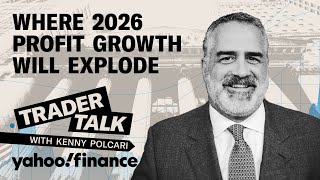
A Trader Talk interview (host Kenny Polcari; guest Erin Gibbs) discussing why manufacturing data are treated as a leading economic indicator, concentrated profit growth in 2025 (communication services and technology, especially semiconductors), and anticipated sector rotation into industrials, energy, materials and small/mid caps in 2026. They debate interest-rate timing and magnitude (expecting Fed cuts starting September, likely a 50bp then smaller cuts), the impact of tariffs and carve-outs, and Trump's move to allow some chip sales to China (with a 15% levy). The conversation highlights AI-driven power/infrastructure demand and investment implications (utilities, energy, uranium, semiconductors).
Chapters
Foreign.
Welcome to Trader Talk, where we dish out the latest Wall street buzz to keep your portfolio sizzling. I'm Kenny Pulcari coming to you live from the Yahoo Finance headquarters in the heart of New York City, a global hub where the deals are made, fortunes are built, and the next market move is always just around the corner. Coming up, I'll share my big take on why manufacturing is so important. I'm gonna sit down with SlateStone Wealth's Aaron Gibbs to talk earnings season. And then I'm Gonn Pringle and clam chowder recipe. Now let's jump into the big take. There's an almost superstitious reverence for manufacturing data in the markets. Every time the ISM or PMI numbers hit, traders sit up straight, economists scramble to update their forecasts, and pundits start speculating about recessions or recoveries. But why? Why does manufacturing get so much airtime in a service driven digital economy? Here's the truth. Manufacturing is the economy's early warning system. It's one of the few sectors where shifts show up in the data almost immediately. Orders rise, factories ramp up, hire more people and buy more raw materials. Orders slow down, inventories pile up, production gets cut, and layoffs start making the headlines. The feedback loop is fast, it's brutal, and it's straightforward. Manufacturing also has a ripple effect. When the factories are humming, so are the truckers, the warehouse workers, the miners, tech suppliers, and even the restaurants feeding these blue collar shifts. One manufacturing slowdown can ripple across dozens of industries. That's why policymakers and investors care so much. It's not just about the widgets and assembly lines. It's about the momentum. But let's be honest. Manufacturing share of the economy isn't what it used to be. Services, tech and intellectual property now dominate the gdp. Yet manufacturing is where they look first when the world wants to know if a slowdown is real or just statistical noise. The sector's volatility makes it a leading indicator, not a lagging one. The bottom line. Our obsession with manufacturing is about more than nostalgia and industrial pride. It's about timing, transparency, and trust in the data. If you want to see where the economy's headed, manufacturing will show you the signs before the rest of the market really wakes up. Okay, so I would love to introduce my next guest, Eric Erin Gibbs. She is the chief Equity Strategist at Slatestone wealth. Erin brings over 25 years of experience in quantitative equity research, portfolio strategy and wealth management. At Slatestone, she leverages advanced mathematical and statistical models to create Proprietary investment strategies while serving on the firm's Investment Policy Committee. Previously, erin managed over 15 billion in equity products at equity as equity CIO at S& P Investment Advisory Services and co led Multi asset Portfolio as CIO at Main Street Asset Management. She's also held senior analytical roles at Liberty Ridge Capital, Citigroup and Sanford Bernstein. A Pace University graduate with additional studies in mathematics in finance at nyu, Erin is recognized as a thought leader who frequently shares her insights with the financial community. Please join me in welcoming Erin Gibbs to the show. Erin, it is such a pleasure to finally sit down and have you on the, on the podcast. And I am even more excited that you're joining us at Slate Stonewell.
I am so excited. It still pinched me.
I know, I know. It's really, you're gonna just love it there. It's great. And listen, being in Jupiter, Florida is not so bad, right?
No, it's not so bad.
All right, so listen, earnings, let's talk about earnings and interest rates, right? Because really, how should investors weigh strong earnings in high growth sectors like tech against the drag of higher for longer?
Right. So one of the things that I wanna really help people understand is I know we talk a lot about interest rates, we're really looking for that. But one of the things that we also need to keep in mind is that fundamentals still fuel a lot of that price growth. So even though we have lots of macro factors like unemployment, interest rates, a host of others, msm, we still want to come down to what are these companies doing? And what's really been driving the growth in 2025 has been coming from profit growth in communication, services and technology. It has been so incredibly concentrated and you're seeing that earnings, profit growth concent replicated within the gains that we've seen in the stock market. So there is some rationality to all of this concentration that we talk about.
Right. But, but therein is also the double edged sword because there is rationality in it. Yet if you look under the surface, there are some other industries that are pulling back that are not necessarily the indexes say we're making a new high, we're making a new high, we're making a new high. But yet some of the other sectors in fact are digesting and backing off exactly. Industrials, basic materials, health care certainly has been negative all year.
Right. And this is one of the interesting things that's happening is I'm talking about just what they've been able to do for 2025. So we're halfway, you know, almost, you know, three quarters of the year there, that's just what they've been doing. In 2025, when you look at forecasts for what's going to happen in 2026, the picture dramatically changes. And this is where I would really advise clients to think about not concentrating your portfolio and have some breath because there is a huge change in where we expect profit growth to come in 2026, where the leadership is still information technology, but we add industrials, we add energy and we add materials. And all those sectors are about 40% higher growth than the S&P 500 and communications drops below the average.
Right.
So like your names, like Google Meta, these are the guys where their, their profit growth is forecasted to be cut in half for 20. So if you have money in those names, those are some of the ones that you might want to take off the table. But we still see a lot of strength within information technology and particularly the semis like Astera Labs and Nvidia, still very strong even going into next year.
Going into next year. Wait, but I want to ask because you made a good point there. Right. You talked about where's it going to come from? And we just talked about industrials, basic materials. Both sectors that are kind of lagging right now. They're backing off their highs, providing an opportunity.
Absolutely. And so, you know, we really, within industrials, another great thing about energy with this higher growth is that energy trading has historically been very volatile. Right. You really had to do very precise timing of getting it in and out. But with this AI driven demand for power, energy actually looks a lot more stable for once. Like this looks like a real long term opportunity.
Right.
So again, just think about other opportunities as we go into next year.
When you look at the energy, look at the utility sector, it's up nearly 14% this, this year so far.
Right. Utilities.
Utilities which were always poor, you bought them for their dividend and you didn't really worry about it. Now you're making great money in utilities.
Yep. So it really is a shift and we're just being aware of where we're expecting the second wave of this AI growth to come from in next year.
Right. Let me ask you a question. Just about, just about. Let's talk about energy for a minute. And this AI growth, right. You talk about the demands for energy and where is it going to come from? It's going to come from certainly fossil fuels, but it's also going to come from nuclear, I believe.
Oh, absolute. Absolutely.
And we're not going to come from.
Wind and solar no, it is not.
It's just not.
It's not. And nuclear is just going to be one of your options. So that one of the plays you can do is using uranium, which again is part of your materials play.
Right. As part of. You're right. And that's perfect. That's part of the, that's a, that's a great point to use it as part of the materials play. All right, so, so let's talk about, you want to talk about the profile, you said, you know, maybe you want to think about lightening up on Google. Not necessarily selling the whole position, but maybe trimming around the edges and lightening up and plowing money into the sectors that you just identified. Right, right. Going into 2026, but away from it. Let's talk about where small caps and mid caps play a role in that new portfolio. Right.
So another big shift and this again is forecasted growth. But we're looking at about, for the small and mid caps, they're estimating that they are going to have 40% higher profit growth than the S&P 500 than your large caps in general. And right now they're trading at a 30% discount to the S&P 500. So you get 47% more growth for 30% less price. It does look like a win win.
Right.
But the big thing that's holding them back and why they're so cheap right now is because we haven't seen those interest rate cuts and we're getting a little hesitant about how long in the tooth is this economy.
Because. Because small and mid caps tend to borrow a lot of money. Right. That's the connection with the interest rates because they borrow money to run their businesses. So if we see rates come down, the assumption is they're going to borrow more money.
Right. And so it's, you sort of need two components. You need interest rates to come down, but you also need that risk on appetite. You need, you need the positive sentiment. When those two come together, these guys are going to take off.
Right.
And we've been sort of waiting for it for the past few years, but it looks like it's finally going to start maybe coming in at the end of this and into 2026. So again, another opportunity for diversification and moving out of your magnificent seven.
Let me ask you a question. Just about when you talk about small and mid caps and you talk about them being on sale.
Right?
Right. But now, is there any particular sectors within small and mid cap that you.
Want to talk about, similar to what.
We'Re Seeing in the large so industrials, small cap names. Right, Same thing.
Yeah. Okay, same idea. And heavily in tech, heavily in technology. There's some really great growth spots within, you know, the smaller semi companies that just haven't been picked up as highly but are still see that massive AI driven growth.
So now that we're talking about, you expect to see this change in small mid caps. But here's the key to what you just said. If interest rates come down because the economy's slowing down, that's a negative for the small and mid caps.
Right. And that was. So it's not immediately going to be that first rate cut.
Right, right. If interest rates come down, but the economy continues to be strong, which I think it is right now.
Yeah.
Right. And I still think they're going to cut rates in September. Yeah, Then, then that's the perfect kind of platform for these small mid caps to take off.
Exactly.
Yeah. So let's just talk about rates for one second before we move on.
Sure.
So now the expectation is that the Fed is cutting rates in September. I think the market is expecting a total of 75 basis point cuts before the end of the year. Now there's a couple of ways you can get that. You can do 325s. Right. You know, September, October, November or December. You could do a 50 and a 1. Right. Or you can do, you can hit them with 75 right off the bat.
Yep.
Which I don't think they're going to do.
Yeah, I don't see that bet yet.
But I, but I am leaning towards a 50 basis point cut in September. Like, like they're going to cut, they're going to make the, they're going to make a significant move in September and then they're going to wait.
I totally agree. The Fed, this Fed particularly still likes to wait and see but they want to see like their movement, they want to see how the economy responds. And I totally agree. I think it would be more likely to be a 50 and then 25 that trickle off.
Right? Well 50 and then 25 for this year.
Yes.
I don't think we get more than 75 this year.
That would be like, that would be actually be a bad thing.
Yeah, yeah. And so there you go. So then it's no good for the small mid gap.
Exactly.
Hold the line there one second. We just take a quick break, we'll be right back. Okay, so now we're back. And so let's do a check on Wall street forecasts to see how they're, how they're reflecting these new tariffs or maybe not the tariffs everyone thought we were going to get. You know, they're coming in around 15%.
Right.
Very different from the 40 or 50 or 60% that they were all screaming about in February and April when we had that, when we had that meltdown. Right. What could really though, surprise investors, A, on tariffs and then B, on maybe some of the revisions that are going to come about as a result of the tariffs.
Right. So as I've been talking about all of these growth rates, one of the things is that Wall street really has been hesitant to incorporate tariffs into their estimates.
Right.
There is a lot of room for surprise, just like you said. And so one of the things we could see, it would probably be more so in your consumer discretionary, consumer staples. Those areas though, certainly, you know, we see so many, you know, carve outs exceptions. You know, it's just, it's such a fluid environment right now.
You don't really know.
You don't really know. And so I think we're really not going to see any finalization until there's absolute clarity, which may take quite a while.
Right.
So I one thing, and that's ultimately why analysts are just saying we're proceeding as business as usual. And look, we thought that there was going to be a huge impact even in the second quarter. We obviously saw none of that. We had this massive beat, like a record earnings season for the second quarter because we just didn't have that impact. But absolutely, it should be something that you could take into consideration, be prepared for surprises and constantly revise your, your, your outlook.
Right. And your outlook. But you should, I guess what you need to, I guess what we need to really understand is as this plays out, right, as we see these tariffs get negotiated, are they really that difficult in terms of, for the economy, for the, for the U.S. economy to swallow? Right. Is 15% really something that everyone needs to light the hair on fire?
Absolutely not. And we see that in that a lot of different companies that are even talking about how they're trying to incorporate tariffs, how that trickles down to the final prices that consumers see when it's maybe only 10% of their total costs. So, okay, the tariffs hit 10% of your total cost. That's one and a half percent increase. Not as big of a deal.
Right? Not as big of a deal.
Right. Because not everything that comes into the US Is completely imported. We do have some value add. There are additional costs here.
I guess the question that investors really want to know is that what is it that they're not thinking about what could be the surprise that suddenly hits everybody in a negative way that goes, oh my God, I didn't think about that.
I, I think it would really be down to raw materials. Like that would be something that would, just because it flows through to so many industries that, that could be something that we really want to be careful.
You want to be careful. Right, right. Okay, so AI's ripple effect goes now beyond tech, right? So the AI driven power and infrastructure demand create lasting growth opportunities in traditionally cyclical sectors like energy and industrials. So, so let's talk about, let's talk about what that's going to look like.
Right? So one of the things that we're seeing for now is we're still seeing very strong growth within your, your infrastructure, types of companies around AI. So basically your semiconductors, your semiconductors, like the, the first stage within AI, they're still making plenty of money. What we are seeing is that the companies that are needing to incorporate AI and build and put, and obviously invest a lot of capital, like your communication services, your metas, your Googles, those are the ones that are getting hit hard next year. We're not necessarily see forecasted profits come out of them because of all this capex. This additional capex.
Yeah, but if, but if, if, if you know that going in, right? Because we know that this year that they're going to spend all this money.
Right.
Nobody should be surprised.
Yeah, in theory, like we somehow, but.
Somehow people end up getting surprised, which always amazes me because they told you this, they told you this time they're going to spend all this money. So you know, ultimately it's got to come at some point. It's got to come out in the wash.
Yes. You got to pay for it.
Right. And so I always find it interesting that when it comes out in the wash, everyone starts to go, oh my God, oh my God. Right, right. You have to kind of be, you have to look, you have to be able to look ahead and understand at some point that's gonna happen.
Absolutely, absolutely.
Which is why, you know, that goes to the argument about having like, like, like Dan Paine says, right. You have a process and you understand what that process is and you make sure that it's repeatable and that, you know, your, your investment process plays out. I thought that was, I thought that was great advice that, that Dan was on a couple of weeks ago that he was talking, when he was talking about managing money. So let me ask you a question about the news that came out this Morning. About Trump allowing Nvidia and AMD now to sell chips to China.
That was exciting.
It was very exciting. Right. Although stocks reacted negatively.
Yes.
Right. But in the end, they're going to sell chips to China and the US government's going to take 15%.
Yep.
Good idea. Bad idea.
Well, certainly. Interesting, interesting. I mean, creative.
Very, very creative. Very creative, Very diplomatic.
You know, I am not like I'm still processing how this is exactly going to hit the bottom line.
Right.
I think it's, it's just again, just a exceptionally creative way of trying to.
It's going to hit whose bottom line? The government's bottom line or Nvidia's bottom line?
Right, Nvidia's bottom line. But yeah, I think ultimately they're going to figure out a way to be able to be profitable and make money. I don't think this is certainly. And we know even the chips there that they sell to China are some of the lower value chips. It's, it's not the ones that are really driving the, you know, the mass benefit. It's a small portion of their total revenues. So I'm not entirely sure why they got hit so hard in the market.
Today because I think some people must have thought that, you know, the first reaction is a negative reaction.
Oh, yeah, they're, you know, 15%. But yeah, it's. Yeah.
When you, But I agree with you, I don't. While I would have stayed and just kind of let it digest for a day because I always like to do that when news comes out. I don't react right away. I want to just see how the market interprets it to see what happens. But in fact, I don't necessarily think it's a negative at all.
No. And again, these specific carve outs, that's why it is again so hard to try to forecast exactly how next year is going to play out. Because you do have these very creative and unusual and never done before types of carve outs and exceptions that are just making Enos lives stay on their toes.
And it's going to be interesting because. Are there more of those to come?
Exactly. Now, one is it's not, you know, with Trump, it's probably not one and done.
That's what I mean. Exactly. Exactly. Right. And I think the market understands that. Right. That I think that it's not one and done, but the market once again today is in rally mode, so making new highs once again. Right.
One.
Yep. Anyway, all right, so now we're done with that. It's time to have the Clam chowder Now. Eric just flew in from Nantucket. I spent the month of July at Cape Cod. So what better than a Cape Cod Classic New England clam chowder, and it has been a staple in my family but along the Northeast coast since the early 1700s, when French, British, Portuguese fishermen brought their tradition of hearty seafood stews to America's shores. Over time, the local cooks adapted the recipes using the region's abundant clams, potatoes, salt pork and cream, creating the rich, comforting chowder that we know today. From Maine to Massachusetts, a steaming bowl of this creamy chowder captures the flavor of the Atlantic briny, hearty. Perfect. It's perfect for day at sea. Anyway, you can scan the QR code on the screen for the full recipe and you can thank me later. Look, that's a wrap for today's Trader Talk, but the conversation always continues. Subscribe on Apple Podcasts, Spotify, Amazon Music or wherever you get your podcasts. You got questions or topics you want covered? Email us@tradertalkahooinc.com because we're always listening. Until next time. Stay sharp, stay disciplined and stay in touch. Take good care. This content was not intended to be financial advice and should not be used as a substitute for professional financial services.
More from Kenny


Wall Street Is Celebrating| But Kenny Polcari Sees A Warning Sign | Kenny Polcari


Stocks Crashed After The Fed Move But Here’s What Investors Missed | Kenny Polcari
9/11 25 Years Later: Bond Market Warning, Oil Above $100 & Fed Rate Hike Fears | Kenny Polcari

Oil Hits $97, Bond Yields Surge & PPI Inflation | Markets Brace for Fed Decision | Kenny Polcari
The Fed Has a New Problem | Oil | Inflation | and Rising Yields | Kenny Polcari

The Fed Never Promised a Rate Hike | But Markets Panicked Anyway | Kenny Polcari

Nvidia Crushed Earnings | but the Biggest AI Opportunity Is Still Ahead | Kenny Polcari