Nvidia earnings preview and the Trump chip tariff twist
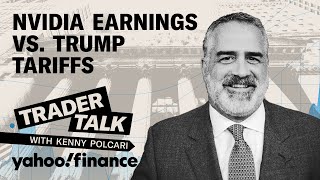
A Trader Talk episode (Kenny Polcari with Lou Bassanese) analyzing President Trump’s semiconductor tariff/deal proposal (15% take on China sales) and its strategic implications for US tech champions (Nvidia, AMD, Apple). They discuss Nvidia’s lost China revenue (~$5B), company margins, and the upcoming Nvidia earnings (noted as August 27, 2025). The hosts argue the tariffs could create domestic advantages but carry risks (higher costs, retaliation). The conversation links AI growth to huge chip demand, rapidly rising compute and electricity needs (claims: compute doubles ~every five months; US data-center electricity share rising from ~5% to ~10% in five years; 50% of electricity demand growth to come from AI data centers), and investment opportunities in energy, utilities and legacy hardware (Cisco, IBM). They also note narrow market leadership (MAG7) and advise selective sector exposure rather than indiscriminate indexing.
Questions this video answers
15% (as stated in the transcript).
About $5 billion (as stated by Lou Bassanese).
Nvidia gross margin ~70%, EBITDA margin ~61%; AMD gross margin ~56% (speaker claims).
August 27, 2025 (mentioned as 'August 27th').
Computational power required for AI models 'doubles every five months'; data centers' electricity share rising from ~5% to ~10% of US demand over five years; 50% of electricity demand growth over five years will come from AI data centers (speaker claims).
Chapters
Foreign.
Welcome to Trader Talk, where we dish out the latest Wall street buzz to keep your portfolio sizzling. I'm Kenny Pulcari coming to you live from the Yahoo Finance headquarters in the heart of New York City, a global hub where deals are made and fortunes are built. And the next market move is always just around the corner. Coming up, I'm going to share my big take on Trump's semiconductor tariffs. I'm going to sit down with my good friend Lou Bassanese and we're going to talk about Nvidia and then I'm going to share my veal. Now let's jump into the big take. Trump's latest move to slap tariffs on foreign made semiconductors isn't just trade policy. It's a direct shot at the heart of global tech supply chains. On the surface, the logic is bring chip manufacturing back to the U.S. protect national security and reduce dependence on overseas fabricators. However, when you pair these tariffs with the high profile deals involving Apple, Nvidia and amd, the picture gets a little bit more strategic. These companies aren't just any players, they're the crown jewels of American innovation. Apple needs cutting edge chips to power its devices. Nvidia is at the epicenter of the AI boom. With GPUs in sky high demand, AMD is challenging both intel and Nvidia in multiple markets by cutting favorable deals with them while tightening the screws on foreign chip imports, Trump is effectively creating a preferred club of domestic champions, ones that benefit from tariff protection while foreign rivals face higher costs. For investors, this is a double edged sword. On one hand, US Chip makers could see a tailwind from reduced competition and new domestic incentives. On the other hand, higher input costs, potential trade retaliation and global supply chain disruptions could squeeze margins or slow innovation. And let's not forget tariffs tend to be blunt instruments. They protect some but punish others in ways that can ripple through the market for years. The bottom line? Trump's semiconductor play is less about a single policy and more about rewiring the tech battlefield in America's favor. If it works, domestic chip makers could dominate a new era of tech supremacy. If it backfires, expect higher costs, slower growth and a messy geopolitical fight. As always, follow the incentives because that's where the real story is. Now I would like to welcome back my good friend Lou Bassinis. Now, Lou I think was my second guest when we when started with Trader Talk. He's a seasoned Wall street Veteran with over 25 years of experience across private and public markets, investor research, wealth management, banking and investor relations. Lou is the executive vice president of market strategy at Prairie Operating Company which is a NASDAQ listed company. PROP is a symbol one of the nation's only high growth, low cost, independent oil and gas companies. And the founder of thebigskinny.com of which I will be joining him next week. A nonsense research firm connecting Wall street insights with everyday investors. He also serves on Endre Life Sciences and the Roberto Clementi Health Clinics boards and advises the Headstrong Project. He's always sharp and today he's extra sharp and ahead of the curve. Well, I am thrilled to welcome him back. Lou, it is a pleasure to have you.
Good to be here, my friend.
I just love when you come here.
I need you to introduce me. You're my hype man. Anytime, everywhere.
I'd introduce you anywhere you want. Look, we're going to talk semiconductors today, but it's interesting that, that I want to talk to you about it. But in fact there was a, there was a headline that hit the tape this morning.
Yeah.
I was early this morning about, about Trump making a deal with Nvidia and amd.
Yes.
About now selling their chips back into China, which they haven't been able to do. Now they're selling them back in. And Trump said, and we'll take 15%. We, the U.S. government will take 15% of that.
Yeah.
You know, I thought it was an amazing deal, but I'm not sure the stock down initially on the report. I actually don't know how they're ending the day. But let's talk, let's start there because I think that's a fascinating concept.
I think it's fascinating because it's a deal unlike we've seen any other. Right. And whether you sit on the side of the aisle depends on whether you say Trump's getting a pound of flesh or a pound of prosperity for the government.
Right.
But here's how I look at this. Nvidia confessed in its last quarterly report they lost out on about 5 billion worth of revenue.
Right. So they lost out. So no revenue.
No revenue. Would you rather 85% of 5 billion or 100% of.
There you go, there you go.
I think at the end of the day, here's the other thing where I come down on Nvidia more so than AMD has plenty of margin to really absorb that if they, if they want to. So gross margins are at like 70% for Nvidia. EBITDA margins are at like 61%. AMD is at like 56% gross margins. But here's the thing, you're talking cutting edge technology. China, even though they're going to say, well there's security risk, they need it, so they have pricing power. AMD just reportedly raised their prices on their chips that are now more competitive by 70%.
Right.
I mean this is a market that if you could, if you could pass on a 15% tariff or tax, right, you can do it.
Right.
It's there, it's embedded in that business.
Well, let me ask you a question because one of the first things that came out today was China came out and said that their inferior chips, that they, you know, it's not a big deal because they're not going to use them, which I think is total. Yeah, right. So they came out and they also said that they were environmentally unfriendly. Help me out here. I'm not really sure I understand how a chip can be environmentally unfriendly. Tell me where I'm wrong.
Listen, the chip can be environmentally unfriendly because the materials that go into it, the processing itself. But it's ironic that China is talking about environmentally unfriendly.
Right? 100%.
When they're opening up more coal fired power plants this year than they have in 10 years, they, they thumb their nose at any emissions and regulatory, environmental stuff. So, you know, I think it's all to look, save face in the press.
Right.
At the end of the day, we know China wants and needs these AI chips. The Trump administration has charted a path to allow them to get it. I think they'll jawbone a little bit, right.
And then keep, and then they'll keep buying it because right to your point, they need it. Who's kidding who? They need it.
Listen, you see the race changing every day. Like Grok 4 came out and shortly after OpenAI's Chatbot 5 came out. And I mean this was. Someone anecdotally told me the leader changes every week. And it's actually true.
It's true.
It's really happening. So if you're one leg or two legs behind on a chip technology, you're, you're falling dramatically. And so you have to have the latest and greatest to stay in the running. Right. With the AI.
So who is the Chinese counterpart to Nvidia? Like China makes up themselves. Was it Huawei, maybe?
Huawei. But I mean, I don't know that there's anyone that's really competitive. I mean that's what they talked about in the wake of deep seek and the ban on the 20s is. Well, we'll just use domestic suppliers.
Right. They don't really have yet.
Right.
Like who are they kidding?
Yeah, you want to use a Mustang or a Yugo, right? What are you going with? Just, I think that's the analogy.
You go, yeah. Oh God. I'm just kidding. No, I did not. No, I actually, I didn't own. Either I didn't own a Mustang or you go, but no, I hear you. I just, you know, when I saw the headline this morning when I first read it a. You're right. Would you rather have 85% of 5.2 billion or would you have zero? Yeah, that makes complete sense to me. AMD the same way, I think they made, they fell over and made the deal as well. Right? They did.
And here's the thing. I think people need to understand about AMD and Nvidia. Everyone thinks it's a two horse race, right. Like Nvidia. AMD is trying to steal market share. Absolutely not.
Right.
When we saw before Blackwell was coming out, there was potential delays and then everyone realized, hey, I need two suppliers of these chips. Right. You got your main supplier and then you're going to have your backup. Supp. AMD can steal no market share, can stay at that 8 to 10% level and still increase its sales by 10x.
Yeah.
And do very well without stealing any market share. So I think that drives home the point that this trend is really large.
Right.
Multiple winners and yes, there's going to be the clear front runner, but it's not a, it's not an Apple versus, you know, BlackBerry, like where one's going to dominate and the other one's going to go into obsoletes.
Yeah, no, right, no, there's not at all. And I agree with you. I think there's plenty of room for a lot of players in the space.
Right.
You know, going forward. So I don't necessarily think that you can, I don't necessarily think you can go wrong as long as you're in the space and you do your homework and you, you know, kind of exposure.
I mean I look at semis and have for the last seven to 10 years. They're the oxygen of the digital economy. Right?
Yeah.
Today's oil. Oil used to run the global economy. Now chips. Do you look everywhere? I mean the average car now has 30% of their content of the car is chips.
100%. Yeah. No, I agree, I agree with you 100%. Let me say another question just quickly and then I want to move on to the next to the next topic.
The veal Scappellini, Right.
No, no, that'll come at the end. The Veal Scalpini. No, the deal that was made. Do you think that people are gonna find the negative side to that and say, there goes Trump again? Meanwhile, I think it's a. I thought it was a great deal, but do you think that they're gonna try to pull it apart and demonstrate how this is not a good idea?
Yeah, I think there's enough grounds there to say this is not free markets, this is not open trade.
Right.
But look, it always comes down to the data, right? The fundamentals. If the businesses continue to truck along and increase profits, and that benefits the US Domestic economy, which I think it will, you look at in Q1 GDP growth, one full percentage point was coming from AI Capital Investments. Right. So if that continues, I think he gets more covered. Right. I mean, it's like. It's like when a Stock's down, there's 901 complaints, and when it suddenly is up, everyone forgets those complaints. So I think in the aftermath of the announcement. Absolutely. There's going to be some. Some people that are upset. This is not free markets. And I agree it's not free markets, but at least it's clarity. It's a path.
Well, it's a path and it is clarity. You're right. I guess the question is, then, if he does it here, are you going to start to do it in other places as well, other industries, other things? You know?
Yes, I would say that the probability of that is pretty high. I mean, this is the one thing about President Trump that I don't think anyone can get clarity on is his. What is he going to do next? It's completely unpredictable. If you have a book on game theory, go ahead and rip it up and throw it out the window, because he's going to upend any nor.
Right.
And just do things differently. So I think that's always going to keep us on edge.
Right.
The markets are going to always be ready for what's the next shoe to drop, which is probably not a bad thing.
I was just going to say. I mean, he's doing things differently, but quite honestly, the market does not appear to be having a big problem with it. Yeah, right. Investors appear to be happy with it. The market appears to be happy with it. So. So, you know, you're right. It is kind of a. It's kind of a tightrope. Right. Is it the right thing or is it the wrong thing? In fact, I think in this case, I'm leaning towards. I think it was the right move.
Yeah, no, I'd agree. He's moving things forward. It's not going to be perfect. And I think that's it. It's like, it's like getting in good shape. Right. You got to just start somewhere. He's starting in a lot of places all at once. The repercussions are still to be determined. Is the, do the benefits outweigh those repercussions?
Hold on one second. Just take a break. We'll be right back. Okay, so let's talk about Nvidia's next act because they're actually coming up with their earnings at the end of the month. I think it's August 27th and Nvidia is coming out with their earnings. Right. I guess the question now is can they continue to deliver Right. Post this earnings? I mean, listen, I think they can. Nvidia is one of those names like, like Apple. I buy it, I own it, I'm never going to sell it, I'm just going to die with it. It's just going to be what it's going to be.
I'm with you. I've owned Apple since 2014.
Right.
I bought in late into Nvidia. But here's what I think. We don't have to predict the Future here. Right. August 27th is the next Nvidia day, right. Guess what? We got reports from Metta and Microsoft and Alphabet and Amazon and they confirmed, the read through is very clear. They increased capex for AI, which means increasing sales for Nvidia. I mean it's the question of is the bar so high that they just can't live up to expectations?
Right.
I don't believe so though. Because if they keep growing earnings, if, let's say 1/4, investors are underwhelmed by the results, but the growth continues, guess what? The multiples coming down and everyone's going to come back in with, with bigger positions. Right. I mean just like we've seen with Nvidia before, it's now at I think 40 times forward earnings. It gets back into the mid 20s. That's a bargain for something growing as rapidly as it is.
Yeah, that would be a huge bargain if it gets back into the mid-20s. I'm not sure it's going to get back to the mid-20s, I think.
Agree.
Right. I mean that, I mean I guess it could but if it did, then I, you know, then it's like remember.
When Apple could never break out of the valuation range of being about like 20 times forward.
Right.
Because everyone said like, look It's a hardware, it's all iPhone dependent. And then services all of a sudden grew to a big enough and now it's at a 25 to 27 times multiple. I think Nvidia leapfrog to that realm where it's, it's never going back to where it was.
Right.
As long as this growth continues.
And I. Well, and I think the growth continues because everywhere you look, every time you turn around, whether like you said, Grok comes out with the latest version, Chachi Open A just came out with ChatGPT 5 or what is it? 5.
Yeah, ChatGPT 5. 5. Right.
And I think those products do an amazing job. I'm constantly amazed at what they do.
Yeah. And the more you learn how to prompt it, the more effective they become. But to point, I don't think this changes because if you look at it, the computational power required for those AI models doubles every five months.
Yeah.
How are you going to do that.
With every five months?
Every five months, the electricity requirements. Every 1.3, 1.4 years. So like you have a tremendous demand for electricity, which is oddly how I ended up in the oil and gas industry. Right. We need fossil fuels plus. Plus solar, wind, all the things. But then. So it's not just the technological innovation side, it's also the energy side. This is really driving economic growth. So it's ours to. If we make the investments. And I think that's what people are focused on is mostly the chips and they don't think about the energy part of the equation.
Right. Well, they should start thinking about the energy. But look at the utilities. And I said this the other day on. There was Larry Kudlow Friday afternoon when I was on. They were talking about sectors.
Yeah.
Utilities are up nearly 14%. Utilities were the, the, the most boring sector out of the 11 sector.
They still are, but.
They still are, but they're performing very nicely. And most of it is because of this demand for energy coming from AI. Yeah.
Look, my dad told me early on businesses make money.
Right.
Utilities are going to be printing money with the demand for electricity. But if just to kind of put it in perspective.
Yeah.
Demand growth for electricity, 50% of that over the next five years is going to come from AI data centers in the United States. Right. It's just. And then the total percent of electricity that data centers use is doubling in the next five years from 5% of us demand to 10%. So that's, this is not an industry that's traditionally grown that fast. And now you're seeing that this Growth engine is kicking into gear and we're woefully behind because it's not just like you got to remodel the house or the infrastructure. You got to remodel and put on an addition at the same time. Man, if you look at it like China has up. They've generated since 1985, they've gone from about 4,000 terawatt hours electricity generation per year to 10,000 all forms. Right. The US is kind of middled along at about four and a half thousand terawatt hours. So we got a lot of catching up to do just to be able to supply and put the team on the field to even compete with China, which I think we'll do. I mean, you have to move mountains to play this game, because what are the options? Not. Not be a leader in AI.
No. And that's not an option. Yeah, it really is not an option. All right, so one other thing before we, before we bring it to a close, I want to ask you a quick question about the NASDAQ and the S and P, quote unquote, are making new highs day in, day out. The index is making new highs day in and day out. Yet if you look underneath the surface, financials have backed off their highs, industrials have backed off their highs. Basic materials have backed off their highs. So that kind of tells you, I'm in this camp, that I think the market stretched. Quite honestly, I think it's stretched, but every time I say it stretch, it goes up another, you know, 50 points. But I do think one day I'm going to be right. Right. Because one day it's just going to crack. But what I think it says is that there's this internal rotation going on and that while the indexes are saying, while the NASDAQ saying, wow, wow, we're making a new high, it should be driven again by seven names.
It is, largely. And if you look at the earnings projections and actual growth for MAG7, they're growing. At Q1, it was like 27% earnings growth this quarter. It's on. It was 25.7% versus like 6% for the rest of the S&P 500.
Right.
Here's what I would say. Valuations can stay a lot rational a lot longer than we can stay solvent betting against it. It's a losing bet.
Right.
I would rather be overvalued, overstretched, and richer than. Than wrong and sitting on the sidelines. But to your point, there's a rotation, and I would say there's still value in this Market energy sector, lowest weighting in the industry. In the SB, it's ever been trading at like 15 times earnings. That's not. You talked about utilities. They were trading on the cheap financials.
Health care, I think is a huge opportunity. That's the, I think that's the only negative sector on the year.
It is. And it's woefully underperformed. You're looking at Even now like UnitedHealthcare is catching a bit, which you would not think with all the, you know, the investigations.
Right.
You know, the crisis.
I guess what I'm saying is I just, it's not that I'm out of the market or it's not that I'm telling people to sell stocks. What I'm saying is I'm not chasing, I'm not chasing the names that are out of control, but I'm looking for opportunities in the other sectors that we just talked about. Right. Ones that are kind of churning and maybe, maybe digesting the move a little bit, backing off. I think that's where there's opportunities.
No, I agree with you. So we're, I mean, I'm biased because I work for an oil, oil and gas company. The insiders and myself have been buying there. But the energy sector, by the, you know, you can look at the xle, the sector etf. I'm finding companies like Halozymes in the biotech space. That's a multibillion dollar company, that's more of a pick and shovels play. They're not doing drug development. They have a delivery system. It's trading at like 13 times earnings, generating significant cash. And that's not typical for health care or biotech. But that's where the bargains are.
Right, Right. So right. I think, and that's true. And so I think people have to start to kind of, you know, you get so caught up with oh my God, tech, tech, tech. But there are other opportunities, certainly. For sure. But let me ask you a question. Other than in video and maybe some of the other semiconductors that we talked about, who else do you think from the hardware side is poised to benefit with this AI build out?
So one that I love right now actually surprised everyone in Q1 is Cisco. Right. This is a company that is about to hit its first all time high in 25 years.
CEO says not FY.
Why are you always thinking.
That's why he's a food company. Csc, Right.
So the last time it hit an all time high was in March of 2000. It was trading at 131 times forward earnings. This time it's trading about 18 times. They generated AI infrastructure revenue of over 300 billion in Q1 and surprised the market because everyone thought this was an old guard tech company, kind of like intel, that was not going to leapfrog into the future. Now they are, they're doing about a bit on a billion dollar run rate for AI chips, air related chips, trading at 18 times earnings. I like Cisco, but you know the reporting results here soon. So it's one of those names that I think this, this AI tide is going to lift a lot of bolt rights, including some of the old names that we thought were left behind. I don't think intel is one of them though.
Yeah, no, I don't think intel is one of them either. But I got to tell you, Cisco, it's funny because that's a name that I don't really think about anymore. Yeah, but now you said I'm going to have to go and do a little bit. I got to tell you another one when you talk about old names that has really performed tremendously is IBM. Yeah, IBM is, has. IBM has been a great name for me. Right. I've owned it now for three or four years. I love it, I'll keep owning it.
It's funny because I think there's a philosophy in investing like when you, you move on from a stock, you delete.
It from, you delete it from your memory bank.
That's right.
Yeah, yeah, yeah, yeah.
IBM's not one I've looked at lately. But then I got reintroduced to Cisco and I was, I couldn't believe it.
So yeah, so you know, I got, I got back in IBM like I said three or four years ago. But, but you know, I think I get in 120, I get straight at 270 now and I think that's a big thing.
Talking with traders and investors here, there's literally 4,000 choices out there. You can't get mad about everyone that you miss so many. And it's all about in this market to your earlier point when the valuations are getting stretched, be more particular, be more opportunistic. You can't just be the easy button got removed from the table. You can't just index. You now have to actually do some work and find the values of the market.
All right, so listen, we got to move on to the food because we're out of time. So I want to give you the veal scallopini today I'm giving you veal scallopini and white wine and Porcini mushrooms right now. This is rooted in the traditions of northern Italian cooking, particularly from the regions of Lombardi, Piedmonte and Veneto, where veal and wild mushrooms have long been the staple of the local cuisine. Now, scallopini simply refers to thinly sliced meat that's quickly sauteed, a technique that preserves the tenderness of the meat while allowing the sauce, in this case earthy porcini mushrooms, butter and white wine. It doesn't get any better than that to take center stage anyway. Porcini Porcini mushrooms are the prized mushroom across Italy for their deep, nutty flavor. They grow wild in the forests of northern and central Italy and have been foraged since the Roman times. Pairing porcini with veal was a natural match in northern Italy, where pastures produced delicate milk fed calves and forests offered the abundant mushrooms. The use of white wine in the sauce reflects both the culinary style of the north and the Italian tradition of sufari, which is deglazing the pan to lift the caramelized bits and infuse the sauce with the acidity and the aroma. The cream only softens and rounds out the flavors of the rich meat and the mushrooms. So while the dish may now be found in Italian menus across the country and around the world, the heart is in northern Italy. You can scan the QR code on the screen for a full recipe and you'll thank me later. Trust me, that's a wrap for today's Trader Talk, but the conversation continues. Subscribe on Apple Podcasts, Spotify, Amazon Music or wherever you get your podcast. You got questions or topics you want covered? Email us@tradertalkahooinc.com because we're always listening. Until the next time. Stay sharp, stay disciplined and stay in touch. Take good care.
This content was not intended to be financial advice and should not be used as a substitute for professional financial services.
More from Kenny


Wall Street Is Celebrating| But Kenny Polcari Sees A Warning Sign | Kenny Polcari


Stocks Crashed After The Fed Move But Here’s What Investors Missed | Kenny Polcari
9/11 25 Years Later: Bond Market Warning, Oil Above $100 & Fed Rate Hike Fears | Kenny Polcari

Oil Hits $97, Bond Yields Surge & PPI Inflation | Markets Brace for Fed Decision | Kenny Polcari
The Fed Has a New Problem | Oil | Inflation | and Rising Yields | Kenny Polcari

The Fed Never Promised a Rate Hike | But Markets Panicked Anyway | Kenny Polcari

Nvidia Crushed Earnings | but the Biggest AI Opportunity Is Still Ahead | Kenny Polcari