Nvidia, Intel and Alibaba ride the AI boom as bubble fears grow
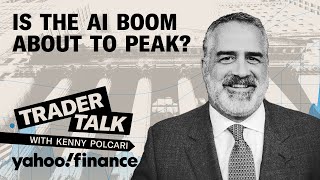
A Trader Talk videocast transcript (host Kenny Polcari with guest Tom Hayes) discussing whether the recent AI-led rally resembles a bubble versus a lasting industrial shift. Kenny argues AI is a transformative, productivity-driven revolution distinct from the dot-com era, while Tom says AI is not a bubble but some names may be overheated; they analyze capex, retail option flows, Meta’s earnings reaction, and opportunities in Alibaba and Intel as examples of contrarian/second-derivative plays. The episode also touches on retail vs institutional flows, option expirations, sentiment indicators, and market microstructure (window dressing, algorithms), ending with a personal recipe closing.
Chapters
Welcome to Trader Talk, where we dish out the latest Wall street buzz to keep your portfolio sizzling. I'm Kenny Polkari and I'm coming to you live from the Ahoo Finance headquarters here in the heart of New York City, a global hub where deals are made, fortunes are built, and the next market move is always just around the corner. Coming up, I'm gonna share my thoughts on the AI bubble. Or maybe not. Chat with my good friend Tom Hayes and share my baked taglioni with peas, pancetta and a creamy bechamel sauce. It is outstanding. Now look, let's just jump into my big take. Every time markets explode around a new technology, the comparisons start flying. This feels like the dot com bubble, they say, pointing to soaring valuations, overhyped startups and wild speculation. Sure, the AI rally has some of that froth, but let's be clear. This is not pets.com 2.0. This is the next industrial revolution. In fact, I'd call it the fourth industrial revolution. The dot com era was built on potential, on what the Internet might one day become. Back then, companies were raising billions on buzzwords and business plans with absolutely zero revenues. Today, AI isn't a theory. It's already here, embedded in everything from healthcare and logistics to energy grids and financial systems. The infrastructure, demand and cash flow are real. Now look at the difference in scale. When the dot com bubble popped in 2000, global Internet adoption was under 10%. Today, AI is being deployed by trillion dollar companies with decades of profit history. Nvidia, Microsoft, Amazon, Apple. These aren't startups burning cash. Oh no. They are global titans building the picks and the shovels of the next economy. And here's the key point. The AI story isn't hype. It's about productivity. It's not simply new software. It's a force multiplier for every industry. AI doesn't just add value, it compounds it's cutting costs, improving decision making and accelerating innovation at a pace that we have never seen. That's not a speculative promise. That's margin expansion in motion. Now will we see some shakeouts? 100%? Absolutely. Some startups will vanish, some valuations will crash. But that's how every technological revolution evolves. Creative destruction is the toll we pay for progress. The winners that survive will define the next generation of market leadership. Just like Amazon and Google did after the last bubble burst. The bottom line, the dot com bubble was about possibility. The AI boom is about execution. This isn't the birth of a fad. It's the rewiring of the global economy. And if you're still waiting for the bubble to pop before you get involved, you might just miss the next decade of growth. Okay, my next guest is my very good friend. He's a powerhouse in the world of hedge funds. He's the founder and chairman of managing member of Great Elk Capital here in New York City and California where he's been at the forefront of long short equity investing. And he's known for delivering real, actionable ideas for traders and investors. He also hosts the popular hedge fund Tips with Tom Hayes. It's a videocast and podcast, a go to resource for anyone trying to make sense of these markets. A Columbia University alum and dedicated community leader, he's a dynamic and influential voice in finance and. And I get to call him my friend. Please join me in welcoming Tom Hayes back to the show. Tom, it is such a good time.
So good to see you.
Kenny, I am so happy that you're here with me today.
I'm so happy to be here.
You have no idea. It's perfect. Cause I think, you know, there's a lot to talk about you and I haven't, I think the last time you were on was at the very beginning part of this podcast back in January, February. So it's exciting to have you back now that we've gone, you know, six or seven months into the, not only into the podcast, but into kind of the economic cycle, what we've been through over the last six and seven months, you know, so let's just, let's just put this out in the open. At the very moment, in your opinion, is the AI trade too crowded?
Ooh, that's a different question than is the AI trade a bubble? Okay, I don't think it's a bubble. I think we're in the early to mid stages and I agree. I think in the short term it might be a little bit overheated.
Okay.
You know, it's interesting statistics. The hyperscalers capex to operating cash flow is now 60%. Do you know what other industry has that level of capex?
I don't.
Big oil now, big oil trades at 15 times earnings. The hyperscale trade at 33. Now, I'm not comparing the businesses, but what I'm saying is the free cash flow of this group in aggregate since Q4 of 2024 till Q1 of next year is down 43% because of all this investment. And the market is saying we're going to give you time to see the return on investment, except in the case of Meta, no time for you. Okay, So I think we're going to see more instances of that. And even if you look at this great earnings season, Kenny, the biggest it.
Has been so far, fairly good earnings season.
Yeah. The biggest detractor was communication services because of Meta and because of Netflix. Okay, Those are two, two big misses in the mag 7. And believe it or not, Financials has been the largest contributor because they had a big, big contribution in terms of exceeding expectations.
Right. But let me ask you, let's just go back to, for one minute and talk about, I want to talk about the Meta story because I think that's interesting what they did to Meta last week when they, you know, I didn't necessarily think that the report was so horrible, but they didn't, you know, it was priced to perfection that the miss that they had suddenly caused everyone to say, I gotta get out. You sold the stock of what, 11 or 12% in one day?
Yeah, yeah.
At 11 and a half percent, I think.
Well, here's the thing. When you're in the flavor, you know, you've been around. It's the Wall Street Fashion show, okay.
Flavor of the month.
Flavor of the month right now is AI. And when you're in these trades, you know, Palantir is gonna report tonight. Palant, great, okay. And it might keep going up. Here's the thing though. There was an upgrade on the stock at Wedbush and we know Dan, brilliant guy, he's got a home run. Billion dollars in his etf.
Dan Ives.
Dan. And he's upgraded to a trillion dollar valuation and he certainly could. I don't know if he'll be right or he won't. But here's what I know. They're going to report a billion dollars in revenue this quarter, not a billion dollars in profits. So last time I checked, there's four quarters in a year. That's $4 billion in revenue. Right. 250 times sales. That works. Until it doesn't. Because you know what? Everything, all the great things that Palantir is doing and is going to do in the future. The question is, how many years of that are you paying for today? Amazon, not to compare. This is not like a bubble. Amazon did everything they promised us that they would do in 2000 and more. The problem was in 2000 you were paying for it as if it had happened. And that's why over the next four years, from 2000 to 2004, even though their fundamentals got better, revenues went up, cash flow went up, earnings went up, the stock went down 80%.
Amazon did.
It did.
Right, right. And so now the question is, let's talk about Meta. Where do you think Meta goes after what we just heard? You think it continues to trade back a little bit, or you think it kind of finds its stability and starts to move ahead? I'm not a meta. Listen, I don't own meta. I never did. I was not a Facebook person. I never was. So I'm not in that game.
Right.
I got no skin in the meta game. But I thought it was very interesting that after those earnings came out, and I didn't necessarily think that the earnings were that horrible, but they punished the stock really bad.
It's similar to when he did the massive investment in the metaverse. And the question we have to look at is all of this spending offensive or defensive, and do they have a choice in the matter, or are they afraid of ceding shares effectively if they don't make all these investments? So that's when you look at capex levels at the same level as oil. If you remember the stories of these multiples, what was the thing? They're capex light. That's no longer the case. So when you see cash flow deteriorating, on the one hand, you could say the fact that they're buying back less shares and investing tells you that they have a better return on capital through investing in AI, or at least they believe they're going to have a better return on capital than in buying back their own shares. For years it was buy back your own shares because you can invest at a higher rate of return. On that side, it's positive. On the side of Facebook has yet to show, or Meta has yet to show the return on invested capital, just like when they were investing in the metaverse. And then all of a sudden he cried uncle and he said, okay, the stock's down too much, we're going to stop spending on metaverse. And all of a sudden the stock recovered. Right. I don't know that we're at that point. From a trading perspective, you say, do I buy META today, sell META today? I don't think in those terms, but for me, I think there are ways to invest in the benefits of AI without taking the risk, I.e. having a greater margin of safety where you can sleep well at night and put large amounts of money to work, not worrying if, God forbid, one of these companies trading at 200 times sales misses by 1%. The stock doesn't go down 1%.
No, it doesn't.
It goes down 50% because it's like yelling Fire in a crowded theater.
Exactly. Which is always the part that's interesting to me. People will say, but it missed it by, you know, a small fraction. Yeah, I know, but it was so overvalued to begin with that it creates that angst in the market.
So it works until it doesn't. And by the way, I'm not saying my framework is the only framework. I'm very good at one framework. Okay. It doesn't mean you can't make a lot of money buying momentum stocks and riding them and buying breakouts and doing all the things that momentum traders or investors do. That's a great. It's just a different discipline.
Right.
You know, like one guy's an orthopedist, one guy's a heart surgeon. You know, you don't try to have the heart surgeon do, you know, you.
Don'T want the heart surgeon doing my knee replacement. I don't want the knee replacement guy doing my heart.
So because I have one framework doesn't mean the other frameworks are wrong or right. They're different.
Right?
Yeah. And they work for people who are wired to do that. So when God was handing out FOMO genes, he didn't give me one. Okay. And I like to buy businesses that are down in price. Fundamentals are improving. Play the divergence, Rinse, repeat.
Listen, just so the audience understands when Tom says he wasn't given a FOMO gene, that it's that fear of missing out gene. Right. When people get excited and they're not in, they think they've missed it and they all run right in is typically also the wrong time to do it. But that's a whole nother conversation. In any event. Hold on one second, we'll take a quick break. We'll be right back. Okay. So Tom, we're back and thank you. And we just ended up with that whole FOMO conversation that I thought was very, very funny and apropos. Listen, let's talk about retail versus institution and some of these AI names. Who do you think is really driving the flow in, into the big leaders? Is it institutional or is it in fact retail? Because I know we've gotten some very interesting retail data that you know, that we're going to discuss.
Yeah. Institutions have been net sellers in the last few weeks. Retails have been aggressive buyers.
Right.
And it's the longest 25 week streak of retail buying call options. And the slug of the massive concentration is expiring in November. It's unlikely those people get paid.
Okay, so explain that, that concept. Explain what that Concept means so that the listener understands.
Okay, so retail is chasing the story. Okay. That's not to say investor institutions always get it right because they were net sellers in the hole and they messed the hole right up. And retail has been basically right since COVID Right. Okay. But when you see this concentration of call premium that signals froth. Okay. And when you, when you have that amount of premium that are written by dealers, that are written by sophisticated investors that are doing option pricing, it's very rare that you see all of those late money, high implied volatility calls pay out. Okay. Usually those people don't get paid. So what does that mean? It means that the likelihood is between now and expiration, we probably see a little bit of volatility or prices stop going up. So the bulk of those expire worthless. So the sellers made the money on the calls, not the buyers.
And so the expiration would be the third Friday of the month.
Correct.
Right. So that's two weeks from now.
Yeah. And then, you know, you look at even active investment managers, they had 35% equity exposure in the hole in April, now they're 90%. There's a lot of year end chase here.
Right. So. So that's one data point. Then we had the data point about the investor survey. Wasn't it saying that.
Yeah, 44% bullish, which is the highest in a couple of months.
Okay. So a lot of these data points while they, they appear. Oh God, look at how bullish it is. All these people are in can actually be a contraindicator.
Correct? Correct. You want to, you want to look for extremes and when everyone's crowded on one side of the boat. So when you ask me, is AI a bubble? I said no, AI is not a bubble. But there might be a concentration in a few names. If AI is going to work as well as everyone anticipated, the 493 are going to be the beneficiaries and the Mag 7 are going to be the cost centers.
Right.
Because the 493 are going to get margin expansion. If this works, if it works, I.
Can'T that it's working.
It is working. Of course, if I got to go through 30 articles about what's happening before I go do a show, I can get through that in an hour versus a day.
That's right. Listen, I'm also in the camp and I think you're in the same camp. We're very much in my mind at the beginning of this story. I still think we're in the batting cage. I don't Think the game has begun honestly, yet.
Look, even if you take the model of the dot com boom, we're now realizing what that was. Now the question is, do you get a massive hiccup in innings four through seven before you get through seven to nine? And the answer is, no one knows. Yeah, you don't know, no one knows. But as far as where is this going in terms of quality of life and implementation, super early days question is, what do you pay for that?
Right.
And that's gonna vary year by year.
Right? Okay, so let's talk about second derivatives of AI. And in your mind, where do you see some of the opportunities beyond maybe the obvious mega cap name that we've already talked about. Right. In infrastructure and chips and software. Do you have a kind of a short list in your head?
Well, we've had four major AI plays that didn't look like AI plays until everyone figured out they were AI plays. One is called Alibaba. You couldn't give this stock away because it was China was uninvestable. The thing went down, we started buying above 100. It went down to 60. We bought every share we could buy until our fingers bled. Not because we're geniuses, because the thing had $80 billion of cash on the balance sheet. Number one thing with the turnaround, Kenny, and is solvency risk. Okay, not only do they have 80 billion, they were generating 25 billion a year of free cash flow controlled E commerce controlled. The Cloud business has 33% of AMP Financial, largest financial services business in Asia. Oh, and by the way, they have this thing called AI which is growing at triple digits a year and you couldn't give the stock away. So for us, that was kind of a no brainer. And with these unloved stocks in the short term, it's a voting machine based on emotion. The emotion was China's uninvestable. It's communist. We're going to decouple, they're going to get delisted. All the nonsense that got people out of their stock at the exact wrong time. And then when it turns, it goes up overnight to 180. Tripled off the lows in less than a year and it's probably going to double again over the next three to five years as the AI story actualizes versus theorizes. Then intel, okay? Intel you couldn't give away. It was a dead, dead horse.
Right, right.
Okay, so 18, 19 bucks. I look under the hood, I was like, oh wait, book value is $22. You know, if they liquidate the damn Thing tomorrow, I make three bucks. So my downside's protected.
Right.
Their legacy business on the CPUs, we were in a trough of a cycle. The boring stuff that goes in computers and servers was worth 40, 45 bucks a share. So I got a double if AI fails and the fabs fail, and then if they actually produce advanced chips, which Nvidia needs more than anything in the world, then I could have a five bagger plus.
Right.
So downside's protected upside is good and possibly unlimited if the story plays out.
Right. And it didn't hurt then that the government got behind it.
That was key. But if you thought about it, the government had no choice. It doesn't matter if it was the current administration, the previous administration. The only difference between the last administration and this administration is the last administration says, we're going to give you $9 billion and we want nothing. Right. Trump says, we're gonna give you $9 billion. Oh, and by the way, we're getting stock.
Right.
Because that's the taxpayer's money. And I'm gonna. The taxpayer is gonna wind up making a five bagger on this thing.
That's right.
Okay. And when you have Donald Trump rooting for a stock to go up, that's a good thing, because you know how many Boeing planes he sold? Imagine how many intel chips he's gonna sell. Because he's got skin in the game.
Yeah, well, we. He's got it, but we've got skin in the game.
He is. We. Look, this is a guy that doesn't take a salary.
That's right.
Why is he doing this?
Right.
Right.
So it's a good thing he doesn't take a salary and he's making deal after deal after deal.
I mean, honestly. For the benefit of who?
For the benefit of the country. Correct. Every time you turn around, it is a new deal after a new deal. Over the weekend, they announced that new deal again with China about the rare earths, how China's now completely taken those export controls off and they've come to the table and whatever you need, and here you go.
Yeah.
I think it's amazing.
Yeah. And by the way, I mean, it's not dissimilar. It's not because they wanted to make a deal. It's because they had to.
They had to make a deal.
And it's the same with Intel. So if you get into these situations, like Boeing a year ago, planes are falling out of the sky, doors are falling off, you can't give away the thing. Okay. So Southwest goes to Boeing, I hate you. You're screwing up my business. Okay, go to Airbus. Your next plane will be ready in 25 years and one month. And by the way, you won't be in business by then. Right, so buying Boeing at $135 was not rocket science. Right, so we do simple things, we don't have to predict.
You're unbelievable. Listen, let's just talk about maybe really quickly, because then we're coming to the end. There's retail's new handbook, maybe on how either retail or traders are using ETFs and social media to pile into or maybe hedge some of their AI exposure. Do you have a sense of that?
Yeah, it's just gonna exacerbate the moves. Okay, so this earning season, earnings are good. 64% reported 10.7% earnings growth versus 8% expectations.
Yeah, but of the ones that reported, we have like an 84% beat rate.
83% beat rate on the bottom line, 79% on the top line, all is good. So your question is the retail exacerbates moves. The average beat is up 30 basis points, the average miss is down 6.4%.
Right.
Okay, so this is what, what happens in the short term. Voting machine based on emotion, based on people crowding in, crowding out, based on social media. All of these things, whether it's AI, whether it's this or that, will never replace fully human judgment. It'll allow us to assimilate more.
Agreed.
But that short term emotionalism, there's always going to be humans making the end decision. The people that are going to benefit are going to be the people who know what they own and play the time arbitrage game. If you got a business where the fundamentals are improving and the price has deteriorated and you can figure out that why the business will continue to improve, that's how you can make a lot of money. And a computer or AI is going to be more inclined to chase the short term fluctuations. Well, it does.
When the algorithms kick in and they take a good stock and they dislocate the price because there's nervousness and big asset managers are raising money and the algorithms are going into sell mode. If the story fundamentally hasn't changed, there's a huge opportunity.
Yeah. And a lot of it, the benefits come from structural, which is why I never do private deals, because I don't, I don't think the private markets will ever offer the opportunities in terms of price relative to value that the public markets do right from time to time. Because structurally active managers can't show certain stocks on their books at the end of the quarter because it went down, right? Even if they love the company and they think the company's gonna do well, they're forced to sell it. Because it's about survival and keeping their.
Job, they're forced to sell it. And that's what they call window dressing at the end of the quarter, right? They sell the names that they can't have on their. On their books, and they all buy the names that they want to have.
On their book, and they buy the ones that are up, the ones that are already up.
But then at the end of the month or at the end of the quarter, look, look what we own. And just.
We just saw it at the end of October. It's the end of the year for mutual funds. They were doing all their tax loss selling. So whatever was down this year got down more, right? Now you're going to see them rebound huge in November.
December. In November and December. So, Tom, it's always a pleasure to talk to you. I am. So I want you to come back, you know, every six months we have this conversation.
Love to you.
One way or the other. Thank you. Because now, today I told you, I introduced this dish, Itagliarini, the baked tallulini with peas and pancetta with gruyere cheese on the top. And you can put some parmesan. But here's the story behind that dish, right? Because when the magic happens, when you make this pasta dish and you put it together and then you put it in the oven, right? In Italian kitchens, baked Taglioni wasn't about showmanship. It was about comfort food. It was what you made when you had a little bit of everything left. Maybe a bit of bechamel from the night before and some pancetta from breakfast and maybe a handful of peas that are just rolling around the counter. Nanda would stir it all together, sprinkle the gruyere cheese on top, a little bit parmesan on top of that, and put it into the oven, wait until the edges get nice and crisp and the top turned nice and golden. The smell alone would pull people in from the house and even from the street. The version is a love letter to the memory, right, of my grandmother. Tender tagliorini wrapped in a creamy bechamel dotted with the sweet peas and the salty pancetta, finished with the crust of melted gruyere cheese that whispers, sit down, come in. It's time for dinner. You can scan the QR code on the screen for the full recipe. And trust me, you can thank me later. That's a wrap for today's Trader Talk, but the conversation always continues. Subscribe on Apple Podcasts, Spotify, Amazon Music, or wherever you get your podcast. You got questions or topics you want covered? Email us@tradertalkahooinc.com because we're always listening. Now. Until next time, stay sharp, stay disciplined, and stay in touch. Take good care.
This content was not intended to be financial advice and should not be used as a substitute for professional financial services.
More from Kenny


Wall Street Is Celebrating| But Kenny Polcari Sees A Warning Sign | Kenny Polcari


Stocks Crashed After The Fed Move But Here’s What Investors Missed | Kenny Polcari
9/11 25 Years Later: Bond Market Warning, Oil Above $100 & Fed Rate Hike Fears | Kenny Polcari

Oil Hits $97, Bond Yields Surge & PPI Inflation | Markets Brace for Fed Decision | Kenny Polcari
The Fed Has a New Problem | Oil | Inflation | and Rising Yields | Kenny Polcari

The Fed Never Promised a Rate Hike | But Markets Panicked Anyway | Kenny Polcari

Nvidia Crushed Earnings | but the Biggest AI Opportunity Is Still Ahead | Kenny Polcari