Smart investors protect themselves before the chaos hits
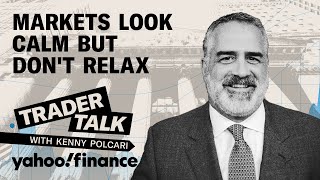
This is a Yahoo Finance/Trader Talk YouTube interview (host Kenny Polcari) with Amy Wu Silverman (RBC Capital Markets, head of derivative strategy) focused on market volatility and practical hedging advice. Key points: current near-term volatility is complacent while medium-to-longer-term option pricing (term structure) shows elevated risk; social media (tweets/memes) and algorithmic trading can cause sudden moves; investors should plan hedges before panics via options, volatility ETFs, cash/Treasuries or short ETFs depending on horizon and needs; concentrated positions (example: large Apple holdings) can be hedged via options or correlation trades. The video closes with a lemon ricotta pasta recipe and distribution/subscription details.
Chapters
Foreign. Welcome to Trader Talk, where we dish out the latest Wall street buzz to keep your portfolio sizzling. I'm Kenny Pulcari coming to you live from the Yahoo Finance headquarters in the heart of New York City, a global hub where deals are made, fortunes are built, and the next market move is always just around the corner. Coming up, I'll give you my big take on the vix and and then sit down with RBC Capital Markets head of derivative strategy Amy Wu Silverman, and I'll share with you my lemon Rigotta fettuccine recipe at the end. Now let's jump into my big take. It always feels safest right before it gets dangerous. When you see the VIX at its lowest, when your account is up and the headlines are quiet, that's when most investors let their guard down. But the truth is, in today's market, peace is only an illusion. One unexpected Trump tweak can instantly sen stocks into a tailspin, even if nothing really in the world has changed. Why? Because so much of the market is now run by computers that react in seconds to every headline. Trump doesn't need to pass a new law or sign an executive order. Sometimes he just tweets a threat or a wild prediction and the algorithm starts selling or buying. Panic spreads in either direction and volatility explodes. And and investors who thought it was safe scramble for the exits. Now, if you're newer to the game, here's how to think about preparing. Don't get too comfortable when things are calm. Low volatility doesn't mean risk is gone. It just means it's hiding. When everyone's relaxed, that's actually the best time to set up some protection, whether that's buying a little insurance through options or holding a volatility ETF or simply keeping some cash ready on the sidelines. These things are cheapest when nobody thinks they need them, and they give you power when everyone else is rushing to react. Have a plan in mind for what you'll do if the market suddenly drops. The middle of a panic isn't the time to start making decisions if you already know how you'll handle a sudden swing, you won't be stuck following the crowd. Instead, you'll be positioned to buy great opportunities at a discount while others are forced to sell. Bottom line, volatility isn't gone. It's just waiting for the next surprise. Smart investors protect themselves before the cha, not after it's already too late. Don't wait for the panic. Be calm in the chaos. So now I'd like To introduce my guest today, joining us is Amy Wu Silverman, managing director and head of derivative strategy at RBC Capital Markets. She's a leading voice in the world of options and volatility with a deep background in quantitative research and equity derivatives. Before joining rbc, Amy spent years on both the buy and sell side, building a reputation for translating complex market signals into sharp and actionable insights. So, ladies and gentlemen, please join me in welcoming Amy Wu Sullivan. Amy, it's a pleasure to have you and thank you for joining us on Trader Talk.
Thank you for having me.
So we're talking about volatility. There's certainly a lot of volatility in the markets these days, if not because of what's going on in this country politically, but certainly what's going on around the world and how that all plays into kind of the whole volatility mantra. Right. So talk to us a little bit about what you think. Here we are in mid year, what you think about where volatility goes from here, what people should be aware of. You know, when it's at its lows, what should people really be concerned about? Because I always think when it's, you know, trudging around at the lows like this, everyone goes, oh, nothing's wrong. Nothing wrong. That's exactly when you kind of have to prepare.
Yeah. There's actually this old saying that strategists point to, which is hedge when you can, not when you have to. Right. And I think that that piece of advice still holds true. You know, it was just Father's Day, so. So maybe I'll give you a bad volume joke instead of a bad dad joke. But, you know, we talk about the option Greeks a lot. So the Delta, the Vega, the Theta. But, but you know, the most important one is actually Twitter. So it's just the sensitivity of implied volatility to Donald Trump's tweets.
Right.
Right now, because you're absolutely right. It's this uncertainty of what he could say, and the implications of that are vast.
Well, and it's. But it's the uncertainty. Yes, it is the uncertainty about what he could say, but it's kind of the uncertainty about what so many people can say on Twitter. They could post something that's, that, that's either not verified or it's erroneous. I mean, look, I remember and I tell this story all the time because I think it's, I think it goes right to the point, you know, when, when I was still a floor broker on the floor, the New York Stock Exchange, it was probably 2013, ish, 2014. And Avon was going out of business. Right, they were bankrupt. The stock was trading for pennies on the dollar. Right. And it was well known that it was bankrupt. But then somebody put a tweet out that some equity venture capital firm was buying Avon for $9 a share. Made zero sense. But the fact is the tweet hit the market. Now this was also year 2013, so it was, it was a dozen years ago. Right. But the tweet hit the market and the, and the letters of the, of the venture capital firm, it should have been PHG for instance, and it was pgh. So they just twisted the letters around. But if you looked at it quick, it, it made sense that, you know, you might have thought it was that. And suddenly Avon went from, you know, $0.30 up to $9 before you could even blink your eye. And then they came right out and denied the, denied the story cuz it wasn't true. And then the stock went right back to $0.30, which is clearly where it should have been. But that, that chaos that the tweets create now that wasn't Donald Trump, that was somebody else that did it. But it's the fact that, that tweets can create volatility up or down, no matter who says it.
Absolutely. And you think about the way social media disperses things now, you know, so think back to the meme frenzy. That was a very options related phenomenon that hasn't really gone away. You know, it might not be on GameStop now or AM. If you were in a coma at the beginning of this year and you just woke up, you would have thought nothing's happened. But look at the whiplash we've had. And a lot of that has to do with when that news hits. You're right. You get those algorithms that immediately try to factor in that news. But then you get that human emotion too, of the panic post Liberation Day, this is the end of the world. We're really going to have 145% tariffs. Let's degrows immediately. And then, and then you get that, that fear and that greed kind of combining on the way back. And then you kind of take that step back with hindsight and you say, oh, we didn't really move, did we?
No, we didn't.
Weird.
Yeah, we didn't. And people get frustrated and rightly so, especially if you're a long term investor. You get more frustrated if you're a short term day trader. You know, some people love that volatility because that's how they're making their money. But as a long term investor, you can really get frustrated. And you know, as a market strategist and a wealth advisor now, I spent a lot of time after Liberation Day when the market was crashing, trying to talk people off the edge, people that wanted to sell, sell, sell. I'm like, stop. You know, you re, you have to take a step back and sometimes it's difficult, but the chaos that it creates is really, I think, amazing. I do think though that people, especially investors, might be getting a little bit more used to, you know, how that happens. Right. It feels casino ish, but it really isn't. But you know, you can't help when they say it is or it feels that way. So talk to me about where we are in volatility now. We're mid year. What do you think is happening for the rest of the year and how do you think maybe investors. Investors, not day traders, but investors should position themselves.
Yeah. So one thing I'll say is, one thing we look at really closely is not just how volatility is behaving in the near term, but how it's pricing. Three months out, six months out, 12 months out. So we call that the volatility term structure. But it's essentially a way of saying what are your expectations in the future for how volatile this market will be? Right now, near term, it's actually pretty complacent. You know, we were talking before about the fact that it looks like Iran is trying to de escalate the situation in the Middle East. So, you know, we had that quick pop in the vix, Right. But now we've subsided. What is really interesting to me is when you look at that term structure three months out, six months out, one year out, there's a lot of nervousness.
Right. So that's very interesting because I just want to make sure that the audience understands the short term is three months. Is that what the short term is?
Under three months?
Under three months. Right. So right now that's fairly complacent. People are not that worried. But if you look out six or six months or a year from now, they're much more worried, which means what are they doing? What's happening to the pricing of that volatility?
Yeah. And look, every market as you know, comes down to supply and demand. So when we say things look more uncertain, uncertain, essentially what we're saying is there's more demand for options to hedge, there's more demand for protection from investors who, who say, look, if there is a downturn six months from now or one year from now, I want to have something in my portfolio that's going to kick in to protect me. That, that could be a recession. That could be the tariff impacts finally coming. That could be the soft data translating the Fed.
Right. It could be a ray. Right. Could be a range of.
We, we don't know. But what we do know is even though we kind of had this whipsaw and rally back in the market from April 2, near term, it didn't ever change that longer term fear. And I think that's interesting because it does speak to the fact that we still have a bunch of question marks that need to be resolved.
Right. Because there are a bunch of. So separate from the tariffs and separate for one moment for the geopolitical issues, we have our own issues here in the United States in terms of what the Fed's going to do or not do right now, this week happens to be Fed week. Right. So we're going to get their June rate decision. I don't think they're cutting rates, do you?
Neither do I.
And I don't think they're cutting rates in July either. Yeah, right. And then August we have the, we don't have a meeting because we have Jackson Hole. So the next meeting after that is September. There's some sense that maybe September they cut rates. Where do you stand on that?
And so what I think is about interesting is that term structure inflection I think is pricing. That that could happen because the other thing that I think this gets lost a little. But the demand for options doesn't always have to be to the downside.
Right.
To the upside. It doesn't really matter. Right. It's just that if the demand is increasing.
Right.
You're going to see that reflected in the volatility. So it could, you know, it could be saying the market's just going to have a big move. It doesn't say if that's a move to the downside or the upside, just that that magnitude is higher.
So where do I, where do I or where does an investor see that information? Or they can'.
It, I mean I think they can see it on Yahoo Finance. So I, you know, you can essentially say where are the September S and P at the money options trading? Like let's make it really straightforward and where are the December ones trading? Where are next year's trading? And you can kind of, if you plot that in a graph.
Yeah.
You can kind of see those points start to go up. And to be, to be fair, those points Normally should go up because you probably know what you're going to do this weekend. You probably don't know what you're going to do a week. Maybe you do, maybe a good planner, but I don't.
Yeah, yeah, right, right.
So it is normal for what we call that term structure to be upward sloping. But our point is that it's way more upward sloping right now than it typically is. Even adjusting for the fact that the future is more.
Which then suggests that, that the market is concerned there's going to be a move, something's going to happen.
Exactly.
So let me ask you a question because, because a lot of times I talk about the contra trades, right, which are, which are essentially helping you hedge. So whether it's you buy the sh, which is the S and P short, right? So if you think the market's going down, you would buy the sh, which gets you short, or the PSQ would get you short the NASDAQ or the dog, which gets you short the Dow or the spsx, which is the S and P triple leverage short, which I always tell people that's not a long term holding at all. And you have to be very careful. Cause that can cut both ways, right? If it goes the opposite way, then if the market goes up, it's gonna cut three ways up to the upside. It's going to hurt three times as much. But those are other ways that people can play and I guess in a simpler fashion than trying to come up with an option strategy. Am I right?
Yeah. But this is what I would say to me, you know, because what I do my day job essentially is to help like an asset manager or a hedge fund or a pension fund, say, okay, like let's look at your portfolio. And if you really do think there's something to worry about, what's like the optimal way to protect but for someone who has their own personal portfolio, Right. The most important thing is what do you need the money for? Do you need it right now? If you need it 30 years from now, don't do anything 100%, right. But if you need it one year from now because your kid's about to go to college and you need that liquidity, then that hedge is essentially a way of saying, I'm going to lock in this amount that I need and I'm paying a little to do that. But the same way you have insurance, like that's what it is.
All right, hold on one second. We're going to take a break. We'll come right back. Okay, so we're going to pick up from where we left off about, about planning. Because it's really all about planning. Right. To your point, I would say to a lot of people, if they need the money for their kids education, six months from now or a year from now, if you want to play really safe, take it out of the market, leave it cash, just put it in Treasuries. Cause then you have no issue at all. You don't have to worry about what the market does up or down. But to your point, if you want to, you know, if it's a year out and you want to stay in the market but protect yourself, then you would do it that way, right?
Yeah. And that's, that can be something, you know, as straightforward as just a put option on a broader market. Or it could be, you know, it depends what your positions are. And again, this is why I say the day job is kind of to actually look through the portfolios and say, okay, you know, you own a lot of Apple. Apple's kind of been in the crosshairs.
Correct.
You know, for a variety of reasons that tweeter risk is really high. So we want to own some put options there.
On Apple.
On Apple, or sell it, you know.
Because it's very funny, bring up Apple. Because I have one client that has an extremely concentrated position in Apple. This guy's been buying it for 30 years. Any money he had, you know, when Apple was traded at 12 bucks, he just kept putting money in Apple.
That was a good idea.
It's a great idea. It's a great. Because it's a $20 million portfolio now, which is beautiful, but it's all Apple. Right. So there's no diversification. He's completely at risk right now. Apple's under pressure to your point. And so, you know, this particular portfolio has had a volatile time, but trying to hedge it, trying to, you know, create some income. Because you can certainly create income from a portfolio like that as well.
Absolutely. So you know, one another thing, it's funny because people use the word correlation to just say, you know, how much does this move relative to something else? But in our world you can actually trade it. It's a product. Right. You can trade the correlation itself. And one thing that we talk about is what are the offsets? So okay, you don't want to move your Apple. Maybe it's for tax reasons. Like, I don't know, there are a lot of reasons why you might not want to touch that. So essentially you want to find another asset that is uncorrelated, that is going to move in the opposite direction than Apple. Maybe that's another company. Maybe, maybe that is an option that's helping you again, reduce that. The fact that you're so concentrated, you have a correlation of 1. We want to make that a little lower. Right. To. To the tweet risk or whatever it is, 100%. And you know that that's the type of thing that I think can be really interesting if you manage it the right way.
Right. So. So essentially what you're saying is I'm going to buy something that's going to. That's going to react opposite to Apple. So If Apple loses 10%, hopefully the, the other investment that I'm now purchasing is going to rise 10%. So. So I haven't gone anywhere, but I haven't lost. I haven't lost her any money. But I'm hedged.
Yes.
Right. So one position's down, the other position's up. It washes each other.
And you know, for a long time, I'm sure you know this, that was bonds and equities. Right. For a long time, a lot of the portfolios that were constructed.
Right.
Were, you know, 60% equities, 40% bonds, because people were relying on that correlation to help them out. One's going one way, one's going the other way. And the problem is that has broken down. There are all these relationships in the market that we counted on, both in options and in bonds and in stocks where we can't count on that anymore. And so we are trying to figure out what those new relationships are because they're really important.
They're very important. So listen, let me ask you a question based on your world and what, you know, in this conversation we're having, what's your sense of. And I'm not holding you to it, I'm just kind of get a sense of what's your sense of where the market's going to be the end of the year, a year from now.
Yeah, here's what I would say. I am not officially the chief equity strategy, so I'm not speaking on their behalf. On their behalf. But what I would say is when you look at where we started at the beginning of the year, let's pretend tariffs didn't like. Let's pretend the tariff thing never happened. Let's pretend there was no geopolitical risk, just purely on the economics of the beginning of this year.
Right.
We already worried about a decent amount of things, so we were already a little bit worried about growth. We were already worried that kind of this K shaped recovery. So meaning the high end consumer was really bringing this market along, was also starting to wane. And this is prior to throwing in the tariff risks, throwing in the gifts, geopolitical risks. So you know, our chief strategist has this great phrase which I love, which is called aggressively neutral. But it's just this idea that probably from here, just for valuation reasons, we were at a point where perhaps this year the upside was limited. And so we started this year with an outlook that said, look, if you want to be an environment where you're collecting more yield, use volatility to help you. So that could be yield enhancing strategies or using some of that yield to maybe fund some downside protection. But everything we talked about in our year ahead outlook for the end of this year was managing for scenario. At the end of this year, you know, maybe the market is up a handful of percent but not a 20% up.
No, but. And so, and so that's the exact point. Look, we had a couple of years where the market was up plus 20%. Well, that was really out of the norm. It was way outside of the bell curve. Right?
Yeah.
Returning to an 8 to 10% return on stocks and if you add in divvies, maybe you're 12%, which is historically normal, which I think is, which is great. And so we've been preparing at Slatestone, we've been preparing investors to consider the fact that we're gonna go back to a 10 or 12% return, which by the way works right. This 20% or 25% return year in and year out, not happening. And so people need to understand that. But you know, it's funny because they, after they see the last two years, what they've returned and going back to 10%, it feels like it's a failure. It's not a failure at all. A failure might be if we're down 30%, that's the failure. Right.
And I also don't think that's going to happen right there. You know, I don't think it's going to be past this growth scare into this. I don't think we're there. You know, it's again, it's unfortunately, you know, it's not going to be as sexy as the plus 20% market. But it won't be a 2008 either.
Yeah, no, absolutely not a 2008. I don't think that's going to happen. But to your point, I don't think it's gonna be another multiple 25 plus percent. You know what I mean, I just don't see it.
Yeah.
Anyway, listen, I'd like to revisit this maybe in another six months and come back and see where this conversation went because I too think that there's something coming. I think I tend to be more optimistic. So I think the next move is gonna be higher, not significantly, but I don't think we're gonna be down to 4800 by the end of the year at all. Right. I think we're somewhere between 6,000 and 6,400. I think by the end of the.
Year you're gonna wake up from that coma. Not that's right.
But, you know, we'll revisit that in five or six hours. I'd love to have you back. In the meantime, you know how I end every podcast with a recipe, and today I thought I'd feature those and I made it yesterday for Father's Day. It was delicious. This lemon ricotta pasta, right? It's a dish that really reflects Southern Italian cooking. It's fresh, it's seasonal, it's just simple and beautiful. Its roots can be traced back to Campania and Sicily, where lemons grow in abundance along with sun drenched coastlines. And the ricotta is a staple in both sweet and savory dishes, right? Ricotta itself dates all the way back to Roman times, and its name actually means recooked, referring to how it's made from the whey left over in the cheese production. In southern Italy, fresh ricotta is prized for its creamy, slightly sweet flavor and is often paired with citrus to highlight the freshness. The idea of combining lemon and ricotta with pasta emerged as a way to create a luxurious, feeling dish without meat, especially during lean times or even during Lent when a lot of Italians don't eat meat, right? Lemon adds brightness, cutting through the richness of the cheese, while the pasta water, which I call tears of the Gods, helps to emulsify it all into a light, creamy sauce. It's a warm weather favorite today for good reason. It's quick, it's elegant, and it's full of Mediterranean sunshine in every bite. You can scan the QR code that's on the screen to get the full recipe and you can thank me later for that look. That's a wrap for today's Trader Talk, but the conversation will keep going. Subscribe on Apple, Apple Podcasts, Spotify, Amazon Music, or wherever you get your podcasts. You got a question or a topic you'd like me to cover? Email us@tradertalkahoo inc.com because I'm always listening. Until next time. Stay sharp, stay calm, stay disciplined, and stay in touch. Take good care.
This content was not intended to be financial advice and should not be used as a substitute for professional financial services.
More from Kenny


Wall Street Is Celebrating| But Kenny Polcari Sees A Warning Sign | Kenny Polcari


Stocks Crashed After The Fed Move But Here’s What Investors Missed | Kenny Polcari
9/11 25 Years Later: Bond Market Warning, Oil Above $100 & Fed Rate Hike Fears | Kenny Polcari

Oil Hits $97, Bond Yields Surge & PPI Inflation | Markets Brace for Fed Decision | Kenny Polcari
The Fed Has a New Problem | Oil | Inflation | and Rising Yields | Kenny Polcari

The Fed Never Promised a Rate Hike | But Markets Panicked Anyway | Kenny Polcari

Nvidia Crushed Earnings | but the Biggest AI Opportunity Is Still Ahead | Kenny Polcari