This sell-off could be your golden ticket to AI and fintech gains
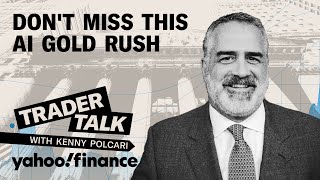
A Trader Talk YouTube episode (host Kenny Polcari, guest Drew Pettit of Citi) about long-term investing discipline and thematic investing. They contrast themes versus sectors, explain Citi’s process (mapping ~6,000 global stocks to 100+ themes and grouping themes into innovative/cyclical/defensive buckets), and discuss how recent volatility and tariff headlines affect positioning. Key thematic opportunities mentioned are AI, fintech, and "Digital Leisure;" the guests argue volatility creates chances to buy high-quality, structurally advantaged names at lower prices.
Chapters
Foreign. Welcome to Trader Talk, where we dish out the latest Wall street buzz to keep your portfolio sizzling. I'm Kenny Polkari coming to you live from the iconic New York Stock Exchange, a place that had been my home for four decades and still fuels the pulse of capitalism, entrepreneurship, and freedom. Let's jump into my big take for the week. Everyone says they're a long term investor. That is until the market drops 5% and then they're refreshing their portfolio every 10 minutes. Let's be clear. Long term investing is not a slogan. It's a mindset. And most people completely misunderstand what it actually means. Long term investing doesn't mean buying and holding forever, no matter what. It doesn't mean ignoring risk or blindly trusting the market will come back at some point. What it means is you have a clear plan, a disciplined process, and the patience to let time, not emotion, do all the heavy lifting. Being a long term investor means you're focused on the fundamentals. Earnings growth, potential, market position, leadership. Not headlines or hype. It means you're not reacting to every dip or rotation. You're not chasing performance. You're thinking in years, not quarters. And it also means knowing when the long term thesis has changed. Long term doesn't mean stubborn. It means you hold as long as the reason you bought the asset is still holding up. If it doesn't, it's time to move on. No ego, no emotion. The reason long term investing works is because time smooths out the volatility. Markets go up, they go down. But over time, it's always quality that wins. Dividends compound, strong businesses grow. And disciplined investors, the ones who can stay in the game, always come out ahead. The bottom line, Long term investing isn't about ignoring the noise. It's about knowing which noise to ignore. And that takes more than just patience. It takes conviction, clarity, and a whole lot of discipline. I'd like to introduce my next guest, Drew Pettit, a distinguished market strategist with extensive expertise in U.S. equities and exchange traded funds. As Director of U.S. equity Strategy at Citi, Drew provides insightful analysis on market trends and investment strategies. A proud alumnus of Canisius College, he combines academic excellence with real world experience to empower his investors. Please join me in welcoming Drew Pettit to the show. Drew, it is a pleasure to meet you. Thank you very much for making the trip down here from Buffalo, New York.
Absolutely love it. Love being on the floor here. This is awesome.
Thanks for having me. Although the floor's a little bit different, say, than it was, you know, when I came here 40 years ago. But that's a whole nother conversation. We could have. Drew, talk a little bit about just your history, kind of where you came from and how you ended up in this position at city that you're in.
Yeah, it's funny. So Kenesha's college, always a tough one to pronounce. Little, little messy, but so it's funny. I'm Canadian, came to the US to play college baseball. From there I worked at an RIA and really wanted to dive into the inner workings of markets. Not so much, just kind of the, the, the tail end. So I got to Citi about 10 years ago. We focused at that time on small and midcap stocks for the most part. And over time we transitioned to look more at ETFs as macro and bigger thematic trading really became a bigger topic, a bigger key, not just for retail investors, but for institutional investors. And then from there our teams transitioned into US Equity strategy where, where we broke off and now do themes. Because themes evolve very quickly. Like this world evolves. And I think it's more relevant today than it ever has been.
Well, I think you're right. So let's talk, let's just talk about that. Let's drill down on themes for a minute. Because, because it is true. Thematic trading is gaining all kinds of exposure and you hear people talking about it. So explain to the audience when you talk about themes, the different themes, for instance, that you focus on.
Yeah. So I always like to step back. So why themes, not sectors? So the fun one is our credit card companies. Let's take MasterCard for example.
Right.
Is that a financial company or a tech company?
Right.
If you asked these people that create these big indices, if you ask them that, five years ago they would have told you it's a financial company. Today they tell you it's tech. That's fintech.
Right.
So when I think of themes, these are not just short lived, little tradable things, right. But longevity, things that tend to be tied together.
Right. But so the theme can be the stock can fall into two sectors, right? It's got a theme, which is fintech, but its sector might be financials, am I right?
But the key is evolution, right? Financials, as you've seen in your career, went from human to human interaction to a lot more computer to computer interaction. So there's a theme in the long term transition, right. In something like financials. So when we think about themes, it's about enduring changes within markets, within economies that we can see in companies and we can pick companies to invest in those changes.
So when you, if you're going to get on that road, you could talk about a lot of companies from a lot of different sectors suddenly not being in the sector that the theme might suggest, am I correct? Like an insurance company could also be fintech and very automated. A bank can be very fintech and automated. Look at JP Morgan, look at Citibank. Right. Couldn't be very fintech and AI oriented. So that's a very interesting, you know, conversation, the way you play it. So then how do you, how do you figure it out? How do you, how do you select the top themes?
Yeah. So from a top theme perspective.
Yep.
Depends on the market environment we're in. Don't want to be overly tactical. I love your setup at the beginning. Long term investing is about having a plan.
Right.
When we think about these innovative themes, these tech heavy themes, we want to buy into those structural plays, but we want to be reasonable about valuation. So when I think about innovation, I think about growth at a reasonable price.
Right.
When I think about cyclical themes, so the infrastructure, all the road work we see outside, fixing the sewers, you know, water getting pumped in and away from this building, those types of themes, I want companies that can do that more efficiently. And that's a long term structural theme. And then some of the defensive themes, like a lot of the stuff we need and use in everyday life. That's where actually we're probably thinking about that a little bit more tactically. But I want to think about defense. That might not get upended in changes like we're seeing today.
Right. So defensive meaning consumer stable stuff, not aerospace and defense. You're talking about defensive sectors, even something.
Like health care, for example.
Right. So utilities might be defensive sectors.
But.
But let me ask a question. So then do you, at Citi, do you create thematic ETFs?
No. So we're thinking about thematic baskets or we're slicing and dicing. We think about almost 6,000 stocks globally and we map them to over 100 themes. And the beautiful thing about this is the list of those names changes over time.
Right.
So we were thinking about these groups of stocks and then we break them into the innovative, the cyclical and the defensive types of groupings. And then from there I can pick and choose which themes I like the best.
And you're not using. Did I hear you right? You're not just using US Stocks? Global. Global stocks. Global. So you could have European stocks and you could have Asian stocks in there. You could have US stocks in there. Them, which makes it even more interesting. And then, and then. So if I were going to buy into this theme, I'm not buying an ETF then, right? I have to buy. Here's the theme, Here are the names that are in it. I have to buy those names. Am I, am I right?
For, for some investors, yes, they can buy into this using single stocks. A lot of our institutional investors like to go down that path, right? A lot of. Honestly, retail or actually some of those institutions that want some more diversification, right. Can use an ETF or a sleeve of these stocks.
Right? Okay, so, so, okay, so there's the point. If you have a retail investor that wants to, that wants to incorporate some thematic investing into their portfolio, where are they going to find these ETFs? Because they're not city ETFs, am I right?
Oh, they're out there in the world.
They're out there in the world.
We're looking at 4,000 plus ETFs. That covers probably 90% of the themes that we track, right?
So does iShares or S&P have thematic ETFs that people can buy? Oh, yeah.
Tons and tons of issuers go down the line. You'll find lots of different exposures. But at the end of the day, the funny thing about themes, because everyone can think about these differently, you got to know what you own, right? Whether it's in that ETF or in that single stock, know what you own.
Well, because the problem there is you could have one name that could be in two or three different thematic strategies. And so then you end up, you go with those different thematic strategies. But then without even realizing it, you may end up being overweight in a number of names, which is what you're trying not to do, right?
If you're going to be overweight, it, and we don't mind having overweights, know that you're doing it. Make it a conscious decision.
Well, and so that's the point, right? So when you look at things like, you know, I talk about this on other podcasts, but when you look at things like the XLK, you look at the top three names in the XLK make up 40% of that one ETF, right? But it's Apple, it's Amazon and Microsoft. I think those are the three top names in the XLK etf. And that's great as long as you know that that's it. Because then you go buy, you know, an innovative tech etf or you go buy. Maybe, maybe you own Apple stock separately. You know, you may, some people may not realize that unbeknownst to them, they became overweight in a name that they didn't necessarily want to become overweight in.
And it's funny, even from a thematic perspective. Think about the S&P 500 and the Mag 7 at the top.
Right?
You're getting a lot of that thematic exposure just in a core type of holding.
That's right. Core holding would be the S&P 500. Right. Would be the S&P 500. Right.
Something broad and diversified, depending what stocks are heavyweights at the top.
Right.
You're gonna get some thematic exposure there. You layer on a sector bet, you layer on a stock bet, you're just adding more to that theme. Just in different ways.
Right, Just in different ways. And I think that's the important part. I mean, that's what people need to understand. Is that how you do that and making sure you understand that you know what's in those different themes to make sure that you don't necessarily, unbeknownst to you, overweight yourself in a name and then suddenly that sector comes under pressure and then you underperform.
Yeah, it's. How can I say this really simply. There's many roads to Rome.
Yeah.
To get there.
There are many roads to Rome and trust me, I think I know all of them. Anyway, let me ask you a question. Let's talk about, you know, recent market action has caused all kinds of volatility in the markets. There's been this whole, you know, this whole play on, on tariffs with, with Trump trying to clear, level the playing field in terms of, in terms of, you know, who's, who's charging who and where we're going with it. And so he, he dubbed it Liberation Day, you know, a couple of weeks ago. As far as I'm concerned, the last, the last three days I've seen we've been liberated from our money, the way the markets are reacting. Right. Because the markets have done nothing but go down. Now, it's interesting because I said this in my note this morning, that overall, I'll call it a price adjustment because it's really not a loss until you take it. Right. You can own Apple at 200 now. It's trading at 180. I don't necessarily consider that a loss yet. Because you didn't take the loss. Yeah. Okay. It's worth less because it's adjusted its price. Right. I'm trying to get people to think differently because right away everyone thinks loss, loss, loss, and they get panicked. It's not a loss until you take it. And it may not ever be a loss because if it's just part of the cycle and Apple is Apple. Right. That people shouldn't necessarily panic. So talk to me about, about what's the view at Citi.
So I like to step back and try to be a little bit cold when these things happen.
Cold, cold.
Calculate here.
Right.
What did change tariffs, the view on trade longer term and kind of the view of US Business. What can change in the next hour, week, day is we can roll some of this back.
Right.
So first off, I do like to think about what is changing from a numbers perspective. Is there risk to Apple's earnings? Are there risks to the s and P500 earnings? Yes.
Right.
But if I think about this out the other side, who's going to survive this?
Right.
Do I want a big US company that has a bunch of operating leverage, good margins, a lot of financial flexibility and do I want to bet against companies that can make productivity changes and adapt? Because guess who's left on the other side? Good, strong companies.
Right.
So do we think tariffs are good for the US Market and earnings? No, that's math. Do we think it is good for long term multiples? Can we trade at very high PS on the S and P, for example? Probably not if they're this high for a long time.
Right.
But does it change my view that I want good companies and am I going to be able to step into some winners at a much lower price today than I did?
I think that question is yes, although it still feels nervous. Right. Because look, the market is still kind of under pressure. But you saw what happened. I mean, you get one positive headline and the market spikes higher because it's looking for something positive. And you can imagine that there's probably a bunch of people out there that are short the market thinking it could go lower and it might go lower. But if we get that positive headline and the market turns, it's going to turn. It's going to be a rip your face off rally, I think, because then you're going to have the market responding to the good headlines and then you're going to have all the shorts trying to run for cover, which will only exacerbate the move to the upside.
And that's the not so cold side of me is here's where sentiment starts swinging. Do we think investors are completely panicked? We got to really step back and realize where we started the year at. We've taken a lot of froth out of the market, a lot of this, like irrational exuberance, not to steal a book title here, but we've pulled some of that out and now we have a better starting point for assessing the risk to these companies that are really strong structural names. So the beauty of that is we put out a shopping list with some names as a first response to the tariff headlines. Not us just freaking out, changing estimates right away. We wanted to think about what we could own or should own in this volatility, not do we need to panic.
Perfect. All right, hold that line one minute. We'll be right back. Okay. So welcome back. We left off where we were talking about, you know, how to react in a market that's volatile. So I'm in your camp and I spend a lot of time as a wealth manager talking to clients when it gets nervous like this because people get anxious. And so I go over once again about those themes, about the names that they own. Has the thesis change. Okay, are terrorists maybe the best thing? Maybe not. Maybe yes, maybe no. One way or the other, they're here and we have to figure out how then to make it work. And so you have a list of names that you can certainly, you know, go shopping for. These are names that are on sale. This could be. You know, I heard some people talking about being a once in a lifetime opportunity to get some of these names at the prices they're now trading.
Yeah. So this, this comes back to themes in the structural nature of them. So it's fun to tie this all full circle when we think of structural themes. And I'll stick with a couple innovative ones.
Right.
AI. I know that scares people. No. But we have kind of a view on that and how you should think about that. Fintech. Right, we mentioned that. And another one of our favorite themes, Digital Leisure. So Digital Leisure. So this is fun. Think about what you consume at home. It's this podcast, it's.
Is that what they call it now? Digital Leisure.
But it could be the streaming services on your tv. Tv, you don't read the physical newspaper, Mind you, I still get one, trust me, I'm older than I look. The physical newspaper. But people will read it on a tablet and then even like online gambling, for example. So a lot of things we can consume easier on the go in different formats. Something like Digital leisure is also a thing.
It's interesting. I had never heard, I'd never heard the sector described like that. I guess it's, you know, welcome to the 2025.
Right, exactly. So these are types of things with this Sell off and this volatility, right. Is that going to change your behavior and go, oh, I'm not, I'm not doing social media and podcasts anymore because the market went down. No, people are still consuming.
No, they'll actually, they may actually end up consuming more of it. Right. Because people want to be, either they want to be entertain or they want to be educated or they want to understand what, you know, the minds are thinking. Right. And it's a great place to do that.
So those types of names, while they may not be as affected, are there short term impacts? If there's consumer confidence and spending, yes. But longer run, is that going away? No. So that's a theme and we think of some of the stocks within it that we would step back into.
Right.
It's not even outperforming in this, this mess right now.
Right?
It's a beta sell off.
No. Right, that's right. It's a beta sell off. It's a beta sell off. But, but here's the question. The AI theme, right? So just let's think about that theme for it. That theme is not going away. That theme is only going to get strong. Okay, so Nvidia is Now trading at 86, down from 147, screaming behind Nvidia's going away. Nvidia sits right at the nexus of the whole AI architecture.
So this is our thought, and not to get really specific on Nvidia because there's, there's other semiconductors we like in that space too, but semiconductors are there. But you also need data centers to make it happen, right? You need the software. And then the one spot where we think investors got to start going is we got to think about some of these users that are going to change their business with AI, right?
100%.
Think about how that changes mobility.
Right? It's already changed mobility. Listen, we need to come back and have this conversation in a couple of months after the market calms down, after we see what happens with tariffs, after we see whether or not any of your themes have changed in terms of kind of where you're focused and what has happened as a result. Because I'm sure in all of this mess, there's going to be new themes that emerge and I'd love to talk to you about it.
That would be absolutely awesome.
So, you know, as always, I end, I end our, our podcast with a dish which I think kind of, kind of reacts to how we're feeling for the day. So today I'm giving you chicken Scarpariella. Which is shoemaker's chicken. It's a beloved American dish with a rich, albeit somewhat murky history tied to the immigrant experience in the United States. Now the name scarpariello comes from the Italian word scarparo, meaning shoemaker. The dish likely evolved from the southern Italian peasant cooking traditions, specifically from regions like Campania, Calabria and Sicily where resourcefulness was key. In Italy, a dish called scara piello exerts as a quick tomato based pasta sauce in Naples, but the chicken version is distinctly American. Chicken, affordable and widely available, became a centerpiece paired with sausage, a nod to the southern Italian flavors and peppers which were abundant in American markets. The use of vinegar is a hallmark of the dish reflects a practical way to add bold flavor with minimal cost, much like a shoemaker might cobble together his materials while making the shoe. You can get this recipe by accessing the QR code on the screen. That's a wrap for today's Trader Talk, but the conversation keeps going. Subscribe on Apple Podcasts, Spotify, Amazon Music or wherever you get your podcast. You got questions or topics you want covered? Email me@tradertalkahooinc.com we're listening. Until next time. Stay sharp, stay disciplined and stay in touch. Take good care.
The following content is not intended to be financial advice and should not be used as a substitute for professional financial services.
More from Kenny


Wall Street Is Celebrating| But Kenny Polcari Sees A Warning Sign | Kenny Polcari


Stocks Crashed After The Fed Move But Here’s What Investors Missed | Kenny Polcari
9/11 25 Years Later: Bond Market Warning, Oil Above $100 & Fed Rate Hike Fears | Kenny Polcari

Oil Hits $97, Bond Yields Surge & PPI Inflation | Markets Brace for Fed Decision | Kenny Polcari
The Fed Has a New Problem | Oil | Inflation | and Rising Yields | Kenny Polcari

The Fed Never Promised a Rate Hike | But Markets Panicked Anyway | Kenny Polcari

Nvidia Crushed Earnings | but the Biggest AI Opportunity Is Still Ahead | Kenny Polcari