Wall Street bets big on AI while watching Washington unravel
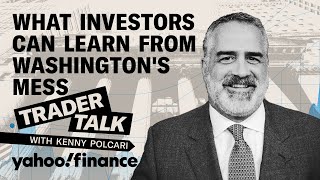
This YouTube interview (Kenny Polcari with guest Rich Ducat) discusses how U.S. midterm elections act mainly to remove uncertainty rather than directly move markets, with the 12 months before midterms historically underperforming and the year after often showing stronger (double-digit) S&P 500 gains. They examine government policy risk (shutdowns, budget bills, tariffs) and resulting sector shakeups—healthcare, solar, EV credits, semiconductors, and rare-earth/mining—with examples of market reactions to a GOP budget bill and government equity stakes (Intel, MP Materials, LAC). The conversation contrasts AI (ongoing momentum) and emerging quantum computing (IBM, IonQ) as structural themes, and notes flows into alternative assets (gold, Bitcoin) amid policy uncertainty. The episode closes with a recipe plug and a legal disclaimer that the content is not financial advice.
Chapters
Welcome to Trader Talk, where we dish out the latest Wall street buzz to keep your portfolio sizzling. I'm Kenny Pulchari and I'm coming to you live from the Yahoo. Finance headquarters here in the heart of New York City, a global hub where deals are made, fortunes are built, and the next market move is always just around the corner. Coming up, I'm going to share my thoughts on the midterm elections. I'm going to chat with my very good friend Rich Ducat and I'm going to share my Orecieti con Ragubianco. It's delicious. You're gonna thank me later. Now let's jump into my big take. As we approach another 2026 United States midterm election, the buzz is loud. Congress is already in flux. Policy uncertainty rising. Portfolios are twitching. But here's what most investors miss when it comes to the stock market. Midterms are usually background music. They're not the main act. Historically, the period leading into the midterms tends to disappoint. In the 12 months before the election, the S&P 500 has averaged just about a3.10 of a percent return, well below the long term average. Investors get jittery because they don't know which party is going to control Congress and what policies might pass. Uncertainty spikes and markets don't like that. Meanwhile, the year after the midterm often paints a much different story. Over the decades of data, the S and P has averaged double digit gains. Once the political verdict is in, here's the catch. It's not the winners or the losers of the vote that moves markets. It's the removal of uncertainty. The tickers don't jump because party A gains Senate seats. They move when investors can stop asking why what if? And start asking what now? Once that question gets answered, direction becomes clearer and capital starts flowing. For investors, this cycle means just one thing. Don't trade based on which way a red wave or a blue wave might go. Trade based on how your holdings perform. Once the dust settles, keep your eyes on policy levers that affect your sectors, not the switchboard in Washington, D.C. pick companies with strong fundamentals that thrive in any political scenario. Use the upcoming noise as a reminder to rebalance, not panic. The bottom line. Midterms are noisy. They feel important, but they're rarely the driver. If you want a real edge, focus on execution, earnings, valuations and macro trends. The election is a signal that, not a strategy. Joining us today is a very good friend of mine, Richard Ducat. Coming all the way from Chicago, he's the lead market technician at Schwab Network. With over two decades of self directed trading experience, Rick specializes in technical analysis, charting and market strategy across stocks, futures and options. He's a charted market technician, he holds an MBA in finance and he's an expert in Think and Swim, Think or Swim, and thinkscript coding, bringing a rare mix of technical skill and real world trading insight to his analysis. Rick's ability to break down complex market moves into clear, actionable takeaways makes him one of the most trusted technicians and names in the business. Please, ladies and gentlemen, join me in welcoming Rich Ducat to the conversation. Rick, how are you? And thank you for joining me today all the way from Chicago.
Benny, it's a pleasure to be here. I would add that orecchiette is one of my favorite pasta shapes as well. Little ears, you know. But I would say too that, you know, it's been a pleasure to join you here on the other side of this, this, you know, video conference thing for once.
Yeah, listen, I always, I, I do a fair amount with Schwab TV every once in a while and every time that I do it, they always got Rich on the other side who's analyzing after what. I'll talk about a stock, I, I'll talk about it broadly and in general and Rich will then take it to the charts and he'll show you what's good about it, what's bad about it, where's support, where's resistance and all that stuff. A little bit of what we're gonna talk about today. But first let's talk about kind of government policy risk, right? And quite honestly, government policy risk. We're right in the middle of government policy, a government shutdown, and yet the market seems to be looking through that, right. Anyway, how budget, how debates, how tariffs, how the shutdowns come, create sudden shocks for traders even more so than long term investors. So let's talk a little bit about that.
Yeah, you're exactly right, Kenny. And it's kind of funny almost how little the government shutdown impacts so many people in day to day life until it does impact you. You know, it can change very quickly here and we've seen so much legislative risk. And when I say that, I'm not referring to any kind of political outlook or any kind of personal opinions. What I mean is though, that this is a time of great change in this administration. A lot of things are happening. The trade war, the tariff situation for so many sectors. We had a GOP budget bill that had major changes to many sectors here if we look at our chart that I have pulled up here, you don't need to be a technician to see when the big beautiful bill passed on July 4th, because you could just look at the effect on the healthcare sector. Companies like Humana, hca, Molina, they got absolutely trounced during this situation here because of large cuts to Medicaid. You know, this government spending on the healthcare sector faced severe reductions here. And these companies, that's a big part of their business. As we said too, about the price shock types of events, they can quickly rebound as well. So it's a tricky environment right now, Kenny.
Right, but put that screen up one more time because I just wanna, I wanna go over that, that drawdown, that big drawdown that you see in all those names. That was April. Am I correct?
That was, that was Liber, not Liberation Day. Excuse me? Liberation Day was in April. That was the April early of tariff announcements here. What we're looking at is the day that the GOP budget bill actually passed. You know, that was July 4th. So that wasn't an actual trading day. But the sharp move to the downside happened when the market reopened here. It's done these very significant changes to, you know, the way the government treats certain sectors.
Yeah, I think it's very interesting. So let's talk about the, the sector shakeups. Not only just health care, but kind of the other things. And what policy changes, how they can move entire industries overnight. Actually, whether it's health care, whether it's energy, whether it's technology.
Oh, yeah. I mean, some of the other ones are the solar industry, that. That's a pretty easy one to identify as well. Big shakeups to companies like, like for First Solar and Enphase, they took some hits as well. But as we said once again, once the news kind of shakes out and things get reestablished here, they can often find their footing once again. One of the most recent big shakeups here was the expiration of all those electric vehicle credits we saw recently. So we saw this flurry of buying as people rushed to kind of take advantage of these credits here. So it kind of remains to be seen what's gonna happen next time. It's like a, to use a car analogy, it was like a boost of nitrous oxide that made everything go really fast for a short time. But now that we're out of that fuel, I mean, what happens next now to this kind of fledgling industry that hasn't established itself the same way as the legacy automakers did?
You see what, speaking of that, just because A quick aside, did you see what a number of car dealerships did when that EV credit was expiring? They decided to buy the car. So they took advantage of the credit. And then if I came in the week after or the week after that, when the credit was really no longer available to me, it became available because then they just cut the price of the car by the 7,500 bucks that they took the credit on. I thought it was actually very ingenious that, you know, as we were moving into that final days of that credit, that's a bunch of carmakers, auto dealerships decided to take advantage of it. I thought it was very interesting how they did that.
It's always funny, even well intentioned rules, people figure out the best way to work with them here. So you see things like that kind of perhaps these somewhat unintended consequences here. But yeah, a major shakeup as we said too. And government has been such a major role too as well. We've seen this situation here where we've seen the government start to take a much more active stake on some of these companies. If we look at our charts once again here, big, big stake, 10% stake in Intel Investments in MP Materials, LAC, Lithium Americas Corporation here once again, it's pretty easy to see these points where the government started making these big stakes in these types of companies.
So let me ask you a question because that's a whole other conversation. Where do you stand on that? Good, bad? Should the government be in those sectors? Should they not? Should they be, should they be out altogether? Because listen, when I think of it, especially in this case and talking about rare earths and technology, I actually think some of it is national security, the same way oil is national security. Right. I think that this, you know, we're right on the edge. And so in my mind, investments in things like MP materials, which is all about rare earth, I think it's rare earth mining and production, is it not? Mp?
I believe so. It's that general type of.
It's in that space. Right. I actually agree that I think it's okay for the government to kind of dabble their toes in that space because I think it's national security, as you said Kennedy.
I mean oil, that's the easiest example to think of. We have a huge strategic petroleum reserve. Obviously we need oil. So I can definitely see the thinking behind some of this. I won't comment on the rightness or wrongness of political maneuverings here, but I think there's an obvious case to be made for national security aspects with, you know, they're called rare earth metals for a reason. You know, they're, they're, they're not exactly super easy to get. But we, we in this country have significant reserves of things like lithium that we haven't really managed to take advantage of just yet. So I can certainly see the thinking behind, you know, moving to solidify the government's role in these very critical industries. I mean, what's going to happen to us if we can't make semiconductors? I have a pretty hard time seeing a future where we don't need more computer chips.
Kenny, hold that thought one minute. We're gonna take a break. We'll be right back. Let's talk about the rare earth thing because you're right, the U.S. by the way, has a lot of railroads and a lot of them apparently are in Alaska, a place where there's not really easy to mine. Plus you got the conservationists and you got all the policy and a lot of it's on federal lands. And so it's gonna be difficult, but we do have them. But now to this point, last week President Trump made a $8.5 billion deal with Australia to try to diversify away from who? From China, which in my mind makes perfect sense because once again, we've allowed ourselves to become too dependent on one country for a range of things. Right?
So I mean, to me it's an obvious problem. You know, like it's. Oh, I don't know if you know this too, Kenny. My brother in law is actually running for U.S. congress. Like he's, I did not know that. He's. Yeah, he's the, probably the favorite candidate for, for, you know, the Illinois 8th district seat. So, boy, let me tell you how much money he asks for.
Yeah, right.
It's, yeah, well, yeah.
Talk to us about, talk to me about what you think about AI because I know everyone's got an opinion about whether we're in a boom, we're in a bus. Is it irrational? I'm in the opinion that I think we're very much in the infant stages of AI. I don't think AI and dot com are anything alike. Partly because the dot com names, they had no revenues, they had nothing. They had just dot com next to the name. That was it. Today, this AI revolution is much different.
I think the whole blockchain thing was much more reminiscent of the dot com. I mean, you saw, what was it? Long Island Iced Tea changing to long blockchain. That was the most ridiculous thing. To me that was much more reminiscent of the dot com era than what's happening right now is what I would say.
Right. But I think this whole AI and I think the next group that's going to light up is quantum computing. Right. And you already see it. IBM came out and reported their earnings two days ago. Right. IBM's got to. People don't necessarily know it because it doesn't stick out, but IBM's got a real presence in quantum computing. So take IBM and then say look at something like Ionq.
Sure, yeah. You know, quantum computing and AI, it's like kind of left brain and right brain. You kind of need them both to work together eventually. It's like quantitative versus qualitative types of computing. I'm an electronics person, I like computers and electronics quite a bit. So this is an area of interest for me especially too.
Right, right.
So what we can see for IBM if we do look at our chart, IBM is kind of this space here where we can see that it's listed as it services. What a core definition for what IBM actually does. These sectors, you gotta be really careful when you actually look at them. I mean that part of what they do. But it's much more like an AI and quantum computing type of game at this point, you know. So when you look at the rest of this sector, I mean it's kicking everyone's butt in that area here like Gartner and Infosys and cognizant those types of companies here. Really it might be more accurate if you look at this next chart to compare them to Oracle, Microsoft, IBM, Amazon, you know, that type of group makes much more sense together based on their forays into this whole new space that we're trying to work in here. If we do look at IBM's chart more specifically though, looking at this chart, we had a bit of a give back here. We failed to take out those previous highs near 295. We did make some intraday highs beyond that, but in terms of the close, we weren't able to muscle up a close above those previous highs from back in June. The June months here today though, a big resurgence. You can see that some of these areas here where we topped out the near that lighter green line here around 255. That's about where we opened up this morning and just rocketed back up here. Now we have recrossed this area near 281, this red line right here where price stopped and started frequently. So now we can see that we are perhaps going to make another run up at those highs that we established recently we're moving upward in this name here. Really one that you wouldn't want to forget about or overlook at this point here. It's kind of the sleeper hit of this sector.
Listen, I'm curious about getting your thoughts on alternative assets on the rise. With gold certainly just blowing the top off, although it has retreated over the last couple of days. We start back off about 6% from 4300 or so down to 4000. And now it's bounced a little bit between gold and Bitcoin. What do you think that says? Just about either market sentiment or risk or what people investors are feeling?
Oh, I mean, it's this whole government shutdown thing is certainly part of it. It's looking for some kind of stability or safeguard against, you know, who knows what could happen at this point here. But it's also, you know, I saw some articles recently talking about how central banks and developing economies are just snapping up gold as much as they can. They want to diversify away from the dollar here. So it seems like there's some impetus for a prolonged move to the up when we look at the GLD etf. I've got the chart pulled up here on my own screen here. There was this period leading up to our big rally that was a kind of a triangular type shape converging toward each other. And you know, these periods of lower volatility and narrowing range, they can be kind of boring to watch, but they can usually get pretty exciting down the road here. Low volatility often turns into high volatility as these increasing, increasingly entrenched boundaries get broken eventually here. Then in this case, it did translate to the upside. Kind of a haircut recently. But you know, it's common for price to give back some of its gains after such a sharp rally. What I do notice right now is that we had a small gap October 10th, the high point came in right around 378.86 or so. We filled the gap yesterday. Now we have bounced once again here. So 403.30. That's those highs for GLD right now. We were just there recently. It's certainly not out of the question. We could retest them shortly here. Bull flag, bull pennant type of behavior is what I see here.
Yeah, I think that that move in gold after it broke out where you, you know, where it broke out went in a straight line. I gotta tell you, while I love the fact that it did that, I kept saying it's overdone, it's overdone, it's overdone. And it kept going higher and higher and. And then it finally just the other day broke, and we saw it pull back, you know, a good 6% very quickly. It happened quickly. And I'm not necessarily surprised it happened as quickly as it did because when they get so stretched like that, that's typically what happens, whether it's gold, whether it's an individual name, whatever. Right, okay, so let me ask a question. Where are you looking next? What sectors and what setups do you think that investors should be aware of? Whether it's healthcare. Listen, I think healthcare has been an underperforming sector. I think that's gonna be a sector to watch. Basic materials. I love industrials, but tell me what you're thinking or tell me, what are the charts telling you?
Well, you know, Kenny, kind of what you said, momentum can go on longer than you can remain solvent if you're on the wrong side of it here. I don't think the momentum is quite over with this whole AI situation here. So many of those companies still would be worth examining here and keeping in your mind. The bigger ones like Nvidia, Microsoft, Apple, Google, you know, those are the names that we all know. Then there's the smaller ones too, like Core, Weave, Mobileye, UiPath, Upstart, Big Bear, AI. Those are also ones that you could consider and keep on your radar. Certainly not a recommendation or anything like that. But these are the companies that are the major players in this space right now. I also would say, too, some of the other areas that really interest me, as we said, this rare earth sector, we're seeing increased government involvement, investment in this sector that could turn fortunes for a company literally overnight into a huge change here. But, I mean, think about how prevalent computer chips and everything is in our life right now. We need them for our current way of life. As I said, I'm fascinated by electronics. I watched a video the other day. Someone took apart a simple vape box like some people used to vape nicotine. It had the amount of electrical components and electronics inside it. It had a microphone that senses when you're inhaling, so it knows how to activate the heating element. The amount of technology and intricacy and such a trivial object is kind of where we're at right now. So, I mean, yeah, it's crazy.
I've got those. I got a pair of the Meta sunglasses made by Ray Ban. And so when you look at the. When you look at the, you know, the arms, they're a little bit cloudy, but they're clear enough that you can see if you hold it up to, like, the sunlight, you can see all the chips that are. That are located in the arm that. That allows me to talk to it. The microphone that if I put on music, I can hear it in my ears. If I talk to it and give it a command and say, give me directions to xyz, it hears me talking and it goes. And he searches what I ask, and then it tells it to me back in my ear. But it's amazing to see just in the arm on the one side of my head, all the little chips that are in there. It's really crazy. It's really. It's really amazing to think. At any rate, listen, we could talk about this for hours, and I appreciate you taking the time to come on, and I'd love to have you back. But it is time for me to serve up dinner. Tonight we're having orecchiette al ragu bianco, right? It is a delicious, delicious dish, and it's the soul of a Sunday dinner without the red sauce, right? There's something magical, really, about how some of the simplest ingredients, like carrots and celery and onions and a bit of ground beef and maybe you want to mix in some ground pork, can really fill the kitchen with a kind of warmth that feels like your home, like at your grandmother's house, right? The dish orecchiette al ragubianco comes from the heart of Puglia, down in the heel of Italy, where women would roll tiny rounds of dough with their thumbs to make, like you said at the beginning, little ears. Orecchietti. That's the word for ear in Italian. Each one of them shaped with love, meant to hold just the right amount of sauce. Now, don't be fooled, because it's not your typical Sunday red sauce dinner. The ragu bianco is a white ragu, a white sauce. It trades the tomatoes for something gentler and more elegant. Instead of being drowned in marinara sauce, the sauce relies on olive oil and a bit of white wine and the holy trinity of Italian flavor, carrots, celery, and onions, right? To build the base. As it simmers together, the meat takes on a rich, almost velvety texture. And the wine, well, that just adds a softness, a soft perfume ish to the pasta, and it clings beautifully to the dish. It's the kind of dish that your kids are going to devour without question. They'll just know that it tastes good. And for you, it's a one pan wonder that tastes like it took hours to make, but it didn't. A perfect reminder that in Italian cooking, less is really more. You can scan the QR code on the screen for the full recipe, and trust me, you you will thank me later. That's a wrap for today's Trader Talk, but the conversation continues. Subscribe on Apple Podcasts, Spotify, Amazon Music, or wherever you get your podcast. You got questions or topics that you'd like me to cover? You can email us@tradertalkyahooinc.com because I'm always listening. Look, until the next time, stay sharp, stay disciplined, stay in touch, and take good care.
This content was not intended to be financial advice and should not be used as a substitute for professional financial services.
Sam.
More from Kenny


Wall Street Is Celebrating| But Kenny Polcari Sees A Warning Sign | Kenny Polcari


Stocks Crashed After The Fed Move But Here’s What Investors Missed | Kenny Polcari
9/11 25 Years Later: Bond Market Warning, Oil Above $100 & Fed Rate Hike Fears | Kenny Polcari

Oil Hits $97, Bond Yields Surge & PPI Inflation | Markets Brace for Fed Decision | Kenny Polcari
The Fed Has a New Problem | Oil | Inflation | and Rising Yields | Kenny Polcari

The Fed Never Promised a Rate Hike | But Markets Panicked Anyway | Kenny Polcari

Nvidia Crushed Earnings | but the Biggest AI Opportunity Is Still Ahead | Kenny Polcari