What really keeps Wall St. up at night: it's not AI or inflation
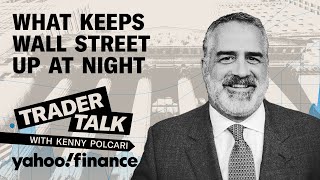
Kenny Polcari hosts a Trader Talk episode with guest Lou Bassanese focused on investor due diligence and where real market opportunities lie beyond AI hype. They review earnings season (majority of S&P companies reported with strong beat rates), argue that broad earnings growth is stronger than analysts expected, and identify undervalued areas such as energy, healthcare and industrials. They discuss AI’s infrastructure needs (data centers, power demand), potential investment legs (chips → power → energy infrastructure), policy/trade clarity and job creation from new data centers, and a multi-year view on small modular nuclear reactors (SMRs). The episode closes with a Thanksgiving-themed recipe: stuffed baby pumpkins with butternut/pumpkin risotto.
Questions this video answers
About 65%
Top-line beat rate ~83%; bottom-line beat rate ~76%
Below 3% of the S&P
An "over/under" of 2032 (expectation for SMRs to materially come online)
U.S.: ~5,500 data centers; China: ~500 data centers
Chapters
Welcome to Trader Talk, where we dish out the latest Wall street buzz to keep your portfolio sizzling. I'm Kenny Pulcari, and I'm coming to you live from Yahoo Finance headquarters in the heart of New York City, a global hub where deals are made, fortunes are built, and the next market move is always just around the corner. Coming up, I'm gonna share my thoughts on due diligence. I'm gonna chat with my very good friend Lou Bassanese, and then I'm gonna share my stuffed baby pumpkins with butternut and squash pumpkin pumpkin risotto. It is perfect. And guess what? It's Thanksgiving. Now let's jump into the big take. Everybody loves to talk about doing your due diligence. Few actually do it. Most retail investors buy because they saw a headline or a tweet or a friend said, this stock is about to pop. That's not due diligence. That's gambling. And on Wall street, gamblers lose to researchers every single time. If you want to trade like a pro, you've got to think like a pro. Here's how you do real homework before you put a sing single dollar to work. Step one Know the business. If you can't explain what a company does in one sentence, you have no business owning it. Apple sells devices that generate revenue and keep you within the ecosystem. Coca Cola sells sugar and brand nostalgia. Nvidia sells US Shovels in the AI Gold rush. Figure it out or move on. Step two Follow the money. Pull up the income statement and the cash flow. Are revenues growing? Are profits real or just accounting tricks? Is debt under control? Look for trends over time, not one quarter. If you see revenue flatlining while the stock rips higher, ask yourself why. Step 3 Listen to the people running it. Management matters. Read the quarterly letter or earnings call transcript. Are they honest about their challenges or are they just spinning hype? A CEO who dodges every question is waving a red flag. Step 4 Check the price tag. A great company can still be a bad investment if you are overpaying consideration. Compare the PE ratio to the competitors. Don't buy hype. Buy value. If it's trading at 40 times earning and peers are at 20 times earning, ask what justifies the premium. Step 5 Spot the risks before they bite. Every company has them. Regulation, competition, supply chain, bad leadership. Write them all down. If you can't stomach the downside, you're not ready for the position. Step 6 Play your own game. Decide on your timeframe before you buy it. If you're investing long term, stop checking the price every hour. If you're trading it, set, stop losses and stick to them. Pros know the horizon and they have a clear exit plan. So here's the truth. Due diligence isn't optional. It's what separates investors from speculators. When you do the work, you understand why you're in the trade and that's what gives you conviction when the market tests you. The bottom line don't chase tips, don't buy stories. Read, question, verify and own your decisions. Pros win because they know what they own and why everyone else is just hoping to get lucky. And hope doesn't really pay the bills. Now my next guest I'd love to welcome back is Lou Bassanese. He's a returning guest and a long, long time friend of mine and a friend of the show. Lou is a seasoned Wall street Veteran with over 25 years of experience across private and public markets, investment research and wealth management. He currently serves as executive vice president of market strategy at Prairie Operating Company, a NASDAQ listed company prop a high growth, low cost independent oil and gas company While also leading TheBigSkinny.com, his no nonsense research platform, bridging the gap between Wall street and Main Street. Known for his sharp insights and dashingly good looks and his data driven market forecast, Lou brings a unique perspective on how innovation, policy and investor psychology intersect to shape opportunities. Please welcome back to my to the show. My good friend Lou Basin East. Lou, it's always a pleasure to have you to be here, man.
I don't know about those dashingly good looks at you. Whoever wrote that bio, I'll take it. Give him a race.
I think it was me. I just had to, I kind of just threw it in there. Listen, it's always a pleasure to have you. Look, earnings are in focus. We're right in the middle of the earnings season. So far we've got about, we've got about I guess 65% of S& P companies that have reported. We got a beat rate at about 83% on the top line and 76% on the bottom line. What's it revealing about US corporate health?
Look more of the same and it's all good. I think everyone for too many quarters focused on the wrong divergence. They were talking about the divergence from mag seven growing. Grow earnings growth.
Right.
The other 493.
Right.
But now you see that the gap is being closed and overall earnings are growing by 10% for the third quarter in a row based upon the latest results.
You're Seeing this better than the expectation going into the quarter.
Look, I think what's the big takeaway is analysts are woefully underestimating how strong earnings growth is. They've done it for two quarters in a row. This will be the third right back half of the year. They're predicting though that unmagnificent 493 to catch up and get the double digit growth rate. Right.
Right.
So I think that's the key. So everyone that the headline that says hey watch out big seven mag seven is getting too big. I'm looking for value like you're saying in your due diligence segment, find the value in the market even when it's you know, trading higher. There's always things that are undervalued.
Right. And the value can be in a ton of places and if people are so, you know, everyone, it's AI, it's AI, it's a. And that's great. There can still be value in AI, but there's also. You're finding value in other, well other parts of the market.
Yeah, look, I think there's value in the energy space. It's the lowest weighting in the sector.
That we've seen in below 3% of the S&P.
Below 3% screaming binding. Right, Exactly. Yeah. Oil prices are headed lower but the cure for low commodity prices is low commodity prices. So low longer term if you're a trader, I wouldn't be jumping in. If you're a long term investor. Well, well you know, capitalized dividend paying low price, I mean trading at like 15 times earnings.
Right.
Healthcare, same thing. I mean there's, there's pick and shovel plays there. There's a company named Halozymes that I personally own that they don't make new drugs. They basically have a technology that allows you to take infusion based drugs. So think chemotherapies, things that are on a long IV drip for hours and turn it into a subcutaneous injection for five minutes. So that's a pick and shovel play. They just partner up with the pfizers of the world to take their proven drugs them more amenable to patients. So really trading at like nine times forward earnings. I mean it's a great opportunity in a market that everyone swears is overstretched, overvalued and we're in a bubble. And my thing is this so much. There's a bubble in bubble talk. We can't be in a bubble.
Yeah, no, listen, I don't think we're in a bubble. I Think it's okay to say maybe it's a little frothy, but frothy is not a bubble.
Right.
There are two very different things and I think that's important to know especially you know, when you hear people trying to Compare the current AI mania to the dot com bubble back in 2002.
Huge data points there. It makes no sense.
It makes zero sense. And that's what I keep saying. We're nowhere. This is nowhere near the dot com.
So you're encouraging people to do their own due diligence. So I'll give them two things to go home and do. One, go pull up Cisco's price chart from the dot com days and its earnings growth rate and you'll see it got completely divorced from earnings reality.
Right.
Now compare that to Nvidia. Nvidia's chart is up into the right parabolic, but so are returning.
Right? Correct.
The other key difference, back in the dot com days, the infrastructure was there, but dark. Like over 95% of the, of the, the fiber optics were dark.
Right.
Now the data centers, we can't. It's every bit, every last megawatt megawatt of power to power a data center is being gobbled up as we speak.
Okay. But that's in fact there's the opportunity as well because to your point, it's gobbling up the energy.
Right?
The data centers are gobbling up the energy. There's not going to be enough energy to power the world as well as power the data centers.
Right, exactly.
So there's an energy play here.
There is. And I think you can come at it from a bunch of different. You get, I don't know, natural gas is responsible. That's the bridge till we get to nuclear.
Right. So natural gas, small nuclear reactors is another one.
Small nuclear reactors is another one. The, the bitcoin miners that have pivoted to AI compute. So big deals being announced by Cipher Mining by Iran with the likes of Microsoft and Amazon.
Right.
Anyone that has available guaranteed power to a data center is going to be a pick and shovel play on this trend.
Right. And that's what, that's what they need, Dev. And as a, as a matter of fact, Cipher just reported this morning they blew. The stock was up 17%. Yeah.
And then Iron had a bigger deal with Microsoft. Oh, I didn't see that $10 billion deal with Microsoft. So Cipher had one with Amazon web services, about $5 billion over five years.
Right.
There's a, plenty of other names in that space. But then I start thinking about what's the next derivative.
Right.
We got to build new power plants and new, new data centers. So who are like the Williams construction type names that are providing those critical contracting services and construction services? I don't know them offhand, but that's the next area of the market that I would start looking in.
Right. But when you talk about that, when you talk about who's going to build them, then you talk about further down the line, you think about Caterpillar tractor and John Deere. I mean, they got nothing to do with, you know, with AI, but they do in fact have something to do with AI, Right.
Yeah, this is.
And in fact, a lot of their tractors now are being run by AI. Just so let's just put it out there.
No, it is. And I always used to say that every company is a tech company because even if they're not doing tech, they're using tech 100%. Every company is turning into an AI company right now because using it in.
Some form or they're using it in some form. Correct. And so, I mean, everybody is right, no matter what industry you're looking at, which is also, you know, it's fascinating, which is why I think, you know, not only is this not a bubble, but we're in the very, very, very early part of this game.
Yeah, I absolutely agree with that. I mean, I think if we had to put it in dot com terms because that's what everyone likes to think of. I think we're 1995, 1996. I still think we have two, three years. But again, the key thing I watch is earnings growth. Does, does all of this spending get backfilled with earnings? Right. Is it profitable for the data centers to do these big deals with, with big tech?
Right.
To be determined. It looks like it. On the front side, we got to see it drop to the bottom line, to the income statement, to cash flows. Can they continue this?
Right, so let's talk before the break. Let's just talk one thing real quick about market leadership and market kind of rotation because what we are seeing, and it happened say in the month of October, what we saw, you know, the, the s and P500, you know, was up 2.7%, I think, but the equal weight S and p was actually down 7, 10 of a percent. Now what the, what the audience should understand is The S&P 500 is a market cape market cap weighted index. The equal weight S&P 500 just takes that weighting out, gives everybody the same weighting. And so you get to see what's happening really underneath the hood. Right? Yeah. And so it was very interesting to see that the S and P equal weight actually underperformed. Right. So there's kind of a warning sign. They're just saying, look, I think it's stretched on the side. Doesn't mean it's bubbly. Just means there's other places to look. To your point, energy, health care, basic materials.
Yeah. I think those are the undervalued ones. But then to the point, like, the momentum is a powerful force in the market. Right, Right. If you look at the earnings growth in tech, so the not, you know, the regular S&P 500 is being propelled by the tech sector. They're reporting earnings growth of 26% so far this quarter versus expectations of 20. So they keep outperforming.
Right.
It's going to keep that momentum going. So I think people have to think about a balanced approach. Stay in momentum names, maybe trim some profits and reallocate tactically into these undervalued sectors.
Right.
Health care, energy, biotech is even having a comeback. You're seeing much more mergers and acquisition activity.
Yeah.
You know, Big pharma has to replace. I think the number is $180 billion in revenue between now and 2028.
Right.
I mean, that's huge. I mean, Keytruda and GLP1s are like 30 billion a year. So you're talking dozens of drugs.
Hold on one second. Take a quick break. We're going to come. Okay, so I just want to make one point just about the, the, the allocation thing, which I think is fine. Some people need to kind of trim around the edges if they get, if it gets overweight. Other ways of. The way I like to look at it, this is me personally. Right. Is that when I, When I'm overweight in tech because. Because prices have gone up and value has gone up, I take my new money and I'm putting it in consumer staples or I'm putting in basic materials. That's how I'm reweighting. Cause guess what I. The names I'm in. I've done my homework on, I've done my due diligence on. If the story doesn't change, I'm not selling it just because that's the way I choose to do it. And then I'll put new money into under.
Not everyone has unlimited capital to do that. No, but I think that's the smarter way.
But I agree.
And then you use trailing stops like you talked about.
Right.
Or let your winners run.
Let them run.
And then you're not forced to take profits early and then you put new.
Money into the new money into the other sectors. Okay, look, let's just talk about for a moment Trump in the markets, right? And how new policy signals are going to impact not only energy and technology, but maybe just broadly the market. Because every time you turn around, call it for what it is, he's made deal after deal after deal after deal, all to the benefit of the United States. Yeah, they're all.
It's a pro. I mean, I look back, it was maybe March, April, May. That was the Abusa trade. Anything but the US Right? Everyone was trying to boost. I never heard that anything but the usa. And I'll admit at that time I started buying some European equities ETFs because they were dirt cheap.
Right.
But it's not an either or, right? It's not a zero sum game. I think you're right. We're yet to see the policy implications on the markets of what the Trump administration is doing. I do think we got to put the breast, which we have definitively the tariff talks, right. Like, yeah, we're done. We've done the major deals or at least got a standstill for another year.
Right.
That was creating a lot of uncertainty in corporate America in terms of capital expenditures. But now you got clarity on tax rates, you got clarity on deductions, you got clarity on all the other things that were hanging out there.
You got a lot of clarity. It's on a bunch of things. Go. You have clarity on. I mean, look what he did over, you know, over the weekend with the whole. The new China trade. China basically said, here you go, we're gonna get, we're gonna get rid of all our export tariffs that they were putting on the controls, that they were. Suddenly they wanna come to the table, have a conversation. Well, damn right they do. Because he's gone and made these side deals with Australia and Thailand and Cambodia all for this railroad stuff. And so China's sitting there going, you know, I better jump on board here, otherwise we're gonna get. Shut up.
To be fair, we can't. You know, Scott Besant was out saying that within the next one to two years, we're gonna replace that. We can't.
You can't replace it all.
It takes five, ten.
Yeah, easily.
But you're at least seeing a path.
That's right.
The competitive.
Well, because you're not driving ourselves into a corner the way we had because we, and it became evident during COVID that we were beholden to China because They controlled the supply chain. Right. So honestly, shame on us for allowing that to happen.
Yeah. And I think you've seen so much investment that's going to happen in the United States to return manufacturing here. U.S. companies being forced to invest more here domestically.
Right.
That's going to be.
Which I'm okay with.
My key thing what keeps me up at night is the labor market. Right. It's cooling, but I balance that with an new data center. 10,000 skilled jobs required for that. So the growth is coming to restore balance to the labor market. That's yet to be seen how quickly that.
Right. But see, you made it. You just made a key statement there. It's going to create 10,000 new jobs. So while they're worried about AI taking jobs away, there are going to be new jobs created. It's going to take a different. It's going to take a different skill set.
Correct.
But there's a whole generation of, you know, young people right now in college, approaching college, just out of college, that, that are going to have that skill set. I may not have it at 65 years old, but they're certainly going to have it. So there's that opportunity for new opportunities.
Talked about small modular reactors.
Right.
If you look at the last new scale. Yeah. You look at the last nuclear reactor we built and the scale that we're building on, there's welding jobs that have never been done the scale before.
Correct.
So long since we've done it. So getting into those trades, jobs that are highly technical are going to be a lucrative market. Anything AI adjacent or involved in AI data centers, I mean, anything there's going to. I take solace in the fact that every time we've had a major tech revolution, yes, some jobs have got fallen by the wayside, but by and large, within 12 to 18 months, new jobs are unlocked. And the number of total jobs in the United States continues to go up.
You can say about any revolution. Right. Because back during the Industrial Revolution, they were all screaming about lost jobs, lost jobs, lost jobs. Well, I wasn't either, but lost jobs, lost jobs. But look what happened. They're just new jobs created. And I think the same is going to happen with tech. Maybe it's a little bit more unnerving just because of what tech can do. Yeah. But I do agree with you. I think, I think there's something like.
You and I aren't just born died in the wool permeables. I mean, there are areas that you talked about, valuations I look at like Chipotle's Results like they can't get people to come back into their stores. Is that a testament to a weakening consumer or just a failed business model that's just not. That's losing interest? I think it's the latter, but time will tell. We've got to see, you know, interest rates should give some relief to consumer spending.
Yep.
I don't bet against the consumer, though. I don't think there's ever been two consecutive quarters of negative consumer spending.
Right.
So it just doesn't happen because I.
Don'T think it's necessarily a statement on the consumer to your point. Because. Because you go out to dinner in other restaurants, you can't get a table in some places. I mean, the demand is out the door in some places. Right. So. So I don't necessarily. I agree with you. I think it might be the business model that's wrong. Right. In any event, you know, we talk about oil and energy and all the AI demand. So the power surge is going to come because it's going to come with these data centers. Let's talk about where you see opportunity there. Like again, beyond just the, just beyond the energy company. But, you know, is it industrials, is it basic materials, is it building equipment?
I think it's all of the above. And it's just about figuring out what leg of the, of the growth trend we're in. Right. The first leg was chips. Now you got big tech CEO saying we can't even plug them in. We got plenty of chips, but we don't have the power.
Right. We don't have the power.
So right now we've moved from that leg to the power leg. Then where do we go? It's probably the energy infrastructure, small modular reactors, transmission lines. I think you're also going to get into services. Right. Like we build all these data centers. What are the companies that are going to service them? Because US alone has 5,500, call it data centers. China's got about 500.
Right. Think of all the air conditioning you need.
Exactly. Whoever thought H Vac would be a.
Profitable business would be a profitable business. Because there you go, you have. Because that is an area you have to consider, especially as this, you know, as this continues to grow. And it will. But let's talk about. Because I don't know details, and I'm not sure you do either, about small nuclear reactors. I don't know what the, what the, what the timeline is on those.
Yeah. So I've had the benefit of going to the Energy Freedom Conference with that. Alex Epstein ran maybe Six or seven months ago and sat with some data center builders and they said SMRs, the over under is 2032 before they really come online and having an impact. The difficulty is that you need 99.9999% uptime for data centers.
Right.
Which means if you need 10 SMRs, you need to add 11th or a 12th to be able to cycle through it. All those things need to be worked out. Right. The first ones and the second one to build and integrate are the hardest. Then you have that learning curve that shortens very quickly. So I still think, you know, a lot of these names will trade on the potential revenues that we won't start seeing for another years.
Right. For a while. And anyway, let me ask you a question. Talk about, you know, people will talk about, well, there's this mismatch in the market, right. Because the macro data, the markets keep going higher. We do have some concerns kind of building up. Right. We've got bullish sentiment at highs we haven't seen, which actually can be a contraindicator. We had the Hindenburg omen, which you know, was another technical indicator that got, that got triggered last Thursday, which is another indicator that suggests, you know, you could have some volatility ahead. But then you add in, look at these earnings, look at what's happening in policy, look what's happening in trade. All very positive things. And so how do you kind of reconcile the two?
Yeah, two things I never buy into too many ominous sounding omens.
Right.
They strike me like Jamie Dimon's comments. We could have a correction in the next six to eight months.
Right. Okay.
That's useless.
Right. It's useless. Completely useless.
But the other thing is, I always remind people the stock market is not the economy. The economy is different. The stock market is forward looking. If it sees a path of clarity through a downturn, it's going to start responding more appropriately. So I think you've seen that a testament to trade deals getting done, tax policy getting restructured or at least guaranteed. I do think there are pockets of weakness. Real estate needs to be figured out. I don't think that Secretary Besant, he's out now saying it's all about interest rates. That's an oversimplification. It's not just the fact there's a, there's a lack of supply, that if we lower interest rates too aggressively is going to lead to price increases back again.
So which is. Right. And so that's where I'm at. I mean you have to kind of be very careful with you know? Yeah. Do you want to see mortgage rates come down? But quite honestly, 6% mortgage rates, by the way, are not historically out of line. No, they're well within what's normal. I mean, you know, again, Here I go. 1985, the first house, I was paying 15 and a half percent. 15 and a half percent.
I think I was at 6% back in 2003, 2004. So.
Right. 2000, you were at 6%. Right. So I'm in the camp that you gotta go slow on that. But in any event, listen, we could go on and on and on, but the time has come to an end. It's time for me to talk about the dish that I need to eat.
Time for me to get hungry.
Yeah, it's time for you to get hungry. Right. So here's the story behind the dish. So in the old days, nothing went to waste. Not in the garden, not the squash, not even the pumpkin shells. Right. Autumn, men. Harvest and harvest. Harvest meant abundance. Families would haul out whatever was ripe in the field. Pumpkin, zucchini, or peppers, and fill them with rice and cheese and herbs and meat. It was practical cooking that somehow always felt like a celebration. When pumpkins arrived in Europe from the New world in the 1500s, Italian cooks were smitten. Right. Their sweet, golden flesh paired beautifully with the creamy risottos of the North. Before long, the two traditions met. The art of ripini, which is stuffing the vegetables and the comfort of risotto really hit home. That's where this dish was born. Baby pumpkins are roasted until they're tender. You cut the top off, you roast them until they're tender, and then you fold back, you take out the flesh on the inside. After it's roasted right, and you mix it with a rich butternut and pumpkin risotto. Then the whole thing gets spooned right back into the shell, and then you take the top and you put it right on top. You make a beautiful presentation. And that's the perfect marriage of flavor and the presentation. And people. Honestly, people just love it when they. When I serve it at Thanksgiving. It's part of, you know, what we've put on the table. It's really. It's really great. Anyway, it's got rustic roots, it's refined spirit. The kind of dish that brings everyone to the table before you even call them. Look, you can scan the QR code on the screen for the full recipe, and trust me, you can thank me later. That's a wrap for today's Trader Talk, but the conversation continues. Subscribe on Apple Podcasts, Spotify, Amazon Music, or wherever you get your podcast. You got questions or topics that you want me to cover? Email us@tradertalkahooinc.com because we're always listening. Until the next time, stay sharp, stay disciplined, and stay in touch. Take good care.
This content was not intended to be financial advice and should not be used as a substitute for professional financial services.
More from Kenny


Wall Street Is Celebrating| But Kenny Polcari Sees A Warning Sign | Kenny Polcari


Stocks Crashed After The Fed Move But Here’s What Investors Missed | Kenny Polcari
9/11 25 Years Later: Bond Market Warning, Oil Above $100 & Fed Rate Hike Fears | Kenny Polcari

Oil Hits $97, Bond Yields Surge & PPI Inflation | Markets Brace for Fed Decision | Kenny Polcari
The Fed Has a New Problem | Oil | Inflation | and Rising Yields | Kenny Polcari

The Fed Never Promised a Rate Hike | But Markets Panicked Anyway | Kenny Polcari

Nvidia Crushed Earnings | but the Biggest AI Opportunity Is Still Ahead | Kenny Polcari