Why cybersecurity stocks are tariff resistant, plus how embedded finance helps more people trade
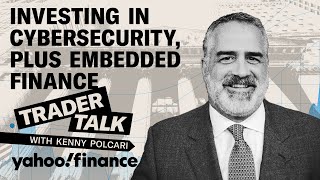
YouTube episode of Trader Talk (host Kenny Polcari) recorded at the New York Stock Exchange on March 26, 2025, featuring Donato Cotone (former CEO, DriveWealth Institutional). The host argues that cybersecurity firms (e.g., CrowdStrike, Palo Alto Networks, Fortinet, Zscaler, CyberArk) are 'tariff resistant' and will benefit from AI-driven data growth and geopolitical uncertainty. The interview then focuses on embedded finance and brokerage modernization: fractional (notional) trading, global access via B2B partners (DriveWealth), 24/5 trading, high messaging loads, regulatory/regtech gaps, and the move toward digital/tokenized securities and faster settlement (T+1 → T0).
Chapters
Foreign.
Welcome to Trader Talk, where we dish out the latest Wall street buzz to keep your portfolio sizzling. I'm Kenny Pulcari coming to you live from the iconic New York Stock Exchange, a place that has been my home for decades and still fuels the pulse of capitalism, entrepreneurship and freedom. Now, let's just jump into my big take this week. Everyone is obsessing over AI. Who's winning? Who's losing, who's leading the charge. Guess what? No one's talking about cybersecurity's critical role in the AI boom. And unlike most sectors, cybersecurity is completely tariff proof. Here's the deal. AI growth isn't possible without bulletproof security. Every new AI application and chatbot, autonomous vehicles, generative models. Cloud computing depends on massive amounts of sensitive data. And the more data we generate, the bigger the cyber risk becomes. Tariffs and trade wars can't slow that down. If anything, global uncertainty makes cybersecurity even more essential. Companies like CrowdStrike, Palo Alto Networks, Fortinet, Zscaler and Cyberark are perfectly positioned. They're not affected by supply chain disruptions or global trade battles. Instead, their growth accelerates when uncertainty increases and exactly when other stocks become vulnerable. Look around. Banks, healthcare providers, data centers, cloud platforms. They're all leaning deeper into AI. And with that AI expansion comes increased vulnerability. The more data and digital infrastructure grow, the bigger the cybersecurity spending becomes. So forget trying to predict the next tariff headline or trade war scare. Instead, bet on cybersecurity. The the sector quietly benefiting from all the noise. The bottom line, Cybersecurity stocks are essential infrastructure. They don't rely on international diplomacy or tariff policies. They simply thrive on growing digital threats accelerated by AI adoption and geopolitical tensions. Now that's a trade worth considering. So now I want to introduce my guest to the show today, Donato Cotone. He is the former Chief executive officer of DriveWealth Institutional and and global head of trading and brokerage until that was February of this year 2025. He is a dynamic financial markets executive with over 37 years of industry experience. At Drive wealth, he led the transformation of traditional brokerage models through innovative full stack technology infrastructure and modernized executions methodologies. He co architected ultra resilient brokerage and technology solutions capable of handling the high throughput demands of embedded finance and next generation financial services. Prior to that, Donato built Cotone & Co. Into one of the largest independent New York Stock Exchange member firms over his 36 years beginning his career at the New York Stock Exchange trading Floor in the summer of 1987. He has served on the board of directors of NYSE national and Drive wealth holdings and currently serve serves on the NISI Committee for Review. Beyond his professional achievements, Donato is executive co chair of Wall street warriors supporting Stop Soldier Suicide, which is dedicated to reducing veteran suicide through personalized care and support. Ladies and gentlemen, join me in welcoming Donato. And you have to understand, I have a personal relationship with Donato that goes back to when he was just a young boy. This is such a pleasure to meet. Listen, here we are at the New York Stock Exchange, a place that you and I grew up at, right? Having this conversation now about embedded technologies and all kinds of AI and new brokerage. Very different from what you and I did, you know, when we first came in. After your recent leadership role at Drive Wealth, I want you to share what you see as the most significant transformations happening in brokerage technology and infrastructure today in terms of, you know, in terms of the.
Markets. So embedded finance is a bit different from the retail that we grew up with. And you know, it's both domestic and.
International. So define it for the audience. Define what embedded finance.
Means. So the traditional retail customer comes via a Schwab account or an online brokerage account. Right. Embedded finance now is built digitally, natively and digitally into embedded wallets, into E commerce players. All different services that you see these days with roundups, rewards, all different programs, okay. Notional based investing, fractionalization trades all the way down to $1. So embedded finance has proliferated now across the globe. There's more digital wallets than there are brokerage accounts in the United States and collectively across the international region, which.
I find, I find.
Amazing. So usually. So now what happens is the unbanked people that never had access before have very quick and easy access to the financial markets and we can usher an order right down here to the trading floor at the New York.
Size. I think what's interesting too, and you said it, it's notional trading. So people can buy a fraction of a share. You know, before when, when we were kids, you know, it was 100 share lots, right? Correct. I mean, at least here was 100 share lots. Now you can buy a half of a share of Apple or half of a share of Microsoft or quarter of a share of, you know, Nvidia, whatever it is. Yes. Which I think is, which I think is very, very.
Interesting. So you can also do a swipe and a roundup and buy 45 cents or an down to one penny of any ETF or security. Yeah, it's where the adoption's been outstanding and is available now all across Wall.
Street. Okay, so, so, so talk about that a little bit. So can you do that at any brokerage? Can I do that at Fidelity or Schwab? Or do I have to do it like at a Robinhood or. Or an e.
Trade? So DriveWorld was the pioneer of fractionalization and opening and providing technological access via APIs to the market. So all digitally native. And then there was adoption across other places like Schwab has slices, Fidelity has their own version, and now you see it all over in.
Place.
Right. So not everybody supports fractionalized trading. Comes with a lot of technical debt and technical overhead becomes a big technology lift to build systems that trade notionally instead of share based because the messaging counts are so much higher than traditional share based.
Orders. So the messaging counts are the number of messages that go back and forth into the system. Correct.
Correct. So that puts an enormous amount of load on systems. And traditional brokerage systems weren't built to handle that. And that's what people are looking towards now in the embedded finance world, those type of.
Systems. So I think what's interesting here, and I think this part is very interesting, is that, is that you did that with drivewealth. You sold out the drive wealth and you built this new business. But Drive wealth actually has access to people around the world. This is not just a United States.
Thing. Yeah, they're an amazing firm. Support tens of millions of clients all around the world via close to 100 partners. They're an outstanding firm. The founder, Bob Courtright was very forward in his thinking around unifying the entire technology stack. And when we were able to unify the technology stack, we were able to be more efficient, which allowed us to support these smaller type of.
Cows. All right, so if somebody, if somebody in the United States, they access through drive off. But if somebody's outside of the United States, what's the process? Explain to me, what do they have to have? They have to have a brokerage account. They just can't. I mean they have to connect.
Somehow. So Drivewealth's a true B2B. So we only support business relationship. We drive wealth only supports relationships with registered and regulated entities in their jurisdictions. So those customers come through native, locally regulated brokers, banks, embedded finance.
Companies. Right. But they can access the markets that they could be somewhere else in the world and access the US markets via that relationship. That's connected to dry wealth and connects them to the floor of the new York stock sheet.
Correct. And also available at DW now to trade 24. 5.
So. 24. 5. Correct. 24. 5. That's unbelievable. But, but so tell me about that. How do you actually trade 24. 5 in US markets? Because at some point they do.
Close. Correct. There's some ATS that are, that there's one ATS in particular right now supporting the market more. Another one coming on as we speak. And then the exchanges have all filed now to support 24 hour activity as.
Well.
Right. In various.
Shapes. I think what's interesting about that and I think it's fascinating and it is going to go there, but what people have to really understand is that in the off hours it becomes much more volatile. The markets are not nearly as thick and liquid as they are during the regular trading.
Day. There are quite a bit different, but it's much different than when we grew up and things have definitely smoothed out. So yes, there are periods of volatility that are different than the core trading.
Session.
Right. But you'd be surprised and impressed if you looked at the data and how much the market has kind of found a more commonplace operate off.
Hour. Yeah. I guess it's, you know, it's progress. Right. I mean people find opportunity in situations like that. So at some point it will become complete seamless, I'm assuming.
Yeah. And so many other markets too. Right. Digital fx, crypto. Right. These things have been.
Trading. Right. They trade seven days a week. Yeah. Buy and.
Sell. And globally people are used to that. And domestically now they have to become.
More. But you see that that's happening in market, in developed markets around the world. So whether it's Japan or Australia or Europe and Germany and France and Spain. Can you do it 247 in those countries.
Too?
Yes. Already not in.
Their. I don't know about their local.
Markets.
Right. But they can access the US market through one of these regulated partners that connects to U.S. clearing firm 24.
5. Right. Wow. I think that's, you know, when I think about the transitions that we saw and they were amazing. You know, I mean I've been there since 1980. So 1987 to 2020 there were amazing transitions kind of in the, in the institutional side of trading. But you actually saw it from a very different view. Right. You went from institutional and suddenly drive wealth brought you very much into that retail.
Space. Correct, Correct.
Right. Which was. And you were actually, you were actually one of the only firms, if not the only firm doing that, that drove that fintech development into, brought it to the floor of The New York Stock.
Exchange. Yeah. I was really fortunate to meet Bob Cortright, the DriveWell founder, in 2012. And we had tried another brokerage technology business which lasted for a couple of years, was relatively successful. We decided to close it down so he could pursue.
Drivewell.
Yeah. And he just, I bought into his vision and I really believed in what he thought, which was that eventually all things would be on a mobile.
Device.
Yeah. And he'd been saying it since, you know.
Mid-2000S. And by now we know most things are on a mobile device and not just trading. I mean, almost everything had a mobile device, Right?
Correct. Correct. Yeah. It's really, it's really.
Incredible. So now let me ask another question. Having built this successful business, you built a very successful institutional brokerage business like I had, and then you sold it to drive wealth. But what advice could you give other entrepreneurs? Younger. Either younger entrepreneurs or, or guys are just building business now as they look to innovate into the fintech space. Because the fintech space is going to continue to change. But you know, you've got a, you've got a different perspective on it than I do. Because you were kind of right in the middle of it. I'm, I'm, I'm in it, but I'm kind of on the outside of it. You would, you were right smack.
In the middle of it. So I would say from an entrepreneurial perspective, the key was that we never stopped, we never gave up. Every day we put one foot in front of the other and we continued to develop what we thought would help us survive. We didn't sit down one day and decide, hey, we're going to be a fintech firm and we're going to be innovative and we're going to revolutionize the market. That was Bob. We were trying to remain relevant. So we kept putting tools together and strapping things together and then developing native applications to tie those together. That eventually became our technology. So survivability turned into an entrepreneurial vibe and then that turned into what we were able to sell. So that number one would be to never give up. And number two, I think obviously the focus now has to be on digital securities. Right. Digital native ledger based product services, which kind of gets me to where I think I'm going next, which we can talk about in a.
Minute. Yeah. So let's just. So they, so that the audience understands. When you first, when you had Katona Company, you had. How many people, how many people do you employ here on the.
Floor? The exchange at the height of our business 58 people. 58. 58.
People. All right, so now, because we were just talking before you sat down and. And today you went over there to kind of see what's going on in the booth and all that stuff. So today, repeat what you told.
Me. We do 10 times. We do 20 times the transactional volume. 10 times the notional volume.
Right. 20 times the transactional volume and 10 times the notional volume with two people. Two.
People. And when we ran Caton independent of drive wealth with 18, obviously there's a lot more people inside of dry wealth that support that.
Business. Right.
Right. But from our perspective as legacy floor guys, when you go over there and look at who's looking at our systems, right, we've got a few people, but two are state stationed there all the time. And that's on the.
Mono. It's amazing to me. I mean, it, you know, when I come down here and I see it, you know, for me, coming here is always like coming home. But, you know, I have all these memories that rush around my head. And today, as I was contemplating sitting here talking to you, all these other memories came in my mind about, you know, kind of what we lived through and what we did and, you know, the events from 1987 till 2020. And there were a lot of those events. But it's amazing now to see how the floor of the Exchange has itself kind of grown and developed and changed. And people always ask me, you know, is the exchange going to continue to exist? I think the exchange will very much continue to exist because it continues to evolve. Right. Using more and more and more technology, like you just said. And to your point, what used to be 5,500 people down here working on the floor is today probably less than 125, doing everything that we all did. And in your case, you know, you went from 58 to two people right.
Now. 18, 18.
18. Right. But there's all these support people behind the scenes. But here on the floor, managing that two people managing that flow is.
Unbelievable. I'm not sure technology is an incredible empowerment.
Tool. So, yeah, it really.
Is. Brings a lot of scale and size. So what I think is interesting next is we both know the regulator has fallen completely out of step with the pace of the business. And that's no news to anybody. So I think on the regulatory technology side, that is out of step with where the business.
Is. All right, so where does that have to.
Go? I think that needs to go to the same place that embedded finance has gone, which is high throughput, resilience, high transactional volume, sophisticated algorithms and AI driven models to assist people. We can't look at millions and millions of transactions. And some rules that are written suggest that you should reasonably attempt to review each.
Order. Right.
Right. Which can only be done with technology. And everything's. We're still using humans in a lot of places around Wall street to bridge those gaps and I think that I might have an opportunity to fill that.
Gap. Right. And so, and so it's the SEC that really is the one that's kind of behind the, behind the eight ball in terms of regulation, am I.
Right? I think the SEC and.
Finra. And finra, yeah, I think, I.
Think both of them, I mean, no knock, it's a difficult.
Job.
Right. And the. Right. There's a lot of innovation in the industry and it happened so.
Quickly. I mean, you and I both realize how it happened so quickly and so, you know, you got to keep up with.
It. Correct. It's hard to innovate and build a business in a regulated world and the regular has a job to do as well. And that all needs to be managed. But I think technologically things are where they need to be to solve some problems that were previously hard to solve. And that's where we're going to take a shot.
At. Hold on one minute, we'll be right back. So we are back and I am here with Donato Cotone. So look, with your experience on the NISI trading floor and later building these modernized brokerage systems, how do you view the collision of analog versus digital securities markets and what regulatory challenges do you think are really ahead of.
Us? Well, I think that's what we were just commenting on just a few moments ago. So the regulator is, it seems like now regulation is starting to catch up with what's happening from digital currencies through digital securities to tokenized assets, et cetera. So the infrastructure is not built to kind of cross the chasm between analog and digital. But there's obviously a lot of people out there working on that now and then. I think on the regulatory side there's clearly no mechanisms that are connected anyway. There's surveillance systems designed for the digital world. And the chain, by the very nature of what the chain is, is.
Surveillable.
Right. And then on the analog side, there's traditional regulatory technology firms that are supporting.
That. Right. But the analog side. The analog side is going to be less and less. It's going to be all. Yes, it's going to all transfer to become.
Digital. When we go from T1 to T0. Right. I'm sure that's going to be at the same exact time that we move from analog to digital because we use the digital process to clear.
Them. So T1 just to make it clear, T1 to T0 means settlement, right? So right now it's T1 is the next day settlement, right? Trade date plus one would be next day. T0 is immediate settlement, Right. So if I buy or sell something, it's immediately settled. Correct. Listen, when we started with T3, right, it was T5, it was T5, then it went to T3, now it's T1, and now it's going to go to T0, which I think is. Is. You know, when I. When we think about it, it's been an.
Amazing. If I remember right, I was working on the floor three weeks during the crash of 87, and I think the right. Black Monday. And I think we got our QTS the next.
Wednesday. The qts now, qts were questionable.
Trades. And then we found out how we used.
To. Yeah, right. You didn't.
Know.
Yeah. No, you didn't know. You didn't know. Qts were qts. Were these with. Were these notices about questionable trades in case, you know, if Donnie and I were in a crowd and we traded and there was a question on the amount of shares or the price or the time, or did he even trade with me? Did he trade with somebody else? Did I trade? Right. Or were we both buyers? We didn't realize or we were both sellers. And so that was a questionable trade. And the questionable trade, the notice would come out three days later. So you never really knew for three days from when I traded on Monday. I didn't know until Thursday whether or not there was an.
Issue. Exactly.
Right. And today it's T +1. But pretty soon it's going to be T +0. Right. So it's going to be immediate.
Immediate settlement, instantaneous settlement, just like it is on a.
Chain. And actually, a lot of the issues that cause those questionable trades then don't exist anymore because the technology has corrected a lot of those issues. Correct. It's difficult. It's difficult for me to go into. Well, you don't even go into a crowd anymore, but it's difficult for a buyer to meet another buyer. It doesn't happen. The system prevents that from happening. Correct. Before, when it was open outcry and you were in a busy crowd, you could easily confuse that. Although you did it once and it was an expensive lesson, you never did it.
Again. Same side.
Trend. So let's Wrap things up with three essential market tips to keep in mind no matter which way the wind is blowing in the market. So analyze credit market indicators for early signals about what's happening in the market. Bond markets often move ahead of stocks, signaling economic shifts earlier than equities. Keep an eye on credit spreads, treasury yields, and yield curves to detect early signals of changing economic health. If yields begin widening significantly, it could signal heightened economic uncertainty. Consider adjusting your equity exposure accordingly. You also want to watch commodity prices Economic barometers Commodity prices, especially oil, copper, gold, and agricultural products, can offer early indications of economic shifts. Rising commodity prices might hint at inflationary pressures or improving economic demand, while falling prices may suggest weakening growth. Regularly check commodity price movements and integrate this insight into your market strategy to anticipate macro trends proactively and identify institutional money flows for portfolio positioning. Institutional investors such as hedge funds, pension funds, and the mutual funds to drive substantial market movements. Follow the institutional money flows to see where major investors are allocating their capital. Tools like ETF inflows and outflows and fund flow reports can provide valuable clues helping you position your portfolio alongside the smart money. Okay, so you know every podcast ends with a recipe and today I'm having Donnie and I was thinking about this and so I'm going to feature the Villasobuco Now Osso buco, right? It's a Lombardi classic especially tied to really Milan, right is where it kind of came from. The name bone. The name means bone with a hole, referring to the marrow filled veal shank. At its very heart, the slow cooked dish has deep roots in Italian peasant cooking where patience and simple ingredients transform tough cuts into something really extraordinary. Dating back to the Middle Ages, Ossobuco was a way to make the most affordable meat using braising, a technique common in northern Italy, families would slow cook veal shanks with wine, vegetables and herbs, proving that great flavor comes from time and care. And just like cooking, patience and focus are key to long term success in investing. You can scan the QR code for the recipe. You're not going to regret it. Donnie, I got to ask you a question. Tell me about osso buco. Do you love.
It? I love my favorite. I like it over.
Risotto. Yeah.
Absolutely. I'm not so much on the carrot and onion part over risotto with a.
Heavier. Yeah, it's so it's traditional. Whenever we make it right, we Evelyn. Evelyn makes it. We make it all the time. We make it really more in the, in the wintertime when it's cooler out. Yeah, yeah, but over a nice delicious risotto is perfect. But I will tell you, I take the veggies and I and I puree them and I put the veggies all around it and then I put it right on top of the.
Risotto. Oh, there you.
Go. I absolutely love.
It. Well, I have to give that a.
Shot. Anyway, that's a wrap for today's Trader Talk, but the conversation keeps going. Catch Trader Talk Every Wednesday at 12:00 clock on Yahoo. Finance or wherever you get your podcast. You got questions or topics you want to covered? Email us@tradertalkahooinc.com because I'm listening. Until next time, stay sharp, stay disciplined, and stay in touch. Take good.
Care. This content was not intended to be financial advice and should not be used as a substitute for professional financial services.
More from Kenny


Wall Street Is Celebrating| But Kenny Polcari Sees A Warning Sign | Kenny Polcari


Stocks Crashed After The Fed Move But Here’s What Investors Missed | Kenny Polcari
9/11 25 Years Later: Bond Market Warning, Oil Above $100 & Fed Rate Hike Fears | Kenny Polcari

Oil Hits $97, Bond Yields Surge & PPI Inflation | Markets Brace for Fed Decision | Kenny Polcari
The Fed Has a New Problem | Oil | Inflation | and Rising Yields | Kenny Polcari

The Fed Never Promised a Rate Hike | But Markets Panicked Anyway | Kenny Polcari

Nvidia Crushed Earnings | but the Biggest AI Opportunity Is Still Ahead | Kenny Polcari