Why defensive stocks could be your best bet in a wild market
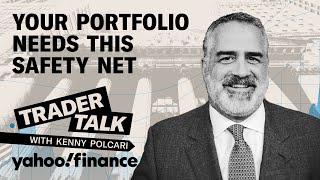
A Trader Talk episode (YouTube/podcast) where host Kenny Polcari interviews Dryden Pence, CIO of Pence Capital Management, about the role of defensive stocks and ETFs in volatile markets. They discuss identifying ‘‘no‑matter‑what’’ businesses with pricing power, investor psychology (Maslow’s hierarchy, panic buying), AI’s infrastructure vs implementation phases, Fed policy and interest‑rate expectations, macro signals to watch (jobs, stimulus), trade/tariff risks, and a closing Mediterranean chicken (bocconcini) recipe. The piece closes with a standard non‑advice disclaimer.
Questions this video answers
1982
7.1 million jobs
$5.4 trillion
3.2% of the European Union's economy
Around 4.5% (with the possibility of a quarter‑point change later in the year)
Chapters
Foreign.
Welcome to Trader Talk, where we dish out the latest Wall street buzz to keep your portfolio sizzling. I'm Kenny Pulcari coming to you live from the Yahoo. Finance headquarters in the heart of New York City, a global hub where deals are made, fortunes are built, and the next market move is always just around the corner. Up next, we're gonna break down defensive stocks. We're gonna talk with Dryden Pence, chief Investment Officer at Pence Capital Management. And I'll share a chicken recipe for you that you don't want to miss. Now, let's jump into my big take for the week. Most people think of defensive stocks as predictable staples, utilities, health care. The safe, slow moving names that quietly sit in the background of a flashy portfolio. But here's what they miss. Defensive stocks aren't just about stability. They're about seizing the moment when the market goes into full blown panic. When growth stalls, rates rise or macro shocks hit, the high, flyers take the hit first. Money floods out of the risk and into reliability. And guess what's waiting there with open arms? Defensive stocks like Procter and Gamble, Johnson and Johnson, Nextera energy, or even ETFs like XLP, XLV and the XLU. These names and funds aren't just about safety. They're built on necessity. They don't depend on consumer sentiment or speculative narratives. They deliver groceries and healthcare and utilities, the basics people need, not just what they want. And while they might lag in raging bull markets, they often shine in volatile markets. They deliver steady earnings, consistent cash flow, and often pay dividends that compound over time. That's not just perfection, it's participation. It's how portfolios stay alive and even grow while everyone else is scrambling to cut their risk. Smart investors know defensive stocks and defensive ETFs aren't an afterthought. They're a strategy. They keep you anchored. They keep you grounded when the market's swinging wildly. And if you think you don't need them because the market always comes back, you're missing the point. They're not for when things are good. They're for when things get real. The bottom line. Defensive names and defensive ETFs don't just help you survive. They help you stay sane and solvent while the crowd panics. And in this game, that's an edge worth owning. Okay, so joining us, I have the pleasure of introducing you to Dryden Pence. He's the Chief Investment Officer of Pence Capital Management, a firm that brings together extensive market experience and strategic insight to help clients navigate Today's financial landscape. Dryden obtained his degree in economics from Harvard University in 1982. In that same year, he was commissioned by the US army as a military intelligence officer through the ROTC program at MIT, the Massachusetts Institute of Technology. After further graduate study in law and crisis management, Dryden functioned as a military intelligence officer and specialized in psychological warfare. Kind of appropriate as we discuss the markets today. He was reactivated for Desert Storm and is the recipient of the Bronze Star, the Army Commendation Medal with V for valor in Combat, the Meritorious Service Medal, and the Legion of Merit from the US army, one of the highest honors earned by a soldier with decades of expertise in both military intelligence and wealth management. Dryden has a unique perspective on how global events and investor psychology drives markets. With his outstanding background in education, Dryden is a frequent voice on major financial networks. Please join me in welcoming Dryden Pence to the show. Dryden, thank you very much for joining me today. I am so honored to have you.
Thanks for having me. This is going to be a lot of fun. I really appreciate it.
It's going to be a lot of fun. And, you know, I should. I should just go back and, and, you know, you and I were probably running around the streets of Boston together as we were going to college. I was not at Harvard. I was at Boston University, but we were there at the same time.
We were. And we've probably been in a few.
Of the same places. I'm sure that we were. Anyway, so let's talk about defensive stocks for sure. Right. In this very, very volatile kind of market that we're in, you know, you're never knowing from one day to the next. Right. So talk about why defensive stocks are essential in this volatile market and how to spot really the right ones for investors.
Well, we do things a little bit differently, but in terms of why it's important is you want to go to companies that function and have and deliver substantial earnings no matter what. So you're looking for the no matter what holdings, what people are going to do. In our philosophy, we look for big, noble themes that are moving money in certain ways. And then we try to identify a choke point. And what we mean by a choke point, that's a military term. It's a point in place, in time, where everything has to go through there to get from where it is to where it wants. It's like being stuck behind a drawbridge. Right, Right. If you get stuck behind a drawbridge, you go, yeah, I'd pay that guy 100 bucks to let it down and let Me go through. So when we look at these things, we identify companies that are at the choke point that have something essential that consumers and everybody has to have. And then we figure that they're going to have pricing power, like a little monopoly. Pricing power turns into excess earnings, more substantial earnings, more consistent earnings over. And that's gonna support the stock, regardless of volatility.
Regardless. And that's the point, I think. Right. And so I always talk about, when I talk about the defensive stocks, you know, they're big, boring, but yet they're beautiful in times of stress and kind of volatility. Right. They're not the high flyers. It's not Nvidia, it's not gonna be Palantir, it's not gonna be. These stocks are gonna grow 300% a year. But when times get volatile, they are named. You absolutely wanna have a segment, not 100% of your portfolio, but you wanna have a segment of your portfolio in. In these types of names.
Exactly. And so when we think about, you mentioned people being under pressure. So kind of walk through an example. We both probably studied psychology in college. And so you remember you had a nightmare about Maslow's hierarchy of needs, right? And so human beings react in certain ways. So you first fulfill your physiological needs, then your need for safety and security, then your need for love and belonging, then self esteem, then self actualization, in that order. We don't vary.
Right.
And so a perfect example of this is when Covid hit. How many times did people go out and buy 75 rolls of toilet paper in response to a disease that had very few gastroenterological effects?
Right. But they were panicked about. They were panicked, right? Do you remember that? Oh, my God. And then they were stopping you from buying. You could only go in there and buy two packages. Some people are trying to walk out with four and five packages because they panicked.
Right? And the thing is, there wasn't anything wrong with the supply chain. It was just a peak demand because of the pandemic. But when are under pressure, they revert first to their base physiological. It's very true. So you look at the Procter and Gambles, you look at Kimberly Clark, you look at companies that are delivering things that people are going to. I mean, if you're going to eat.
You'Re going to need those things 100%. And that goes to the whole point about. It's what you need versus what you want, right? Consumer discretionary are things that you want. Consumer staples are things that you need. Utilities are things that you need. And so I think it plays a very important role. And the other part of this is that they're typically very good dividend payers.
They typically are. Because the thing is, companies like that, if they have a consistent customer base, I mean, human behavior drives consumption.
Right.
Nobody makes a penny until someone decides to buy. Right. So if we can figure out what someone's going to buy and who they're going to buy it from, that's the company you want to own.
Right.
So in this case, when you're looking at people being under pressure, things getting worried, what are they trying to do, you're going to dive in for those particular things, very consistent earnings. And so you just want to make sure that the company's executing well.
Right. And if they execute well, then they execute well for you and your portfolio as well. Right, exactly. So let's talk about AI and automation and how this is disrupting maybe that mindset.
Sure. I think that where we are in AI, we look at again a little bit differently is we're in the very early stages. This is like the transcontinental railroad. You first had to lay the track and then you run the railroad across it and the economy takes off.
Right, Right.
So in this case you've got all this chip manufacturing, all of these absolutely essential items to growth. Those companies are absolutely essential. That's the track. We're just laying the track.
Right.
And so what we think the next generation of this is you have infrastructure and you have implementation. So we're in the infrastructure phase. What I'm going to get really excited about is the implementation phase where companies are going to take AI and increase labor productivity. That's going to increase profit margins.
Right. But we can already start, we can already, already start to see that happen. Right. I still, I'm with you. I think it's very much in its infancy stages, but you can already see it happening. Chat bots and you know, customer service assistance and all that things. Like I, I will tell you, have you used GROK on, on X yet? It's, it's Twitter's, it's Twitter's product. Right. It's like ChatGPT except it's called Grok.
Right.
I gotta tell you, and I think ChatGPT does a great job. But Grok, I think gives you, you ask it a question, I think it gives, their answers are more succinct. I'm not really sure what the, how they train it, but I think it's really a fascinating, a fascinating AI product.
Chat GPT is the first mover.
Right.
And everybody, everybody's learning from them.
Right.
And you know, technology moves so quickly, intellectual capital moves so quickly that every couple of months we're going to have a new generation of something better, something faster, something.
Right. So do people in your mind need to be concerned about either losing the job or being put out of business because of technology, or should they embrace it? Because I have my own story about that.
I think you embrace it, first of all. You're not gonna stop it. So what you can't change might as well embrace and wrestle it to the ground. But I think that that's important. But we tend to think about it as what I call AI plus H. It's artificial intelligence plus the human factor. It's how are you going to take this and do something with it that increases labor productivity? Because that's the real.
Right, exactly right.
So I think that people should not worry about, oh my gosh, this is going to wipe out all the jobs. It's going to change the jobs, but it's also going to make each job probably more valuable, which higher salaries.
But it also creates new opportunities. Hold on one second. We'll take a quick break and come right back.
Super.
So let's just. I want to talk first about, because I think you and I are in the same place about the Fed and the tariffs and what Jay Powell should or should not do.
Well, I think that at this point, the economy is still stronger than most people completely. And I don't think that Chairman Powell should be in this, in this position where he's overly pushed. I mean, the Fed, the Fed's mandate is full employment and stable prices. They don't have a mandate to make sure the bond market makes money. That's not part of their mandate. Right. So that's our job as professionals to kind of figure this out. So we foresee interest rates staying at four and a half. You probably get a quarter point change, but it's pushed to the back half of the year. And they don't need to be in a hurry because the fundamentals are still exceedingly strong. And the good news here is that the Fed has something that they did not have seven years ago. They have dry powder.
Right.
We're at five and a half for a year. The world didn't come to an end. So let's say we're at four and a half or nine to 12 months. The world's not coming to an end. And so now they also, if we do have a recession or not a recession, if we do slow down a little Bit the Fed has plenty of room that a small quarter point is highly stimulative. So I think we're in a very good position going forward.
Well, so let me ask a question and then we'll move on to investor psychology. But I think this is very important, I don't think to your point and I read some of your stuff. Right. So I know we're on the same place in this. The hard data continues to be fairly robust.
Absolutely.
The soft data, which is really opinion survey type of data, while it, while, you know, on the one hand it looks like it's weak, I think you have to be very, very careful about how you interpret because it's opinion data. It's not, you can't meas. Measure it.
Right. I think the, the issue is, is also how they ask the question.
Right.
And who they ask the question, ask the question of, you know, the guy, well, don't you think the economy is weak or have you thought the economy is weak?
Right.
And then you, they, they put it that way and then you heard somebody else and the guy says, well, well, yeah, maybe the economy is weakening, but weakening. But, but then you ask that same person, well, what are you doing next week? Well, I'm going to go out and buy a new truck.
100%.
So, so I think the real issue here is you can't watch what people say.
Right.
You got to watch what people do. Exactly.
Right. Because I think that tells a different story. And to your point, I think, and even look, the University of Michigan data last week, while it's still low, it's actually starting to tick up. I think people are starting honestly to feel a little bit better about kind of where this whole tariff conversation is going and it's not turning into the disaster that they thought and inflation is not spinning out of control. The latest PC report actually trended lower. Right, right. And so, and so it, you know, it flies in the face of all these, the bears and the, and the naysayers saying, you know, it's gonna, it's gonna spin out of control and it's not.
I, I think that you, I think you have to separate hyperbole from hum.
Yeah.
I mean the economy is humming along pretty, pretty well.
Right.
But people aren't hearing the hum because of all the noise and everything that's going on.
They're letting the noise get in the middle of. Yeah. And you really have to, you know, one thing I always say, especially if the long term investor, if you're a short term trader, you want more noise because It's a noise that creates the volatility for you as a trader. But if you're a long term investor, you need to try to eliminate the noise and kind of focus on the long term. Right.
Grab some noise canceling headphones, take a look at the, take a look at the fundamentals and kind of go like, is human behavior really going to change?
Right.
And if it's not, then stick with the things that people are buying.
So if you had, over the last month and a half or two months, ever since liberation date, have you had a lot of these conversations with your clients, people that are getting nervous, kind of investor psychology. And you know, because your first reaction when things get antsy like that, people want to hit the button, hit the sell button and get out. Which I keep saying to people, it's the wrong decision, don't do that. I mean, this thesis hasn't really changed yet. It's created a lot of noise, but it hasn't really changed where the market is, where the economy is.
Well, the first thing, when I'm talking to clients and things like that, I approach it in two different ways. The first one is I approach the emotion and then I also bring up the facts of where we think we're going to get. So the first thing that I'll say to somebody is like, do you know any irrational people? And they'll go, well, yeah. And I said, so what makes you think that all this volatility is rational? Have you ever done something irrational? And so those are the key questions. And then you get past that and you go, so let's talk about the facts. And when you look at the facts on tariffs and what we're doing and is that you have, there's really about the European Union and seven countries that matter.
Right?
That's it.
But the European Union, remember, and I brought this up in my, in my, my blog post last week, the European Union is 27 individual countries. And so it's, it's a, it's a complex negotiation.
Absolutely.
But it certainly can happen. It's not going to happen overnight. You know, like negotiating with one country. You have to negotiate with 27 individual countries.
Exactly. And included in that you have French farmers. And God love them, they are the best protesters in the world. And when they get upset and they're driving their tractors down the Champs Elysees, everyone's paying attention. And so, you know, I mean, it's one of these things.
It's what happens.
It's what happens. And so these aren't simple negotiations, but the facts are they have no choice. I mean, we're exports to the United States. Let's talk European Union. Exports to the United States are 3.2% of the European Union's economy. Well, they don't export to us, they go into depression.
Right.
You know, we're 30% of Mexico's, we're 20% of Canada, we're 7% of South Korea's. You can go through each of those countries. All of those guys, China and India go into recession of our big trading partners, if they don't trade with us, everybody else goes into depression.
Right.
They need us more than we need them.
And I think that's the, I think that's his point. Right. Which is why he's saying renegotiating trade agreements that are decades old is okay to do.
Of course.
Right. And so we should want to renegotiate these trade agreements. Now we can argue all day long about his style, about how he does it, but the fact is you want to renegotiate trade agreements that are decades old.
Yeah, I'm more interested in policy than personality.
Right. I mean, so let me say one more question and then I want to get on to kind of the macroeconomic trends that you're looking at and key signals and stuff. But do you believe anything that comes out of China?
No.
Okay, thank you. You and I are so much in the same place. Yeah, yeah. Not a word they say. Not a word they say. Okay, great. Let's now move on to these kind of macroeconomic trends that you look at. Specific signals that kind of, you're watching that may either, that may either confirm your decisions or change your decisions.
Sure, sure. I think the, from macroeconomic standpoint, I think the most important characteristic and to ask that question, are we going to go into a recession or anything like that? I look at jobs, I mean, most people don't realize that since the peak right before COVID to Today, we've added 7.1 million jobs in this country. Now that is more, that's more jobs than the entire labor force of the state of Illinois.
Right.
Sixth largest state in the nation. And you add it up, it's about $3 trillion in terms of earnings. Well, that's greater than the GDP of France. So in the last five years, we've grown France the seventh largest economy in the world and more people are making more money than ever in our history. Labor productivity is at an all time high. We're adding more than 100,000 jobs a month. You take a look at all those factors, I Don't see a recession. You give an American money, they spend it. That's what happens. That's why we call it retail therapy. It's true.
Yes. No, it is absolutely true. So are you looking what's next on your kind of calendar in terms of stuff to look for that might change your thesis?
I think the big thing is we're going to look at jobs. As long as, if you rip it apart, as long as we're creating 100,000 to 150,000 jobs plus a month, you're looking at an economy that has got strong demand signals. You're looking at people that are making more money than they've ever made before in aggregate. And so I think that that's. And the other big thing that people forgot is we put $5.4 trillion worth of stimulus into this economy as a fiscal response to Covid. That's more money than we put into all of World War II.
Right.
And the World War II stimulus roared through the economy all the way to the 70s before the multiplier effect broke out. So we're only five years after this. This stimulus is going to be an underlying strength to our economy for probably another 10 years.
By the way, one last thing and then we got to move on. The latest first quarter GDP was negative 2.10 of a percent. The latest Atlanta GDP Fed now forecast is 3 point plus 3.8% in the second quarter. This massive turnaround from people that were saying, oh my God, we're going off the edge. We're not going off the edge.
And here's the thing, people forget the math factor there. So, oh my gosh, it went down 2/10 of 1%. Well, it went down 2/10 per 1% because we went from 0.37 basis points to like 4.5% on imports. Everybody was front running tariffs. You have to subtract out imports of gdp. And so it's a false number.
That's a false number. But the naysayers don't want to tell you that. They just want to tell you it's a negative number. Right. And we're going off the edge and everything he's doing is wrong. Anyway, listen, we need to move on because I want to come back to you after this. Sure. But at the end of every episode, I end it with a recipe just because it's the cooking thing. I love to cook. I grew up in an Italian family. Today I'm giving you chicken bocconcini. Mediterranean. Right. So it does not have a singular historical origin like some classic dishes in the Italian cuisine. Right. It's a regional expression of the Mediterranean coastal cooking, drawing from southern Italian and Ligurian traditions, with a nod to Spanish influences as well. Right. Bocconcini in Italian means little bites or morsels, often referring to food that's tender and flavorful and easy to eat. While more commonly people think of bocconcini, they think of little mozzarella.
Right.
Essentially what it is in this context, it refers to those bite sized pieces of in this context, bite sized pieces of chicken cooked quickly and meant to be really kind of juicy and succulent. So the Mediterranean style refers to not a specific recipe but a flavor profile really from what's in your pantry. Right. So capers are typically from Sicily and the Aeolian Islands, where they're briny pop lifts the seafood and poultry dishes alike. Tashiasi olives. They'll hail from Liguria or the Italian Riviera up north. Prized for their mild and nutty richness. Cherry tomatoes, with their natural sweetness and acidity, echo the sun drenched gardens of southern Italy. So the use of onion and olive oil and minimal liquid like water to create a light sauce speaks to the frugal elegance of peasant cuisine. Flavor built from the pantry staples, not cream and butter. These flavors together reflect the cucina povera, which is like the poor kitchen. That mindset, it's simple, it's seasonal, it's resourceful, with deep roots in family cooking. You can scan the QR code that's on the screen for the full recipe and you'll thank me later, I'm sure. Look, that's a wrap for today's Trader Talk, but the conversation keeps going. You can subscribe on Apple Podcasts, Spotify, Amazon Music, or wherever you get your podcast. You got questions or topics you want covered? Email us@tradertalkahoo inc.com because I'm always listening. Until next time. Stay sharp, stay disciplined and stay in touch. Take good care.
Of this content was not intended to be financial advice and should not be used as a substitute for professional financial services.
More from Kenny


Wall Street Is Celebrating| But Kenny Polcari Sees A Warning Sign | Kenny Polcari


Stocks Crashed After The Fed Move But Here’s What Investors Missed | Kenny Polcari
9/11 25 Years Later: Bond Market Warning, Oil Above $100 & Fed Rate Hike Fears | Kenny Polcari

Oil Hits $97, Bond Yields Surge & PPI Inflation | Markets Brace for Fed Decision | Kenny Polcari
The Fed Has a New Problem | Oil | Inflation | and Rising Yields | Kenny Polcari

The Fed Never Promised a Rate Hike | But Markets Panicked Anyway | Kenny Polcari

Nvidia Crushed Earnings | but the Biggest AI Opportunity Is Still Ahead | Kenny Polcari