Why October could be make or break for the markets
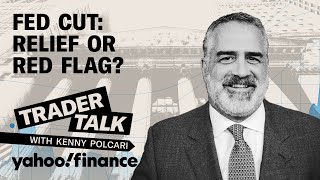
A Yahoo Finance Trader Talk interview (Kenny Polcari with guest Barry Knapp) discussing the Fed's recent rate cut, what it signals about the economic cycle, implications for asset allocation, and outlook for earnings, capital spending (especially AI-related buildout), and tariffs. Knapp draws historical analogies (1950s–60s), emphasizes micro-to-macro analysis using corporate earnings and margins, and outlines tactical positioning (e.g., overweight industrials/materials, cautious on consumer-facing sectors, preference for MBS). The piece includes host framing and a brief personal aside (risotto recipe).
Chapters
Foreign.
Welcome to Trader Talk, where we dish out the latest Wall street buzz to keep your portfolio sizzling. I'm Kenny Pulcari coming to you live from the Yahoo. Finance studios here in the heart of New York City, a global hub where deals are made, fortunes are built, and the next market move is always just around the corner. Coming up, I'm gonna share my thoughts on the Fed rate cut. I'm gonna sit down with my good friend Barry Knapp and I'm gonna share my pergo gonzolo risotto recipe. We'll get now let's jump into the big take. So the Fed finally pulled the trigger and cut rates. Wall street cheered, politicians took their victory laughs, and the media blasted out the usual hot takes about stimulus and supporting growth. But let's cut through the noise. A Fed rate cut isn't necessarily a free lunch. It's a flashing signal about where we are in the economic cycle. When the Fed lowers rates, it's telling you something. The economy may need help. Or maybe not. Maybe it's growth. Maybe it's slowing, inflation is under control, or credit markets are showing signs of stress. Whatever the reason, the Fed is stepping in to grease the wheels. That can feel great for investors in the short term. Borrowing costs fall, stocks often pop, and risk appetite rises. But don't confuse a sugar high with long term strength. Here's what investors need to remember. Rate cuts shift the playbook. Growth and tech names often benefit first. As liquidity pours back in, dividend stocks and bond proxies lose some of their shine. Yields fall and the dollar usually weakens, boosting commodities like gold and oil. But the bigger picture is this. If the Fed cuts, they may see trouble ahead. Markets may rally on the move, but the reason for the cut eventually matters more than the cut itself. The smart money uses the moment to rebalance. It's a chance to pick up quality growth names on pullbacks and stay disciplined on risk management. Don't chase every rally. Look for companies that can thrive whether rates remain low or volatility returns. And remember, rate cuts can buy time, but they can't fix structural problems in the economy. The bottom line the Fed's cut may be good news, but it's a warning label. Enjoy the short term boost, but prepare for what comes next. In markets, as in life, the easy money usually comes with strings attached. Now I'd love to introduce my next guest, Barry Knapp, who's a veteran Wall street strategist with four decades of experience in advisory trading and macroeconomic research. I have four Decades too. So I'm good. Barry began his career at Merrill lynch and Fidelity before a decade at Lehman Brothers, where he helped pioneer derivatives products that paved the way for today's ETFs and asset allocation tools. He went on to serve as US Portfolio Strategist at Lehman and then Barclays, and later held senior roles at BlackRock and Guggenheim, advising institutional investors across all asset classes. Today, Barry is the founder of Ironside's Macroeconomics, where he provides in depth research and strategy for investors, banks and corporations. He blends the corporate data with big picture analysis to uncover signals that others miss. Ladies and gentlemen, please help me and welcome Barry Knapp to the conversation. Barry, it's a pleasure to have you. Thank you. I love the fact that this ended up working out. You just happen to be in town because you do live in Vail, Colorado, which is absolutely spectacular. So thank you for making the time to come in.
Happy to do that.
So look, let's talk about market cycles, right? And you often emphasize the importance of historical context in the markets. But what past cycle do you think most closely resembles what's happening in the economy today, in the investing environment today? And then why?
I had this discussion at my last meeting a little bit earlier, and it was within the context of expected earnings growth as we get into 2026 and beyond. And I wrote a note early in the pandemic called deja vu all over again. The 1960s. And the idea was in the 50s we had very similar monetary policy. We had explicit interest rate caps which were the equivalent of large scale qe, large scale asset purchases. We had very tight bank regulatory policy, very low credit creation, very weak, uneven growth, tepid earnings growth. But because of that monetary easing, we had a pretty good stock market throughout the entire decade of the 50s. In the 60s, inflation started to accelerate, earnings growth accelerated. Eventually it was a crack up as a consequence of that led into the great inflation. The cycles are different. In as much as we had an inflation shock at the beginning of this cycle, we still have that lingering inflation risk later on. But as we move into 2026 and 2027, and by the way, the 60s was a very strong cycle for capital spending. So earnings growth accelerated from roughly 9% to 15%. The market was expensive, but earning. But returns were still pretty good because earnings growth was strong. And it sort of underscores the point where faster inflation is a problem for the bond market, but not necessarily the stock market within reason.
So let me ask you a question, because you just made that point about capital spending was strong in the 60s. Is that anything like the capital spending we're seeing today specifically in the AI space?
Well built throughout the the 60s and it began with JFK's supply side tax reforms. So they accelerated depreciation, they cut corporate tax rates, a lot of the same things.
Sounds like what's happening we're doing today.
With the one big beautiful bill act.
Right.
It's been very specific to AI thus far.
Right.
But the call would be that the 2000 and tens was the longest business cycle we ever had, but the second weakest post World War II capital cycle, capital spending cycle we ever had. We've underinvested in our capital stock. We now have a very favorable tax treatment. There's every reason in the world that we should build this out beyond just Gen AI, rebuild our electricity grid, energy grid, manufacturing on shoring, all of those things could lead to a better mix of growth.
And all those things are in fact happening specifically. Look, the energy grid has to be rebuilt because the demands on energy are going to be tremendous with AI and data centers and all the energy that they suck up.
Yeah, that's right, that's right. So there are differences. There's always differences. My brand is never different this time. It's never quite the same as the last time. But you know, history does inform the present. And so I do think that there could be a lot of similarities to that business cycle.
Right, we'll get into that because I want to talk about that. But we'll get to that in a minute. Now listen, you've spent years analyzing kind of the intersection of macroeconomics and policy, right? So how do you see the current Fed policy shaping the outlook now for growth, inflation? Because we know that Powell and the Fed is concerned about inflation. We see it kind of brewing under the, under the surface. Friday we're going to get the PCE report which is the Fed's favored inflation gauge. And so. So how do you see it affecting asset prices now and over the next.
12 months, say, sure, the Fed eased primarily using their balance sheet and that that easing by buying asset purchases, you know, by buying Treasuries, by buying mortgage backed securities. Continuing to do that in 2021 was a tremendous benefit to large banks, less so small banks, tremendous benefit to households who held assets, less so to ones that didn't hold assets when they tightened, rather than a symmetrical tightening process, meaning they were more aggressive unwinding the Treasuries and mortgages that they bought. Instead they decided we're just going to raise the policy rate and run QT in the background. That created an exceptionally unbalanced policy that hurt small banks. Their profitability is much weaker than large banks. It hurt households living paycheck to paycheck, it hurt floating rate borrowers, it hurt high yield borrowers to the benefit of high quality investment grade companies. For me, the equilibrium or neutral policy rate is 3%. And the way I came up with that is because in September of 2022 when they raised through 3%, the third consecutive 75 basis point hike, that yen cratered, gilt market cratered, US mortgage backed securities market cratered, the pound sterling flash crashed. That was the point when the Fed's portfolio started losing money and the bank portfolio started losing money. We need to get back to 3% to restore an upward sloping yield curve for those small banks so they can provide credit to real estate developers, to small businesses. And one of the big manifestations of this, and what finally was the 2 by 4 that hit the fed over the forehead was the third consecutive large first estimate of the annual benchmark revision to employment. That said, we created 911 fewer thousand jobs in the year ended March because small business is really struggling here.
Right.
So the Fed needs to get that policy rate down a full percent, including what they did last week in order to take the heat off of small banks and small business.
So rates have come down a point and a quarter.
A point total.
A point total. A point total which we could see by January. If we get, if we get 25 and 25 in October and December, then 25 in January, there we are.
That's correct. And they've essentially pledged to do the first two, October and December. I mean, the Fed doesn't have a median forecast for the next two meetings when there's only two meetings to go right out intending to do that.
Right.
Whether the next one happens in January or not. You know, incoming data.
Right. But it's interesting because now that the meeting's over, you're starting to have different Fed heads coming out, talking their own thought process. Right. So Beth Hammond came out yesterday and said, not so fast. She's not so sure she voted for a hike. She voted for hike. She was the, she was the lone dot, the one dot. I didn't know that, but that's interesting.
Well, I'm surmising that.
Right.
I could say that with a high degree of confidence that she was the one that either wanted to reverse the cut.
Right.
Or never wanted to cut in the first place. A silent dissent because she wasn't a voter.
Right. Okay, so she doesn't think rates necessarily should be going lower at the moment. St. Louis Mussolin doesn't think at the moment, thinks we should be more cautious. There was another guy that came out, Bostic, Bostic is another one who thinks that maybe we should slow down. So even those two rate cuts for October and December may be in question. But hold that thought one minute because we'll take a break and come right back. All right, so Barry, we're back. I got another question for you. When you talk about micro to macro, the approach that you take at Ironsides Macroeconomics and you're known for starting with these, with the corporate data and then building it up into a bigger macro picture. Right. So share an example, kind of, what does that look like from the bottom approach? How do you, how do you spot these turning points that maybe others miss?
So let's, let's consider what's likely to happen, what has been happening and what's likely to happen with third quarter earnings. So I had to look through this morning. The consensus estimates for Staples earnings are marginally negative. For consumer discretionary earnings are slightly negative. Yet with revenue growth, that's marginally positive margin pressure. Well, what would cause margin pressure on consumer facing companies? Tariffs. Right. And so, you know, there's been, there was all this concern at the Federal Reserve that tariffs were going to cause inflation. So inflation is always in everywhere, both a monetary and fiscal phenomenon. Every inflation episode since The War of 1812 began with excessive fiscal spending, often a war. The central bank was asked to mop it up, which it can never do politically in 2021. In March of 2021, when the Biden administration and Congress passed the American Recovery Plan act, government spending was increasing at a 45% annualized rate. We sent 500 billion of checks to everyone. Money supply growth was 27% in March of 2021. So that demand associated with that huge fiscal and monetary stimulus is what caused goods prices to go from 0 to 12.5% in a year. And then services inflation as the great reopening happened, exploded as well. Today money supply growth is 4,7 against a long term median of 6,7. Government spending growth has decelerated to 6.4% against its long term median of 6.5, it was 8.9% in third quarter GDP, it was negative 4.7in second quarter GDP. So the consumer does not have the wherewithal. So then you look at corporate earnings and you say, okay, earnings are expected to decline on stronger revenue growth. There's going to Be margin pressure. Who's eating the tariffs? Companies are eating the tariffs.
Companies are eating the tariffs.
Right. And then you look at the same thing in China and you look at what's happening to profit margins in China and producer price inflation in China, it's getting crushed. So the Chinese are eating it, the companies are eating it, consumers aren't paying for it. Demand has already weakened in services. When they rushed out to buy goods like autos before the tariffs went up, that caused services spending to go down. So there you sort of intersperse the micro earnings data and you answer that question about who's actually.
All right, so, so, so you just said they're expected to be you. So you already know what the expectation is. So the market knows what this expectation is, does it not?
That's right.
Right. So the market's already expecting these earnings to be weaker.
That's right. And that's why Consumer Discretionary and Staples have been the worst performers.
Underperformers. Correct. Right. Consumer staples, I think, are negative on the year. I think it's the only sector.
Correct.
That's actually negative on.
And it's only too.
I think health care just went positive, but I think consumer staples just under the zero line. Right. Which I think is interesting. So when these earnings happen and if this is true, is there going to be a negative market reaction or has the market already priced this in?
To a great extent. This has been the performance all year. So I've been underweight these sectors as a consequence of that. The question would be what would cause an inflection point? What would cause earnings to suddenly accelerate? You'd need stronger consumption, stronger final demand. What would cause stronger final demand? Right now the tariff drag is only likely to get a little larger. Could we get into the beginning of next year and the Trump administration get frustrated with growth and do a stimulus package? The tariff rebate stuff they've talked about. Possibly. It's been one of those things I've been exploring with clients the last couple days. There's no talk of it in Washington right now. It's not eminent. So you look at that and go, what would likely cause a change in trend? Nothing. Could earnings modestly surprise and the stocks go up on the day? Sure. But do you want to be positioned for outperformance in those sectors? Probably not, no.
But as always, it's really going to be about, you know, they're going to report their earnings and it's going to be what they say about the next six months, four months, six months. Right. It's Always going to be about that. And, and is your opinion that they're going to be kind of mixed forecast?
Most likely, yes. I mean when Walmart says we think we'll, well, we may have to pass the prices through. Walmart has the most sophisticated pricing models other than Amazon in the world. If they could have taken price already, they would have taken price.
Right.
You know, so they're not in a position to pass it through because the consumer is not in a position to absorb it.
So you don't think, then there's all this information about the consumer being strong. Do you not think the consumer's strong?
Consumer's not strong. I mean, consumption has slowed decidedly this year. Services spending has gone from three and a half percent to closer to one and a quarter percent.
Right. But when you look at like advanced retail sales and consumer spending, those numbers continue to be.
The August number is distorted by faulty seasonal adjustment factors related to back to school when there was no back to school. So we always have to be careful with this data. Like my, my diatribe about the BLS getting small business employment wrong, getting immigration wrong, getting back to school wrong. Three major areas of weakness, by the way. The same thing happened after the global financial crisis when the world stopped, when Lehman went bankrupt and I went down with the ship. For the next five years we had weak employment data in the third quarter and strong data in the fourth quarter because the seasonal adjustment factors that smoothed the data got distorted by that event. And the Fed eased in the third quarter in response to weak labor data. QE2, Operation Twist and then QE3 because they got fooled by the data.
Right.
All of us sitting on the trading desks knew that this was coming and the government statistics were distorted.
Okay, so again, again, this is why it gets confusing. Because you say all of us sitting on the training knew it was coming, yet the Fed that's supposed to know it's coming doesn't know it's coming. Correct.
Because they don't have guys like you.
Trading desk, which goes back to the point that they should.
That's correct.
Okay, listen, I want to talk about your asset allocation views, right? Because you provide these insights across equities, rates, currencies. And so right now, which asset class do you think investors are most mispricing and why?
We've been at 70% equities, 30% fixed income all year. We've moved around the fixed income positions at times in a different places, but within fixed income we have no credit exposure. Credit is exceedingly tight. I do think what core Weave and others are talking about that you cannot possibly finance this Gen AI buildout without some debt. It can't all be done in equity. Is going to change the technicals that have helped credit spreads get tighter and tighter. I like mortgage backed securities because I do think that small banks will start to accumulate them and we will have some loosening of regulatory policy that will cause mortgages to do a little better. That may lead to a five handle on the mortgage rate which could help loosen up some of the supply from existing home sales within equities. I've been avoiding consumer facing sectors as I said health care as well for make America healthy related disruption long anything to do with investment. So we've scaled tech and comm services back a little bit because it's they've outperformed crazy expensive and outperformed but overweight industrials, overweight materials. Energy has been a tougher trade but I still like energy. Financials have for small banks potentially a steeper curve. They're going to have regulatory tailwinds for the next three years.
Right.
The loan to deposit ratio of big banks is at historic lows. I strongly suspect that Treasury Secretary Bessant is asking every candidate for Fed chair what do you think about bank regulatory policy? It's been a big theme for him.
Right. So it's never different this time which is your tagline, it's your research series. Right. So it suggests that history repeats itself in powerful ways. Am I right? Right. So what's one lesson from history that you think investors are ignoring today?
Well, so one of the ways I tried to think about this in my latest note was to look at capital investment as a percent of cash flow. Right. And so I looked at the energy sector in the mid 2010s when we had the shale boom and then crude prices dropped 75% over the course of 18 months. I looked at tech spending from telecom, the telecom sector, capex from tech and from telecom in the late 90s and I looked at it today. So I'd have to conclude like my friend Dan Ives, probably closer to 96 than 99. We're at roughly 30, 35% for telecom. Not 80, 85. But you have to watch that really carefully when they start to blow through all of their cash flow and spend it all on capex. You'd have to think we're getting close to another blow off investment boom and bust.
Right, right. Listen, I really appreciate this conversation. We could talk for hours for sure but we have to move on. So I want to bring you to my dish for the night, which is a pear and gorgonzola right, a pear and gorgonzola risotto and the pear Gorgonzola pairs two food products that Italians considered almost instinctive right? The sweetness of the fruit against the sharp creaminess and the tang of the blue cheese. Specifically right it traces back to northern regions of Italy, particularly Lombardy and Piedmont, where pears and gorgonzola are tradition staples. Gorgonzola itself is one of the oldest blue cheeses in the world, said to have been first made in the town of Gorgonzola near Milan in somewhere around the 9th century. Risotto is a northern Italian creation born out of the fertile rice patties of the Po Valley. The combination of risotto with pears and gorgonzola emerged in the kitchens of the Milanese and the Lombard households, where cooks blended the local rice with fruit and cheese into a refined yet rustic dish. The walnuts are a natural addition. Northern Italy has long grown walnuts, and their earthy crunch balances out the creaminess of the risotto and the cheese. Over time, the dish became a sort of cucina legante, which is a very elegant dish today. Pering Gorgo Gonzolo risotto is served on most fine dining menus around the world. You can scan the QR code on the screen for the full recipe and you can thank me later. That's a wrap for today's Trainer Talk, but the conversation continues. Subscribe on Apple Podcasts, Spotify, Amazon Music or wherever you get your podcast. You've got questions or topics you want me to cover? Email us@tradertalkahoo inc.com because we're always listening. Until the next time. Stay sharp, stay disciplined and stay in touch. Take good care. This content was not intended to be financial advice and should not be used as a substitute for professional financial services.
More from Kenny


Wall Street Is Celebrating| But Kenny Polcari Sees A Warning Sign | Kenny Polcari


Stocks Crashed After The Fed Move But Here’s What Investors Missed | Kenny Polcari
9/11 25 Years Later: Bond Market Warning, Oil Above $100 & Fed Rate Hike Fears | Kenny Polcari

Oil Hits $97, Bond Yields Surge & PPI Inflation | Markets Brace for Fed Decision | Kenny Polcari
The Fed Has a New Problem | Oil | Inflation | and Rising Yields | Kenny Polcari

The Fed Never Promised a Rate Hike | But Markets Panicked Anyway | Kenny Polcari

Nvidia Crushed Earnings | but the Biggest AI Opportunity Is Still Ahead | Kenny Polcari