Why waiting to invest could cost you more than you think
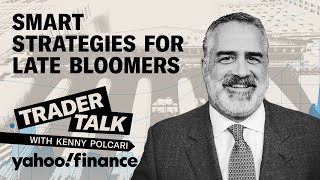
A Trader Talk episode hosted by Kenny Polcari featuring Interactive Brokers chief strategist Steve Sosnick. The conversation dispels the myth that starting to invest late is futile, emphasizing capital preservation, dividend-paying blue-chips, diversified ETFs, bonds/fixed income, and matched risk to time horizon. They also cover responsible uses of options (covered calls, cash-secured puts, vertical spreads) and discuss early-stage impacts of AI and algorithmic trading on market behavior. The episode closes with a cooking segment (pork chop pizzaiola) and a standard financial-disclaimer.
Questions this video answers
January 1987.
1986.
November 2022.
Pork chop pizzaiola.
Chapters
Welcome to Trader Talk, where we dish out the latest Wall street buzz to keep your portfolio sizzling. I'm Kenny Polkari coming to you live from Yahoo Finance's headquarters in the heart of New York City, a global trade hub where deals are made, fortunes are built, and the next market move is always just around the corner. Coming up, we'll dive into why it's never too late to get started investing. We'll chat with Interactive Brokers Chief strategist Steve Steve Sosnick and will be sure to stick around for my Pork Chop Pizzaiola at the end of the show. Now let's jump into my big take. Let's just bust the myth. Starting to invest late in life is not a lost cause. In fact, it's more common than you think. Maybe you were focused on family or a career, or simply didn't have the means. But here's the truth. While time is a powerful ally, discipline and strategy matter even more when you're playing catch up. The biggest mistake late starters make is trying to gamble their way to make up for lost time. They chase the risky stock, so they speculate on the next big thing. That's a recipe for sleepless nights and potential disaster. If you're coming in late, your number one job is to protect what you have, even as you aim for growth. So what works? Prioritize stability and cash flow. Think high quality dividend stocks, blue chip companies and dividends, diversified ETFs, defensive sectors like healthcare, utilities and consumer staples. Think Johnson and Johnson, Procter and Gamble, the XLP or VOO should be core holdings. These names provide steady income and tend to weather volatility better than the growth fads. Keep your time horizon realistic if you're planning to retire soon. Do not go all in on the riskiest ideas. Focus on capital preservation, and only take calculated risks with money you can truly afford to lose. Don't overlook bonds or fixed income. They're not flashy, but they add stability, especially as you approach retirement. Laddering maturities can give you flexibility and steady income. And above all, get a plan. Don't just wing it. That means budgeting, working with a financial advisor if you can, and automating your investments where possible. The power of consistency can still work wonders even if you're starting from a smaller base. The bottom line it's never too late to start investing, but your approach has to match your reality. Play defense first. Avoid the lottery ticket mindset and let discipline, not desperation, be your guide. There's still time to build wealth. Just do it with intention okay, well, joining us today is Steve Sosnick, the chief strategist at Interactive Brokers. With a career spanning over three decades in the financial markets, Steve has been at the forefront of trading innovation and strategy. He began his journey at Timberhill in 1995, where he served as an equity risk manager and options market maker, eventually leading the firm's expansion into Canada. Steve's expertise in algorithmic and electronic trading has been instrumental in shaping modern trading practices. Beyond his strategic roles, he. He is a respected voice in the financial media, frequently sharing insights on market dynamics and risk management. Please join me in welcoming Steve Sosnik to the show. Steve, it's such a pleasure to have you and thank you for joining me today.
My pleasure, Kenny. This promises to be great.
Yes, I hope so. So listen, I know I gave you that little introduction, but talk just a little bit about kind of your history and where you are today and how you ended up where you are.
Sure. Well, I mean, before actually, by the time I joined what was then Timber Hill, the predecessor firm to Interactive Brokers, I'd already been on the street for several years. I started in the Salomon Brothers training program in January of 1987. I actually finished school in 86, but I managed to postpone them for six months. It was a raging bull market. So they were doing two training classes a year. So I said, all right, here's my opportunity to, to venture out a little bit. So I went, you know, put on a backpack and then joined and finished pretty much just in time for the stock market to crash. So that was, that was quite an adventure. And you know, one of the things that, that's fascinating about that whole period and I was reminded of it just, you know, just last week I, I spent some time at the NASDAQ Thursday morning. I was privileged to be part of the bell ringing.
Yeah.
And it was to celebrate 25 years of the ISE, which doesn't exist anymore. That was the first all electronic options exchange. Right. We were very involved in that. And I had my ISE polo shirt from back in the day. Somehow I still had it. Much to my wife's chagrin, I was able to find it and still had it. But it's amazing because we, you know, some of the talk, because, you know, everybody who'd been there from the 25 year mark was of a certain age. And you know, it was a time to look back on how the business changed, on how trading on the floor trading New York based stocks versus trading NASDAQ stocks was a completely different Animal completely and no. And you did one or the other. And then we're moving, moving to the options game. You know, you had them, you had at that point single listings, which, you know, so, so if you wanted to trade Dell, you had to do that on the Phillips. If you wanted to trade.
Right.
You had to do it on the.
Unbelievable, wasn't it, when you think about it.
Right.
And so it's.
The mechanics of the business have all changed. I'm one of the rare people who in the old days actually traded NASDAQ and New York stocks at the same time. Because I was in the foreign, foreign business, the ADR issuers didn't really care whether the listing was. But, but for the most part the mechanics were so different. Yeah, I obviously don't have to tell you about New York NYSE mechanics, but, but it was just, you know, it was mind boggling to have that little trip down memory lane and realize the evolution of how far we've come. You know, at least in our, in these, in the lifetime of older, you know, gentlemen of a certain age, you.
And I could have our own separate show just about that. Because that is a fascinating conversation. Right. In any event, let's move on to talk about investing kind of late in life strategies for people maybe who, you know, feel like maybe they've missed the boat, they didn't take advantage, they couldn't, for whatever reason, they had kids, they had expenses, they had houses, whatever it was, they couldn't do it. So now they're starting to invest late in life. And what are their key considerations for kind of building wealth and managing risk as we move into this kind of period of our life? So talk a little, talk a little bit about that.
I wish I could disagree with anything you said in the open, but I really can't. I mean, that's, I, I think first and foremost, yes, for the younger, for the. Assuming we haven't completely tuned out any of the younger listeners. Time is, Time is your biggest asset. I think somebody once said compound interest is the eighth wonder of the world. And literally time in the market is a big winner. But that doesn't mean you shouldn't start late. It doesn't mean you should always be looking toward investment opportunities. And as you said, the key here is understanding your time horizon and understanding your risk, your risk limitations. And you know, it's fascinating because I just actually I got asked by some friends of mine who are doctors and one of them, you know, the wife who's, she's a physician, her father passed away and she inherited this investment portfolio from her father who was an economics professor. And she said, what do you think of this portfolio? And she said, it's too heavily invested in stocks. And you know, for a 90 year old guy, how was he so invested in stocks except the stocks? This was like the dream portfolio.
Right.
It was, the only stock that didn't pay a high dividend was Berkshire Hathaway.
Right.
Everything else was, was a solid dividend payer. You know, not the sexy stuff. He didn't go in for Nvidia, you know, whatever else, because he was, he was a, you know, man in his 90s, he was a 9 year old man and he wanted to, you know, he needed the income, but he wanted to leave something for his, for his children and grandchildren, which he did.
Right.
And I'm looking at this, don't touch this. I understand you're gonna have to pay taxes, whatever. Touch as little of this as possible because that's really the right thing. But you know, again, I think what happens is the, the big impulse a lot of people have is, all right, I'm playing catch up, I'm gonna, you know, I gotta make up for lost time. You just, that's inappropriate.
Right. Well, they're looking for every stock to be Nvidia or Palantir or, you know, some name that's going to grow at, you know, 500% year in and year out, which is certainly not the way to do it. Right. You can have some exposure to that certainly as you get older. You should have more of it when you're younger for sure. But as you get older, you know, you get into the 60 category and up, you don't want to be, you have some exposure, but not nearly that much. And while the guy might have been 90 years old, to your point, he had a portfolio that, that was a beautiful portfolio. They weren't, they, they were, they were stable dividend paying stocks that were year in and year out, solid performers.
Exactly. You know, I think it, I think at some point you get to a point, as you get to a point in life, even if you're investing late, you realize that at some, you need the income because, because if, you know, we all want to retire, I think you and I are both a little lucky in the sense that we're again of a certain age and not necessarily looking to do that. But where, but what happens is the income comes, I'm not going to say it comes in handy. It becomes a necessity. And so you want to have your money making money for you and Also quite importantly, you want that money to be there. You know, my, my good friend Steve Sears wrote a book several, several years ago and it was, you know, basically about people who've made, you know, some of the most successful investors of all time. One of those kind of books. And one of the key things that all of them focused on was first, don't lose money.
Right.
You know, that doesn't mean don't take risk. Let me, let me be, let me be real. You have to take risk and reward are always there. There's always the cost. You know, there's, you know, otherwise we would just do a show about like finding the, finding the highest bank account. Right. You know, FDIC C insured rates and that. That's not necessarily it either. But you have to have the mentality of making your risk reward appropriate. You know, my, during, you know, when things were selling off, you know, in April, you know, my son who's 27, a bunch of his friends were calling him. What does your dad think about what's going on? I'm like, for you and your friends, don't do anything, right.
Actually buy more. Right? You should be buying more. You should be freaking out by any stretch of the imagination.
Yeah, I bought as well. I bought. You mentioned Voort Voo, but realistically I told the younger people, don't get out. Don't get out of the market. You've got 50 years to worry about this.
That's right.
This is going to be a blip in time. I'm not necessarily a believer that every dip is reflexively a buying opportunity. That's a topic for another. Agreed. But, but if you had 50 years on your side, you know, 40, 50 years on your side, just keep plowing your money. And you know what, if you've got, if you're putting in for your 401k, just keep doing it. Come hella high water because that's averaging down. Don't worry about that. But if you're, but you know, for the older folks, I also had people approach me like, you know, look, I'm think I was hoping to retire in three years. Now I don't know if I can. And, and you know, I think one of the things you have to remember in situations like that, and I think this is very important, is think about, do a gut check for how you felt in April.
Right.
And if you felt freaked out, if you felt that you were just, you know, this was inconceivable, you're carrying too much risk. If you said, damn the torpedoes, I'M a buyer. Well, that's a different story too. Most people, I think, fall somewhere in between.
Steve, hold one second. We're going to take a break and we'll be right back. All right, so now we're back. And so to your point, for people that were feeling unsettled in April when the market sold off on the back of all the tariff news and liberation news and all that stuff, then your point? You're right. They're either too involved in way too much risk in their portfolio or they're just completely uncomfortable and they don't really know how to. They don't know how to process kind of what was going on. Right. Now what's interesting is that if you or somebody had a portfolio on April 1st and you did absolutely nothing with it, you rode that wave. By now you're right back to at least where you were, if not actually improved. Some of those stocks are actually at prices higher than they were on April. Right. But a lot of people who said, no, no, no, I gotta get out, they sold, they sold, they hit the sub, and then when it turns around, they rush to buy back, they rush to get back in. Right. So they're in, out, they're in, out. And so you're not really sure where they end up because they screwed it all up. Right. They sold everything, then they bought everything. So where'd you end up? You don't really know how you would have been had you held that portfolio. So to your point, like I say, you know, in as long as it's a long term investment portfolio and it's properly balanced, then you should be able to ride the waves and take advantage of that. Right. And to your point, the dividend stocks, if you're not taking the dividends yet, if you're not using it for income, the dividend should just automatically get reinvested into the same name that's paying the dividend. Because if you like the stock to begin with, then you should not mind reinvesting those dividends into the same name.
Absolutely. And you know, I think going into this, one of the ways that I think, you know, I come from a volatility trading environment, so to me, I'm always conscious of volatility. Right. And so, Nora, I think institutional investors think in terms of returns adjusted for volatility, so. Right. So if you're going to invest in crazy stuff, it tends to be more volatile, you get bigger risk, better returns. But I think sometimes, or bigger losses.
Sometimes are not right.
Exactly. But I think for, you know, if you're starting at this a little bit later. You want to use the concept, let's say a beta is a good way to think about volatility in some way. So beta is a, is a simple, you know, is sort of a. It's not perfect, but it's basically saying for each move that The S&P 500 makes, this stock moves one for one with it. One, you know, it moves two for one with it. It moves 0.7 to one with it.
Right.
I think if you're investing later and you don't have and, or do not have a very high risk tolerance, you want to favor the lower beta stocks. Those are usually found as value stocks. Right. Those also tend to pay dividends. And so I think that's generally a way to go if you're, if you're coming into this late and don't have, and don't have a huge stomach for this. And quite frankly, I'm going to assume that if you haven't been investing this long, you know, until relatively recently, you haven't been doing it because you don't have a huge risk tolerance. There's nothing wrong with that. Everybody's risk tolerance is different. And I would never say that what works for one person is going to work for another. It can't.
No.
I think first is know yourself and then once you know yourself, figure out the investments that will follow along with yourself.
Right, so talk about this for a moment because this was another area where you kind of spent a lot of your career options and derivatives, Right? And maybe how should everyday investors use these tools? Could they use these tools, can they use them responsibly to enhance their risk and return if they're not really sure how they work?
Well, number one, make sure how they work.
Right?
And one of the places you could do that is we've put a lot of effort at Interactive Brokers. It's free. You do not have to be a customer, although of course we would love you to become one. You do not have to be a customer to use our tools. Another great place is the Options Industry Council, because I have a lot of friends at OIC and this is what they do for a living. So those are places to look. And when people think of options, they think of them as gambling or, or some sort of means of just trying to supercharge your returns. There are also ways to supercharge your. Well, not supercharged is the wrong word. There are also ways to enhance your income using covered calls. Writing cash secured puts the covered calls is getting a Little extra income. You're willing to forego maybe some of the return on your securities in exchange for a little extra income on the cash secured put side. If you're holding a lot of cash and you say I want to buy, I wish I could buy XYZ stock at $90 a share, but it's trading at $95 a share and you can afford to do so. You might want to sell a put and get paid to. And get paid to wait. There's different reasons for doing this, but I know some very successful, very conservative investors who utilize option strategies to enhance, to enhance their income.
Right.
Look, I know people gamble with them too, but I think they're very, they're a great tool for conservative investors when, when done appropriately.
Right, but done. But, but to the other point, options investments are not. You don't buy an option and hold it long term for 10 or 20 years like you do a stock. Right. They're very short term and strategic when you use them.
Oh, absolutely. Remember options, options decay.
They decay.
You know that, right? If I, if I ever write my autobiography, it'll be called the Life in Decay because that's literally, that's literally how I've spent it. Wait, watch. You know, and you know, professional. There's two ways to approach it. You're either paying the premium to, you know, to, to get the turbocharged returns or you are willing to accept the, you are willing to accept a little less in return in exchange for, for a cash outlay.
Right.
This again can fall that we were talking about conservative things that investors can do. That is a conservative thing an investor can do. Is, is, is right. Is right Covered calls, cash secured puts. There's some other strategies. Vertical spreads can be very conservative. Play into that realm, you know, without getting into the real nitty gritty or crazy stuff that I think a lot of people associate with options.
Right. So let's talk a minute about. Because you have a, you have a big history kind of electronic trading and algorithm. So let's talk about the impact of AI on trading. Right. And how that technology is kind of reshaping behavior and what it ultimately means for investors.
It's interesting. Well, first of all, AI is a theme is certainly that's, that's the investment theme of the last of the last few years. Right. It, it's, it's no coincidence that Chat GPT was released in November 2022. And that's literally was the, was when this bull run, which wasn't really, you know, I, I, you could say it was Interrupted in April. It really wasn't. That's really when that bull run dates to. So no coincidence there. But in terms of using AI, I would say right now it's still not. There are people trying to do it. I think right now some of the algorithms that are using it are a little unsophisticated. I was actually at a panel at the Options Industry conference just earlier, I guess about a month ago now, and someone put out my friend Henry Schwartz from the CBO put, which was another great resource if you want to learn more about options. CBO has plenty of stuff too. And he put up a chart that blew everybody's mind. And it was certain algorithms, a lot of algorithms. Now you could see the time on the chart exactly when the trades were going off. I was a former floor trader, would love it if you knew that some guy was going to walk in the crowd at 10:15 and buy X and walk back in the cloud at 10:30 and buy it again and again at 10:45. And there were strategies that were doing this was like. There was like a gasp of like, you know, how to. How does someone let these algorithms out there unleashed in the world? So artificial intelligence will. Will help. It probably will help people code certain algorithms, but it's still not at the point where it's replaced humans yet. Although, believe me, I'm sure there are guys out there with PhDs who are trying.
Well, I'm sure they are. And I'm sure, you know, at some point that is going to happen, right? I mean, whether it happens, you know, next month or two years from now, I think at some point they're going to figure out how to use AI. Look, if you look on, it's popping up on Instagram or it's popping up on TikTok, it's even popping up on Twitter. You know, all these people saying that they can do it better. They got this AI machine that can do it better and do it better. Every time I look at it, I shake my head, I go, really? Anyway, look. No, God.
I mean, you're on social media. Any time I'm on, like one of these things that's, you know, if I'm featured on any particular. Any social media, any major media outlets post on social media, inevitably there are comments. Oh, you should be listening to Joe Schmo. One, two, three.
Right.
He's great. Or, you know, or, you know, or Jane Doe, you know, and you realize there's just so much crap floating around out there. And this goes back to, I guess our theme of Listen to people who've been at this for some period of time and who, you know or who tell you what their vested interests are. I'll tell you, our vested interest is we'd love you to become customers. Once you become customers, we want you to make money because we want to keep you as customers.
Right?
The Options Industry Council, the cbo, they are. They want people to trade options, but they don't want to trade options and blow people up. They want people to. They want people to use this stuff responsibly, right?
They want the people.
You've been at this for a while. You don't want to, you don't want to just create people and followers and ruin them. So I think this is very important is get your. There's all kinds of stuff out there. There will be great models out there. Look for a track record. Look for and, or, and, or figure out who's motivating this idea that you're getting into.
And that's right, because a lot of people are talking their own books. And so, yeah, it's like anything, right? Who's talking their own book? Because that's what you have to be careful about. Listen, Steve, we gotta wrap this up, but I appreciate this conversation. I want to talk about maybe coming back five or six months from now and kind of revisiting where we are and where we were and what we talked about and kind of compare and contrast to see how this all turned out. But as you may or may not know, I end every episode with a, with a recipe because I love to cook and it's just part of who I am. And so today I'm giving you pork chop pizzaiola. Right? So when you ask, what is pizzaiola? Well, the term alla pizzaiola literally means in the style of the pizza maker, right? Because in Italian, the. The pizzaiolo is the pizza maker. And it refers to the sauce that he makes with tomatoes and garlics and oregano and olive oil, the same basic flavor that you use as a base for this classic Neapolitan pizza. So sometimes they add in crushed red pepper or bell peppers and capers or even olives, depending on who's cooking and what's in the pantry. Right. Originally, the term alla pizzaiola was a way to stretch for tougher meats, tougher cuts of meat into a meal. Right? So they took thin slices of meat, simmered it in this tomato based sauce until it was tender. It took time. And over time, this method was adapted to other meats, including pork chops. Which are naturally flavorful and hold up beautifully in a slow cooked kind of tomato sauce. This recipe is rooted in Neapolitan ingenuity and is a symbol of the Hardy family focused Italian home cooking. It's not fancy and it's not fussy, but it's full of love and that's enough to make anybody happy. You can scare the QR code on the screen to get the full recipe and you can thank me later. In the meantime, that's a wrap for today's Trader Talk, but the conversation keeps going. You can subscribe on Apple Podcasts, Spotify, Amazon Music, or wherever you get your podcast. You got questions or topics you uncovered? Email us@tradertalkahooinc.com because we're always listening. And until next time, stay sharp, stay disciplined, stay in touch, and take good care. This content was not intended to be.
Financial advice and should not be used.
As a substitute for professional financial services.
More from Kenny


Wall Street Is Celebrating| But Kenny Polcari Sees A Warning Sign | Kenny Polcari


Stocks Crashed After The Fed Move But Here’s What Investors Missed | Kenny Polcari
9/11 25 Years Later: Bond Market Warning, Oil Above $100 & Fed Rate Hike Fears | Kenny Polcari

Oil Hits $97, Bond Yields Surge & PPI Inflation | Markets Brace for Fed Decision | Kenny Polcari
The Fed Has a New Problem | Oil | Inflation | and Rising Yields | Kenny Polcari

The Fed Never Promised a Rate Hike | But Markets Panicked Anyway | Kenny Polcari

Nvidia Crushed Earnings | but the Biggest AI Opportunity Is Still Ahead | Kenny Polcari