You can't manage risk if you don't know what you're holding
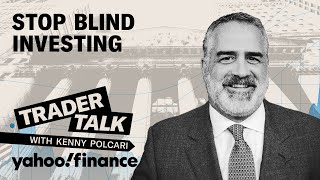
Host Kenny Polcari opens with the episode thesis: investors must understand what they hold because you "can't manage risk if you don't know what you're holding." He interviews Mark Malik (CIO, Siebert NXT), who describes a quantitative, technology-driven approach to stock selection—screening a ~3,000-stock universe with factor models and statistics—then applying human thesis review and allocation rules. They discuss practical investor rules (explain holdings in two sentences, know risk parameters), buying high-quality names on sale, and macro risks including Fed policy, political pressure on the Fed, and soft vs. hard economic data.
Chapters
Foreign.
Welcome to Trader Talk, where we dish out the latest Wall street buzz to keep your portfolio sizzling. Look, I'm Kenny Pulcari coming to you live from the iconic New York Stock Exchange, a place that had been my home for decades. And it still fuels the puzzle. Capitalism, entrepreneurship and freedom. Now let's jump into my big take for the week. Let's cut through the noise. You can't manage risk if you don't know what you're holding. Too many investors buy stocks, ETFs, crypto, you name it, based on the headlines, on hype or someone else's conviction. But if you can't explain why you own it and what drives its value, you're not investing, you're just renting volatility. It's easy to fall in love with a ticker symbol, a flashy name, a hot chart, a glowing upgrade from an analyst. But here's the thing. Markets don't reward blind conviction. They reward understanding. Do you know how your company makes money? Where its growth comes from? What risk it faces? If, if they raise rates, how does it impact the balance sheet? If margins compress, is their pricing power to push back? These are all questions real investors ask before they hit the buy button. And it's not just about individual stocks, ETFs, mutual funds, even broad market indexes. You need to know what's under the hood. If your diversified ETF is 30% in the same five tech names, you're not really that diversified. You're concentrated and you don't know it yet. The biggest portfolio blow ups don't come from bad picks. They come from good picks that you didn't understand. They come from being overexposed, over, leveraged or simply unaware of what the hell is in your portfolio. The bottom line. If you can't explain it in two sentences why you own something, you probably shouldn't own it. Know your holdings, know your thesis. And when the market tests you and it will you have the conviction to hold it or the clarity to cut it. I want to introduce my next guest, Mark Malik, the CIO of Siebert NXT and a Wall street veteran since 1987. He distills real time macro shifts in the clear. Actual insights for investors. Please take a moment and welcome Mark Malik to the show. Mark, it's a pleasure to meet you.
Pleasure is mine.
Have you here at the New York Star.
Great to be here.
Look, I'm a little bit. Let's start by this because I would like the guests to kind of introduce themselves a little bit to the audience so they understand why you and I are talking. Okay, so go ahead.
Okay. Been doing this almost as long as you have. Taken a slight different path than you.
Although you look like you've been doing as long as I have.
Well, look, I have leaders to follow, so, you know, I have to look like I know what I'm talking about.
You do.
And so my path was a little bit more sort of quantitative. And so my background is really more technology oriented and I took a couple of detours in the finance world, but mainly sort of tech oriented. And ultimately I started my own quant firm back in the early aughts and ultimately ended up getting acquired by Siebert. And my firm became the basis for their asset management company and I joined as their cio and it has been love ever since.
How great is that? This is going to be a fascinating conversation because I've got a lot of my own views on the technology and actually what technology and algorithms did to my career, but did to really the New York stock change in the way that people invest. So let's talk about, tell us a little bit about your quantitative, kind of your history there and what got you into it.
Yeah. So quantitative can mean so many different things, Right. Most people think of quantitative, they think of these high frequency traders and things like that. I never did any of that stuff. I basically use the quantitative methods to help me pick stocks better, manage portfolios better, to allocate better so that I can do on my own what it would take maybe 20 analysts in the old days to do. All right, so that's always my starting point.
So define that when you say the quantitative methods, define that for the audience. Right.
So I'm basically going to do everything that you would do. Right. So when I started, you know, quantitative, meaning you would do math on the back of a trade ticket.
Right.
And you have your Monroe trader over here, you're clicking away, trying to figure it all out. The first step away from that was to use a spreadsheet and start to apply statistics.
Right.
And so back then I started doing that in the early 90s and I was kind of like the one eyed guy in the land of the blind. Everyone was still walking around with those little solar calculators and I was using a spreadsheet. I was high tech, but as technology progressed, the power progressed and I was able to do much, much more. But I'm still looking at the same stuff that you would look at. I'm just looking at the technicals, I'm looking at factors I'm looking at the standard fundamentals, but I'm applying, applying levels of statistics on top of that to sort of give myself a better idea of probabilities. Right, right. So you probably use probabilities. You probably inherently know them because of your experience. But I'm actually calculating the number, taking the guesswork out of it.
Right. So yours is probably more precise than minus.
You know what? But it's going to be based on the same stuff. I like to say I'm doing exactly what you would do if you had a chance to do it every day. Over 3,000 stocks. Right, right. So basically I'm able to do that and again, eliminate, you know, a lot of the ones that we shouldn't be looking at and then focus and going deeper on the ones that we should be looking at.
All right, so let's talk about the 3,000 stocks. So they, they span stocks here at the New York Stock Exchange as well as stocks on nasdaq.
Yeah, Basically like to look at the whole universe.
The whole universe. And then you're going to eliminate stocks that don't fit the criteria. Yeah, right. But, but, but that doesn't mean you're eliminating sectors. You're just eliminating individual names.
Exactly. And then I might look in there based on what sectors we like, because we're also going to look at sectors and decide which sectors have the greatest probability to. And then, of course, it still has to fit a thesis at the end of the day. You said earlier you're going to look.
At the sectors that probably to make a move in the current environment. So.
Correct.
The conversation today might be very different than it will be six months from now or six months ago.
Correct, correct. So today I might be saying, okay, it's time for us to consider some, you know, defensive type stocks. Right. That may not be the case, but, you know, it is. And so now, and so now I got to decide within the defense, defensive, you know, universe, which ones am I going to look at that will fit these?
Right. So it's interesting. Let's just make sure that the audience understands defensive, not defenses. Defense. Defense. Yes. Correct, correct. Because some people sometimes get that confused. So we want to talk about, when we talk about defensive. Yeah. Talk about consumer staple names, you might.
Be talking staples, essentially.
Staples plus are utilities in that space.
They kind of are. But I look at everything. Right. So at that point I'm starting to look at, okay, what are the best things here? What. So it's different for everybody. You might be looking for growth in those, in Staples, which is not typically associated with Staples. But if you look for it, maybe you can find it. So you're basically going to look for the best names in that, in that group, the ones that have the best sort of factor exposure that we like at the time and that changes, right? And that becomes sort of, you know, the beginnings of, okay, these five names came up, right. You know, Pepsi. No. Coke, Maybe Walmart. Yes. Right. So then you start to say, okay, what might be my thesis around this, it's the same stuff that you would do, right. And then you're going to do the legwork, as you said on the top of the show, right. Then you got to get into it, you got to read the 10Ks, you got to read the 10Qs, you got to read every bit of news, you got to do much more on top of that. But all those algorithms really the starting point ones with the best probability.
So is it the algorithm? Are you creating then an algorithm based on your data? So you're creating an algorithm with a bunch of names. Are you using the algorithms to help you discern the discern.
It's a lot of different things.
Right.
So if you're picking individual stocks, we use, let's say the algorithms and factor models to narrow it down to a universe that we want to look at.
Right, right.
And then we start to develop stocks that we're interested in. And then of course we use other algorithms to help us allocate those stocks. Right. So you know, as you also said earlier, you know, you want to, there are times when you want to be, you know, concentrated in a few stocks.
Right.
When they're, when they're pulling for you.
Right.
But you know, if you're over, you know, sort of, you're over diversified in market's moving, it can also cost you. So we're constantly evaluating how to, what type of conviction we might have, you know, on each one of those stocks that we ultimately pick. And that's a whole separate group of models that we use.
So, so then here's the question. Does that model, does that methodology. Methodology change? Doesn't change very frequently. It's not like from week to week you're changing your method?
No, no, not at all. So I have the benefit of being very long term oriented. All right, so our clients are long term oriented. Clients could sit here and say very easily, is this stock going to be up in two years? Right. And so it's a much easier process than saying, I better get in. Now don't get me wrong, we're still looking at the short term Technicals to see if there are indicators that show us that we have some short term momentum and the trends and all that kind of stuff that we're looking at that you probably would also look at.
Right.
And you know, we're certainly not buying, you know, when things are going straight down with, with, with negative momentum and things like that. But that said, we're looking at stocks that we think are going to do well over the next, let's say four to eight quarters.
Right.
And once we have that, then we're constantly reevaluating.
All right, so let me ask you a question. So you're not necessarily buying stocks when they're falling out of bed. It's like catching a falling knife.
Right.
You're going to kind of, you have to kind of step back and just let it happen. Yeah. But then at some point. Yeah. It hits a bottom and then these names become very attractive.
Correct?
Correct.
Yeah, absolutely. You are seeing a lot of that now.
We're seeing a lot of that now. I agree with you.
Yeah.
Look, I think while the market and look, today's another day. The market's just under pressure again. Right. There's a lot going on. Yeah. But I do think that we've put in the lows like that 4835 that we hit maybe three weeks ago. I think that's actually the lows. Doesn't mean we're not going to test it again. Yeah, we very well might. And actually we probably should just to see if, if they defend the position. Right.
Yeah.
But I do think that in times like this, there are stocks that end up becoming very interesting to look at. And we're talking about big mega cap names.
Yeah, absolutely. They're great. They're names that we loved a long time ago.
Right.
And we were buying them much richer when they are now.
Correct.
The markets are down, the macro climate has changed drastically and changes every 15 minutes drastically. But, but you know, at the end of the day, there's still the thesis test. Right. Does it still match the thesis?
Right.
Are the fundamentals the same now? Fundamentals are going to probably shift a little in the coming weeks with earnings.
Right.
But that said, we're constantly doing that. Check most of these companies that we probably both loved, you and I, a couple of weeks ago, a couple of months ago.
Right.
Are even better buys down here?
100%.
I don't care if it goes down further from here. I'd rather, you know, I'm fine with that.
Well, you just said it. As long as the thesis itself.
It's holding.
Right. If the thesis that you originally owned it.
Yeah.
Still stands. And the stock's on. On sale 20%.
Yeah.
That's more of a reason to buy it.
Yeah. I don't see people canceling Nvidia orders.
No.
You know what I'm saying?
And I know, I know. 100%. And look, I always laugh because I say it's like, you know, when. When Bloomingdale's has a sale.
Yeah.
Everything goes on sale 30%. The ladies run in and they buy three dresses because how could you leave it on the shelf? Right.
But there's. But there's still junk out there. You gotta be real careful.
I understand. But if they're buying a high quality dress that's on sale, they're going to buy. Right. So when Apple's on sale 28% or Nvidia is down 25%.
Yeah.
Those are names that aren't going anywhere. Right. Nvidia sits at the nexus of this whole AI movement. That.
Absolutely. And that. And that opportunity has not changed.
That's exactly. And that's the point. That hasn't changed.
Not at all.
This hasn't really changed.
Not at all.
At all. There are some stocks. Absolutely. That you say, oh, they stink. Right. They're falling out of bed. Okay. The thesis there has changed. I got to get out.
Yeah. I always say the big question is, is it down for the right reason or the wrong reason?
Right.
Right. Sometimes it's down for the wrong reason. This is a very, very uncomfortable market. It is very hard to find conviction here. However, if you do the math, you do your homework and you know what you're doing, and you don't just bl. Whatever your friends are telling you, you will find that there's some fantastic socks that are on sale right now. It may not be the bottom. Bottom. You can sit and wait for it to retrend and build up momentum, which is fine also.
Right.
But if you have a strong enough conviction and you have time and you understand your risk parameters.
Right.
You can find stocks right now. This is a buyer's market right now.
All right. So hold on one minute. We're going to take a break. We're going to come right back.
You bet.
All right, we're back. And I want to pick up that conversation off because I think what's really important about what you just said it was, you know, if. If you own the thought, you own the stock. The thesis is right. It hasn't changed. The stock is down.
Yeah.
You may not hit the bottom yet. But it's down 25%. It's still a name. It's okay to jump in there and buy. You're not necessarily always going to buy at the very, at the bottom tick. You're just not. Yeah, but you also have to understand people go, well, if I missed the bottom, if a Stock is down 25%, it's not trading up 25% in one day. Yeah, right. It's just not. You're going to get the opportunity to add to it.
Absolutely, absolutely. And like I said, if you're following the rules and the guidelines that you set for yourself and you understand your risk parameters.
Right.
You will find that it is not difficult, especially in a market like this, to justify making purchases.
And so I think what's important with that statement too is you people have to understand their risk. They have to know what their risk parameters are.
Correct.
The people, I think that are really stressed out and nervous during this recent turmoil that we're all going through are the people that maybe don't understand their risk enough or maybe they've never really done their own risk assessment to understand what their risk is. Right. I think it's very important that people understand kind of how much risk they're willing to endure.
Absolutely, absolutely. And that's why I would also say a big part of my job is education. Right. So it's educating clients so that they understand what's going on 100% and I understand what they're thinking. Right. So that they understand that, okay, markets go up and down. They understand why the markets are down. They understand why they own the stock.
That's right.
And they understand that we follow a very, very strict set of guidelines.
A strict set of guidelines, exactly.
And that makes it easy, right? It makes it easier.
Well, it makes it easier. It doesn't necessarily take away the angst.
So the pain is still there. There's no way taking away the pain.
You know, I always have this conversation. People say to me, I've lost so much money. I go, no, no, no, you haven't actually lost it. Unless you make the sale and take the loss. If you haven't made the sale and taken a loss, you know, it's just part of the cycle. Yeah, because, because if you've got high quality names, they're coming back.
Yeah.
Look, I want, before we run out of time, I have to, we have to talk about this because I think you and I are in the same place. Yeah, but, but I, I, you know, I, I read your note that you put out and I, and I, I'm fascinated by it because I think we are in the same place. But tell me what you think about all the noise around Trump and Fed Chair Powell.
Well, first of all, I think it's dangerous for the President to be threatening to fire, to fire the chair. Like, I understand that the President would like to jawbone the chair and that's understandable. A president doesn't want low interest rates. But the reality is, is, you know, is firing the chairman of the largest central bank in the world kind of doesn't help when your currency is already, you know, people are looking at it sideways and they're looking at our sovereign debt sideways. You know, now may not be the time to be doing that, but to say, hey, you know, lower interest rates could certainly help the market. We hope that we don't miss it this time. That's okay. We expect that.
Okay. Yes.
Yeah.
But I got to tell you, I'm in the camp right now as I look around.
Yeah.
I don't think rates usurious by any stretch and I don't necessarily think that he needs to cut them right now because I don't think the macro data suggests it. And I think all the trade angst is actually causing him to be a little bit more cautious, which I think is okay. Look, I agree he was late to the party when inflation was running out of control.
100%.
100%.
Yeah.
But I'm not necessarily sure that he's, that he's going to be late to the party this time because I think there's a lot of unknowns there. And I think he's trying to stay steady, which I think is the right thing to do.
Yeah. You have five bullets in your gun. Someone has broken into your house. It's completely dark. You don't see or hear anything. You take a shot into the dark. Right. No, no, you're absolutely right. And let's think about it. What would a 25 basis point rate cut do for the market right now?
Zero.
Any there is. Sure, there's angst. Sure there are people out there that will say, oh God, thank God the Fed is cutting, I'm going to buy, but they're going to probably lose money the next day. But in terms of fixing some of the challenges that we might have should these tariffs stay, then that's a very different case. And that quite frankly, you might not be able to solve those problems with lower interest rates, certainly Fed funds rates. So the fact of the matter is if you're Fed chair and you have more ammo than they've had in the last 20 years to use. Why waste it? Right. Wait till you start to see things crumble.
And by the way, I don't think the hard data is crumbling yet. I think the hard data continues to reflect that the economy is still fairly robust.
I would agree with you, but that's today. You know, I'm a little, I'm a little, you know, uncomfortable with the soft data. A lot of people have been poo pooing the soft data. But I'm a real big fan of, you know, consumer sentiment.
Right.
I believe that, yes. Maybe there's not a direct correlation.
Right.
But if consumers are showing and both parties. Right. So I'm not saying it's biased one of the other because you can watch the parties certainly on the umich one. Right. So we have an idea that everyone's getting a little nervous.
But, but are they getting nervous because of all the chaos that could be that's being created at the moment? Well, what else are they really getting nervous because they think either they're going to lose their job or they're going to be out of. Or they're, you know, the economy is.
Very good point, Very good point.
So that's where I'm at. Right. I, while I look at the soft data, I'm just not there yet. Yeah.
I'm not ready to call a recession on.
Right.
But it's certainly. We got to watch this very, very carefully.
It comes down to doing your homework and understanding kind of how it all plays together. Let's wrap up things with three essential market tips to keep in mind. No matter which way the wind blows. Right? Start a watch list before you start buying. Before you invest a single dollar, build a simple watch of companies that you're interested in, Brands, you know, products you use or industries that you're curious about. Track how these stocks move day to day and then what news impacts them and then how they react. This helps you learn how the market reacts without risking real money just yet. It's like training wheels for investing. Right. Everybody should at least do that when they're starting out. The second thing, do not check your portfolio every hour. While it's tempting to refresh the app constantly and go in and constantly check it out, short term market moves can mess with your emotions. Instead, pick one or two times a week to review the portfolio. Remind yourself why you're invested in the first place. Long term investing is a marathon. It is not a minute by minute sprint and use fractional shares to build positions slowly. Right. You don't need to buy a whole share of Amazon or Apple. And maybe you can't even afford to do that yet, Right? Most platforms now let you invest small amounts, $5, $10, $50 at a time, using fractional shares. This lets you gradually build a portfolio while learning how each investment performs. It's a great way to invest consistently, even if you're on a budget. Okay, so now here's the food for thought. Because, you know, I always end the show with a recipe. And I gave you this recipe. It's nidi di tagliatelli. It's tagliatelli nests. It's not just pasta. It's really a statement. You gotta picture these golden coils of fresh egg pasta all rolled up. Looks like a little nest, right? This was born in Emilia Romana, the food capital of Italy. Legend has it that a Bolognese chef created them in 1487 to honor Riccia Borgia, whose golden hair at her wedding was all rolled up in a nest. Now, that's setting the bar a little high. But it's not just about the looks. These nests mean business. They soak up the flavor like a stock soaks up a rally. You serve them with a rich ragu or a creamy sauce or a bright tomato base. Whatever you're working with, they rise to the occasion. Now here's a pro tip. You can make the ragu a day ahead to save time, and it even sits overnight. It's even better. These make. And once you make these, these make killer leftovers. You just reheat them in the oven with a splash of sauce, and boom, you've got round two. Now you want to go an extra mile. Try it al forno. You arrange the raw nest in a par cooked in a baking dish, and you stuff them with bocconcini, right? Those little mozzarella balls. You pour the sauce on the top, you cover them, and you bake them in the oven until they're nice and golden. It's pure magic. The dish is a Sunday staple in Italian homes and a showstopper in restaurants around the world. It's got roots style flavor to spare. And hey, if you want my take on it, scan the QR code on the screen for the full recipe. You'll thank me later. That's a wrap for today's Trader Talk, but the conversation keeps going. Subscribe on Apple Podcasts, Spotify, Amazon Music, or wherever you get your podcast. You got questions or topics you want covered? Email me@tradertalkahooinc.com because I'm always listening. Until next time. Stay sharp, stay disciplined, and stay invested. Take good care. This content was not intended to be financial advice and should not be used as a substitute for professional financial services.
More from Kenny


Wall Street Is Celebrating| But Kenny Polcari Sees A Warning Sign | Kenny Polcari


Stocks Crashed After The Fed Move But Here’s What Investors Missed | Kenny Polcari
9/11 25 Years Later: Bond Market Warning, Oil Above $100 & Fed Rate Hike Fears | Kenny Polcari

Oil Hits $97, Bond Yields Surge & PPI Inflation | Markets Brace for Fed Decision | Kenny Polcari
The Fed Has a New Problem | Oil | Inflation | and Rising Yields | Kenny Polcari

The Fed Never Promised a Rate Hike | But Markets Panicked Anyway | Kenny Polcari

Nvidia Crushed Earnings | but the Biggest AI Opportunity Is Still Ahead | Kenny Polcari