Dan Lok's 5 Most Powerful Sales Questions | What Are You Communicating?
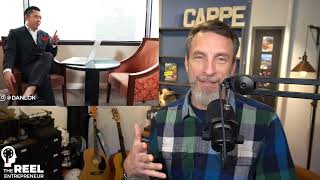
Dan Lok breaks down five sales questions for in-person meetings. Dress one notch above your audience, start by asking what motivated them to meet, then map where they are versus where they want to be. Let prospects talk most; when they articulate the solution themselves, they're more likely to buy.
Chapters
Hi.
From my hotel room. I am traveling. And perhaps when you watch the Real Entrepreneur, you are traveling too. I just did a video about Dan Lok and his discussion of sales strategies. I think the content is so juicy, if I may, that I broke it into two parts. This is part one right now. And if you hit the subscribe button, you surely won't miss part two.
Today we're going to be watching Dan Locke talk about the five most powerful sales questions ever. And I don't know if I agree with every single one, but some are pretty juicy. We'll see.
Let's say you are going to have a face to face meeting with a prospect or this time you're having that client. What are some of the things that you could say to make sure that that meeting is successful or goes the way that you want? Today I'm going to teach you.
And he's doing the suit with other powerful sales questions.
Not for me ever. That you could use from a client meeting. Now, you have to understand this when you are meeting face to face with a client. Now, we are not just talking about closing on the phone. When you are sitting down, face to face, belly to belly, toe to toe with a client or multiple clients or prospects, knowing that your body language also comes into play. So the way you present yourself, the way that you dress, all that makes a difference. But today we're going to just focus on the question most salespeople.
I just paused it before he gives us the question. He's talking about the way you look, the way you present. It does matter. I heard a great tip once. Dan didn't really go into much of it about this, but I heard a great tip. And a great tip was this. Dress like your audience, plus one. So I'm not wearing a suit right now. Because chances are you're not wearing a suit right now. And if you are, well, good for you. But chances are you're in a much more comfortable attire. So that's why I'm doing it too. You want to meet your audience. Can you imagine you are presenting at an event of people who are doing construction work. They come in with boots and stuff like that and you wear a tuxedo. There's such a disconnect. You're overdressed. It actually can reduce your effectiveness. Conversely, imagine you're at an event where everyone's wearing tuxedos and you come in wearing those ragged boots and jeans. That may degrade you too. But most importantly, speak to your character. If Mike Rowe Dirty of Dirty Jobs shows up, he's wearing a baseball cap and ragged jeans to a black tie affair. It makes sense and actually increases authority. So dress to your character. And when you're unsure of exactly how to tune in your dressing, it's your audience plus one little notch. That's the general rule.
Make this mistake that they let the guards down, meaning that they think, oh, I'm meeting face to face with a client and it's already a done deal. No, it's not. Just because you're meeting face to face with a client or prospect, it doesn't mean that you've already closed the deal. In fact, if anything, you need to be even more cautious when you're meeting face to face. The second thing you need to pay attention to is what is the outcome?
Yeah. Know your outcome.
Right. Most salespeople, they go into a meeting without a clear outcome and they think that if they naturally they will want to buy.
Yeah. Avoid that. I agree with Dan here. They call it the show up and throw up. Just pumping people with more information actually will cause them likely to freeze up because they're overwhelmed. They have to contemplate so much. The safest action when you're overwhelmed is inaction. So be careful about overwhelming people. Know what they want, know what you want, navigate theirs efficiently.
A lot of information that naturally they would want to buy. That's not the case at all. You need to set the tone, set the agenda in the beginning. So at the end, so the closing part or signing the deal, that becomes a very, very natural conclusion of what should happen next. But you need to be very, very strategic about it. So question number one, and that is this.
Yeah. All right. So before Dan gives us feedback on what motivated you to meet with us today is a great question. I would make a little tweak. I'd say, what motivated you to meet with me today? When it's a one to one, it brings about more control, more confidence and motivation. Now you're figuring out, obviously you're figuring out the core reason that they're investigating you. And you're going to avoid that show up and throw up commentary, and you can speak just to their needs.
That's it. What motivate you to meet with us today? Now why is that question so powerful? Because that question gives you some information, some intel. It tells you what are their motives. Right. Why? It's just like, why are we having this meeting today?
Another thing is he's talking about what motivated you. It also doesn't imply your solution.
Then the prospect would do 80, 90% of the talking and that's a great point.
When you do that, the prospect does the talking. That's what you want. There's a real simple sales lesson. Ask questions and listen. If you follow that, you'll close more sales than ever before. When you ask what motivated them, you're going to be positioned to listen to their feedback. And they are in a position of control too, which is good.
It's now taking sense of paying attention. What are they saying? And let them talk. Don't interrupt them, let them talk. Let them talk for 5, 10 minutes. Let them talk and then you pay attention. The second question that you could ask this exactly what are we trying to accomplish today here?
Good questions. Dan Locke. So he's asking what motivated you? And then what is the problem we're trying to solve? You're looking at the end caps. Motivated is why we're here. The pain and solution is what's the resolution we're getting to, which is pleasure. So you're hitting the pleasure point of pleasure. I like that.
See how that is very, very outcome driven. It's very goal oriented. Exactly. I like to use the word exactly what are we trying to accomplish here today? And boom, again, a simple question, open ended question. Let your prospect talk.
Yeah. What they'll do too when they're talking is they're going to paint the picture, the outcome.
And the third question that I like to use all the time, especially if I am doing any kind of consulting or brainstorming kind of work, I would have a big whiteboard kind of maybe behind me right here. And then I would ask this question, where are you today and where do you want to be?
Where are you today? Where you want to be.
Now that question is, I'll give you.
A code of warning here is people will tell you what they where they think they are and where they think they want to be, which is powerful because if you try to tell them something otherwise, you're in conflict with their own thoughts. But realize what people want and what people need are sometimes different. So this question, I just want to give you a little bit of warning that the answer they give you may not be satisfactory. But what he's doing here is now he set the two end caps. Where are you coming from? Where do you want to go? And now he's doing the bridge technique. The bridge simply connects those elements together where the steps to get there. And the client or prospect will often paint you as a solution because this is the reason they were motivated to meet with you in the first place. So see if they're painting you as a solution. If they are, that's good. Acknowledge and go with it. If they're not painting you as a solution, then the next supplementary question is how do you think we could serve you in making that bridge?
What's the status of the company? Right. Where are they? Are what? What are their frustrations? What are.
I had as people ran in behind up around. Look at that computer.
Where do you want to be a year from now? Two years Right there. Go. What I want to do is I want to present my product, my service, my solution, my system as the bridge.
Oh, he used the word bridge. There you go.
They are to where they want to go. You see that? That's the gap. But my product and my service should be right there. The bridge. The perfect solution to help them to get from here.
I'm with Dan on this one, how he's explaining it. I just want to emphasize if the client paints you as that bridge, you're in a strong position because they're painting in their mind. There's a concept called psychological ownership. We don't have time to go in here now, but when people come up with their own ideas in their own words, they're going to believe it far more than if you pitch it. So you want to see if they say those words. If not, you have to ask them, how do you think we can serve in that bridge again? It puts it back in their plate to paint you as the picture. And this becomes more desirous instead of.
Just you talking about how good your product is, how good your service is, and how long have you been in business, your track record and all that. Much better to ask them where you now and where do you want to be? And again, you let them talk.
So there you have it. You watched part one of the Dan Lok episode. I hope you loved it. Reminder, please do subscribe because Part 2 is right around the corner.










