Creative Competitors Dave Delaney
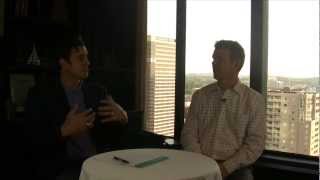
Dave Delaney, online since 1984, talks through digital marketing basics: define your audience and goals before measuring anything, use free tools like Google Analytics, and focus on content people actually want to share. Paid Facebook ads work when paired with real value.
Chapters
Hi everyone. Kevin Thompson here from Creative Competitors, and I'm here with one of my favorite peeps in Nashville, Dave Delaney. Dave, so good to have you here.
Thank you. Thanks for having me.
Thanks so much. I tell you, I'm a big fan of yours. And before we get started, my understanding is you specialize in social media and marketing. Do you want to tell our audience here as far as what you specialize in doing?
Sure, yeah. Thanks for having me.
Absolutely.
I am a digital marketing consultant. So basically I meet with people, I audit what they've done already in social or in digital marketing in general, and then I provide an. I audit that and then provide a strategy based on my findings and then help them execute a plan to increase whatever the goals and KPIs we determine.
You do a great job with social media. There's a lot of people out there that say they're gurus and it's sort of they'll say do as I say, not as I do. They don't have the results. But you really have a great following.
Yeah, yeah. I mean, I've been in the business a long time. I've been online since 1984, on my BBS, on my Commodore 64. So I go back a bit and I've been working in marketing at some capacity for a decade plus a decade now. So yeah, there are a lot of people, we call them social media snake oil salesmen. There's a lot of people out there that are just self proclaimed gurus, as you said. And anybody who says they're an expert or a guru or anything like that is usually full of it.
Well, you've got demonstrable results. I'll sort of be on your Google profile or your Facebook and you're interacting with Chris Brogan, who's a great personality and you're a guy, Kawasaki, and it's. You're doing a great job. Another small plug for you is that you were last year you were featured as one of the top 40 leaders in tech in the Nashville community. So as far as the theme of the program is creative competitors, you definitely fit the mold.
Thank you.
Yeah, without a doubt. Okay, so let's get started here. And one thing that's challenging for my partner and I as attorneys is we don't know what analytics to follow. Okay, so we have a website, but how much or what data should we be measuring that would influence our decisions with our business? So as you're consulting with clients, how do you identify what metrics are important?
I help determine who their target market is. First, I think before you start creating tons of content online or jump on every social networking service, you should really determine who you're trying to reach and then create a goal that's specific. So whether it's increasing our email newsletter subscribers by 20% by X date, or increasing traffic or time on site or conversions, or if you have an E commerce store, increasing revenue from the site. So it's determining who you're trying to reach, what you want them to do when they come to your site, and then determining that goal and then measuring. Once you set the goals, then you can start adjusting things accordingly.
What tools do you like to sort of capture the data? Google Analytics is free. It's very popular. Do you like that kind of service?
Absolutely. I love Google Analytics. I mean, they're changing it all the time. They're always updating it. It's free, which is very nice. So, yeah, I'm a big fan of Google Analytics, for sure.
My partner and I feel like we, we just do a lot of activity. We're precise like sledgehammers and we sort of have an instinct as far as what works. But I think we could be more refined. When you're working with, obviously with an E Comm strategy, social makes sense. But what about with professionals like attorneys or accountants? Should they even be trying to be social and playing social media?
Absolutely. I think social is almost more important than search now in a way because you can see with Google, Google has a lot of interest in capturing the social side of business. Right. I mean, obviously they won't claim that they're competing with Facebook, but they are. I mean, search is changing dramatically now. And in the future search will really be results from your peers. So if it's. If I'm looking for a restaurant in a certain area and I see that you, my friend, likes a certain restaurant there, I'm more likely to go to that restaurant based on your review, because I trust you. And those types of search results, if that can be integrated, that's extremely important. So it's something to consider. So the more content you create, that's legitimate content that's interesting to your fans and friends and followers and customers, the more content that you create on a blog and through social media, the more likely you're going to rise to the top in search results because you're providing relevant information for your audience, things that they will find useful and share.
I'm glad you share that because, and I don't know what you think about this, but I've never actually spent a dollar on SEO tactics. I'll pay for Google AdWords. But a lot of people cheat. They'll pay for SEO tricks or these vacuums or all kinds of tools out there that kind of trick Google's algorithm. But Google is always one step ahead. Do you ever recommend people spend money to boost up search results?
No, not really. I mean, I think it's extremely important to be honest. I guess my mother raised me well, but I do, I believe in transparency. And you hear the word transparency constantly. And it's almost, you know, it's a little annoying sometimes, but it's true. I mean, you need to be honest. And I think trying to game the system is a bad, bad idea. And it, you know, Google look for case studies. They look for people to make examples of. Facebook will start doing it sooner, sooner or later with some of their promotional things. And you look at JCPenney last year, I think it was last year or maybe even two years ago now, they were doing some black hat, as it's called in the industry, some tricky stuff.
They got put down.
And Google put them down and removed them from search results for a certain amount of time. And that's. That'll hurt. That's a big deal. Yeah.
With the benefit of not paying for SEO, in my opinion, is that it forces, at least it's forced me to try to create content that spreads. It puts pressure on the author to create interesting stuff because that is how you get good Google rankings.
Right? I mean, and there's free tools in Google like Google AdWords selector that you use when you're setting up a Google AdWords campaign. You can use that and search just to search different terms. So if I'm writing about, I don't know, I'm totally drawing a blank. But if I'm searching for my favorite beer. So if I'm searching for, you know, Guinness is a great beer. Sorry. If I'm writing a blog post about Guinness, I would look up different terms, like, Guinness is great. Guinness makes you strong. Guinness is awesome, whatever. And search those different terms and you're going to see the ones that get the most search results. Most people are searching for a certain term, and by using that tool, which is free, you can then change your copy. Pardon me. Change your blog posts accordingly. Not to constantly change it all so that it sounds really weird, but it's okay to do that, to use words that make the blog content or make the content optimized for more eyeballs. Sure.
I'm writing all the tools you're referencing. I'm going to make A list and we're going to go at it at the end of the program. Keyword tool I use a WordPress plugin called Scribe SEO. Do you recommend any kind of plug in that helps choose the right keywords? Make sure your article is optimized.
Yeah, the WordPress plugins are great. Scribe's great. Trying to think now.
Headspace maybe.
I'm not familiar with headspace. There's a couple other ones that'll probably come to me during the chat, but yeah, those are very helpful. Again, the important thing is that you write for your audience and you can change the copy in a blog post or the title so that it's more optimized for search results. But ultimately write for humans, don't write for robots.
That's good advice. The Facebook IPO sort of been a huge bust. I'm a little upset at it because I bought some of the secondary shares and it's already dropped below what I bought in at. The Facebook model, to me is confusing because their model is driven by paid advertising and I'll admit we pay for advertising for our fan pages. But would you ever recommend to people, for example, let's say for me and my firm that people spend money on the Facebook platform to build up a fan base?
Yeah, I would. I have several clients that are doing that actually.
Does engagement go up as the users and likes go up?
Absolutely, yeah. I mean, again, it gets down to what you're sharing. So you can do a campaign to try to get more likes on your page, but if you're not sharing anything of any relevance on your page, anything that's really resonating with people, then it's not going to get shared. So it's important to consider the content that you're creating, the content that you're sharing and posting to Facebook and then using those ads to promote that content.
That's interesting. Now you have a great following on Google. Personally, I like the Google model better, but there's no engagement there. What are your thoughts on it? Do you see it becoming a force in the space or is it just sort of a hobby by Google?
It's early days. Right now the numbers are staggering. When Google releases like 100 million active users who are using Google. I don't necessarily buy that those are all active Google users and maybe they're Gmail users who are logged into the service or things like that. Yeah, I find that interactions on Google have dropped some since I started using it. It's early days. It's tough to say. I think they have a Great service. The Google Hangouts feature is fantastic. It is great and really has some great potential there. So that's one thing that I think they can really capitalize on and use well and promote a lot.
What I like about it, and you're in a similar boat because you have a personal identity. You and you have a family and a wife and two children and you have your personal friends and yet you also have this public Persona, a brand in Facebook. It's really hard to separate the two because everybody, I'm sure you've gotten a lot of friend requests from people you don't even know. And maybe you made the same mistake that I made and you just accepted all of them. So the news feed is kind of trashed, at least for me, it's trashed. So the model, I like the Google model where it's more following based, where you don't have to follow them back, but there's just no activity.
That's the problem. I mean, if your friends and family aren't posting things on Google and that's a big reason why you are using social media personally, then it doesn't serve its purpose. If all your family are on Facebook, then that's where you have to go. You can create private groups and private lists on Facebook to be able to follow or subscribe to those people. It does help that way. But I mean, I'm not, I don't swear by Facebook either. But as far as these sites go, I mean, you know, obviously Facebook is, you know, still a very, very, very valuable place to be.
So what, what drew you to social media to begin with? Because my understanding you're with Griffin Technology.
I was.
Yeah, right. You're with Griffin Technology now. You have your own consulting firm. You served as a social media coordinator over there or marketing coordinator. You've got this brand, you're good at it. What kind of got your attention got me into it.
I think it gets Back to that 1984 time when my friend's dad had a BBS, a bulletin board system back in the day. And I was fascinated by it. And War Games, the movie came out, you might recall that film. So I got intrigued by this whole idea of modems and calling people and connecting with other computers. So I would call and call other computers and use other BBS's. And then I created my own. And so late at night, I love telling this because my Commodore 64, if you remember, the disk drive would be red if it wasn't being used and then it would turn green if it was being Used. And you'd hear it spinning. And late at night, I'd have my ringer on, my phone turned off, I'd have my monitor turned off, and my room would be glowing red. And I'd go to sleep, or I'd be in bed anyway, and suddenly the room would glow green, and I'd hear the disk drive spinning. And I know that somebody right now, right now is using my computer. And I jump out of bed and I turn on the monitor and I get up and get into what's sysop mode, systems operator mode, and get in the chat room or what have you, the chat service, and be able to chat with them. Whoever was using my computer, only one visitor at a time.
That's pretty neat.
It's a single node, and it just fascinated me. And all my life, my entire career of marketing and promotions and publicity and all that stuff, I've always brought an online component to it. Even before early days, before that was needed, I would try to drive traffic to our site or increase an email list or what have you. So I've always just been very, very intrigued by it. And I'm a social guy, and I like connecting with people online and in real life, too, as they say. So you know when Twitter came out. I've been on Twitter since February 07.
You have several thousand followers, correct?
Yeah. Yeah, yeah.
Did I insult you? Is it like 100 or.
No, I honestly don't even. I don't know.
I know that metric is not really.
It is a weird metric. Yeah. Yeah. I think it's probably around 10,000 now.
That's great.
Yeah. But I don't buy lists. It's always been organic, and that's important to me because I want people that are following me for a reason, because they want to interact. And. Yeah, there's a lot of bots now that do that too, which is unfortunate, but I think Twitter's battling the spam like everybody else.
That's neat. That's a neat history that got you in the space, I want to say. Didn't Steve Jobs had a similar experience with the whole BBS deal? Or maybe it was Bill Gates, one of those guys fell in love with that whole idea. That's pretty neat.
Yeah.
I could be way off, but I.
Believe they probably both did anyway. Yeah. And Wozniak with Steve Jobs as well.
That's really neat. Now, you mentioned the whole idea of, you know, you've got the online networking figured out. I mean, you've got a great brand. I really am a fan. I mean, I take my cues from certain people. You're one of them. I follow Michael Hyde a lot. I think he's just amazing. Chris Brogan, who are some of the people that you follow, that you really respect and that they're in your. What do you call it? Subscription list?
Yeah. Cece Chapman is an amazing guy. Cece is an early podcaster. I was an early podcaster too. I had a podcast, which is Internet radio for those who don't know, and video now as well.
We've got a podcast.
Yes, of course. Right here. Sorry. So talking to you here. Forget we're being filmed, but yes. So with CC though, I listened to his podcast back in 05 when I had a podcast, my first podcast. And we became friends online through Twitter and through his blog and through the show. And then I met him in real life, which is at a podcasting conference in 06 or 07. So CC is just a really. First of all, he's just an incredibly nice guy. He's a great guy. He's extremely smart. He's very gifted creatively and he's got a great head with marketing. He has a book, best selling book, Content Rules. Content Rules.
I follow cc. He wouldn't know who I am. But he is a great personality out there.
Absolutely. Yeah. He and his co author, Anne Hanley from Marketing Profs, is also someone to follow. You mentioned Chris Brogan. Julian Smith is another person who I really respect a lot. And he's been in the game for a long time too. Julian's a great guy and also very smart. He pushes buttons.
He curses a lot.
He curses a lot. He does curse a lot. So not everybody.
A few F bombs.
A few F bombs here and there. Yeah. But he's a very smart guy and he wrote a New York Times bestselling book with Chris Brogan called Trust Agents and they have another book coming out in October. And he also has a free book called the Flinch, which is available as an ebook for free on Kindle. On Kindle, yeah. Which is a great book. Just sort of an inspirational book, really. More than marketing or anything like that specifically. But those are some great people to follow.
I think I've read part of the Flinch, actually. It reminds me of the Dip by Seth Godin, where it's sort of like, you know, you have to assess that there's a problem and it's important to go about solving it. Doesn't give you specific strategies, but in most cases you don't need specific strategies. You just need to boot to your rear end to get going.
Yeah. And that book's actually on the Domino project, which is Seth Godin's label publishing, whatever platform.
Okay. So you got your online brand, which you've got figured out. But there's also. I saw you give a talk at podcamp, which, by the way, didn't you start that?
Yeah, I co founded it 2006. Bar Camp was 07, and that was 08. The first podcam Nashville was February 08.
That was a great leadership effort because that's a great conference.
Thanks.
But at your talk, you talk about the importance of networking offline, going to events, shaking hands, actually building relationships, genuine relationships. You give hours of consultation on the subject, but in a nutshell, can you sort of summarize your strategy as far as how much you should spend offline versus online?
Well, that's a tough one. I mean, the more time you spend online, the more results you're going to get. But I do believe that you need to unplug and get out into, I keep joking, the real world. But that's what we say, right? In real life, and go out and meet the people that you're connecting with online. I mentioned CC Chapman and meeting him in the podcast new media expo, PNME, which is now Blog World, back in 07, was incredible. And I met him there and Chris Brogan and people like that. And we all met in real life for the first time, and there was hugs and high fives, and we were just like, oh, I can't believe it. And even earlier than that, when I met Julian, I used to have a podcast, as I mentioned, with my wife, about parenting. And we met. Julia and I met at a podcasting conference in Kingston, Ontario, called Podcasters Across Borders. And that was an amazing one as well, because suddenly you're meeting people in real life who listen to the podcast. And because it's a parenting podcast, they were asking me about my kids by their names and things, and I'm like, who are you? How do you know anything about my son? This is so weird. It's like, oh, my gosh, people actually listen to this stuff. So it was amazing to actually meet people in real life. And so what I'm blogging about now on a new site that I just launched about networking, that it's so important to do your best to meet these people in real life as well. And whether that means going to a conference, something huge like south by Southwest Interactive, or going to local events, I host a few different networking events in Nashville, Geek Breakfast being one of them. Geek Breakfast is one yeah, but it's good to come out and actually meet the people that you're talking to online. So kind of solidifies that relationship, makes it whole.
Well, you're very humble because you had a perfect opportunity to plug your site and you didn't do it.
I know you didn't do it, but.
It'S Dave A. Delaney dot com. And that's sort of your effort to talk about offline networking versus social networking. I just have a crystal ball and I envision maybe some future book deal or some other. Some kind of content that you can sell. And I think you'll sell a lot of it.
Yeah, I've got some ideas for that. I have had some interest from a couple publishers about working on a book around that topic.
Michael Hyatt talks about authors nowadays. It's not about so much. Well, content is very important, but you need to have a platform first. You've already got that. And so to be able to put that on paper and share some insights as far as how you built your platform, people, I would buy it. That's a great idea. You also have a site that's been up for a while, davemadethat.com that's sort of a fun site that you use.
Yeah, so that was. I started that. Well, I had a blog a long time ago called davemadethis and it was my failed attempt at becoming a web designer. And I realized I'm not good at this. And so I started a new blog called Dave Made that. And when I moved to Nashville, actually, and Dave Made that is just dedicated to really social media and marketing. But I'll write about things about my family or things about Nashville or what have you. So it's sort of a hodgepodge of a lot of different stuff, which is part of the inspiration of starting my networking blog, because I wanted to really hone in on something. And it's something that, whether it's sort of like I saw the light and I'm like, wait a minute, I know how to network. I love this stuff. I need to start writing about it more. And the feedback has been really positive so far. It's only been a couple weeks, so it's been great. So far, so good.
So that's daveadilaney.com and so, Dave, before we cut out, do you want to share some other ways for the audience to connect with you?
Absolutely. Yeah. I'd love you to drop by the new site and let me know what you think. You just plugged that really well. I appreciate that. I'm also avedelaney on Twitter, and you can find me at Dave Delaney most places. But yeah, reach out on Twitter, and if you have questions about the stuff that we talked about, I'm more than happy to answer those questions.
Dave's really good about that. You send him a message, he will respond very fast. I don't know how you do it, but it's one of the reasons why everybody likes you. I'm serious. I'm really honored that you came here. This is a huge, very nice thing that you did for us, and I won't forget it. So thanks a lot, Dave.
Thank you. Thanks. It's a pleasure.
Appreciate it. Thanks, Sam.










