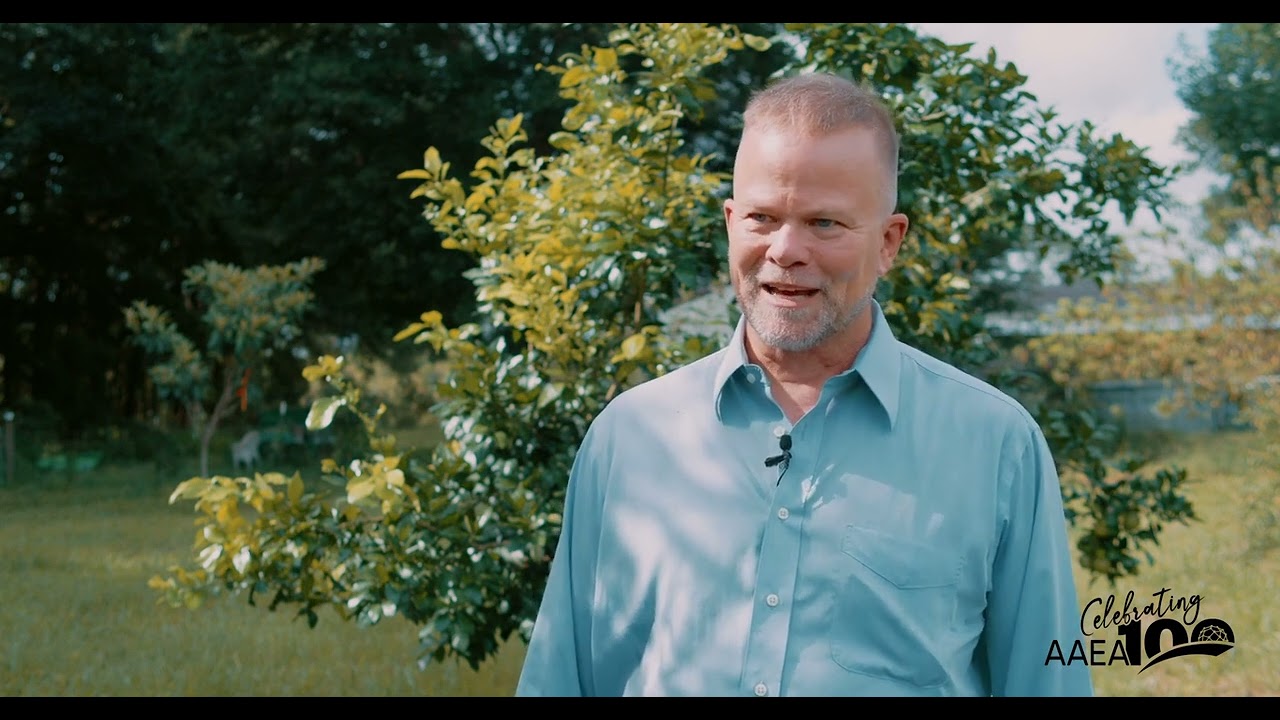
Stop Political Appointees from Grant Decisions - Dr. Colette Dalawalla, Talking Biotech 501

This content was created by Kevin Folta. This content was uploaded by Kevin Folta. This is a YouTube podcast episode titled "Stop Political Appointees from Grant Decisions - Dr. Colette Dalawalla, Talking Biotech 501" (Talking Biotech), created 2026-07-05. Host Kevin Folta interviews Dr. Colette DeLawalla (founder & CEO of Stand Up for Science) about proposed OMB/administration rules that would give political appointees veto power over federal grants (NSF, NIH, USDA and other agencies). The conversation covers historical analogies (Lysenkoism), falling grant funding rates, agency staffing cuts, the economic return on public R&D, bans on topics and international collaboration, risks to dissemination and scientific freedom, and organizational/political responses and calls to action to defend science funding and infrastructure.
Chapters
Hi everybody, and welcome to this week's Talking Biotech podcast. And this is an extremely important one, and I need you to hang on through the whole episode today because there's an action item that you need to help us with. We're all in this together. Well, first I'd like to talk about the 1930s in the Soviet Union. This was a time when they were desperate to feed their people, and they had really the, the corner on great scientists. Nikolai Vavilov, he ushered in new frontiers in crop genetics. But the whole idea of Darwin and survival of the fittest, it didn't square with Soviet communist ideology. So leadership turned their philosophy to a philosophy they found palatable. They found a charismatic, unorthodox agronomist named Tofram Lysenko. And Lysenko claimed that he could trick crops into growing in freezing weather simply by treating the seeds with ice water. That's just one for instance. Everything he suggested was very Lamarckian, entirely rejected what we knew about genetics. Plants were not changing to genetically fit their environment as others understood. Lysenko said that the environment was changing the physiology and ultimately influencing genetics. And to the Communist Party, his ideas sounded like perfect revolutionary propaganda. To mainstream scientists, they said completely crazy. But with the backing of Stalin, Lysenko, he was appointed to the head of Soviet agriculture. Real scientists, internationally recognized at the time, folks like Vavilov and Karpchenko, they were fired, they were imprisoned. Vavilov died in a gulag. Karpchenko, the day after he was arrested— he was an amazing cytologist and working in The day after he was arrested, he was executed at point-blank shot to the head. Lysenko's broken science became the standard practice, not born of data, but born of what leadership wanted to believe. And the result was an absolute disaster: decades of catastrophic crop failures, widespread famine, deaths of millions of people, and near total destruction of Russian biology. Today we're witnessing what happens when ideology trumps evidence, and when state-appointed pundits are deemed experts in deciding what is real and what is not from evidence, but rather looking to a cloud of alternate facts. And now the same flawed thinking and political pundits will decide how your tax dollars are funding government-funded science. It's modern-day Lysenkoism and threatens to destroy American innovation in medicine, agriculture, and beyond. But let's just totally take it out of politics. Should a non-scientist be making decisions on what science has merit and what should be funded? Should a non-expert gatekeeper have veto power over the decisions made by foremost experts in that field? And this is where we find ourselves today. But the good news is there's something we can do about it. So our guest today is Dr. Colette DeLawalla. She's the founder and CEO of Stand Up for Science. So welcome to the podcast, Dr. DeLawalla.
Thank you so much for having me, Kevin. Really, you know, I wish that we didn't have to have this conversation, but excited to be having it.
Yeah, but it's, it's, it's good to at least have some— something we can do that could potentially have some teeth. So I thank you so much for being with me today. Before we get going, we really— I think most folks maybe don't understand this whole process of how grants are awarded in the first place. And so, could you generally take me through the process of what happens at NSF, NIH, USDA, those kinds of federal panels?
Yeah, absolutely. So, generally speaking, what happens first is there's a notice put out that the government will be awarding contracts in a certain area for specific types of work. These are called NOFOs, or Notice of Awards. And this, you know, goes out, people pull together these applications for these government contracts. They come, you know, all into one pool and then they're split up by area and sent over to expert panels to be very, very thoroughly reviewed by peers with expertise in those specific areas. And then they are all ranked in these specific areas. And generally speaking, I mean, the paylines differ, but top 25% to top 10%, somewhere around there depending on the institution, is where we're going to see like these are the most competitive ideas and those will be recommended for government contracts. And those government contracts are 5-year commitments from the federal government saying that we will employ— not employ you, but we'll contract you for the next usually 5 years to complete this work because we think it's you know, of good merit. Your peers said that this was high-quality work and have helped us determine as experts in the field that your work is cutting-edge or fixes a problem that we're trying to solve. And again, these are government contracts. They're extremely competitive, and it is usually a 5-year guaranteed window. And that matters because 5 years is about how long it takes to train a PhD student. It allows you to hire on, you know, postdoctoral folks. It allows universities to bring on professors to make sure that their salaries are covered. And it sets up the ground for stability for a period of time so that the researchers can really dig in and do this work well. And generally speaking, once you've had one of these government contracts, continuing to do the work as long as it's productive and continuing to be reviewed well by peers, Is, is it happens that way, and thus it creates a stable funding environment for scientists.
And you mentioned this a little bit, but what are the current funding rates? So if we look at this pile of proposals, how many of them are actually getting through the process?
So that's a little bit hard to answer right now. In the year 2026, like in July, you know, July 2nd, 2026, We are seeing a significant decrease in the number of grant proposals that are being funded. And even if they are funding, the funding actually getting out the door appears to be a pretty significant problem. I mean, just like magnitudes lower than what we typically anticipate. Yeah. And they've erased the pay lines. So usually there's like a line in this ranking that says, okay, if you are in the top quartile or the top 10%, Of research in this area along these rankings, like, it's not that you can assume that you'll be funded, but generally speaking, there's a good chance that you'll— that this project will be funded, and it helps people plan for the future, which is, again, this is the stability piece of it, right? And they've removed those paylines, and so now it's just kind of up in the air, and we don't know, you know, how many applications we should be sending in.
Yeah, and I can tell you a little from my perspective with USDA and NSF, the 2 major places I write to. Their funding rates were something like 5%, 10%, maybe 15%. They're very low.
Yeah.
And most of the organizations now are requiring a letter of intent first, so that you have to first get through that level. Then you get into the big pool with maybe 100 other proposals. So it's actually honing down the number of proposals to a very select few, and say 100 proposals in the room. And there are 30 people in my department I know are submitting proposals to the same place.
Right.
So you can see what the problem is here, is that we have this real bottleneck that existed even before the current problems.
Yes.
And just from the side— from the perspective of a grant reviewer, I review these things, I sit on panels, and I fall in love with every single one of them, that if this work was funded, you would get great benefit from it. That we're not, we're not triaging garbage here, that this has gotten the environment so— some of these have been rejected 7 times and every time they come back, they get better with more data. So, so this process is really getting weird.
Yeah, it is. And I think there's really something to be said, too, about like, I mean, just this week I have heard in my own department and seen, you know, on Blue Sky people saying, should I even submit anything for this funding deadline?
Yeah.
And like leaders, giants in their fields. And I think it speaks to the destabilization piece that we're seeing by making sort of changes that don't— that aren't being outlined ahead of time. You know, without clear guidance, we're seeing that destabilization.
Yeah. And then this is very true. I submitted a proposal last August to USDA that would have profound impacts in the American Southeast in terms of our crop diversity and, and new opportunities for farmers. It's something really cool we stumbled into. But I haven't heard anything. And it's already June, we're supposed to start in September if it was funded. So that uncertainty is everywhere.
Yeah.
How much?
I'm sorry.
Well, that's it. You know, it's currently the game. I got 2 more I'm looking to submit to NSF. But it's, you know, I'm gonna keep playing the game because it's the only way— my job is to do beautiful science. And the only way it's going to happen is if I find funding, and I got to keep shaking the tree.
Yeah.
When you talk about continuity, how much effect did the DOJ cuts we saw this year really affect different research programs? Because there was a lot of this in the news about mRNA vaccines, but also just losing employees at places like USDA.
Yeah, it was huge. I mean, there was one estimate that we lost over 10,000 thousand PhD-level scientists from government. And I think that that is a dramatic understatement. I think that that's just what they were able to calculate because there's been such a lack of transparency from the federal government during this administration. You know, we are seeing hundreds of thousands of years of expertise just, just walking out the door, being forced out, being ripped, being fired, being retaliated against for whistleblowing. And You know, one of the biggest problems that we're, we're seeing right now, you know, the FDA fired 1,100 people because of DOJ, and now they're having to hire 600 of them back. And, you know, we've seen this with the CDC, which is— I'm in Atlanta. That's right in my backyard. Right. Like my neighbors worked at the CDC, found different jobs or didn't find different jobs. And now the CDC is calling them to come back in. You cannot tell me that that is efficient in any way, shape or form. And we're seeing that across all of these different federal agencies. We're also seeing a tactic called shift and shaft, which is where they try to move different programs or different federal agencies under different umbrellas. They fund it down just to the absolute skeleton, like bare minimum, and then effectively pull the agency apart. We're seeing that with the Forest Service having the headquarters moved out to Salt Lake City, which is a state in the West that has No forestry. The closure of the regional research hubs. So what are they supposed to do, fly public flights with their samples from one place to another? I mean, it's just nonsensical. But the point is to remove these systems, right? And to shift and shaft.
Yeah. All right. So we do have problems, of course, with the lack of funding and all the problems that are going on within the agencies themselves. But can you draw a picture for me of how efficient— or not how efficient, but what is the return on investment of government investment? And I think this is really important. Like, does it really matter at all that we have government funding science?
Yeah. So this is a great question. It's also a little challenging to answer. So there have been a lot of economic sort of breakdowns by agency. So for example, every— for every dollar invested at the NIH, we see about a $2.52 return on investment. Generally across like the broad spectrum of federal R&D research, which we do between $200 and $250 billion a year, we see about a $5 return on investment on average across the board. Now where this gets to be a little bit difficult to calculate. STEM products make up 39% of the American GDP. And how do you calculate, right, that Google was started by an under $1 million NSF grant? How do you calculate that, you know, in our iPhones, that's about 5,000 pieces like patents and pieces of technology that were developed in these, you know, in our, our STEM sandbox that is federally funded? Like, how do you calculate that? I mean, another one, of course, is GLP-1s. This is one of my favorite examples. How do you calculate the impact of GLP-1s that came from, you know, a scientist studying venom, but then a scientist at the VA who is trying to find a solution for, you know, his, his his veteran patients with diabetes. And so, yes, there is this, you know, $5 number that floats around, but I actually think that that's an understatement because at the end of the day, you never know what you're gonna discover and you don't know what the economic impact— I mean, Google is a verb. Google is a company that's a verb. Like, that's like the ultimate capitalism and it came from NSF technology. You know, an NSF grant. So it's huge. It's huge. Yeah.
And it's also been used as an adverb. You've heard of googly eyes and things like that.
Yes, that's right.
Well, anyway, we're speaking with Dr. Colette DeLawalla. She's the founder and CEO of Stand Up for Science. You know, and one thing I neglected to do that I should ask you, maybe now is appropriate, before the break is, you know, tell me a little bit about Stand Up for Science and why people may be compelled to donate to your organization.
Sure. So I started Stand Up for Science in February of 2025. The list of banned words impacted my dissertation grant. I am an addiction scientist. I was finishing up my PhD at Emory University, and I was told I couldn't use the word woman in my grant. And I had pilot data that was reflective of the 2020 census. So I needed to be able to say how many people were Black, and I needed to be able to say how many people in my sample were women. and LGBTQ, and it was a community sample, but the word community was banned. And my grants office told me, well, just take them out. And I'm like, I'm not doing that. That is fundamentally un-American. And I couldn't believe that there was not like a protest happening. Like, I could not believe that scientists had not taken to the streets about being told that they weren't allowed to use specific words. And And, you know, there was this moment of be the change you want to see in the world. So I posted on Bluesky that we were doing a Stand Up for Science protest in Washington, D.C., and it turned out we were going to end up doing about 150 protests across the world. We turned out thousands of people across the country. It was the first organized, you know, protest, peaceful, totally peaceful protests of the Trump, the second Trump administration. And then after that, there was a question of like, all right, a day of protest is important. but alone is not sufficient. And when I evaluated the political machinery of the scientific ecosystem, despite the fact that we make up a third of the workforce and, you know, 40% of GDP, I was seeing that used car sales and chiropractors had better, more effective political machinery than the sciences. And I had a very clear vision of what it would look like if science had good political machinery and I endeavored to build it. And so here we are. We are a 501, a 501, and a super PAC. We are fighting to mobilize science. We are, excuse me, mobilizing the fight for science and democracy and doing so through both political engagement, policy-level engagement. We're, you know, really planning out the future of science and what it looks like to rebuild. But we're also taking action now to defend science and democracy and to hold our public electeds accountable. And so that is, that's what we're doing, and that's who we are.
And maybe another quick question is, you know, how dangerous is it, though, to have a political side? Because if you talk about, you know, one side or the other politically, you lose half your support, right, in this polarized environment we're in. And so is it the kind of thing where you are kind of an equal opportunity monitor of any bad science that's coming through Congress or through the executive branch, that everything is up for discussion, not just aimed at one political party.
Yeah, 100%. I mean, we, we reach out to and schedule meetings and speak with members of both sides of the aisle. We do constituent meetings on both sides of the aisle. We do, you know, contact with, you know, on both sides of the aisle. But at the end of the day, Right now we have one political party who is trying to make certain types of science illegal because it doesn't align with their ideological perspective on the world. And we have one party who is trying to fight that. And we fundamentally are not going to support a group of people who say that we cannot study environmental science, that we— they're banning words like We are not politicizing science by, like, by reacting to banned words. The people who sent out the banned words list are the ones who have politicized science. And here's the other thing. This is the first time in American history that science has been partisan. But science has always been political in the United States. And it gets funded through an inherently political process. And we have been used to— we've had the privilege of having bipartisan support for this process. for nearly a century, and we don't have that right now, and we have to respond appropriately.
Oh, very good. So we are speaking with Dr. Colette Dalawalla. She's the CEO and founder of Stand Up for Science, and this is the Talking Biotech podcast, and we'll be back in just a moment. And now we're back on the Talking Biotech podcast. We're speaking with Dr. Colette Dalawalla. She's the CEO and founder of Stand Up for Science, and we're talking about the potential political appointee who will be refereeing what grants get funded. And this is a non-scientist, and this is the proposal. Let's talk about that in detail. So what exactly is happening right now with the proposed changes? And, you know, what can you tell us about the specifics?
Sure. So the Office of Management and Budget, which is run by Russell Vought, who was one of the masterminds behind Project 2025, has released a very long, sweeping rule that skirts judicial ruling and it skirts Congress. And it, it is effectively uniform guidance for 42 different federal agencies. So it impacts, of course, you know, science federal agencies. But generally speaking, it impacts every single discretionary dollar that goes into the federal budget every year. So that's $1.5 to $1.7 trillion. That will be made into effectively a slush fund for the executive branch. And this OMB rule covers the following. It says that any active grant can be canceled at any time for any reason. It institutes a broad prohibition on international collaboration, not just for scientists, but for any grantee receiving federal dollars. It, like you said, it gives political appointees sort of the control, or they— it makes them the gate to ensure that every federal dollar that's going out the door is being used on programs that align with the policies of— and excuse me, with the administration's policies and priorities. It also explicitly states that grant applicants and awardees can have their grants denied or drawn back based on their individual affiliations with groups that the executive deems un-American or woke. And it means that public communications and outreach about anything that you do, if you are a federal grantee, is, is under the restriction of the federal government. So it's more than just the political appointees piece, right? And this impacts $1.5 to $1.7 trillion.
This is nuts. I, I've to not be able to have international collaborators. If you've got the most suitable collaborator to spend the government's money most wisely in Germany, but you can't use that collaborator and you have to kind of muddle through it yourself and waste money and time, somehow that's seen as an efficiency. That's what blows me away on all this stuff. But how does this all work? Oh yeah, go ahead.
Well, I was just going to say that it is like isolationism in action, right? And people are thinking about this in the context of you know, their own collaborations. Like, I worked in a behavior genetics lab. We use data from all over the world because it's the scientifically appropriate thing to do to make sure you've got this really rich, you know, sample and you have a ton of people in your dataset. Otherwise, you're not powered to do the analyses. Like, there's not enough people in the United States to do the analyses, right? And so this is like, there's this piece of this that is overtly anti-scientific in that, like, to do good science, you need to collaborate. But then there's also this piece that's very practical. So here's, here's one example. If there is an earthquake off the coast of the South China Sea, we would not be able to receive information quickly enough to make a tsunami warning for folks living on the West Coast. 75 times a day on average, there are near collisions between Chinese satellites and American satellites. Satellites in outer space. And there are 2 offices. One, one is ours, one is theirs. They are in constant 24/7 communication. They're colleagues. And their goal is to make sure that our satellites don't crash into one another. This is good for everyone. Nobody wants these satellites crashing into each other. That line of communication is discretionary funding that would be deemed illegal based on this rule. So Within hours of the rule being enacted, we would see dozens of satellite collisions in outer space.
I mean, this is— but you're 100% right. Another big part of this that has the international angle is that, you know, my lab has benefited from students from all over the world and postdocs and visitors. And some of my best folks have come from Iran. And they came here not because they were— well, I should rephrase that. They came here in part because they wanted to take part in gold standard science, and the greatest place to do it, you know, the best place in the world to do it. But they also really didn't like their home country.
Right.
So by banning them, you're actually leaving them there where they're able to use their talents and gifts inside a place which has apparent hostility to the government here. And so how does this whole idea of terminating a grant for any reason, really take away interest in American labs?
Sure. One of the things that I think drew the world to America as this scientific superpower is the stability, right? We have nurtured a stable scientific ecosystem, right? Just as you would any other biological system. We have watered it and we have planted seeds and we have allowed for stability and growth and predictability. And if grants can be canceled and terminated based on the president's whims, based on a political appointee's whims, that does not— like, that's not a free system, right? That doesn't allow for stability. And it also means that in order to participate in science, you have to be willing to kiss the ring of the person in charge. And that is, I mean, I just, I want people to ask themselves, is that freedom? Are we living in a free society if we have to pad our scientific questions to be palatable to the president in order to get funding? Is that freedom? I'm not convinced it is.
Yeah, that is an excellent question. And it really does, it scares me as a scientist, but also as a consumer who has benefited from the breakthroughs that have come through American funding of science. It's just really, really too bad. What are some of the, some of the topics that have been explicitly banned, or that we fear will be?
Yeah, so this is interesting because of the way that they worded it. So in the rule itself, they explicitly ban gender studies, environmental and climate science, because who needs to know about the weather? And things that are deemed woke, and I'm putting this in quotation marks because when you dig a little bit deeper into this, we've seen now a year and a half of executive orders from the White House that have explicitly laid out what the policies and priorities of the White House are. So that when so the way that this rule is written, it pulls in all of those executive orders and then applies it. So we're seeing LGBTQ+ research, research on and for religious minorities. So things like trying to stop antisemitism and Islamophobia, we can't research that anymore. Research on women. So that seems counterintuitive given how much we're seeing from the Maha branch about, you know, studying women and women's hormones. But this explicitly bans Women's health studies, uh, because it is viewed as, um, it is viewed as discriminatory towards men. Uh, we are seeing explicit bans on, um, uh, anything related to, uh, like health disparities, um, things like how disabled people can move through the world better, how we can help people who experience basically any type of disparity is just not— we're not doing that. So, you know, Black maternal health outcomes, we can't study that anymore. Anything to do with climate, the climate crisis, it's a no. Anything to do with vaccines, vaccine hesitancy, like getting people, you know, to increase their vaccine uptake, can't study that anymore. But anything that has any sort of framing around DEI or DEIA, can't study it.
And which is amazing to me, because if you're taking away the decisions based on merit, you're actually doing what DEI— what they say DEI does, right? They say that you're— that DEI forces you to make decisions not based on merit, when which we know isn't true. We're just casting a wider net to find the most most meritorious work in a larger pool, especially of underrepresented folks. That's a great conversation for another day. A lot of the discussion around DEI, unfortunately, how those have been targeted has left a lot of scientists saying, well, how do I pursue these initiatives? And then it's like, you just got to do it, do the right thing independent of saying you're doing the right thing. And, you know, most of us have already done that. Um, just kind of a funny aside. When we talk about words that have been eliminated, I started thinking as a plant scientist, what are some things that I could propose that would almost guarantee funding? And in plant science, we do something called embryo rescue. They'd love that. Um, I thought gas exchange, you know, like maybe it's oil and oil-related.
That's so funny. Yeah, yeah, like how can you flip it on them?
Yeah, how do I flip it? Yeah, maybe we do talk about photosynthesis. Like, they would go, oh, this must be new ways of imaging, you know? So I'm thinking of, you know, ways that I might be able to play the game a little better, but sorry for the aside. So let's talk about— so some of the other problems that are there. You already talked about this, about the idea of being removed from consideration if you are deemed unfavorable in some sort of— and you talked a little bit about that, but what kind of affiliations would get you automatically removed from consideration as a potential awardee or have your grant pulled if it was already funded?
So this is where things get to be pretty vague and pretty egregious. It's anything that the president deems to be unfavorable. So that means the executive branch is allowed to say, like, they could come up and say tomorrow, any person that has ever donated to Stand Up for Science you are no longer eligible for grant funding. Obviously, they haven't done that. So, you know, please donate. But that's the kind of thing that they could do. They could say for people who have donated to Democratic nominees, they could say people who have attended a protest this year.
Hmm.
And so, so it opens the door for the executive branch to make really, really wide-ranging blanket types statements. And we're beginning to see what this kind of looks like in practice based on some of the ways that, you know, the Trump administration has gone after specific people, you know, has targeted places like the Southern Poverty Law Center. Right. We're seeing that, that they do take these targets and sort of move forward in that way. And so it's a very, very slippery slope. It's not a power that I think any president should have. Right. Like when we were talking about sort of this polarization piece, like fundamentally, I don't think that the executive of any party should have a $1.5 to $1.7 trillion slush fund every year. Right. Like I actually just think that that money belongs to the people and it should be used towards public good regardless of who's president.
Yeah, and I'm an equal opportunity critic when it comes to politics. I have a good time criticizing folks on the left and right, because we all make mistakes, and there's things that people do on either side that I can find that I don't like.
Oh, me too.
And then, but that was what the Founding Fathers wanted, you know, keep your people in line. And I've had great conversations on Capitol Hill with folks on both sides of the aisle, and I've had horrible conversations with others on both sides of the aisle, and maybe one side more than another, but in general, I've been an equal opportunity critic. Yet what they could do if I had a very highly ranked grant proposal is say, have AI go through his social media feeds and his podcasts, and if he finds anything that criticizes the current administration, he doesn't get the award. Yes, that's right. And I think this is something that is also on the table. So this is the thing that kind of scares me, is that it doesn't matter that I'm— if I'm an even-handed critic, the fact that I said anything against the, you know, current folks in charge would eliminate me. I mean, is this a legitimate concern?
Yeah, it is. So this week in the hearing with Russell Vought with the House, and it was the— it was an appropriations hearing, someone— I don't remember who off the top of my head explicitly asked him if they would be using like AI-related tools to screen proposals? And he said yes, and, you know, made it really clear that they are actively building tools to screen both grantees and the proposals, and would not expound upon how that screening was going to take place and what would be included in that screening. But we have what they're going to include in that screening, right? And the other thing about these tools is they're not super accurate. They aren't going to really have people, you know, Clearing through that. And any, any new thing can be added without alerting the public. Right. So, so they could just add that if you have said XYZ thing on social media, you're out, and we wouldn't have knowledge of that. They don't have to alert us of that. And I understand that this sounds like I have the most insane tin cap on, right? Like, I understand how wild this sounds coming out of my mouth. And I've read the rule. Me and my policy team have read this 412-page document multiple times with our lawyers. We have gone through and through and through this to make sure that we're not overreacting. And every constitutional lawyer that we have spoken with from both— with like both leanings has said this is bad and that there is not a single line in this rule that is good for our democracy.
Wow. I mean, they could even link in data like flock cameras and stuff, you know.
They could.
You know, you, you go, you go to the wrong church or don't go to church, you know. And so this is the kind— because this is, it's so 1984. It took like— Orwell really is like, he must be spinning in his grave.
I know, I keep, I keep saying that. I was like, you guys are really pissing off George. I just know it. I just know that he's over there like, I I told you. You know, the other piece of this, too, that I, that I will highlight is that, again, like, it sounds crazy. Like, I understand that we have been meeting with Republican members of Congress. There is something that— there are 2 things, well, 3 things that members of Congress could do right now, but it would need to be led by Republicans and they're not doing So first and foremost, they could put appropriations riders in here in the fiscal year 2027 appropriations bill that basically says, yeah, this rule doesn't count. We're not applying this to funding this year. They could do that. They haven't done it yet. The other thing is that somebody could call Trump and just say, hey, this is bad. Like, we're going to lose the elections. Like, you can't— you know, you can't do this. Like, somebody could pick up the phone and make that phone call. But the third thing is that in theory, the Congressional Review Act could be used after this rule gets implied to pull back the rule. However, it would require a veto-proof majority across both chambers. And that would mean that Republicans would have to get on board. And we have— it has been made very clear to us that they are not going to do that.
Yeah, I know my representative won't do it. I mean, she does whatever she's told to do and has zero interest in listening to anything constituents say.
That's right. And I say that just to make the point that, like, yes, we come off as being very partisan, but we have asked for these specific things from multiple senators, from multiple leaders, like leadership in the House on the right. And we have been told no.
Yeah.
And so it's not that we're not trying to work with folks, right? We are, and we've been told no, and, and that matters. That matters.
Well, let's shift a little bit. I know that the— so this whole idea of gatekeeper on the end of this process is a scary thing, but there's also been a lot of ideas batted around about how the structure of funding for proposals will happen in the first place. Apparently travel to conferences, memberships in professional societies, paying for page charges, communicating through different outreach mechanisms, all that stuff is on the chopping block, or tell me a little bit about that.
Yeah, so effectively, all of the things that you just mentioned would have to be approved by these political appointees. So if you want to include, like, you know, it's, it's not at all uncommon to include publication, you know, dollars, or, you know, travel for conferences for your lab. based on the work that's done in the grant, in an R01, for example, you know, in this high-level grant. At sort of face value, the answer to that is no, we're not going to fund it. But if we do fund it, it does have to be approved by political appointees, which means that political appointees are the ones in charge of saying whether or not you can share your findings about your specific research with your peers. And it also gets really like hairy because this applies to all discretionary funding, which includes work at the CDC and FEMA and the Department of Labor and HUD and, you know, pick a— the Treasury, Department of Transportation. So that means that folks who receive these grants wouldn't necessarily have clearance to like talk to their local media about how You know, they're doing this new, like, watershed project that's supposed to better, you know, take out lead pipes in the area, right? Like, they would have to have federal government's approval to talk to the press about that in their own community.
Yeah, yeah, this is— it's very scary because that's a huge part of every grant now, is how you share and how you plan to disseminate the findings that the taxpayer has funded. You know, how do you share this information that that's, that the taxpayer paid for. And, and they should be able to take, understand that. And one criticism of scientists is we're not doing it enough. And here they want to take—
That's exactly right. That's exactly right. I think you wanna make an Instagram about my dissertation work that was funded by the government. I have to get a political appointee's approval to make an Instagram reel about my federally funded research.
Yeah.
I mean, that is crazy. Like we're having these conversations about how people, you know, don't trust scientists, and, you know, mis- and disinformation is running rampant on social media platforms. But then we would have to ask the government to share our findings with the public who paid for the findings? That's crazy.
Yeah. And meanwhile, you know, I have a lot of colleagues in China and India, other places where they are flooding dollars into research.
Yes.
Where when I had an appointment as a visiting scientist in China back in the 2010s, that they would ask me, what piece of equipment do you need? And I'd say, well, you know, just very basic molecular biology stuff. And they would say, how about a sequencer? It's only a few million dollars. It was insane how they were just—
Oh my gosh, that's crazy.
And then you look today, 15 years later, and you look at the journals that are being published, where we've seen this huge shift shift of work coming out of the USA and Europe and now huge proportions coming out of China. In some journals, almost 100% are Chinese papers and extremely good quality. It's great students and folks who are being well trained now. And so it's—
Yeah.
The shift is already underway and this will be kind of a, in my view, a nail in the coffin of America's competitive science.
I agree. The single shred of hope that I have is that a truly free scientific ecosystem, which is what you need in order to proliferate discovery and innovation, is predicated on freedom. It's predicated on scientists being free to turn over any rock they want to turn over and to share and learn and, you know, ask questions. And what I will say is that when we look around at the nations who we're in competition with, they're not necessarily allowing their scientists to turn over any rock. They are pumping lots and lots of money into science, but they're not necessarily approaching this in a tyranny-free way. And I say that to make the point that I actually think it would be easier for us to get American science back on track and to rebuild an even more vibrant and exciting future for innovation and science in the United States than I think it would be for the Chinese government to allow scientists to really study anything that they want to study. Does that make sense?
No, it's an excellent point because they do—
I'm a little bearish. I'm a little bearish on the whole, like, China could be the I don't know. I think that we can do it. I still think we can have it.
Well, I agree. I'm with you. But in the current climate, I'm seeing what's happening over there and how innovation is really moving fast. Some of the recent big breakthroughs in— what was it now that I just read? But in diabetes came out of China in terms of replanting stem cells. But kind of just kind of as we head towards the finish line here in our solution step, One of the other questions that always comes up is, well, it shouldn't be the government's job to fund science because companies have lots of money and they can do it. And I think that my comeback to that always is, but if I generate the data from an NSF award, I am obligated to put those data into the public domain where other people can use them. Whereas if it comes from a company, the company keeps them and you have no access. And, and what are some of the other benefits of the public funding science rather than this being done through a private sector?
So the first thing that I will say is that I actually think it's really important that we have multiple streams of funding and multiple sources of funding. I think that taxpayer dollars, philanthropy dollars, and company dollars are like— they all play really important roles. The role of the federal government is to create a sandbox for ideas that aren't necessarily going to turn into increases in shareholder value in 3 quarters.
Right.
Like GLP-1s, that is a 30 to 40-year lifeline. And we had no idea what one person's work on various types of venom was going to turn into. You do not know what you're going to discover. That's the both joy of science and also what makes it really, really, really difficult, right, is you, you don't know. And you might have an idea that turns out to be total crap, you know, and that doesn't bode very well for shareholders. And so, yes, it is important that companies do research too. Like, I do think that, you know, Eli Lilly should be funding the clinical trials for their work, especially as we get into like phase 2 and phase 3. Like, that's very, very expensive work. And I do think that if they're going to make the money off of the, off of the drug, they should be putting in the investment. That makes a lot of sense to me. And at the same time, Eli Lilly isn't going to just for funsies, you know, allow some guy to study, pick a random thing, right? You don't know what you're going to discover. Having this sort of sandbox that we curate, that we allow to proliferate, is really important. The other piece of the puzzle is I don't see companies jumping to fund the, the infrastructure of research, right? Like, I don't see companies out here funding huge swaths of, you know, labs across universities. And I also don't see them funding PhD students and postdocs and undergraduate, you know, research assistants, right? Like, that's where the United States government, the tax dollars fund the people and fund the innovation that isn't necessarily going to turn into innovation, but we don't know. Right? So it's the sandbox, and we need to think about it that way. And we also need to think about the importance of, of stable infrastructure. That is the role of tax dollars in the scientific ecosystem. It's stable infrastructure. So philanthropy and companies can come in and augment what's already there and can push forward specific areas that seem really especially viable, but they're not going to provide the stable infrastructure that's necessary for innovation.
Now, very good. And I think this is important because as we get towards our solution step here, I want people to really understand really what we're up against and what we could have a chance to lose here, as they can incorporate this in their, in their solution. I know that in our university, in our department, one of the things we've seen is a cutback in federal dollars. We still are doing very well competitively, so it's a great great place to be here. But, um, you know, we got great scientists who can play in that competitive environment. But, uh, companies across the country, if you go into a number of them, you find all our graduates and our people are running those companies. And one of my former undergraduates is a CEO of a major company that deals in neurological drugs. I mean, all these folks who've come through my program, 150 undergraduates, uh, dozens of graduate students, postdocs, visiting scientists. They're all making a difference in the U.S. technical workforce, the places that are generating the high-value companies that are rising in the S&P 500.
Right.
And right now, that pipeline has a potential to end, and I think companies see that. Companies are also not funding basic fundamental research. You're not looking at splitting atoms and looking at— and very esoteric differences in biology or issues in biology that could lead to potentially the next GLP-1. So it's— they're all looking for application and rather than basic science. So these are other things that we stand to lose is workforce readiness in a technical economy as well as basic science information that could seed future application.
And also, there's a value to be had for simply learning about the world around us, right? Like, even though that doesn't necessarily overtly result in shareholder dollars or shareholder value, there is societal value of a well-educated and knowledgeable populace.
Yeah, no, you said it perfectly. Knowledge for the sake of knowledge is something that's, you know, been mentioned even in scripture. And, you know, so it's something that maybe will That does resonate a touch. So let's, uh, let's get to the punchline here. So how do we solve this problem as a scientific community? And how do— what do we do? And how do— well, let's start there. What's the first best step right now?
Yeah, so first best step is that we need every person in the United States to be leaving a public comment about this OMB rule. So the public comment period closes At 11:59 PM on July 13th. So that's your deadline. I know scientists need a deadline. That's your deadline. And you could do this in several ways. We have a Stand Up for Science Action Center. It is fight2win.standupforscience.net. And on that Action Center, you could submit your public comment. You can learn about what the rule proposes. How to write a public comment, how to talk about this issue. We've got all sorts of resources there to make it as easy as possible. So you can submit your public comment. You can email your public comment to your members of Congress, which I highly recommend doing. It's literally just a click of a button. And then you can also call and email your members of Congress. And what we're trying to do there is to drive awareness, which we're seeing is actually working quite well. There was just a Senate letter released yesterday, you know, speaking out against this, and we've seen one in the House of Representatives as well. So really driving awareness of what's at stake and why this is going to impact you as a scientist, as their constituent. And so that is, that is the action. We need people to really get in on this. And I know that it seems like, you know, it's just a comment, like, what is this? This is a very democratic process. It's the federal government asking people who will be impacted by this change to tell us how they will be impacted. And legally, they have to respond to that. And if they don't, that allows us to take legal action against them.
Yeah, and look, can we drill down on that just a little bit? Because I think many people will say, as you note, you know, the current administration is a steamroller. They steamroll over Congress, they steamroll over everybody. So what difference is this going to make? And I think, you know, so if I'm somebody who's skeptical that my, my letter in the huge pile can matter, how do you motivate me to do this?
Sure. So first of all, you don't have to be an expert. And that's the, that's the critical piece. What we need for folks to do is to spell out how they, their labs, the people who work in their labs, their graduate students, their research is reliant, and that's the key word here, on federal funding and on these federal grants. And to tell the story of what it would mean if you had your grant just stopped one day, if you just received an email saying that you had no federal grant and that you were ineligible because of your participation in XYZ, or what it means that you aren't going to have your publication costs covered, what it means that I mean, you could pick any part of this and just dive in and paint the picture for the federal government of what that means. If then this does happen for you, you have a very explicit hook for litigation. And at Santa Fe Science, we are pursuing several different approaches legally. And there is this piece of like fighting in the court of law and fighting in the court of public opinion. And so court of law, every time you say you're reliant on something and that, that funding gets pulled back, we are able to, uh, move forward and fight it legally, which is working really, really well against the administration right now. Court of public opinion also matters. It's important that people understand that when 49% of, um, federally funded clinical trials get canceled on day one of this, um, it is, it is because of this rule. And we want to be able to show people that scientists called it before it happened, that scientists stood up for science and democracy and for the public before all of this happened. It goes a long way in establishing this social contract or reestablishing the social contract between science and the public.
No, very good. So that you're— so you're not just putting a message in a bottle and whipping it into the ocean here. You're adding momentum to a movement that can have profound impact. Because of its mass.
Absolutely.
And that you not only have to sign that letter and submit that letter, be creative as you do it, personalize it. You know, the form letters are fine, but they always kind of stick out in a public comment thing. You know, the ones that are kind of personal really do way more to me as a reader, as well as I'm sure for representatives. But most of all, share this on social media, share it with your family, share it with the people who are sick. share it with the people who have lost family members to cancer. This is the kind of thing that we need to show the profound impact of loss of federal support for science. And, you know, it's— and so, you know, so that's where we are. So, Dr. Colette DeLawalla, can you tell me more about where we can find Stand Up for Science, either on social media or on the internet?
Yeah, sure. So online you can find us at standupforscience.net. or standupforscience.foundation. Our policy work is all over at the foundation site. So head over there if you wanna take a deep dive in all things related to science and tech policy. And you can find us on Instagram, on Bluesky, on YouTube, on Facebook, all of the above. If you just look up Stand Up for Science, you'll be— and LinkedIn, you'll be able to find us pretty easily.
Very good. And, but is it like Stand Up F-O-R or is there a Number 4?
Yeah, FOR. Stand Up FOR, FOR Science.
Yeah, be careful. Did you buy the one with the number 4 just so that they don't get it? No.
So we are— I will tell you, we're not the— I guess we're not the first ones to think of Stand Up for Science. And so it's been a fun time with domain names, but we did get the .net.
Yeah, I was gonna ask about that. So that's good. Well, thank you so much for joining me. I wish you the best in the world in this effort. And Please, you know, let us know either as a podcast or as I personally, you know, can assist in any way because this is something I truly believe in. So thank you very much for all your efforts.
Thank you so much, Kevin, for having me, and thank you to all your listeners for engaging with us. We really appreciate it.
And so there you go, folks. You got your orders. Get over to, uh, get over to the URL, get over to standupforscience.net and start working on that letter. Send it to your representative through email, to your senators through email. And let's see if we can at least provide some good argument for why these efforts need to stop, why the efforts of having a political appointee making decisions about grant proposals— totally unacceptable. So thank you very much for listening. This is the Talking Biotech Podcast, and we'll talk to you again next week.
More from Kevin



Talking Biotech 503 - A New Strategy in the War on Obesity. Dr. Erik Issacson, Wave Life Sciences

Organic Production, Conventional Agriculture, Health Anxiety, and Social Media Disinformation