Nucleus CEO Kian Sadeghi and Reddit co-founder Alexis Ohanian discuss Nucleus's Series A funding and how AI accelerates gene mapping. Whole-genome sequencing now costs a few hundred dollars, making large-scale genomic databases viable for personalized health insights on disease risk and drug dosage. Nucleus operates as a CLIA-certified medical provider to protect patient privacy.
Chapters
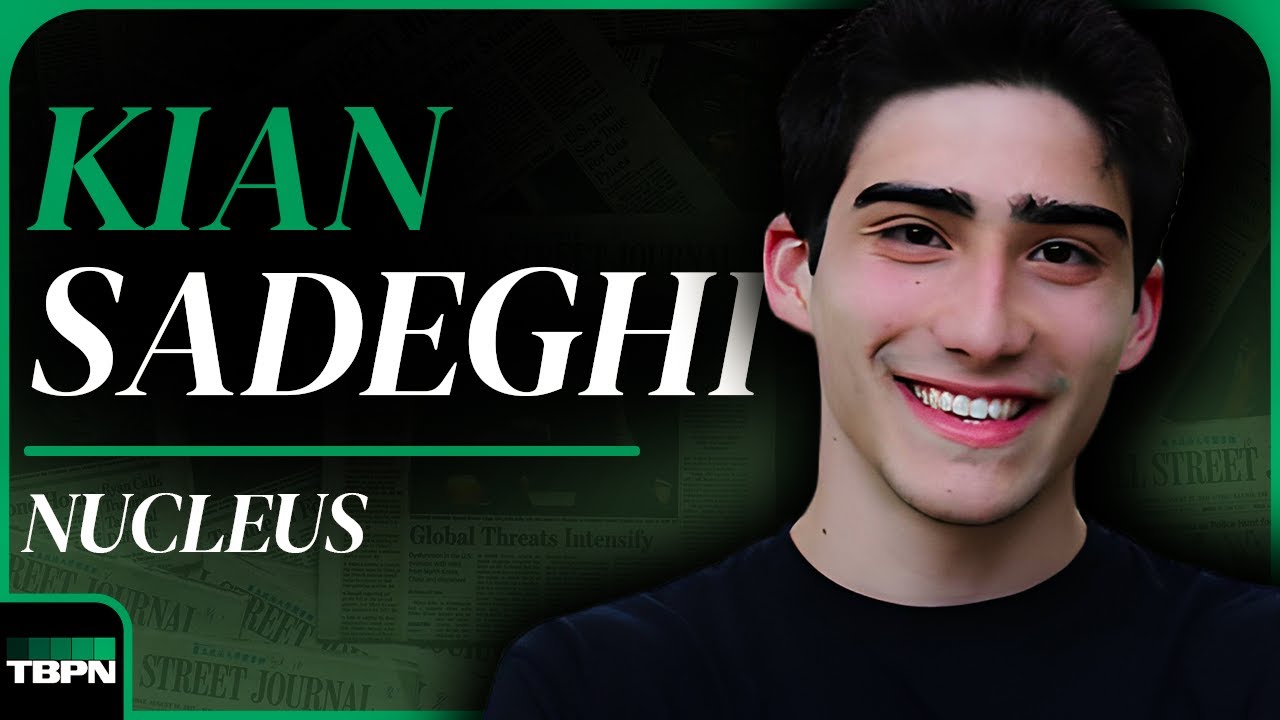
AI is helping bring down costs across a wide range of industries, from manufacturing to tech to healthcare, including gene editing. Well, this week, Nucleus, one of the companies working to unlock cheaper and faster gene editing, closed its Series A round with some well-known investors, including 776 and Founders Fund. So joining us now for an exclusive interview is Nucleus founder and CEO Kian Sadeghi, along with Reddit co-founder and 776 founder Alexis Ohanian. It's great to have you both here. Welcome, Alexis. I'm going to start with you. Because we've been hearing about the possibility of genomics for a while. Why make an investment in this area now and why this company specifically?
Well, I'll tell you what, this is the time. And we didn't just invest in this round. I've invested over $10 million into Nucleus since their first round a couple of years ago. And the big why was that the cost of sequencing a whole human genome was plummeting to a few hundred dollars. And this is one of those secular shifts in a technology that it took decades to have happen. And I, like a lot of people, you know, I swabbed and signed up for 23andMe decades ago, didn't get much value out of it, but hoped for what the future could bring. And, and the future is here, and Nucleus is building that massive database of whole human genomes that I think is going to help a lot of us live much healthier, much longer, much better lives.
And we're showing a stock chart of 23andMe, which is now a tiny stock. It's a, it's a microcap. It went public during the SPAC craze of a couple of years ago. Kian, what is it about Nucleus in terms of these new technologies, these new capabilities? What does AI bring to the equation? And perhaps just as importantly, since people do seem to be a little bit gun-shy about their genetic data, how do you keep it secure?
Yeah. So, you know, 23andMe collapsing is indicative. It's sort of like Blockbuster or like Netflix. It's not the sign of industry destruction. It's actually about brand transformation, and Nucleus is leading that transformation. So as Alexis mentioned, it used to be about $100 million to look at all your DNA. So 23andMe had to only look at a very small fraction. And because of that, they fundamentally couldn't give people insight into their individual health. They couldn't help them plan families. They couldn't tell them what drug dosages are right for them. These are all things that Nucleus can do. Regarding privacy and security, we're actually a medical provider. So we're physician-ordered tests. We're CLIA certified, we're CAP accredited. So we're as stringent with our policies as your hospital or doctor's office.
Alexis, good to see you. It's been a while. Let me shift the topic to DeepSeek and the idea now of efficiency in AI that you can get maybe more done with less expensive hardware. Is that shifting your investing strategy overall at all?
Well, I would look at that number that they advertise with a raised eyebrow. I do think, though, you know, the big story here is that because this is open source, it lets everyone else level up their game. And it speaks to what we've been betting on for the last few years, ever since ChatGPT sort of reframed or reset the possibility for AI and what it can mean. It just makes me more excited because the real value here, at least I believe, is going to be in really the data. And the unique models that you can train based on that unique data. And at the end of the day, our DNA is just a lot of data. And especially with a whole human genome sequenced, you're looking at a lot of data that the average person or even the smartest person could take infinite lifetimes to try to understand. But this could not be happening at a better time because the models on which we're going to be able to train are just even more capable than just a couple of years ago. And what it means, and I think it bodes pretty well for a very near-term future of a very different way of health and healthcare, medicines that can be prescribed on an individual, on a genomic level for us. We've only begun to understand what our DNA holds. And if you think about even the small steps we made forward in things like the BRCA gene, which we know leads to or often leads to breast cancer. If we get this right, in another 5 years, 10 years, that little bit of knowledge we had will seem almost like Bronze Age technology compared to what we'll be able to do. And, and that's the part that gets me the most excited. It means lots of people getting access to better healthcare.
Kian, doubling down on that, how do you envision Nucleus working such that people, consumers, will actually want to share their genetics info out to dating platforms or wherever else and believe that they're only sharing the portions that they want to share? Because, you know, if the wrong insurance agency starts making calculations based on information people don't want to share, they could end up in a bad spot.
Yeah, well, so, you know, Nucleus, again, we're like a medical provider, so people have complete control over their data. If you talk about insurance, for example, GINA, actually the Genetic Information Nondiscrimination Act, made it legal for health insurance companies to use genetic data. It's really important for people to say, especially nationally, because a lot of people don't know that and that stops them from doing genetic tests. I think there's no one in the world that doesn't want to be healthier, that doesn't want to have healthier children, and that doesn't want to get the drug dosage that is right for them. Data insecurity, especially if you look at the way that Nucleus is built and that we don't share any genetic or other protected health information with any third party, that should never get in the way of someone getting life-saving insights.