MASTER the Art of Negotiation in B2B Software Sales
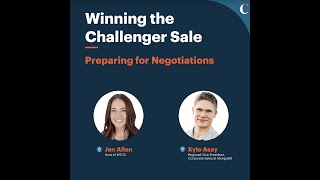
A November 2022 interview (podcast/video) with Kyle Asay, VP of Sales at Qualtrics, hosted by Jen Allen. Kyle recounts his sales career from SDR to VP, discusses negotiation tactics and preparation (beyond discounts), coaching reps for negotiations, leveraging mobilizers, advantages of introversion in sales, and examples of making concessions conditional. Practical guidance includes finalizing scope before price, asking "why" for discount requests, structuring conditional concessions, and preparing buyer champions to defend value. Kyle also mentions his site (salesintroverts.com) and an upcoming move to MongoDB.
Welcome back to this week's episode of Winning the Challenger Sale. I'm your host, Jen Allen, and our theme for November is preparing for negotiations. Now, specifically, we're talking about how to prepare and anticipate curveballs ahead of negotiation conversations. Now, today, I am very thrilled to welcome our very special guest, Kyle Assay, VP of Sales for Qualtrics and the brains, the man behind salesintroverts.com Kyle, welcome.
Thanks so much, Dan. I'm thrilled to be here.
We are so thrilled to have you. Now, every guest has a really interesting story about how they got to where they are today. And I typically tell that right now, but Kyle's is actually just really, really cool to me. Kyle was hired as an SDR at Qualtrics eight years ago and worked his way all the way up to VP of Sales, which we're going to learn a little bit more about in a moment. But even more than that, why I'm particularly excited to have Kyle on this episode is because he talks openly about the fact that he considers himself to be highly introverted. And for a very long time, I had the false assumption that in order to be great at negotiation, you had to be one of those killer reps who could go to battle at the negotiation table. And that always intimidated me about negotiation. So Kyle's here to show us doesn't have to be that way. So before we dig into negotiations, let's get to know you a little bit more. Can you tell our listeners a little bit about your origin story into the role of SDR and how you made it so quickly up to where you are today?
My origin story is I fell into sales completely accidentally. I didn't want to go into sales. I thought I was going to go into consulting. I did an internship in the consulting role, and I hated it. And so I was in a bit of a panic. I thought about extending my undergraduate degree. I thought about doing a CS degree, which is a major pivot from business. And then a quality recruiter reached out for an opportunity development role, which I did not know what that meant, honestly. But I took it because I was. I was freaking out, and I was desperate. I was graduating soon, and they. They sold me on the vision of the company. I remember meeting with one of the co founders in my final interview, and I literally said, stu, I don't want to do sales. He said, that's fine, Kyle. We'll start you in sales. And then if you want to change later, you can. You'll just probably make less money. I was like, okay, I Guess I'll start in sales. And then I turned out that opportunity development meant SDR met cold calling, and we got started. So it started with that and then I've been stuck ever since.
Wow. Wow. Okay, so you've got to help me understand, like, to start in an SDR and to make it as far as you have and have the sort of responsibilities and roles and team size that you do. I think personally, to me, it's really awesome to hear that because I think sometimes in entry level sales roles, it can feel like, man, there's just so much distance between where I am today and running a sales organization. So what do you attribute to your ability to kind of move along and move up the ladder like that?
I think it's important to know that at first I kind of sucked. I didn't earn my first promotion after becoming an ae. For two and a half years, I was considered to be a low performer. I watched all of my friends promote rapidly and I wasn't very good. I had a mindset shift of ownership where I realized, hey, like, I have this excuse for why I'm not good because I'm not doing all that I can. And it's scary to do all that you can because once you do all that you can, if you do fail, there's nothing to fall back on. But I had some really good mentors, good leaders, saying, look, man, like, you're either good or you're not. Go all in and figure it out. So I went all in. I started to study more, tried to learn more. The challenger sale was actually pretty impactful in my development and applying those, those learnings. Right. And so as I began to see success, I think the biggest thing that differentiated me is I would actually start to write things down. Why did I do this? Why did it work? What did I learn? So when I became the number one ae, I knew how I did that. That allowed me to go teach people how to sell effectively. And then I began to write down how do I teach people to sell? And then what I found is if you're able to sell effectively and if you can teach others to sell successfully, then you're going to be asked to help more and more people sell successfully. And that led to leadership promotions until eventually I was managing 10 teams, 60 reps, helping them learn how to sell Qualtrics at a broader spectrum. So I would attribute to learning, ownership, and then a consistent focus on development. If you're in my group, I am going to stop at nothing to get you better and get you promoted.
Let me just say, if every sales manager and sales leader showed up like that, I think we'd have a much different story to tell about sales. I just so love the way that you described your self reflection and your awareness around what worked, what didn't. And then, I mean, even in just watching you speak at other places or reading some of your content, I mean, it really does shine through your passion for developing people and making people realize their best potential. So we're going to do that today. We're going to do it on negotiation. You're going to do it to thousands of people that are listening. So no pressure.
No pressure. None at all.
So let's talk about the topic at hand and maybe take us back. Could you tell us about the first time you ever entered into a negotiation conversation in your sales career that you can remember?
Oh, yeah. This is a painful but fun memory. I remember this gentleman cfo. And if any salesperson has a nemesis, this gentleman is my professional nemesis. Because we had multiple negotiations throughout my time working with the account, as a rep, as a leader moving forward. And he's really good. He's really good. And my first negotiation, he absolutely destroyed me. He gave me curveball after curveball, none of which I was expecting, none of which I was prepared for. And the curveballs were aimed to pin me and undermine the value of the solution I was selling. And so I remember just watching the deal size go lower, go lower. It was finally at the number where I was like, kind of okay with, but not great, but I thought we were going to end there. Then the last curveball came in on even more. And I just remember after the contract was signed, sitting down, thinking, holy crap, that was a disaster. And so I wrote out all the things that went wrong and that became the foundation for how I'd negotiate in the future. And then hopefully he's not listening to this, but I applaud.
You don't get a lot of CFOs listening.
I applied the same tactics that he taught me in a future negotiation. And by the time I finished with the account, they were significantly higher than our approved price because I was able to turn them and maximize the value and extract more value from the account. So he won. He won the first round. But I'm going to. I'm going to feel good at that. I think. I think long term, the account one, I won, everybody one, which I think is the real goal of negotiation.
Absolutely. And I'm already sensing a theme with you, Kyle, which is like, you're very intentional about looking at what happened, reflecting on it, documenting it. So let's, let's talk a little bit about that. Right. Because one of the things, and I will, I mean I don't remember my first negotiation probably because I blacked it out because it was so terrible. But I do know the times where I have lost, seriously lost in negotiations. I could always point back to my lack of preparation. Right. I went in thinking it wasn't going to be that hard of a call or I thought I had a good idea and I didn't really bake it out. So let's talk about preparing negotiables. So I think one of the mistakes I made a lot when I was selling earlier in my career was when I thought negotiables. I always thought about discounts. And for many sellers I think that's like the first thing that comes to mind when you think about negotiation. Can you talk a little bit about what are some of the other types of negotiables that sellers can consider above and beyond just looking at discounts?
So let's, let's kind of bucket into two areas. There's going to be one that it's going to be personal negotiables that matter to your immediate contact and then there's going to be business negotiables that matter to the business. Your contact is not cutting the check for this, Right. It's their company's money and they just want it in. The CFO though that is cutting the check wants the dollars lower. So starting with the financial piece for the company, beyond the obvious of discount lowering the actual cost of the solution, you can look at things that impact cash flow. So payment terms, structure of the agreement. If it's a three year deal, some companies really like to have a much lower year one ramp into year two year. So one of the first questions I will ask a financial minded contact is hey, how important to you is cash flow? And if cash flow is important to them, then I know I can go pull some levers. The benefit of working for a larger company is cash flow isn't as important to us. We're fine to backload the agreement, but for a lot of our customers that's meaningful for them. Going to something that's valuable for the company and your contact, another negotiable is adding additional value with no additional cost. We did this not that long ago on a deal where our contact really liked an additional feature and they did not get budget approval for it. They say hey, we're going to buy Qualtrics, we can't give you all of this, maybe later, to help streamline and speed up the process. At the end, we said, hey, you know what? We're going to give you that feature in year one for free. Then if you want to keep it, you can pay for it in year two and year three, but you can try it at no cost at all. So our champion was thrilled they got it. The business was excited because now they get something for their champion with no additional cost. And we had an almost guaranteed upsell in year two because of course they were going to implement it, use it, love it, buy it later. And so we're able to give incremental value short term and then extract more value long term. A couple others that are a little bit less common but still can be beneficial are offerings to mitigate the risk of your buyer. So this can be additional training, additional support, anything to help them feel more secure in procuring your solution, that they're not going to waste their money through a failed implementation. And then the final one that I can think of that is valuable for your contact is additional exposure for them. People love to be the hero. People love to win. And so I've seen things like inviting them to speak at a webinar, an event, or even offering a chance to network with leaders in their space you have connections to can help sweeten the deal. So think creatively. But when you're thinking about negotiables, the first question you have to ask yourself is, hey, what's going to be impactful for my contact and their company that's not going to be super expensive and painful for my company, man.
And how relevant is that advice right now? Because I think, you know, we're recording this in August and we're in the thick of, you know, market uncertainty. Not going to use the R word. We don't know where we're going, but everyone's got opinions on it. But I think I've even caught myself this year neglecting the importance of cash flow to customers. Right. And it's a complete conversation changer. So I love the way you talked about that. I also think hearing you talk about it, I don't think I reflect enough on the last thing you mentioned, which is what drives personal value for that person. Because I think what I what attracts me to that the most is sometimes we need people to go to bat for us and sit on the same side of a desk with us against other forces internally that may want to knock it down. And I just, I love the idea of how much that makes Someone want to fight more for you because there's something in it for them. So that is just awesome advice. I'm noting that in my head that I need to be more mindful of that. So thank you.
Of course.
Okay, so you mentioned that you. I think if I have it right, you're a second line manager, right at this point. Okay, so you've got 60 reps. Did you say underneath your purview? Crazy. How do you coach your reps to prepare for a negotiation?
I'll walk through the negotiation lessons that I teach, most of them coming from when I got my trash kicked several years ago. So number one, never start with a discounted price. Reps love to do this. They think they can go show good faith to the buyer by starting with a good deal. The problem is for any buyer, they are going to benchmark any discount off of the first price they actually see. So if you go in preemptively with a 20% discount and then you discount $40,000 off of that, the buyer only sees a $40,000 discount. They don't see a 20% plus 40,000. You're not going to get brownie points. Don't do it. Number two, this is a huge one. Finalize scope before you negotiate price. Otherwise they're going to be up in price, you're going to go down on price. And then when you feel like you're done and you're still okay with the price point, they're going to slash go. They're going to take out users functionality, and now you're forced to go even lower than your negotiated floor because they change what you actually provide to them. And so whenever I hear negotiation requests, the response to say we want to be competitive on price, we want to work with you to prevent unnecessary back and forth with you, me, my leader, my finance team. Let's finalize exactly what we're going to give to you and then we'll be quick to iron out the investment details. Number three, make concessions conditional. Again, like you're not going to get extra credit for being nice. It's okay to be nice. I encourage people to be nice. You don't need to be a jerk in negotiation. But when you give, it is perfectly appropriate to ask for something in return. Whether it's a case study, whether it's an introduction of the department, whether it's accelerating the deal. If I concede I want something for value in return because we're a partnership, I'm not your, I'm not your vendor. We're a partnership. Right Number four, no is a perfectly fine response. I remember when I finally felt like I was okay at negotiation, being on a call, when this guy just threw every curveball at me pretty aggressively. And then he made his demands. And then I said, those demands are just not industry standard. They're not reasonable. We can't do it. And then I shut up, and there's probably like this 30 seconds of painfully awkward silence. I literally remember pulling up my email inbox to do something during the painful silence. And then it was, okay, Kyle, we'll get back to you. Call ended, and they signed the next day at those terms. Right. And so people. People will always ask for things. If it's not reasonable, you can say, no, that's not a bad word in sales. And then the last point goes back to your first question about preparing negotiables. Know in advance where you want to give. What can you give them that is valuable, that is less painful for you to offer? Start with those, and you'll likely end in a better place.
I can see why you lead teams and you do it so well. I mean, that is all stuff that I learned way too late. And I would say I still fall into some of those traps. And, like, I remember back. I'm curious for your take on this. I remember when I would get a customer who'd say, yeah, but we want to do it at 20% off. I mean, I couldn't run fast enough to my manager to be like, we need to. We need to get back to them right now. Like, what's your take on that? Is it. Is it something you want to respond to really quickly? Do you actually intentionally seed a little bit of extra time on there? What's your. What's your opinion on that?
The first question is why. Why do they want 20% off? Is it because they legitimately can't afford this? Is it because they're trying to benchmark us from the vendor to get the other vendor cheaper? Like, let me understand the intent. I saw a really good story. It's not my story. I can't take credit for it. But the sales leaders. The sales leader's response whenever the rep asked for a discount was, it sounds like we have more work to do. We haven't shown the value. I'll be the first to admit, because I know people that I work with will be able listening to this. I'm not going to be a liar. Sometimes, yes, they ask for a discount, and I'm like, 20% to get this deal done now. Absolutely. Let's do it. But in a, in a perfect world, when I approach it well, it's understanding why the discount request, understanding where is the leverage? Are we just a vendor or are we actually a partner? That changes my approach. And ultimately, if they want a lower cost, there's probably more work for us to do along with them to get a mutually beneficial agreement in place.
Love that. The power of asking why. And actually, so our researcher here, Timur, did a study on negotiation about a year ago. And one of the things that he labeled, which I thought was really cool, is there's a word for that feeling when you are rushing to your airport gate where you're panicked that you're going to miss it. That relates pretty significantly to how we feel in sales. And we think we're at the final mile and then we've got like just this one little hurdle. I think it's called something like tortious panic. I'm sure I'm butchering that word. So I apologize. A German word. I'll look it up and put it in the show notes. But I. When I heard that, it really caused me to realize, like, I wasn't stopping to ask why. I was just thinking, I've just got to jump over this hurdle and then I'll be done. Not realizing and then getting burned by the fact that usually when you. Someone asks for a 20% discount, you say yes. They're like, okay, well, there's clearly more I can get out of this. And so I love your guidance. Slow down, think about why. And what I also love about your management style is I would be willing to bet that every seller on your team knows if they're going to come to you with a, with a discount request, you're going to ask why. And so you've probably already embedded that in your mind. So for sales managers listening, like, training to that behavior and training to that expectation, I think is a really powerful thing too.
Yeah, I love your point on if you say yes quickly, there's going to be more. Like, there's always a curveball. There's always a curveball. And if you accept the first curveball, they're going to throw another and another and another. And why wouldn't they? That's just good buying.
Exactly, exactly. We would do it in our personal lives. Awesome. That's great advice. And for. And again, for any managers listening, great things to just embed in the minds and consistently coach and be. I said it already, but like, consistent about if you're all over the map with how you treat negotiations, I think it's a signal to how your sellers behave too. Okay, so I want to talk introversion, right? Because like I said in the opener, my thinking of like a negotiation table when I first started selling was so scary to me because I thought you had to be one of those, like, you know, slam your fist on the table, show up with Rolex watches, like, show that you're the boss. And that freaked me out. You speak a lot about being an introvert in sales. So in your mind, what are some of the advantages of being an introvert in a negotiation conversation?
Yeah, that's a really interesting question. The one thing that comes to mind is everything in sales is so psychological though. What you say, how you say things, impacts the way that your buyer hears what you say. And I think, and even outside of extrovert versus introvert, whenever you fall into appearing like a stereotypical salesperson going down a stereotypical negotiation process, almost every buyer in the world is going to put up walls, right? Like they're, they're feeling this. Okay, here I go again. This reminds me of all the bad experiences I've had. Whether it's working to buy a car, including a cell phone plan, other. Whatever, whatever the purchase was, right? And so I think there's any advantage to being an introvert is I'm. I can come across to buyers as not a natural salesperson. And what I mean by that is I just can seem different to a lot of sales leaders they've worked with. And those differences might for some, maybe not for all of them, but for some, might help take those walls down a little bit and actually have us have a more partnership minded conversation and less of a me against you conversation. Right. As soon as you can make it about the partnership and not a winner loser or winner loser conversation, the psychology changes and you're going to get to a really good agreement faster.
I love that. I love that. It's almost like what I picture in my head is what I think a lot of customers expect a seller to behave like. And I hate the term pattern interrupt because it is such an overused term. But it is a bit of a pattern interrupt, right? To not come to the table and be very aggressive. But look at it from how do we both win in this scenario? I think that honestly is unexpected for buyers a lot of the time. And I think buyers appreciate that, that you're not trying to win over them, but you're trying to find a way to win together. Okay, so this is a fun question. What is a commonly held belief about negotiation that you passionately disagree with.
Yeah, so I, I'm going to, I'm going to answer this question, I'm going to tweak it a little bit. The most common mistake, maybe, because I don't know if it's commonly believed necessarily it might be, but it's definitely implemented consistently and it's not a good thing. The, the most common mistake is the seller approaches negotiation with the goal of selling their product at the highest possible price. That is their goal outcome. That is what they structure towards. That's how they built the pricing model. That's they built the package, that's what they present. Everything leads to the goal of, hey, I want to sell my product at the highest possible price. The problem with this is the automatic reaction is the buyer is going to counter with the goal of buying your product at the lowest possible price. So just with the nature of the conversation, we're now at polar opposites and there's probably going to be a winner and a loser, which we don't want a winner and a loser as part of this negotiation. What they should do instead is there should be a mutual goal that I want you to have the most valuable possible solution. Okay? We're not going to go try to force unnecessary features or unnecessary volume with the punitive pricing model. We're not going to end up with them saying, hey, I actually don't need these extra features. Take it out and change the scope. The goal from the beginning is I want my buyer to have the most viable solution from my organization they can have. And then it becomes fair to ask that in return of our most viable solution that they pay an appropriate amount of money for that solution. But now we hopefully have the common goal, most valuable solution purchased. And now we're just tweaking the details to get there instead of starting at highest cost possible, lowest cost possible, and battling it out.
I love it. I love it. And I think what you just said right there really illuminates for me something that I learned a while ago, which is how much or how little you need to negotiate often is dictated by what you do earlier, much earlier in the sales process. Right? So when you talk about, don't go in just trying to sell the biggest thing, sell the right thing so that you don't have to go back and forth over useless features or useless add ons or service wrappers or things like that, it limits the amount of negotiation. At least what I'm taking away from you that you probably even need to have at that stage in the game. Okay? So last, last Big question. Then I want to ask a couple more things about you. But one of the concepts we talk a lot about in Challenger Customer is the idea of a mobilizer. Right. So for those that are newer on the Challenger journey, what we uncovered in Challenger Customer is you've got talkers who will give us all the time of the day in the world, but when it comes time to do anything, they sudd, disappear and retreat. You've got blockers who are just pro status quo. It ain't personal, they just want to protect same. And then you have a group of people called mobilizers. And mobilizers are activated by insight and they, at face value, may not seem very supportive at first. So one of the mobilizers is a skeptic, but they're asking hard questions of you because they're kicking the tires because they don't bring everything back to the buying group. They only bring back the stuff that kind of crosses the threshold. So little history lesson on mobilizers. I know you know this well, but when you're working with a mobilizer, what are some of the things that you're doing with them or they are doing independent of you in preparation for a negotiation?
The, the number one thing is what are their personal wins going to be? If I haven't made clear to them how they're going to personally benefit by my solution uniquely compared to others is, well, first, they're not going to be a mobilizer in my court first. But also they're not going to do much to defend my value internally in the conversations I'm not a part of. And so assuming that we have a mobilizer that is motivated by my solution because of personal wins they're going to experience, now I need to go prepare them to answer the questions I know they're going to get. I know they're going to be asked, hey, like the solution you're looking at with Kyle's team is 40% more than this other solution. Why can't we just start with a cheaper one and if we need more, go to Kyle's?
Right.
I need to, I need to teach them how to answer that question. I want to work with them to understand what the company's priorities are going to be. Are they going to be preferring delayed payment terms? Are they going to prefer even years for cost? Do they want to see more of a backloaded schedule? Help me understand what your CFO is going to care most about. So our initial proposal can be as closely aligned to that as possible. Possible. But if they can help me understand the company's priorities, what the company's probably going to ask for in negotiation, and I can prepare them to answer the hardball questions they're going to get, then we're going to be in. In pretty good shape.
And so if I can get real tactical with you, like, how does that happen? Is that like a separate call? Do you make them aware that that's going to happen? Like, how does that come to life in your sales process?
Yeah, so it's usually going to be a separate call after the proposal review. And some of the things I like to just call out, yellow foot in the room, like, hey, we're now going to that phase where your team's going to want to negotiate price. Here are the things we're usually asked for. And then I list off all the things that were usually asked for, and then I try to set, like, really clear barriers. If you beat us up on total price, that's not an area I can give much at all. Okay. However, if you have requests around these other areas, usually more give, how does that align with your priorities? So I'm trying to, like this. There's no secrets, right? I know what's going to happen, but I can start to coach them towards, here are the areas that I'm going to be happy to give. Here are the areas where if you push me really hard, it's not going to do any of us any good. And it's also, I'm going to be coaching them on. Hey, you're probably going to be asked, why do you want our solution over a cheaper competitor? I'm curious your point of view right now. You looked at both demos. Why do you think we're the better fit? Why wouldn't you go with a cheaper option? Like, I'm going to go challenge them because if they can't answer that to me, I've lost the deal anyway. Like, it's not like me bringing it up introduces that concept to them. They're already thinking about it. I want to make sure they have the right answer so I can fill in the gaps before they go have these conversations.
Oh, my gosh. I know anyone listening has got to have probably a whole page full of things they want to go and do based on your advice, Kyle. But that one, to me, like, is such a big one playing back. And almost nobody likes the word role play, but so often I found myself just, like, having a leap of faith that they'll describe it in the way that I do, and I never verify it. Right. And so when you actually get someone who thinks they know the answer to the question, to actually voice it out loud when I have done has never been perfect. Right. It's never been the way that we want to talk about. So there is always an opportunity to commercially coach the buyer, and they want it right. So it's in their best interest, too. So it might feel a little bit uncomfortable asking someone to do that. I always found, like, gosh, am I going to sound like I don't have faith in them? But it's for their best interest in mind as well. And I love, love the way you frame it so that the buyer understands that, too. That is just like professional challenger selling at its finest. I love it.
That is the greatest praise I've ever heard. Challenger selling in action from Jen Allen herself.
W. Listen, I have people on this show. There's a lot of great challengers out here. Okay, cool. So now getting back to you, two more questions. I could just talk to you about negotiating. I have so much to learn from you, so much good negotiation advice here. But two questions for you. So one is, let me ask all of our guests this. If you could take anyone in sales out to lunch, living or dead? Sales is however you define it, who would it be and why?
Living or dead? Oh, wow. I'm still going to go with. I'm going to go with living, and I'm going to go with John McMahon. And the reason for that is his breadth of experience as a CRO, I think, is unparalleled. And so being able to understand, hey, what have you seen in sales leadership that literally scales to any environment versus what is going to be much more focused on a specific segment, type of business, I think would be extremely interesting. He was a CRO, I think, at five publicly traded companies. And that is a. That would give some really unique perspective that I don't know that anybody else in the world has.
Are you going to be a CRO one day?
I don't know. Tbd, where the journey is going.
You heard it here first. I see it. In the future. I see it. Awesome. And the last question is, where can our listeners find you and learn more about what you're doing now and in particular, salesintroverts.com too?
Yeah. So LinkedIn, I'm pretty active on Twitter. I think I have like 60 followers now. So I'm kind of a big deal on Twitter. I think my tweets often get seen by like a dozen people. So if you want to check me out there, I occasionally tweet and then this is new. But I will be joining a new company very soon. I'll be going to MongoDB, so if you'd like to follow me along there. If you want to work for Mongo listeners, give me a shout out. We are definitely hiring. Very excited about that. And then I put all of my best frameworks on my website, salesandtippers.com so you can check that out as well.
Well, big congratulations. You saved like the biggest surprise for the end. That is awesome. So, yes, if anyone listening here is looking for a new role, I think you've just seen firsthand what kind of leader that Kyle is. I think we'd all be lucky to work for Kyle. So that's really awesome. Congratulations and thank you so much for everything you've shared today. I will attest Kyle's content, his posts are always thoughtful, no fluff, like really, really good advice. I constantly find myself learning from you. So thank you so much for being here today and thank you all for listening and we'll see you next week.
Thanks, Jen. Really enjoyed it.










