Momentum Without Burnout | People Magic Summit with Amanda Goetz
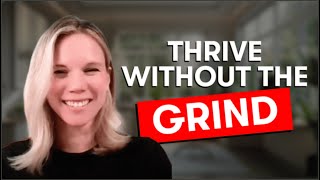
Amanda Goetz (interviewed by Gina Bianchini) describes her transition from CMO/founder to community-focused creator. She recounts career steps (Ernst & Young, managing a celebrity wedding planner brand, startup in wedding tech, product/brand marketing at The Knot), then founding House of Wise (a CBD CPG wellness brand built around community "wise women"). After selling that company she launched "Office Hours" — a community for multi-hyphenate entrepreneurs seeking to build businesses without burning out. Key themes: emotionally connected marketing; community design shift from 'hero' (leader as product) to 'host' (members connecting to each other); content frameworks (Four E's: Expertise, Emotion, Experience, Entertainment; and T-H-I-S: Teach, Help, Inspire, Show); membership tactics (small cohort, high retention ~150 initial members, use of Mighty Networks), boundary-setting for founder access, and monetization via member-driven referrals. Practical work–life strategies include 'intention' and 'transition' between roles, the 'commute bath' ritual, a weekly 2:1 push/pause rhythm, and a daily schedule emphasizing deep work 5–7am, kid time 7–8am, workout 8–10am, meetings 11–3pm, done by 3pm, early bedtime. Amanda also announces a book releasing the day before her 40th birthday and aims to create multiple 'front doors' (newsletter, tweets, book) into her community.
Chapters
Foreign.
Nail the moment where it goes for like our, our countdown goes from zero to me. Hi, how's everybody doing? Am I in the right place? Are we gonna get Amanda up here on the proverbial stage with me?
There you are.
I am so excited about this session and I know the folks in the chat are, are very excited about this session as well. So I am here with Amanda Getz. If you all do not know her, you are going to fall in love over the next hour. Because that I feel like Amanda, like you and I, I think we met kind of in passing in a community, as a matter of fact, a few years ago and then met in person at an event, as a matter of fact, back in June. And I've been such a huge fan of yours from afar and now am so grateful to call your friend and somebody who I just admire and think that you are a force for not just being good in the world, but also helping people navigate all of these different parts of their lives and their personalities to be great and, and have their best year ever. So thank you for that. Thank you everybody for being here. So with that, I want to start by asking you the age old question of like, how did you get here? How did you get here? And even before we start with how did you get here? Maybe I'll, I'll do, I'll do like a, a snap question, which is what are you the most excited about right now?
Oh, my goodness. So, so many things. And thank you for that amazing introduction. I'm so excited to be here. I. Okay. The thing I'm most excited about right now is, and this is gonna sound like you planted this in me, but she did not.
I did not. I didn't even tell her I was gonna ask her that question, by the.
Way, is the community I'm building. I've been a marketer for 20, 20 years in house and I've built two companies. I've been a founder several times. I sold my last company a few years ago and I truly feel like I'm at this kind of like halftime of my career and I'm entering to this next chapter. So excited to give back to people and help them learn from all the things I had to kind of learn the hard way throughout my life. And that's what's lighting me up, is the one on one interactions I'm. I'm having with people. So that's what I'm most excited about. I love that.
And so you shared a little bit. You know, you have gone from really world class Marketer. Maybe start with that chapter of your life. How did you become a marketer? What did that mean to you? What kind of marketing did you do before you became an entrepreneur? And now in this latest entrepreneurial chapter, we'll, we'll go through all of them.
Yeah. My career started a non traditional marketer. I actually was a marketer at Ernst and Young. So that was the start of my career. And that took me to New York City from Chicago. I grew up on a small farm in the Midwest and then I moved to New York City and I did a 180 and I went and managed a brand for a celebrity wedding planner, which was kind of my first like foray into what a CMO does is managing his licensing deals. He had a reality TV show, podcast, et cetera. Wow. And that really kind of like wet my whistle on all things marketing. I'm like, I love this, this multichannel omnichannel. How does it ladder up to this, like your message? Right. That led me to actually launching my first startup, which was a wedding tech company. And I did that. That was back in 2011 in New York City. I joined an accelerator program. I really learned what it meant to manage engineers and product and all of that, which I think is really important as a marketer to have empathy for all disciplines within a company.
Yeah.
And that took me to the knot where I was really the first consumer marketing hire because the not traditionally was a media company.
Does everybody remember the knot or anybody who's in the chat to the. Not the premier wedding destination?
Yeah. It was the like 20 year old SEO giant in the room. They were there at the original.com days and I got to come when the CEO, they brought in a new CEO from Google and it was transitioning from a two sided or from a media company to a two sided marketplace. I got to lead product marketing, brand marketing, what that looked like. And that's really where I learned what my style of marketing was, which is emotionally connective marketing. How do we take something that is just a day in someone's life and feels very, you know, almost capitalistic, like, you know, how do you spend as much money and, and make it this thing? And I'm like. And the irony of all of this was I was going through a divorce while I was managing this brand.
And thank God you didn't become one of those people that were like, you know, sitting in the back, smoking, being like, oh honey, right. Oh honey, get a pretty great.
Right. So I, I got to really take this brand that could have just stood for this transactional day and make it about self love and making relationships work and how do you build an emotional connection with a brand long before you're actually engaged. And that really turned into the last like 10 years for me, which is, I care so deeply about adding emotion into brands and what it stands for and how it actually impacts the end person.
So that's profound first and foremost. So it's, it's, it's even in these environments that were about performance marketing and all of the things where it's so easy for people to become an email address.
Yeah.
Or a, A stat. And I was thinking about this a lot this morning, which is this idea of it's so easy to be in conversations with people today where they think about human beings as an email address.
Yep.
And so now let's go into your next startup and how you thought about taking that emotionally connected marketing into founding again.
Yeah. So that was truly mission driven. I, like I said, I went through a divorce. I had three kids under the age of four. And then Covid hit and I saw women specifically really struggling and, and so I created a CPG company. It was a wellness company. It was gummies and it was really, gummies were like a very, you know, gummies are everywhere. But it was gummies wrapped with this larger permission for a woman to create space for herself. And so it was house of wise and it was empowering women to take control of their sleep, sex, stress and strength. And by taking a gummy, you were signaling to yourself that you deserve to get a workout in that day or you deserved pleasure. Pleasure. And what we found was this was fully community driven. So we had what we called our wise women and they got all of our quote unquote performance dollars. Because it was a CBD brand, we couldn't do paid marketing. And so we actually took all of our VC dollars and we put it into this one channel, which was this kind of hybrid affiliate program. But these women were the backbone of this company and they got to be a part of something bigger. And so we had a slack channel for them. This was before Mighty even, you know, this was many years ago now. This was truly like we did town halls with them, they got to meet with our sleep experts, our sex experts, and they saw that this was bigger. And it's funny because that was truly, I was running a community then, but it was actually a CPG company masked as a real community that Truly, like when I sold that company, I started doing fractional CMO work trying to figure out what I wanted to do. And I'm like, community is my thing. Like, that is what I love doing is bringing people in and having an impact.
Yeah. One of the things that I have yet to figure out how to truly communicate and, and yet I think we've seen it here today and I think you have found it as well, which is when you see a community that you have had a role in building, actually connect with each other.
Yep.
There is no better high. No, there is no better high. And when you then can do it around, you know, such important topics like, like, I just want to take a beat. Sleep, stress, sex and strength. And this multifaceted space for the multi faceted human being. That is profound, Amanda. It's profound.
Thank you. And it's. It's my continuing mission. Like, it's everything that I continue to push for and even with office hours. So after I sold that company and we can talk a little bit more about the transition between being a marketer into a creator. But that mission still exists and is the heartbeat of what office hours is that. Yes, I'm helping people build brands and businesses, but it's the multi hyphenate of it all. We don't just talk about your LinkedIn strategy. We also, I. There has been no time in my life that external success didn't come from internal growth as well.
Whoa. Say that one more time for the people in the back, because I think that that was so important.
There's not a single time in my life that I can count that external success, meaning getting a book deal, selling a company, finding love. Again, external success didn't come from internal.
Work.
And leading a community. That is both my work to do, but also the work that I want to do with everyone else.
Yeah. So let's actually take a minute and talk about how you. So you sold the business. Where did the idea for office hours come from? How sort of intentional were you about the people that you were bringing together with it? Just give it. Give us the. Give us the origin story.
So the origin story, I wish I could say, was super, like, thought out. But the first goal was I wanted to start a newsletter because I wanted to write a book. And I use the newsletter as the litmus test of did I have the skill of writing and could I hold people's attention for 1,000 words? Right. So I started to grow the newsletter on topics that just. My newsletter is called Life's a Game. And it's just about leveling up in the game of life. So it's all the things both personal and professional. So it's that external work and the internal work and I touch on a range of topics and this is truly like this is marketing at its core essence. I just started asking questions around what people wanted from me. And, and the thing that kept coming out was people wanted to know more and more about my journey. Going from a CMO and a founder into this kind of world as a knowledge creator. Because I think that there's still some ambiguity around are you an influencer, are you a creator, are you a solopreneur? It gets all blurry. And so people wanted kind of a front row seat into what that meant for me. So I was like, okay, let's build a community around this. Why don't I bring whoever wants to come inside and I'm going to share every week what I'm working on, how we're building it, the product ladder, how I'm thinking about it, but also then infusing marketing knowledge and then some of the work that I've been doing internally. Right. And for the first year. So it's, it's. We just celebrated one year. We had around 150 people join and it was truly. I didn't market it that often. It was truly just for me to learn what was both equally as exciting for me, but also what got people the most impactful in their lives, not just in their businesses, but really moved them forward. And so we just launched and I'm so excited because we launched with Mighty. And the thing that like the first thing somebody said to me was like, I didn't realize you had all of this stuff in office hours. It's now so like neatly organized. I was like, yeah, I was doing so much and no one knew about it, but.
Right.
We launched and year two is really about multi hyphenate success. That is what this community is about. We help you build businesses without burning out. This is a very anti hustle culture community and it's been awesome because now I have this group of people, this 150 people who the retention rate has been insanely high and they're here now telling everybody and they're my marketing engine at this point.
So it's on some level the need for the gummies almost is removed. You're starting with that same network, that same community of people sharing a similar intention, which is how do I become my full self and do so as an entrepreneur? We'll just for simplicity's sake, we'll use the term entrepreneur.
Yeah.
What have you found in doing this has been the biggest surprise.
The biggest surprise was how much access people want from the community leader and how when you start a community, if you don't set those boundaries quickly and manage the expectations. Because I do believe that if you are, you know, a recovering people pleaser like myself, you're like, well, these people just bought something from me. I need to go above and beyond to, you know, be there to support them and show them how great this is going to be. Be. That was the most surprising thing that I had to do my own inner work to feel comfortable setting what those boundaries and expectations were. From Access Points.
Yep. I, I love that. I'll just, I'll share two stories on that because I think it's such an important, it's such an important point. Number one, in the world of being a creator, the expectation is that it is about you. People are following you. Even the term following is like, it's about you. It's about the work that you do, it's what you put out there. And because when you're building an audience, it's about the relationship they have with you, not necessarily the relationship that they have with each other. We're. And by the way, you're also told to do it like 18 times a day. Because if you think about it, it's like every platform you need to have organic content, you need to be posting five times a day, multiply that by three or four platforms, and now all of a sudden you're like, I am a content engine. That, that, that I have to be out there and it's about me. So now, and by the way, we're doing that for free because we're trying to build the audience. And then we think about our funnel, it goes into, well, wait a second, if I'm actually going to charge people for something, it's got to be for access to me. Right now, all of a sudden we're the product or the way I sort of think about it is like, like we're the hero. And the reality is that the people who have scared scaled the most successful businesses take community off the table. They have scaled businesses that connect people to each other. So actually it's about being a host.
Yep.
And when you're a host, like a, a party would kind of suck if you stood up at your dinner party and talked the entire time. It's a lot more powerful to basically be able to introduce people to each other and say, oh my gosh, we'll have one table. You know, we'll have a one topic table. But at the same point in Time. I really want you to meet this person who I wanted you to be here because you have this in common and what, what you are not alone in this. So you know. One of many very high profile creators recently started a mighty network coming from another platform where they did not have success. And in launching a six month program they thought it was going to be about them. And they had their team lined up. They had six people lined up.
Oh wow.
To like on this person's team. They had a very large following. To answer everybody's question, to be, to be the hero. And this person was going to go live every week and that was what they thought they were selling. What they realized very quickly was that people were there for each other. Audra's in the, in the chat and really it took a long time for her to be able to offer that to the people that were launching this. Fast forward. This is now a 13 million dollar a year business. They have 99 margins because it turns out as they were connecting members to each other, following the people magic profit strategy, the creator realized that they didn't actually have to go live every week. They could go live whenever they wanted and as little as they wanted or as much as they wanted. And those six people, they were bored. It was not needed. What. Instead they have now less than three people part time, checking the community in the morning, checking the community in the evening and that's it. And so it's a really important lesson and thank you for indulging me in this conversation but I just, I love that move from hero to host because that's also. You can't do the things for people. They have to actually do them themselves.
And there are so many tactical things. I love that you just shared that the hero to host is truly like my KPIs are now around that. Like how many peer to peer connections are happening when someone posts a question? How many other people are jumping in that to me, like you said the like nothing feels better than when you see your community connecting. I remember when someone dropped in the slack for the first time that two random people who had never met before literally were having lunch in, you know, a city. And I was like, oh my gosh. That was my light bulb moment where I was like this isn't about me.
Right.
This is about a shared mission and vision for how we want to live our life. Yes. And we are just. You're attracting those people who want to help each other achieve that.
Exactly. So when you think about your members, is there a few, is there one or sort of a couple transitions that, that you have found kind of is your ideal member is the person that the community can create the most value for.
So I say that it's somebody who's juggling multiple roles in life, looking to build a business without burning out. And that's who gets the most from me. Because in this really, because this community and what I do in the community looks at the full human. We do weekly workouts together because I believe energy in creates energy out. And we do weekly coaching, we do deep dive sessions. So the person who really feels like they have a lot on their plate and they don't, they kind of feel like they're not doing well at any of it. That's my sweet spot. Spot is helping somebody prioritize, focus and feel less guilt and shame.
So let's talk about that because I have a feeling there's probably a few people in the chat right now who are like, I might need this community. How have you, like, how do you think about it? How do you think about what does it mean to embrace the different roles that we have and what do you see as like the number one mistake people make who are thinking about building a business while juggling multiple roles?
Yeah. So the biggest mistake I see people make, there's two fallacies. There's the planning fallacy and the urgency fallacy. Right. We, we think that we can accomplish so much more in a day than we actually can, which what does that cause? Guilt and shame. And then there's the urgency fallacy, which we think that everything is significant and urgent when it really isn't. And so everything that I coach on and teach on is around intention and transition. What is the thing that you are focused on right now? How do you give 100% to that? That's the focus formula, right. All cognitive resources on a singular thing. So how do you set that intention and then how do you allow yourself to transition roles? Because who I am in my work mode is very different, energetically, value wise than I am when I'm in mom mode or parent mode. And it's different than how I am as a friend and I social mode. And we, we keep talking about alignment and I think that that is where people get tripped up. Well, I should be all of these things.
Right?
You are at a holistic level, but you're actually these individual people and transitioning and honor the transition between those different roles that you're playing is so important. I, people who follow me know the origin of the commute bath. But during COVID I'm like, on calls with investors and supply chain and issues, and I am in my full, like, founder intensity. And then I'd open the door and I'd have three young kids being like, let's watch Bluey. And I'm like, ah. And so I created this like, commute bath where my kids would joke, they'd say, are you going to go become a mommy? And I'd say, yes, give me 15 minutes. I'm going to go like Superman phone booth it and go become a mommy. And it's so important to figure out what you need to transition amongst those roles, because if you can actually focus on the role you're playing now, give it 100%. It's not about quantity anymore. It's about quality. So I'd much rather be a super focused, in mommy mode mom for an hour than this distracted, frenetic energy mom for two hours. So those are the big things that I would say as somebody's trying to balance is about intention and transition.
I think the transition point is so important, especially when it feels like we're not doing enough. I know I feel this way, like if I'm taking that 15 minutes between lunch and my next meeting and you know, my body is actually like, ah, there's this little voice inside my head that's like, what else could I be doing right now? Like, could I, could I be checking my phone? Could I be checking this? Could I. And I think this is one of those things that is both the absolute hardest because, you know, we're. We're trying to maintain focus and transition between roles when we literally have a casino in our pocket, like intermittent reinforcement. Now at Mighty Networks, our whole goal is to use that as a force for good, which is that you can have a space where you can focus. You can have a space that has intention to it. And we're still, we've got, we've got a casino in our pockets and it's just too easy to care about all of these things that don't matter. I think that's certainly for me for, for 2025. You know, I'm going to ask you. Actually, let me ask you this question and then I'll share my answer as well, which is, what is, what's your intention for the next 12 months? Where do you want to be a year from now? And what are you able to do a year from now that you can't do today?
Great questions. I want to just comment on the thing that you were talking about right before. It's truly like when we think about business, we have a plan. You have a roadmap for where you're going to go. And when someone says, hey, can we do this other thing? You're like, no, we have a roadmap. We're going. We have a clear destination. We have to then put that on ourselves. And if you have a clear roadmap for what the day looks like, because, you know, you need your walk in the afternoon or you need time with your partner or whatever it is, you treat your day like you do your business. And I just think that it becomes a slippery slope when we. We don't turn it back on ourselves. So intention is everything there. But my. Over the next year. Look, I have a very exciting year. Next year is my first book is coming out. I'm very excited. It comes out the day before my 40th birthday, so. Oh, my gosh, Very exciting chapter. Pun intended.
Just like, talk about under the Wire. You're like, I'm going to write a book before I turn 40.
And literally day before publishing date.
Oh, my God, I love that.
That. That has been such an amazing experience, both internally growing and trying to synthesize thoughts into really impactful frameworks. But also it's really been an exciting time to pair my personal mission with my business missions and. And making sure that I really just click into alignment and feel like everything has connective tissue. And a year from now, I want someone who reads a tweet, who sees me on Instagram, who reads my book, to all say, I understand what she talks about and I want to be a part of that community.
Right. Right. Almost. I. I sort of see it as you're. You're talking about. Tell me if this is. This is right. You have multiple front doors.
Yeah.
Into the experience where people can network with.
Exactly.
Build relationships with. Be able to apply those frameworks in deeper ways. I. I really think, you know, for me, this. This model of multiple front doors into a network is more powerful and more aligned with this moment of what is actually possible in the world than a funnel where it's like, okay, we're going to start with everybody, and then we're going to have the next thing, and then we're gonna have the next thing, and then we're gonna have the next thing, and then the next thing, and next thing is, like, super small. And. And there's no sense that, you know, as. As Nathan Barry is going to talk about tomorrow. That there's a flywheel.
Yeah.
That. That the network actually generates its own energy to be able to pull more people in and have a bigger impact for those frameworks I love.
And multiple front doors. Like I'm literally front doors.
And so it's less about, you know, what are you doing in all of the different places in a funnel and more thinking about, hey, wait a second, like that tweet may be a front door. The book may be a front door.
Exactly.
The newsletter is a front door. And that you can have multiple front doors networked into something that is, is a rich, deep experience, but that every member, again, they're not just an email address. They are a human being who has their own relationships that they can then bring people into that network and then you have each individual member is their own front door.
Yep, 100%. And like, as I think about the future of where we're going and building in the future, I, I keep going back to Covid. The start of COVID when everyone was home, there was virtual magic that was happening. True connection. I remember jumping on a random zoom because somebody was doing like literally a five minute plank challenge in the afternoon. And that guy later introduced me to like some investor. And it was truly this like community magic that was centered around the humans, not some transactional nature. And so I keep thinking about that and saying my community is going to really look at the human as a member and bring back that magic. Because, because I'm working with a lot of solopreneurs, a lot of people are home and they. Just because the world opened back up doesn't mean that they're experiencing true connection. That's why we brought the workouts into it. That's why we do book club and more things that are holistic and not just around, well, what are your KPIs for your business and how is your brand, you know, funneling into that? Like, that is one part of it. But like we're looking at every member as a whole human. And I think that that's just important and just a reminder that so many people are still, still experiencing loneliness as they work from home.
I am finding too, just to, to reinforce and validate that point. And part of this, I think is just the way the algorithms have decided to, to send people and information my way. But it's such a grind like, like the, the normal narrative today of entrepreneurship is that it's hard and it's meant to be hard and you're just not aggro enough if you aren't sort of fully, you know, working every minute of every day and that you should feel guilty. And what I, what I love about this conversation is not only is there a different path and multiple in the same way that there are multiple front doors into a network of people and every person is their own front door. But you don't have to buy into that bullshit. And I think one of the things I really respect and value about you, Amanda, is the fact that you have raised your hand as a beacon for people to be like, hey dudes, it's that this is not the point. The point is not about grinding it out to a. To a moment where it takes a massive toll on your body and it takes a massive toll on your relationships, and it takes a massive toll on even your finances. And so I. I love that. And that's why I want to shine a big fat spotlight on it. There's one other piece that I think is actually really important and I'm curious how. How you think about it. Is the only way we are going to offer entrepreneurship for more people in a way that is light and supportive, is by focusing in on software that unlocks relationships between people. That ability, as you were saying, to see more of it, as opposed to telling people that they have to be content factories and that if you're not a content factory, you will fail. And. That ability, especially at a moment where software is getting more and more advanced and more and more dynamic. And yes, AI is contributing to this. What are you really excited to have your members be able to do.
The thing? I'm so excited right now is teaching and helping my members be a human online. Because there's a lot of copy paste stuff and with AI.
Yeah. Okay. I. You're breaking up for me. And are. Am I breaking up for everybody? Basically. Am I the problem here?
No, it's. It's likely me. Can you hear me?
Yeah, now I can hear you.
Okay.
Did anybody else lose Amanda for a hot minute? Yeah, Amanda, you were breaking up. Okay. Yeah.
It's post Florida hurricane. My wife. My Internet has not been great. I apologize, dude.
But you are safe and went through a hurricane, so that's the most important thing.
So I was just gonna say that being a human online, you will attract people who want to learn from you. You are a unique individual with real life experiences. How do you infuse those into what you're creating? Because we don't have to be these artificial robots. So it's not a copy and paste. And I get super excited about the future of content and adding emotion and human back into it.
Yeah, well, it starts, you know, back at the beginning with emotionally connected marketing but also emotionally connected relationships. And I think that this is, you know, one of the themes we've really had today is in a world of automation where content increasingly can be automated. And right now we're kind of in that, like, awkward adolescence where it's like, just because it can be automated doesn't necessarily mean that it should be automated. Case in point, look at LinkedIn. And when you think about what it means to be a multifaceted human being and how you show up, what is that? What does that. That mean to you? To show up as a human being, to connect with people, but even as a host, how you set your culture for people to connect with each other?
Yeah. So I do have a framework that I use. I call it the four E's. So you start with your expertise. What are you an expert in? And from there, you kind of create different content pillars. Okay, I'm an expert in these things. I'm going to talk about these things. But then you're going to inject in each of those the three other E's. Emotion, experiences. So what experiences gave you that? And then last one I call is entertainment. Now, I'm not saying that you have to entertain people in, in. In a certain way, but what it means is how do you bring someone behind the scenes into your life? That could just mean, hey, Gina and I, before the call, like, here's what we talked about. But, like, how does somebody feel like they're actually a part of your inside world? Like, the more human, you're a friend and a real person, not this, like, super polished. That's why I share when I stumble or my Internet goes out, like, those are real life things. Right. And so it's expertise, experiences, emotion, and entertainment. That, to me, when you package those up, that makes you a whole person.
Yeah, I love that. And I love that for two reasons. Number one, one of. And I was really like, every time I don't want to post something or like, you know, I'm like, oh, is that like, a little too much? I post it and it becomes like, the most popular thing that I have posted in, like, 30 days. And in my case, you actually are a part of this story, which is when I saw you in Miami, and I was like, you know, I think I'm allergic to something. And you're like, why don't you go get some Benadryl? So I go to get some Benadryl. I come back, I'm like, a couple hours later that evening, it's still not better. I go, I find out that I'm in Miami in a tropical storm with shingles on my face. Let me just suggest, I don't recommend shingles on your face, but I also, if you're going to get shingles on your face near your eye, do it in Miami because they have a world class eye center, as it turns out. And so I shall shared that story and not only were people so supportive, but actually made it me realize that we're all just human beings.
Yep.
And this is. I, I want to tie this back, Harry. Sounds like a song. Shingles on my face. May that, may that not be a song that anybody in this crew needs to sing. But I think what's really powerful about Community is that your stories about yourself and others as human beings grows exponentially. So for example, would I have ever known, except for yesterday during our summit that Roger Whitney, another host of a Mighty Network, shared how a member of their community that is all about retirement showed up and was like, my real dream is to go to Europe. And this was not about necessarily retirement and the finance and a Roth IRA and everything. And the community crowdsourced their favorite things about Europe and they turned it into a post and then a guide all around. What's awesome about Europe and going to Europe and taking that to the next level of your best year ever. And when I hear expertise, experience, emotion and entertainment and entertainment, I think about that. Are you creating a community that can be monetized in all sorts of different ways, but a community that fundamentally people are sharing their stories, their experiences and their ideas, not advice. And I think that that is the thing that is, I was, I was one other thing. And because I think this is relevant, I was, I was, I was at a mastermind. I was at this amazing mastermind last week and there was a creator there who was talking about, you know, huge following, really successful, and he's like, I don't share anything about my personal life. And I had this moment where I was like, oh, that's interesting. And you could see how like in a perfect world you could just be a content robot. And I realized though, like, that's not going to be my game. I don't know what my game is, but that's not going to be my game. And I like the model that you're creating.
And the last thing I'll say about that is because I've worked with people who are like that. They're like, I don't want to share, I want to just stick to what I know and I'm an expert and that's it? Yeah. But have you ever experienced a time in your life? I know I have. Going through a divorce with three kids under the age of four when you have to show up and perform when you do not feel great and how out of alignment that feels. And so when I hear someone say that, I have empathy for them because they have to put on a performance if they're not feeling good, they have to talk about how amazing everything is, and that's not the human condition. And so I just would really challenge people to inject more humanness because that's what people relate to. And it's also what's better for your mental health because then you're in alignment with truly where you are.
Yeah. So well said. Cynthia had this question, and I'll answer that. I love to hear what you think as well. It's what is the difference between ideas and advice? Here is my experience in terms of the difference between ideas and advice. So, first of all, it's really important to think about stories, experiences, and ideas. But the ideas would be, you know, oh, I think that the show Motel Rescue should absolutely be a paid membership and we could save motels all over the country. If you haven't seen it, it's on max and it's very good. And so that's an idea. Advice is you should totally break up with them. And if anyone has ever said that to their friend or had a friend say that to you, you might know how it ends, which is not well, so what the challenge with advice is when you start a sentence with you should, if the person doesn't do the thing, it's awkward. Whereas if you start with, well, in my experience, this is how I handled a similar situation. Again, this is just something I can, I can give. And that is the. That's the difference.
I love that. I think that should is a very dangerous word for anyone to use. So I echo everything you said. I like when I think about creating content based on my expertise, not advice, but my expertise. I. I use I'm all about mental models and I, I say this content T H I S. I either teach them, help them, inspire them, or show them.
Oh, I like. I'm writing that. So this. So what was that again?
So teach me, help me, inspire me, show me. So teach me is like, I have knowledge that you might not have. Let me teach you how I do something thing. Help me is you had a question. And this is where that flywheel comes into play. People have questions, answer them, answer them with what you know in your experience, what has what has worked, what has, what has not worked? Inspire is showing how you've done that thing that might be the like charts or testimonials, etc. And then show, show how you're doing it real time, like how you are practicing what you preach. And to me, if you stick with that kind of framework, you're not out there telling people what to do. You're putting on a teacher mentality.
Oh my gosh, I love that. That is phenomenal. All right, so we're coming to the end here. Let me ask you a question that I would love to know and understand because I feel like I'm a little bit of a Looky Lou in this respect. What does a typical week look like for you? How like as, as somebody who is running your own business, is a host to a community, but also an author, a creator, a newsletter writer. How are you? How do you break a parent to three children under the age of what, six at this point? Seven.
My oldest is now in junior high, which is, oh my God, wild.
A, A partner. How do you like, what does a week look like for you?
I am the funnest robot ever. Meaning I am super routine. I, I know when I can access deep work and when I can't. I also have to be done with work every day at three because I have to pick up my kids from school. And so the way that my day works is 5 to 7am is when I do my deep work. If I have to create a deck, if I have to write a newsletter, that is when I'm doing deep work. 7 to 8am Kid time, 8 to 10am Workout because my body needs to reset after kid time. Then I go back into work mode. 11 to 3 is when my cortisol starts to dip and I start to feel that slug. And so I, I take just meetings in the afternoon. I can't do deep work and I know that about myself, so I don't try. And then I'm really done at 3 so that I can be with my kids and then I go to bed. I'm in bed by like 8:45. I'm asleep by 9. But if I follow that, every day I'm getting my two hours of fun, focused work. Knowing what I'm going to do is more than most people's eight because I'm not distracted. And so yeah, I think that it's, it's knowing your rhythm, your body's rhythm when you can access deep work and then acknowledging when you can't and then setting your day up for that success.
So I think that one of the things that needs to happen in the world is that the early birds among us need to unite this idea that it's the night owl, you know, engineer who's working from like 10pm to 3am not that I have a problem with the people on Team Mighty who are.
Like, keep going, keep going.
Like, that's great. But it is so interesting because I have found a very similar rhythm and I think we heard from Marie Forleo this morning, a very similar rhythm of like between 4 or 5am and 7:38. Like I can get all my work done for the day and then I'm totally done by like, if you want me to try to write something at 2pm in the afternoon, good luck. Like I will. Literally something that I could have whipped out in 15 minutes. And so what actually is, is interesting is now I just know enough where I'm just like, oh, I'll whip that out in 15 minutes tomorrow at 5:45am tomorrow morning because I'll be awake. And this is, is really fun. But I will say, I don't know if you've run into this problem. I got invited to a dinner tonight that starts at 7:30pm and I don't know what to do with myself. Like, do I, like that is like by the time 7:30pm rolls around, shit's getting real. Like, it is, you know, it is time to get into bed. So. So anyways, I think I'll live. But how do you do that? How do you actually, like, have friends?
Oh, I mean, I'm very intentional. Like I will. I have a 2:1 flow. Like meaning I push hard for two weeks and I have one week that I allow myself to come up for air and be a little bit more loosey goosey. And so if I can push for two weeks and I usually try to ship something or do some big things, that third week is when I like schedule my social activities and I'll have a week where I'm a little more social and I'm a little more. But I, I find that the 2:1 rhythm works for me and that if I have one week a month that I'm more social and obviously if you get invited to dinners and whatnot. But in that situation, I'm like a, hey, I can only come for an hour. I got to get home to the kids, but super excited to come by and then I'm home in bed by nine.
I love that. And Jean, Yes, I'm gonna enjoy the dinner. It's gonna be fun and I'll figure it out later. All right, so we are coming up at time. Amanda, I just want to say thank you so much for being a part of our summit, our inaugural summit. We've never done this before, so you are now one of our founding speakers and people that are just really providing such incredible insight and hopefully maybe, you know, folks in the the chat can help me with this, which is one of our goals for every one of these conversations is to be able to take at least one thing away into your life. I know there are a number that I am taking into my life. So yes, we are getting some so much goodness in here and Patti even wants us to do this in person in 2025. So I. I love that intention. This is amazing. The next session for everybody who is here is going to be at 3pm Eastern time. You are not going to want to miss this. So Angel Marie is interviewing Darrell Westerfeld, who is going to talk about growth. I don't know if you're familiar with this topic, but how do you find your first members and how do you find your first members when you don't have money for paid ads or even if you did have money for paid ads that you don't necessarily want to spend it on, making Meta and Google even richer. So please join us at 3pm Eastern Time. The link will be here. In fact, actually, Chloe, you can see this right here has shared the link. Amanda, seriously, every time we interact, every time I get to spend time with you, I feel so grateful. So thank you so much. And I can't wait to see how office hours evolves from here on Mighty Networks.
I'm so excited. Thank you so much. I love working with the team. Thank you.
Awesome. All right, take care.
Bye, everyone.










