The Brutal Truth About Consistency from Fitness Coach Dan Go
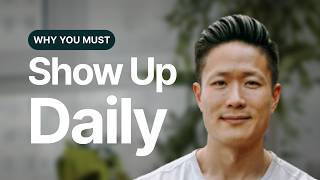
Dan Go, a fitness coach, spent five years building his online presence through consistent content creation. He discusses overcoming motivation challenges, developing a routine, and handling fear of rejection to grow on social media.
Creating and especially publishing, you have to do regardless of how you feel. It's like going to the gym. Do I feel like going to the gym every single day? Everyone's going to be like, dan, you're the fitness guy. You love going to the gym. No, I'm not motivated to go to the gym. It is my routine. And sometimes when I show up, despite not feeling really good, I have the greatest workouts in my life. And the same thing goes with creating.
I'm really excited about this next session. A friend of mine, Dan, Go. I've got to watch his journey from when he was just getting started. And I actually got a DM from Dan on Instagram early on his career to now watch what he's done blow up to be a movement where he's impacting hundreds of thousands, if not over a million people with his content on a regular basis. So excited to welcome Dan to the stage today and have a conversation about his business. Dan, what's up, man?
What's up? Thanks for having me.
Yeah, good to. Good to see you. I'd love to, like, I want to really dig into your story because I think it's so inspiring what you've done over the last three years, essentially, like, starting really at the bottom. And I remember getting a DM from you on Instagram like two or three years ago when you were just getting started, and you're like, hey, I think I can help people like you. And now to see you have grown this massive newsletter and this really amazing company, I'd love to just, like, reflect a little bit about Dan getting started to where Dan is now and have you tell that story just a little bit. Cause I think it's really inspiring.
Yeah. So I started off as someone who was a coach and someone who owned a local business, which is kind of like a body transformation center for women. And this was back in Markham, Ontario. And after about, like, 10 years of owning that and getting myself dirty in terms of, like, doing the training, doing the coaching, I wanted to help a lot more people. And the best way to do that was not through franchising or owning a local business. I wanted to expand out into the Internet. I just didn't know how. So. So, long story short, what happened was I actually invested in coaching with this guy at Ladimore. He's a probably mutual friend of ours. And I just wanted to know the ins and outs and the ropes of growing on Twitter at that time. And I remember I was. It was actually during the birth of my first daughter. I was in the hospital room. And I was like, okay, well, I'm gonna do this. And this is gonna, this is gonna be where it starts. And my wife was in the background in labor. She had like a 12 hour labor. And I was on the couch. It was during the, one of those down times. And I remember sending out my first tweet. And once I sent out the first tweet, I got a good number of comments and feedback. And that was where I started, just like off, just off of just putting my thoughts out there. And as I started to grow my account, I started to grow to 5,000, then 10,000, 20,000. I remember as I was growing and as I kept creating, the one thing that came into my mind, the one thing I was thinking about was just show up, just keep on showing up, keep on publishing, keep on doing the work. And I remember growing with a certain group of people and we were all just trying to mastermind together, helping each other out. I remember one of the things where they were getting followers and they were getting, they were putting content out there, they were growing. And then one thing led to another and about 80 to 90% of them stopped. And I'm just like, I'm like, why, if you have all this momentum, why are you doing that? And my whole thing is just making sure I show up, making sure I do the work and make sure I approve. And if you go through that formula through the course of your life, what's going to happen is you don't know where it's going to end up. So now we have, I think 780,000 on Twitter. We have a million people on Instagram, 430,000 on LinkedIn, 175,000 on YouTube. And it's all because I just decided to start creating one day.
It's so wild. How many, how long ago was that that you sent that first tweet?
2020. It was Covid days.
Covid days. So five years, less than five years. And you've been able to grow from never sending a tweet to where you're at now. I think that's such an inspiring story. And what often people dive into here, Dan, is like, all right, tell me all the secrets. What are the secrets? Cause everybody's looking for a shortcut. And I think you talking about health, maybe know this better than anybody else is. We're always looking for the shortcut. We're always looking for the easy answer. We're always looking for the pill that I can take to make it happen. But like, I love how you're talking about just, like, the consistency of showing up and learning and iterating. Like, the secret is that there isn't really a secret here. So tell me, tell me more about, like, the mindset of, like, continuing to show up every day for the last five years.
So I was on a group call with a mastermind, and these were all very successful entrepreneurs, and the topic came to creating. One of the people came on and said, well, you know, sometimes if I'm not feeling it, I just won't create that day. And for me, creating every single day for the past, like, five years, I had to step in and set people straight. And creating and especially publishing, you have to do regardless of how you feel. It's like going to the gym. Do I ever. Do I feel like going to the gym every single day? Everyone's gonna be like, dan, you're the fitness guy. You love going to the gym. No, I. I'm not motivated to go to the gym. It is my routine, and I show up regardless of how I feel. And sometimes when I show up, despite not feeling really good, I have the greatest workouts of my life. And the same thing goes with creating. So when it comes to people creating and when it comes to people just stepping into this journey, I have to say that you have to be consistent with showing up to the thing you're creating to. You have to be consistent with pushing publish. Even though you may think that what you're putting out is dog crap, but you have to stay consistent with it and you have to do this daily. And I will tell you the unfortunate truth about this whole creation thing, and this has just rang true for me, where the biggest mistake I see people make is when they say, I'm just going to take a break from this. I'm sorry, but creation is ongoing and publishing is ongoing. And if you want to publish sporadically and randomly, you will get those results. But what you are doing is you are showing up for an audience and you're showing up for people who expect to hear your genius and people who want to follow you. People literally follow you because they want to hear what you have to say. So the biggest death knell I see with a lot of creators, and especially ones that don't necessarily make it past certain points, is just they say, I'm, I'm just going to take a break. When the unfortunate reality is like, yeah, you have to publish every day.
Yeah, that. That is the hard truth. And I think you're very, very right about that. It's also like a thing that could potentially lead to burnout. It's a thing that could potentially lead to like, like exposing maybe some of the emotional or mental barriers that we have. How do you combat those two things? Like as you're showing up on a consistent basis, you're exposing maybe like limited thinking or some mindsets or the, like the I don't want to show up monster. Like, how do you approach those things as they come up so that you're not just like grinding yourself into the ground every day either?
Yeah, first it comes with awareness. So what I feel with a lot of people who are creating and especially successful creators, there is this upper limit to what they think they can achieve. And then when they reach the comfort of that upper limit, when they're about to surpass it, they will do things to self sabotage themselves back to where they feel they deserve. It's called the upper limit problem. And the upper limit problem shows up in many ways. Most of the ways it shows up is in self sabotage. So awareness is key. You have to understand where are these limitations that we're placing on ourselves. Write them down. Write all your limiting beliefs. And it reminds me of when I started to get myself in shape. I didn't commit to getting in shape. I didn't commit to losing weight, I didn't commit to building muscle. What I committed to was just opening up the gym doors, making sure I just walked in those gym doors and burnout. I do feel it has a lot to do with the perception of what they are doing rather than the actual doing of the thing. So the perception of the doing is like they, oh my gosh, like I have to create, I have to do this, I have to do that. There's so much pressure on that creation when one thing, what they can do is just consolidate it down to, well, I'm going to create the amount that I feel like I should be creating right now. I'm going to be publishing regardless of how I feel about this piece of content that I'm putting out there. And the funny thing is is that sometimes the pieces of content that you feel are not that great. They're the ones that pop off the most. We don't know what the audience is going to respond to. So we have to, we have to commit to that consistency. And it doesn't have to be every day, like seven days a week. Even though that's what I did in the very beginning, I don't do that anymore. But there has to be a creation schedule. And it reminds me of, I forgot who the artist was but someone asked this artist, this really popular artist, okay, how do you stay motivated to keep on painting these amazing paintings? And the artist said, well, you know what, I'm not motivated all the time. But funny enough, 9am every Monday to Friday, I'm pretty damn motivated and I just show up and I just do it. So it's, it's really about the motivation that you get after you start doing the thing. And something I realized about creation, it's like going to the gym, you warm up a little bit, maybe your first reps are going to be quite shit and you're not feeling it. Once you get to the middle of that workout, you might be hitting PRs, you might be feeling a lot better about yourself. The motivation comes after the doing, it's not before the doing. And if you do feel that strike of motivation, then yes, take advantage of it, but don't wait for it to create.
That's so good. I think, I think this is like, I talk to a lot of beginner creators and I hear the same things over and over and over and over again, which is just like, I don't feel like it, I'm unsure about it, how do I keep going? I'm curious to drill down on this consistency thing a little bit because the other fear that somebody might have is like, okay, Dan, I'm going to show up every day. But if I show up every day for five years and I'm not making any money, or nobody's listening to my stuff, or I'm not making any gains at the gym, like why am I even doing it? And it's a little bit of this editing before I write type of mindset. But there is a real fear connected. That too is like, how do I know that I'm actually going to get the results of the thing that I'm showing up to do. And talk to me through that mindset a little bit like kind of coach somebody at the very beginning stages through like that, that thing that's rising up in them. Like, I'm afraid I'm gonna show up for a year and I'm gonna be exactly the same place that I am now.
Well, I will say that it's more so of a fear that is not based in reality. If you show up to anything for a full year, for every single week, five days a week, you're gonna get somewhere. And one of the things that I would say to that is it's a three part formula. So you show up, you do the work, you publish, and then you look for ways to improve this means, okay, so this one only got maybe two likes. Okay, this one got 10 likes, and that was on the higher end of the likes that you get. How can I recreate this thing that got 10 likes or spin this thing that got 10 likes and do less of the thing that got 2 likes? It also means being a student of the game, going on these, these fireplace chats, joining these conferences, getting coaching. I got coaching from Ed Lattimore. I got coaching from other people within the space, different platforms. Thankfully, Justin Welsh was a friend of mine, so I got to really pick his brain about LinkedIn. One of my friends was a master at Instagram. I invested in their server, in their coaching service. Coaching, to me, is the quickest way to get from A to B while being held accountable to the thing that you said that you were going to do. It costs the most, but it's the most effective. And that's the reason why.
Yep.
The one that's missing for a lot of people is looking for ways to improve. You're not just publishing out into the ether. When you're publishing, you are taking account of the things that you published. This one got this impressions, this one got dislikes, this one got, okay, so why did this one get this many likes? Why did this one get an outsized return on these impressions? And you just keep on doubling down on the things that work for you, disregarding the things that don't work. And also, during that level of improvement, you have like the 80% I'm going to do 80% of what works and 20%. I'm going to be throwing stuff out there to test things out of things that I think are conceptual, things that I think are going to be great concepts that I've come up with.
Yeah, that's really good. I think the thing that third piece is, what I think is missing a lot with folks is looking to improve. Let's. Let's drill into that a little bit more. Like, obviously there's some obvious things here, like, oh, this one gets more likes, or this one gets more responses or whatever else, but what is the mindset of looking to improve when you're just kind of showing up consistently? Because I think this is where I see, again, I've had these conversations many, many years, Dan, and many, many people, which is, I'm doing it for a long time and I'm still not making any progress here. And I think the missing piece of that is, like, I'm not looking to improve. How do we put ourselves in that lens of, like, self Reflection or awareness of self, or asking the hard questions. How. How do you think about that when you're looking to improve?
The very first thing is be a student of the game that you want to get better at. And that means looking at the way other people are doing content, looking at what's working for other people. Now, I caveat this by saying to model what's working, but do not copy. You want to model and put your own spin on what is working, but to copy word for word. The creator business is very small. The creator community is very small. And pretty much like, we know if there's one person, I remember, there's not going to name names, but there's one person that just like totally ripped off everyone's tweets. No one talks to that person anymore. And then the thing with creation as well is the collaboration aspect. Like, a lot of us collaborate, a lot of us comment on each other's stuff, we comment on our friends stuff. Like, it is very much a collaboration between creators when it comes to that. So be a student of the game, look at what's working, and then see if you can put your own spins on, on the things that you see are working. And the other thing is, you cannot really improve unless you're actually showing up and pressing publish. You can't, because if you're trying to be like, I want to get perfect and I want to make sure I'm putting out the perfect thing. You don't know how many of these little sentences that came up in my brain, and I just put it out there into the Internet, and it turned out to be one of the most viral tweets that have happened. It's it. You just. Again, we cannot control these outcomes, but we can control our behaviors and we can control our schedules. The other thing I would also say in regards to this is I go back to the creator schedule. Put yourself on a schedule of creation. And that could be 8am Monday to Friday, or it could be whatever time that you want it to be. But I truly believe that we have these rhythms to how we create, to how we eat, to how we work out, to how we sleep. And this is actually called a ultradian rhythm of like a work rhythm. So when you sit down in front of the computer at a specific time, same time, every single week, every single day, what's going to happen is, is that you will automatically get into the flow of what you want to be doing, and your body will. Your body and your brain will correlate with the time that you're Trying to create that is one of the low key, most important things, is to force yourself to sit down at the same time and to publish at the same times every single day. And when it comes to the improvement aspect of things, whenever I'm. Whenever I'm putting stuff out there, I like to just speak it out to myself. If I'm putting a tweet out there, I'm like, literally speaking it out to myself and being like, does this make sense? Does this sound literate? I feel like captions in writing is a lot like poetry. So when you speak it out to yourself, you can feel how it feels when it comes out of your mouth. And the more that you kind of. More that you kind of say things in the way that almost like, seems like it's poetry or almost seems like it's concise and clear, simple. I feel you can get the most benefit just from doing that as opposed to editing inside of your own head.
Yeah, that's so good. I. We're. You're. There's like so many places I want to double tap on here, but, like, talk to me about the consistency. Like, showing up every single day, I feel like I'm maybe going to run out of things to say. How do I combat or overcome that? Because it's like, all right, man, I'm going to. I'm going to show up every day, but, like, I've only got enough juice in here. I'm going to run out of stuff to say at some point. What have you found about what happens as you're showing up and either, like, re saying the same things over again or expanding on what you know. Like, do you ever feel like you just hit writer's block or don't have anything to say anymore?
There are some times when I sit in front of a computer and I'm feeling like a complete blank just staring at the screen. There are many times that happens. And one of the things I love to do is use consumption for creation. And I will look at other people's content as a source of inspiration. And a lot of times when I'm looking at someone's creation, I'm either disagreeing or agreeing with it. If I disagree with it, I have the response in my brain. I'm like, no, that's not right. Especially in the health field. We have a lot of. A lot of bullshit artists out there. So when they say something bullshit, I will be like, no, no, no, no, no. Like, we don't have to do this. You don't have to be as granular about your fitness. And then that would actually spur something inside of me to create something that is the antithesis of what that person said. Or if it's an agreement of what that person says, I will spin it in my own way based on my experience that I have with my clients. So consumption is a big thing. Everyone's like, oh, you should create more than you consume. I think it should be 50, 50, especially if you're a student of the game. You should look at what other people are doing and be like, okay, so these are the trends that are happening. It doesn't mean that you have to do the trends, but it does mean that you are looking at what is working on a consistent basis and be like, how can I bring this into what I'm doing right now?
It's so true. Like, if you think about the highest performing athletes in the world, like how much they're watching game tape and practicing before they're even playing the game.
Yeah.
It's such an out. It's so outweighed into like watching the tape over and over and over again and learning and learning and learning. I think it's a super, super interesting metaphor.
Yeah. And let's just say we're creating for Instagram and I'll use the health field, but anyone can use whatever niche that they, that they're looking for. I will go into the explore page and I will search fitness. Funny enough, if I search fat loss, they send me a phone number for the suicide helpline. I think you need to talk to this person. Do you need help? But when it comes to fitness, I'll search out fitness and it'll give me a slew of content. And then I will have the algorithm just show me that stuff by clicking on it, showing it, you know, And I want the algorithm to, to tell me like, okay, so here's like all the different pieces of content that are working for other people. It doesn't mean that I'm going to be modeling or I'm going to be copying, but why I am is I'm consuming and I'm creating ideas. Now the caveat to this is making sure we don't use consumption as the barrier to creation. So when we are consuming, we are consuming intentionally so we can get these ideas. Actually, what I do is I'll throw these ideas. Actually, I have a separate account for this algorithm. I'll throw these ideas out to my main account and I'll be like, this is really cool. This is how we can spin it through that consumption. I'm throwing myself out ideas, which I take action on eventually. And it's just this collection, creation, collection creation. You gotta be just very careful that you're not over collecting and under creating. And you gotta be breathing.
It's like in and out, in and out, in and out. It's breathing. It's just a really important rhythm.
And I would also say that when we allow ourselves to think, it is so important for this whole creation business. So I talk a lot about modeling and that's the first step. But after you've modeled for such a long period of time or such a set period of time, what you want to do is you want to test out your own thoughts and ideas. This is where consumption becomes the barrier to creation. So one of the things I love to do, I actually learned this from do you know. So Ryan Hashemi, co creator of Jubilee, the YouTube channel, he told me that this is what they do to create these ideas initially for their channel, which is a. Create a thon. They sit in a room with no windows. They sit for like six hours and they just think and brainstorm ideas and then they'll leave, they'll come back and then they will take these, the best ideas and they will implement them for their channel. And the same thing can go for creation as well. It's like we, we consume so much that it actually prevents us from thinking. But we need both of these things to, to become authentic creators. To become, to become creators that are more kind of in line with their own authenticity.
So good. That's so good. The, the thing that keeps standing out in my mind here is the in and out, the breathing. Like if you were just to breathe in all the time, you'd pass out. And if you were just to breathe out all the time, you'd pass out too. And I think it's like having that level of like in and out rhythm is really important. We're talking a lot about rhythms. Dan, can you tell us a little bit about your rhythm of creation and how it maybe started and how it's transformed over the years? Because what you're really talking about here is like a habits. You're talking about rhythms, you're talking about dedication and consistency. What does that practically look like for you?
So in the beginning I was hyper focused on X and that was the only platform. I only had one point of focus. This is about five years ago. And I just wanted to grow on that platform. So that meant every single day at 8am Monday to actually Monday to Sunday. I'm not even gonna lie, it was Monday to Sunday, I sit down at 8am and I would create 10 tweets a day or 10 posts. They're not tweets anymore. And I did that for probably a full on year. Do people have to be as obsessive as me? If you look at how many tweets I put out there, it's like over a hundred thousand. I just looked, it's like 119,000. So volume actually mattered to me a lot because the more volume that you put out there, the more at bats you get, the more you get to see what works and what doesn't. I don't care about people talking shit about me and I don't care about people saying, you're putting out way too much content. Literally. I just want to put out what's inside of my brain and then let me just spray it out there to see exactly what works and what doesn't. Now my creation schedule is way different. Obviously I'm creating for multiple different channels and multiple different channels respond differently to different types of creations. And always I'm going under the magnifying glass theory where if I put my magnifying glass on one specific platform, I am pretty damn sure I'm going to grow that platform. So before actually this year was Instagram and we grew it from like I think it was 550k to a million within 6 months just by hyper focusing. And then whatever the platform is for you, you want to hyper focus on that specific platform, make sure you are creating add a schedule. And for me right now it's like Mondays are my newsletter days and I'm creating a thread for X which eventually turns into a thread for Twitter or not for Twitter, but for Instagram and LinkedIn. I have like this content matrix. I'll get into this content matrix actually right now where it's like one piece of creation can turn into multiple different types. But I will say that you only want to do this after you are very confident in the level of growth before moving on to a platform. For me, I'm creating multi platform now. So if I create a thread on X, it's going to be a thread on LinkedIn. It's going to be like a PDF and it's also going to be a thread on Instagram. It might also, if it does really well, it might turn into a YouTube video as well. I use X as my testing ground for ideas to see whether or not these ideas pop off. And if this idea pops off for X, then I know that's probably going to pop off for YouTube. It's probably going to pop off for my newsletter, it's probably going to pop up for Instagram LinkedIn. So. So you just want one platform where you can just test this stuff and throw stuff out there. And then so Mondays, that is that Tuesdays are my real scripting days and I scripted, I'm started to do like these video reels where I stand in front of the camera and I'm talking. And the funny thing is is I take the best performing tweets that I have off of X with also the consumption of seeing what's happening with other creators and I just create based off of the most viral tweets that I put out there and also the most viral stuff that other people I put out there that correlates with my health stuff. And then on Wednesdays I do videos. Wednesdays I shoot for YouTube. It usually comes from a script that I did on a thread or a, a script that I did on the newsletter I did on Monday. And also I'm creating five reels and I already have these five reels up and ready because Tuesday was real scripting days. And then I also create, I have two newsletters that go out Fridays, this five minute or four minute Fridays I just put in the, the skeleton of what that is going to look like for Friday and then I just go into it on Thursday and vamp it up. And in Thursday I do creation for LinkedIn and X. But Fridays are my thinking days. I don't do anything on those days anymore. I just, I just sit down and I think for about three to four hours.
It's amazing. Okay, so like if you think about five year ago, Dan sitting in the hospital room sending his first tweet, probably like looking at it for a long time and before you're sending it out to like that content matrix that you just talked through, a massive journey from here to here in like a four and a half, five year period of time, which is really interesting. The one thing that I want to double tap on early on is you said I don't care what people think about the content that I put out. And that feels like, that feels like an unlock to like that journey of one tweet sitting in a room to now that whole massive matrix. How did you learn to not care about what people thought about the content? Or how did you learn to overcome that like caring so much or the fear of rejection or the fear of failure that came from putting stuff out in the world because it is, it is vulnerable on some level.
I will say that there is a part of me that still is like, oh well, what are people going to think about this? And I'll use an example where I started to learn how to sprint and I've started to relearn how to sprint and then I put this video out there to X and I'll tell you guys right now, like X probably one of the more unforgiving platforms out there. I put out my Sprint video and I was asking for advice. I wasn't saying, hey, look at me sprint. I was asking for advice and then got like great advice, but also like a lot of like trolls coming in. And I always remind myself of something that one of my mentors told me, which is embarrassment is the cost of entry. When you're doing these things, if you feel cringe, that is a feature, it's not a bug. It's something that is supposed to happen when you are doing anything new. When I started to learn Brazilian Jiu jitsu, I was like a gorilla like going into and getting into the white belt class and I was like this gorilla that was just trying to use his strength. When I got into Muay Thai, I looked like a stiff robot. When I got into sprinting right now I actually have a sprinting coach now and he's like, you kind of run like my 80 year old grandpa. And I'm just like, okay, cool, we can get better from here. But we have to remind ourselves that especially if anyone's just starting out or even if someone's just kind of like restarting their journey, allow yourself to be cringe, give yourself permission to be embarrassed and understand that all of it has to do with more so perceptions then it is the reality. I just, I think the more that we can get ourselves to a point where we just don't give a fuck about what other people say, the more that we are going to allow ourselves to be our true authentic self. Now this doesn't mean to say like you could just talk shit and just hope that, you know, just be like, I don't care what anyone says. I mean feedback is important, but let's just say you're doing it in a way where you feel as you know, being authentic to yourself and also being ethical. Then the more we can get out there to be like, who gives a. Who cares what anyone has to say about this? I'm putting this out. The more that we can just freely allow ourselves to create in the way that will actually engender an audience who wants to see from us the things that we want to put out there as opposed to just like being a robot and trying to like copy someone else.
Yeah. We don't look at a five year old and say, you really suck at riding a bike. Yeah, right. We say, hey, let me help you. Hey. Like we have a level of understanding that they're brand new at something. However, when we are brand new at doing something, we hold ourselves to the highest standard or we look at the largest expert. Like what people could do in this moment. It's like, oh my gosh, Dan's content schedule is insane. I guess I'll never get there because he's doing all of that. I can't even wrap my head. I can't even remember half the stuff he said, but I wrap my head around how to do it. And it's like you're not giving yourself the grace or space to understand that it's okay to be adolescent or immature at something when you're beginning. So allowing yourself to be cringe, allowing yourself to be clumsy and fall over a couple times, make mistakes, say things that people aren't going to hate. Like that feedback loop is super important. But like, nobody goes to a kid and like, you suck. Like, why would we do ourselves that the beginning part of the journey. Why would we approach ourselves that way? It doesn't feel helpful at all.
Yeah. I was helping my daughter learn how to just scoot and also swim. Like 5 year old is such an unlock for children. And every time she fell on her bike or every time she fell on her scooter, like, my, my. I didn't go to her and be like, oh, well, I guess like scootering ain't for you. And I learned a lot from my daughter where her whole thing is just getting up and doing it again. Getting up and doing it again, Getting up and doing it again. There is no self judgment. There is no, oh, you know, maybe the same for me. It's just this is the process of someone learning how to walk. And the same thing goes with anyone that's beginning to create for themselves as well. You are putting yourself out there to a lot of people, but also you, you are literally an infant in, in the game. So why don't you treat yourself like an infant? Positive reinforcement, it's. If you get bad pieces of feedback which are actually true, be like, okay, cool, I won't do that again. I just won't beat myself up for the fact that I did it.
Yeah, yeah, I think that's good. Having having that perspective, I think is really huge unlock. And, and it's like this Is what's amazing about doing this at this phase of life is we can give ourselves that grace, and then we can also hold ourselves accountable at the same time and say, hey, if you want to become expert at this, like, I've got to show up and post something every single day for a year, or I've got to get 116 or 119,000 tweets out the door for. For me to be able to get there. You can do both of those. The polarity of those two things together, I think, is the important part of what we're talking about about here.
Yeah. What's the. What's the work that you are dedicated to doing? Whether that's putting out a piece of content per day, two pieces of content, what is the platform that you intend to focus on and I would say slightly obsess about over the next year? Those are probably the two most important decisions. And then the last decision is sitting yourself down in front of the computer and creating and publishing, impressing, publish and learning from your mistakes. Even. Even keeping a notepad of like, okay, well, you know, this one popped up because I think this. I actually went back into today. I went back into all my reels and I was like, okay, so why did this one have 4 million views? And why is this one getting, say, like 80,000 views? And it's just like, okay, well, let's. Let's think about this for a second and then just recreate those really good ones in a way that facilitates your best self. And then also just, like, look for other ways to say the type of lesson that you want to say in a way that's authentic to yourself.
That's amazing. That's great. Okay, so question that's coming up for me here is like, if I'm very early on, I haven't obsessed over platform yet. What advice would you give for which platform should I start on? Or how should I go about picking a platform to obsess about over the next year?
I would pick the platform that seems easiest for creation. If you love sitting in front of a camera and doing video, then that would be probably Instagram, YouTube. If you're like me, I love writing. I'm a huge fan of writing, so that's why I started on X. And that doesn't mean that you won't gravitate towards other types of creation, but do the creation. That. That is the easiest, that is the most flowy for you. Everyone says, like, oh, do the hard thing first. I actually disagree with that. I. I say do the Most easiest thing to you as possible. And then that's what gets you started. So even when I was getting in shape, I didn't jump into starting to do weights. I, I, I, I, I started playing basketball because I loved the sport. When it came to creation, I, I was like, oh, okay, should I create for Instagram? Should I create for this, should I create for that? But X was the place where I could just create writing. I could just, I could just write and I love that. So start with the thing that's easiest to you. Start with the thing that you gravitate most to. And then afterwards you can allow yourself to evolve into different directions.
That's good. Are there any platforms that you would avoid if you were getting started today?
Blue sky most likely doesn't seem like there's a good discourse for conversations and ideas there. And also it just doesn't seem like the platform is big enough for people to create on. I would also say like probably threads on Instagram. Again, super small tam or total area of market that you can market to. I would choose like the big four. And if you look at 2020 to 2025, X, LinkedIn, Instagram, YouTube, it took me probably four, five years to get traction on and I spent one year each on getting these platforms off of the ground and learning how to create for them. So everyone's like, oh yeah, five years and overnight success. But the reality was I spent probably the good amount of each of those years mastering one platform and then moving on to the next.
Awesome. A question that's come up a couple of times in the chat so far is like, okay, I love it, but like, I've got a job right now, I've got a family. I can't just like quit and focus on this full time because I've got real responsibilities, my life's really full. How do you think about carving out the space to become obsessed about something when you're just getting started?
The very first thing is, what are the incentives to me doing this in the first place? Because we, we are driven by incentives. So if you're creating just for the sake of getting a following, I would say cool. Probably not the reason to be creating. There has to be an incentive for you. Like, I would guess the incentive would be to monetize your genius in some way shape form or another. So the very first thing is I would, I would set that destination and outcome. So it's like, how much money do I want to be making out of this? How much followers will it take? Or you know, whatever to, to reach that specific type, I would always set the destination first. Because you want to start at the end and then you go back. You're like, okay, cool, well, how can I carve? It's not even about. It's not even about I don't have the time to do this. It's more so about, how can you carve out the time to do this? So if someone says, I don't have time to hit the gym, and then I look at their schedule and I look at what they're doing if they, if we get them to do like a time, a time study, and I look at all the wasted space inside, inside of that time study, I'm just like, well, you're bullshitting me at this moment. So I would carve out the time. And unfortunately, the beginning is going to be a little bit of a hustle. That's. So even when I was like starting out, I had my coaching. I had like online coaching clients and I still had a business. And I was doing this on top of all the coaching calls that I was doing. I was doing probably like six to eight hours of coaching calls.
You had a newborn at home, and.
I had a newborn at home. So I had to carve out the beginning portion of my day to focus on the thing that made that I wanted to grow in. And even if it's like two hours a day or even if it's like one hour a day, that's still time that can compound over the course of the year. So unfortunately, when you are just starting, you have to carve out that time, whether it be after work or when the kids go to sleep or before, and you have to wake up a little bit earlier. And once you carve out that time, it's no dilly dallying. You're literally publishing. You're not, you're not, you're not studying, you're not reading. What you are doing is you're putting yourself out there and you are testing things out and you have to press publish. I think that's like the thing that's. That stops a lot of people. I don't, I just don't feel like this is good enough. Fuck it, just press publish. You just don't know. And that's actually the habit that people have to create above and beyond. Just say carving this time is like to press the publish button, to keep on pressing the publish button, regardless of how perfect or imperfect you feel that piece of content is. Because I'll tell you right now, there are certain pieces of content that you put out there. You're like, oh man, this is so good. This is going to hit. And then you put it out there as like a flop. And then you, you say some, you say some stupid thing that just came off the top of your head and you just want to put it out there. Yesterday was like mine. I was like, oh yeah. Well, you know, I think eggs are like the ultimate condiment. And I just put, I put eggs on my steak, I put eggs on my, on my rice, I put eggs on my poke. I'm pretty convinced it's like, you know, the most, the best condiment on the planet. And then I put it out there and it was like almost like 3k. I think it was like 2k likes about like over a hundred thousand impressions. So I was just like, you just don't know. But you have to create the habit of pressing publish and you have to create the habit of pushing yourself out there and you have to get through what I call these milestones. So it's like seven days of showing up. That's like the first thing it gets it started. Two months is actually where the habit gets set into place. If you can pass a two month mark, then you know this habit is being set around. 90 days is when this becomes a part of, of your everyday schedule. But the beginning portion, I'm going to tell you, you're going to have to go through the struggle bus and it's going to be the hardest because launching a rocket into space, it's not like, okay, we just launched a rocket into space. It's like, no, we spent 80% of energy just launching this thing and getting it, giving it momentum to go into space in the first place. And you have to have that activation energy, especially when you're just starting out with this creation stuff.
Yeah, I think that's, that metaphor is really good. Is like the amount of effort it takes to get just off the ground is significant. And if you're going to do something of substance, of something of meaning, it's going to take effort. There's no way around that. And I think oftentimes we're like the amount of hacks or secrets or the simple five steps. It is a simple process actually. It's show up every day, it's be consistent. But there's no secret around that. There's no, there's no like shortcut to it. It's just showing up and consistently learning all the time.
Yeah, the more that we look for shortcuts, the more that we take ourselves away from the path. And if we are looking for shortcuts, we're actually shirking the work that is required to develop into the type of person that will create on a regular basis, that will put out and publish. And if we're looking for the hack or the shortcut, all this kind of stuff, I like to use another thing that one of my mentors told me, which is the long path is the shortest, the short path is the longest. And if you're trying to constantly look for ways to skirt the process, you are doing yourself a disservice because you are not necessarily doing the ultimate work that needs to be required for you to become a creator. And when I say creator, I mean that as a verb. It's not a noun. It's someone that creates and publishes on a regular basis. Just because, you know, we come up with a couple pieces of content, that doesn't make us a creator. We live up to this moniker as a creator by constantly pressing publish and constantly creating things that we think are going to be great for the audience.
Yeah, that's really good. Okay, so since we're talking about the. Like you talked about the first 60 days, the first 90 days, the consistency that's building the habit and the routine, there's what, like, how are you? How, like, how are you? What's the self talk you're doing here? What is the mindset you're having? What is like, is it really just like, okay, I hate this, but I'm gonna do it anyways, and I hate this. I'm gonna do something. It feels like exhausting if we think about that. Like, what mindset do you have when you're thinking about that launch mode? In the first 90 days of really building this rhythm and routine and habit, are you like, in community, do you have accountability? Like, what are the. What are the crutches or the guideposts or the walking sticks that you have along those days? In the first 90, I don't think you're raw dogging it all the time.
Raw dogging. I love that word. I have a vision for how I want to influence this world, and I have a vision for how I want my life to be. And I set the vision first. And I always start at the end. Now, my mindset, when I'm stepping in front of a computer and putting these things out there, it's part I'm just throwing stuff up at the wall to see what sticks. Still. I'm still on that stage because I just don't know, like, we don't know the outcomes of the things that we create. The only thing that we can control is the creation itself. And for me to place an outcome on something I create and be like, oh, I hope this gets like a million views, like, it's probably going to make me a very disappointed person. So. So I just throw stuff up at the wall. And at the same time, I'm trying to double down on the things that are working. And with all the pieces of content out there, I'm trying to double down on the things that are working, but also at the same time evolve myself. Also at the same time look at what's working for other people so I can maybe change the way in which I'm creating. The funny thing is that you will create in a specific type of way. You get successful enough, then people will start copying you and then making your creations commoditized, so to speak. So even if you are the person that's like, even on my end, like, creating these things, and now we see, like, everyone's copying it. You have to evolve, and you have to look for ways to evolve. And that goes into the 80, 20. Keep on doing what's working. But the 20%. Let's like, throw some really cool shit out there that you think is going to work, but you're not sure, and then see exactly what happens. It's. It's just the process. And I'm more. I actually love the process of creation more so than the outcomes that I create. Like when, when. When I hit a million followers on Instagram, like, everyone treated it as, like, this big thing. And for me, I just like. I just like, actually like creating things in the way that engenders this outsize response and finding out these things that I can create that will engender that I'm more. I'm more actually motivated by the fight than I am of the outcome. And my wife hates that. So she likes to celebrate everything. She got 1 million balloons and, like, all this kind of shit. I got, like the 1 1M balloon and whatever and got like this cake. And I was just like, my. To my detriment. My whole thing is I just love to show up every single day and do it.
Yeah, I think that's the secret. And anybody who I've met has any level of success. It's the commitment to the showing up. It's the commitment to doing it on a regular basis. There's a great book that I read about 10 years ago called the Power of Consistency. I think it's that kind of stuff. It's whatever you do consistently is the result you're going to have for positive or negative, by the way, is if you consistently work out and show up in the gym, you're going to have those results. If you're consistently eating junk, you're going to have those results. And so whatever it is that you're creating consistency around is the result that you're going to have. Yeah. And I think that's important to remember.
If, if I went into the gym every single day and I'm like, did a workout and then looked at my body and be like, why am I not building muscle? I would drive myself crazy. I love going to the gym to push myself and to get the mental health benefits out of it, to get myself away from home. There's so many reasons other than getting in shape that I love going to the gym. I love creating because I just love being such in the flow. So, so even for me, the first five minutes, I'm just like, what? I'm not feeling this. And then as I get into flow, I'm like, I don't want to stop. Like after 30 minutes, 45 minutes, and just like really getting to my flow, I have this like time limit for when I should stop. I'm like, I don't want to stop. I'm getting such good stuff right now and I'm feeling in the flow of everything. And I love that flow. That is the thing I love about creating. Not necessarily publishing, but the actual flow I get from it. So, so love the process. Find ways that you can love that process. Aside from the outcomes that you're trying to create. The outcomes are just destinations. The process and the way to get there is like the gps. But you gotta love that more so than the outcomes.
Yeah, that's good. How did you keep showing up when you didn't love the process or how did you learn to love the process?
I would tell myself, I don't care. I'm just showing up. I literally have these conversations with myself. I just don't feel like doing content right now. I just feel like playing video games or whatever it is and then I'll be like, well, just show up. And my, my, my, my whole thesis in life is it has never been so easy to succeed with all of these tools that we have, with all of these, these abundances of informations and people doing things. Now we're reaching the age of intelligence. I don't, I, I, I really, if you, Darren, you're probably as old as I am. Probably I'm like pushing 45, but I don't know. Are you in your 40s right now?
I'll be 40 this year.
Okay, good. So when I'm, when I'm here in, in this, let's just call it like the middle age, what I'm thinking to myself is, is, is not being like, ah, do I feel it? Do I not? It's, it's really just telling myself over and over and over that showing up is literally 90% of success. And if you just commit to just doing that every single day, you really have no clue what is going to happen. Even for, I'll tell you right now, even for YouTube, I am not focused on that platform, but I have committed to every single week doing at least one video for YouTube, no matter how shit it is. And everyone knows about the YouTube. You have like your 10 out of tens, you have your one out of tens. And I've been, even when I was putting out 9 out of 10, 10 out of tens, these are like shit videos. By the way. I told myself, well, it's, it's feeling pretty shitty right now, but I'm just gonna keep on going and I'm still gonna keep on producing for this platform. And lo and behold, like you, you get these outsized returns just by just constantly publishing and constantly showing up. So I have these conversations in my mind. I'm just like anyone else. But my whole thing is just like, just, just put it out there at the, at the schedule that you said that you were committed to and you never know what's going to happen. And that has served me quite well in this whole five years of doing this.
It's amazing. That comes all the way back to the beginning here. And you said there's a three part framework. Show up, do the thing, look to improve. And so I've heard this thing a lot. In the gym specifically, it's like, hey, like the, I'm just showing up to the gym and like, even if I'm sitting in the parking lot, I'm just starting there. I'm just gonna sit in the parking lot, I'm just gonna go there. I'm just gonna like cross the barrier of the gym. It's like, well, but if you just cross the barrier of the gym, you're missing out on that last part which is the like, look to improve. So like, if I'm looking and I'm just walking into the gym and then I walk home and I do that for a year. Awesome. The only routine that I've built is walking through the doors of the gym. I've not looked to improve at all on that. But it's like, okay, I'm now like, I've got 10 days walking through the doors of the gym. Now I'm gonna, like, I'm gonna get on the StairMaster for five minutes. Okay, StairMaster for five minutes. Looking to improve. Looking to improve, and looking to improve. And I think it's a foolproof thing, is show up, do the thing, look to improve. And I think if you miss that bottom step, which is like, hey, I've been posting content for a year and nobody's paying attention to it anymore, well, I can almost guarantee that you've stopped looking to improve. Because if you're just doing the thing over and over again, it's like, awesome. You are no more physically fit if you just walk through the doors of the gym because you've not looked to improve. And I think that's the missing piece for so many people. Is that looking to improve part of the loop, which is really important.
I agree. Because it all comes down to being a student of the game that you want to play. If I'm playing, let's just say a board game, and I choose to play this board game for, let's just say next, like, year, I'm not going to just play the board game expecting to get better. Yes, that might happen. I'm going to go on Google and YouTube and be like, how can I, how can I kick these guys asses? You know, and Settlers of Catan or something like that. Yeah, I, I, it's about, you want to be a student of the game you are playing. So that game is Instagram. If that game is X, if that game is email newsletter, if that game, whatever it is, you can't just do it by looking at what other people are doing. Know the philosophies behind why people are doing what they're doing, know what the standards are, be able to get coaching, be able to do a course or like, whatever it is, but learn about the game. And then the more that you learn about the game and the rules of the game, then you know when you can actually break the rules to the game. Then you know, like what you can do to amplify and pull certain levers, but you have to learn the game itself first.
Mm, that's good. Dan, thanks for your time today. If you were to talk to that Dan who's sitting in the hospital room other than, hey, pay attention to your wife more right now, what advice would you give to that guy five years ago who's just getting started like, from this point now, like, what's the thing that you would say to him five years ago, who's just getting started sending his first tweet?
Quite honestly, I am exactly where I would want to be at this point. And whatever that Dan did right there, which is exactly what I would tell him is, no matter what you are getting out of this, just keep showing up, keep pressing, publish, and keep looking for ways that you can improve. And that Dan already did it. So he did it for the past five years, and I'm proud of that guy.
So.
So that's what I would say to them. And. And I would say this also. Do not get blinded. Let's just say, like, you do succeed at this. Do not get blinded by the outcomes that you're creating. Do not get blinded by the types of the amount of followers you have. Do not get blinded by the amount of money you're making. Do not get blinded by any of these outcomes, because it is not you. It is not you that had actually created these outcomes. It was the process that you committed to, and there was no limit. And this is actually something I would tell Dan there. You should set bigger goals. You should actually set way bigger goals than you could ever imagine because your mind will conform to the goals that you set for yourself. And I go back and I've achieved all these things and whatever, I'm just like, I should have set bigger goals, man, because we are limited by the things that we think that we can achieve as opposed to what actually can be achieved. So I would just tell them bigger goals and keep doing exactly what you're doing.
Dan, so good. Thank you for your time today. I know you're busy, You've got lots going on, so I appreciate you being generous with me and then with this whole audience of people who are here today. So thanks for the time. Thanks for sharing your story. Show up, do the thing, and look to improve. And I think that's the loop that has gotten you exactly here. So thanks for your time today.
Thanks for having me. Thanks, guys.










